-
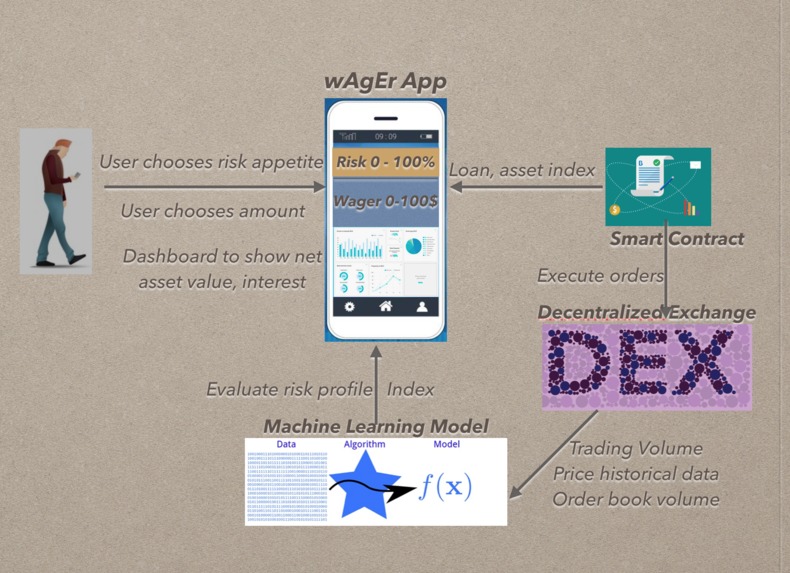
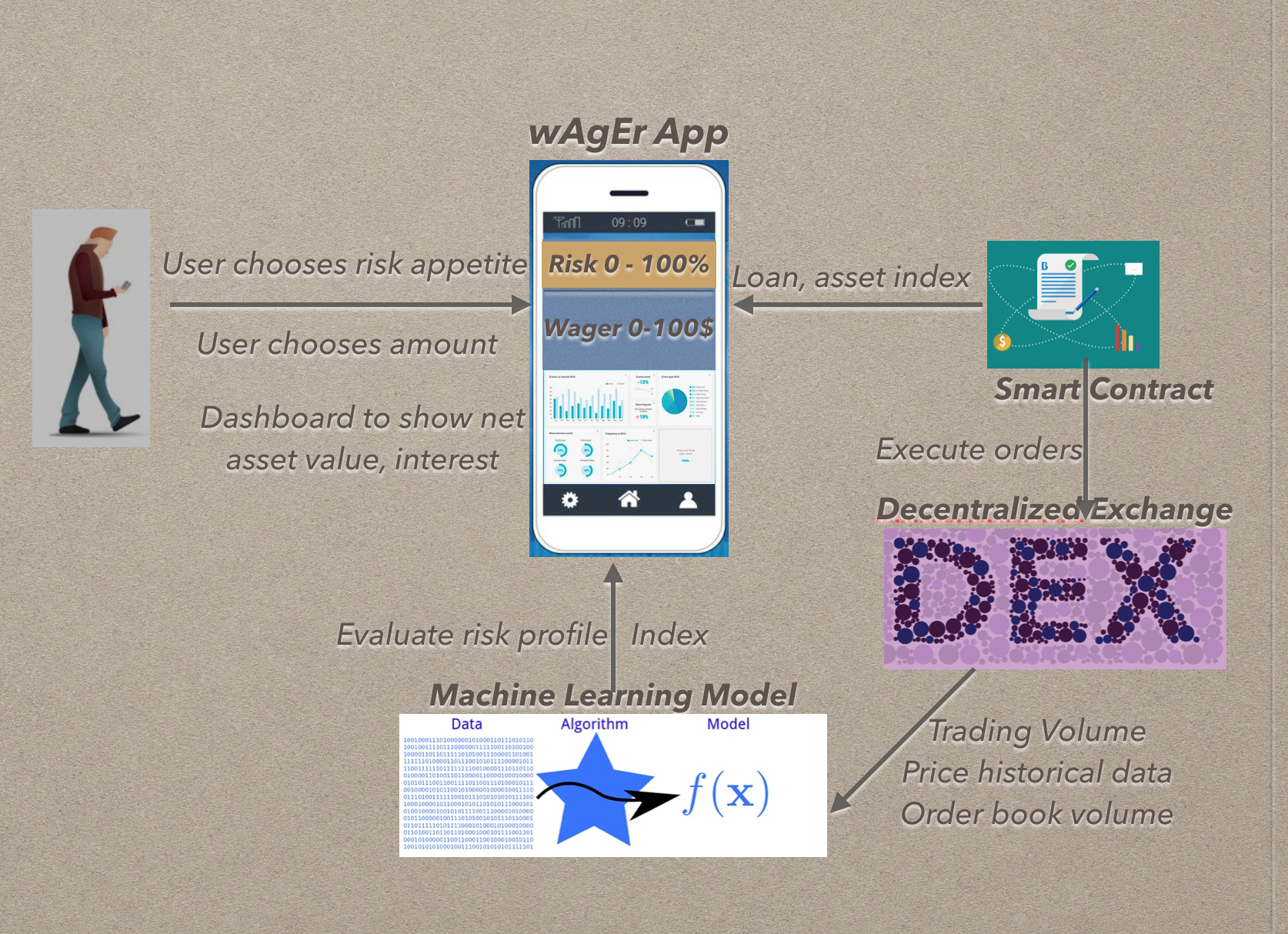
High level overview of the wAgEr ecosystem, and its potential to disrupt exchange traded funds
-
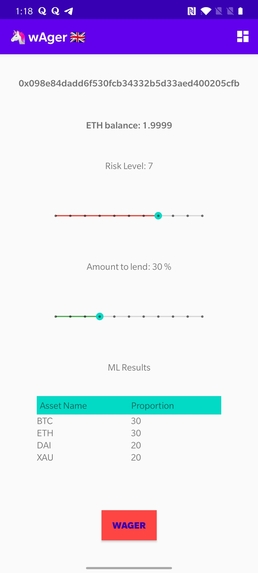
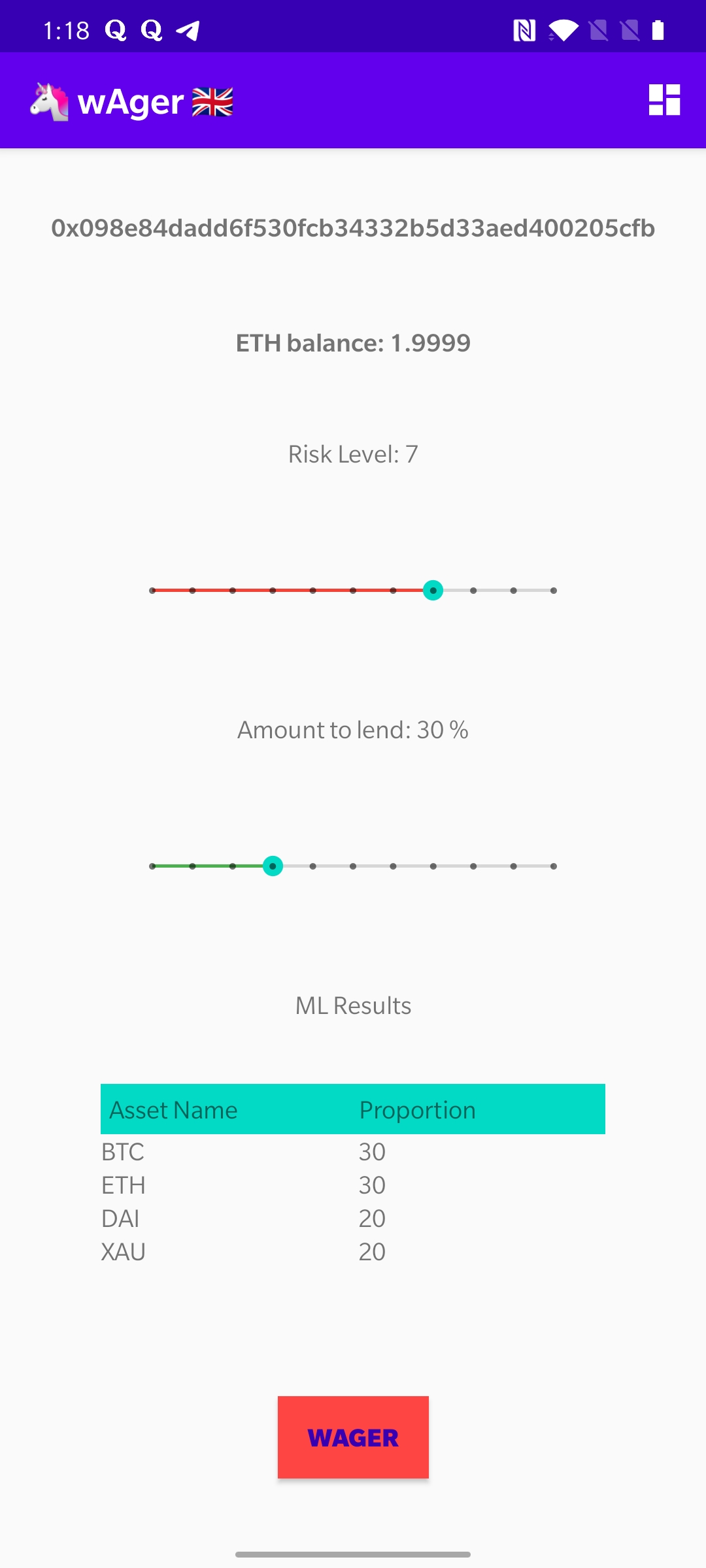
Wager App screenshot after wallet, smart contract and portfolio that are automatically created after user selects his risk profile, amount
-
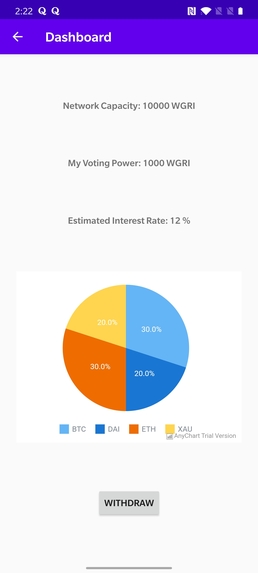
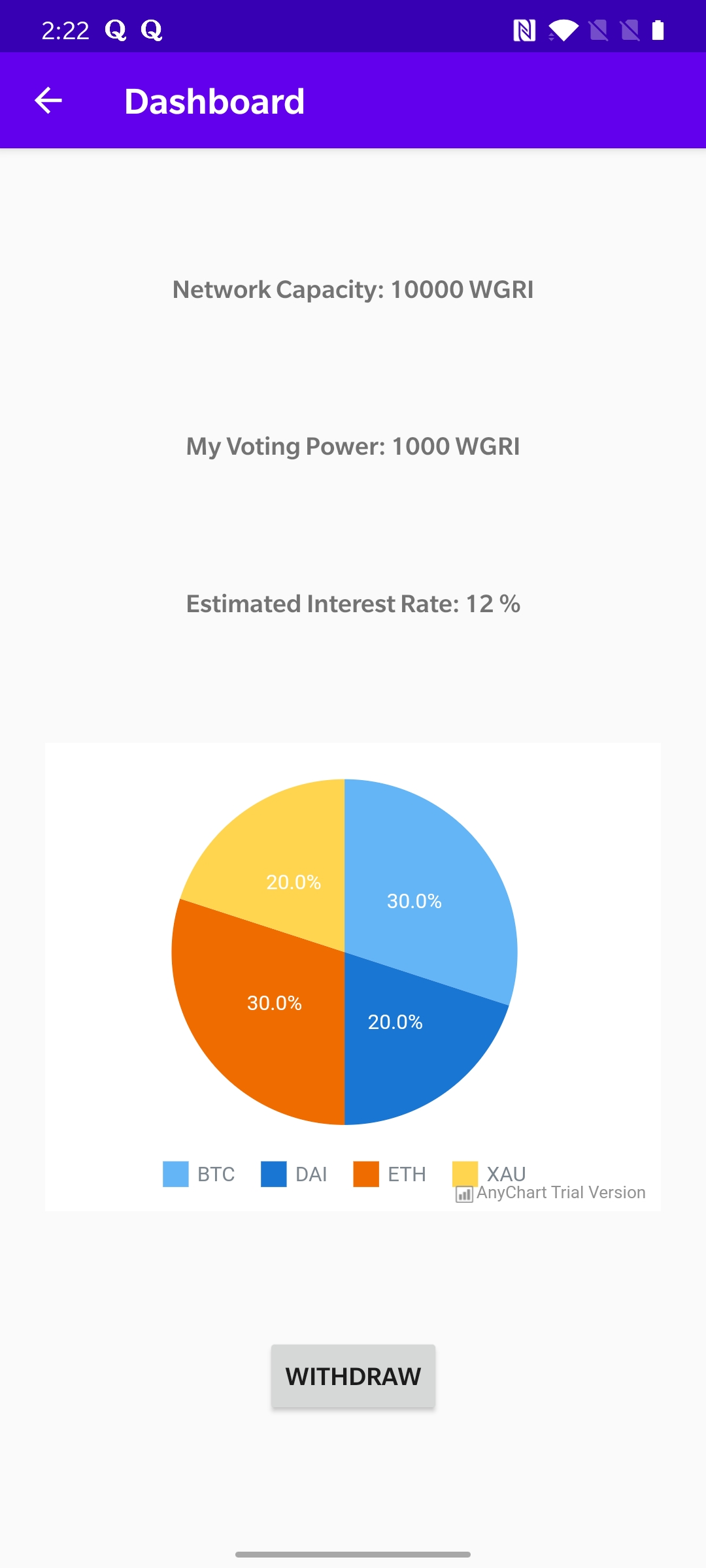
Dashboard view of portfolio, interest rate based on executed smart contract
-
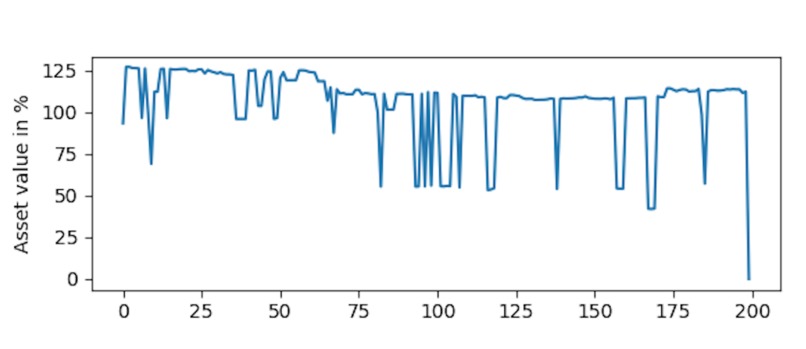
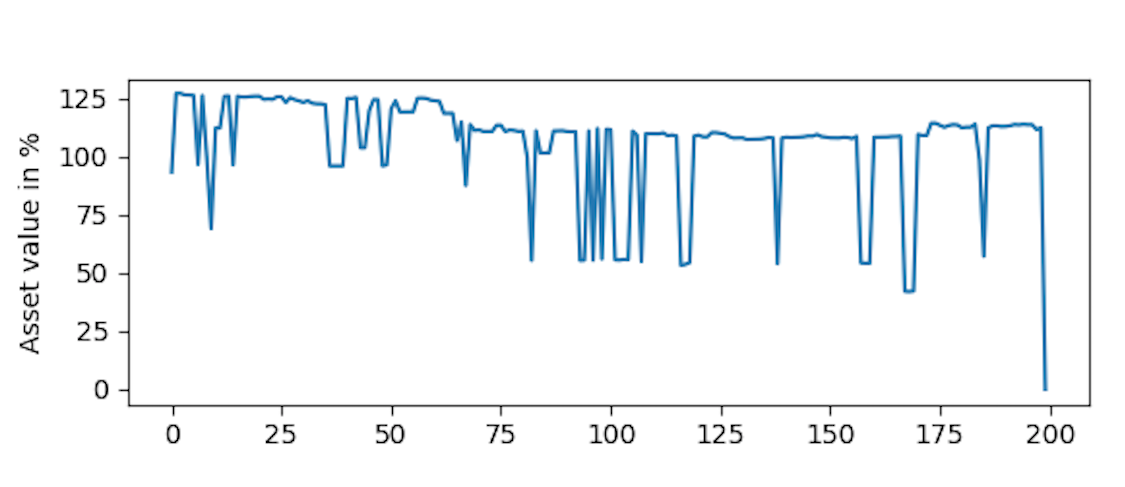
Screenshot of asset AI model output from Ethereum transmitted to AWS Web server for use in smart contract for ETF
-
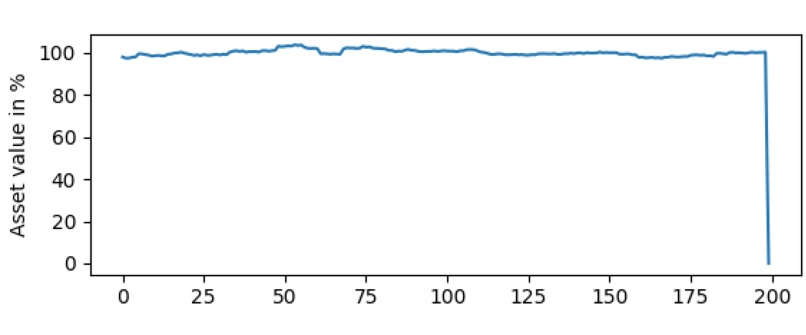
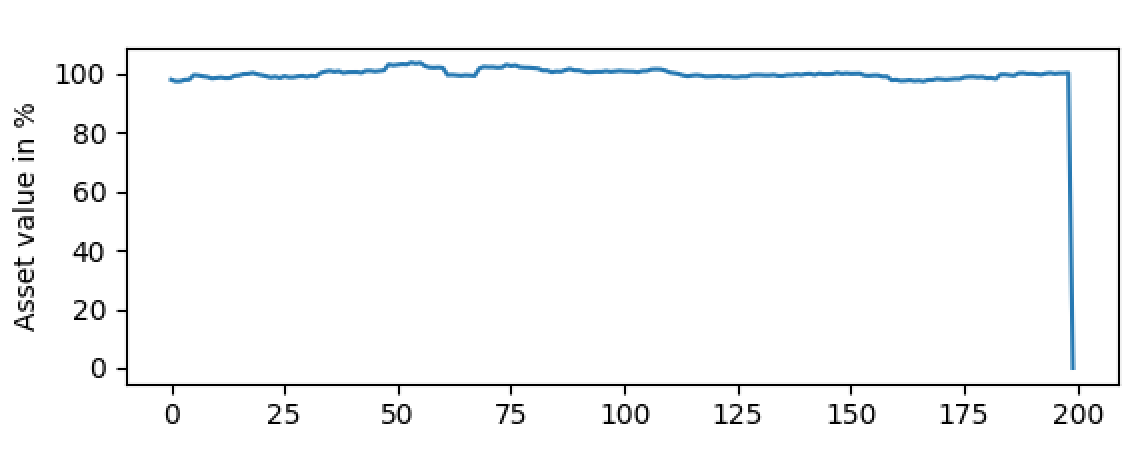
Screenshot of asset AI model output from Gold transmitted to AWS Web server for use in smart contract for ETF
Inspiration
The inspiration for wager comes from the need to redefine investment as a "loan". --> Investors face opaqueness of risk profile in traditional investment funds. --> Absence of a crypto benchmark fund like S&P to spawn crypto ETFs. --> Friction for non-crypto users from using this a vehicle as a method for lending, investment and participation in smart contract ecosystem. --> Most of the blockchain projects are not mobile first, and do not make use of the power of statistical ML models. We aim to disrupt this conventional centralised ETF with a new concept which will flip investment into a loan and benefit the governance council and its participants. With ML models, smart contracts and user input this will be truly decentralised yet personalised trading/investing/lending platform.
What it does
wAgEr aims to provide a simple user interface to users with wallet creation, generation of smart contracts, and model inferences taking place in the background. The portfolio is generated based on the risk profile, and executed in the decentralised exchange. Assets in place are lent into another exchange to earn interest for the fund. (Please see the attached app, and AI screenshots) With the advanced AI model the fund can use its predictions to trade based on indices, and recalibrate the risk profile. In the future users can vote on the way the returns are spent to invest and adapt the portfolio.
How we built it
We started by creating a flow chart of the ecosystem, and starting with a smaller but scalable prototype. On the frontend the focus was more on a simple UX based on web3. A wallet with Eth was generated in the background ensuring ease of use for non crypto users. In production model, user can deposit with a credit card, and place his wager easily. Link to the downloadable Apk file is attached below. Concept from Aave were incorporated in the ETF side by allowing the ETF to lend to other exchanges recalibrating the AI model. Using APIs from DeverSiFi historical token price data was collected. This was used to train and calculate interest rates, asset values and generate a statistical model. The model parameters were frozen and using a flask container sent via a JSON interface and hosted on an AWS server. Smart contracts were developed to execute a portfolio of tokens which were then sent
Challenges we ran into
--> Collecting historical price data across crypto exchanges was really hard due to lack of availability of low cost API endpoints. There are not many exchanges offering a diversity of commodities, low risk and high risk tokens for trading. --> Executing the orders on an exchange and recalibrating increases gas spending, and requests. --> Connecting to the exchange and -> Considering boundary line cases such as flash crashes, actors from outside the system, extremely large bets etc. Safeguards need to be built for which we need more time.
The challenges above can be easily overcome with time, investment, and resources.
Accomplishments that we're proud of
--> The idea came up at the Eth London meeting on Friday, so from idea to execution of a working prototype is an excellent accomplishment. --> Training and getting an AI model up and running on a web server in the duration of a hackathon is no easy task. --> A functioning web3 Android app which does wallet creation, order execution and interfacing with the smart contract. Please download from the attached link (apk file which will run on any Android phone) --> Gathering 90 day data for a basket of diversified tokens which was used to create an asset value --> Finally coming up with an MVP for a decentralised ETF in the duration of a hackathon!
What we learned
--> It was an amazing experience in performing all this within 30 hours, and coming close to recreating an ETF vitually --> Learnt a lot on the investment, financial aspects of managing an ETF -->Learnt staging on AWS and deploying it on an Android app while smart contract executes in the background.
What's next for wAgEr: Decentralized exchange traded fund/Android app
--> Integration of a voting mechanism in the smart contract which will govern the ETF portfolio decision making --> Scaling the ML model to have a series of models which can be selected by the users. This could be a subscription model based on tokens which will pay for the infrastructure costs, and make the governance council independent. --> Enabling high frequency trading by a more efficient gas mechanism will allow more advanced trading strategies --> Listing the index on Dexes to enable a "Virtual token" mechanism --> wAgEr will ultimately change the way humans/machines will invest/lend/purchase assets.

Log in or sign up for Devpost to join the conversation.