-
-
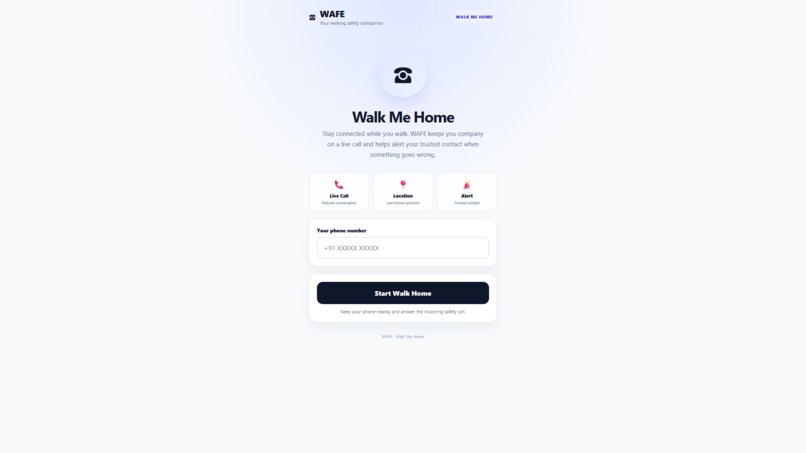
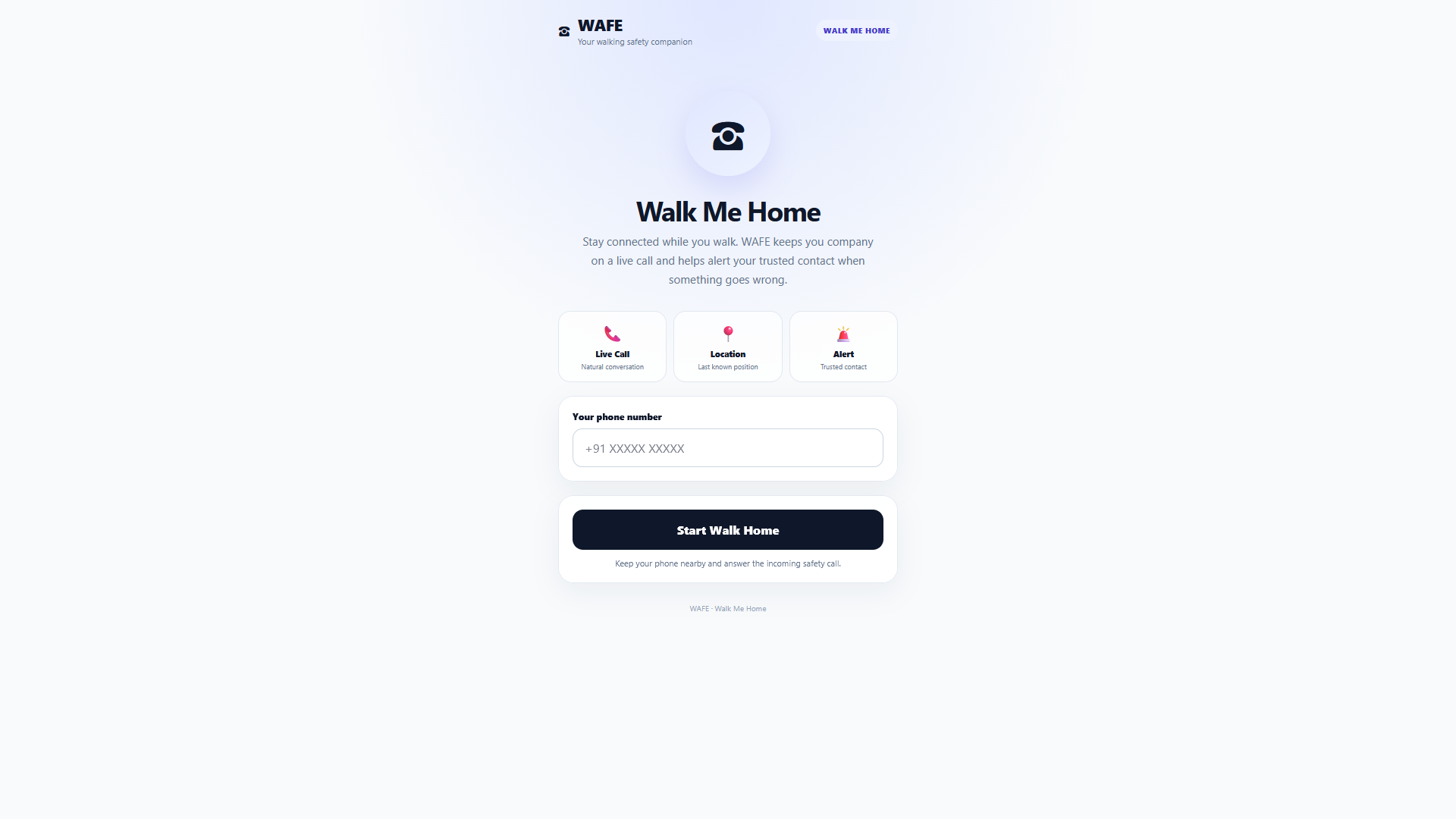
Calling User Interface
-
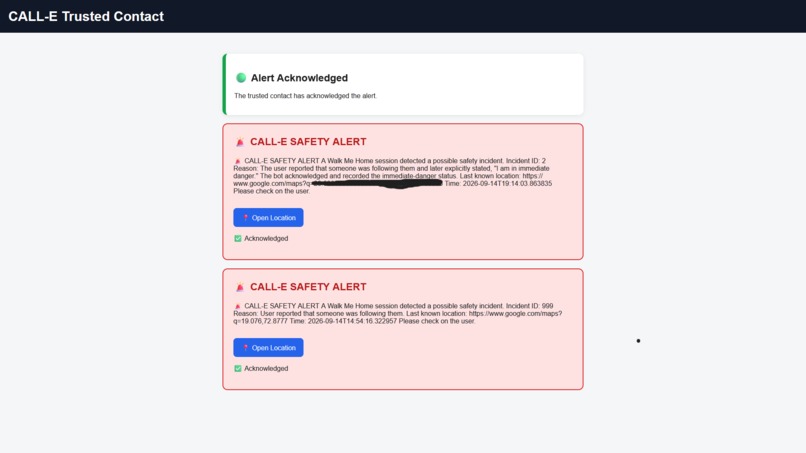
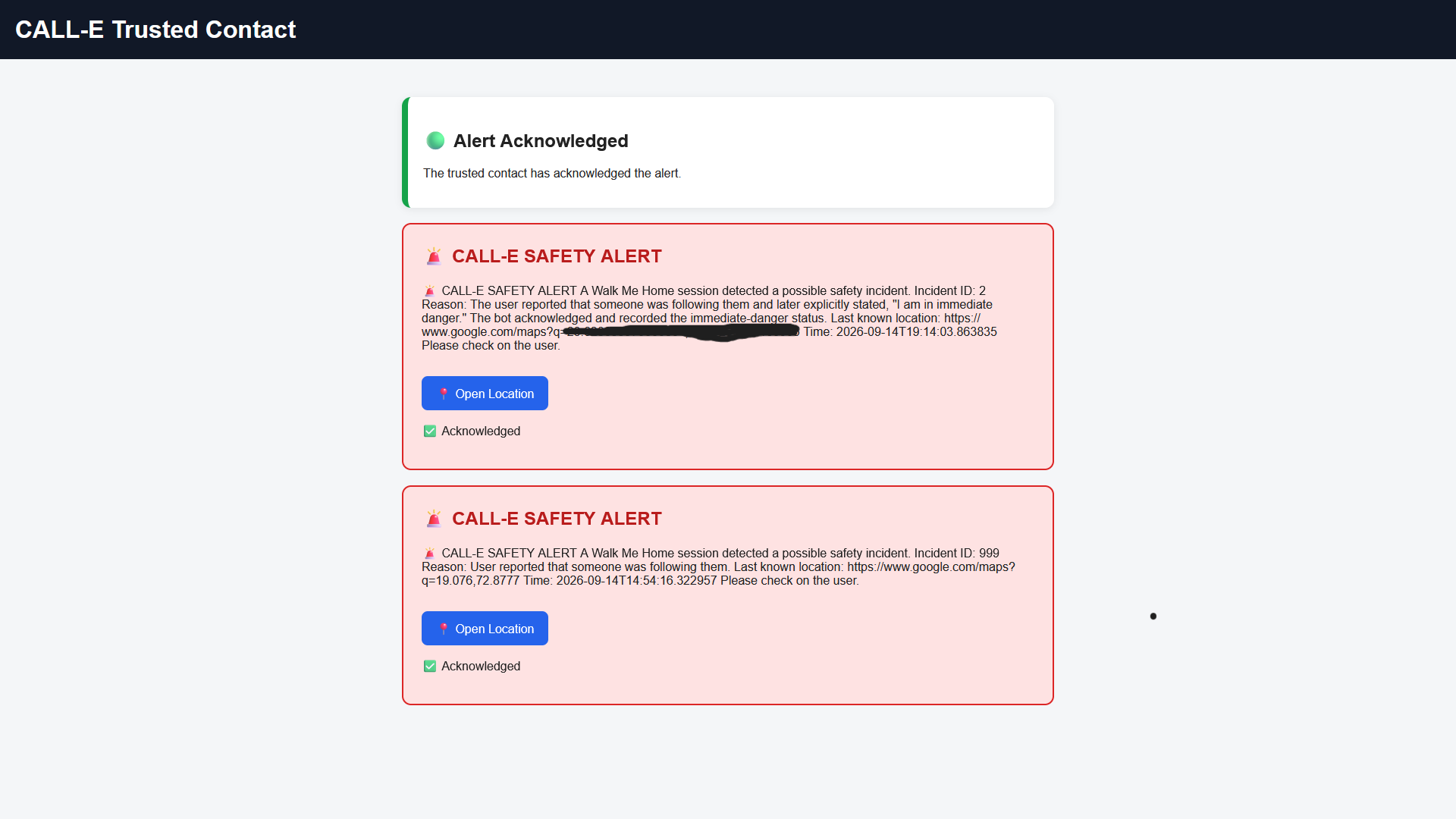
Trusted Contact Interface
Inspiration
Walking home alone can be stressful, especially for students and night-shift workers. Most safety apps depend on the user pressing an SOS button or constantly interacting with a screen. We wanted to make safety feel more natural: what if your phone conversation itself could become your safety net?
What it does
WAFE is a conversational safety companion for people walking alone. The user starts a Walk Me Home session and receives a live phone call. WAFE keeps them company, recognizes signs of distress or danger, tracks their latest known location, and creates a contextual alert for a trusted contact when danger is confirmed.
How we built it
WAFE uses CALL-E for the live phone conversation and structured call results, with a Python FastAPI backend handling the application logic. A Safety Engine converts conversation results into SAFE, CONCERN, or DANGER states. Browser geolocation provides the latest GPS position, while SQLite stores sessions, locations, incidents, and alerts. A web dashboard displays the user's safety state and trusted-contact alerts.
Challenges we ran into
The biggest challenge was designing around real-world phone-call limitations, including call delays and shared outbound calling restrictions. We also had to separate conversational understanding from safety decisions so that ambiguous information would not automatically trigger an alert. Integrating live GPS, asynchronous call webhooks, and the safety workflow was another key challenge.
Accomplishments that we're proud of
We built a complete end-to-end MVP in a short timeframe: real phone conversation → structured safety analysis → danger detection → GPS context → incident creation → trusted-contact alert. We are especially proud that the phone conversation itself is the core interaction rather than simply adding voice to an existing safety app.
What we learned
We learned that building an AI safety product is less about making the AI sound intelligent and more about designing reliable state transitions and human handoffs. We also learned to treat uncertainty conservatively, keep safety-critical decisions outside the conversational model, and design around the limitations of real-world communication infrastructure.
What's next for WAFE
We want to make WAFE more resilient and production-ready with faster notification channels, real-time updates, unexpected call-disconnect detection, configurable safety phrases, stronger authentication and privacy controls, route/deviation awareness, and native mobile support. Ultimately, we want WAFE to make walking alone feel less alone.
Built With
- calle
- css
- html
- javascript
- ngrok
- python
- rest
- sqlite


Log in or sign up for Devpost to join the conversation.