-
-
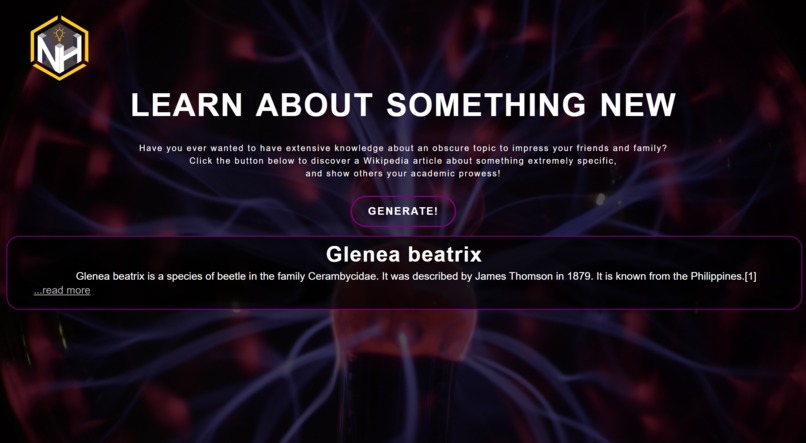
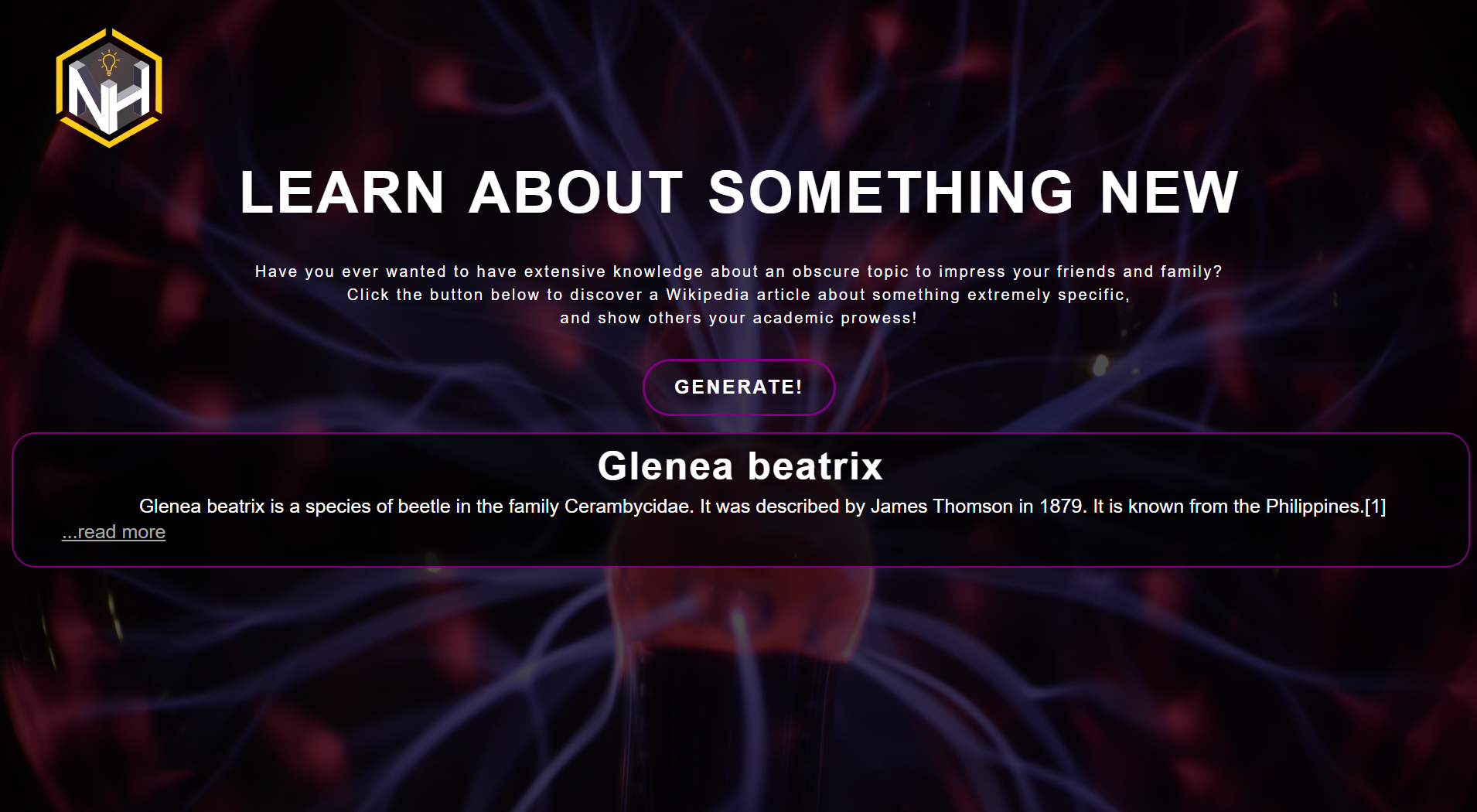
Glenea beatrix
-
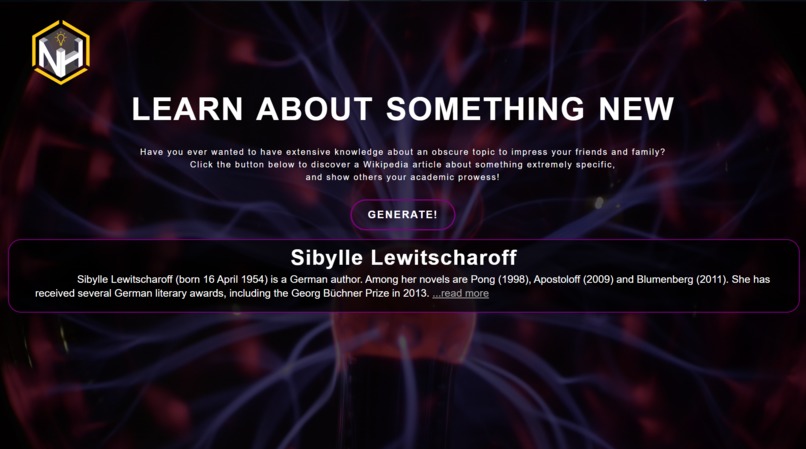
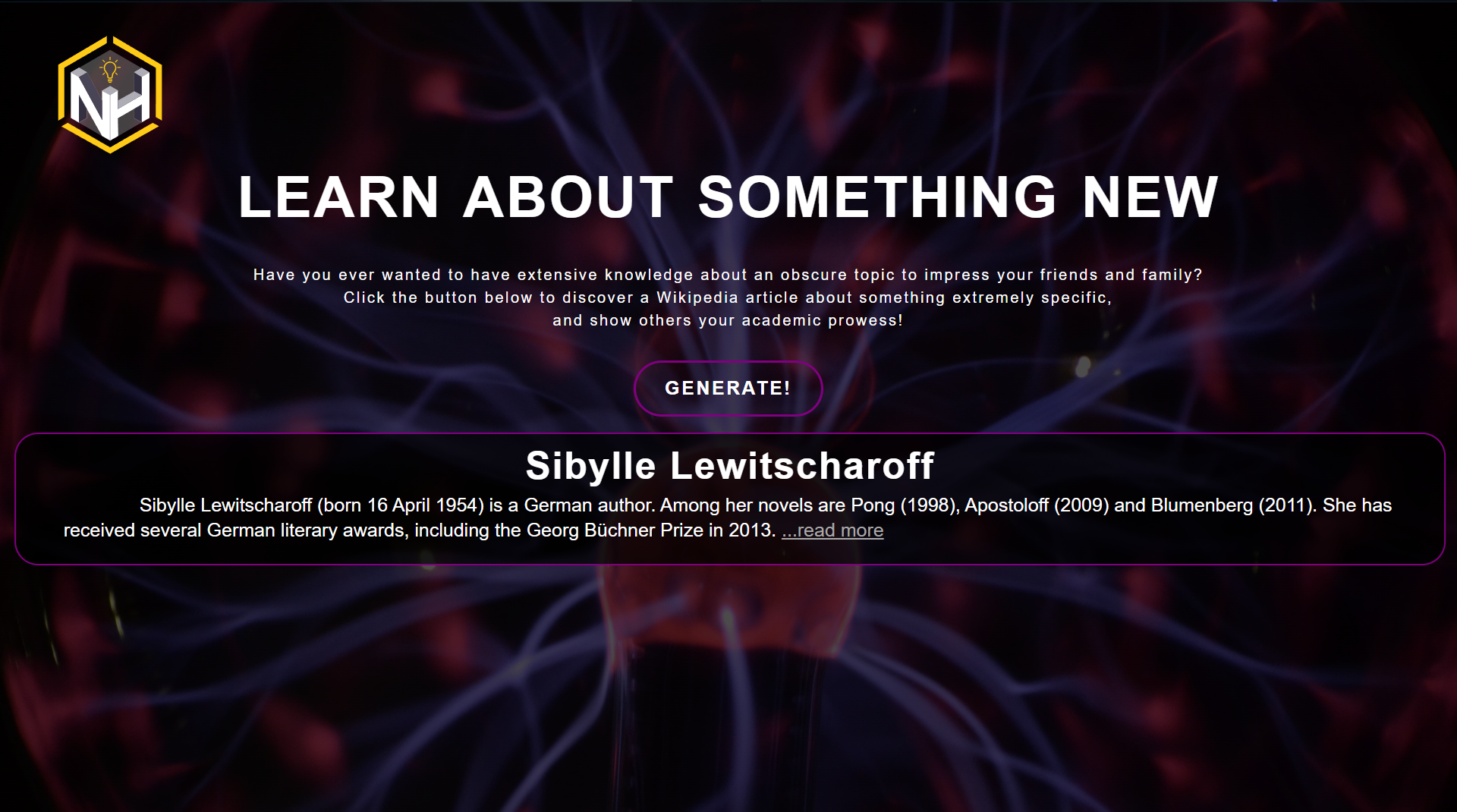
Sibylle Lewitscharoff
-
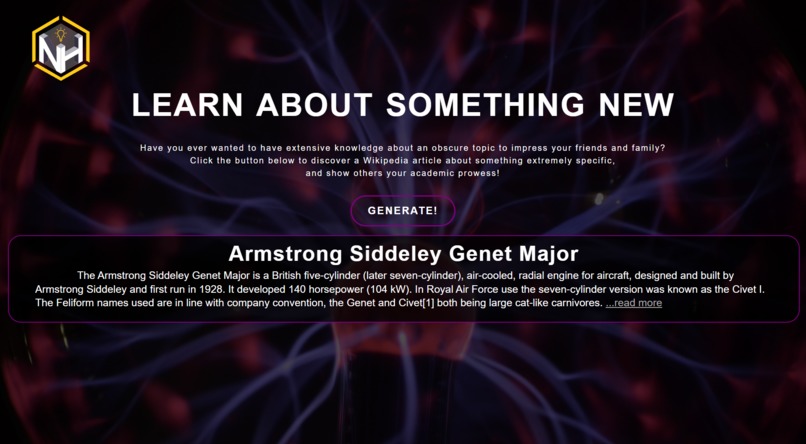
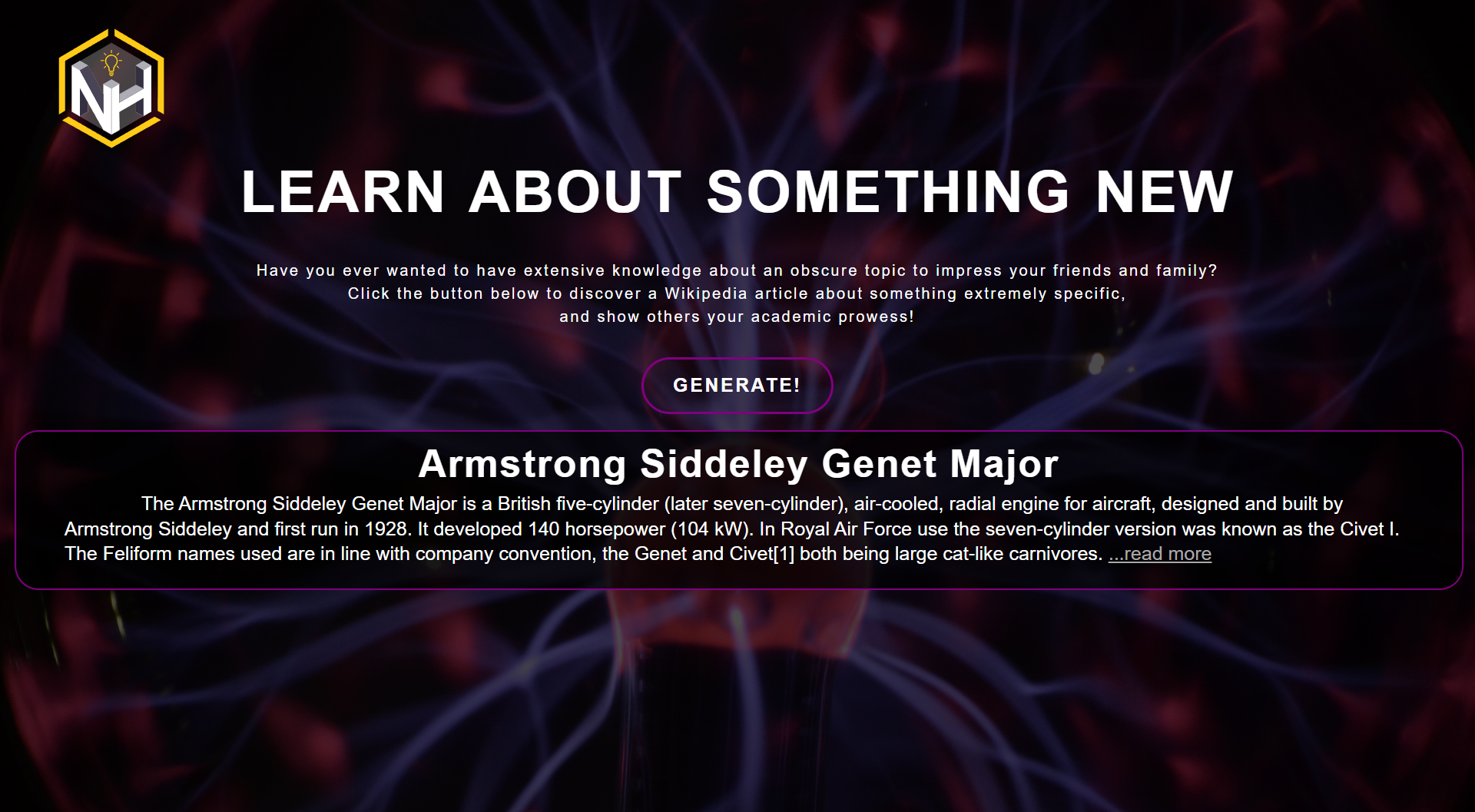
Armstrong Siddeley Genet Major
-
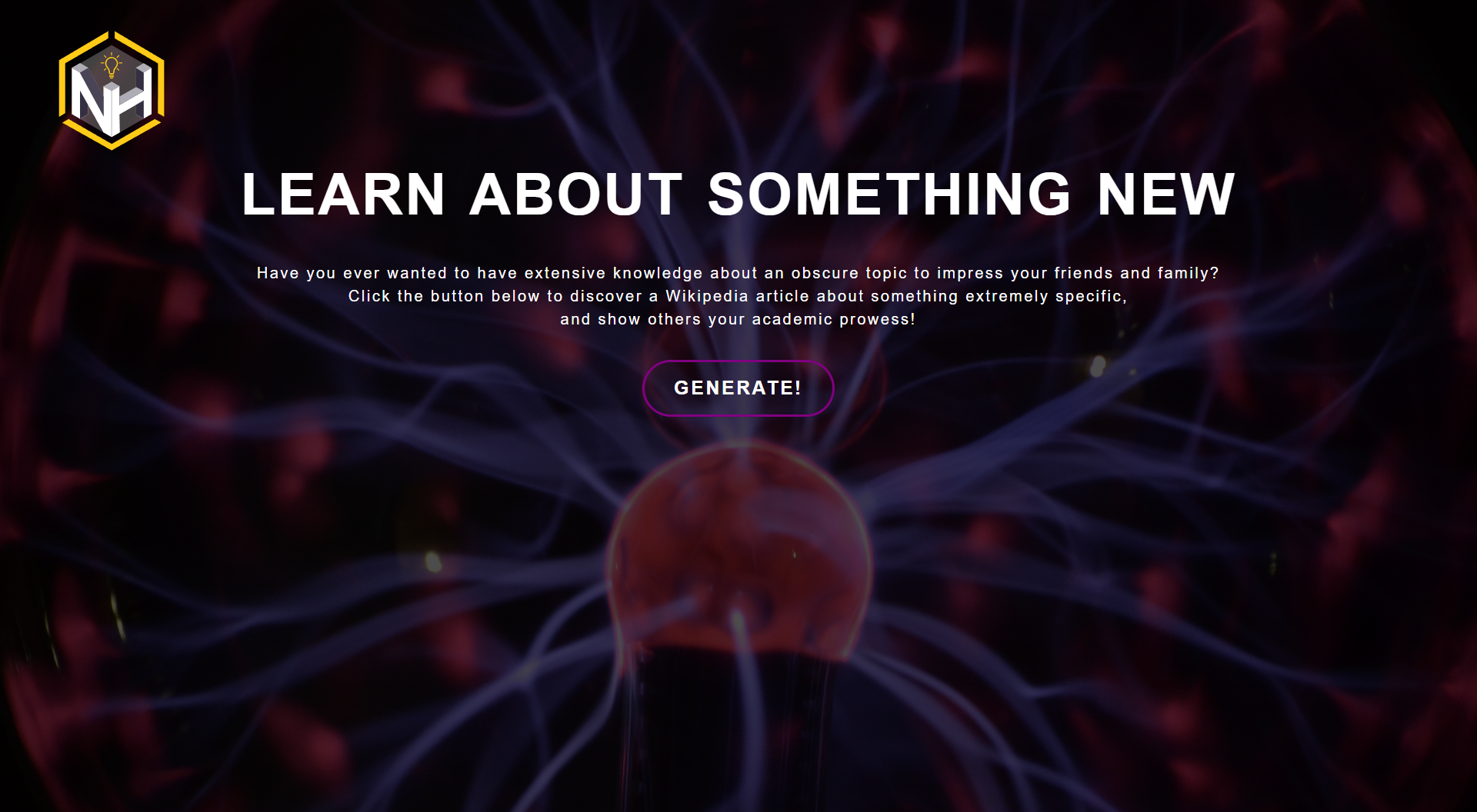
GENERATE!
Inspiration
We were inspired by an event organizer, who challenged hackers during the opening ceremony to present them with an interesting fact in exchange for an MLH t-shirt. We later decided to make an app that would provide the user with new, obscure trivia, allowing individuals to broaden their horizons, and discover topics that were previously foreign to them.
What it does
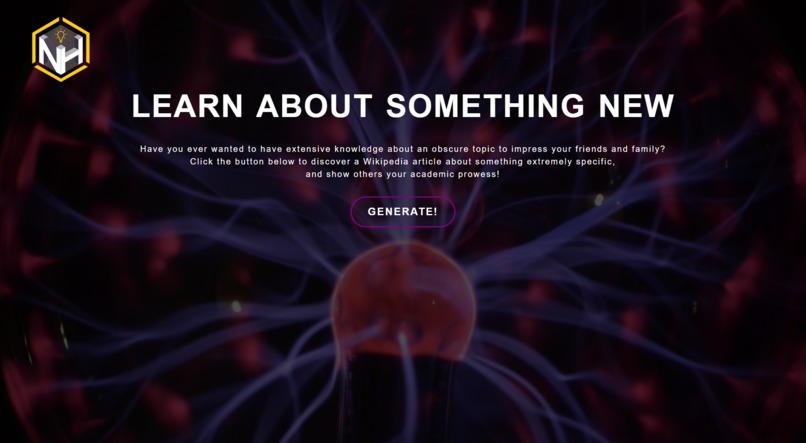
Our app finds Wikipedia pages with low user traffic in order to present the user with information that will almost certainly be new to them. Each time a user requests a new fact, our app will randomly provide them with a snippet of a Wikipedia article with under 20 daily visits on average. By exposing people to more varied content, we hope to promote education, and expand their perspective and awareness of the world around them with new experiences and knowledge.
How we built it
We used the Wikipedia API to obtain article analytics for user traffic for random pages, which we would then store inside a Firestore database if they had a low amount of views. React was used to build a web page to create an interface for users to call for new facts. We created an article preview on our page by using an xmldom webscraper to parse the html source code of the Wikipedia article.
Challenges we ran into
The first major challenge that our group ran into was figuring out how to interact with Firebase and store data correctly. While this problem took a significant amount of time to resolve, afterwards any other setbacks seemed smaller in comparison. We also had some difficulty successfully pulling data from the APIs associated with Wikipedia. Finally, a large setback was found close to the deadline, not allowing us to connect our frontend and backend development.
Accomplishments that we're proud of
From frontend to backend development, every step of our process had accomplishments along the way. As relatively inexperienced hackers, it was very fulfilling to see the fruits of our labour develop into a complete final project that we were all extremely proud of. Most notably, several group members had their first encounter with the Firestore database, while it was another's first experience with web development using React and JavaScript. Within the time restriction of 24 hours, we were able to grow from being beginners in these forms of software to being able to effectively use them to create a substantial final project.
What we learned
By the end of the hackathon, every group member walked away with skills that they previously did not have. Through our participation at NewHacks, we gained new knowledge of React, Firebase, JS, CSS, HTML, and many more forms of software. NewHacks also allowed us to practice and improve our communication and collaboration skills, making us more prepared for a future career in the industry. Overall, this hackathon was an extremely valuable experience for each group member.
What's next for Wackipedia
Wackipedia as of now lacks a lot of functionality, with it only being able to output random articles with low view count. We plan on changing this by adding user controlled filters, in order to create a more user-friendly experience. If a user wants to focus in on articles about biology, they should be able to do so, customizing their experience using Wackipedia. Additionally, we hope to add more functionality by connecting our webpage to more databases and encyclopedias, allowing for access to an even wider scope of knowledge.
Built With
- css
- firebase
- html
- javascript
- pageviewsapi
- react
- wikimediaapi
- xmldom

Log in or sign up for Devpost to join the conversation.