-
-

Logo
-
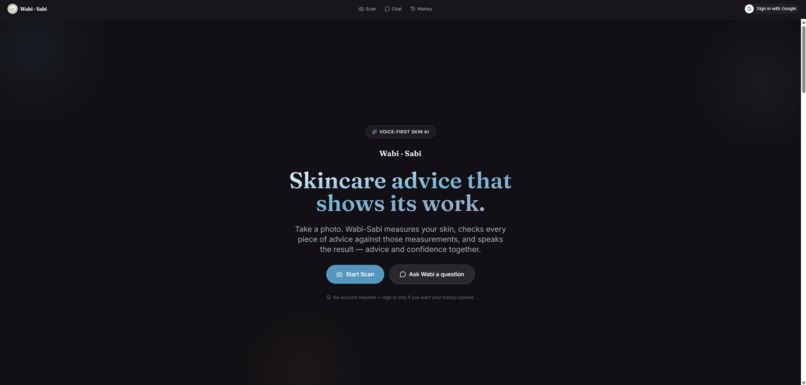
Homepage
-
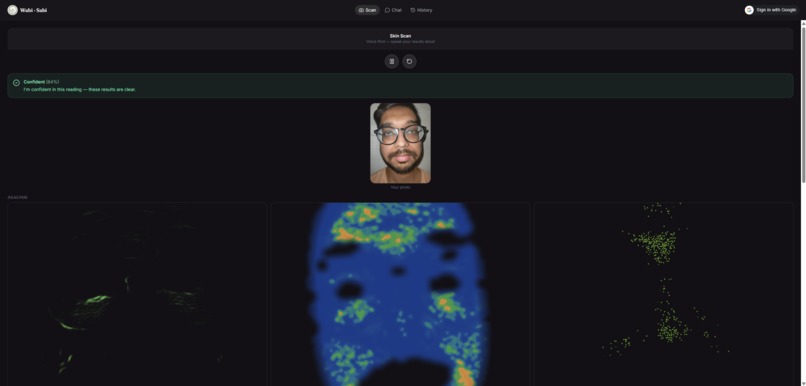
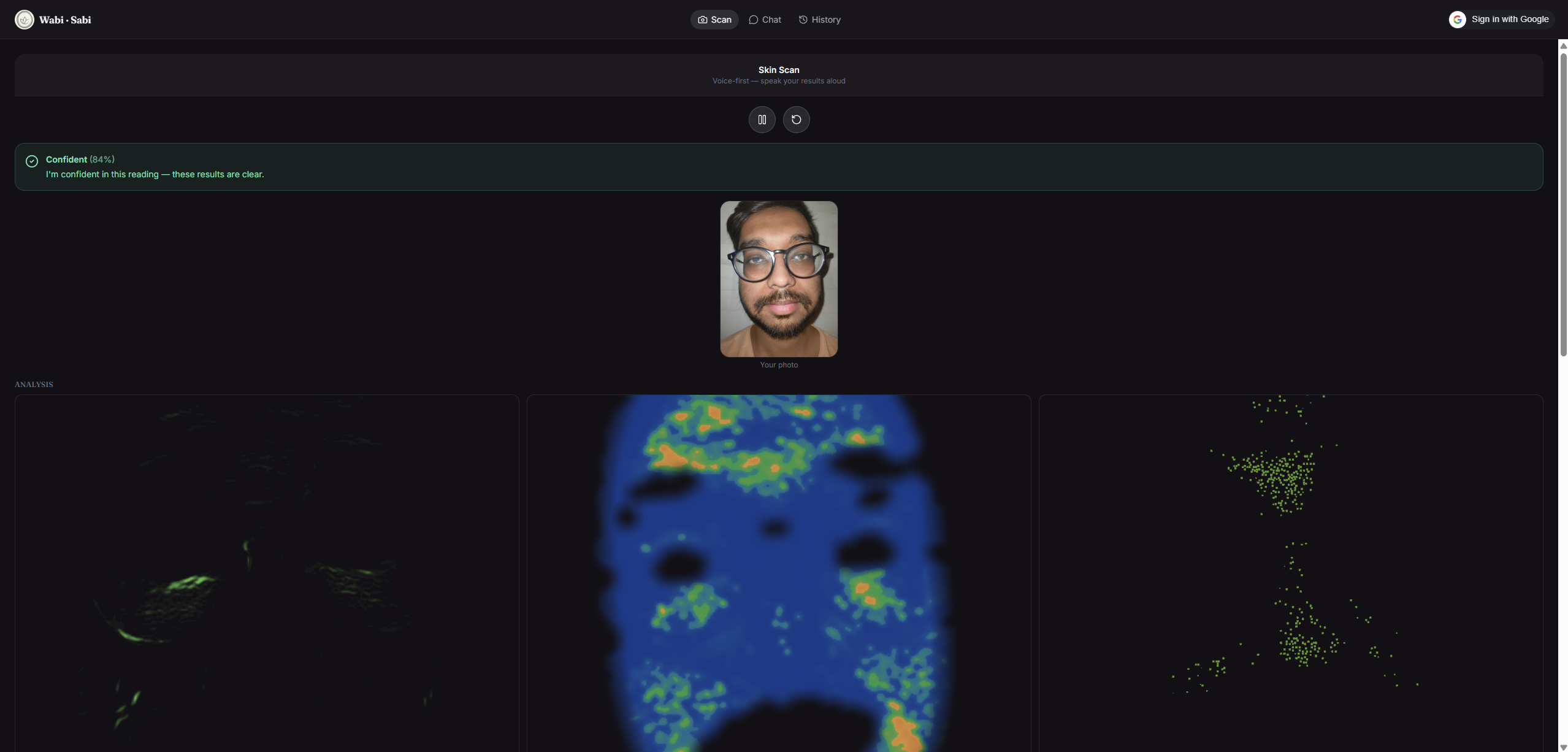
Scan Result
-

Scan Result
-

Ai assistant button
-

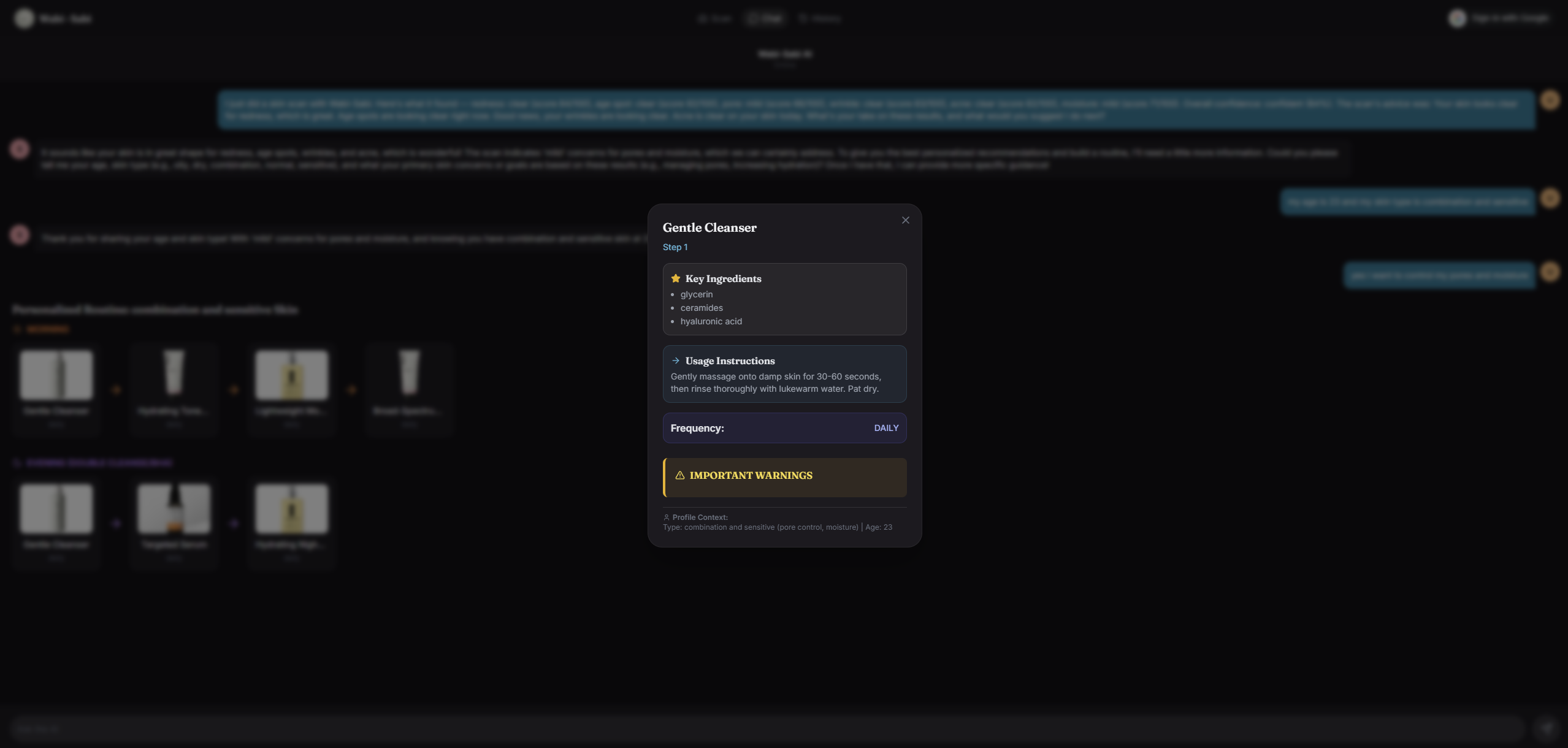
Assistant routine
-
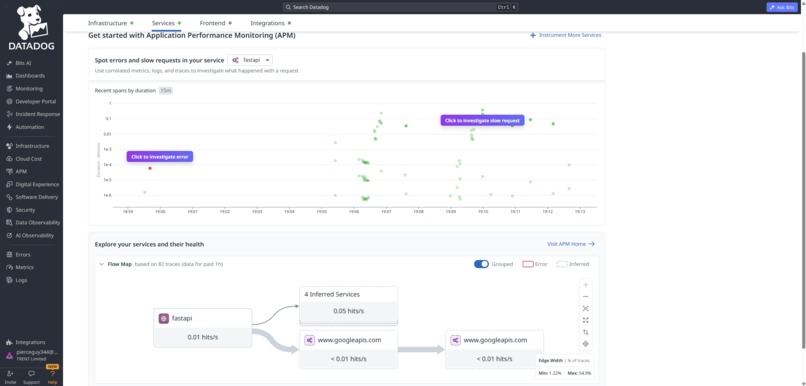
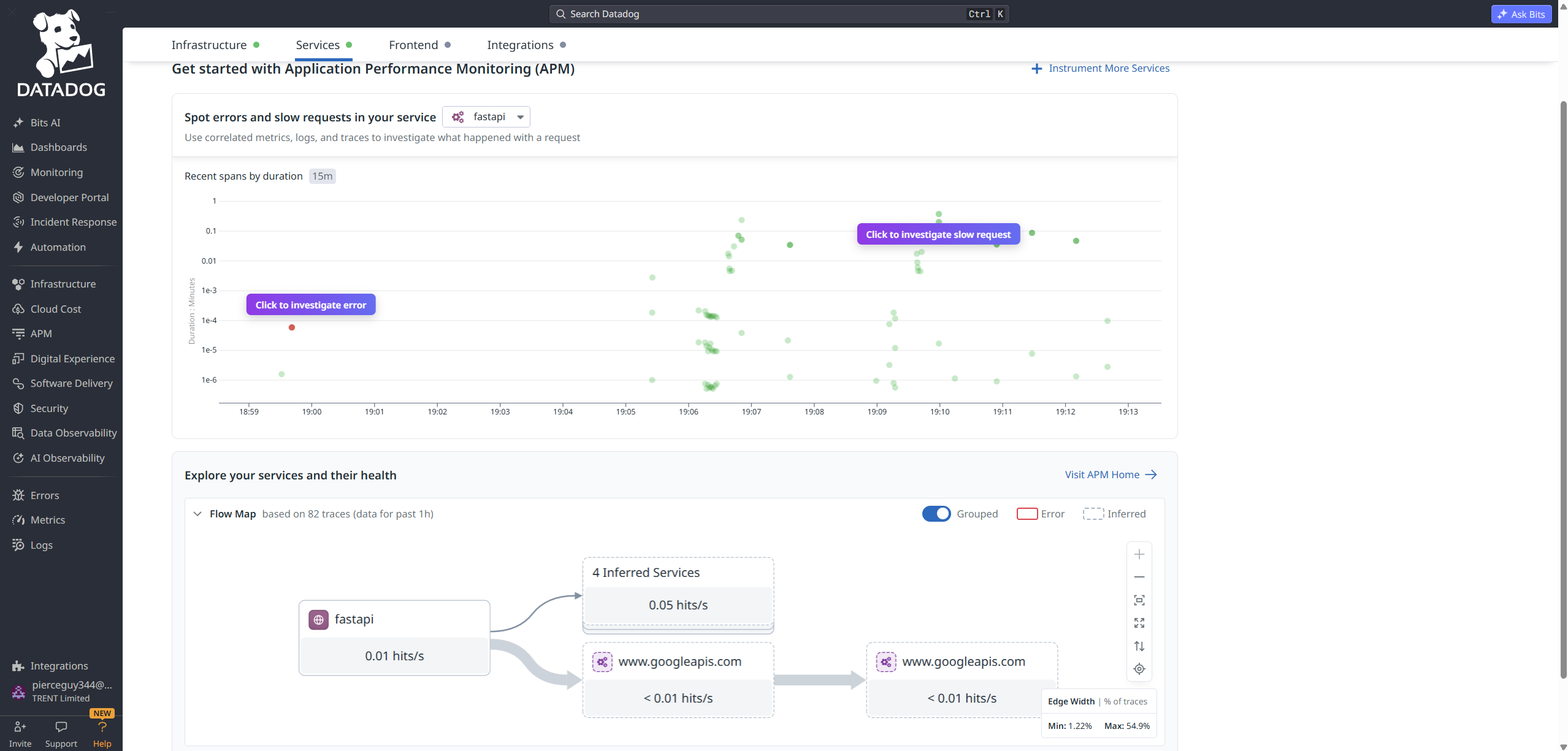
Datadog visibility



Wabi-Sabi
Your Skin's Answer, Right When You Need It
Inspiration
wabi-sabi the idea that there's beauty and honesty in what's imperfect, impermanent, and incomplete. We kept coming back to one thought: skin is the most literal version of that idea most people carry around every day. It's never "done." It has good weeks and bad weeks, texture, redness, a history. And yet almost every skincare app on the market is selling the opposite promise a flawless, fixed, filtered "after" photo.
We wanted to build the wabi-sabi version of a skincare app: one that tells you the truth about your skin as it actually is right now, admits when it isn't fully sure, and tracks slow, real progress over time instead of chasing a fictional perfect score.
Underneath that, we noticed two very specific, very real gaps. People only ever wonder about their skin at one of three moments right before buying something, right after a breakout, or weeks into a routine wondering if it's working and right now they handle all three by guessing or drowning in conflicting reviews. And sitting right on top of that: roughly 15% of the world lives with some form of disability, yet almost no skincare or beauty product experience is usable without sight. Skin advice today assumes you can read a chart. If you can't, you're simply left out.
Wabi-Sabi closes both gaps at once a real, personal answer, delivered in a way anyone can use.
What It Does
You take a photo of your face before you buy something, right after a breakout, or just checking in. YouCam's Skin AI reads that photo and measures what's actually there: redness, dryness, spots, wrinkles, pores real numbers, not a guess.
Wabi-Sabi then takes over the conversation. It doesn't hand you a spreadsheet of scores it talks to you:
"Hey — your skin's looking a bit dry around the cheeks today, nothing to worry about. Next time you're shopping, look for something fragrance-free and skip anything with alcohol high on the list."
Scan again in a few weeks, and it remembers your last visit and tells you honestly whether things have actually improved:
"Good news — redness is down since last time. Whatever you're doing, it's working."
And with every answer, it's upfront about how confident it is — because a friend who's guessing should say so:
"I'm fairly confident about this one. If it doesn't clear up in a week or two though, it's worth getting a dermatologist to take a look."
All of this is spoken aloud, not just displayed on screen — so it works exactly the same whether you're reading it or listening to it.
How We Built It
Wabi-Sabi is one product built around three ideas, each doing a specific job:
the voice. This is how Wabi-Sabi talks, and it's where the actual consumer problem gets solved: product match at the moment of buying, an instant read right after a breakout, and progress tracking to answer "is this working." Every answer is written and spoken like a friend giving a straight opinion, not a lab report reading out numbers.
The depth. YouCam Skin AI provides real, measured skin data instead of open-ended guesswork. On top of that sits our own reliability engine a hallucination-risk and blast-radius scoring system, carried over from an earlier version of this project and rebuilt here to score advice that's now grounded in real YouCam data instead of free-text chat. What reaches the user is simple: a spoken trust score on every recommendation.
** Accessibility **i is built from the ground up for people with visual and other special needs — not as an accessibility checkbox, but as a stated design principle sitting right alongside YouCam Skin AI itself. Every scan result, every product match, every trust score is heard first, seen second.
Under the hood: a FastAPI backend and a React/Vite frontend form the existing foundation, extended with persona attributes (age, skin type, skin concern) so advice is contextual to the person, not just the photo. On top of that foundation, we added:
- YouCam Skin AI integration, replacing free-text advice with real, measured skin data
- A product-match layer that turns those measurements into specific buy/avoid guidance
- The reliability engine rewired to score YouCam-grounded advice, surfaced as a spoken trust line
- A voice-first, screen-reader-friendly layer that delivers results by narration first, visuals second
- A lightweight scan-history store, so the app can tell you honestly whether things are improving
Challenges We Ran Into
Balancing "impressive engineering" against "coherent product" was the whole game. It would have been easy to let the reliability engine the dashboards, the SLOs, the alerting become the star of the show, because it's genuinely the most technically involved piece of the codebase. But a judge watching a three-minute demo doesn't want a backend tour. We had to make a deliberate call: show the bestie, not the backend. The trust engine stays real and thorough in the code and this write-up; on screen, it's one calm, spoken sentence.
Rewiring the reliability engine to score YouCam-grounded advice instead of open-ended chat output was also harder than it sounds grounded advice needed a sharper, more specific scoring approach than free-text ever did, since there was now real measured data to check the advice against.
Accomplishments We're Proud Of
- A working, live YouCam Skin AI integration that drives every downstream piece of the product not a mocked demo.
- A spoken trust score on every single recommendation a genuinely non-obvious idea we haven't seen anywhere else in this space.
- A voice-first experience that isn't a bolted-on accessibility mode, but the actual default way the product communicates narration first, visuals second, for everyone, not just for screen-reader users.
- Keeping three very different ideas a warm consumer voice, a serious reliability engine, and an accessibility-first design principle coherent as one single product instead of three features stapled together.
What We Learned
That the most wabi-sabi thing an AI product can do is admit what it doesn't know. Every skin app we looked at during research projects total confidence. Building a system that scores its own uncertainty and says so, out loud, in plain language turned out to be both a technical challenge and, we think, the most honest thing we could put in front of a user.
We also learned that accessibility works best as a starting constraint, not a feature added at the end. Designing the narration-first flow from the beginning shaped the whole product for the better, not just for the audience it was aimed at.
What's Next for Wabi-Sabi
- QR-tagging and in-store navigation concepts with real retail partnerships, so the "right before buying something" moment can happen inside a physical store, not just online
- Expanding the persona model (age, skin type, skin concern) with longer-term skin history to make trust scoring even sharper over time
- Surfacing the reliability engine's dashboards as an optional "show your work" view for users who do want the numbers, without changing the default spoken-first experience
- Multi-language voice support, so the same honest, out-loud experience reaches beyond English

Log in or sign up for Devpost to join the conversation.