-
-
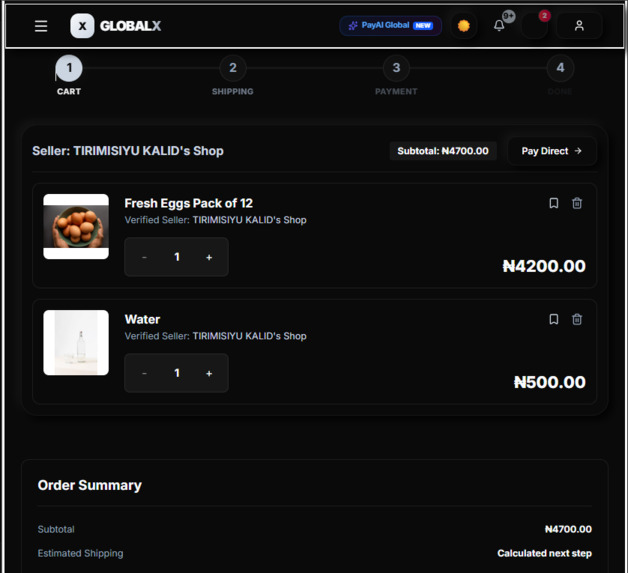
-
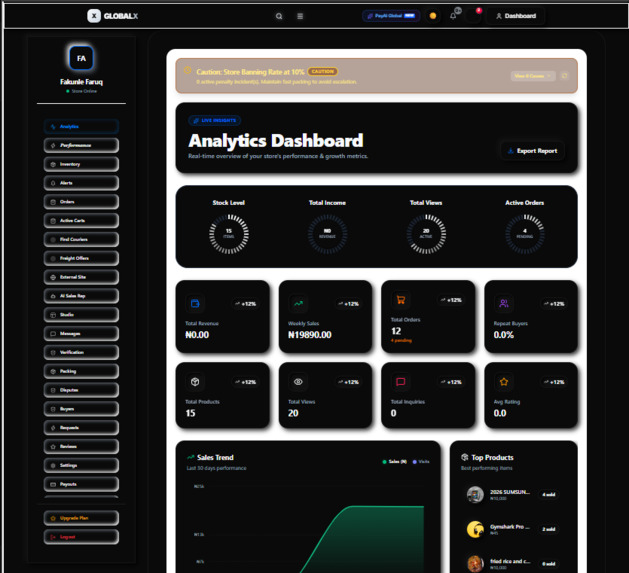
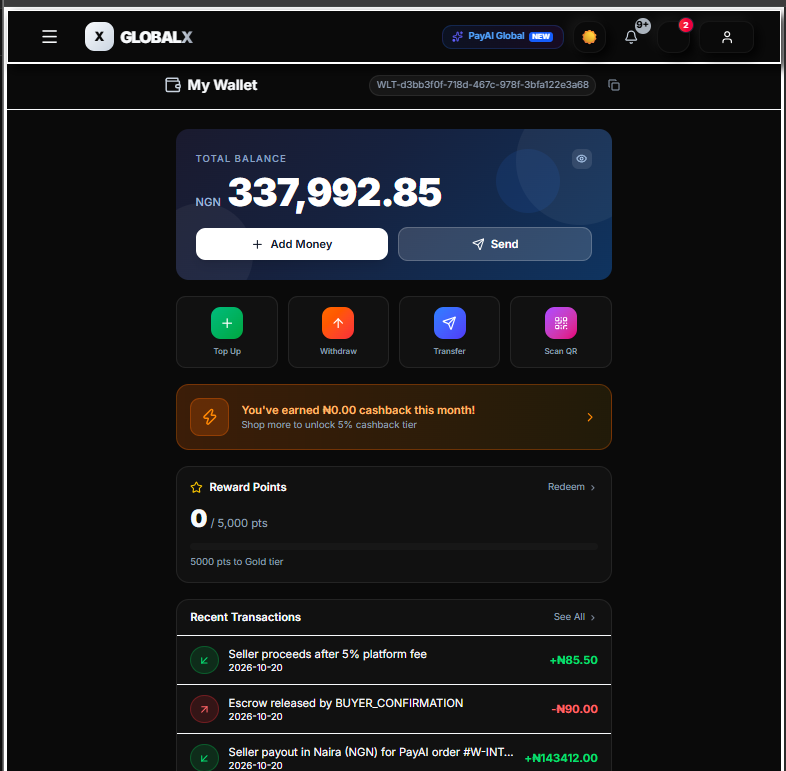
SELLER DASHBOARD MAITAIN YOUR SALE AND PROFIT
-
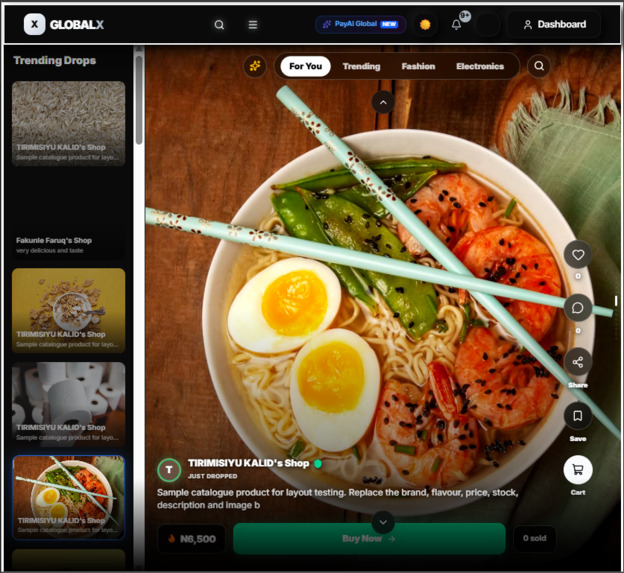
-
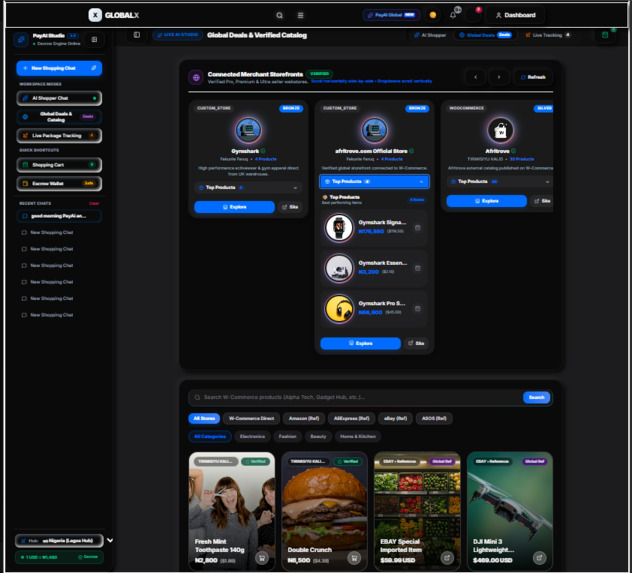
connect to million of stores
-
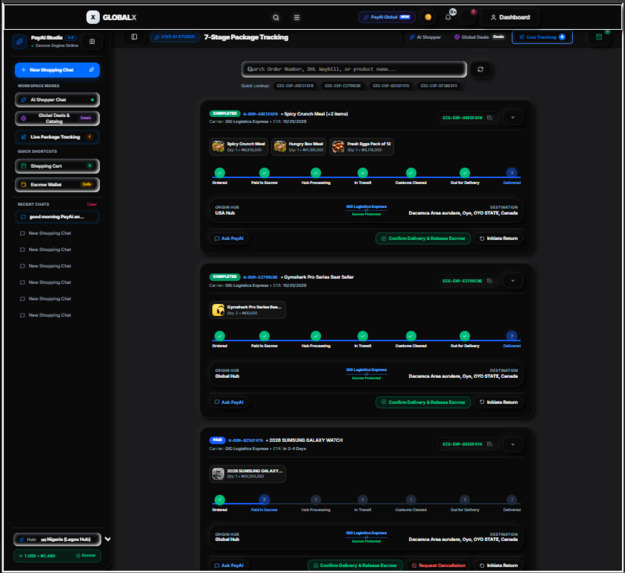
TRACK YOUR ORDER
-
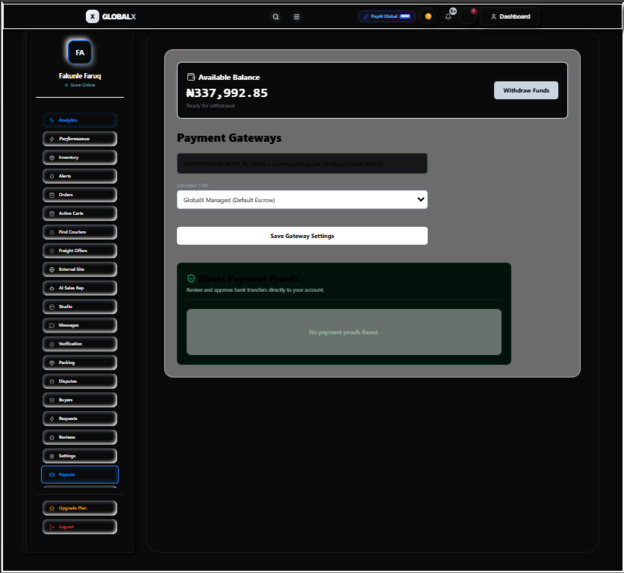
KEEP SAVING
-
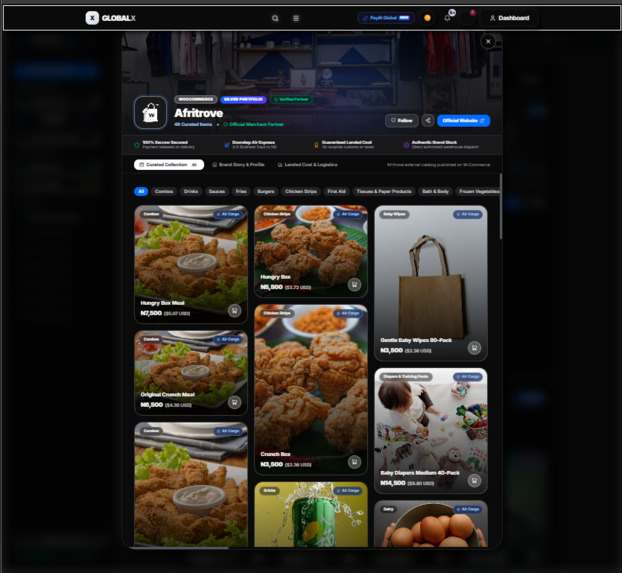
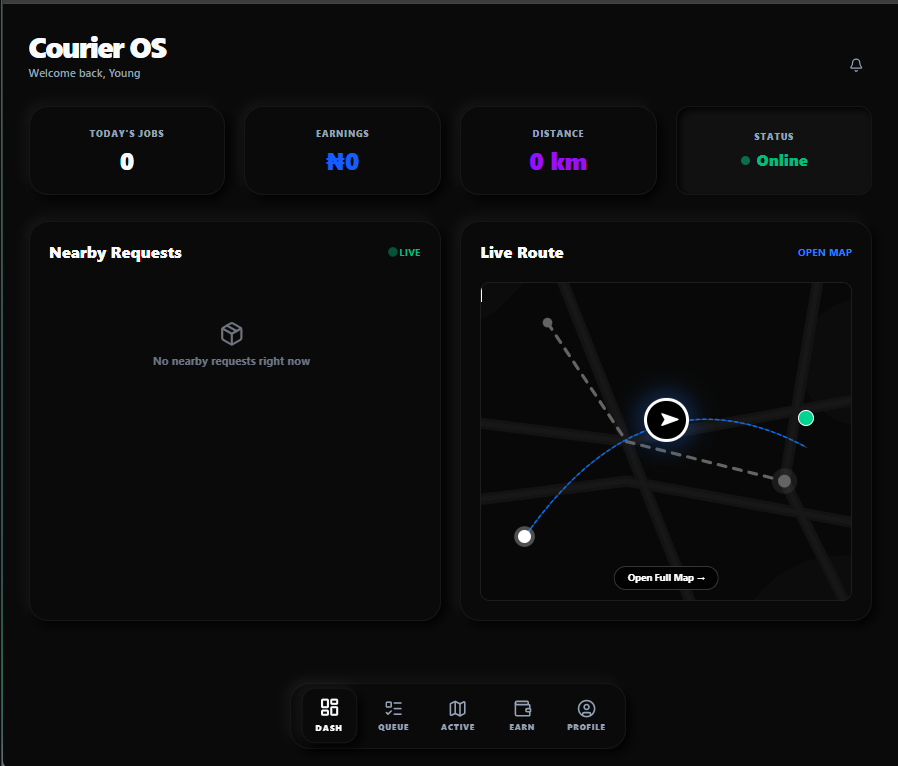
GET READY TO PICK
-
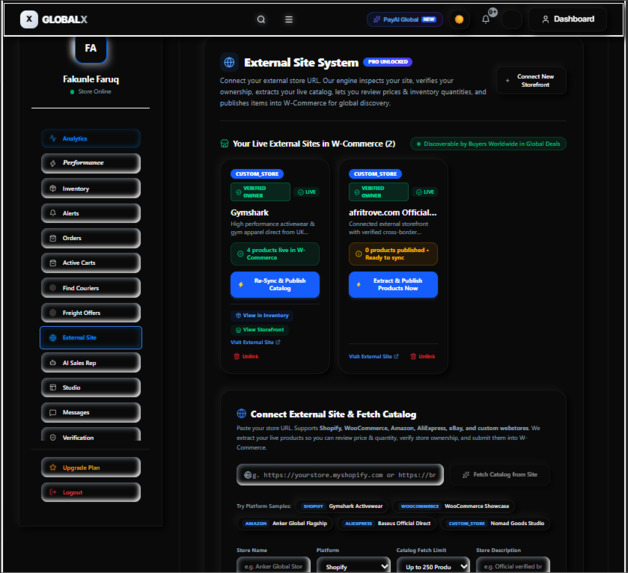
CREATE YOUR OWN WEBSITE /BRING YOUR DEAD LOW TRAFIC WEBSITE LET GET DISCOVER ACROSS MILLION OF BUYER
-
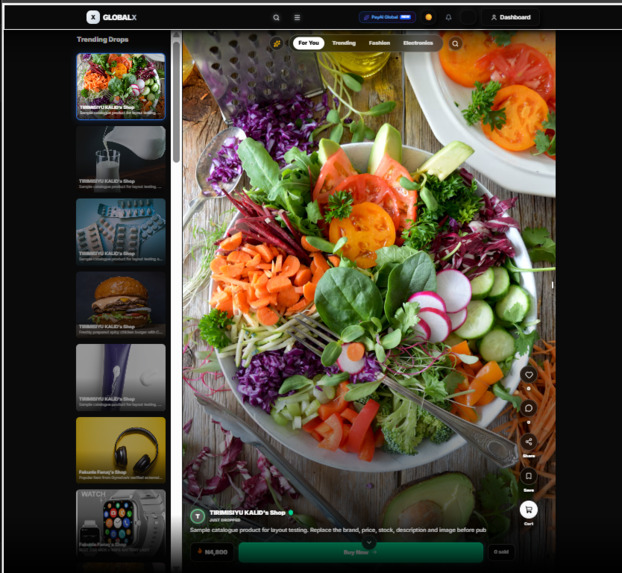
FIND YOUR DAILY NEED
-
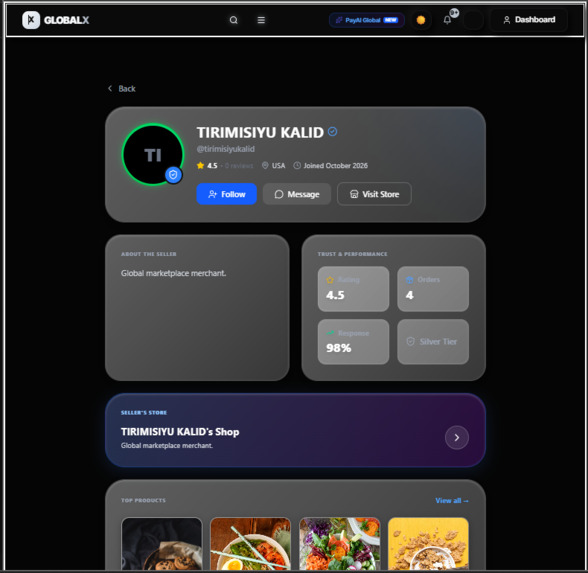
USER PROFILE
-
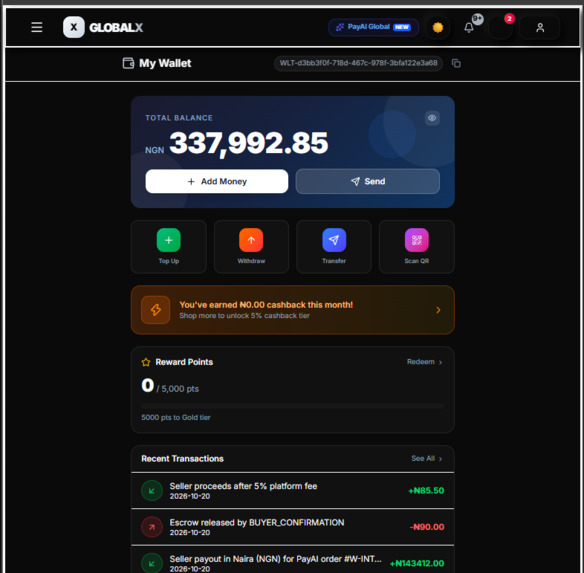
YOUR MONEY YOUR MEAL
-

SHOP ACROSS THOUSAND OF WEBSITE
-
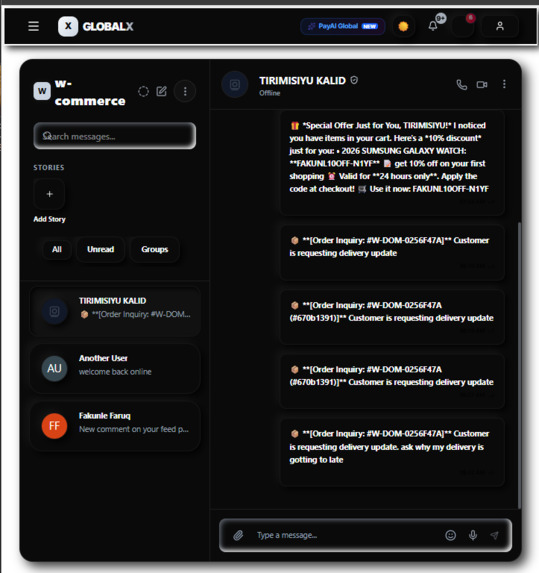
-
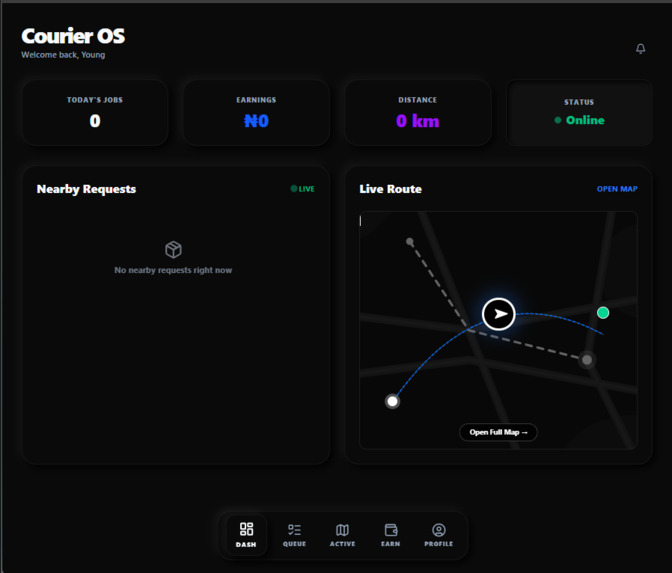
-
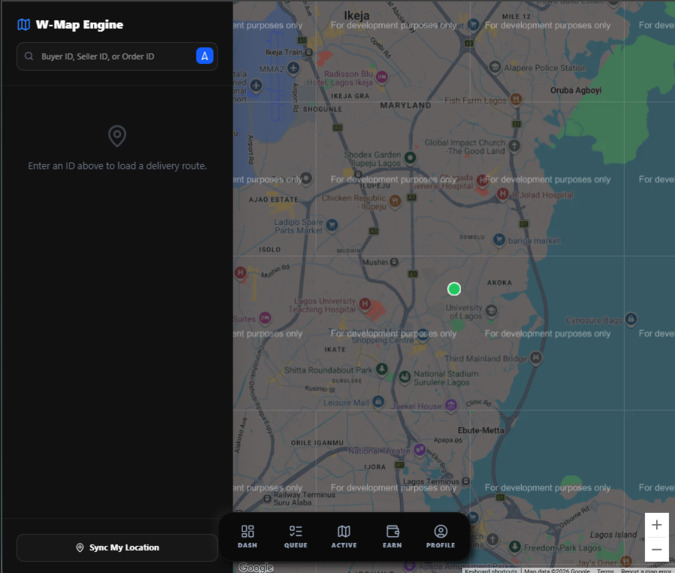
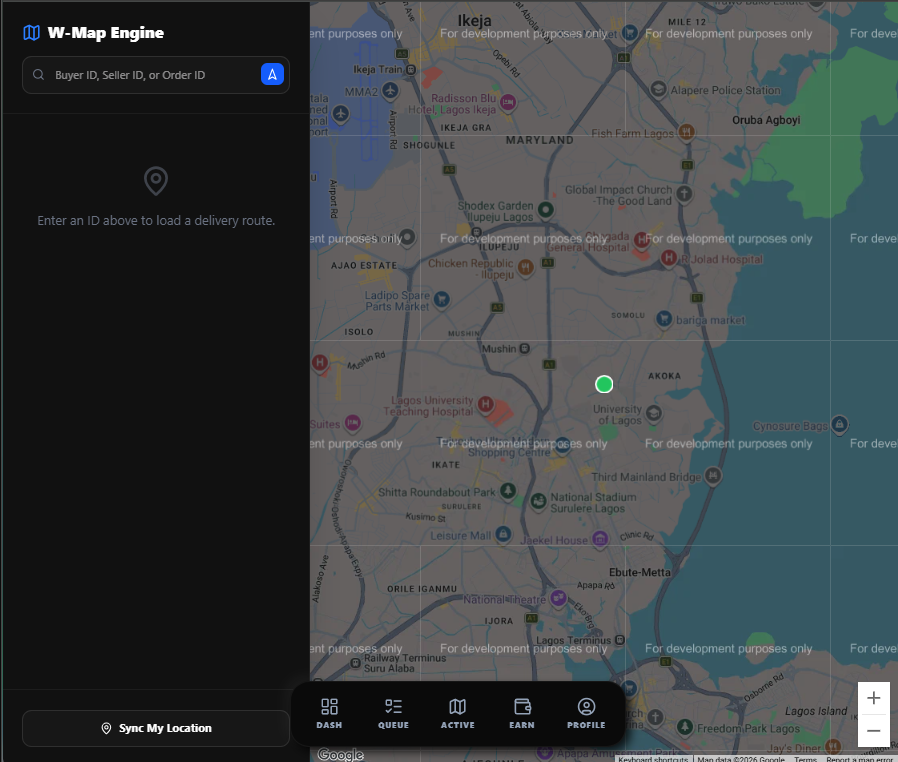
real life google map tracking
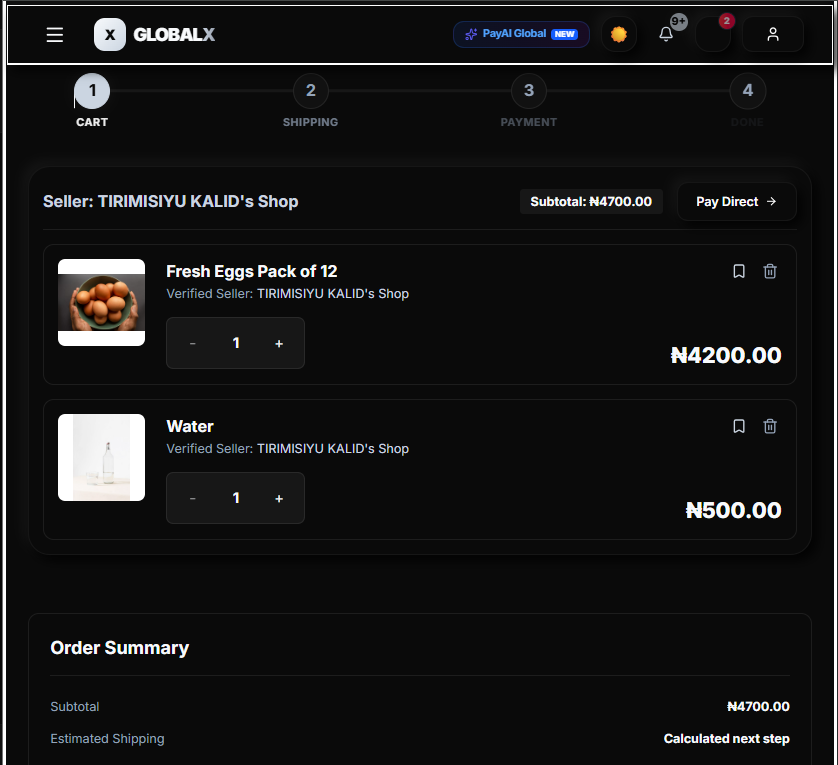
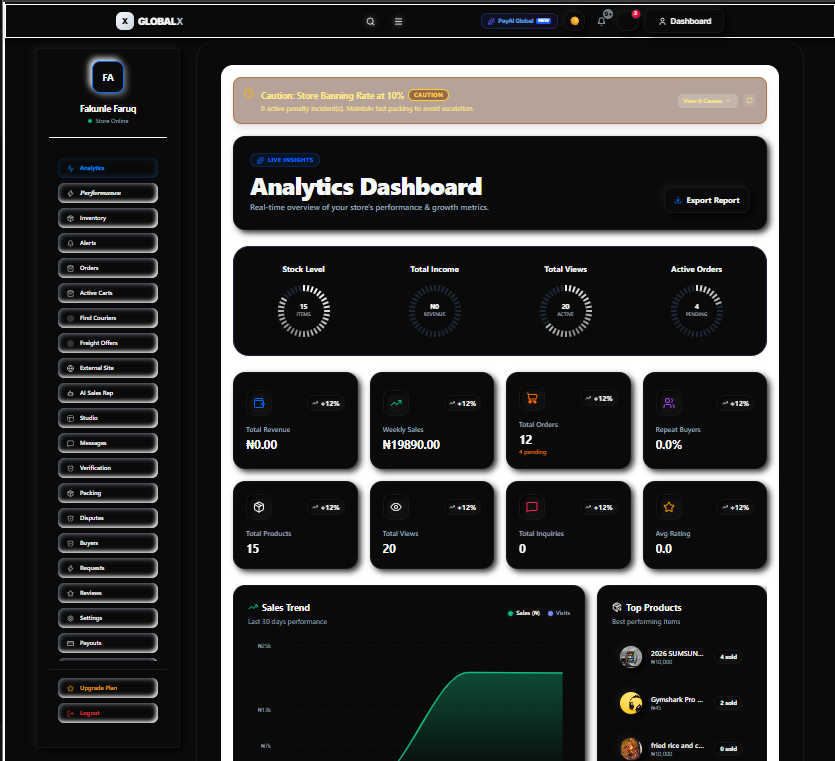
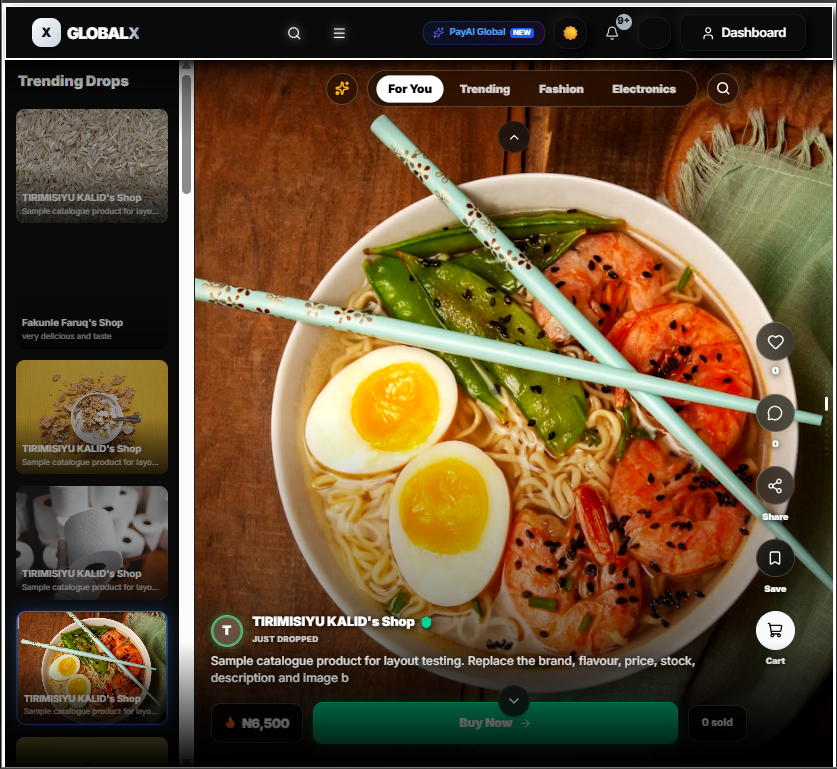
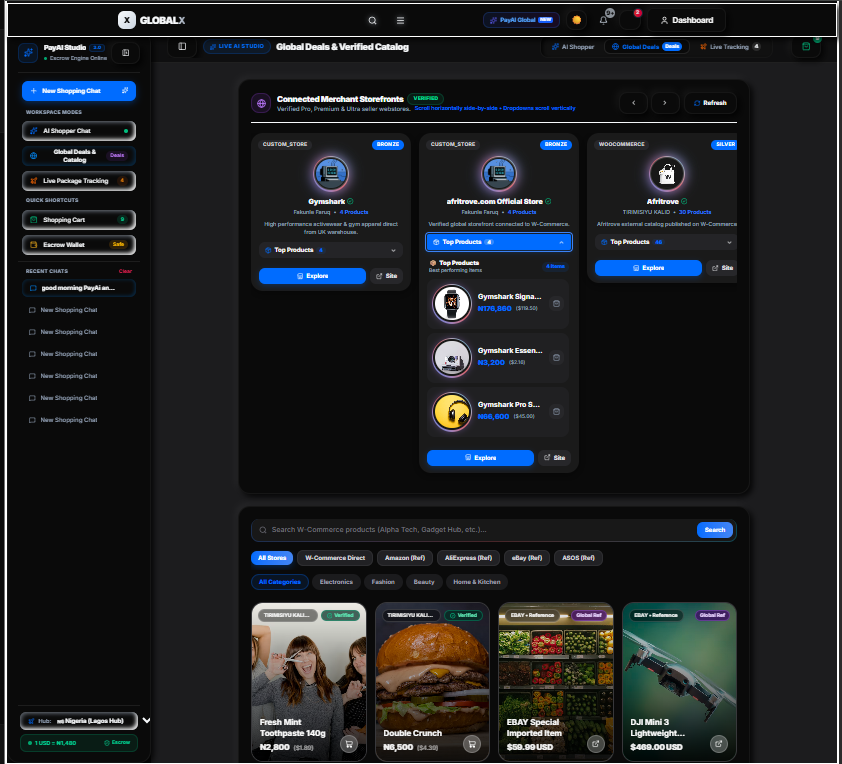
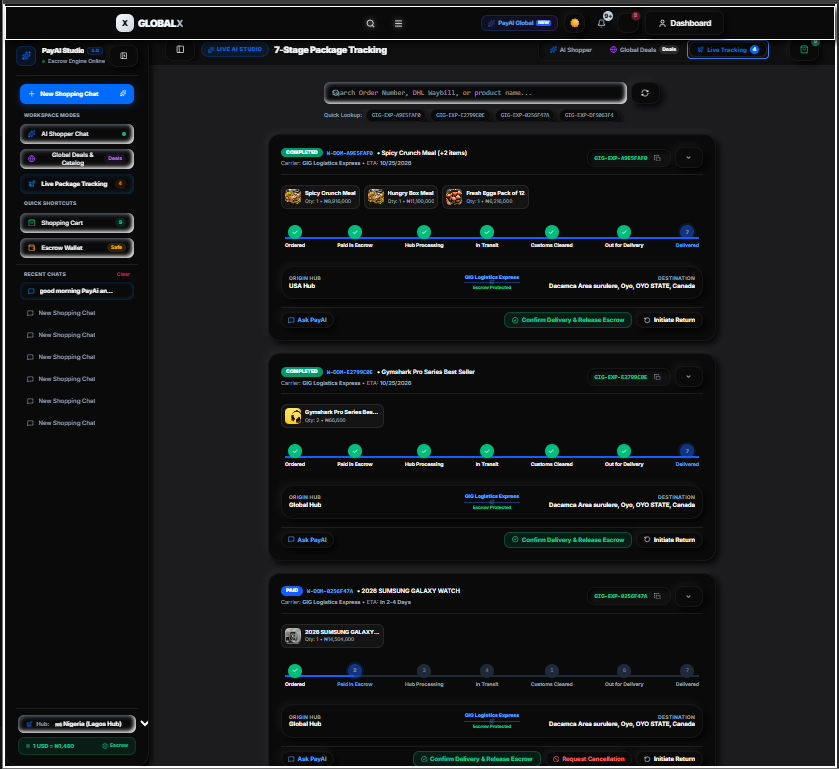
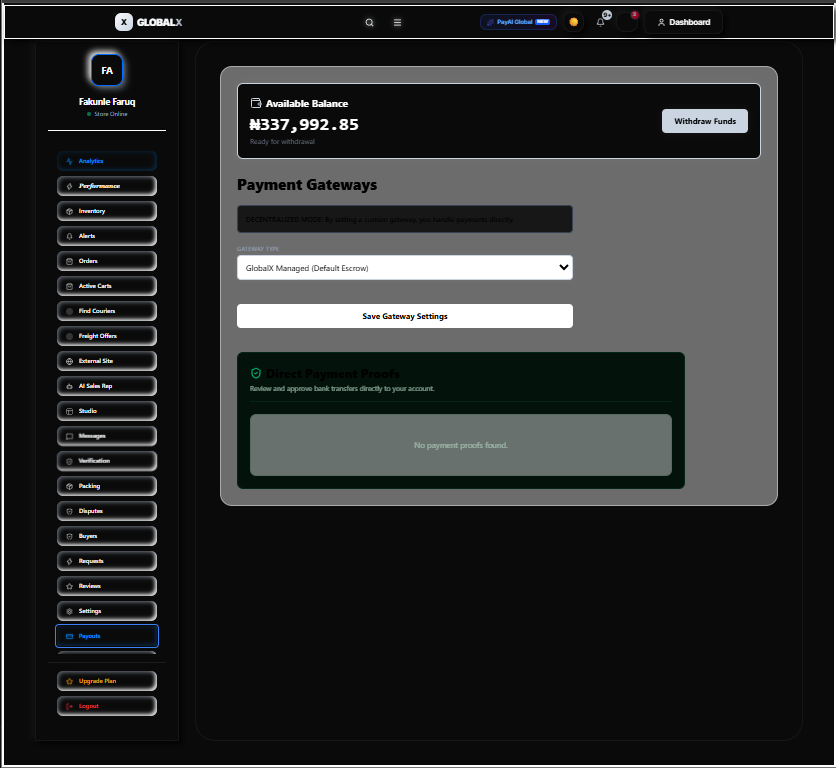
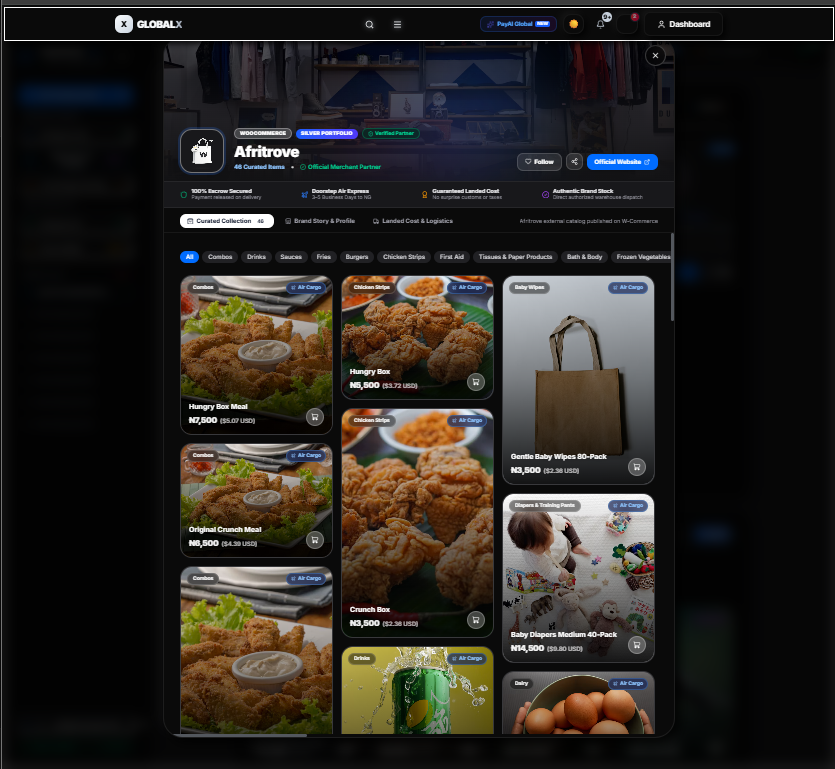
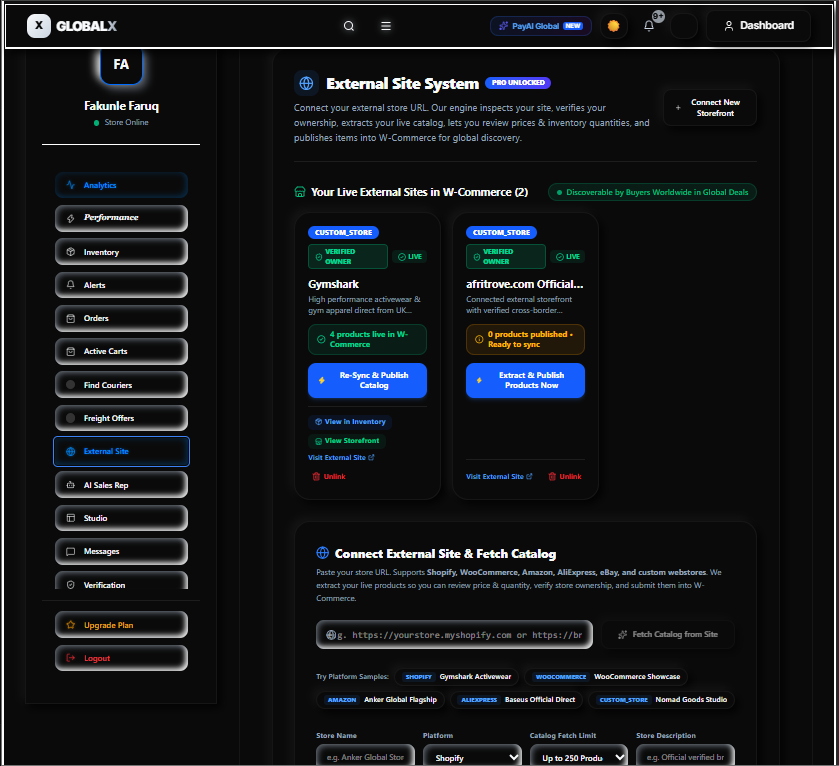
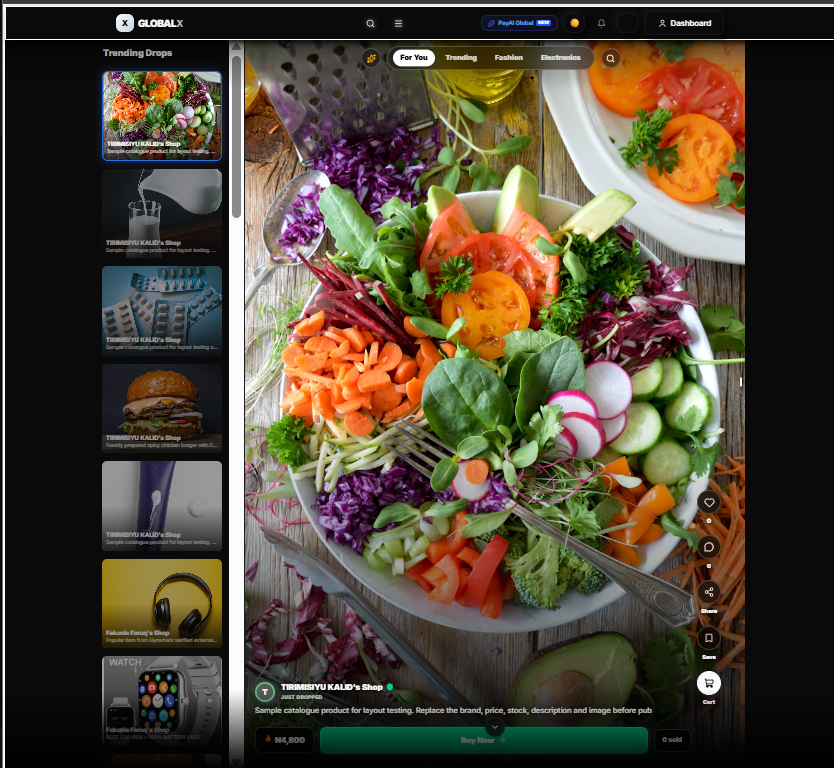
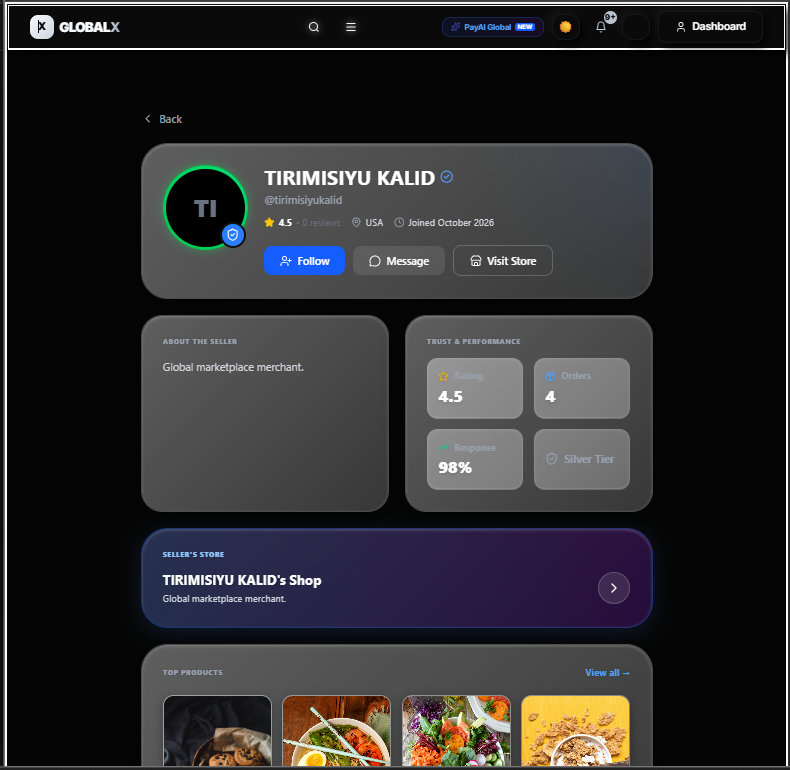

W-Commerce + PayAI: Reimagining Global Commerce Through Intelligent AI
- Project Overview
W-Commerce is an AI-powered, escrow-backed commerce platform designed to make online buying and selling more intelligent, conversational, transparent, and accessible.
At its core is PayAI, an intelligent shopping and purchasing assistant that helps buyers discover products, compare offers, negotiate prices within seller-defined limits, plan purchases around their budgets, and navigate secure purchasing workflows.
W-Commerce addresses challenges faced by both buyers and sellers, particularly in African and emerging digital markets. Buyers often struggle with unreliable sellers, rigid pricing, fragmented shopping experiences, and cross-border payment barriers. Meanwhile, sellers face expensive website development, limited customer traffic, high marketing costs, low conversion rates, and difficulty reaching international customers.
Our vision is to bring the flexibility and human interaction of traditional markets into digital commerce while combining AI assistance, verifiable trust signals, secure payment workflows, and intelligent seller tools.
Rather than treating online shopping as a simple search-and-checkout process, W-Commerce aims to make commerce a coordinated experience from product discovery and negotiation to payment, fulfillment, delivery, and dispute resolution.
- Inspiration
Across Africa and emerging digital markets, commerce is deeply rooted in personal relationships, trust, conversation, and negotiation.
In physical markets, buyers can inspect goods, ask questions, listen to sellers explain their products, negotiate prices, and make purchasing decisions based on direct interaction. Online shopping often removes these familiar experiences, leaving buyers with static price tags, product images, checkout forms, and uncertainty about the quality or authenticity of what they are purchasing.
International commerce introduces additional challenges. Buyers interested in purchasing from African merchants may encounter currency conversion difficulties, expensive international shipping, unfamiliar sellers, and uncertainty about how disputes will be resolved.
Small businesses face a different but equally important challenge. Building a professional online store can require significant upfront investment. Even after launching a website, merchants must attract visitors, build trust, advertise their products, manage enquiries, and convert traffic into actual sales.
A website can be online without receiving meaningful customer traffic.
We asked ourselves:
What if AI could recreate the flexibility of traditional markets while helping sellers become more accessible to customers around the world?
What if a buyer could simply explain what they needed, state their budget, negotiate naturally, inspect available evidence about a product, and proceed through a secure purchasing workflow?
What if a small merchant could connect an existing store or create a simple storefront, then gain another channel through which relevant customers could discover their products?
These questions inspired W-Commerce and PayAI.
Our goal is to build a commerce ecosystem in which AI does more than recommend products. It helps coordinate the real-world processes involved in buying and selling.
- The Problems We Are Solving
Problem 1: Fragmented product discovery
Customers frequently move between different websites, marketplaces, and applications to find products, compare prices, and determine which seller offers the best value.
This process wastes time and makes it difficult to compare the complete cost and quality of competing offers.
Our approach: PayAI helps customers search connected product sources, understand their requirements, compare eligible offers, and identify products that fit their budgets and preferences.
Problem 2: Rigid online pricing
Traditional online stores frequently present fixed prices, even when a merchant may be willing to offer a discount, bundle, or alternative deal.
In many African markets, bargaining is a normal part of commerce. Static checkout systems often fail to accommodate this cultural expectation.
Our approach: PayAI supports conversational price negotiation within seller-authorized rules. It can evaluate eligible offers, respect minimum price limits, generate authorized promotional offers, and explain counteroffers to buyers.
Problem 3: Lack of trust in online transactions
Customers may worry that a product will differ from its advertised description, that a seller may be unreliable, or that a paid order may never arrive.
A product photograph and a seller's written promise may not provide enough confidence for an unfamiliar transaction.
Our approach: W-Commerce incorporates seller information, warehouse inspection evidence, product identifiers, merchant voice notes, fulfillment records, and shipment checkpoints where these are available and verified.
These features are intended to make the purchasing process more transparent. Inspection evidence must be authentic, traceable, and clearly associated with the relevant product or order.
Problem 4: Cross-border payment friction
International buyers interested in African products may encounter payment limitations, currency volatility, exchange-rate uncertainty, and difficulties understanding the final landed cost.
Merchants, meanwhile, may prefer receiving funds in their local currency rather than bearing unexpected foreign-exchange exposure.
Our approach: W-Commerce is designed to support eligible international purchases through PayPal USD checkout, transparent landed-cost calculations, and local-currency settlement workflows.
Actual exchange-rate guarantees, escrow protection, and NGN payouts depend on payment-provider capabilities, settlement arrangements, and the applicable financial and legal requirements.
Problem 5: Expensive online-store creation
Small businesses may lack the capital to hire developers, purchase hosting, configure payment systems, and maintain a professional website.
The technical requirements can prevent otherwise viable businesses from entering digital commerce.
Our approach: W-Commerce aims to simplify merchant onboarding through connected external stores, product catalog ingestion, and future low-cost storefront creation tools.
Problem 6: Low customer traffic and poor sales conversion
Launching a website does not guarantee customers. Merchants must compete for attention, pay for advertising, build an audience, and convince visitors to purchase.
Even businesses with attractive products may struggle to generate consistent sales.
Our approach: W-Commerce aims to create an additional product discovery channel where PayAI can match buyer requests with relevant products from participating merchants. Negotiation, better product information, and transparent purchasing workflows can help merchants convert suitable enquiries into sales.
We do not assume that discovery automatically guarantees traffic or revenue. The platform must earn buyer adoption and demonstrate measurable results.
Problem 7: Limited business automation
Small merchants often answer repetitive questions about prices, product specifications, availability, delivery, and discounts manually.
This limits the number of customers they can serve and makes round-the-clock support difficult.
Our approach: PayAI and future seller AI agents aim to automate routine product enquiries, authorized negotiations, and order communication while preserving seller control over important business decisions.
Problem 8: Poor visibility into business performance
Independent sellers may struggle to identify why their products are not selling. They may not know whether the problem is insufficient visibility, uncompetitive pricing, weak product descriptions, low buyer confidence, or checkout friction.
Our approach: Future seller analytics will help merchants understand product impressions, enquiries, negotiated offers, conversions, and completed sales, subject to available data and appropriate consent.
- What W-Commerce Does
W-Commerce combines intelligent shopping assistance, conversational negotiation, seller tools, trust evidence, and payment and fulfillment workflows.
4.1 PayAI Shopping Assistant
PayAI understands natural-language shopping requests rather than requiring customers to construct complicated searches manually.
For example, a customer could say:
"Prepare breakfast and lunch for three days with a budget of ₦6,000."
PayAI should interpret the goal, determine the relevant quantities, search connected stores, compare suitable products, calculate the expected total cost, and propose a feasible shopping basket.
It should account for product availability, delivery costs, user preferences, and budget constraints. If the requested basket is unaffordable, it should explain the shortfall and suggest suitable alternatives instead of pretending the budget is sufficient.
The customer remains in control of the final purchase.
4.2 Natural Bargaining Engine
PayAI is designed to bring conversational negotiation into online shopping.
A buyer can make an offer in natural language, such as:
"Can I get these biscuits for ₦2,000?"
The system distinguishes product specifications from the proposed price, checks the seller's permitted negotiation rules, evaluates the offer against the applicable pricing boundaries, and responds with an authorized counteroffer or an acceptable deal.
The bargaining engine is designed to support:
- Seller-defined minimum prices and discount limits.
- Inventory-aware offers and bundle negotiations.
- Counteroffers and buyer responses.
- Authorized promotional codes.
- Time-limited deal reservations.
- Clear explanations when a proposed offer cannot be accepted.
The AI provides the conversation, but deterministic backend rules govern the actual price, discount, stock eligibility, and offer validity.
4.3 Dual-Currency Payment and Escrow Workflows
W-Commerce is designed to support international purchases through PayPal checkout in USD and seller settlement in NGN where the necessary services and arrangements are available.
The intended workflow includes order initialization, payment capture, ledger recording, order-state reconciliation, and controlled settlement.
An escrow-style workflow can hold funds pending defined fulfillment conditions and release them when the applicable delivery and dispute requirements are satisfied.
The system must distinguish payment authorization, successful capture, seller acceptance, dispatch, delivery confirmation, and settlement. A browser-side simulation is not proof of a real payment.
Idempotency controls and transaction-level safeguards help prevent duplicate captures and repeated disbursements.
4.4 Live Fulfillment Vault and Inspection Proofs
Trust is central to our approach.
W-Commerce is designed to display fulfillment evidence associated with a product or order, including:
- Detailed product inspection photographs.
- Product batch or serial identifiers.
- Packing and dispatch evidence.
- Merchant voice notes.
- Fulfillment checkpoints and audit records.
These features aim to give buyers better visibility into the handling of their purchases.
The platform must distinguish genuine, recorded inspection evidence from illustrative demonstrations or unverified seller-submitted media. Evidence should never be presented as independently verified when it has not been independently verified.
4.5 Seller Packing and Dispatch Protocols
The fulfillment workflow guides merchants through relevant packing and dispatch stages.
Depending on the order and available integrations, these stages can include product identification, serial-number validation, packing confirmation, tamper-evident sealing, courier assignment, and dispatch confirmation.
The system uses explicit order states to reduce confusion and create a more traceable fulfillment process.
4.6 External Store Integration
W-Commerce is designed to help sellers connect existing online stores rather than forcing every merchant to rebuild their business from scratch.
The External Site Studio aims to support product catalog ingestion and synchronization from compatible platforms, including Shopify and WooCommerce, with additional sources subject to technical and commercial access.
External store connections should use authorized APIs, supported feeds, or permitted ingestion mechanisms. A public store URL alone does not guarantee access to private inventory, order management, checkout, or real-time stock data.
The objective is to bring more eligible products into a common discovery experience while respecting each source's capabilities and terms.
4.7 Shipment Tracking and Resolution Hub
W-Commerce incorporates a shipment-tracking concept with seven stages of shipment visibility, checkpoint logs, cancellation and return workflows, and delivery confirmation.
The resolution hub aims to help buyers understand order progress and navigate available remedies when something goes wrong.
Escrow release should follow the configured fulfillment and dispute rules rather than relying solely on an unverified button press or an unsupported delivery claim.
4.8 Seller Growth Engine
Seller growth is an important extension of the W-Commerce vision.
The platform aims to help merchants:
- Establish a storefront or connect an existing store.
- Import product catalogs and prepare listings with AI assistance.
- Reach relevant customers through product discovery.
- Respond to routine enquiries and permitted negotiations.
- Understand traffic, buyer interest, and sales conversion.
- Reduce repetitive operational work.
- Reach eligible customers beyond their immediate geographic market.
This makes W-Commerce more than a buyer-facing assistant. It becomes a potential bridge between customer demand and independent merchants.
- How We Built It
W-Commerce is engineered as a full-stack web application with a focus on responsive interactions, explicit business rules, and reliable commerce workflows.
Frontend
The frontend uses React 18, Vite, Tailwind CSS, and Framer Motion.
The interface incorporates a custom tactile design system combining neumorphic and neo-brutalist influences, dark and light themes, responsive layouts, accessible mobile drawers, and animated feedback.
Progressive Web App functionality uses Workbox service workers to support appropriate offline-ready experiences.
Backend
The backend uses Node.js and Express.
Prisma ORM manages relational data models for users, stores, products, PayAI orders, quotations, escrow ledgers, and audit logs.
This structure provides a foundation for managing the relationships between merchants, products, negotiations, orders, and financial events.
AI and Intent Orchestration
PayAI combines deterministic intent classification and business-rule processing with Gemini models for natural-language understanding and conversational responses.
The architecture separates the AI's role in interpreting requests and communicating naturally from the backend's responsibility for authoritative business decisions.
The backend must determine the actual price, permissible discount, inventory status, and transaction state. The language model must not be treated as the source of truth for financial values or order execution.
Payment and Financial Workflows
The payment pipeline integrates the PayPal REST API v2 for supported order initialization and capture workflows.
The application also uses an internal double-entry ledger concept for recording financial movements and seller balances.
Sandbox simulation modes support testing, while server-side idempotency safeguards and transaction-level controls help prevent duplicate financial operations.
A simulated workflow must be clearly distinguished from an actual settlement or regulated escrow service.
Real-Time Communication
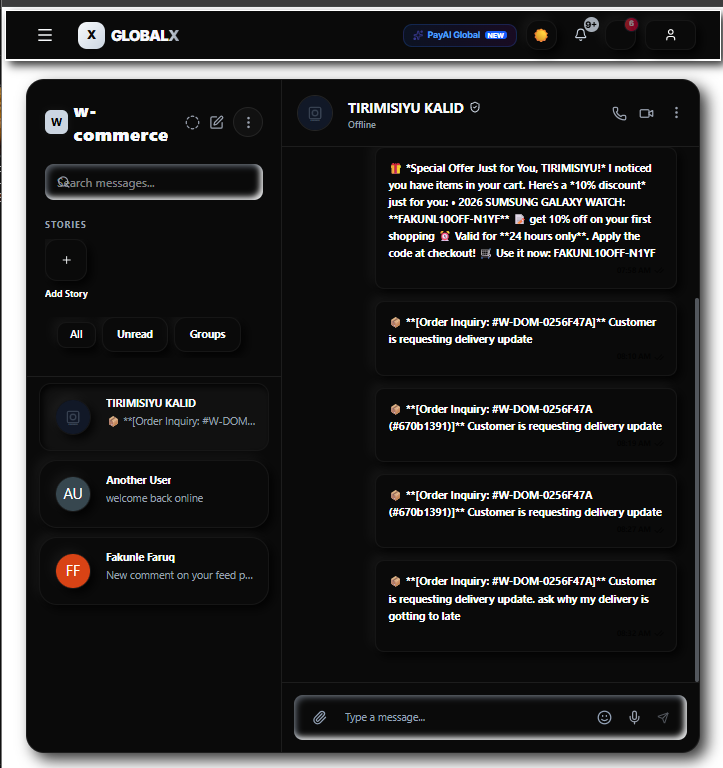
Socket.IO enables supported real-time experiences, including buyer-seller presence, typing indicators, and order-status events.
These features are intended to make commerce interactions more responsive and conversational.
Security and Reliability
The architecture includes double-submit-cookie CSRF protection, server-side request forgery safeguards, and reconciliation controls.
SSRF defenses are designed to prevent server-side requests to restricted private network ranges and cloud metadata endpoints when external URLs are processed.
Distributed cron locking helps prevent concurrent reconciliation jobs from processing the same settlement work unexpectedly.
Security controls are part of an ongoing engineering process and require continued testing, monitoring, and review.
- Challenges We Encountered
Natural-language price disambiguation
A buyer might write:
"For Chocolate Biscuits 200g, can I pay ₦2,000?"
A naive extraction system might interpret the product weight of 200g as the proposed price instead of recognizing ₦2,000 as the buyer's offer.
We addressed this class of problem with preprocessing that separates product specifications from monetary proposals and prioritizes relevant negotiation signals.
This illustrates why financial intent extraction requires more than a simple keyword match.
Cross-intent routing collisions
Words associated with groceries, such as "biscuits" or "cookies," can appear in both product-search and price-negotiation requests.
A system that classifies requests only by product keywords may route a negotiation to general search.
We refined the intended routing logic so that explicit price signals and negotiation language take precedence when the context supports that interpretation.
React StrictMode and asynchronous fulfillment flows
Multi-stage packing and shipping modals can encounter lifecycle issues when state is spread across persistent references and asynchronous operations.
We refactored the intended fulfillment behavior around explicit state transitions, clearer cleanup, and fallback endpoints for supported packing and status-update operations.
This approach improves the clarity of the fulfillment state machine and makes failures easier to reason about.
Idempotent financial reconciliation
Payment capture can be retried because of network failures, delayed responses, or repeated requests.
Without safeguards, the same payment could potentially cause duplicate internal credits or seller disbursements.
We designed transaction-level locking and idempotency checks tied to payment capture identifiers to make financial processing more resilient.
Balancing AI flexibility with deterministic safety
Natural-language models are useful for interpreting requests and producing conversational responses, but financial systems require predictable outcomes.
We adopted a separation between AI-generated dialogue and deterministic business logic for price calculations, discounts, stock validation, and transaction processing.
This architectural distinction is fundamental to making PayAI useful without allowing conversational output to override business rules.
- Accomplishments We Are Proud Of
Conversational bargaining grounded in business rules
PayAI is designed to support real negotiation logic rather than merely generating friendly responses. The intended engine checks pricing boundaries, inventory conditions, and offer eligibility before issuing an authorized deal.
A pathway for international and local commerce
W-Commerce brings together international buyer payment workflows and local-currency merchant settlement as a core architectural objective.
The design addresses an important cross-border commerce problem: buyers and sellers may prefer different currencies and need clear financial terms.
Trust-oriented fulfillment
Inspection photographs, serial identifiers, merchant voice notes, and shipment events are intended to provide more visible evidence about the handling of purchases.
This creates a foundation for trust that goes beyond static product descriptions.
A structured foundation for commerce operations
The application brings together product data, negotiation, orders, payment records, fulfillment states, and audit logs in one coordinated architecture.
The project also addresses reliability concerns such as duplicate financial processing, asynchronous state transitions, and unsafe external URL requests.
A broader approach to seller participation
By supporting external store connections and planning for simpler storefront creation, W-Commerce aims to lower the barrier for independent merchants who want access to more digital customers.
- What We Learned
AI should interpret intent, not invent financial authority
Language models are powerful at understanding natural language, dialect, and conversational context. They should not be allowed to invent prices, authorize discounts, claim payments succeeded, or release funds independently.
Deterministic backend logic must remain responsible for those decisions.
Trust requires evidence and accountability
Buyers need more than reassuring text. They need useful information about products, merchants, fulfillment, payments, and dispute processes.
Inspection media and shipment logs can help, but their origin and verification status must be transparent.
Seller discovery is as important as storefront creation
An online store is not successful simply because it exists. Merchants need relevant visitors, customer confidence, and a purchasing process that converts interest into sales.
This is why seller onboarding and product discovery belong in the broader W-Commerce strategy.
Financial workflows require failure planning
Network retries, duplicate events, delayed webhooks, and partial failures are normal possibilities in distributed systems.
Idempotency, reconciliation, explicit transaction states, and auditability must be built into commerce infrastructure from the beginning.
Real-world commerce requires a hybrid architecture
AI can interpret requests and help people make decisions, but external services, deterministic rules, and human approvals must govern actions that involve money, inventory, delivery, and customer rights.
- What's Next for W-Commerce
Multilingual and dialect-aware voice bargaining
We plan to explore voice-based shopping and negotiation supporting Nigerian Pidgin, Yoruba, Igbo, and Hausa.
The goal is to make digital commerce more accessible to people who are more comfortable speaking naturally than typing formal product searches.
W-Map and intelligent delivery coordination
We plan to extend fulfillment capabilities into an intelligent dispatch system that can help match orders with suitable couriers based on availability, proximity, delivery requirements, and vehicle type.
Actual dispatch decisions will depend on courier integrations, location permissions, and reliable operational data.
Pan-African payment and settlement support
We aim to explore additional local-currency settlement capabilities, including Kenyan shillings, Ghanaian cedis, and South African rand.
Potential integrations include appropriate regional payment providers and mobile-money services such as M-Pesa and MTN MoMo, subject to provider access, compliance requirements, and settlement availability.
Autonomous seller AI agents
We plan to develop configurable seller agents that represent individual businesses according to merchant-approved rules.
Merchants could configure negotiation styles such as firm pricing, generous discounts within limits, or bundle-oriented offers.
These agents would be available to handle routine enquiries and permitted offers while escalating exceptional situations to the merchant.
Affordable storefront creation
We want to make it easier for merchants to launch a basic digital storefront without the expense of commissioning a fully custom website.
Potential capabilities include AI-assisted product listing creation, image-based catalog preparation, simple inventory management, and guided payment and delivery setup.
Seller Growth Engine and analytics
We plan to expand the platform's seller tools with insights into product discovery, customer enquiries, negotiation outcomes, conversion rates, and repeat purchases.
These capabilities could help merchants understand where they are losing potential sales and make more informed business decisions.
- Impact and Success Metrics
W-Commerce aims to make commerce more accessible to buyers and sellers. We intend to evaluate its impact using measurable outcomes rather than relying only on feature counts.
Potential metrics include:
- Time required for a merchant to publish their first product.
- Cost of onboarding a seller compared with a conventional custom-store setup.
- Number of participating merchants and active product listings.
- Product discovery impressions and qualified buyer enquiries.
- Conversion rate from product discovery to completed orders.
- Percentage of negotiations that result in an accepted offer.
- Accuracy of stock and pricing information at purchase time.
- Payment reconciliation errors and duplicate-processing incidents.
- Delivery completion and dispute-resolution rates.
- Repeat-purchase rates and merchant retention.
- Customer satisfaction and trust in purchasing workflows.
These measurements will help determine whether W-Commerce genuinely reduces friction and improves outcomes for its users.
- Why W-Commerce Matters
W-Commerce addresses a broader question about the future of digital commerce.
Online shopping has made products easier to access, but it has not eliminated the challenges of trust, affordability, negotiation, customer acquisition, or cross-border trade.
Buyers still need to know what they are purchasing, whether the price is fair, whether the seller can be trusted, and what happens if an order goes wrong.
Small businesses still need affordable ways to enter digital markets, attract relevant customers, and compete without building every component of their commerce infrastructure themselves.
W-Commerce and PayAI aim to address these challenges through an intelligent, connected commerce experience that combines natural-language assistance, rule-based negotiation, transparent fulfillment, supported payment workflows, and seller-growth capabilities.
Our ambition is not simply to put more stores online. It is to make those stores easier to discover, easier to engage with, and easier to buy from.
- Conclusion
W-Commerce reimagines digital commerce as a conversation between buyers, sellers, and intelligent technology.
PayAI helps buyers express their needs naturally, find suitable products, compare costs, negotiate within authorized limits, and navigate purchasing decisions.
W-Commerce provides the broader ecosystem for connecting merchants and product catalogs, supporting trust-oriented fulfillment, coordinating order workflows, and exploring more accessible routes into digital commerce.
By combining conversational intelligence with deterministic business rules and transparent transaction states, we aim to build a system that respects both the flexibility of real-world markets and the reliability required for digital transactions.
W-Commerce is building toward a future where buyers can shop with greater confidence, sellers can reach more relevant customers, and AI can make commerce more accessible without taking control away from the people who use it.
Quick test login: Seller Email: [email protected] password:8i9o0p@#A Admin Email: [email protected] Password:Admin123! CREATE DIFFERENT SELLER/COURIER/BUYER ACC.
Built With
- express.js-(commonjs)
- frontend-react-18
- internal
- lucide-react
- monnify
- paystack
- photo-transformations)-payments-paypal-rest-sdk
- prisma-orm-ai-&-llm-google-gemini-2.0-flash-api-media-&-storage-cloudinary-(smart-video-to-thumbnail-pipeline
- pwa-(workbox)-backend-node.js
- socket.io
- tailwind-css
- vite
- winston-database-&-orm-postgresql-/-sqlite
- zustand


Log in or sign up for Devpost to join the conversation.