-
-
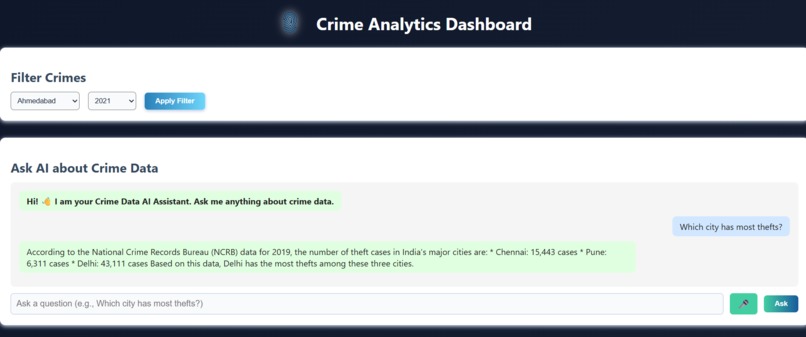
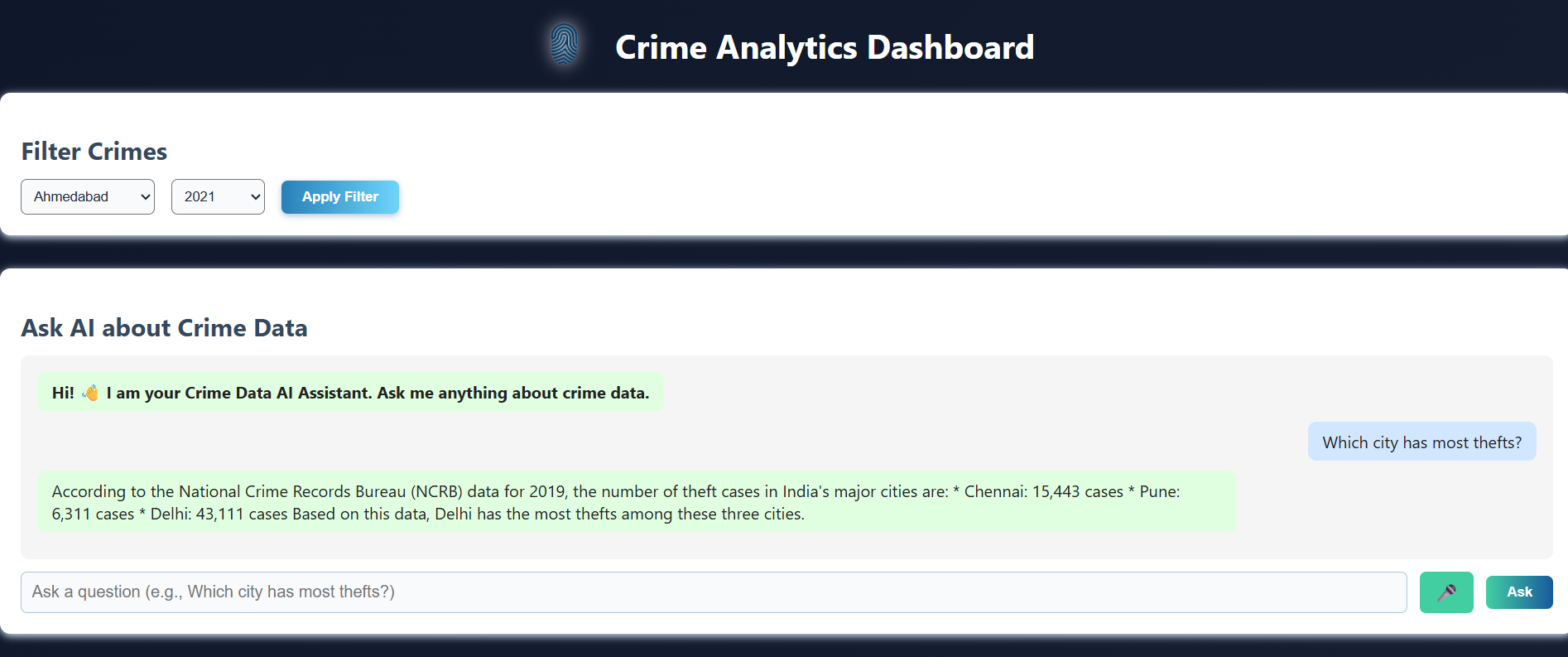
Crime Bot using Llama3:instruct
-
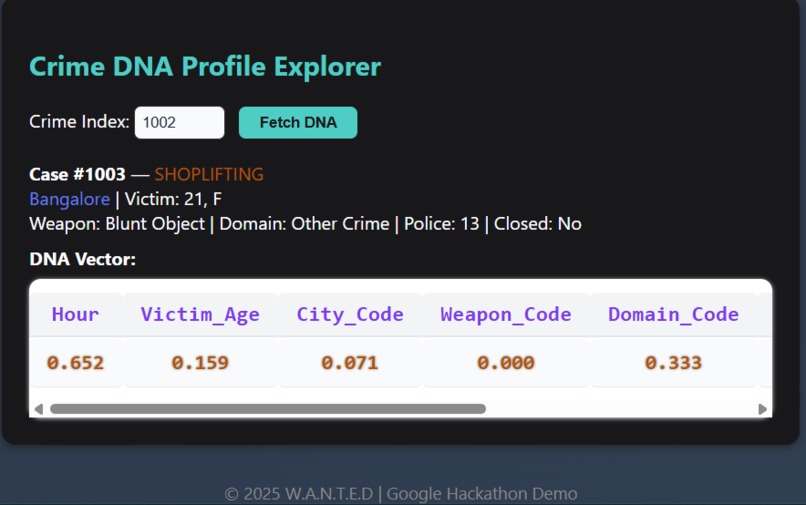
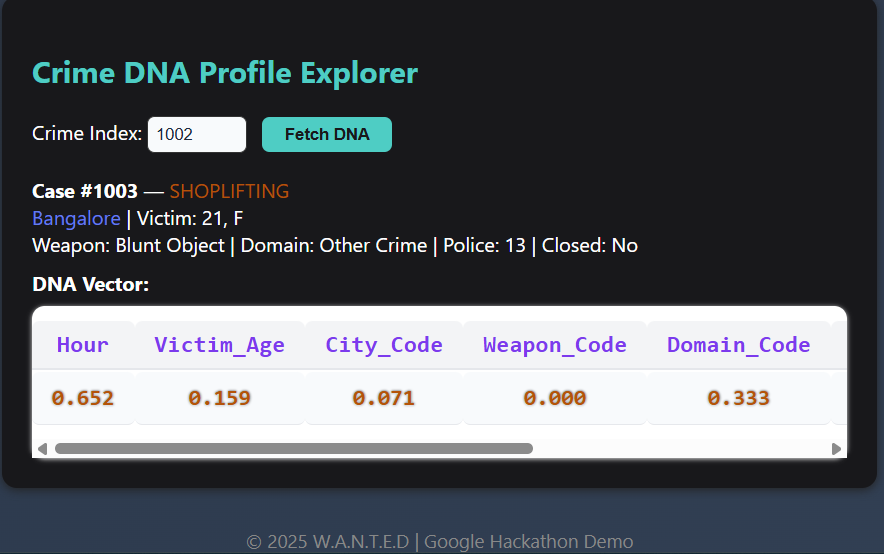
Crime DNA Profile Explorer
-
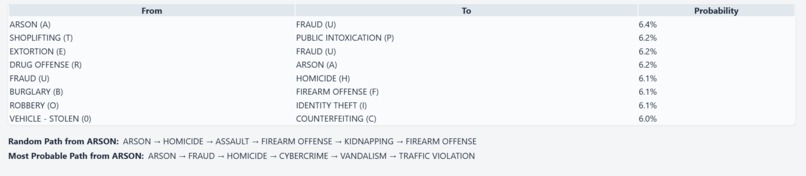
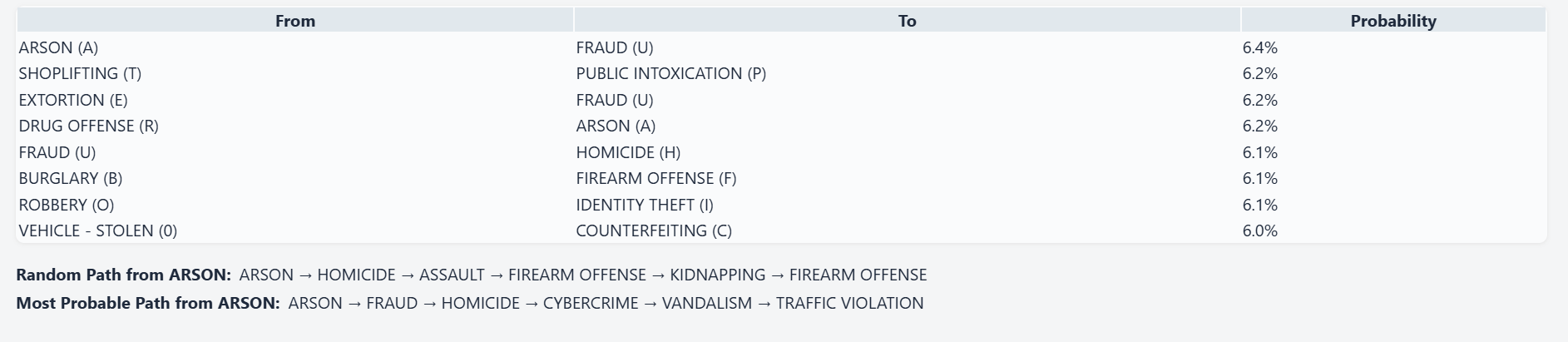
Crime Transasition Path
-
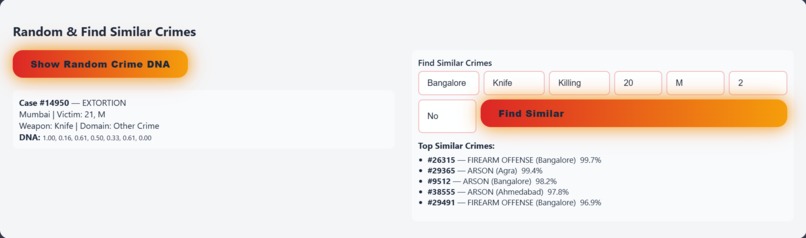
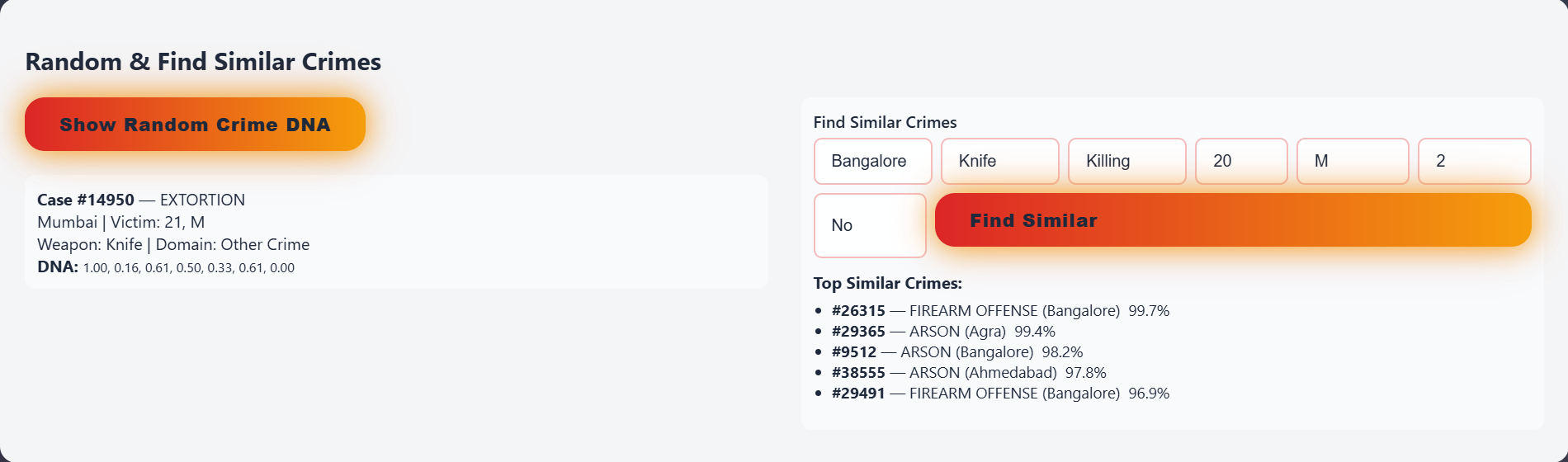
Random and Similar Crime finder using DNA sequencer
-
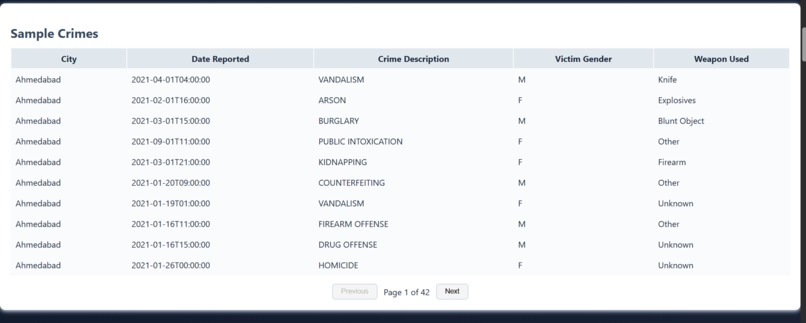
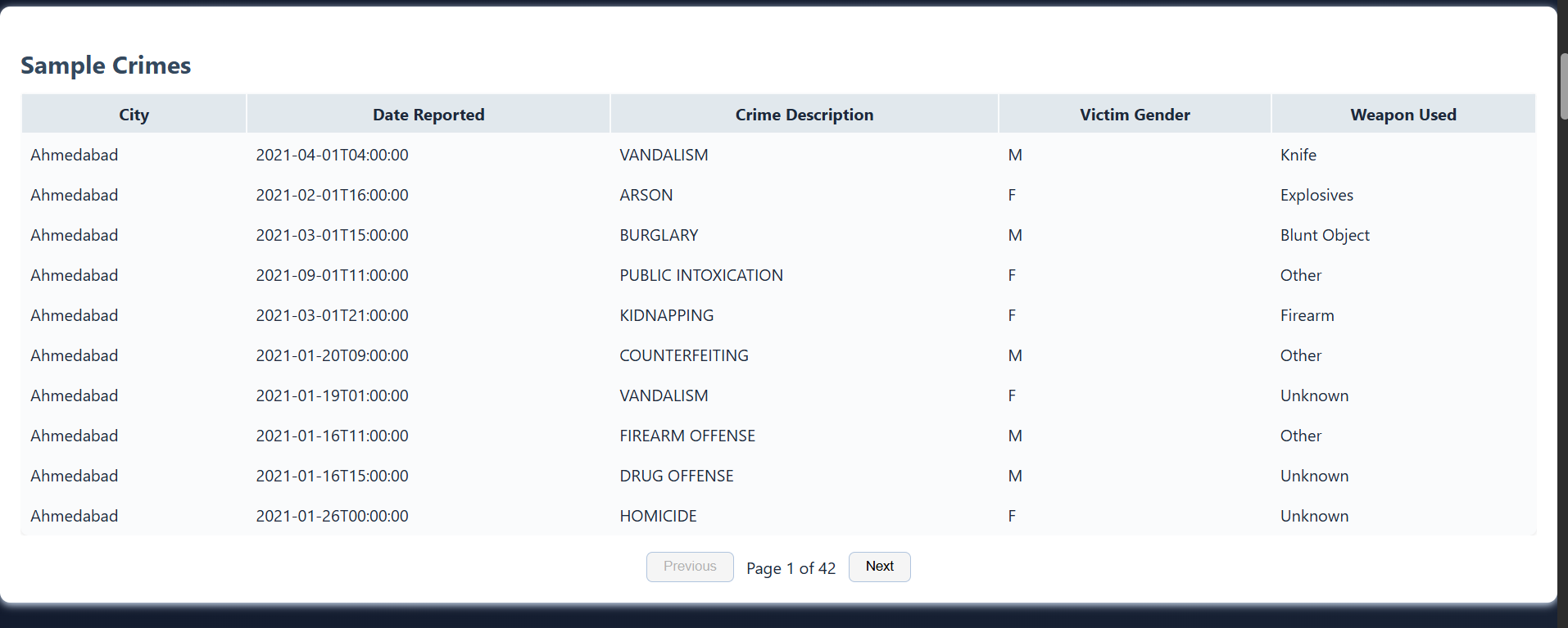
Sample Crime
-
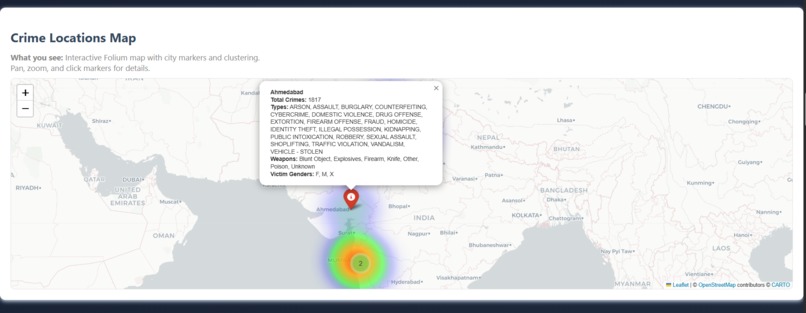
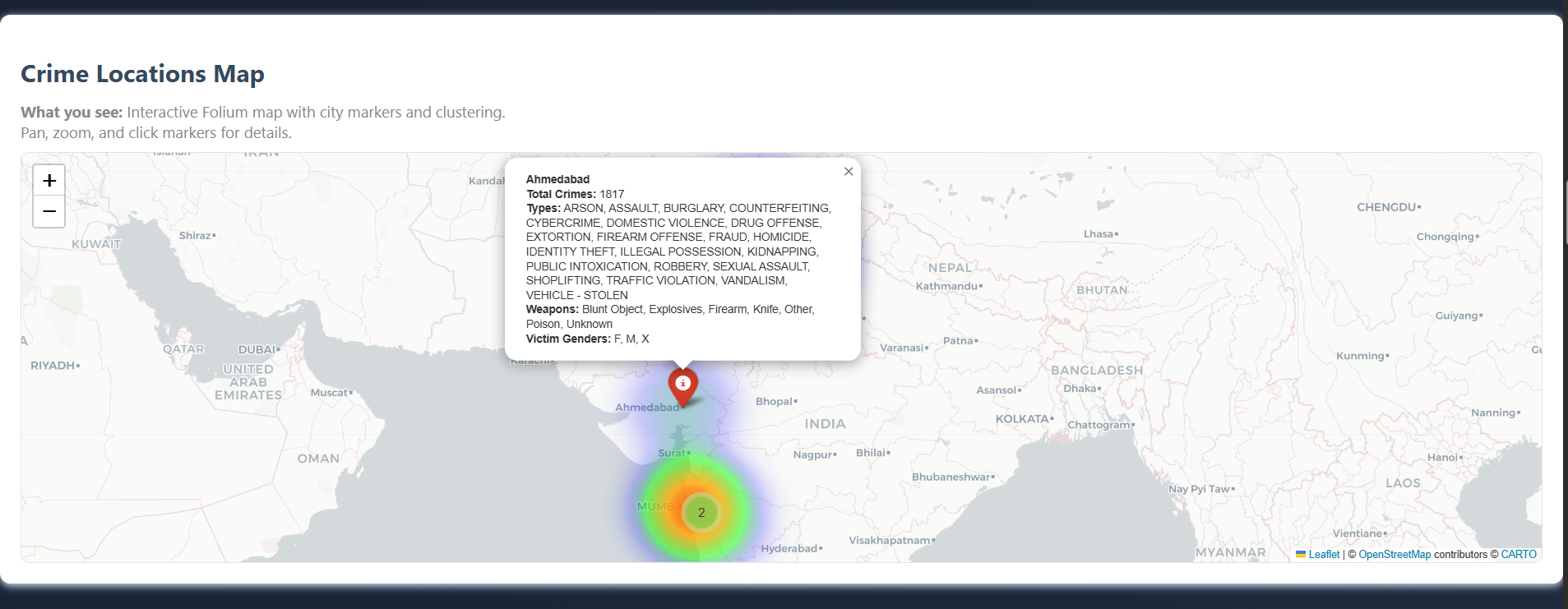
Crime Hotspot Map using Folium
-
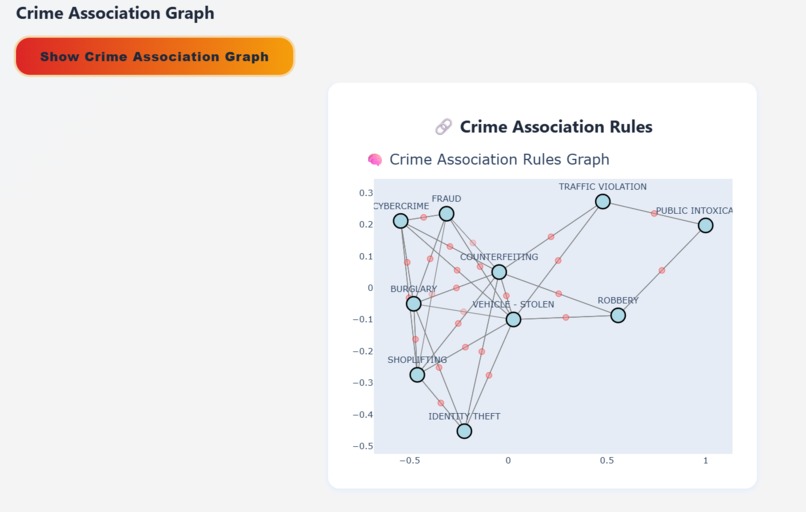
Crime Taxonomy Tree
-
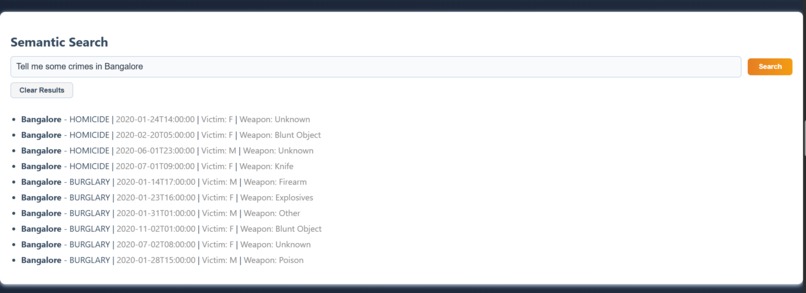
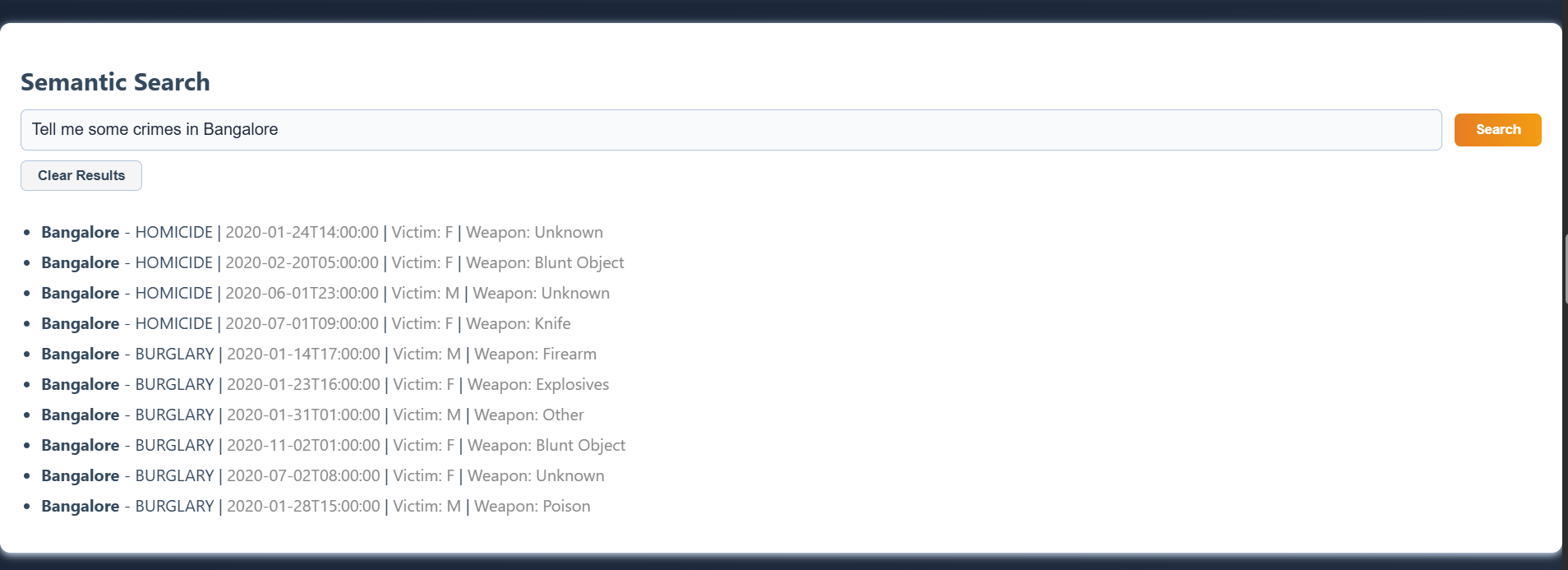
Sematic Search
-
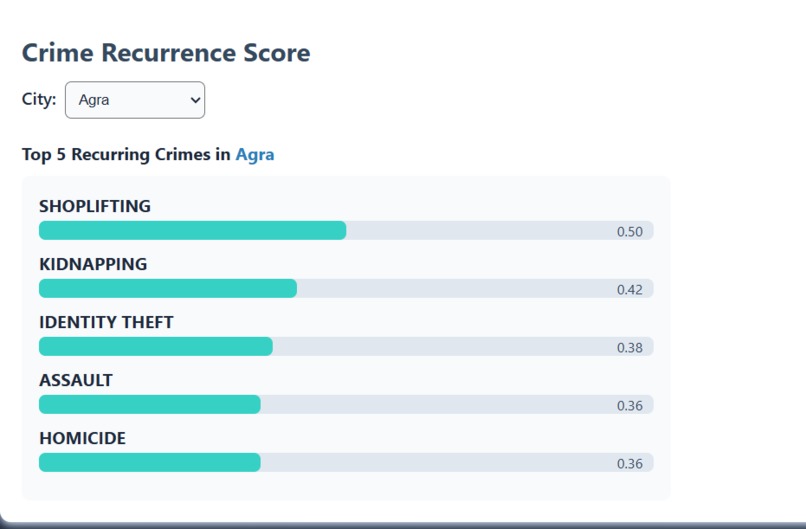
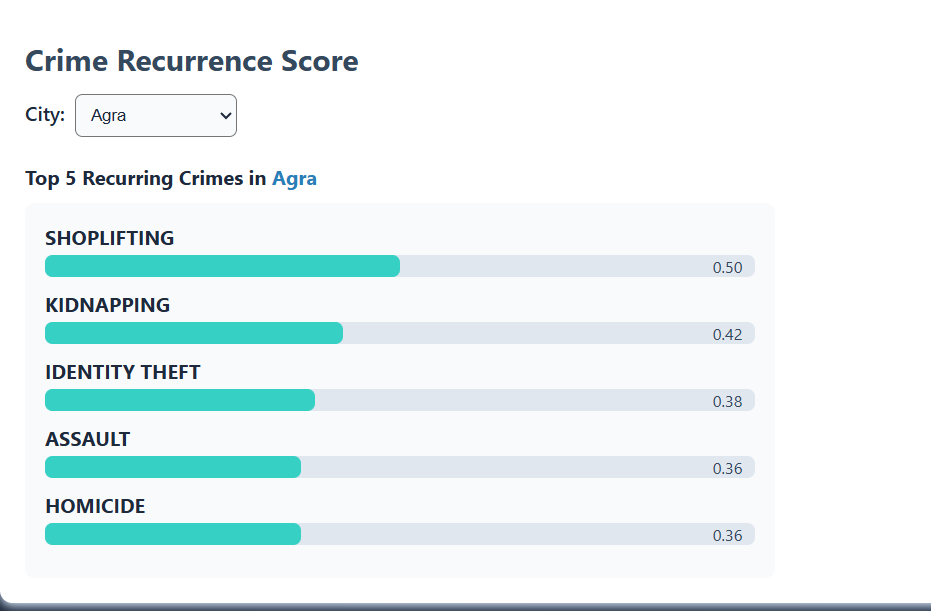
Crime Reccurence Score
Leveraging Cloud Tools and Databases for Crime Transition Analysis in India
Project Name: W.A.N.T.E.D - Watch and Analyze Nationwide Trends in Evolving Deviance
Inspiration
The idea for W.A.N.T.E.D was born out of a shared concern—a desire to go beyond the surface of crime data and truly understand the human and social stories that lie beneath. We’ve all read headlines and statistics, but numbers often lack the context and progression behind them. What happens after a theft? Does it escalate? Does it repeat? Are there patterns that warn us before a tragedy unfolds?
As a team, we felt a sense of urgency. We wanted to build something meaningful—something that didn't just visualize crime but revealed its evolution. The kind of tool that could offer clarity where confusion reigns, and potentially guide interventions before harm occurs. W.A.N.T.E.D is more than a system; it's our collective attempt to contribute to a safer, more informed society. A system that watches, analyzes, and most importantly, understands.
What it does
W.A.N.T.E.D (Watch and Analyze Nationwide Trends in Evolving Deviance) is a cloud-native platform that analyzes crime data across India to discover patterns and forecast transitions. It features:
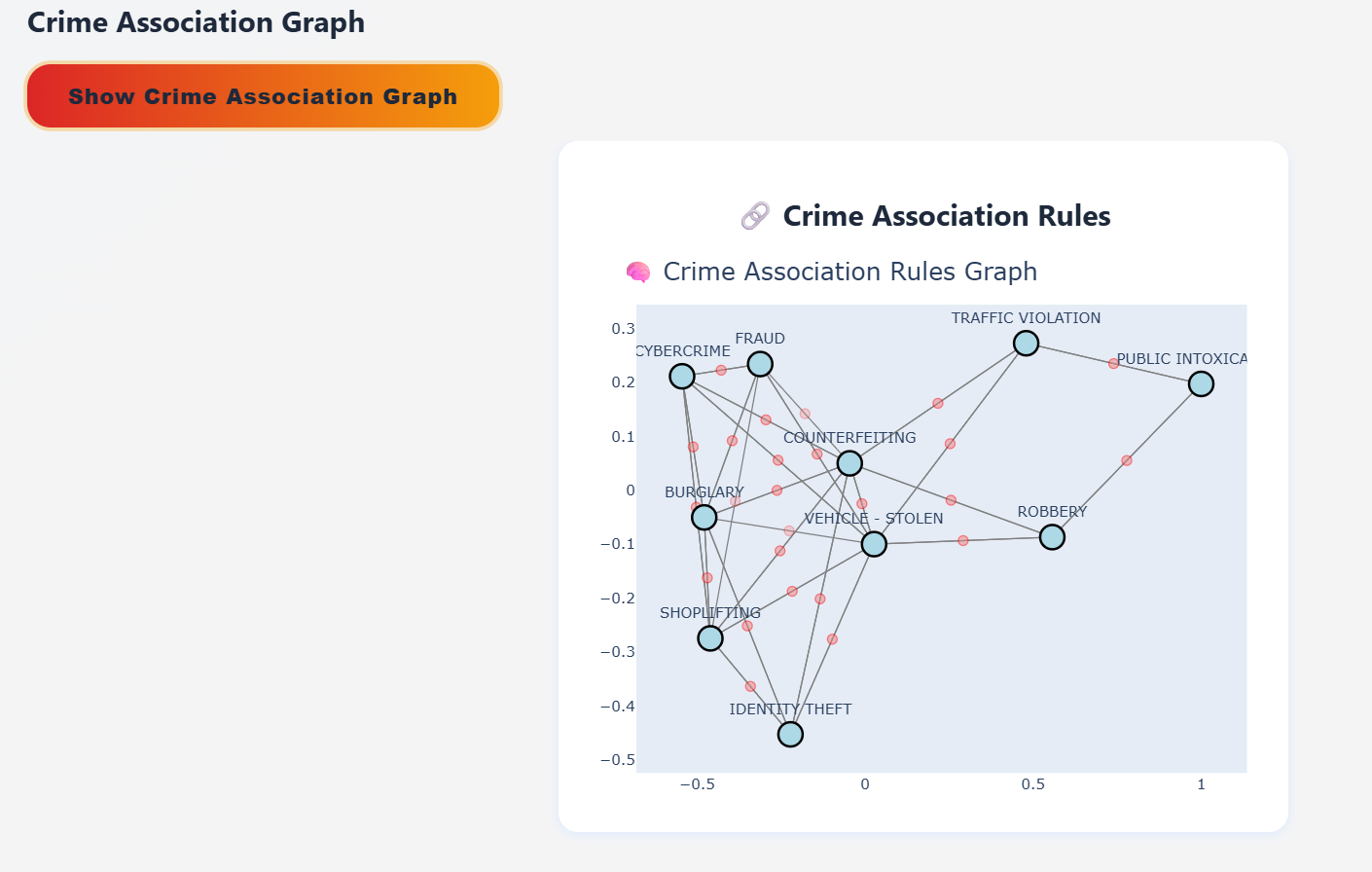
- Interactive crime transition graphs based on victim age groups
- AI-powered trend forecasting and vector-based semantic search
- Geo-mapped heatmaps of crime concentration
- DNA-style profiling of individual crimes for anomaly detection
- Publicly accessible dashboards hosted via Firebase
How we built it
Building W.A.N.T.E.D was a journey in itself—a balance between precision and empathy. We knew from the beginning that we weren’t just working with data points; we were working with echoes of real lives, real incidents, and deep-rooted patterns of behavior. This understanding drove us to make every technical decision count.
We set up our data infrastructure using a scalable, cloud-hosted environment that could adapt to the irregular structure of public crime datasets. From the very first iteration, we designed the backend to not just process data—but to interpret it. From simulating transitions between crime types to computing recurrence patterns across age demographics, our system grew to mirror the very complexity we set out to simplify.
We crafted every graph and chart to tell a story, not just show statistics. Whether it was a transition map linking theft to assault or a heatmap of city hotspots, every element was built with the goal of being intuitive, actionable, and human-centric.
Bringing it all together, the frontend was deployed with care—ensuring it was not only fast and secure but also visually meaningful. It was important to us that every user, whether a policymaker, researcher, or curious citizen, could see patterns unfold before their eyes and feel empowered to act.
Challenges we ran into
- Data inconsistencies: Public datasets often had missing or inconsistent fields that required thorough preprocessing.
- Modeling transitions: Designing accurate and interpretable Markov Chains for crime progression proved challenging.
- Performance optimization: Handling large datasets in real time required GPU acceleration and efficient MongoDB aggregation pipelines.
- Deployment issues: Integrating analytics with Firebase in a modular way while preserving performance was complex.
Accomplishments that we're proud of
- Successfully visualized age-wise crime transitions using interactive directed graphs.
- Developed an end-to-end vector-based search engine for unstructured crime queries.
- Created a scalable backend powered by MongoDB and FastAPI.
- Deployed a fully functional analytics frontend using Firebase Hosting.
- Integrated AI forecasting to predict future crime volumes.
What we learned
- The importance of flexible schema databases like MongoDB when handling real-world, irregular datasets.
- How to use NLP models and embeddings for effective crime data search and clustering.
- Techniques to model sequential transitions in social data using probabilistic methods.
- Benefits of cloud-native development for rapid prototyping and deployment.
What's next for W.A.N.T.E.D
- Ingest live video and crime data streams from city-wide surveillance infrastructure, applying object/person detection and anomaly recognition to trigger intelligent alerts.
- Develop a lightweight, mobile-responsive dashboard for police officers and civic personnel to access live crime maps, suspect profiles, and tactical suggestions on the go.
- Enhance the AI engine with deep learning models such as LSTM and graph-based networks to analyze crime similarity, spatial patterns, and temporal trajectories.
- Implement real-time decision-making to deploy optimal responses — whether autonomous drones, patrol bots, or human officers — based on the type, location, and urgency of the threat.
- Collaborate with international police departments to create a global crime intelligence network, standardizing data formats and scaling W.A.N.T.E.D. into a UN-level AI crime prevention system.


Log in or sign up for Devpost to join the conversation.