-
-
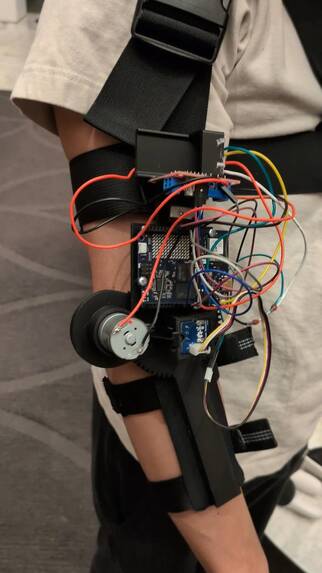
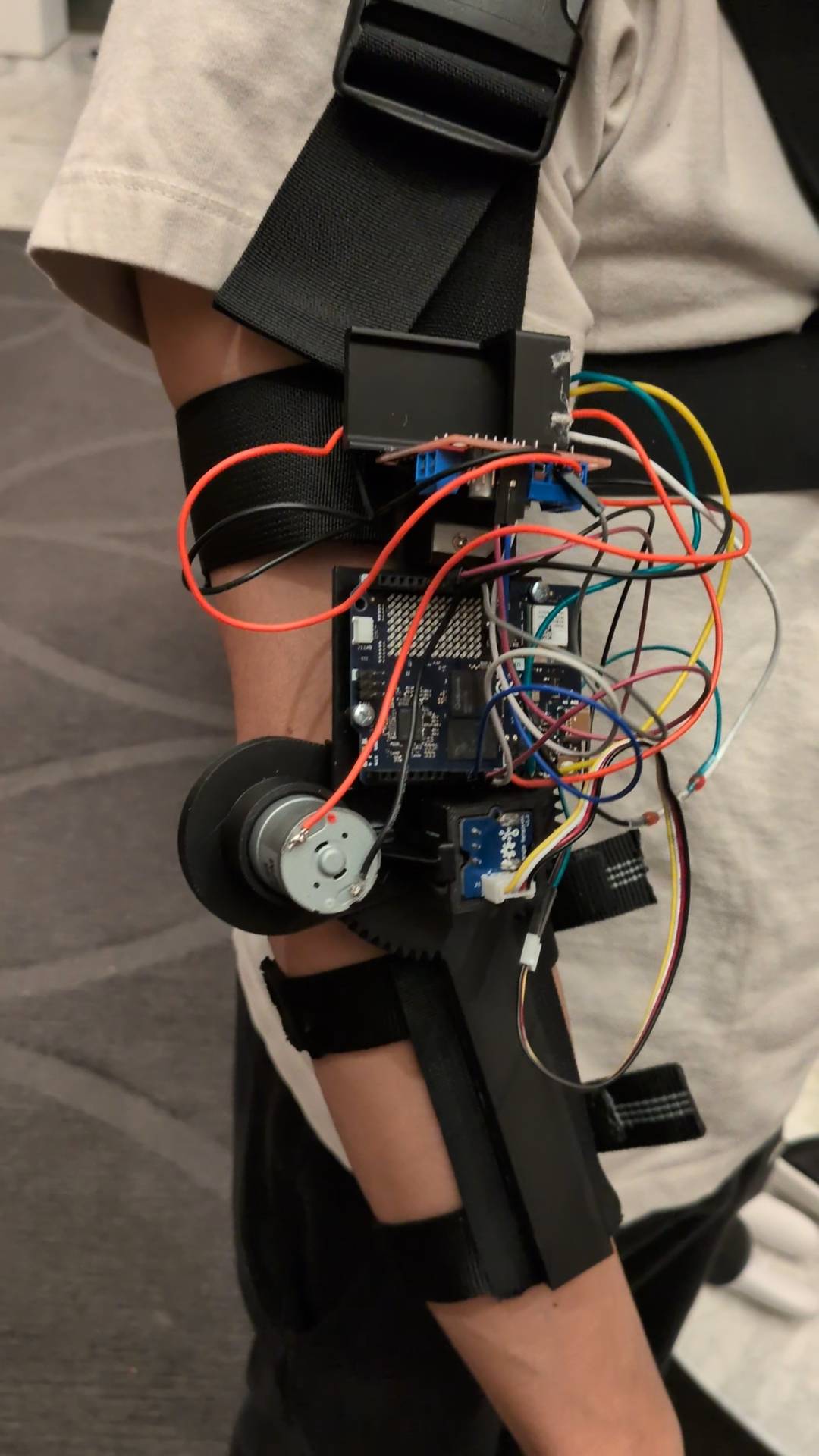
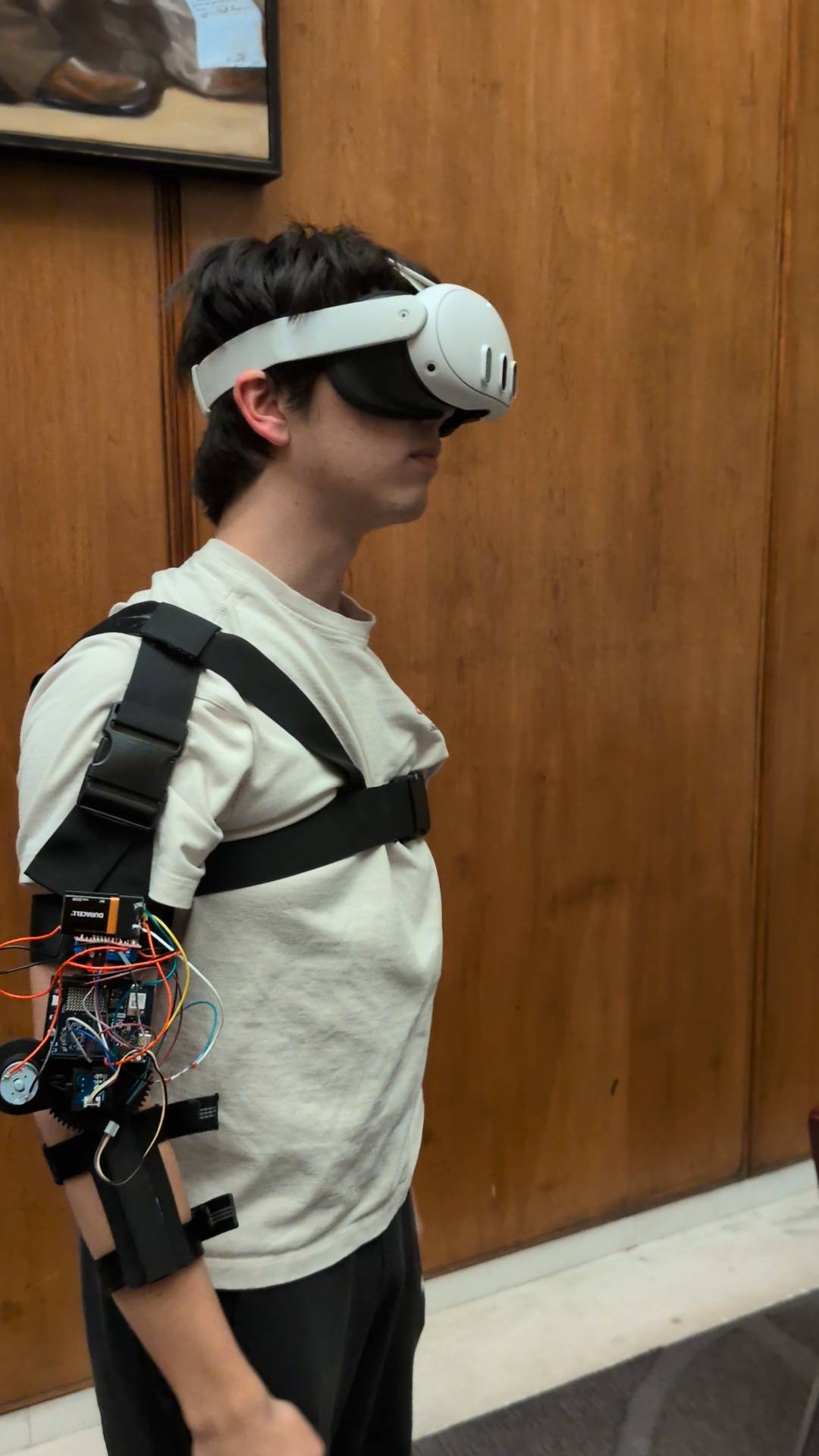
Close-up on the Exoskeleton
-
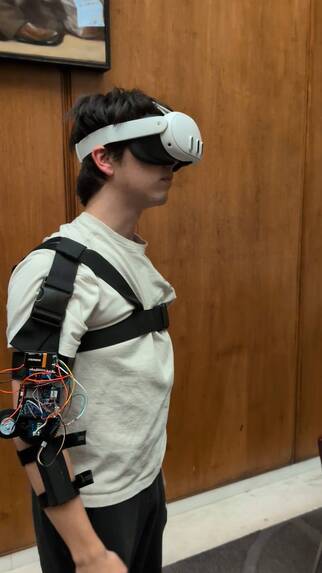
Full Body Harness
-
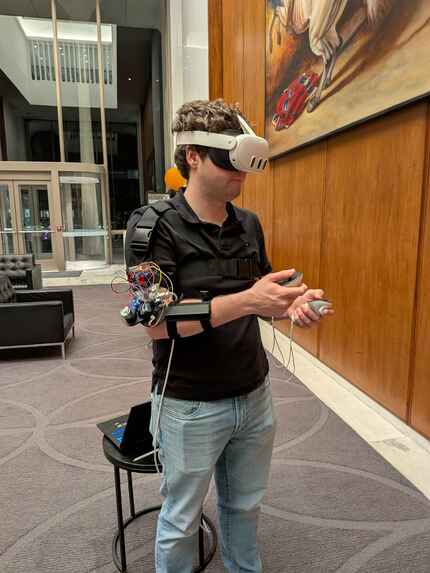
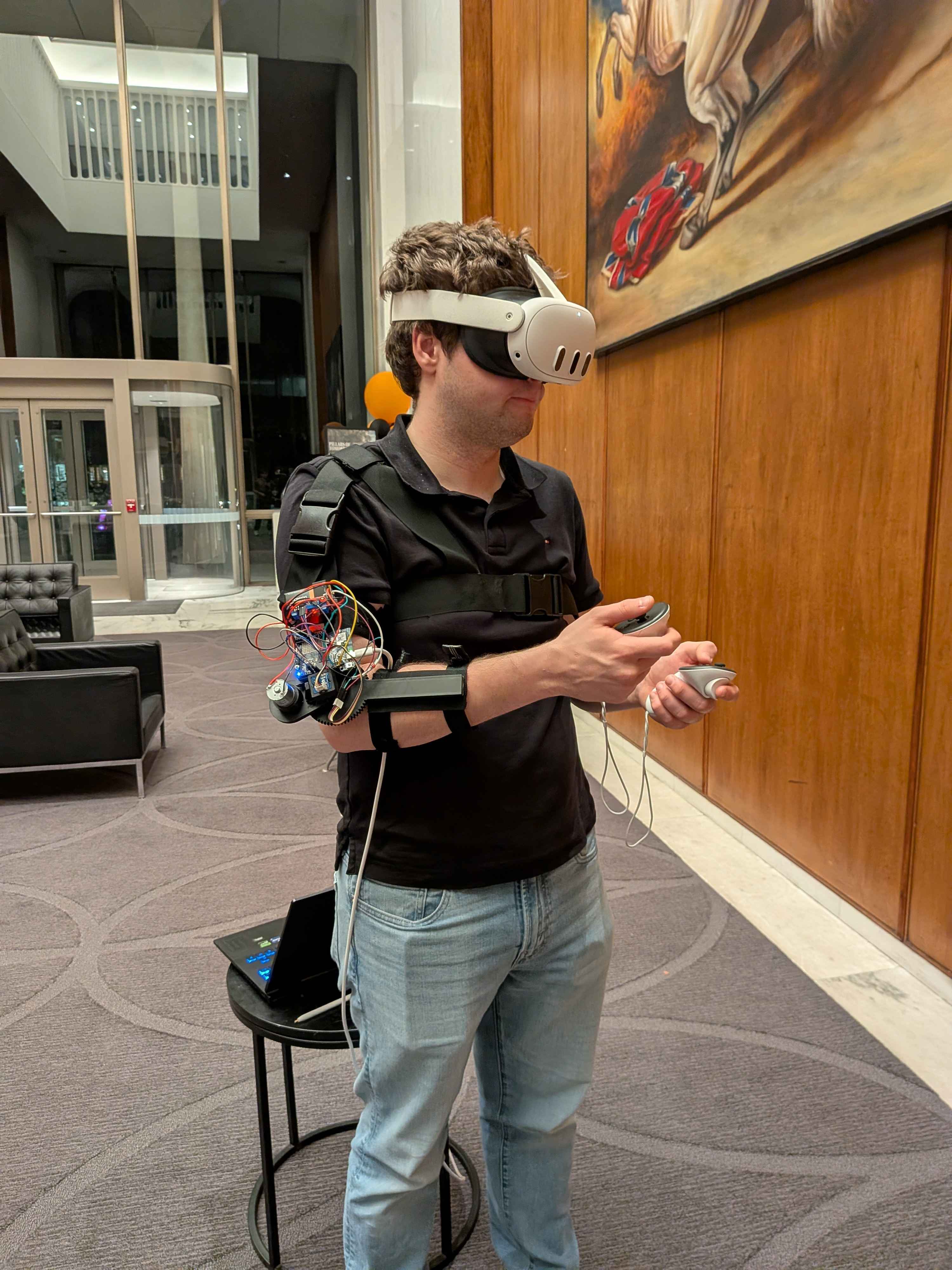
Photo of it being used
-
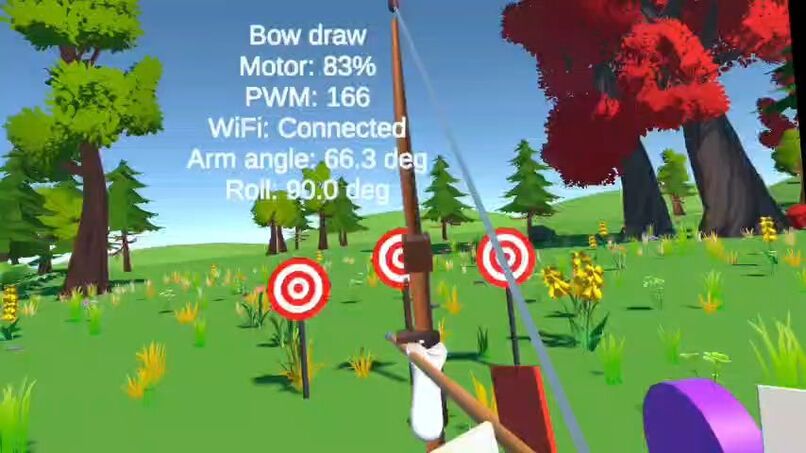
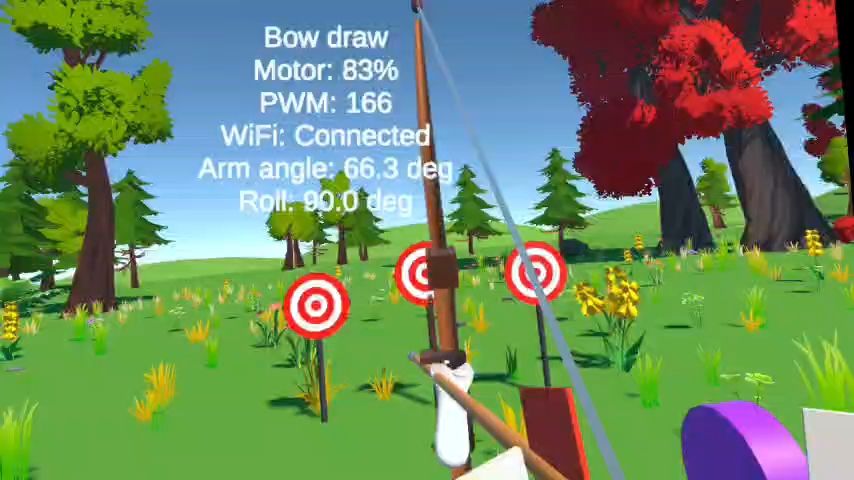
Archery in VR
-
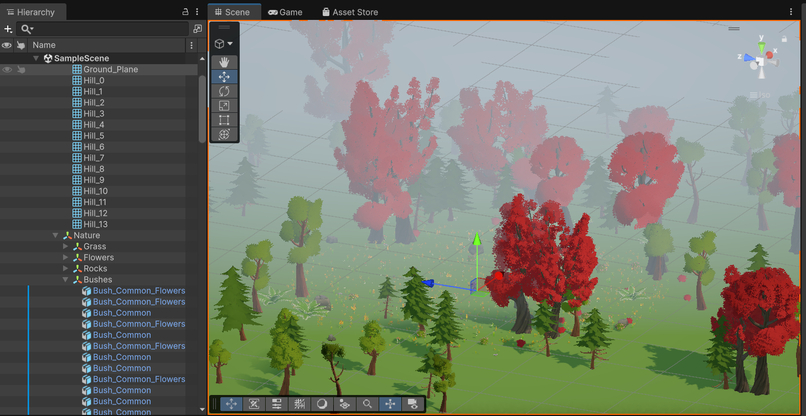
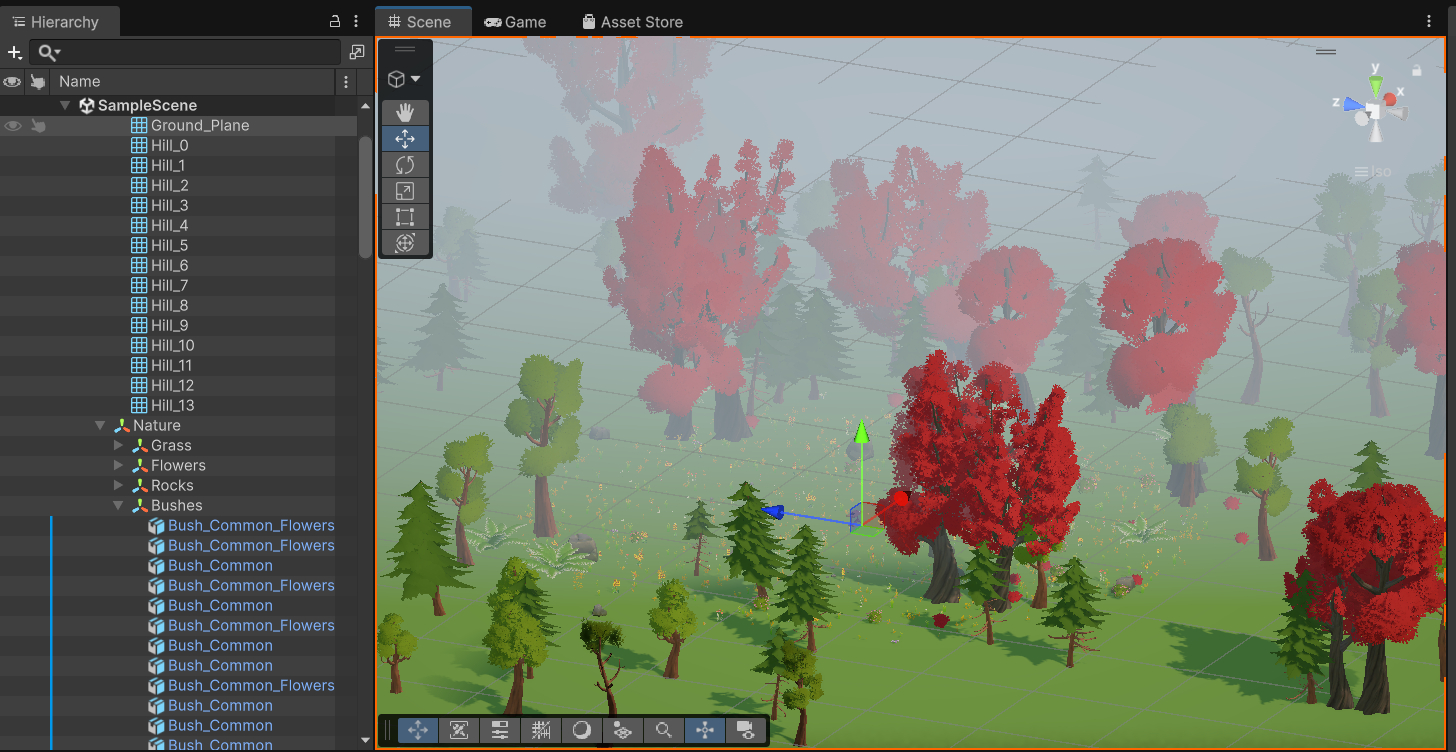
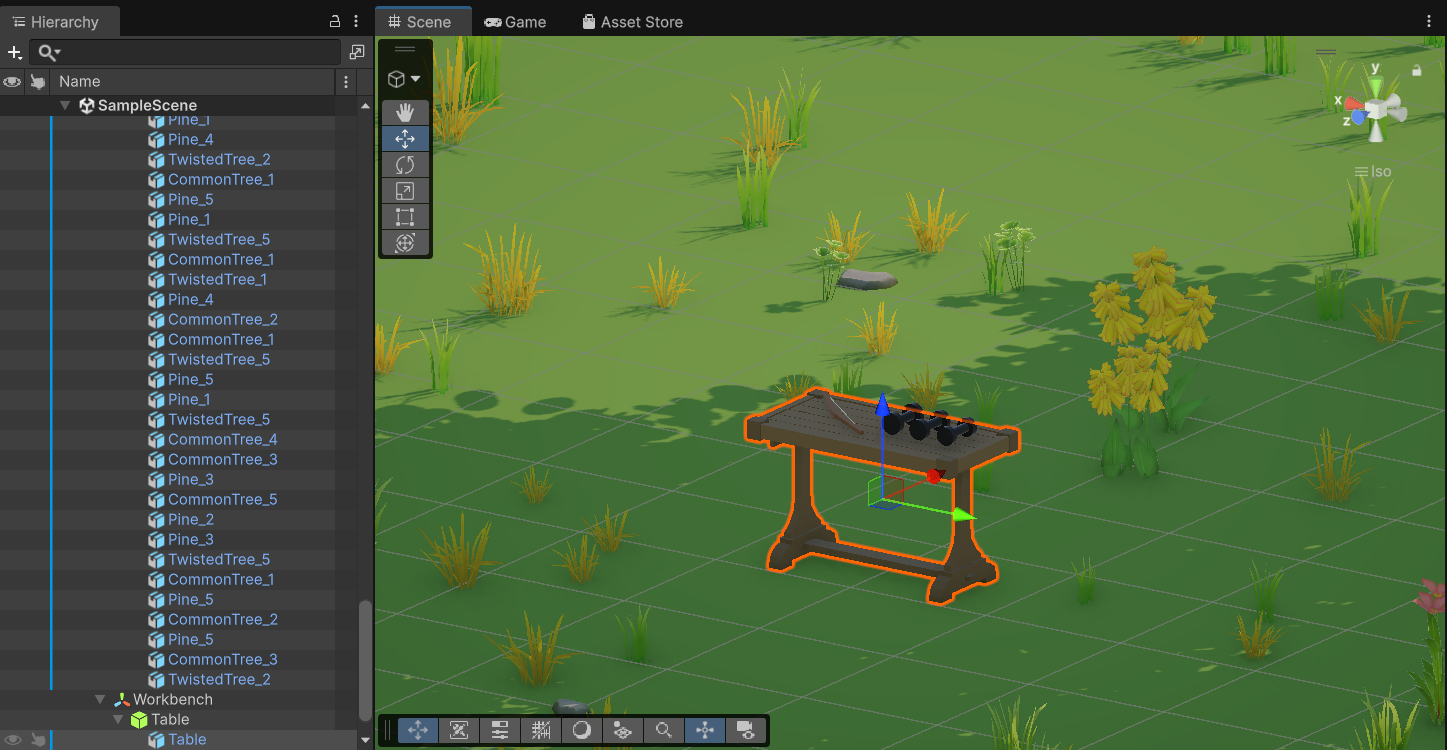
Virtual Reality Environment
-
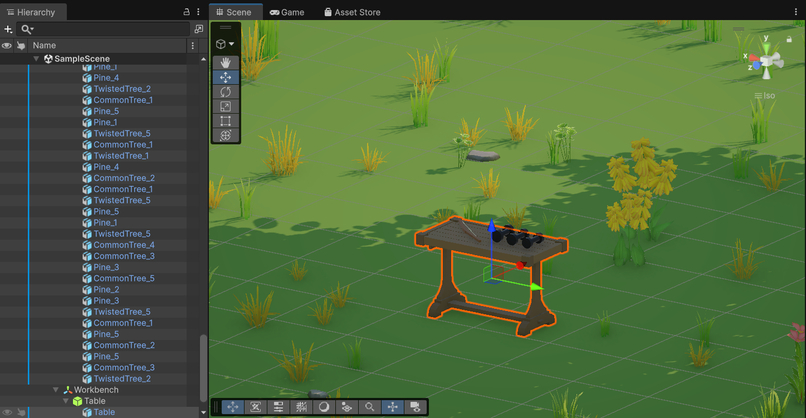
Dumbbells on a Table in VR
-
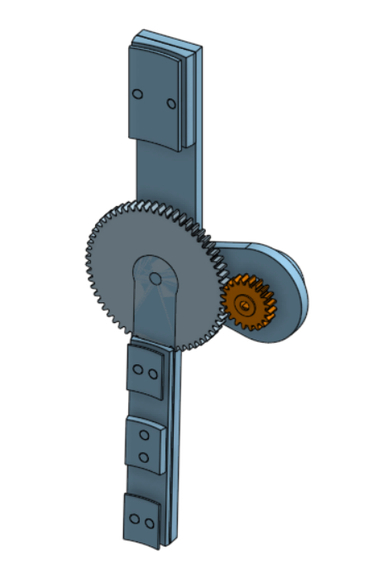
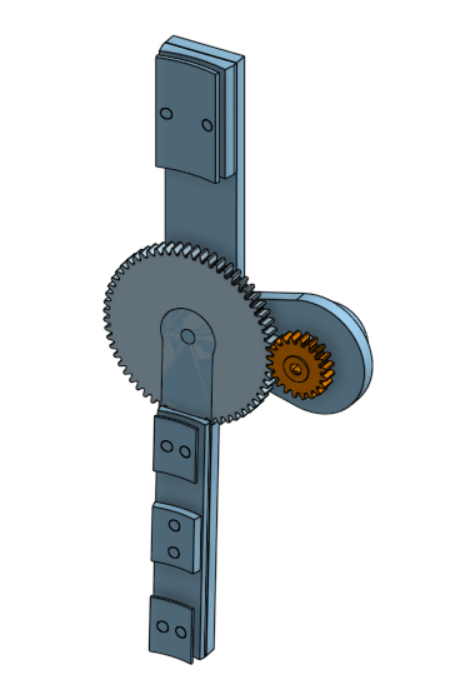
Full CAD Assembly
Inspiration
As gamers, we've always been excited by the potential of virtual reality. Yet despite advances in graphics, tracking, and immersive displays, something fundamental is still missing: virtual objects don't feel physically different.
A 30-pound dumbbell and a feather might look completely different in VR, but physically, interacting with them often feels the same. This disconnect breaks the suspension of disbelief and prevents virtual environments from feeling truly real.
We believed that improving physical immersion could help VR realize more of its potential.
What if virtual objects could actually push back?
That question inspired HeftVR.
What It Does
HeftVR is a wearable, motor-driven elbow exoskeleton that translates virtual interactions into physical resistance.
Our project features two interactive demonstrations set in a grassy forest environment:
- Archery: Players experience resistance as they draw back a virtual bowstring, simulating the tension of a real bow.
- Weightlifting: Players experience resistance while lifting virtual dumbbells of different weights, making heavier objects feel more demanding to lift.
Using a motorized gear mechanism, HeftVR generates torque that opposes elbow movement, connecting virtual interactions with real physical sensations. Our goal is to make VR gaming something players don't just see and hear, but physically experience.
How We Built It
As mechatronics students with backgrounds in robotics, we combined mechanical design, embedded electronics, motion sensing, and VR development to create HeftVR.
We designed a custom wearable elbow exoskeleton using Onshape and SolidWorks, then manufactured its structural components, motor mounts, and gear mechanisms through 3D printing.
A DC motor drives a gear transmission that produces resistance at the elbow. To track the user's movements, we integrated a potentiometer to measure relative elbow angle and an IMU on the upper arm to estimate its orientation. These sensors communicate with an Arduino-based control system, allowing the motor response to account for the user's arm position and virtual interactions.
On the software side, we developed a Unity-based VR environment featuring archery and weightlifting activities within a forest setting.
Together, these systems bridge digital interactions and physical feedback.
Challenges We Faced
Making Virtual Weight Feel Believable
One of our biggest engineering challenges was realizing that simulating weight requires more than scaling motor resistance proportionally to an object's mass.
Initially, we used a potentiometer to measure elbow flexion. However, this only provided the angle between the upper arm and forearm, not their orientation relative to gravity.
We addressed this limitation by incorporating an IMU on the upper arm. Combining these measurements allowed us to estimate forearm orientation and develop a more physically informed resistance model.
Designing for the Human Body
Unlike conventional robotics projects, our device also needed to fit securely around a moving human arm.
Attaching rigid 3D-printed components to flexible nylon webbing was particularly challenging. We needed adjustable straps that accommodated different body sizes without excessive slipping or rotation. Without sewing equipment, we improvised manufacturing solutions, including heat-sealing nylon using a lighter.
Manufacturing and Hardware Limitations
Achieving a reliable press fit between our motor shaft and custom gear required experimentation. Caliper measurements alone weren't sufficiently precise for our 3D-printing process, so we manufactured multiple test pieces with varying tolerances.
Limited access to electronics also forced us to adapt our designs around available motors, batteries, and electrical components. We explored custom solutions for missing hardware, including a makeshift 9V battery connector.
Learning VR Development from Scratch
Although we had experience in robotics, this was our first time developing with Unity and VR. Building interactive virtual environments while simultaneously integrating a physical robotic system introduced a steep learning curve and required extensive collaboration.
What We Learned
HeftVR taught us that immersive haptics is fundamentally a multidisciplinary mechatronics problem.
Creating convincing physical feedback requires mechanical design, biomechanics, sensor fusion, embedded control, and virtual physics to work together.
We also learned how to design adjustable wearable mechanisms, account for real manufacturing tolerances, collaborate using Onshape and SolidWorks, and rapidly adapt when faced with limited time and resources.
Most importantly, we discovered that achieving greater immersion requires thinking beyond graphics and sound. The physical experience matters just as much.
What's Next?
We envision HeftVR evolving into a more comprehensive haptic platform, supporting additional joints and increasingly sophisticated physical interactions.
Imagine feeling the tension of a bowstring, the resistance of lifting heavy objects, or the forces involved in interacting with a virtual environment, all through programmable wearable hardware.
Beyond entertainment, the same underlying technology could eventually support other applications, including physical rehabilitation, industrial training, and robotic teleoperation.
Virtual reality has transformed what we can see. With HeftVR, we're working to transform what we can feel.
Built With
- claude
- cursor
- gaming
- meta
- oculus
- oculus-gear-vr
- onshape
- solidworks
- unity
- vr
