-
-
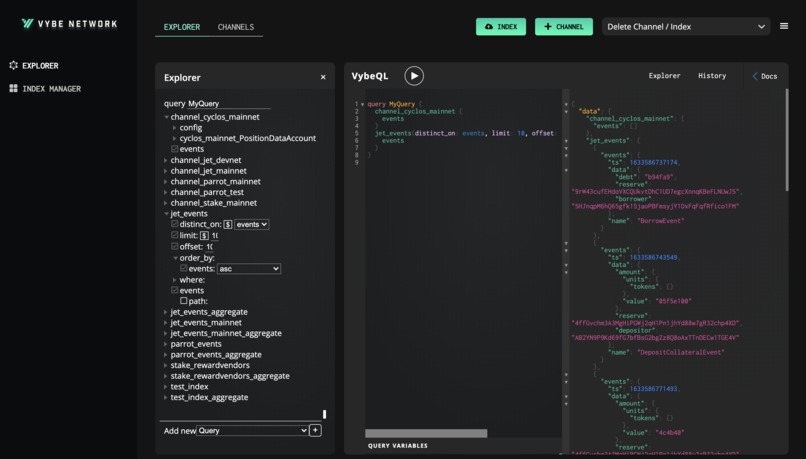
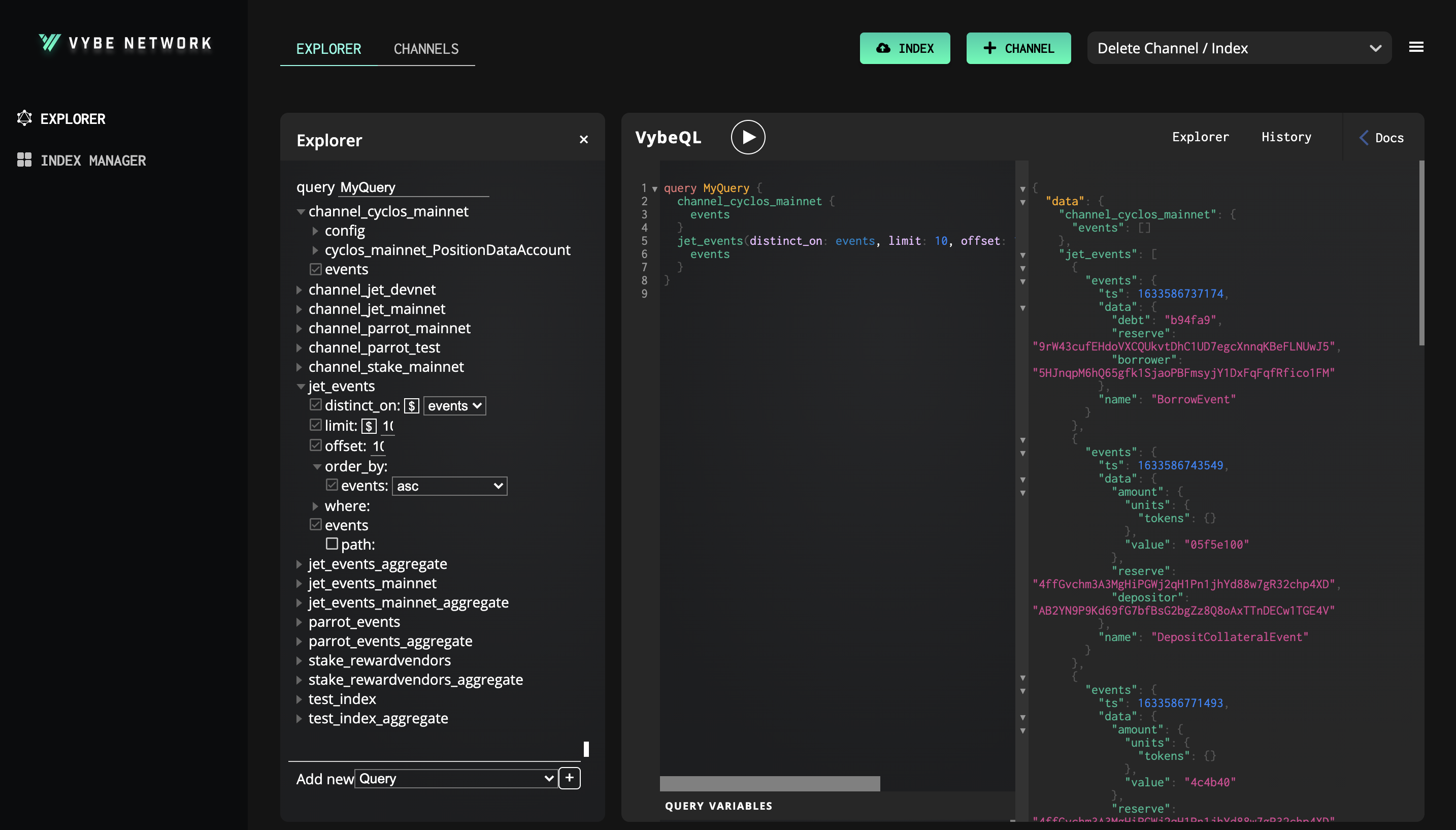
The Vybe Explorer page
-
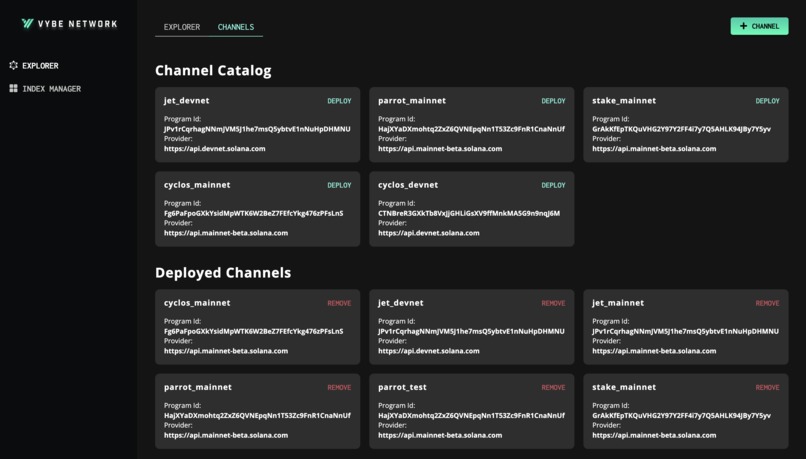
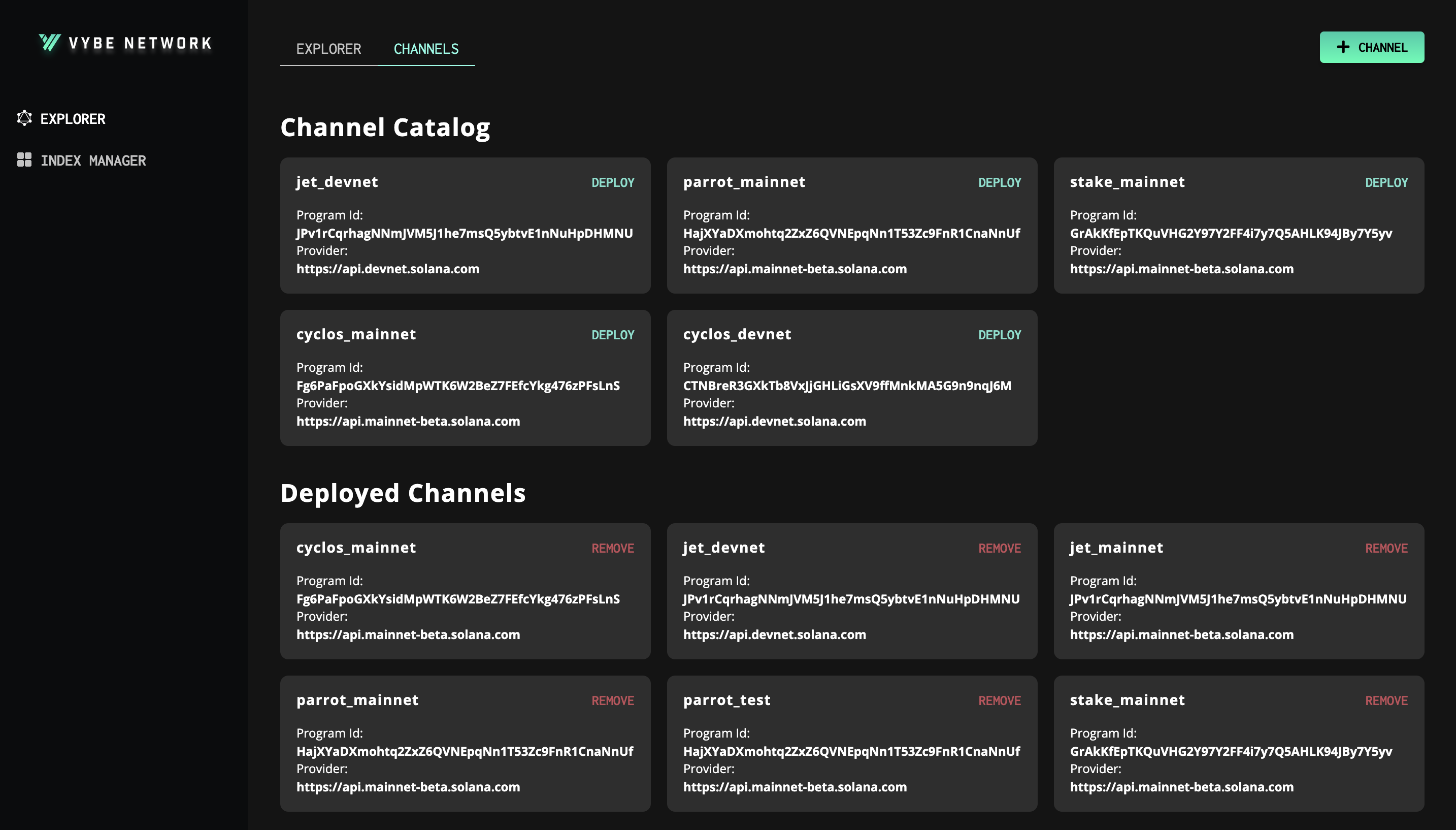
Channels page
-
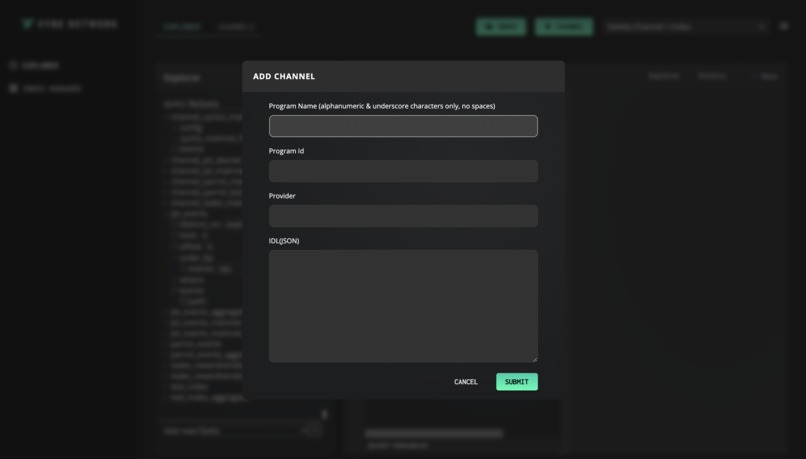
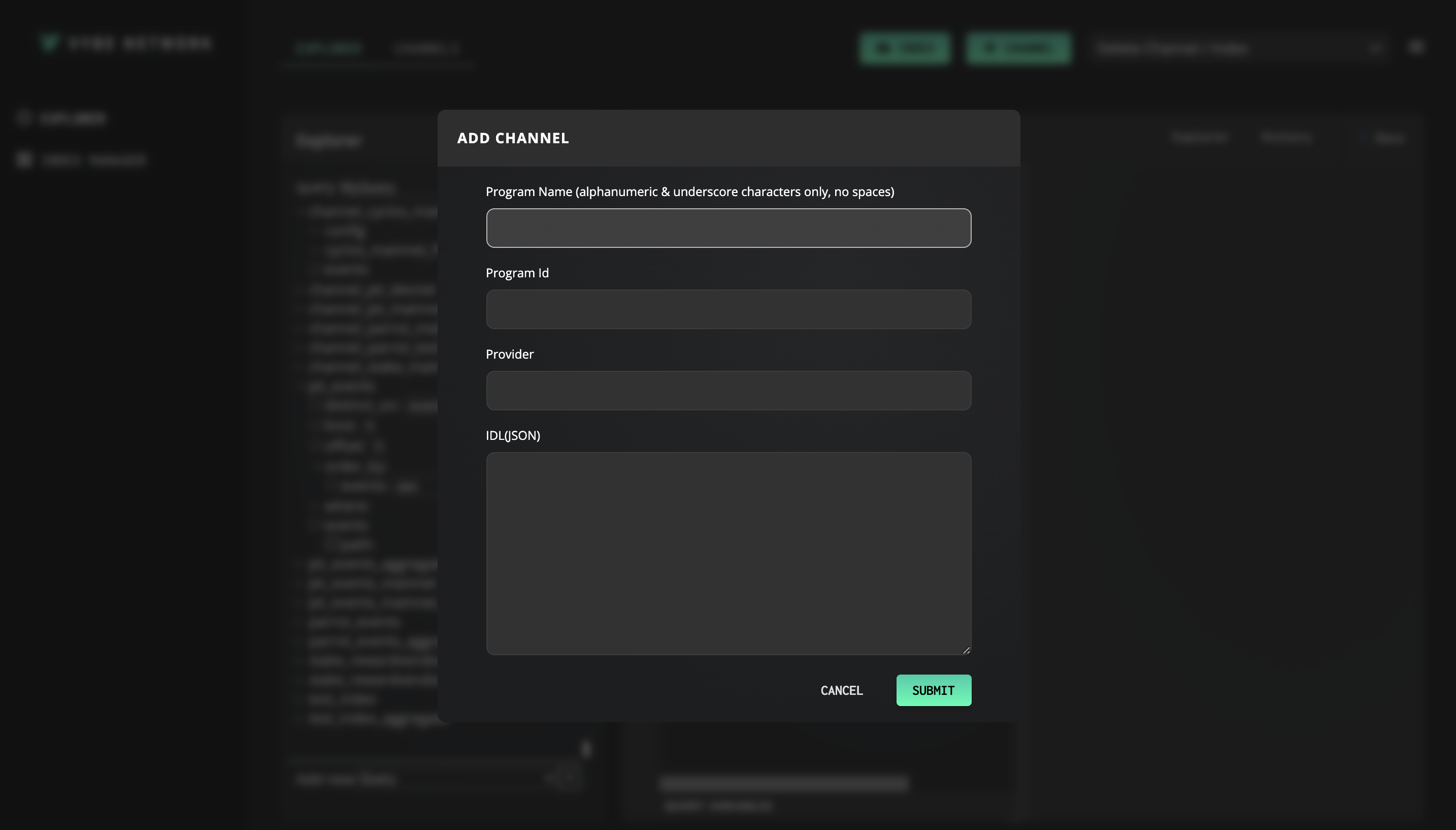
Add channel modal
-
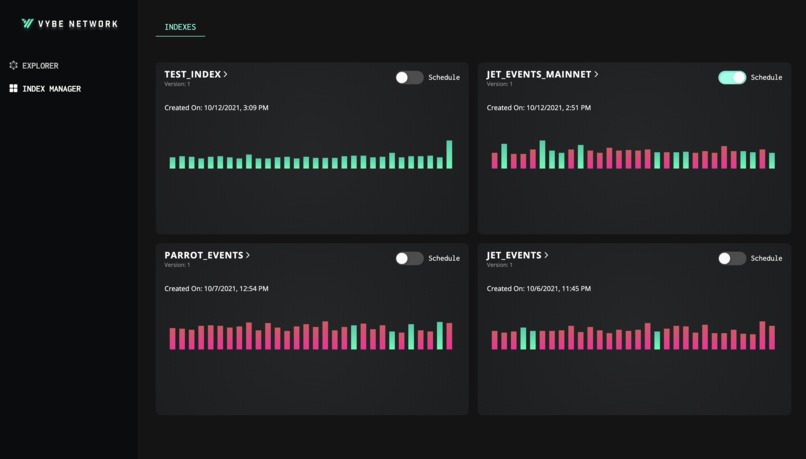
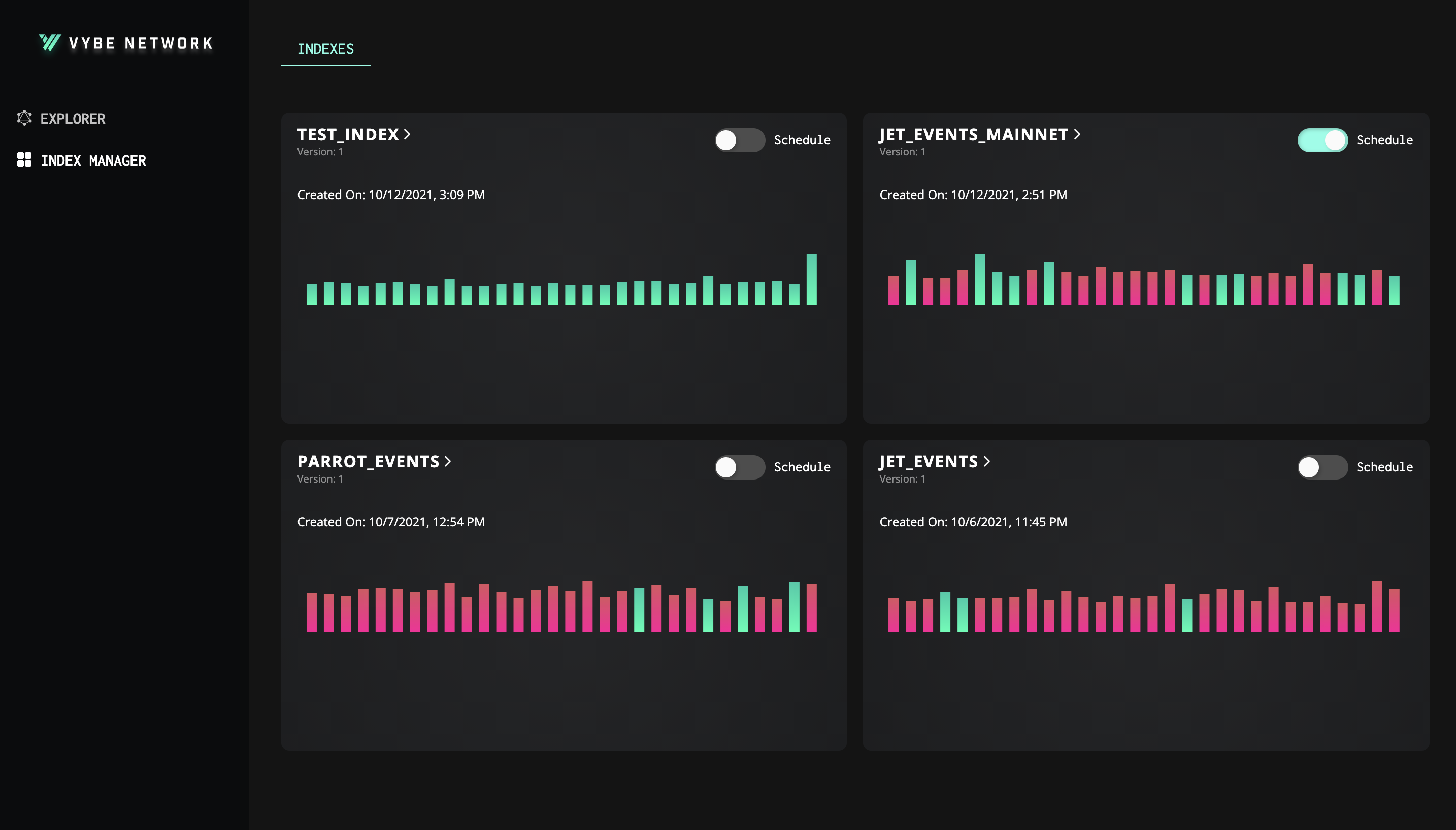
Index Manager
-
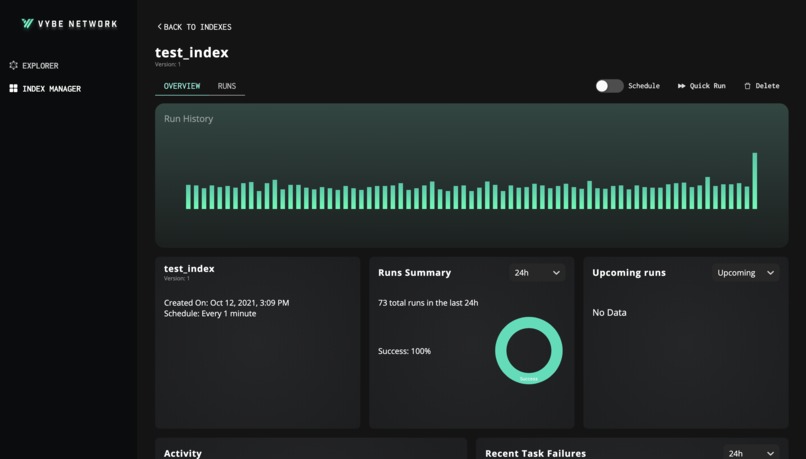
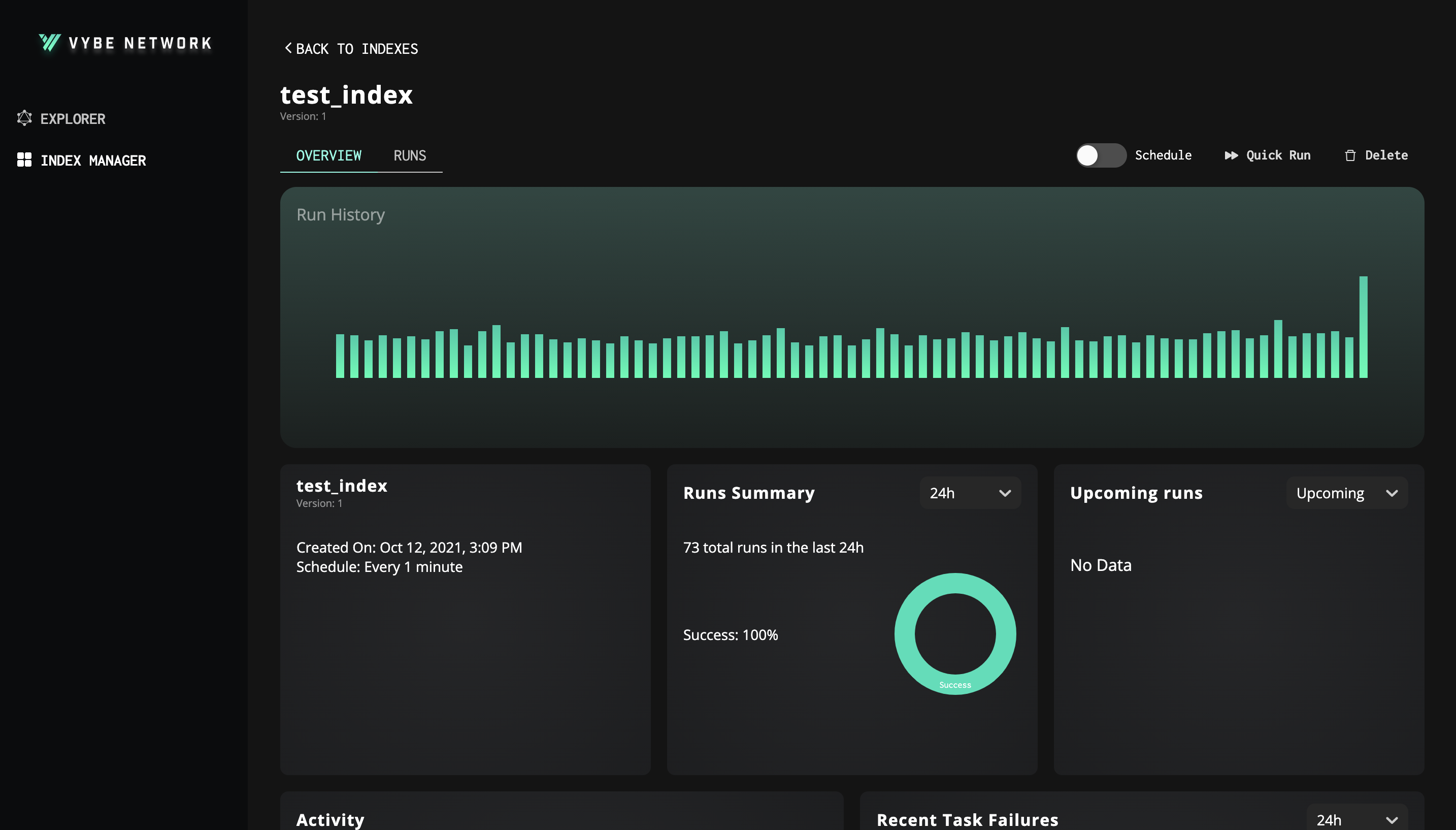
Index Overview page
-
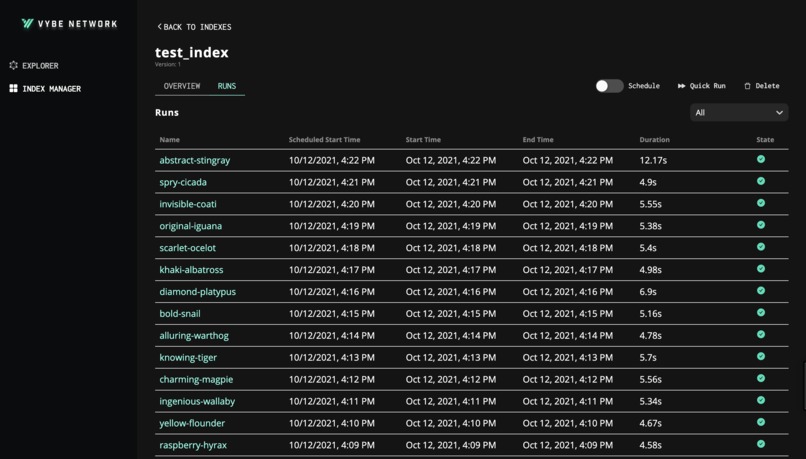
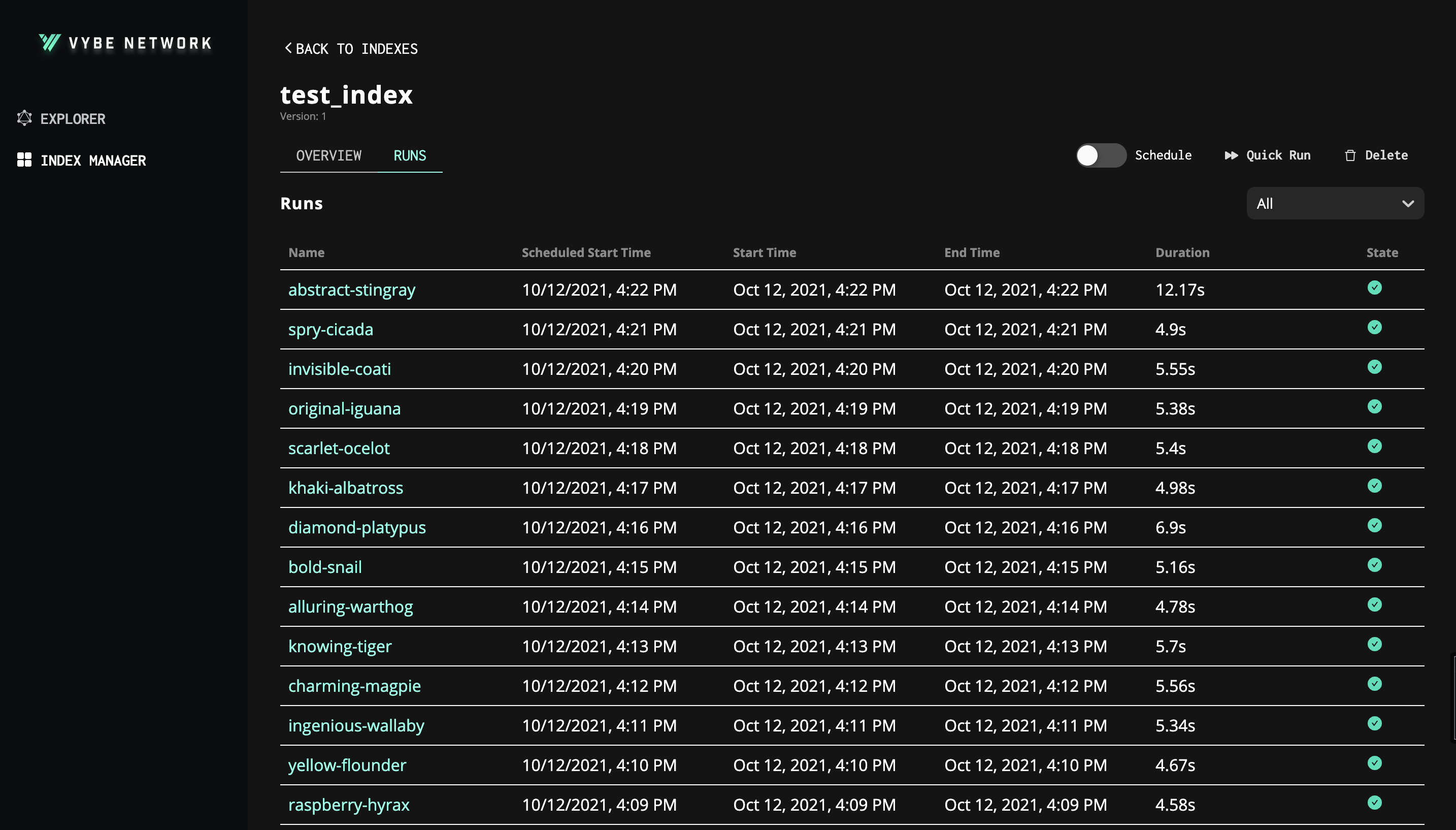
Runs page
**Please consider as web3 track
Inspiration
Our inspiration for Vybe Network was a culmination of conversations we had with different dev teams when we were developing our first project, Serum Pulse. We learned that a major pain point dev teams had was in extracting and indexing data on Solana. That motivated us to pivot and focus on a middleware solution and build out a data network with the goal of allowing our users to seamlessly access data on Solana. With its unmatched TPS, massive scalability, and developer bootstrapping, we are confident that Solana will be a data-rich ecosystem and the blockchain of choice for Defi and Web 3.0 dApps in the future. By building a decentralized data network to support Solana’s growth, Vybe Network can add a great deal of value to the ecosystem.
What it does
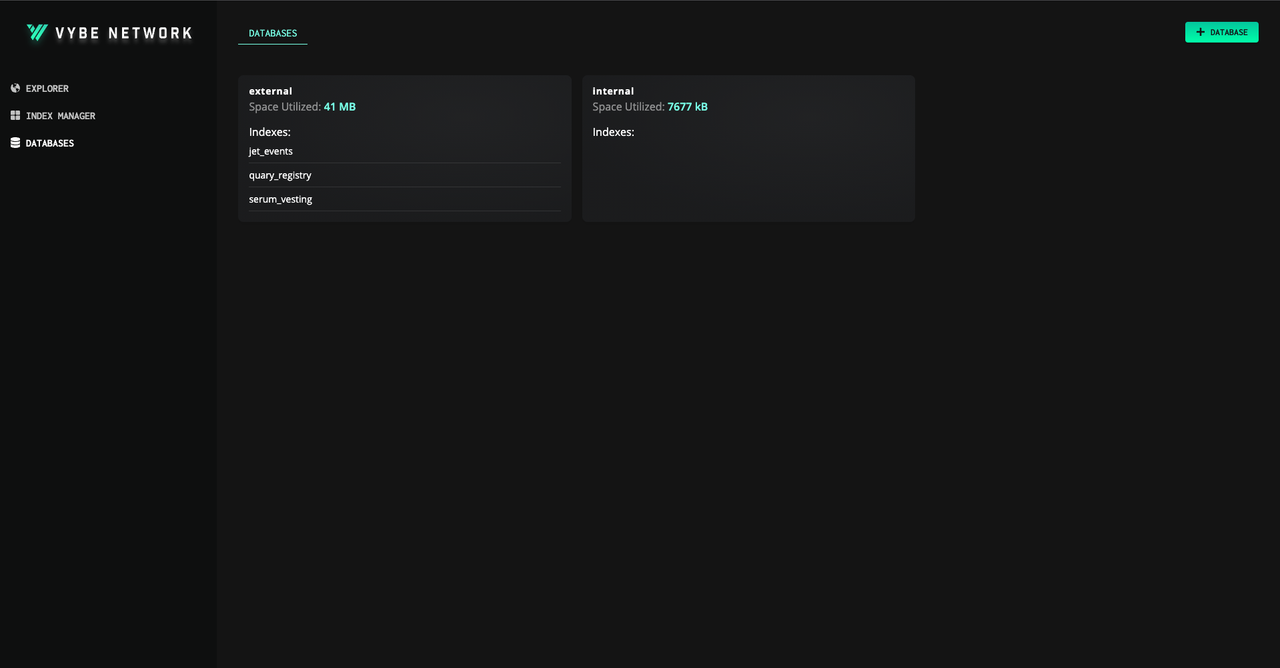
The core functionality of Vybe Network is to allow users to access, index, and monetize data on Solana. Currently, our key feature is our Vybe indexer which can auto-generate GraphQL graphs from Solana programs and index accounts and events with one click. The other core feature of Vybe is the explorer, where users can interact with and query data from their user-generated data channels before deploying indexes.
How we built it
Vybe was built with a user-centered approach where we developed our key features around the pain points of our primary users. From the onset of development, our team has been in touch with dev teams and has heavily emphasized user feedback and testing. Our goal is to build a product that is user-friendly and fills key data infrastructural needs of dev teams. On the technical side, Vybe is built with Node.js, Python, React, GraphQL and Docker. We have has also leveraged our extensive expertise in big data for the design and development of the network.
Challenges we ran into
One of the challenges we faced was prioritizing different features to focus on when we were building the MVP for Vybe Network. Ultimately we decided to prioritize deliverables that we believed would create the most value for our users and align with our vision for Vybe. Additionally, we had to overcome the infrastructural challenges typical of a rapidly growing ecosystem. This included issues with RPC node rate limits and downtimes.
Accomplishments that we're proud of
We are extremely proud of how quickly we were able to pivot from our original idea and create a working product within 3 months. It’s been an amazing experience connecting with the community on Solana, and the connections and partnerships we’ve formed is something we’re very proud of as well.
What we learned
Building Vybe Network has been a huge learning experience for the entire team. We gained a lot of exposure to all of the exciting protocols being developed and we’re constantly thinking of new use cases for our project. For development, our team had to adapt and use new technologies like GraphQL and the Anchor framework. On the product side, we’ve been learning how to effectively implement tokenomic models into the future features for Vybe.
What's next for VYBE Network
Our next immediate goal is to refine the user experience and functionality for our explorer and index manager. Further down the line, our focus will be on developing a data marketplace in conjunction with the Vybe utility token. With our data marketplace, we plan to implement our token to create incentive and reward structures for indexers to provide reliable data for the Solana community. Once Vybe Network is fully decentralized, we plan to add analytics and data visualization on top of our indexing features.




Log in or sign up for Devpost to join the conversation.