Inspiration
Modern cybersecurity tools are powerful but often difficult to understand for students, startups, and smaller organizations. Most vulnerability scanners simply display technical findings without explaining the real impact behind them. We wanted to build a platform that combines cybersecurity, AI, and modern UI design into a single intelligent experience. Inspired by enterprise SOC platforms like CrowdStrike, Splunk, and Microsoft Defender, we created VulnSight AI to make vulnerability analysis more visual, explainable, and accessible.
What it does
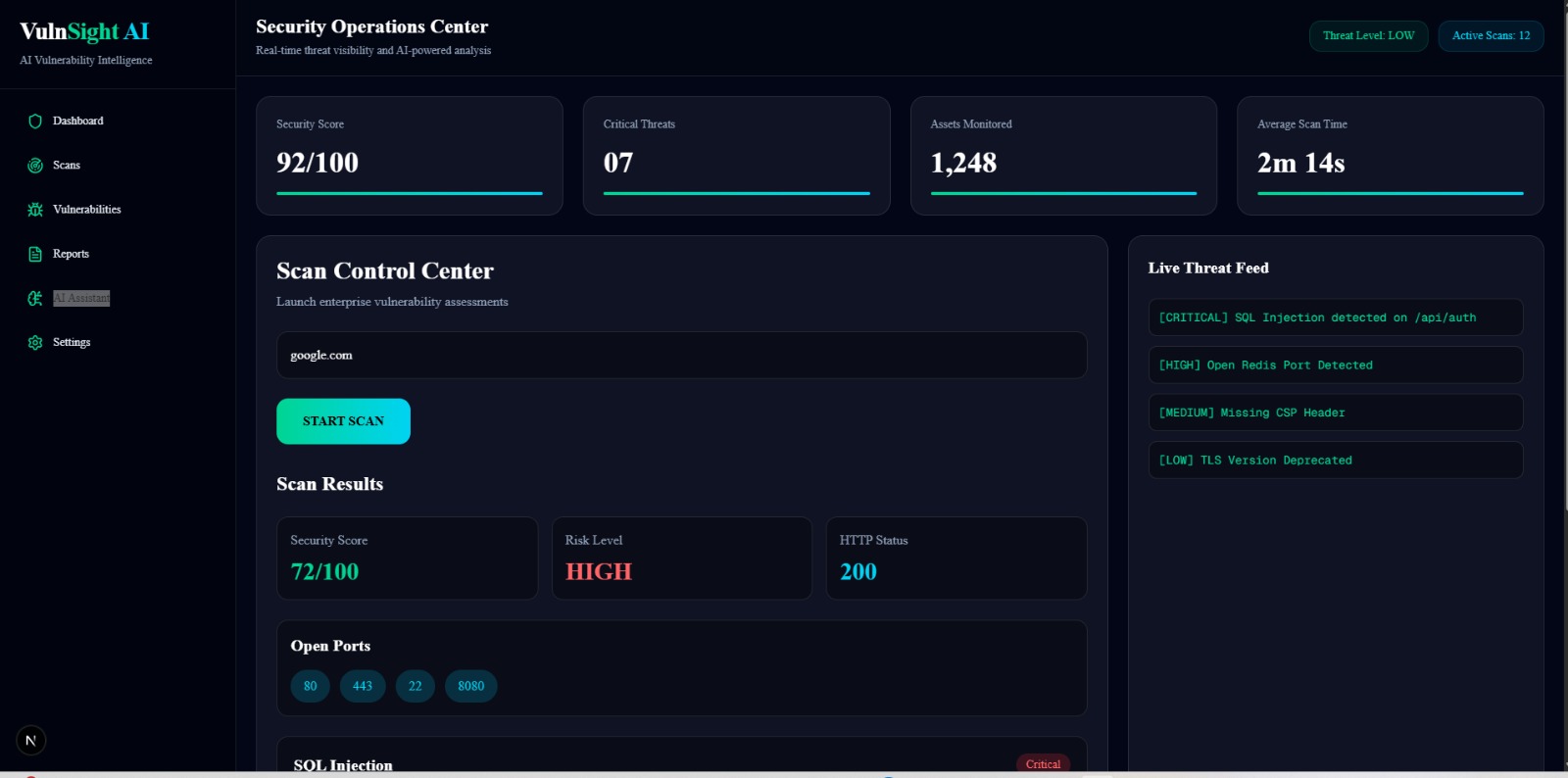
VulnSight AI is an AI-powered vulnerability intelligence platform that scans domains, IPs, and APIs for security weaknesses. The platform analyzes risks in real time, detects vulnerabilities such as missing security headers and exposed services, calculates security scores, and displays findings in a modern SOC-style dashboard.
The platform also provides AI-assisted explanations describing:
- what the vulnerability is,
- how attackers can exploit it,
- the business impact,
- and remediation recommendations.
How we built it
We built the frontend using:
- Next.js 16
- TypeScript
- Tailwind CSS
- shadcn/ui
- Framer Motion
The backend was developed using:
- FastAPI
- Python
- REST APIs
We implemented a modular scanning engine capable of:
- security header analysis,
- HTTP checks,
- open port visualization,
- vulnerability scoring,
- and dynamic risk reporting.
The frontend communicates with the backend through API endpoints and renders live scan results in an enterprise-grade cybersecurity dashboard.
Challenges we ran into
One of the biggest challenges was integrating a modern frontend with a scalable backend architecture while maintaining real-time dashboard responsiveness.
We also faced difficulties with:
- API routing and CORS configuration,
- dynamic rendering of scan results,
- transitioning from mock vulnerability data to real scanning logic,
- and designing a professional SOC-style UI that felt production-ready instead of a basic hackathon prototype.
Debugging frontend-backend communication and creating smooth enterprise-grade animations also took significant effort.
Accomplishments that we're proud of
We are proud that VulnSight AI evolved from a simple idea into a realistic cybersecurity platform with:
- a premium enterprise dashboard,
- real vulnerability scanning logic,
- live API integration,
- AI-powered security explanations,
- and scalable SaaS-style architecture.
The project successfully combines:
- cybersecurity,
- artificial intelligence,
- cloud architecture concepts,
- and modern frontend engineering
into a unified experience that feels like a real startup product.
What we learned
Throughout this project we learned:
- advanced Next.js frontend architecture,
- FastAPI backend integration,
- cybersecurity scanning fundamentals,
- vulnerability analysis workflows,
- enterprise dashboard design principles,
- and the importance of explainable AI in security.
We also learned how critical user experience is in cybersecurity tools. Even advanced security findings become more valuable when presented clearly and visually.
What's next for Vulnsight-ai
We plan to expand VulnSight AI into a more advanced AI-driven cybersecurity platform by adding:
- real-time WebSocket scan streaming,
- CVE threat intelligence feeds,
- AI security chatbot assistance,
- OWASP Top 10 analysis,
- SSL and TLS inspection,
- attack surface mapping,
- PDF report exports,
- authentication and team collaboration,
- and cloud-native deployment using AWS services.
Our long-term vision is to build a scalable, explainable AI security operations platform that helps organizations understand and remediate vulnerabilities faster and more intelligently.
Built With
- aws-concepts
- css3
- dynamodb
- fastapi
- framer-motion
- github
- html5
- next.js-16
- postgresql
- python
- react
- rest-apis
- shadcn/ui
- tailwind-css
- typescript
- uvicorn

Log in or sign up for Devpost to join the conversation.