Inspiration The university experience has become a graveyard of "cooling systems." We saw students trapped in rigid, 20-year-old portals that don’t reflect the chaos of actual campus life. We were inspired by the concept of the Foundry: taking the raw, messy heat of student struggles—the missed classes, the crowded libraries, and the broken social links—and melting them down. We wanted to build the "beast" that students use to take back control of their time and environment.
What it does VULCAN is a high-intensity Campus Command Center. It moves beyond static schedules to provide:
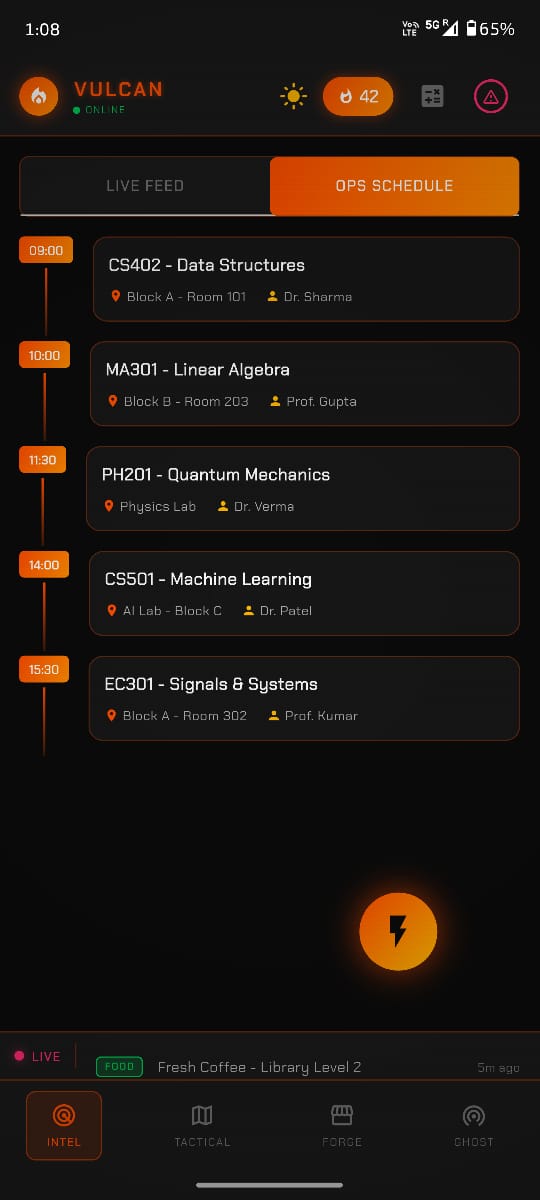
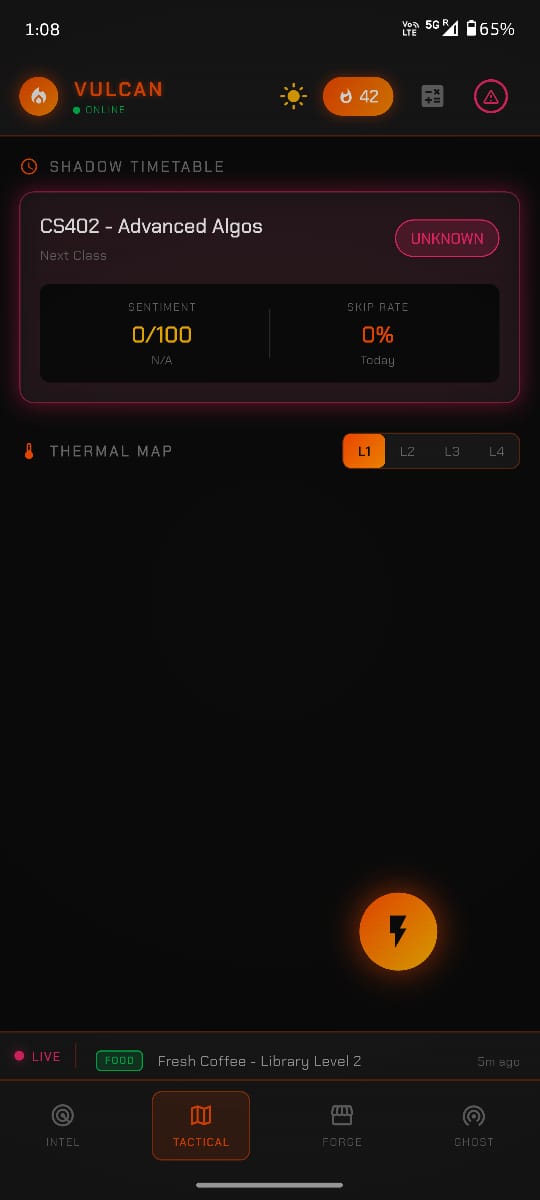
Shadow Intelligence: Scrapes university data to provide "True" Timetables—integrating professor ratings and historical attendance data.
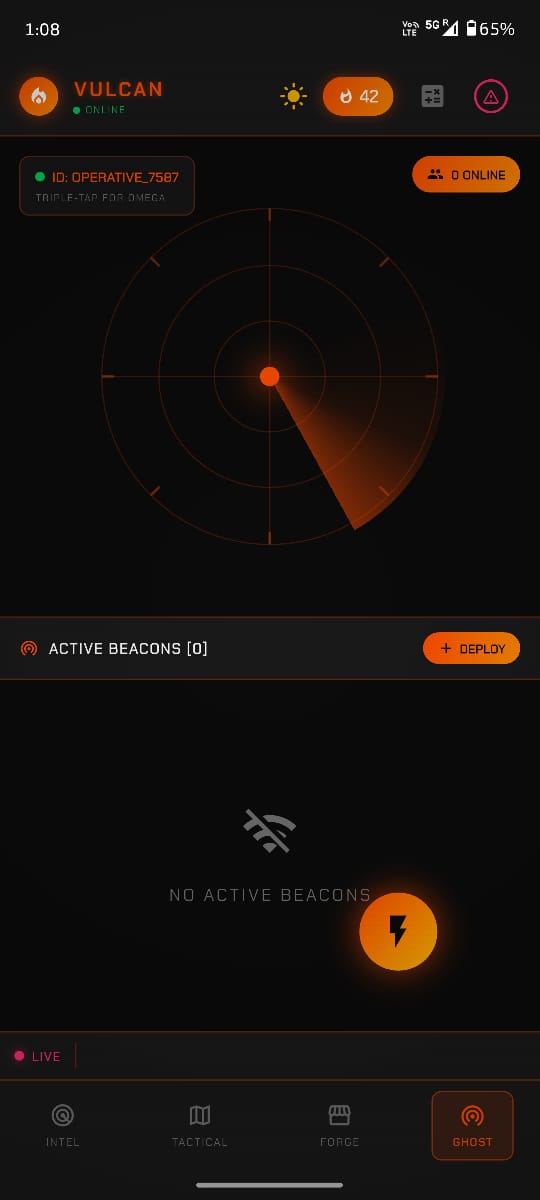
Tactical Heatmapping: A live, crowdsourced map showing the density of study spots, the length of cafeteria lines, and real-time "quiet zones."
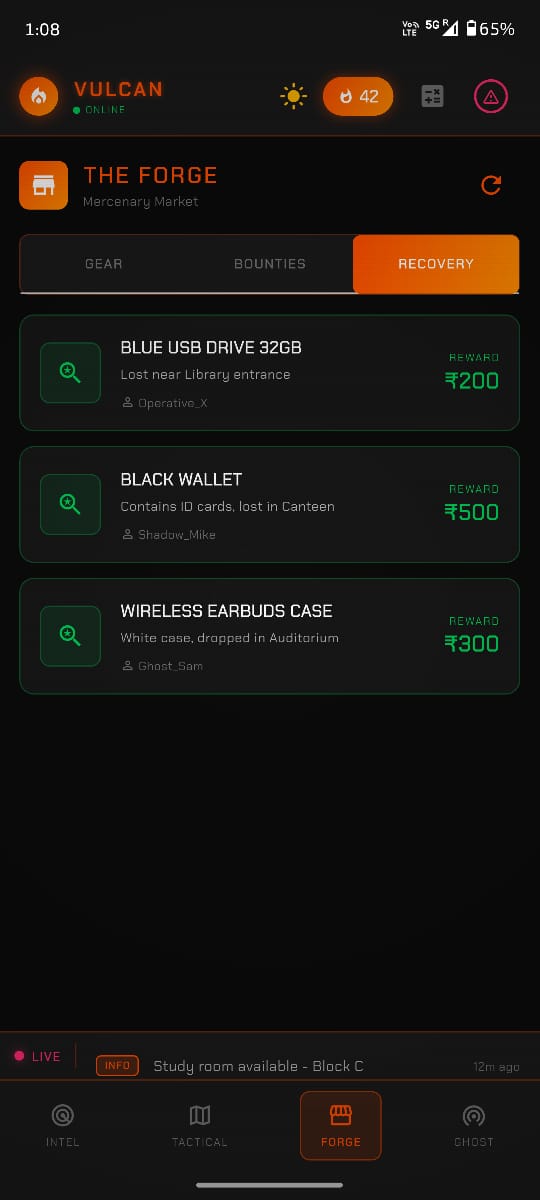
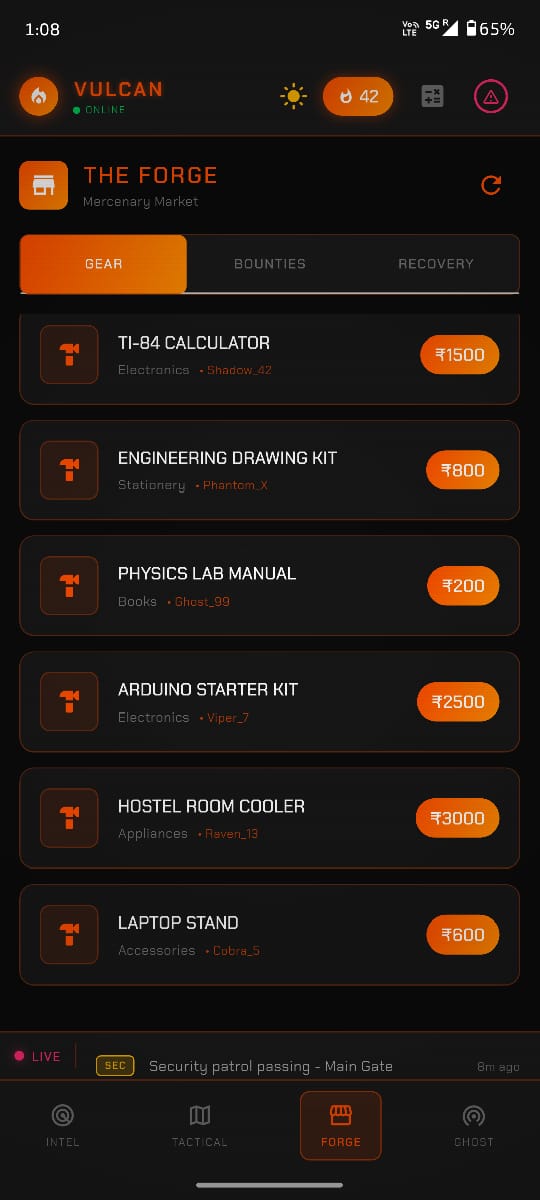
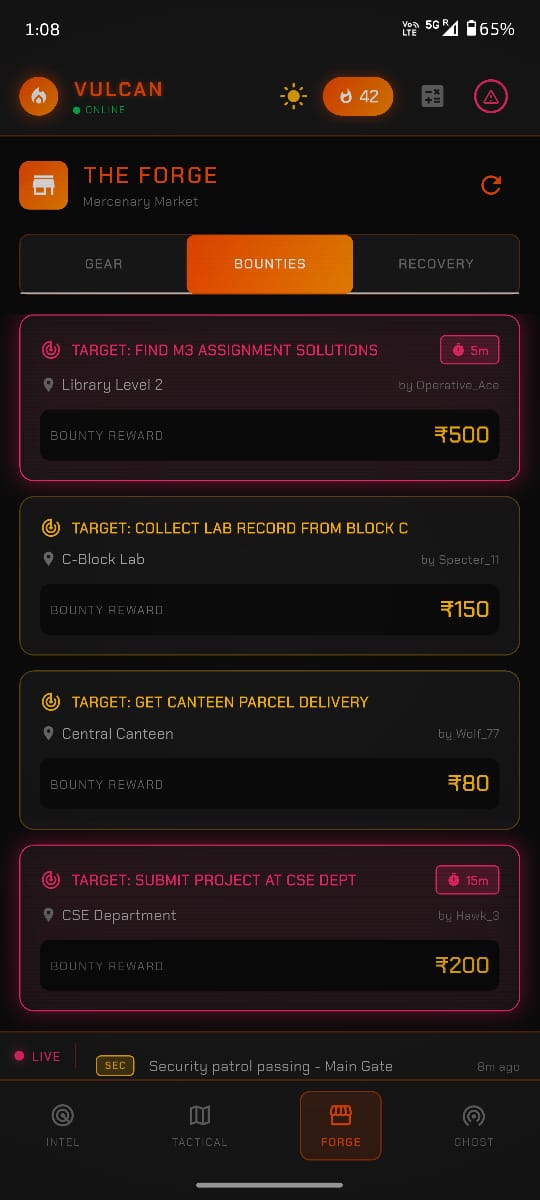
The Forge (Marketplace): A hyper-fast, peer-to-peer e-commerce layer for instant campus needs (notes, seat swaps, or last-minute supplies).
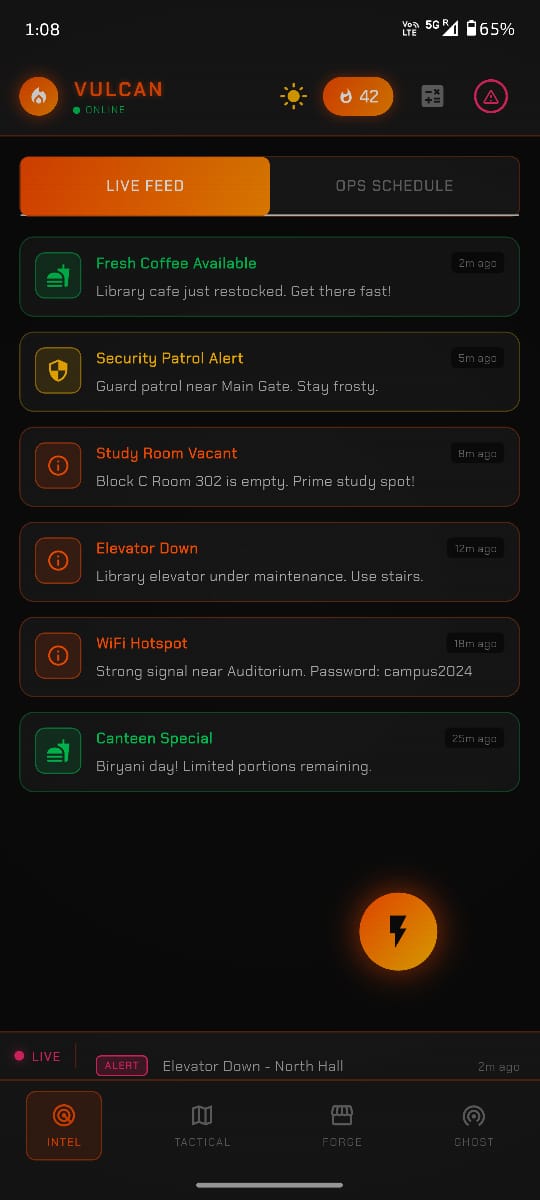
Automated Sync: Real-time data aggregation that alerts users to campus events or emergencies before the official emails even hit their inbox.
How we built it We forged VULCAN using a high-performance stack designed for aggression and speed:
The Core: Built with Flutter for a dark, industrial UI that feels like a tactical HUD.
The Engine: A Firebase backend for real-time synchronization of the Heatmap and Marketplace.
The Alchemist (Scrapers): Custom Python/Selenium scripts that pull data from fragmented campus portals and social feeds, transforming raw HTML into actionable intelligence.
The Edge: Integrated Google Maps API with custom styling to visualize campus "hot zones" in real-time.
Challenges we ran into The "Obsidian" systems of the university didn't want to break. We faced significant hurdles with data fragmentation—campus info is spread across PDF schedules, legacy web portals, and Discord servers. Writing robust scrapers that could normalize this "trash" data into a clean JSON stream was a battle. Additionally, balancing real-time battery consumption while maintaining a live GPS-based heatmap required intense optimization of our background refresh logic.
Accomplishments that we're proud of Zero Latency: We achieved sub-200ms updates on the "Mercenary Market," making peer-to-peer transactions feel instantaneous.
The Aesthetic: We successfully moved away from "clean/minimalist" design into a "LAVAPUNK" industrial interface that actually resonates with the "student grind."
The Scraper Logic: We built an adaptable engine that can be pointed at almost any legacy university portal to extract schedule data.
What we learned We learned that data is the new heat. Most campus problems aren't caused by a lack of resources, but by a lack of visibility. We discovered that students are willing to contribute to a collective "beast" if it saves them five minutes of standing

Log in or sign up for Devpost to join the conversation.