VTAS – Vehicle Telemetry Analytics System Inspiration
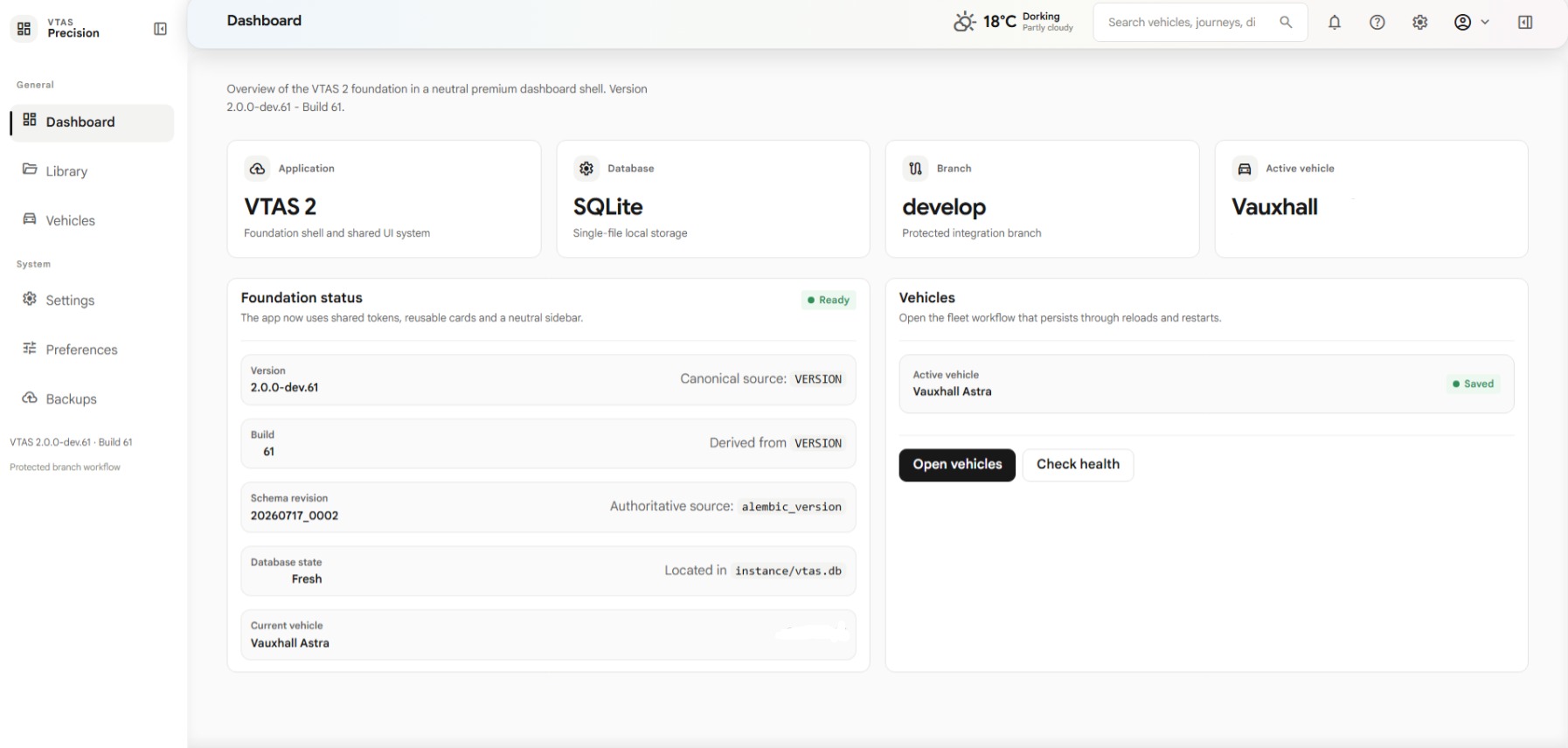
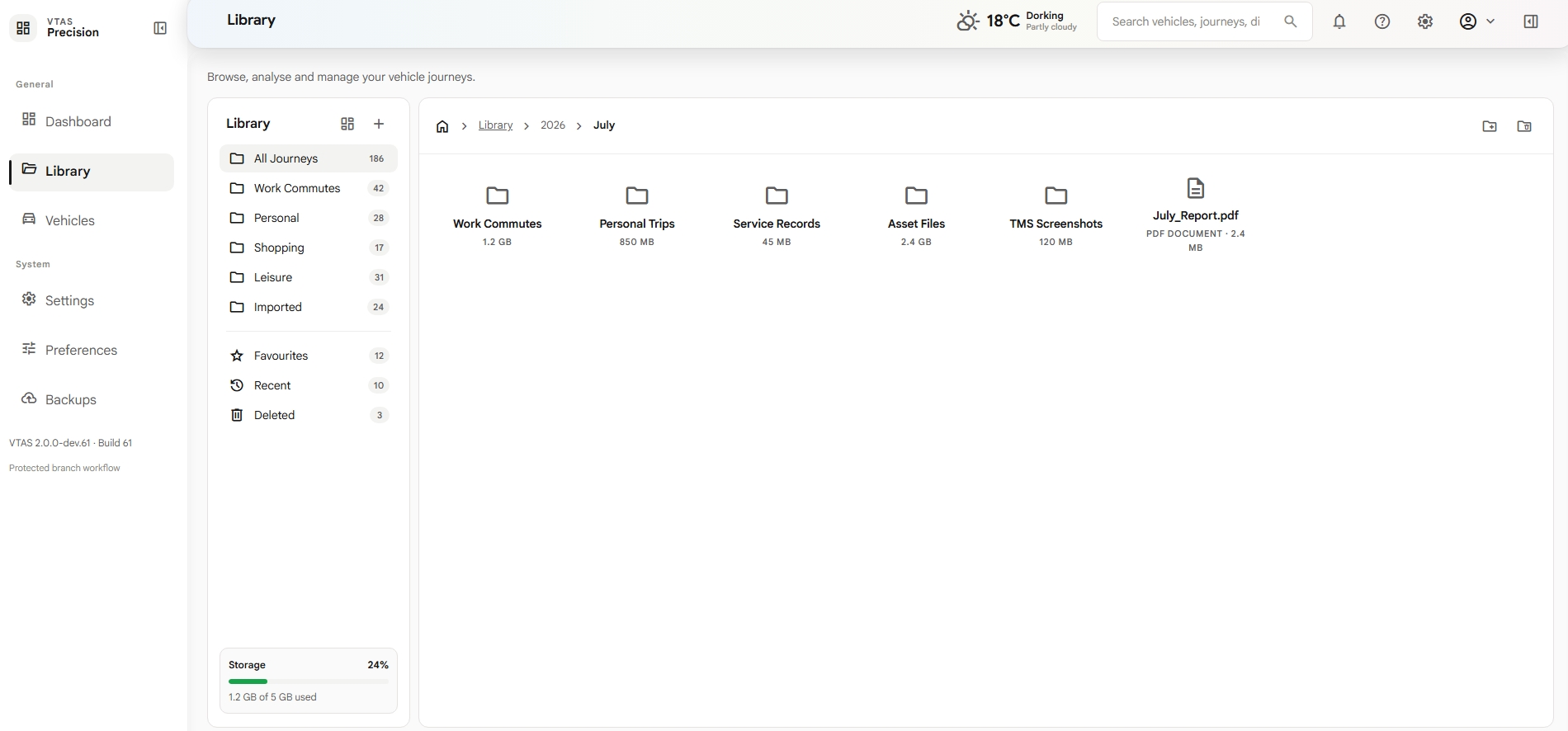
VTAS began as a personal project to better understand my daily commute using real OBD-II telemetry collected from my own vehicle. What started as analysing fuel economy evolved into building a complete vehicle telemetry platform focused on privacy, usability and long-term maintainability.
Rather than uploading driving data to cloud services, I wanted a local-first application where I owned my data completely.
Building with AI
This project was built through an AI-assisted software engineering workflow using ChatGPT and Codex.
Instead of asking AI to generate an application in one prompt, I treated it as an engineering partner. Every feature was developed as a small vertical slice with architectural planning, implementation, testing, documentation and code review before moving to the next feature.
The result has been hundreds of iterative improvements rather than one large code generation exercise.
Features
VTAS currently includes:
Vehicle profile management Journey import from OBD-II CSV logs Journey metadata extraction Maintenance scheduling Multi-vehicle support Local SQLite storage Release history Versioned database migrations Automated testing Backup and recovery workflow Tesla-inspired user interface
The application is designed as a modular monolith so new features can be added without increasing complexity.
Challenges
The biggest challenge wasn't writing code—it was learning how to collaborate effectively with AI.
Early versions became difficult to maintain because I asked AI to build too much at once. I eventually restarted the project and adopted a disciplined workflow based on small, testable feature slices, versioning, documentation and frequent backups.
That change dramatically improved both the quality of the software and my own understanding of software engineering.
What I learned
This project taught me that AI is most valuable when paired with engineering discipline rather than replacing it.
By combining structured planning, incremental development and continuous testing with AI assistance, I was able to build a significantly larger and more maintainable application than I could have produced through one-shot prompting.
VTAS continues to evolve, but it already demonstrates how AI can accelerate real software engineering while keeping the human developer responsible for architecture, design decisions and quality.
Built With
- alembic
- chatgpt
- codex
- css3
- csv
- flask
- git
- github
- html5
- javascript
- jinja
- material
- openai
- pytest
- python
- sqlalchemy
- sqlite
- symbols

Log in or sign up for Devpost to join the conversation.