Inspiration
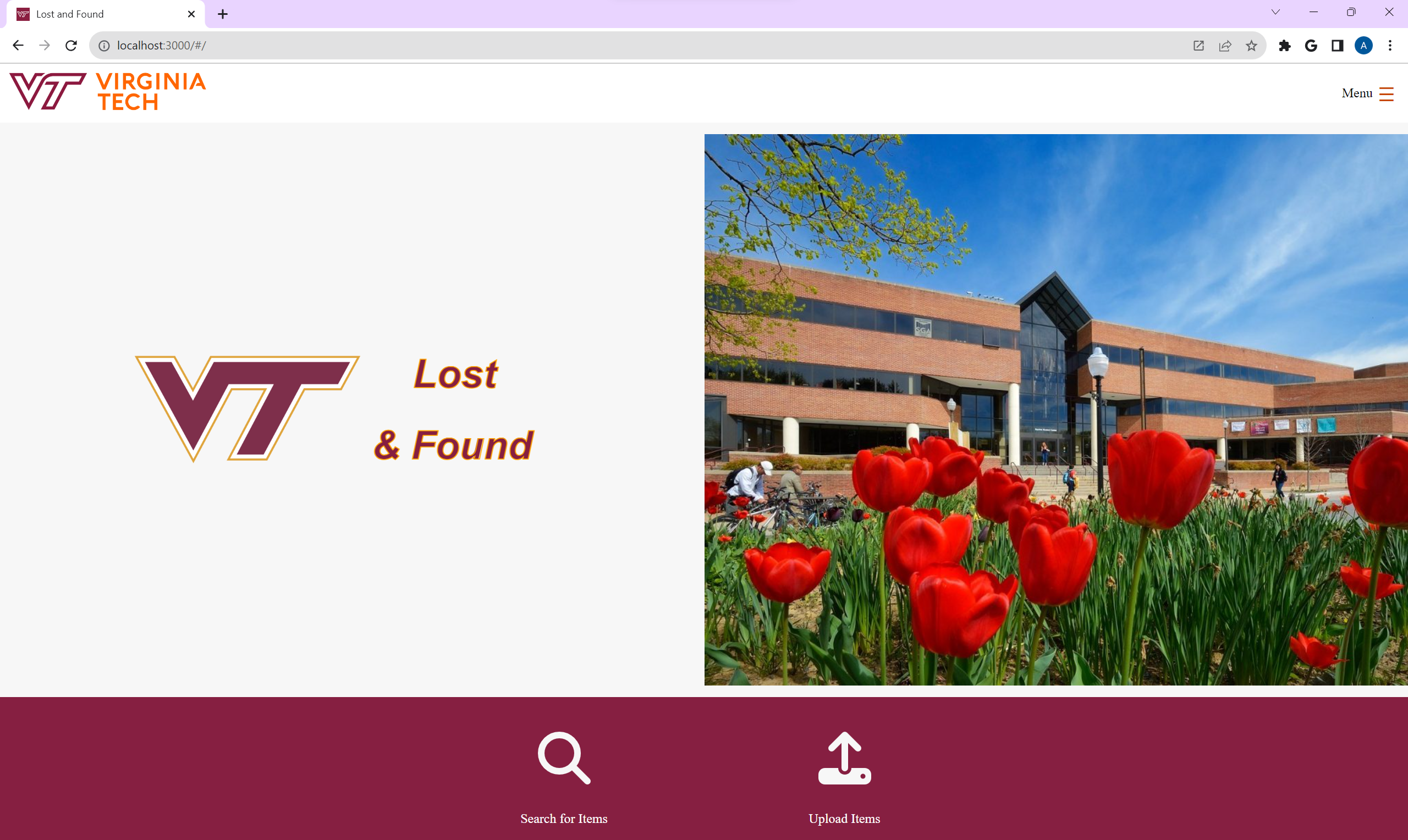
Misplacing objects is a common issue we all face. The typical solution is a pile or box near the entrance which is far from efficient. With people moving through various places daily, retracing steps wastes time. To combat this we made an online database for Virginia Tech, listing lost items with contact info, simplifying retrieval.
What it does
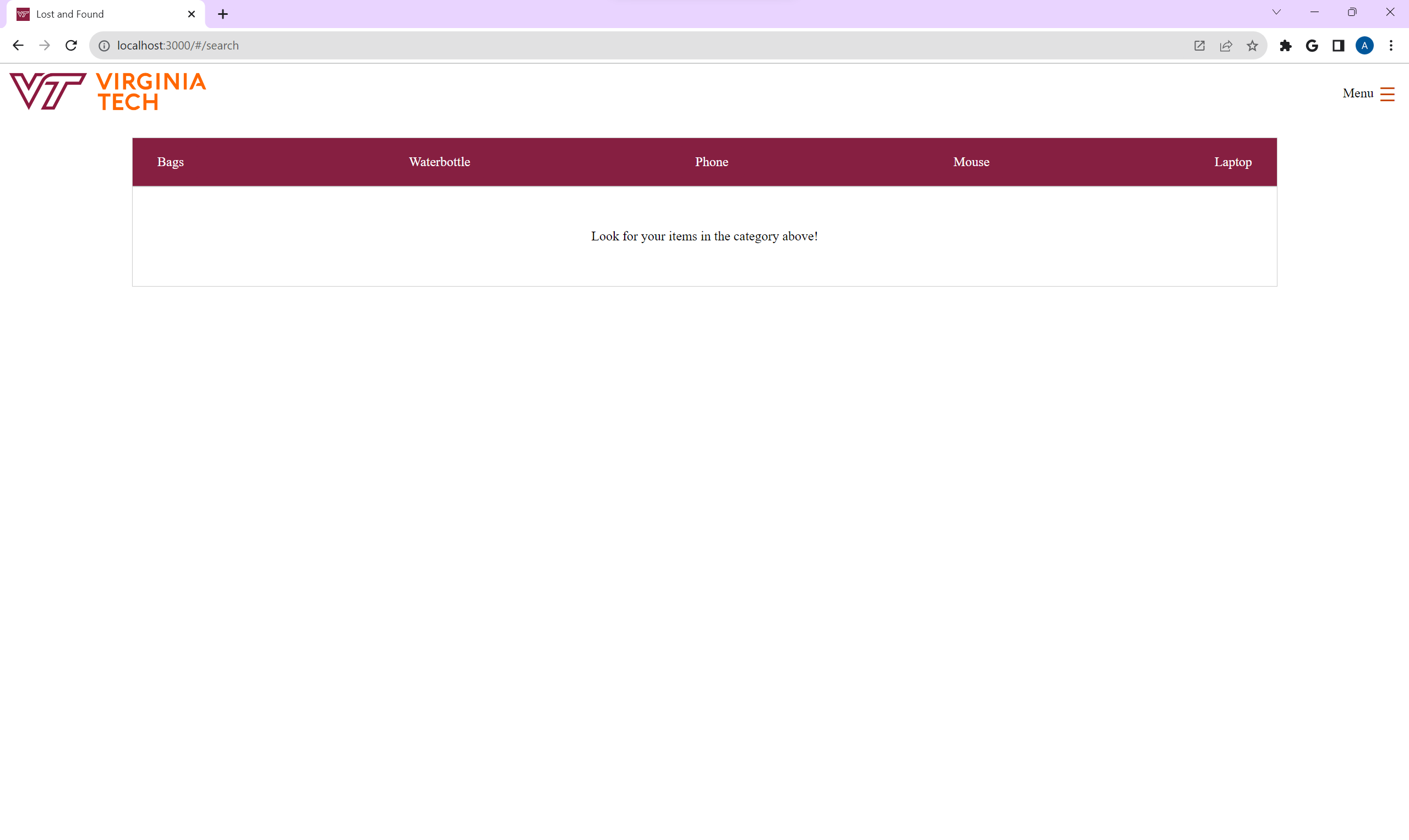
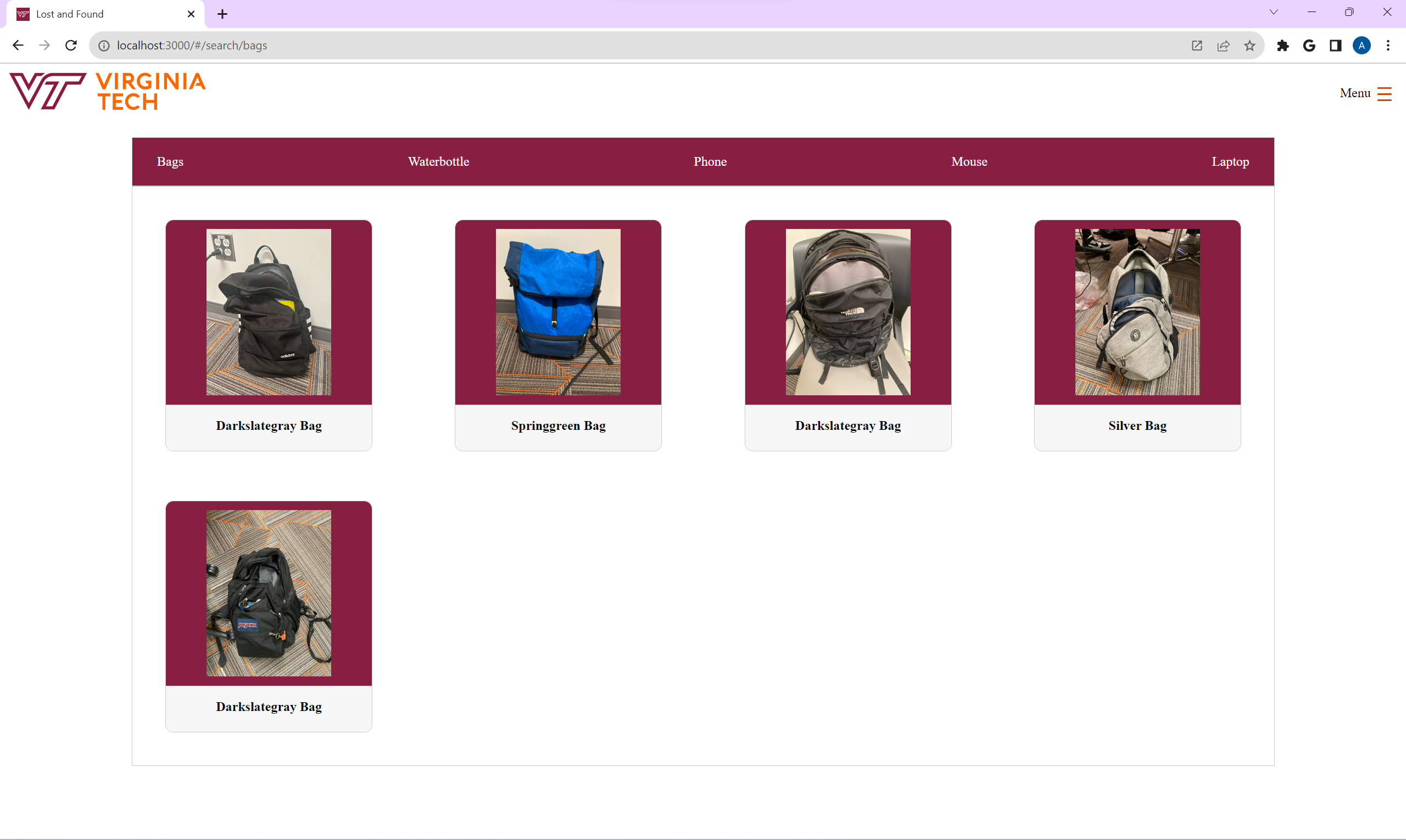
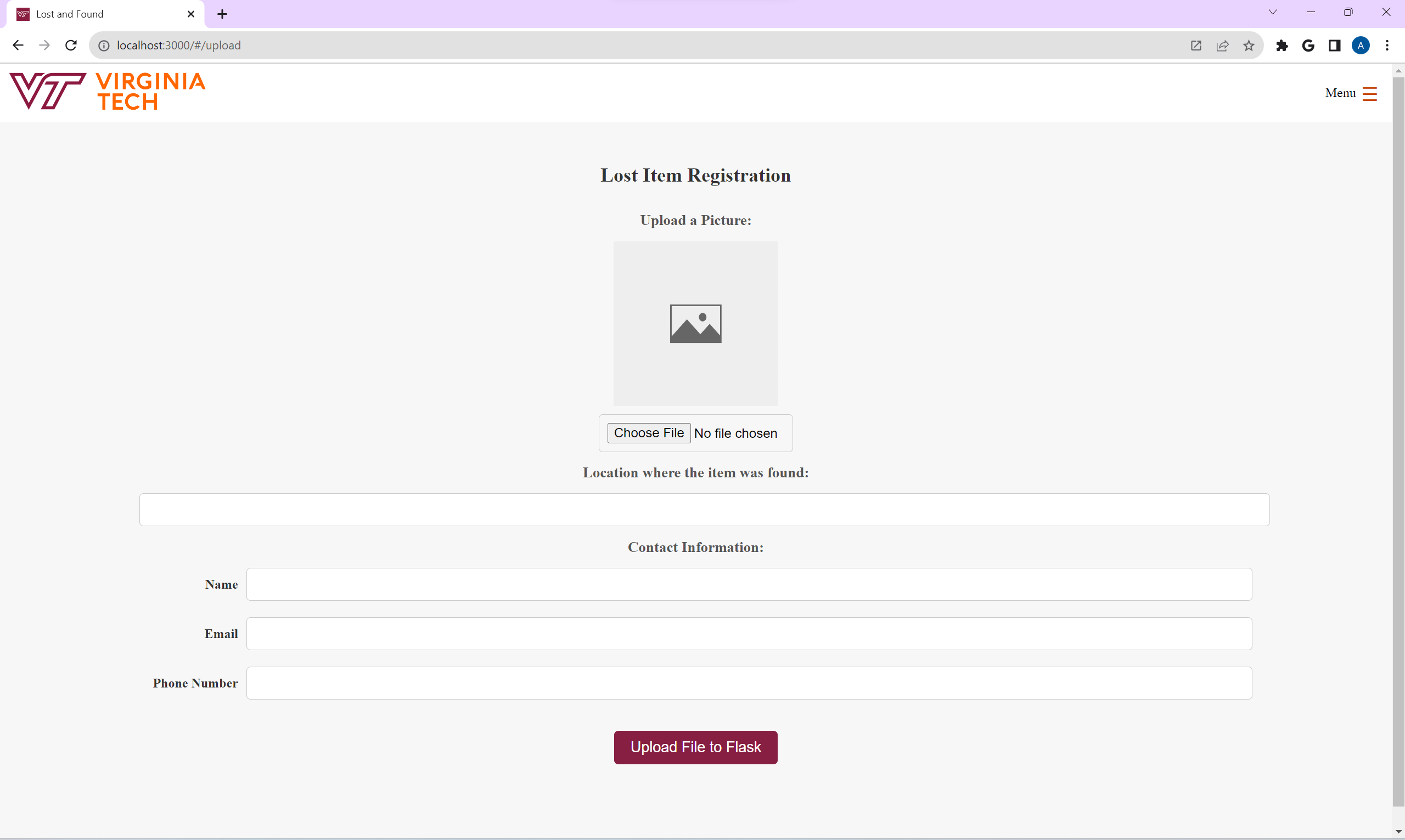
Our website streamlines lost item reporting. Users submit a form, including a photo and contact info for found items. Our AI identifies and categorizes these objects in our database. Users easily locate items in our organized sections, connecting with the uploader if they spot their belonging. Additionally, our AI provides names and colors for quick identification.
How we built it
We employed React for the frontend, Flask to create our robust API, and harnessed our Google Vision AI using Python. Flask seamlessly facilitated the flow of information from React to our API for the AI to identify the items. Following our AI's identification of items, we meticulously stored this valuable data in MongoDB Atlas. When users try to find lost items, Flask efficiently retrieves and presents this information from MongoDB Atlas to React, ensuring a smooth and reliable user experience.
Challenges Faced and Overcome
Throughout the course of our project, we encountered several formidable challenges that truly put our problem-solving skills and determination to the test.
1.) MongoDB Connectivity:: Establishing a connection to MongoDB turned out to be a complex endeavor but after figuring it out we were able to use it as a effective database management.
2.) Flask Setup for Get and Upload: Configuring Flask to handle both GET and upload requests presented its own unique set of challenges.
3.) Seamless System Pipeline Integration: Ensuring a seamless flow of data between various components of our system was no small achievement. The task demanded a lot of planning and discussion.
4.) Integration with Google Vision: The integration of Google Vision into our system introduced its own share of obstacles. We had to ensure flawless communication with this powerful tool, which required extra effort and ingenuity.
Despite these formidable hurdles, we embraced them as invaluable learning experiences. They provided us with opportunities to hone our problem-solving abilities and emerge stronger, ultimately contributing to the success of our project.
Accomplishments that we're proud of
One of the accomplishments we're most proud of is the successful creation of a comprehensive pipeline that streamlines our project's workflow. This pipeline was able to give us the ability to deliver quality results.
Another significant achievement is the development of the Flask API. Building this API required planning and coding, and it now serves as a crucial tool for our project.
Our team's dedication and hard work in ensuring the website's functionality have paid off and we were able to complete our guide. Overall, these accomplishments demonstrate our team's capability to combine technical expertise with innovative thinking to achieve our project goals.
What we learned
During this hackathon, the project that we worked on was produced using Google Vision and Flask for the backend. We used MongoDB in order to attempt to win the prize as well. Finally for the front end, we were already familiar with React, so we continued to refine on knowledge on that framework. This was the first time that any of us had used Google Vision, Mongo, and Flask, so we gained a lot of knowledge with Python specifically.
What's next for VT Lost and Found
The next steps that we think that we can implement are better detection through the usage of more high quality data, and a larger dataset. We think that we could also implement more categories for users to search through, due to the fact that misc. will most likely contain many unlabeled objects. Finally, the most useful thing we believe should be implemented is a search bar, allowing users to far more easily search for their lost items within the MongoDB.

Log in or sign up for Devpost to join the conversation.