-
-
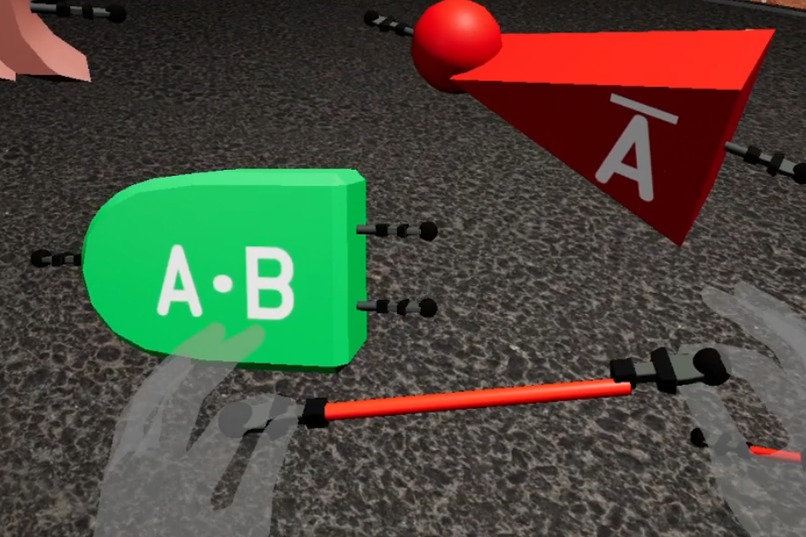
Logic Gates go brrrr
-
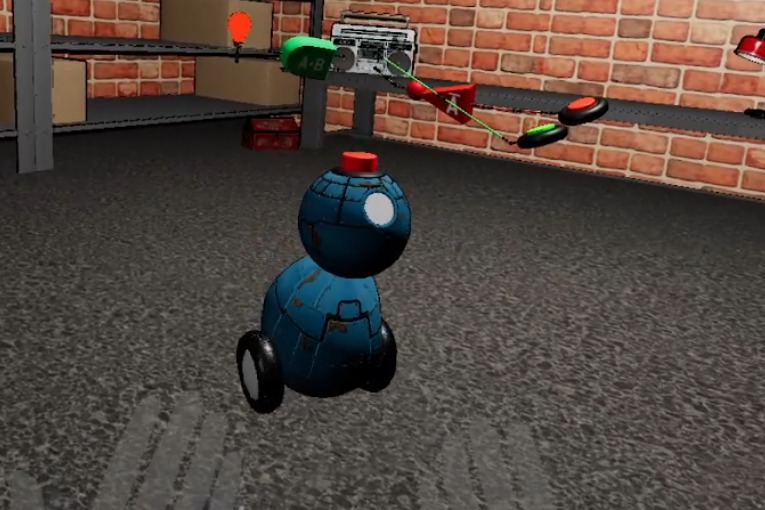
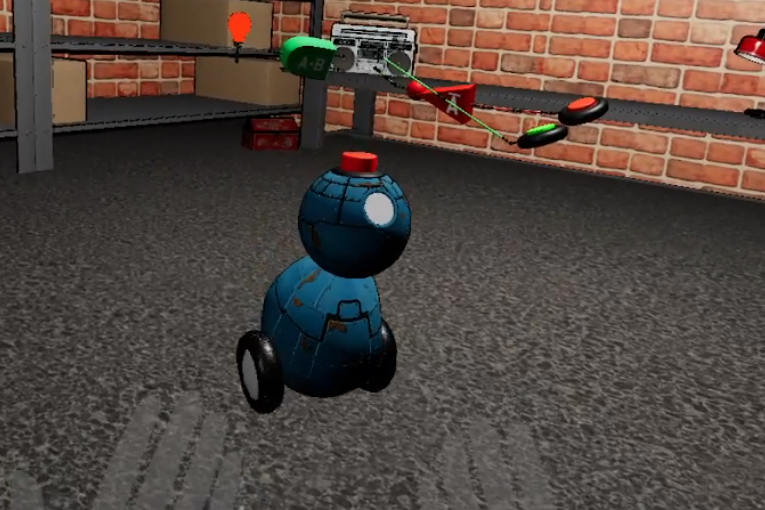
he is Gizmo :)
-
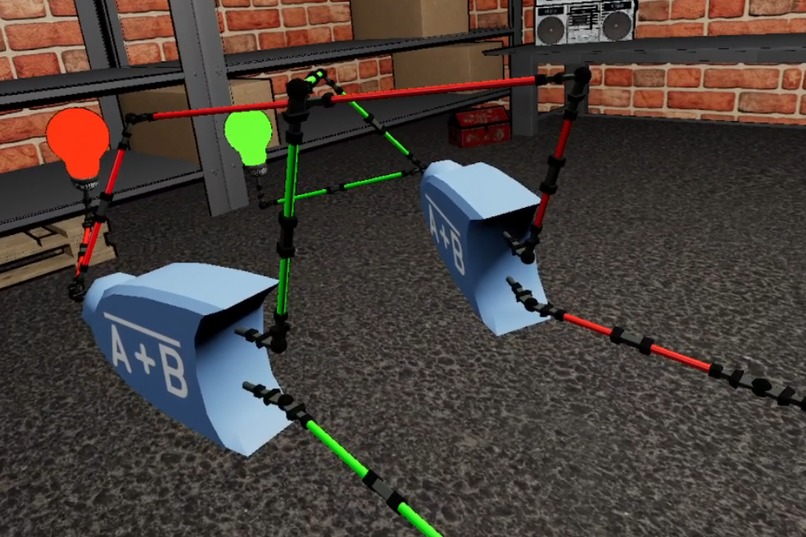
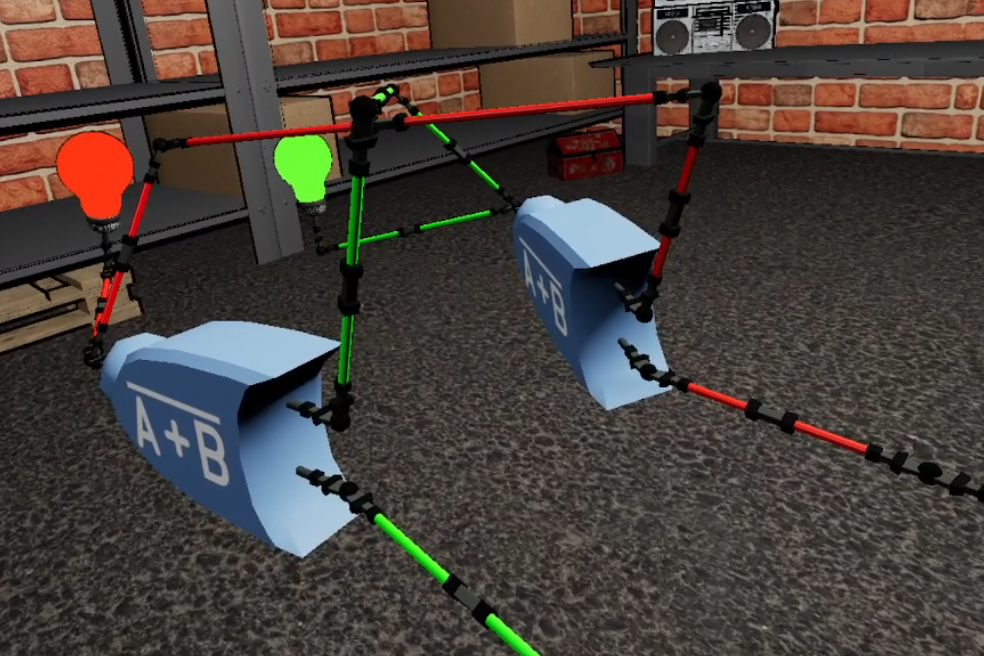
SR Latch Circuit
Inspiration
Seeing our university peers struggle with basic physics concepts, especially in the electrical fields, led us to try and help them get a real practical understanding of the topics at hand. The issues seemed to sprout from the lack of real experience during high school physics lessons. Being interested in virtual reality, we started building a game with the goal of making it easy for everybody to get this kind of experience without any of the possible hazards.
What it does
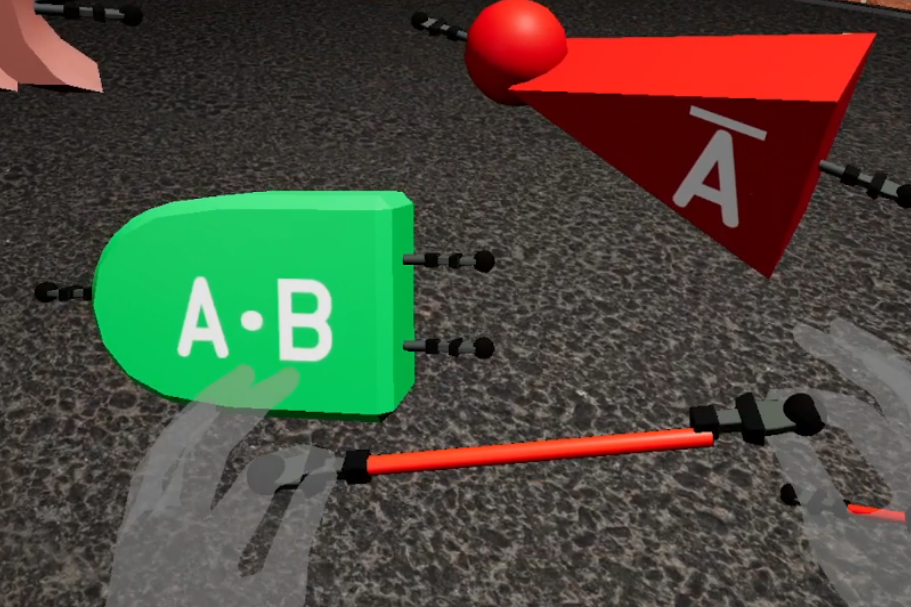
It places the user in a virtual reality space, accompanied by a helpful robot that gets them various basic parts (logic gates, resistors, wires, etc.), and lets them play with these concepts by themselves.
How we built it
We used Unreal Engine 5 for the most part of development, but also Blender to make many of the 3D models ourselves. For the VR development part we used Meta Interaction SDK because it offers more immersive ways for the player to interact with the world. Especially the hand tracking system, which we took advantage of as much as possible and actually recommend playing with it more than with controllers.
Challenges we ran into
In terms of code, it was difficult to prepare in advance for all the possibilities that such a circuit builder could bring. VR Hand tracking and things like the snapping system were not easy either. The artistic part, including textures, models and thing alike, was also very hard, as neither of us has that much experience.
Accomplishments that we're proud of
The concept has provoked the interest of our classmates and teachers, being in the app itself is somewhat fun, and the basic parts that are there work quite well and are not particularly resource intensive. We are also proud that we have a very stable foundation easy to build upon and develop a game that maybe can one day be used in schools all over the world.
What we learned
We got acquainted further with Unreal Engine development, especially the VR tools that Meta has to offer, but also 3D modeling, and even some physics concepts.
The short history
Initially, it was a small project that didn't really work out because of how clunky it felt. Back then, we weren't using any SDK or plugin from anybody. So we gave up on it until one day when we discovered Meta Interaction SDK which did create a little spark, yet we did not do anything about it until we saw this hackathon. Thus we decided to delete everything and start from scratch with another technique and other tools.
Current State of VRCircuits
Even though we have a stable foundation, the game is not even close to being a real playable educational game and we understand that. This is only the beginning. Even though we put a lot of effort in these past weeks, there is a lot more to come. We think we are around ~20% done.
What's next for VRCircuits
Implementation of various other electrical components (including interactive ones such as lights or electrical motors). Implementation of levels and goals for the player to achieve while learning. Improving Gizmo (the little robot that keeps following you) with more complex behaviors and reactions to the player. Testing the app in a few selected schools to see how it could be improved. Releasing for free for individuals around the globe so that anyone can learn in a more interactive way.
Built With
- c++
- metainteractionsdk
- unreal-engine


Log in or sign up for Devpost to join the conversation.