Inspiration
It started when we noticed how people stop in front of graffiti art — fascinated, but unsure how it would look on their wall. Many want that urban vibe, but can’t imagine the result before committing. Street art is expressive and bold — it changes the entire mood of a space. So we thought: what if a shop could help people see and feel that transformation before the paint ever hits the wall?
What it does
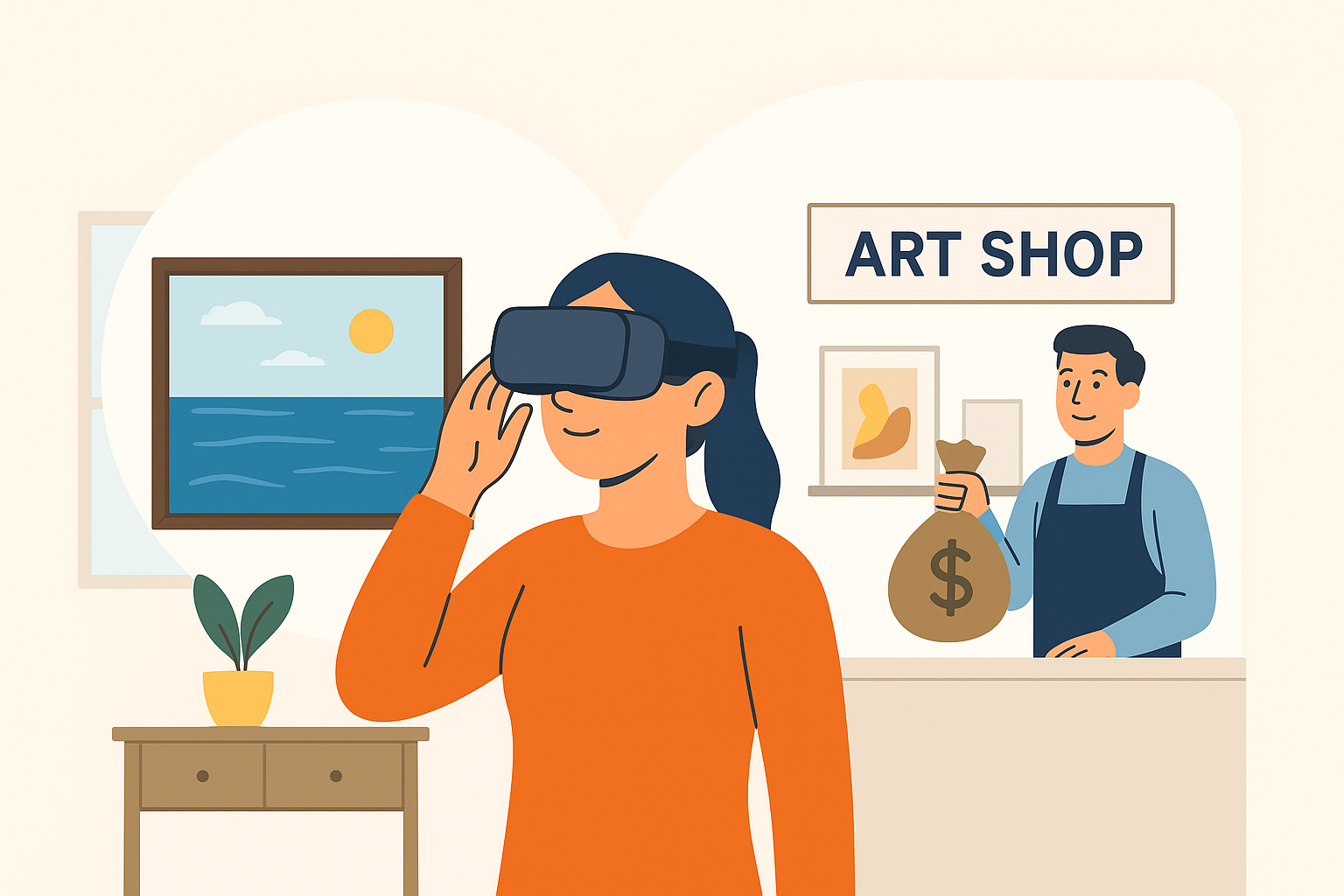
VR Graffiti lets buyers step into a virtual space and preview how graffiti artworks would look in their own home, studio, or business. Using a VR headset or mobile AR, users can:
Scan their wall or upload a room photo
Choose graffiti pieces from the shop’s digital gallery
See real-time projection of the artwork with lighting and perspective matching
Move, resize, or recolor the graffiti before making a decision
Book a graffiti artist or purchase wall panels directly from the shop
It turns browsing into an immersive art experience — buyers feel the art before they buy it.
How we built it
We built a system with three parts:
VR Shop Portal – for artists and shop owners to upload graffiti designs, specify wall sizes, materials, and price.
VR User App – for buyers to use VR or mobile AR to preview art on their own walls.
VR Server – for hosting models, streaming assets, managing sessions, and recording analytics.
We used Unity + AR Foundation for the front-end experience, WebXR for cross-platform previews, and a Node.js backend with a CDN for optimized graffiti textures. Each graffiti piece is processed into a 3D surface decal mapped to real-world dimensions, so it looks authentic on any wall.
Challenges we ran into
Getting the graffiti texture to stick naturally on uneven or colored walls without losing detail.
Ensuring accurate scaling for walls of different sizes and camera angles.
Optimizing performance for mobile AR while keeping the colors vibrant.
Managing artist copyrights and preventing misuse of graffiti designs in shared sessions.
Accomplishments that we're proud of
Built a realistic VR experience where graffiti interacts with real lighting and wall texture.
Created a new digital bridge between graffiti artists and buyers — no longer limited by physical presence.
Early testers said it helped them confidently decide which artwork to buy or commission.
Local artists started using the system to pitch custom murals to cafés, studios, and collectors.
What we learned
People connect emotionally when they see art in their own space.
VR/AR technology can empower local street artists to go global without leaving their city.
Good UX in immersive experiences means blending creativity with precision — every inch matters when art becomes architecture.
What's next for VR Graffiti
Next, we’ll expand features to:
Support collaborative sessions, letting artists and clients co-design murals live in VR.
Add AI color matching, to harmonize graffiti tones with room palettes.
Integrate NFT + Proof of Authenticity, linking each virtual preview to a verified artist’s portfolio.
Build a VR Graffiti Gallery — a shared metaverse for discovering new artists, styles, and walls worldwide

Log in or sign up for Devpost to join the conversation.