Inspiration
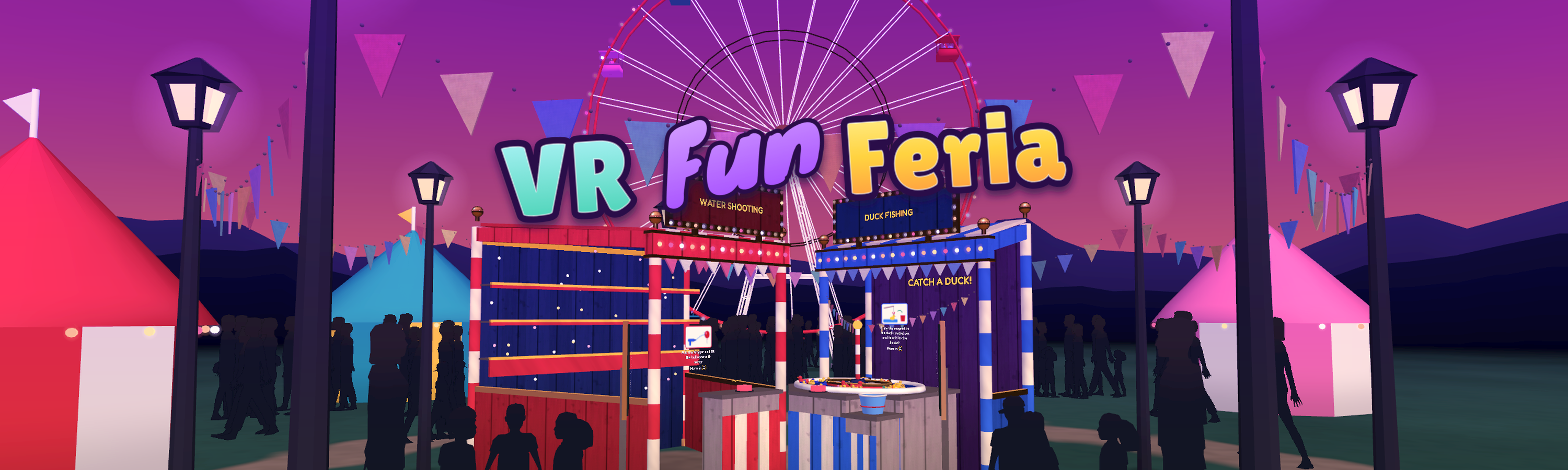
VR Fun Feria is built from childhood memories: the summer fair at San Fermín in Pamplona and the British funfairs, where the helter-skelter, the chip drop, the sand digger and the duck fishing come from. A funfair is one of the few places where nobody needs the rules explained: you walk up, pick up the mallet and swing. This is our first VR game, and we wanted it to feel like that for someone putting on a headset for the first time.
When we looked through the Quest store we found funfair collections built around controllers, and hand-tracking titles built around a single mechanic. We wanted the whole fair, played with your own hands, short enough to finish on a bus ride and good enough to come back to tomorrow.
Also a little surprise is ready to be disconvered! (easter egg).
What it does
VR Fun Feria is a complete funfair you play seated, from start to finish, with bare hands. Controllers also work, but nothing needs them.
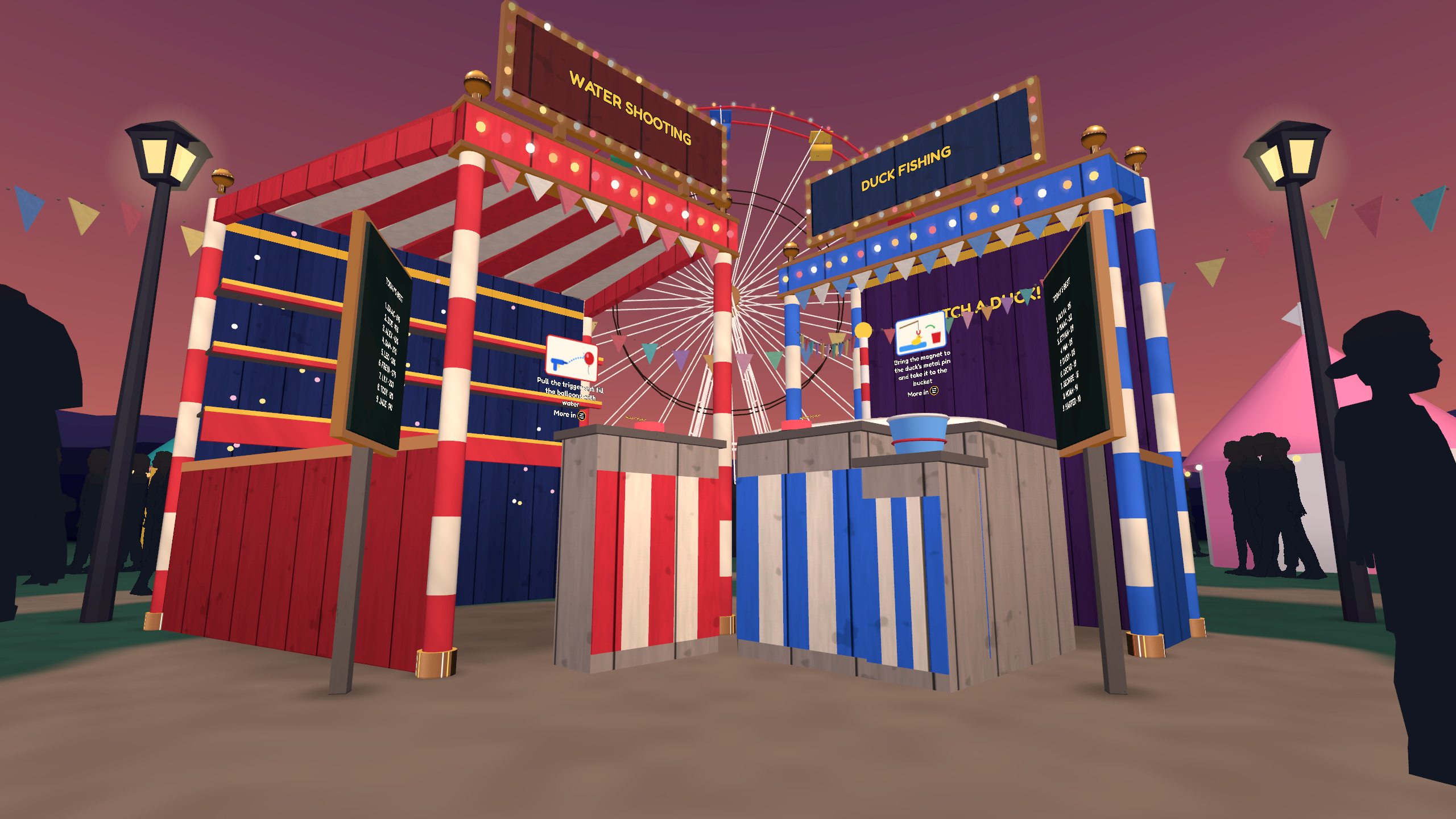
- Twelve classic stalls, each a 60-second round: Water Shooting, Duck Fishing, Balloon Darts, Bop the Moles, Buzz Wire, Chip Drop, Ball Ramp, Claw Machine, High Striker, Shell Game, Sand Digger and Prize Wheel. Play both stalls on a screen and the door to the next one opens.
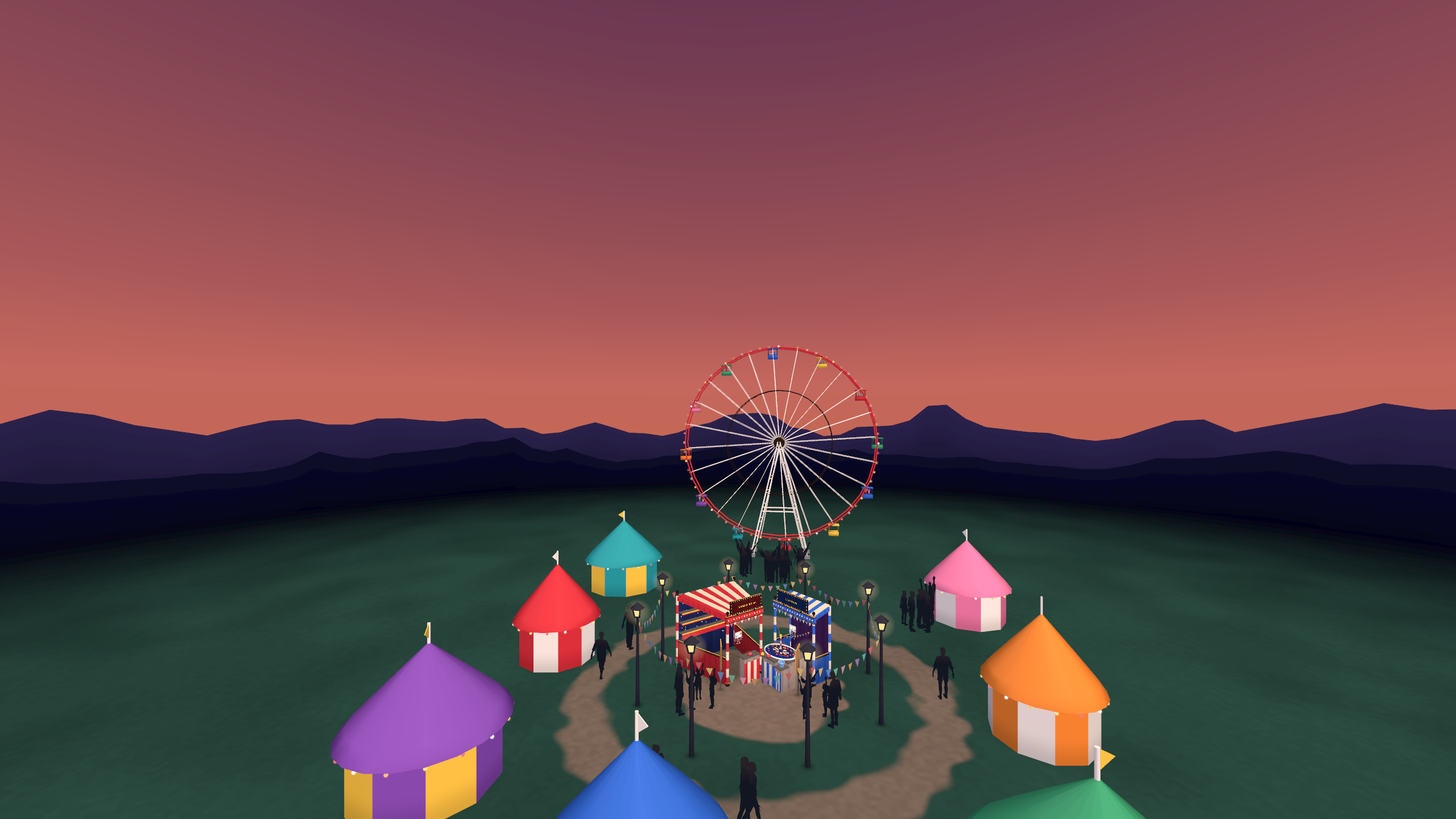
- Night falls as you progress: the fair opens at sunset and by the last screen only the lights and the Ferris wheel are left.
- The Mouth of Fate waits at the end: put your hand inside and it reads your total, for better or worse. Beat the day's record on the Fair Records board and you win a ride on the Ferris wheel, with fireworks at the top.
- Pass the headset around. Taking it off for ten seconds starts a new player, so friends take turns and today's board decides who is on top. The daily boards start clean every morning, while each stall's all-time best stays on the board in gold for you to chase.
- Nine languages (English, Spanish, Catalan, Galician, Basque, French, Italian, German, Chinese), chosen from a fan of flags on the back of your hand.
How we built it
We built the game in Godot 4.5 with OpenXR, targeting Meta Quest and testing on a Quest 2. Game rules live in plain logic classes with no scene code, so every stall, timer, board and gesture can be tested without a headset.
The stalls, tools, crowd and props were modelled in Maya or built procedurally, and then baked into scenes and a material library (49 scenes, 154 shared materials, shaders and textures) so the headset only loads finished geometry: the game ships the logic and the baked art, and the builders stay in our tools for regeneration. The crowd is those same characters flattened into animated cards, two triangles per person and a single draw call; the 3D versions only appear when you look down from the Ferris wheel.
Startup is split in two: a tiny boot scene shows the splash on an OpenXR compositor layer while the fair loads on a thread, then each stall is assembled over successive frames. On a Quest 2 the fair is ready in about four to six seconds and you are playing in under eight on a cold start, about four when warm.
Testing is where most of the engineering went: 1,140 automated tests (nearly 140,000 checks) run headless in seconds, including performance budgets (triangles per model, nothing baked mid-round), and a flat-screen test bench where scripted bots play every stall with simulated hands, take screenshots and write reports, so we could review all twelve stalls in parallel after every change. Music was generated with Suno; sound effects are synthesised in-engine or CC0 recordings.
Challenges we ran into
- Going hands-only. The game started out controller-only. The Claw Machine and Sand Digger relied on thumbsticks, so we rebuilt them with a physical lever that follows your hand and a button on the cabinet.
- A trigger without a trigger. We built our own gesture: holding the water gun, curling your index finger fires, like a real trigger, not a pinch. Telling a curling finger from a gripping fist, without false shots when grabbing the tool, was one of the hardest parts. We ended up replaying real hand-tracking logs from the headset through the gesture code offline until every false shot was explained.
- Hands shake more than controllers. The Buzz Wire wand at arm's length amplified every wrist tremor. Orienting it from the palm joint failed (the joint does not point where we assumed), so the wand now sits rigidly in the hand like the fishing rod.
- Comfort on Quest 2. We saw judder and double images even though the frame rate looked fine. Part of the cause was CPU spikes, fixed by requesting a sustained-high performance level; the rest was direct sunlight blinding the tracking cameras. Turning effects off one at a time showed that frame time went to draw calls and materials, not pixels: merging materials took the duck pond from 29 surfaces to 5. We tried Application SpaceWarp and rejected it because motion felt choppy.
- Handing over the headset. OpenXR could take fifteen seconds or more to report that the headset was off, or never. We read the headset's wear sensor directly, so ten seconds off the head cleanly starts a new player.
- Shipping baked materials. Saving the material library as text resources looked fine on PC and came out grey on the headset: export dropped shader parameters tied to our scene-space globals. Binary resources fixed it.
Accomplishments that we're proud of
- A full fair of twelve stalls, a fortune teller and a Ferris wheel ride, playable from start to finish without controllers.
- No "gun hand": every tool works in either hand, so lefties play exactly like righties with zero settings, and some stalls let you hold one in each hand.
- A language picker that lives on your hand: touch the flag on the back of one hand and pick from a fan of flags with the other.
- A first round that needs no words: hold PLAY, play, see your score and your name on the board, all within the first two minutes.
- All the fair's models are original, including the crowd.
- 1,140 automated tests and a bot-driven test bench, for a game built in seven weeks.
What we learned
- Measure on the headset, one change at a time. Our first explanation for the judder was wrong, and it cost us two days.
- Hands are not controllers without buttons. They have no vibration, so sound and visuals do that work; they tremble, so tools must be forgiving; and things like levers need to behave like real objects.
- Bake everything that does not change. Moving construction out of the runtime halved the start time and removed a whole class of mid-round hitches.
- Designing for first-timers improves the game for everyone: fewer words, shorter rounds and clearer goals.
What's next for VR Fun Feria
We plan to release it on the Meta Horizon Store in Early Access, targeting December 2026, with a low one-time price and no ads or in-app purchases. Next on the list: more stalls, a "continue or new player" prompt when the headset comes back, online daily leaderboards, and a Quest 3 pass to take advantage of the wider field of view.
How to test
- Set the headset language to English (or any of the nine); the game follows it on first start.
- Play with bare hands: hold your fingertip on PLAY until the ring fills (under a second). Doors between screens work the same way.
- Menu: touch the striped button on the back of either hand with the other index finger. From there: help for the current stall, leave the round, credits, quit.
- Language: touch the flag on the back of your hand.
- Taking the headset off for more than ten seconds starts a new player (that is how friends pass the headset). The Meta menu does not count as taking it off.
- When you enter a top score the board asks for your name; you can leave it empty and touch OK, or wait thirty seconds.
- A full pass through the seven screens, the Mouth of Fate and the Ferris wheel takes about fifteen minutes. Each stall is a one-minute round, so a single stall is a complete moment on its own.
