Inspiration
In standard 2D email correspondence and chat, emojis have traditionally been use to add an underlying emotional tone to a message. Emoji visual icons express happiness, anger, sadness, disappointment, amazement, etc. as an additional layer of expression.
In VR, since communication is delivered in a multisensory dimensional environment, 3D emoji provide the possibility of delivering a broader, richer emotional experience. A central challenge to this idea, is how to transfer 3D emoji to network-connected VR delivery platforms such the Vive and Hololens. To implement this solution numerous database storage and web-based media delivery challenges need to be resolved.
What it does
The VR emoji project is intended to be a proof of concept, where 1) Virtual assets are created in Unity 3 and packaged as prefabs. 2) Unity packages are parsed and stored in the cloud. 3) VR emojis are recievable and sendable from a cross-VR-AR device application. For this first run through, we used the Hololens to access and run these emojis within a virtual environment.
How we built it
Unity 3D was used to design emoji environments and experiences including simple 3D environment (a room with a table and chair), along with two short looping 3D animations - a walking spider and galloping horse - obtained from the Unity 3D assets store. The Emoji and Environment assets were exported as prefabs for each supported device.
The VR Emoji assets uploaded to the 'VR Emoji Store' through a Heroku based website/API (written in Ruby On Rails), and assests stored in AWS S3 Storage. This infrastructure has been developed but the front end is not there yet.
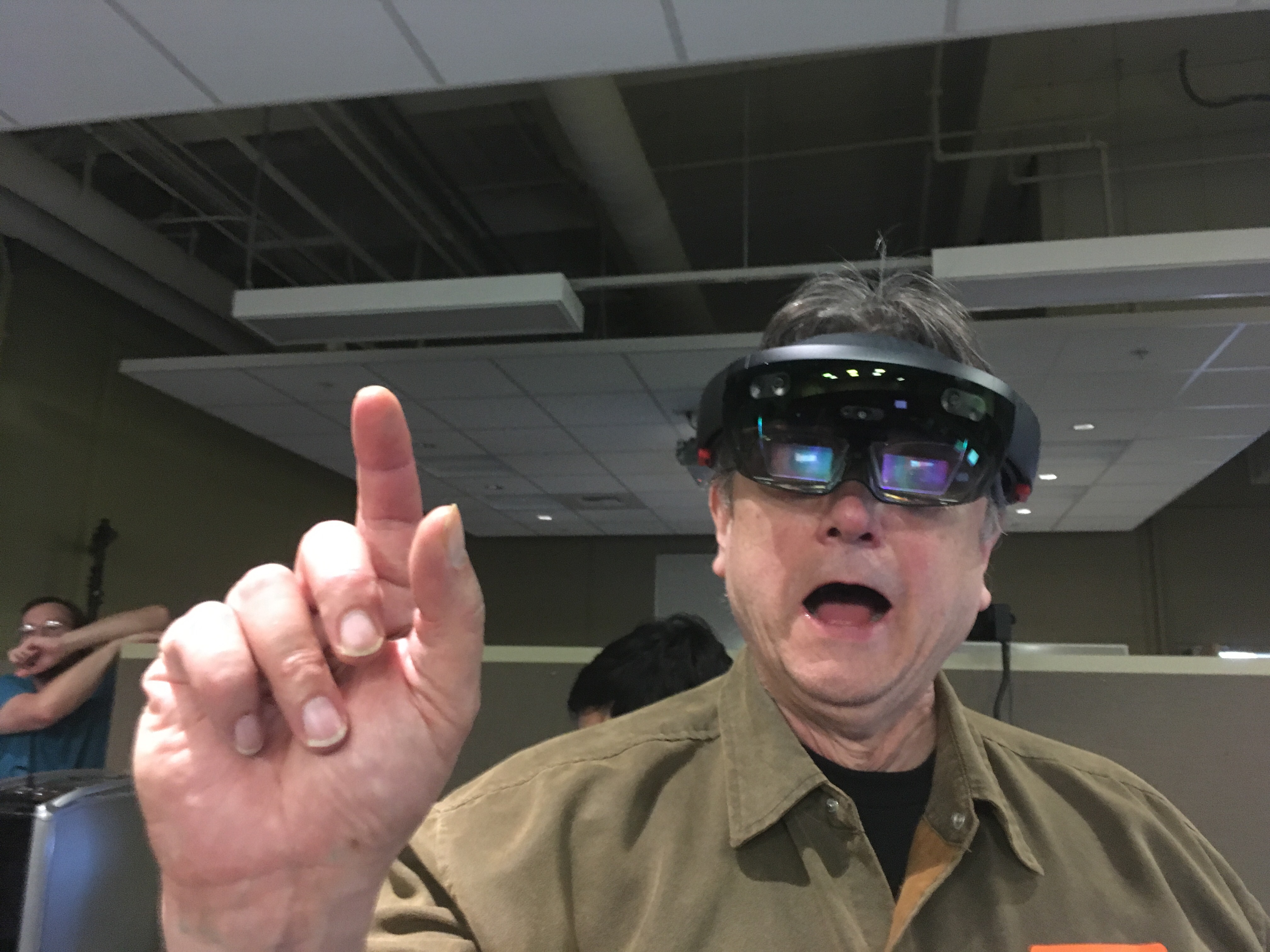
We developed a Hololens VR Emoji Messenger application with basic demo functionality using Unity and C# Scripting. Through this demo application a sample user can see their friends and view Emoji messages.
Challenges we ran into
- Getting Ruby on Rails installed and configured on Windows 10.
- Lack of knowledge and skills - many of our team members have never used or developed for VR/AR before.
- Content formats even on a single framework are complex
- VR development is still in its infancy and things that are taken for granted in other mature frameworks, don't work here.
Accomplishments that we're proud of
- We have proven the end to end infrastructure for a generic cloud based VR content repository
- We successfully created a Hololens Application that accesses animated emojis with sychronized audio from the cloud.
What we learned
How to develop and optimize VR enabled content in Unity 3D. How to develop a Ruby on Rails web service and API Design. Use of Amazon S3 How to use Hololens and Vive devices
What's next for VR Emoji Messenger
The Emoji Messenger is a proof of concept for a VR Experience Messaging Platform. We've demonstrated VR content can be successfully shared and experienced via web connected immersive devices. More robust versions evolving from this early proof of concept will help move forward the idea of communications using VR emotional content.
3D emojis may also provide marketing/entrepreneurial opportunities as VR networking becomes more widely distributed.


Log in or sign up for Devpost to join the conversation.