-
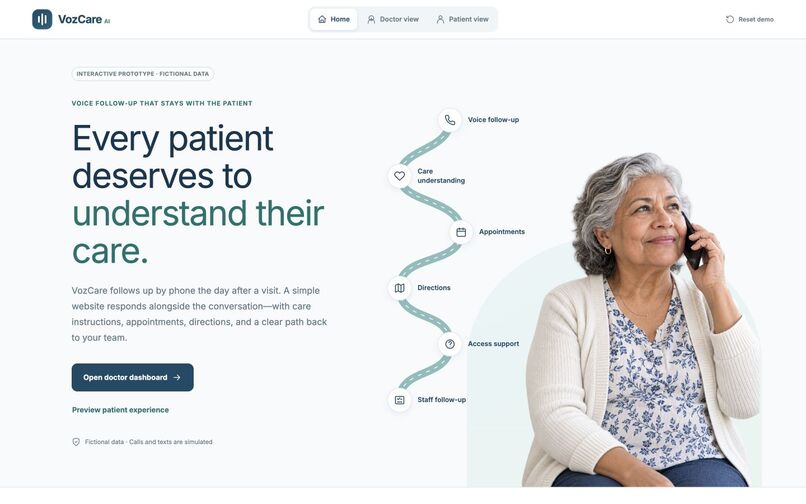
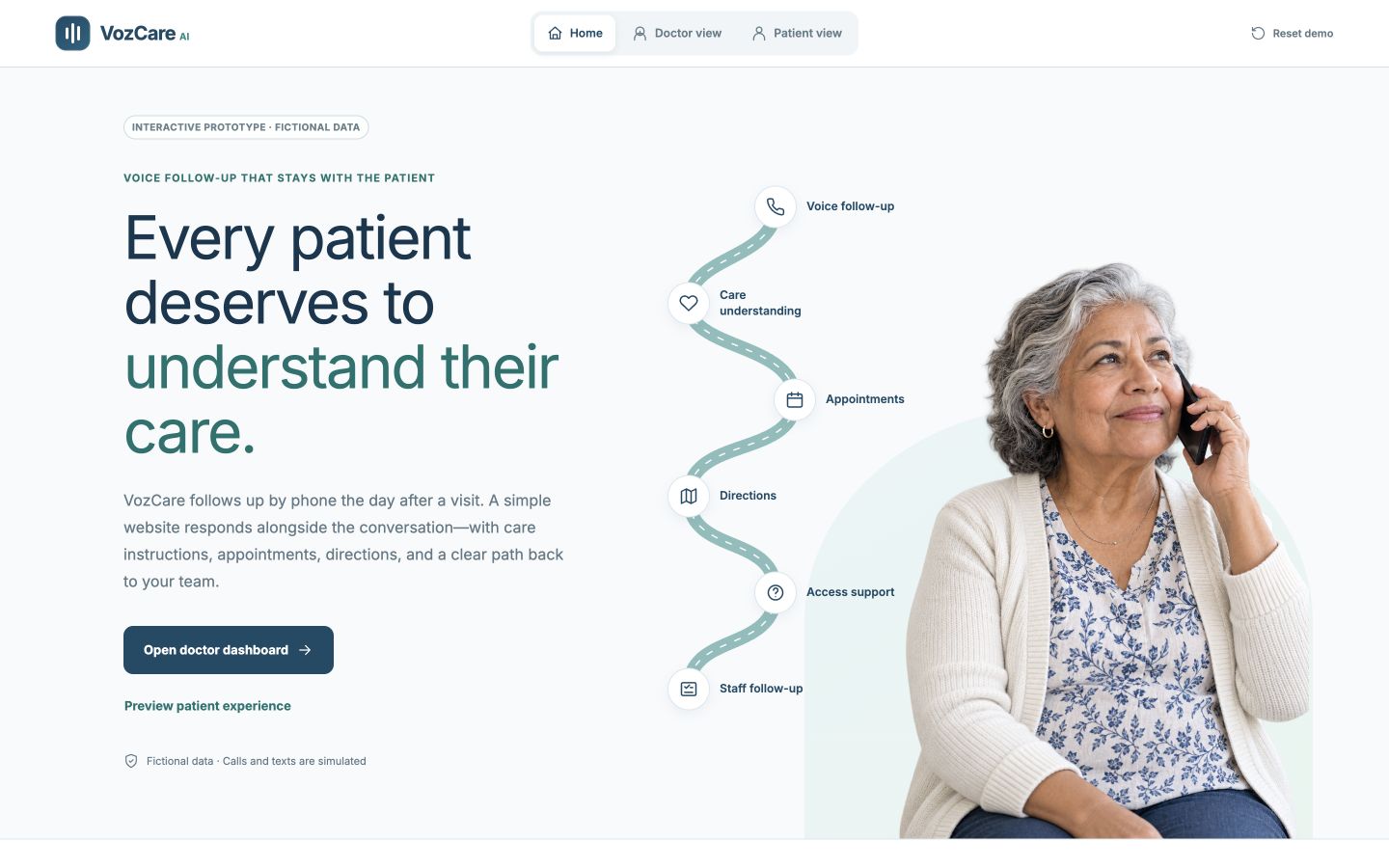
VozCare AI: bilingual care follow-up prototype. Fictional data; calls and texts are simulated.
-
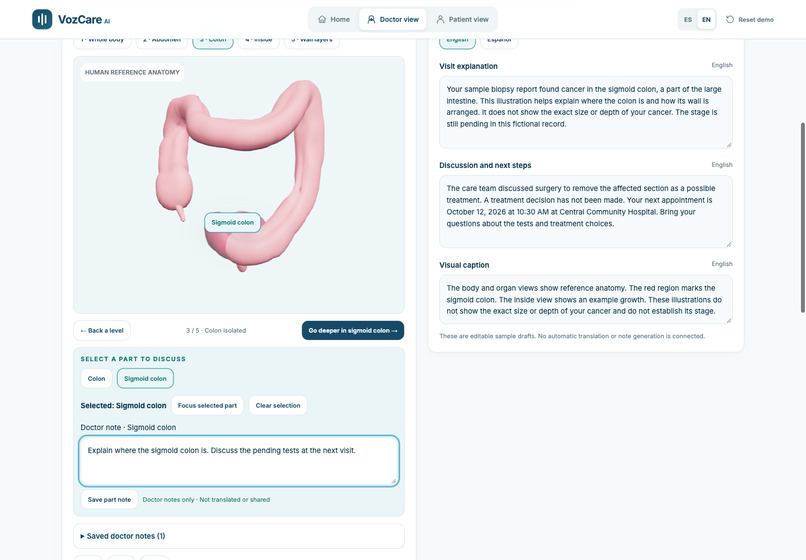
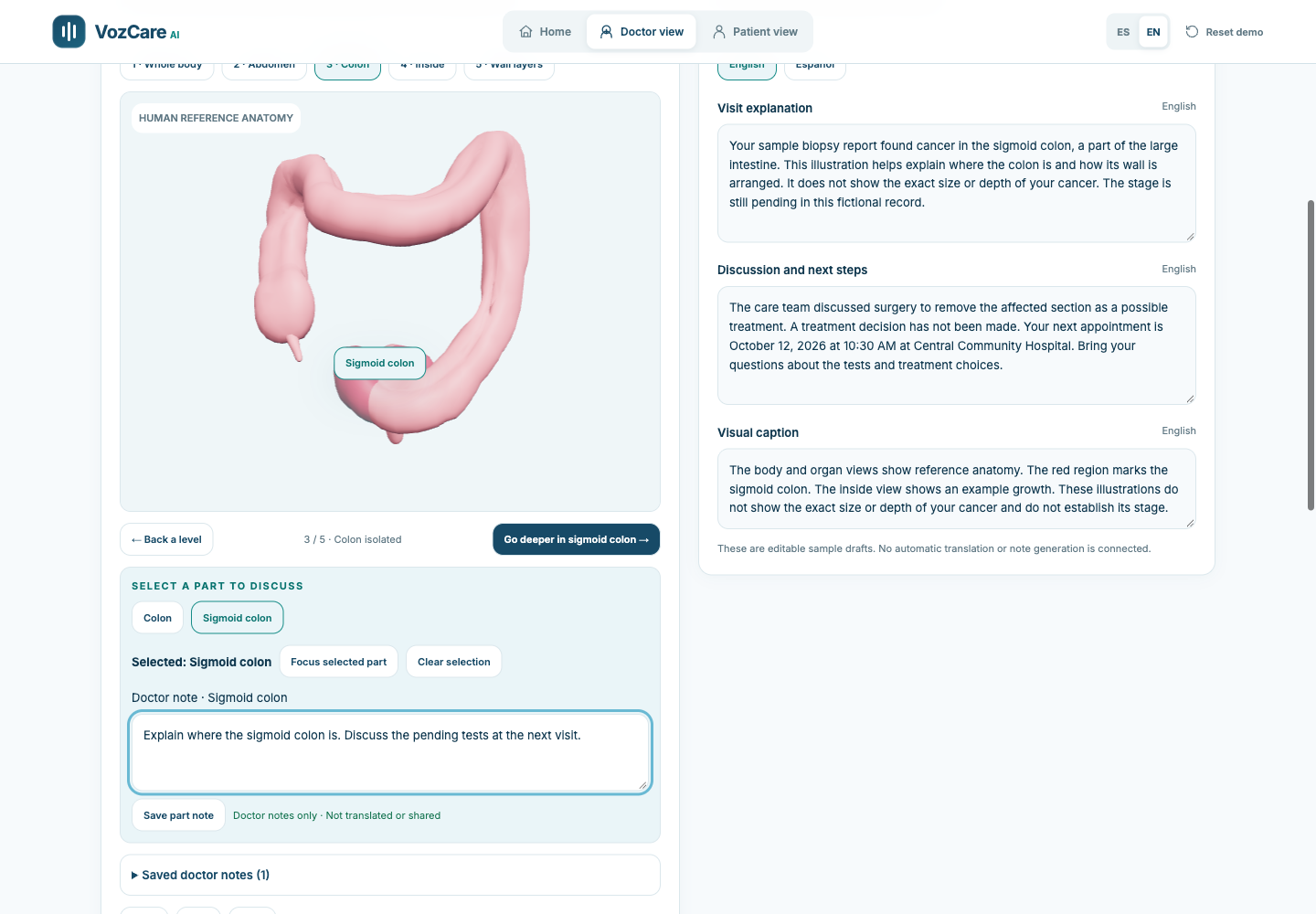
Local doctor prototype: select the sigmoid colon, go deeper, and attach a note to the view.
-
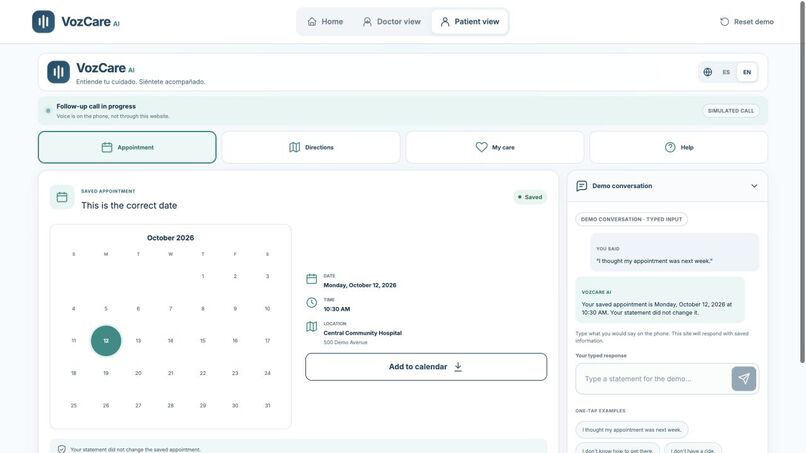
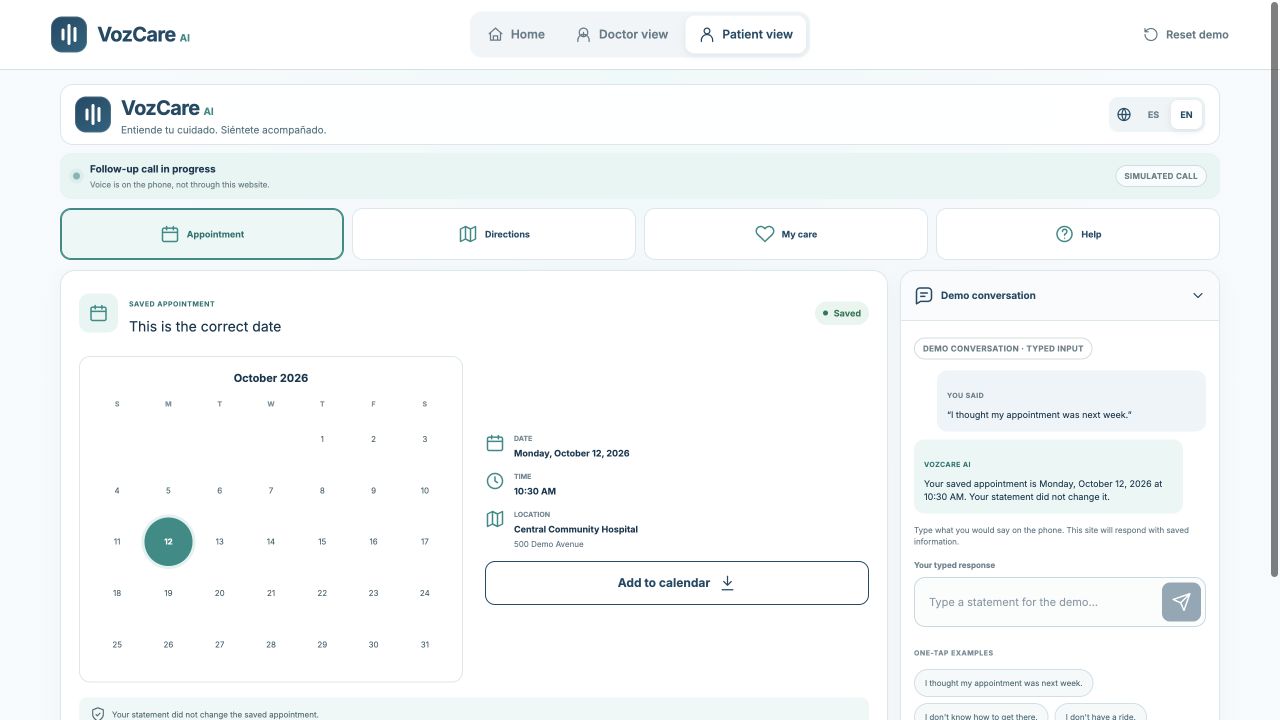
Local patient prototype: revisit the saved appointment. Follow-up interactions are simulated.
Inspiration
A care plan is only useful when a patient understands it and can act on it. VozCare focuses on the gap after a visit: remembering the explanation, finding the next appointment, and telling the care team about practical barriers. Our Spanish-first direction fits the Healthcare track's focus on language and access. We have not yet measured patient outcomes.
What it does
VozCare AI is a Healthcare-track prototype for Spanish-speaking patients who leave a visit with questions about their care and next steps. We want patients to revisit an explanation in their preferred language and give the care team a clear place to review what will be shared.
Using María, a fictional patient with sigmoid colon cancer, the local doctor prototype lets a doctor move from the body to the abdomen and colon, select a part, go deeper, and attach notes to a saved view. The doctor can review sample English and Spanish explanations, choose educational resources, and preview patient-facing information. Reference anatomy and illustrative interior models are clearly separated from patient-specific imaging.
The bilingual patient companion design brings appointment, care, directions, and help information together. Calls and assistance events in the local demo are simulated. Current hosted record access and packet delivery still need backend work.
How we built it
We designed the interface in Figma and built it with React, TypeScript, Vite, and Tailwind CSS. Three.js renders attributed reference body and organ assets, with illustrative internal views. We transferred the frontend to Base44 and connected the public GitHub repository; the current source includes Base44 authentication and data-access work. The README documents what remains unavailable.
Challenges we ran into
The largest challenge is connecting clinician review, access control, and patient delivery without treating a visual mockup as a working clinical system. Another challenge is keeping 3D explanations useful while making clear that reference anatomy does not establish a patient's tumor size, depth, or stage. English and Spanish wording need clinical and bilingual review before real use.
Accomplishments that we're proud of
We built and locally verified an interactive bilingual prototype, responsive doctor and patient layouts, anatomy selection and deeper views, view-linked doctor notes, and a patient packet preview. We published application code and prepared a Base44 deployment. The current hosted build still needs a fresh judge-access check.
What we learned
Clinician review should happen before information is shared. Saving a note, approving a packet, sending it, and recording delivery are separate actions. We also learned that deeper anatomy navigation is easier to explain when it starts with the body and keeps the selected part in context.
What's next for VozCare AI
Complete server-authorized record access, immutable approved packets, patient-specific access links, and persistent follow-up requests. Then connect voice and SMS, verify the complete flow across devices, and review the content with healthcare and bilingual practitioners. Automated note import, translation, and resource search remain future work.
The current public README identifies record access and final approval as unfinished; personal patient links, live calls, SMS, and map navigation are not connected. These are next integration steps. All patient data in the prototype is fictional.
Demo video: Work in progress.
Built With
- base44
- figma
- react
- tailwind
- three.js
- typescript
- vite

Log in or sign up for Devpost to join the conversation.