Inspiration
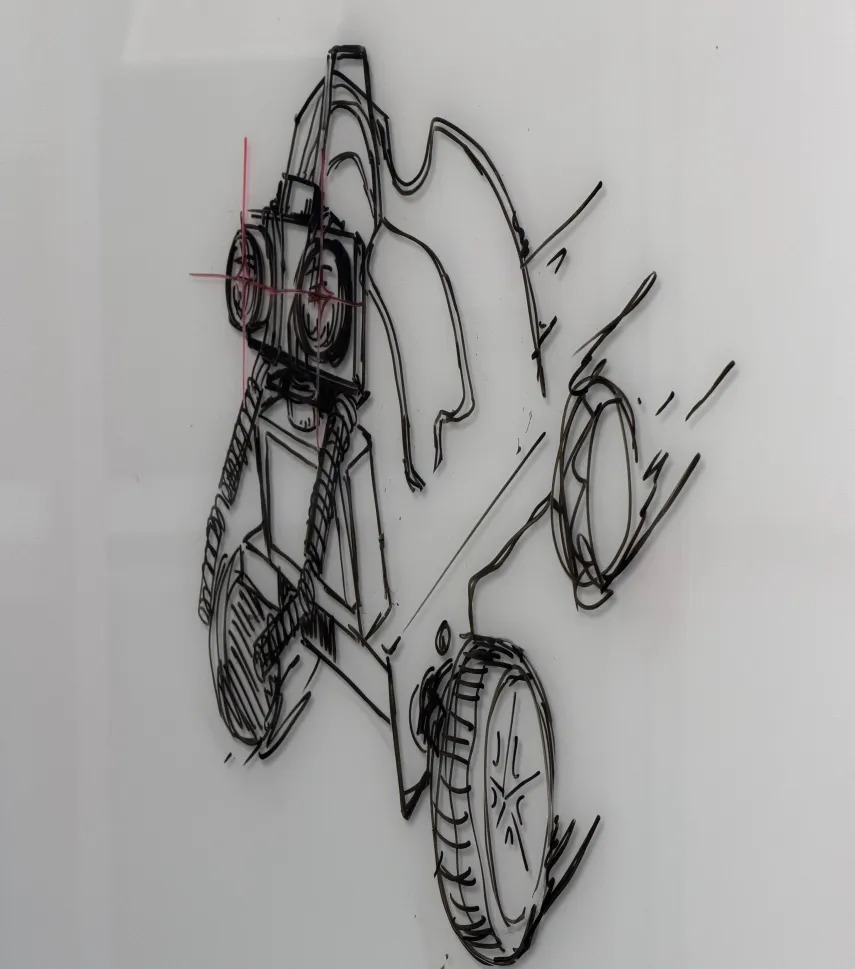
Every astronaut or galaxy explorer needs a brave companion at their side! Our project inspiration came from friendly robot companions from the likes of R2D2, BB8 or WALLE. We envisioned a friendly robot which would follow the intrepid astronaut along as they explored the great unknown.
What it does
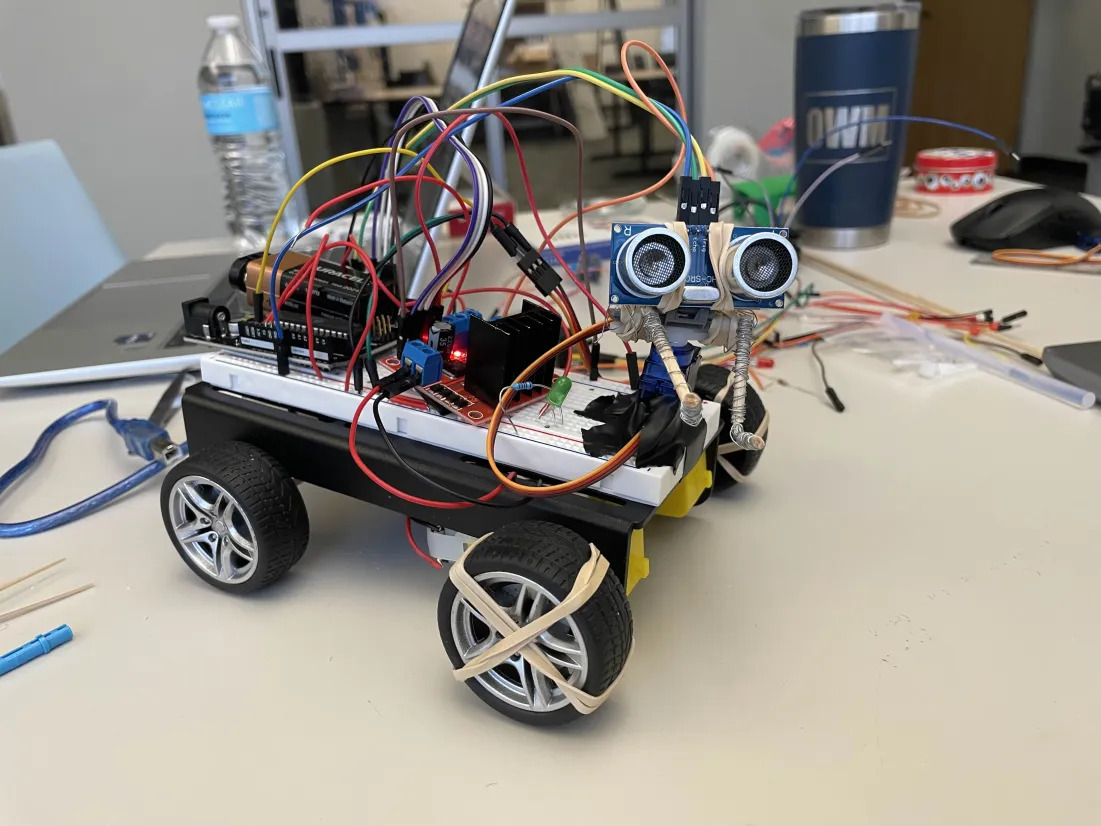
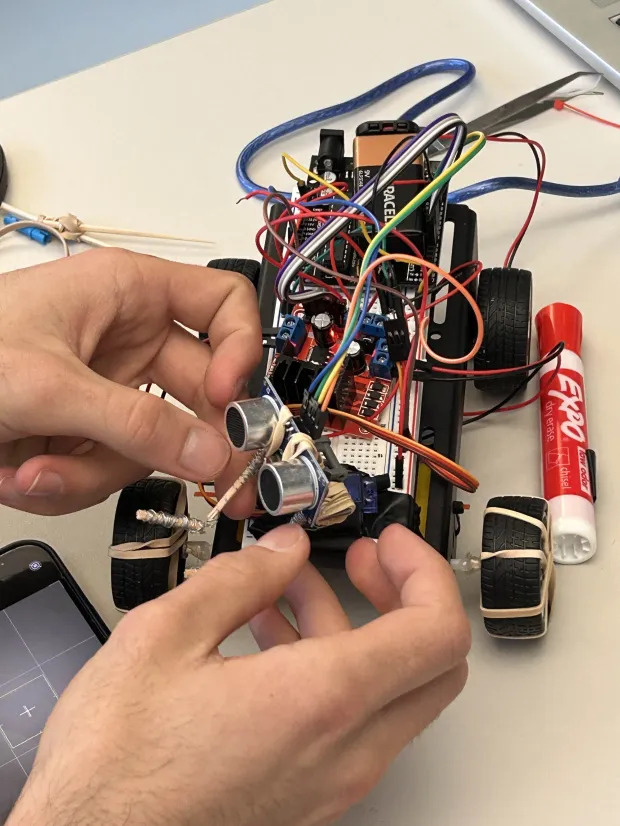
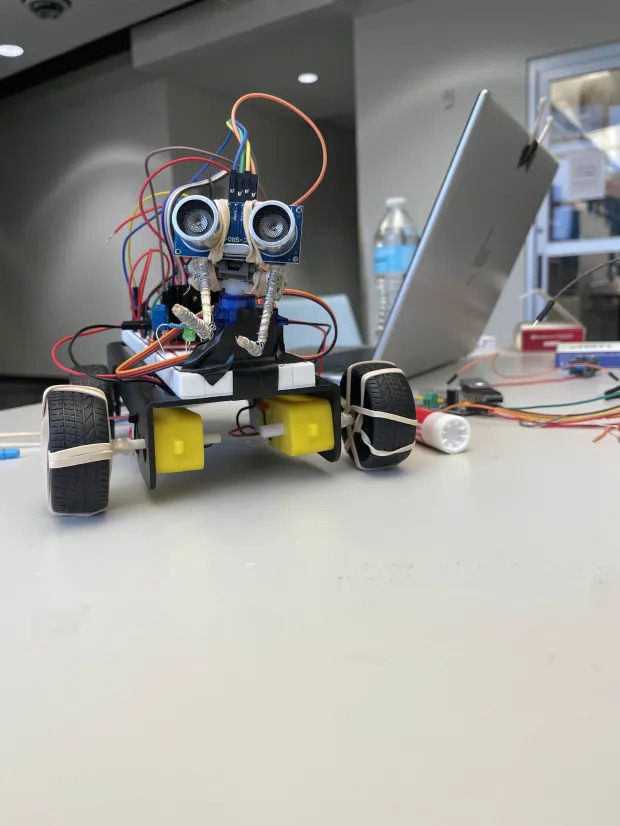
Our robot companion scans its surroundings using a ultrasonic sensor on top of a rotating servo motor. It then determines the location of the closest object and turns to drive towards it.
How we built it
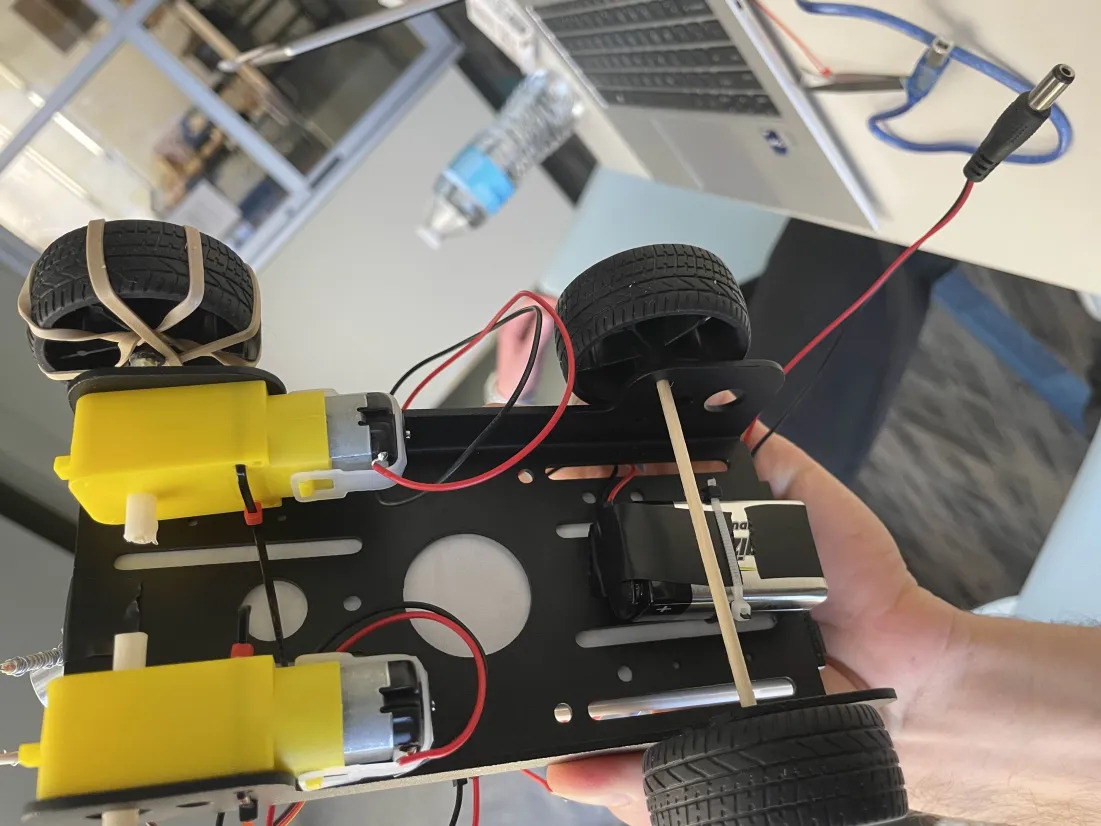
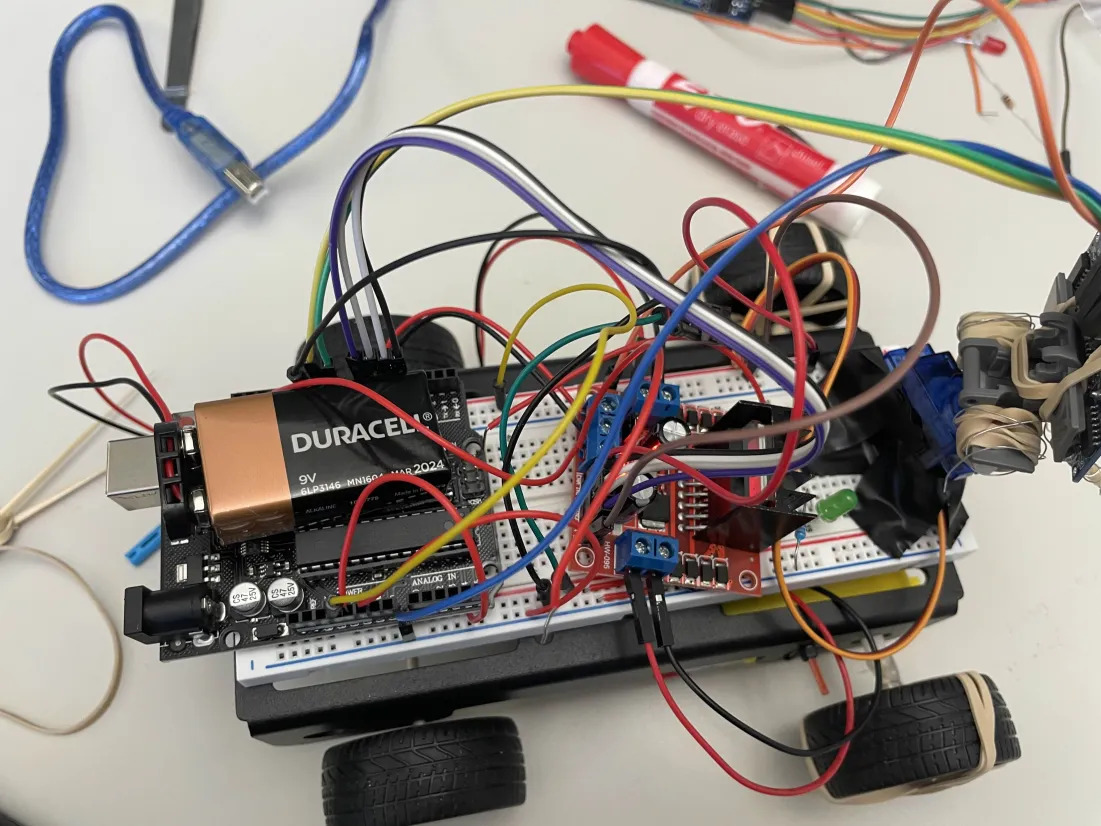
We mounted two dc motors on a standard chassis plate and attached wheels via wooden axles (a fix which we'll explain below). The motors are hooked up to a motor controller board. We used a wooden stick as a free axle for our two back wheels, which remained unpowered due to supply constraints. For the powered wheels we attempted to use rubber bands as a way to gain more traction on the ground. (This unfortunately did not have great results). On the top of the chassis we mounted a breadboard, arduino, motor controller, and the servo with the ultrasound sensor attached on top. Because the distance sensor looks like a pair of eyes, we added some arms as well to make the ambience of the robot companion really come to life.
Challenges we ran into
Due to limited hardware supplies (compatible wheels), the available wheels could not be directly mounted onto the motors or servos.We initially attempted to design and 3D-print an adapter, but it failed as the required dimensions were too small to effectively manufacture on the 3-d printers supplied. As a result, we chose to implement wooden dowels from Blick to connect the wheels and the motors. We had to use substantial hot glue to make the connections sturdy enough to hold weight.
Another challenge we ran into was that the wheels did not have great traction on the surface, this made turning borderline impossible. Due to the unstable connection with the robot chassis, the weird axle connection, and the fact that we only had the front wheels powered because we were only able to nab 3 motors from inventory, the robot struggled to turn properly on the surface. (You'll see in our video the robot detect the right direction and attempt to turn that way but struggle to gain traction).
Accomplishments that we're proud of
We are incredibly proud of the robot that we were able to build given the material constraints we had. We had to come up with a lot of creative solutions, especially with mounting the wheels to the motors. We are also really proud of the scanning ultrasonic sensor we were able to rig up with limited materials. Our robot companion is able to find the nearest object and drive on over to cheer it up in the deep dark of space.
What we learned
We learned about the strong limitations of simple DC motors, which almost made our project impossible, since Mosfets weren’t an option. Mounting was a struggle early on, but electrical tape and zip ties were a great fix. The traction of the wheels was really unfortunate, but we did the best we could given a bad supply of materials. We learned a lot about communication protocols, where I2C was initially needed for the servo motor controller, but we made a easier way around this to suit our needs. We also learned learned about the general applications of a microcontroller, and we’re really excited about what we were able to do, but found the Arduino to be an extremely cool tool for future projects.
What's next for Voyager X
We’re really proud of our accomplishments at this hackathon, and we’re looking forward to the next one!

Log in or sign up for Devpost to join the conversation.