-
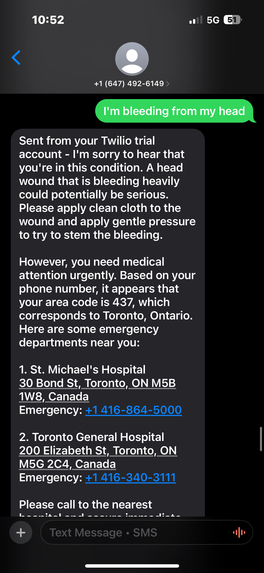
Image One
-
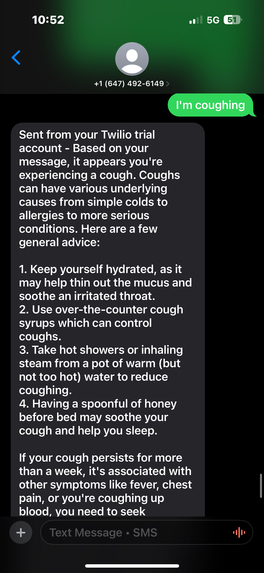
Image Two
Inspiration
While thinking of a project idea, we realized that many services are readily accessible to us. This made us reflect on how privileged we are to have these conveniences at arm's reach. Then, we considered the rest of the world, especially regions outside first-class Western countries. We thought of family in other countries who lack something as simple as an internet connection and are unable to access essential healthcare services or research symptoms for common health issues. Billions of people live in such conditions, where delayed or unavailable responses during health emergencies can have dire consequences. Approximately 2.6 billion people lack internet access, yet around 90% of the world's population owns a mobile phone with SMS capabilities. This gap inspired us to create Voyager: an SMS-based application providing instant, intelligent health advice tailored for low-connectivity environments.
What it does
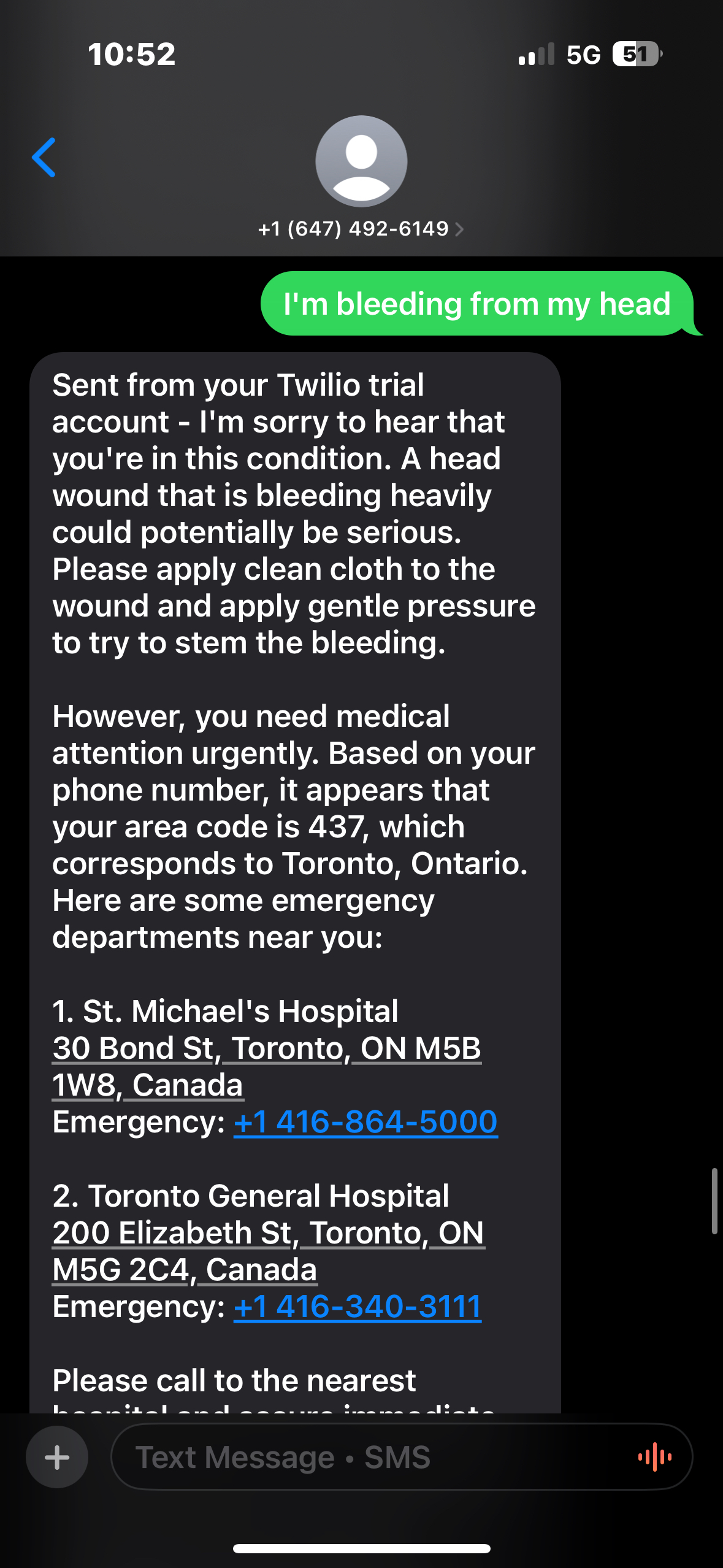
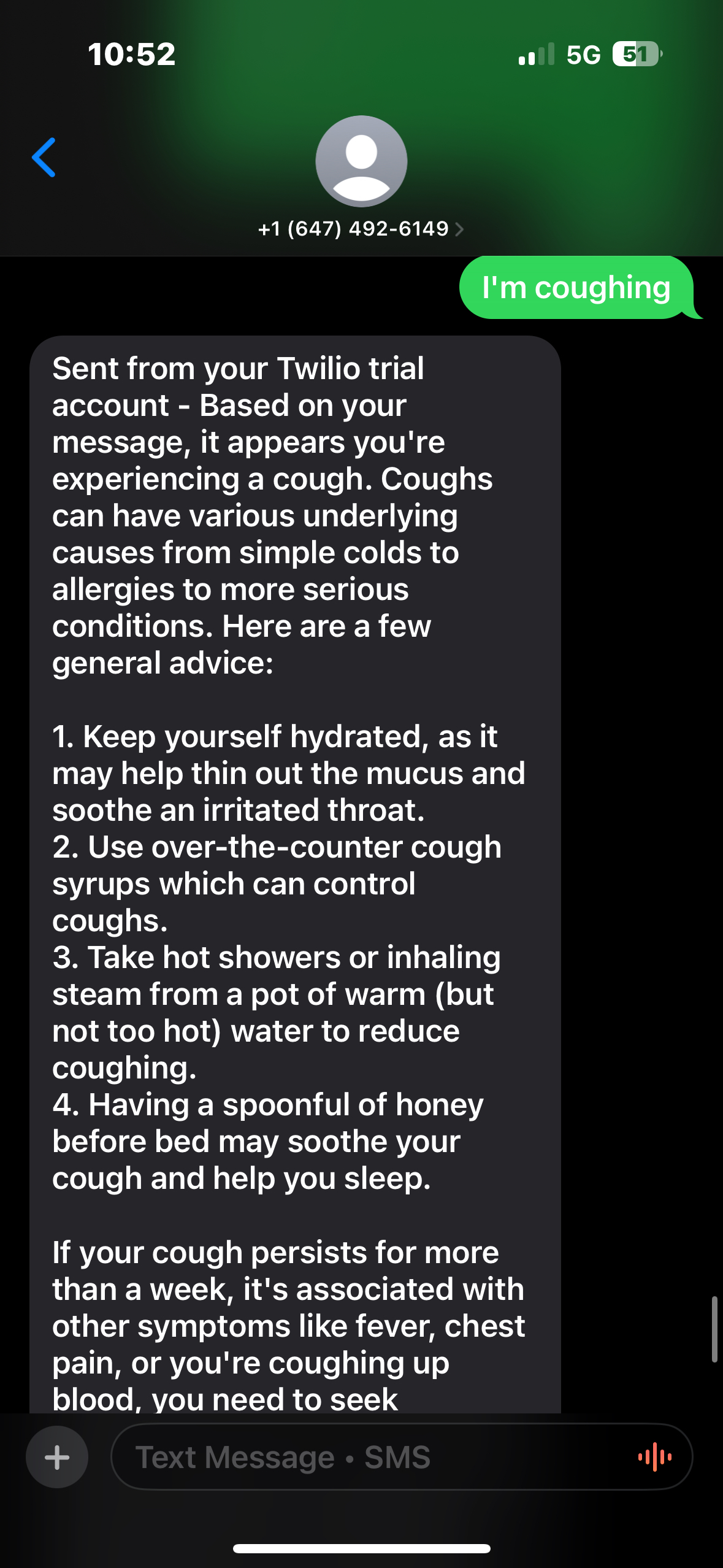
Our software leverages Twilio for SMS communication (a service wildly available across the globe, to substitute internet access), OpenAI for intelligent, context-aware health advice, and Flask for seamless backend integration. Users can send health inquiries via SMS, recieve multilingual responses for diverse communities, and get emergency escalation support with geolocation based emergency numbers and nearby hospital information.
How we built it
We built it with Twilio integration by setting up virtual servers and configuring messaging services to ensure reliable SMS communication. The Flask framework was used to create the backend that seamlessly connects Twilio with the OpenAI API. OpenAI processes user queries and generates intelligent health advice tailored to the context of the inquiry.
Challenges:
- Enabling Twilio to send the response message back to the texter.
- Integrating geological interpretation to provide the nearest healthcare assistance by phone number area code.
Accomplishments that we're proud of
- Building a functional SMS-based healthcare assistant that works on any mobile phone, including flip phones.
- Implementing multilingual support to reach diverse populations.
- Creating a solution that addresses critical healthcare gaps in underserved communities.
What we learned
- The importance of user-centric design for accessibility in low-connectivity environments.
- Strategies to ensure data privacy and security in SMS communication.
- The power of combining AI and simple technologies like SMS to solve global challenges.
What's next for Voyager
- Expanding the database for more localized and culturally sensitive health advice.
- Partnering with NGOs and governments to scale Voyager’s reach.
- Implementing voice-to-text and text-to-voice features for users with low literacy.
- Enhancing AI capabilities to better understand nuanced health inquiries.
- Integrating with local pharmacies for medication guidance and availability information.

Log in or sign up for Devpost to join the conversation.