-
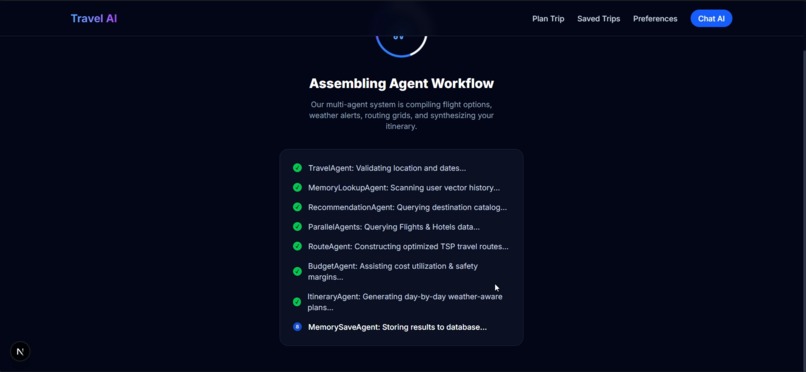
Planning
-
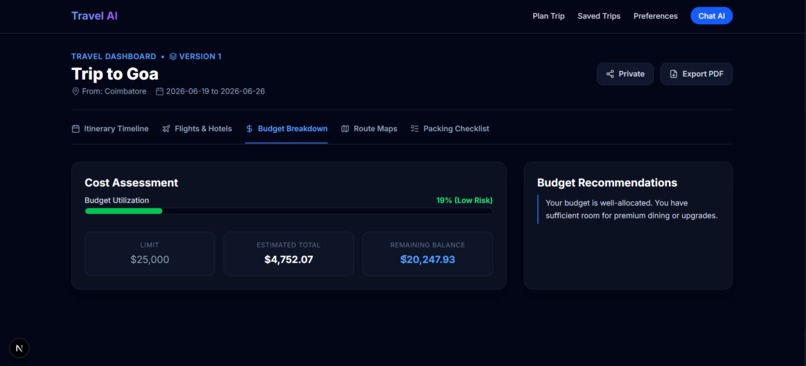
Budget
-
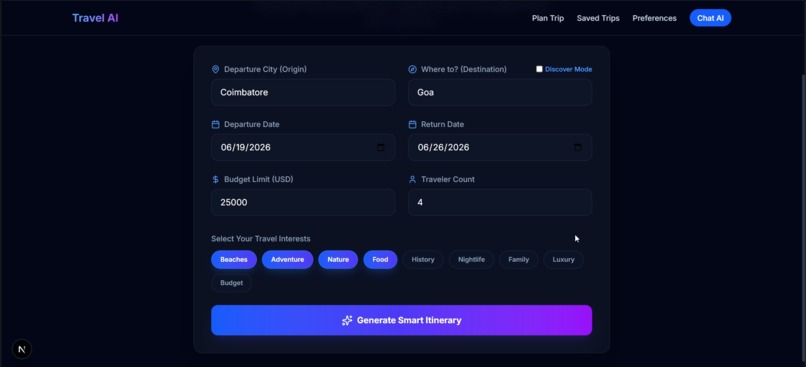
Place Selection
-
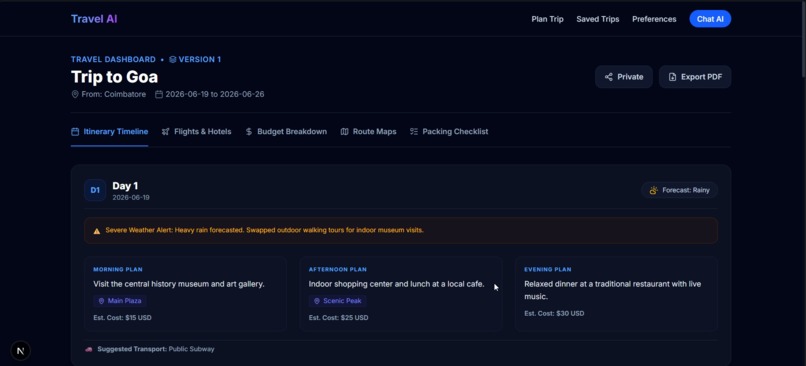
Plan
-
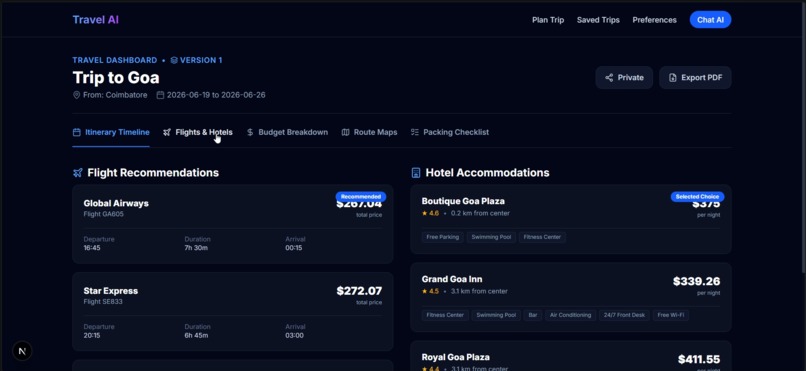
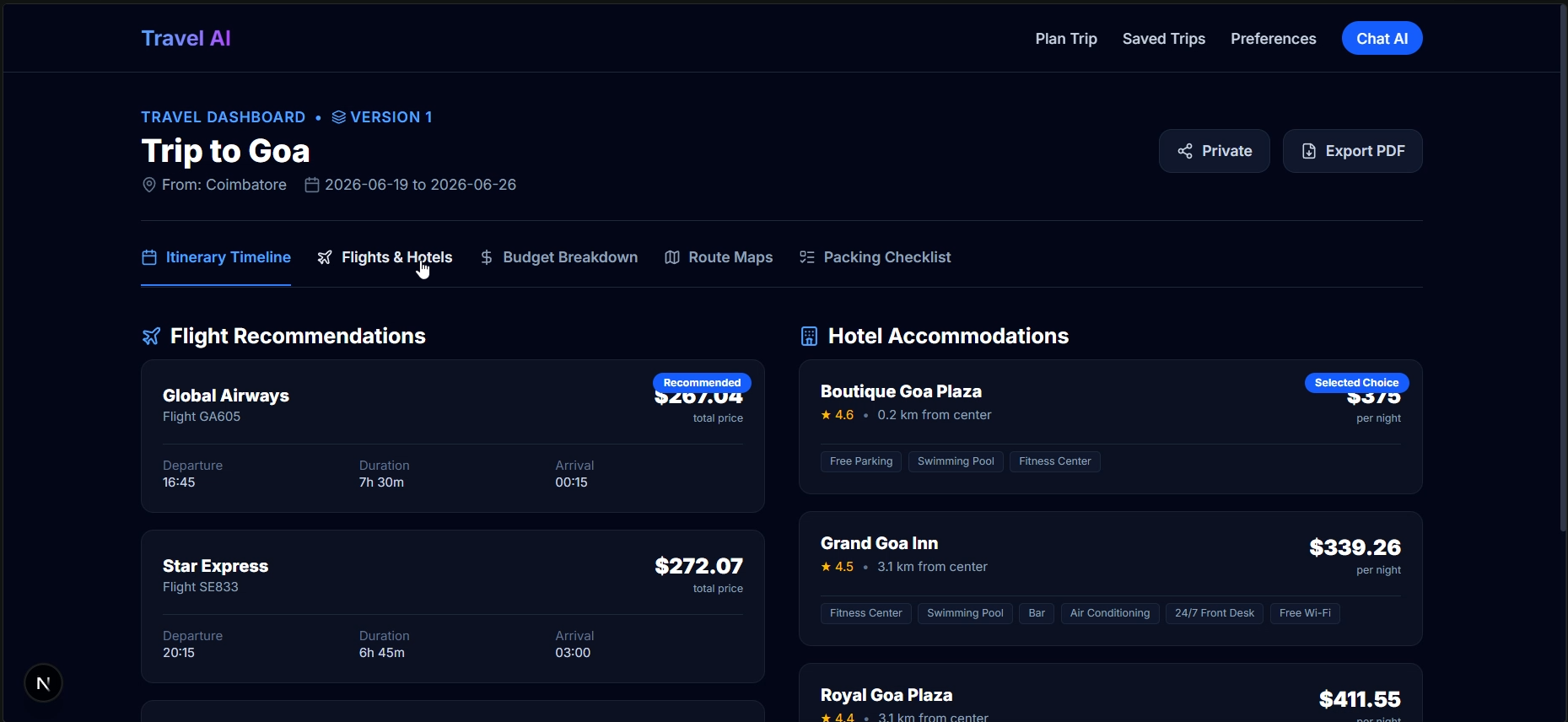
Flight recommendation
-
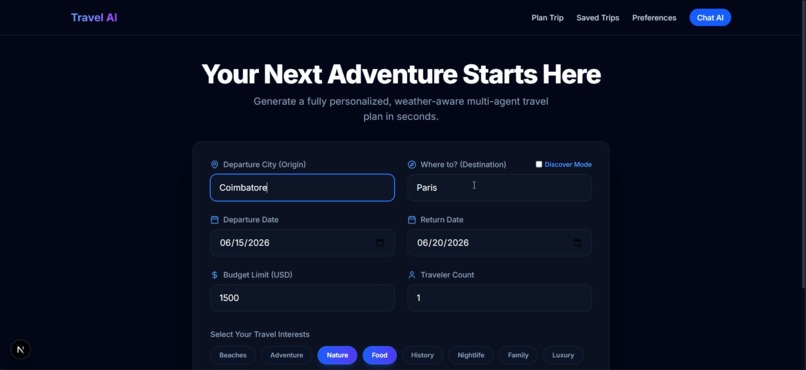
Place Selection
Inspiration
Planning a trip often involves switching between multiple platforms for destination research, weather updates, attractions, accommodations, and itinerary creation. We wanted to simplify this experience by creating a single AI-powered platform that helps users plan their trips faster and more efficiently. The goal was to transform hours of travel research into a seamless conversation-driven experience.
What it does
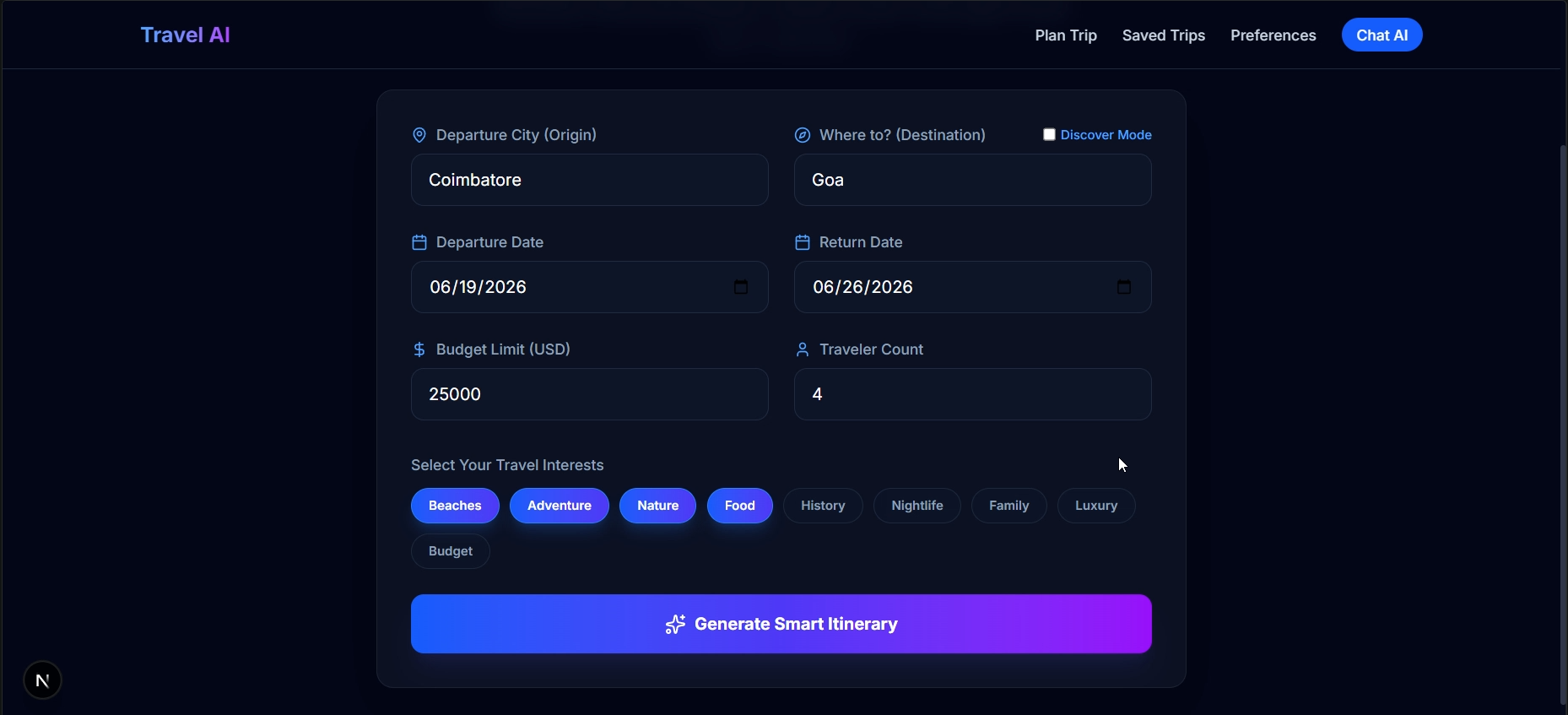
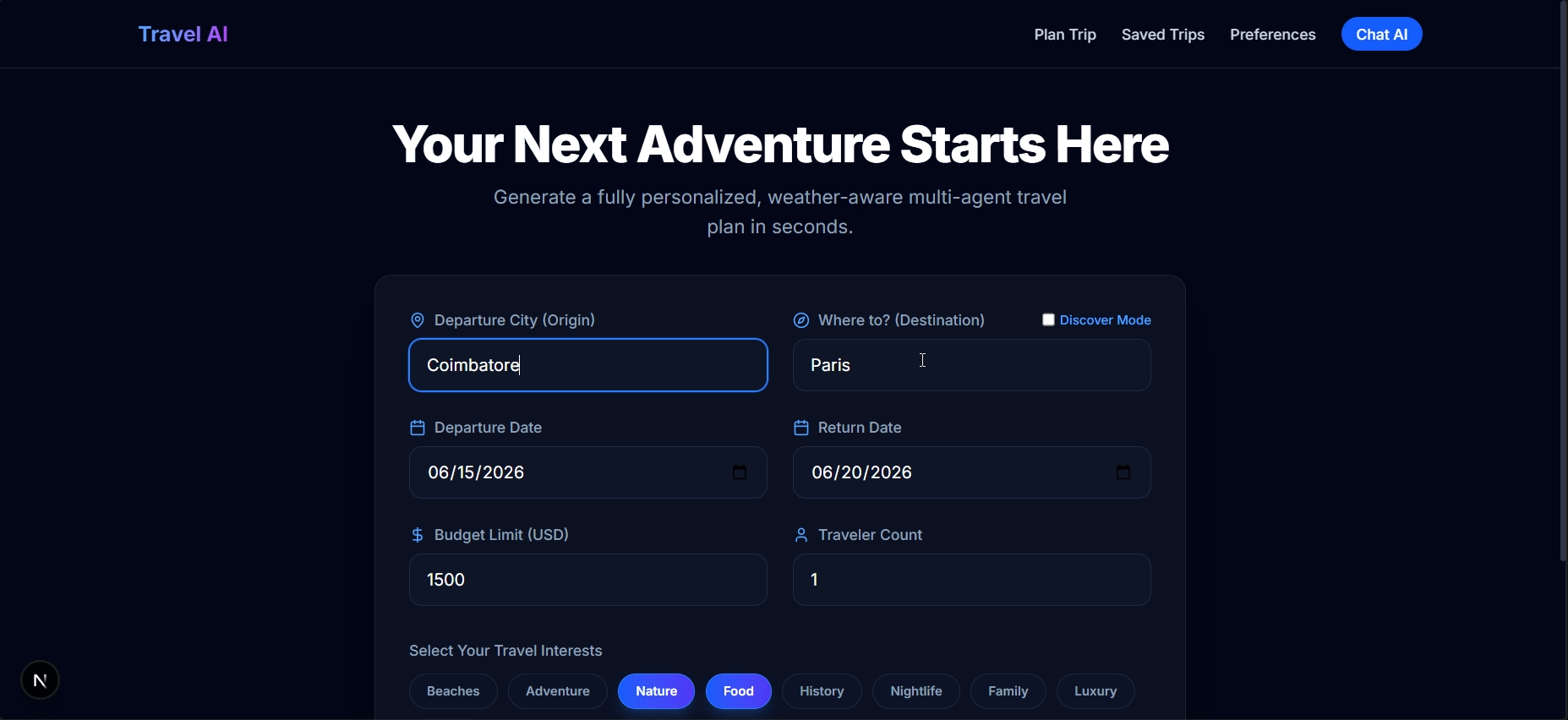
VoyageAI is an AI-powered travel planning platform that generates personalized travel itineraries based on user preferences, budget, destination, travel dates, and interests.
Key features include:
- Personalized trip planning
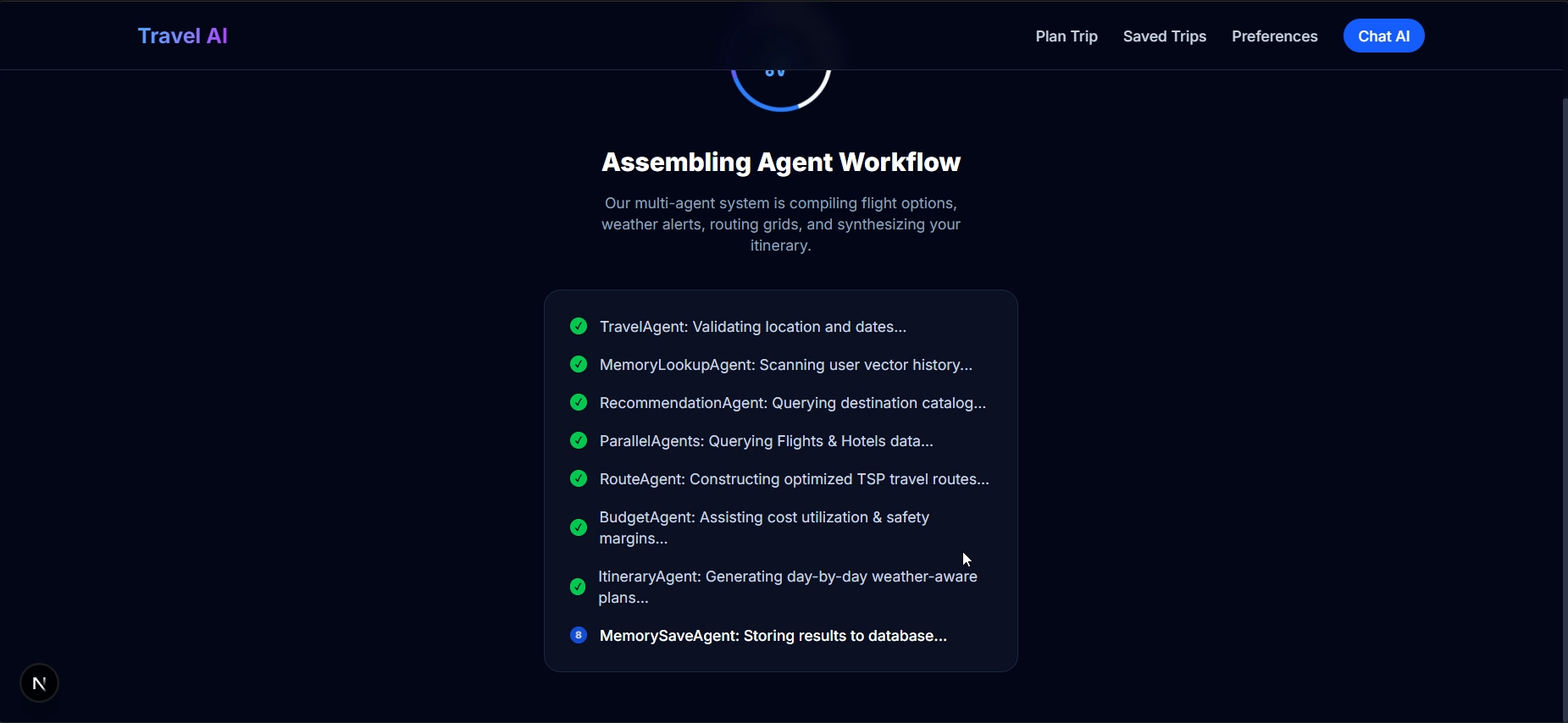
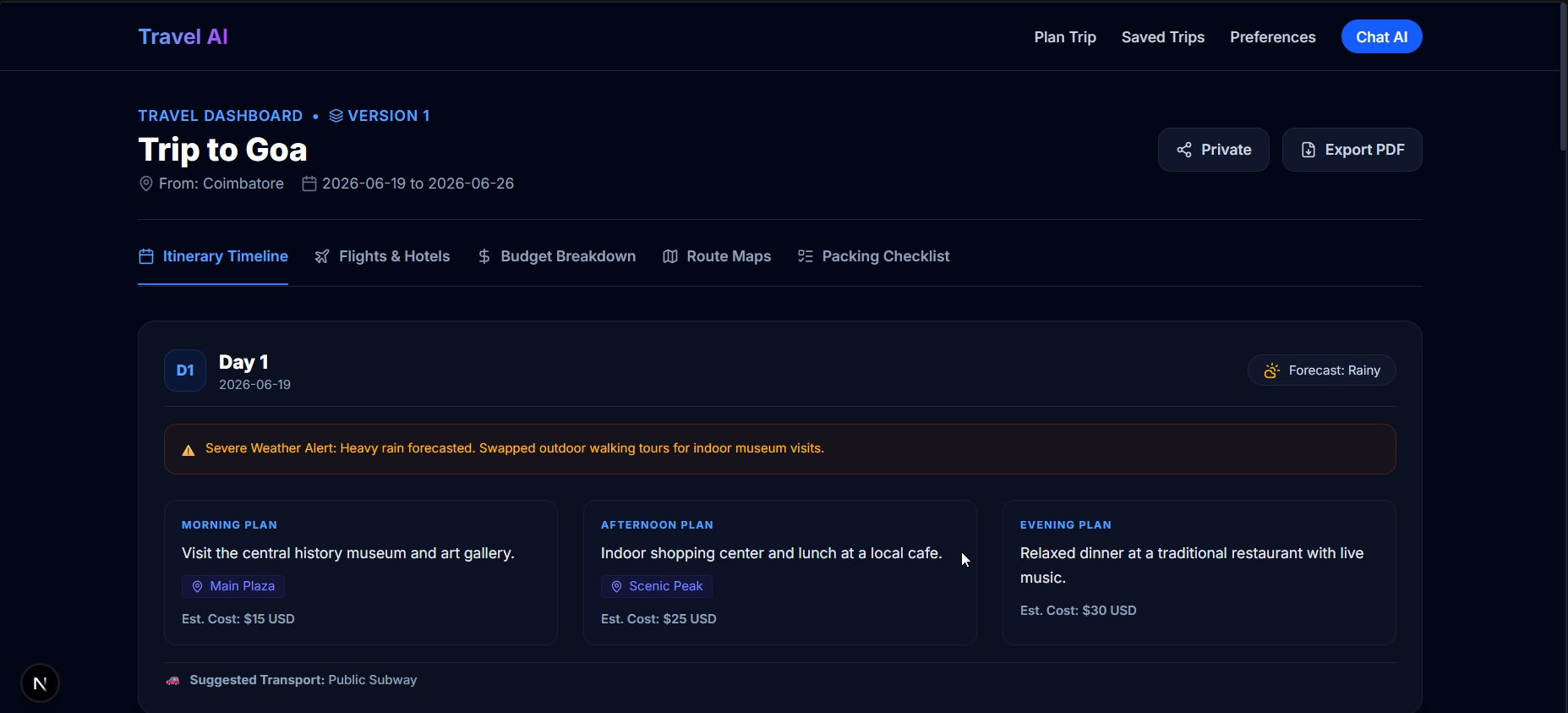
- AI-generated day-by-day itineraries
- Real-time destination research
- Weather-aware travel recommendations
- Attraction discovery and activity suggestions
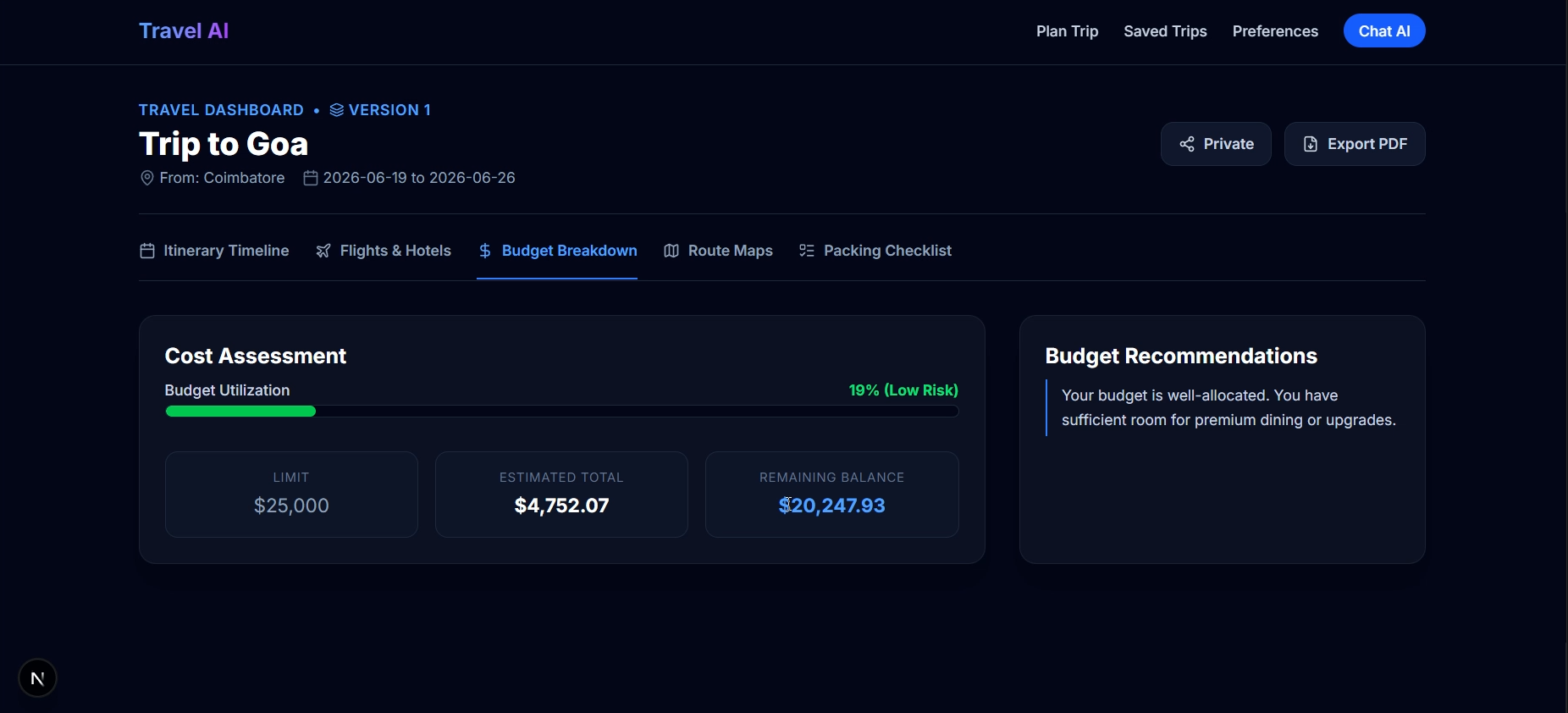
- Budget estimation and trip insights
- Packing list recommendations
- Interactive travel assistance
How we built it
VoyageAI was built using a modern AI-powered architecture combining intelligent workflows with real-time travel data.
Tech Stack:
- FastAPI for backend services
- Next.js for frontend development
- PostgreSQL for structured data storage
- ChromaDB for memory and preference storage
- LangGraph for multi-agent orchestration
- Ollama (Qwen + Nomic Embed) for local AI processing
- OpenWeatherMap for weather information
- OpenTripMap for attractions and points of interest
- OpenRouteService for routing and travel optimization
- Tavily Search for travel research
- TravelPayouts for travel-related recommendations
The system uses multiple specialized agents that collaborate to gather information, estimate budgets, optimize routes, and generate complete travel itineraries.
Challenges we ran into
- Integrating multiple external travel APIs with different response formats.
- Designing reliable fallback mechanisms when APIs are unavailable.
- Coordinating multiple AI agents while maintaining a consistent workflow.
- Managing travel recommendations while considering weather, budget, and user preferences simultaneously.
- Optimizing attraction routes and itinerary schedules for better user experience.
- Handling dynamic travel data and ensuring graceful degradation when services are unavailable.
Accomplishments that we're proud of
- Successfully built a multi-agent AI travel planning system.
- Integrated real-time travel research, weather, attractions, and itinerary generation into a single platform.
- Implemented intelligent fallback mechanisms to ensure continuous functionality.
- Created a scalable architecture with modular service and provider layers.
- Designed a modern, user-friendly interface for seamless trip planning.
- Developed a system capable of generating personalized travel experiences in seconds.
What we learned
Through building VoyageAI, we gained valuable experience in:
- Multi-agent AI system design
- LangGraph workflow orchestration
- API integration and service abstraction
- Retrieval and memory systems using vector databases
- Full-stack application development
- Prompt engineering and structured AI outputs
- Building resilient systems with fallback strategies and caching
What's next for VoyageAI
We plan to expand VoyageAI with:
- Flight and hotel booking integration
- Voice-enabled travel assistant
- Real-time travel alerts and notifications
- Collaborative group trip planning
- Personalized recommendation engine based on travel history
- Mobile application support
- Multilingual travel assistance
- AI-powered expense tracking and budget optimization
Our vision is to make VoyageAI a comprehensive AI travel companion that assists users throughout their entire travel journey, from planning to execution.
Built With
- api
- chromadb
- css
- docker
- embed
- fastapi
- langgraph
- leaflet.js
- next.js
- nomic
- ollama
- openrouteservice
- opentripmap
- openweathermap
- postgresql
- python
- query
- qwen
- react
- redis
- rest
- sqlalchemy
- tailwind
- tavily
- travelpayouts
- typescript

Log in or sign up for Devpost to join the conversation.