Inspiration
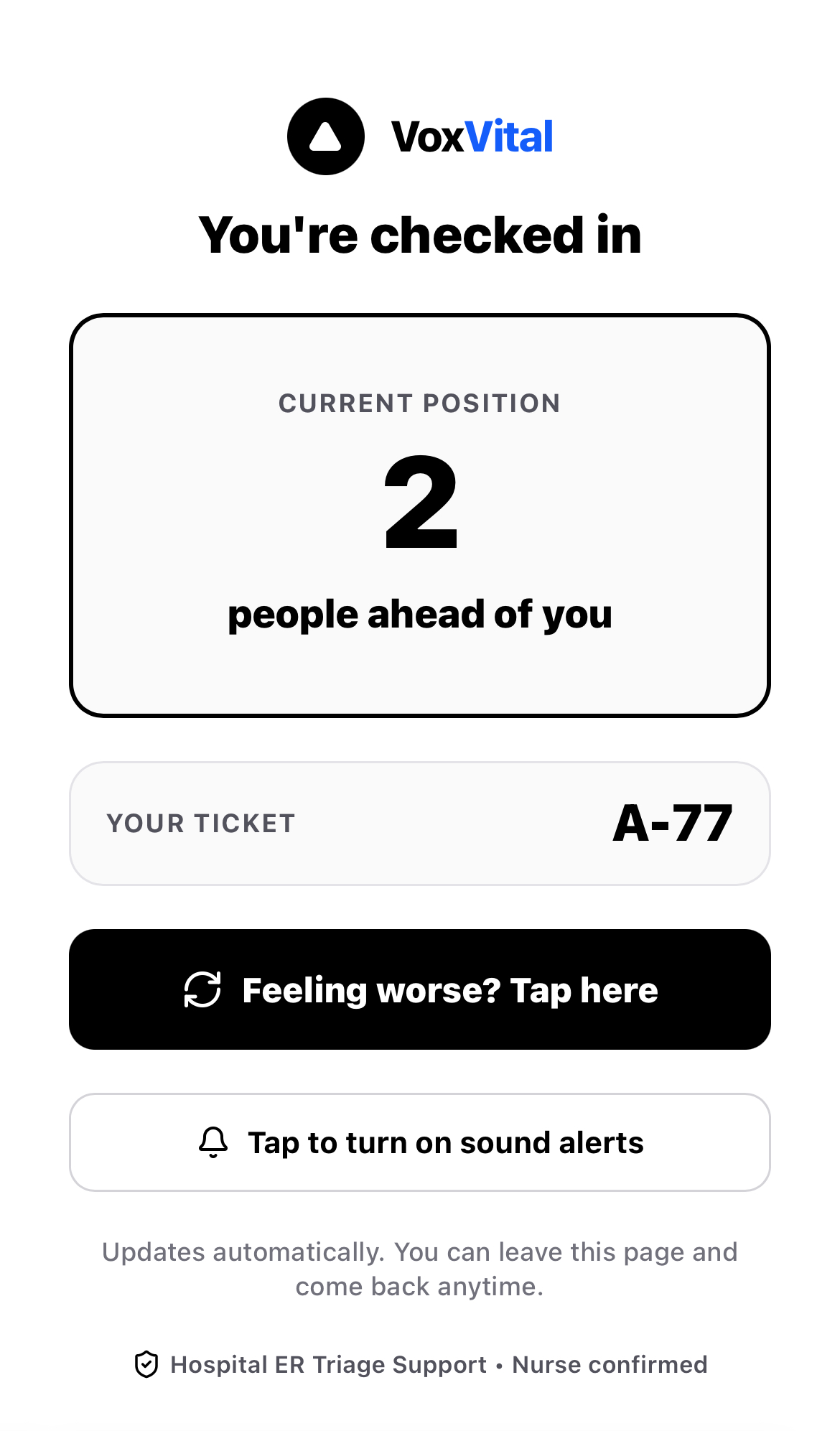
In an ER waiting room, patients are triaged once and can then wait hours, sometimes getting worse without anyone noticing. Language barriers make it worse: a patient who can't describe chest pain in English can be under-triaged. Studies like CoVETED show camera-based vitals can support ER triage. I wanted a check-in that listens in the patient's language and checks their words against their body.
What it does
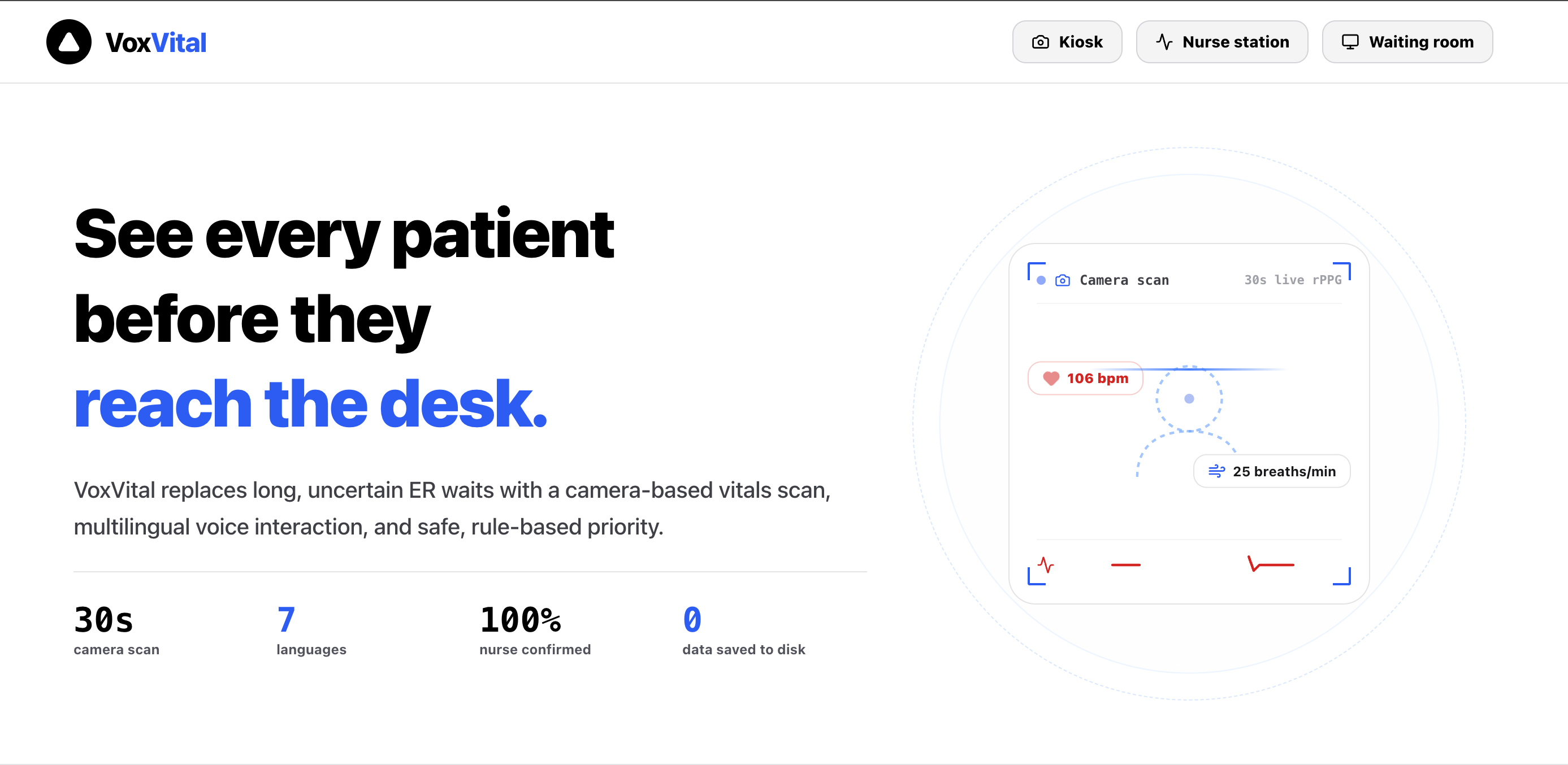
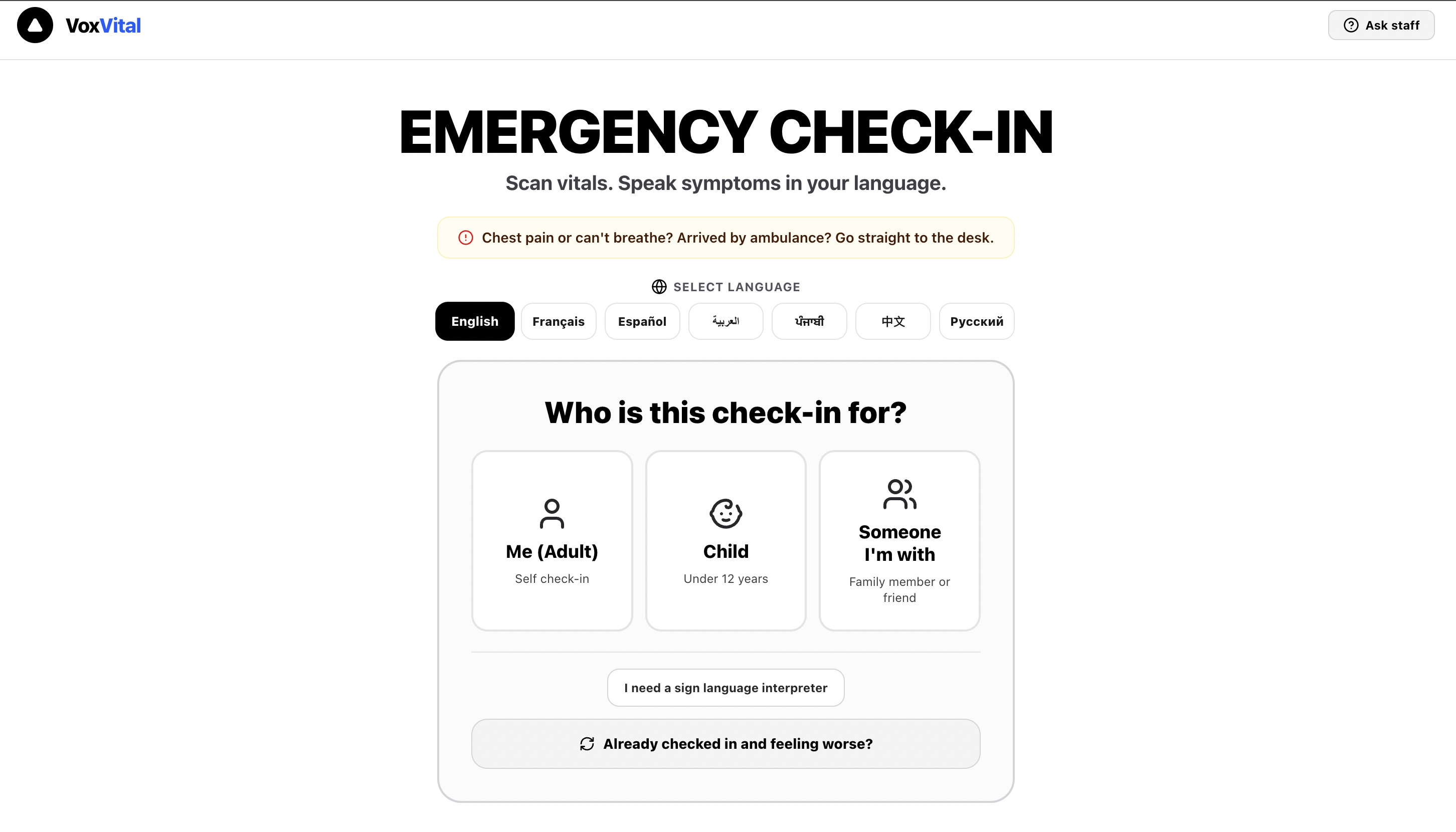
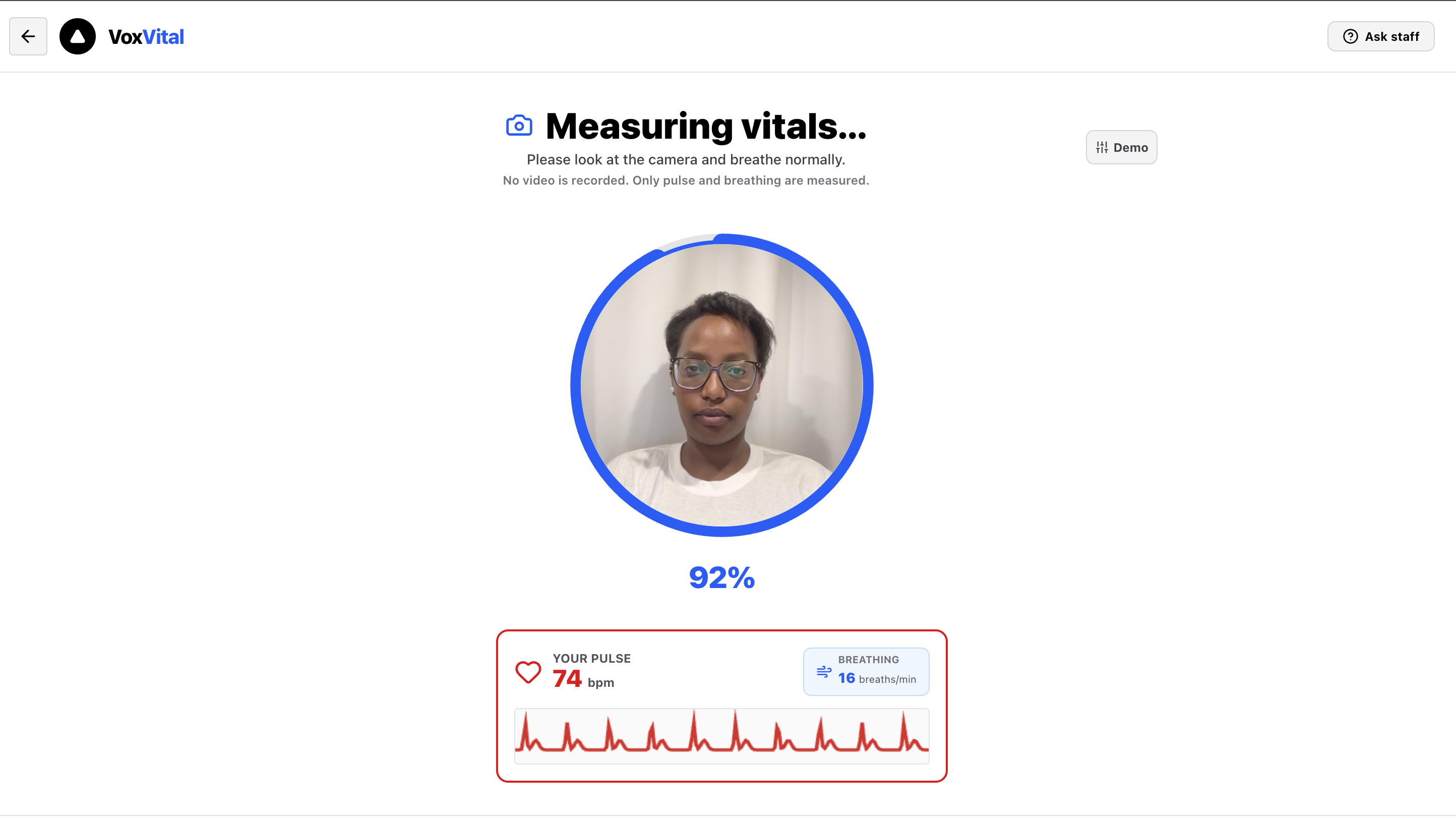
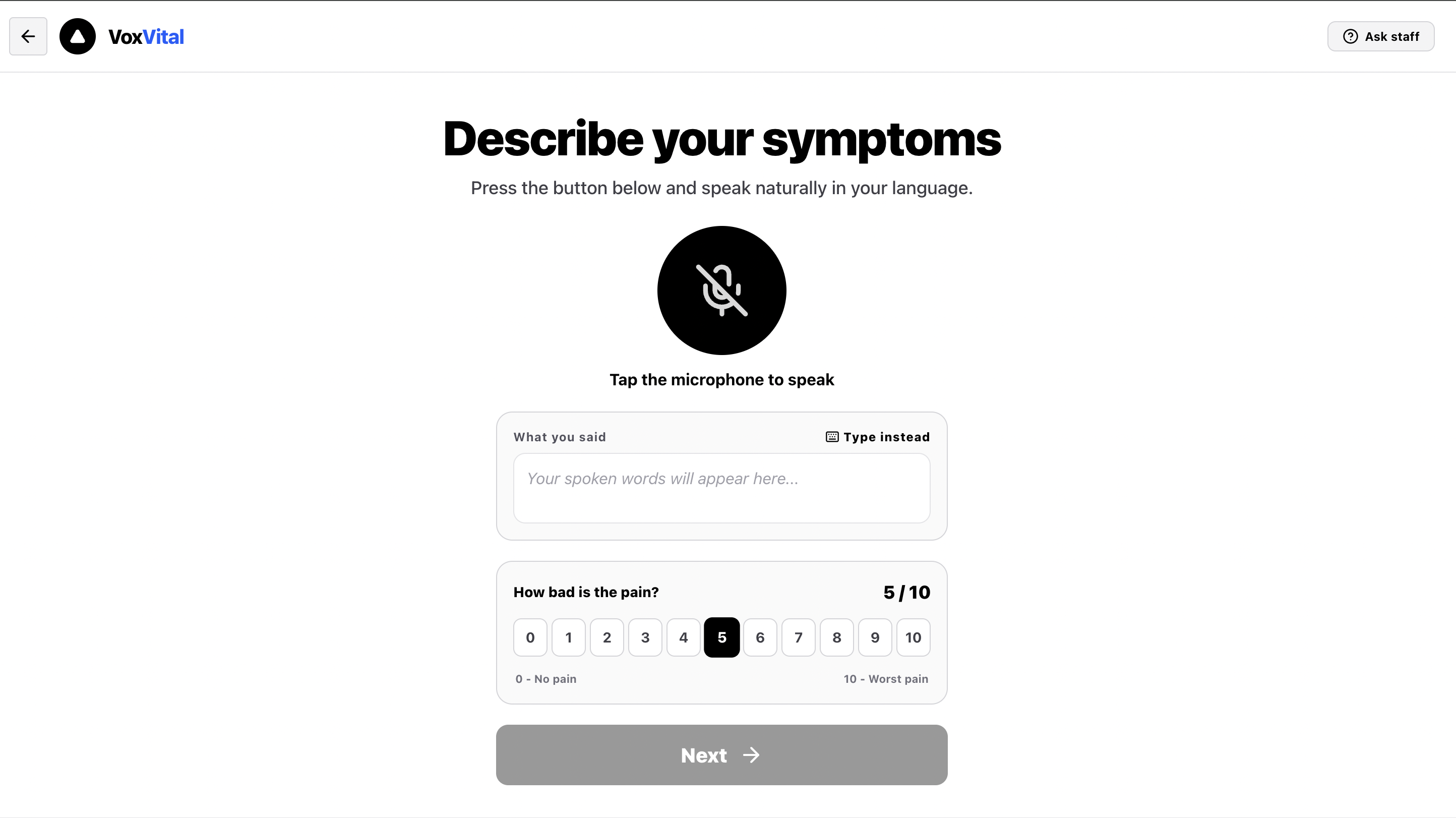
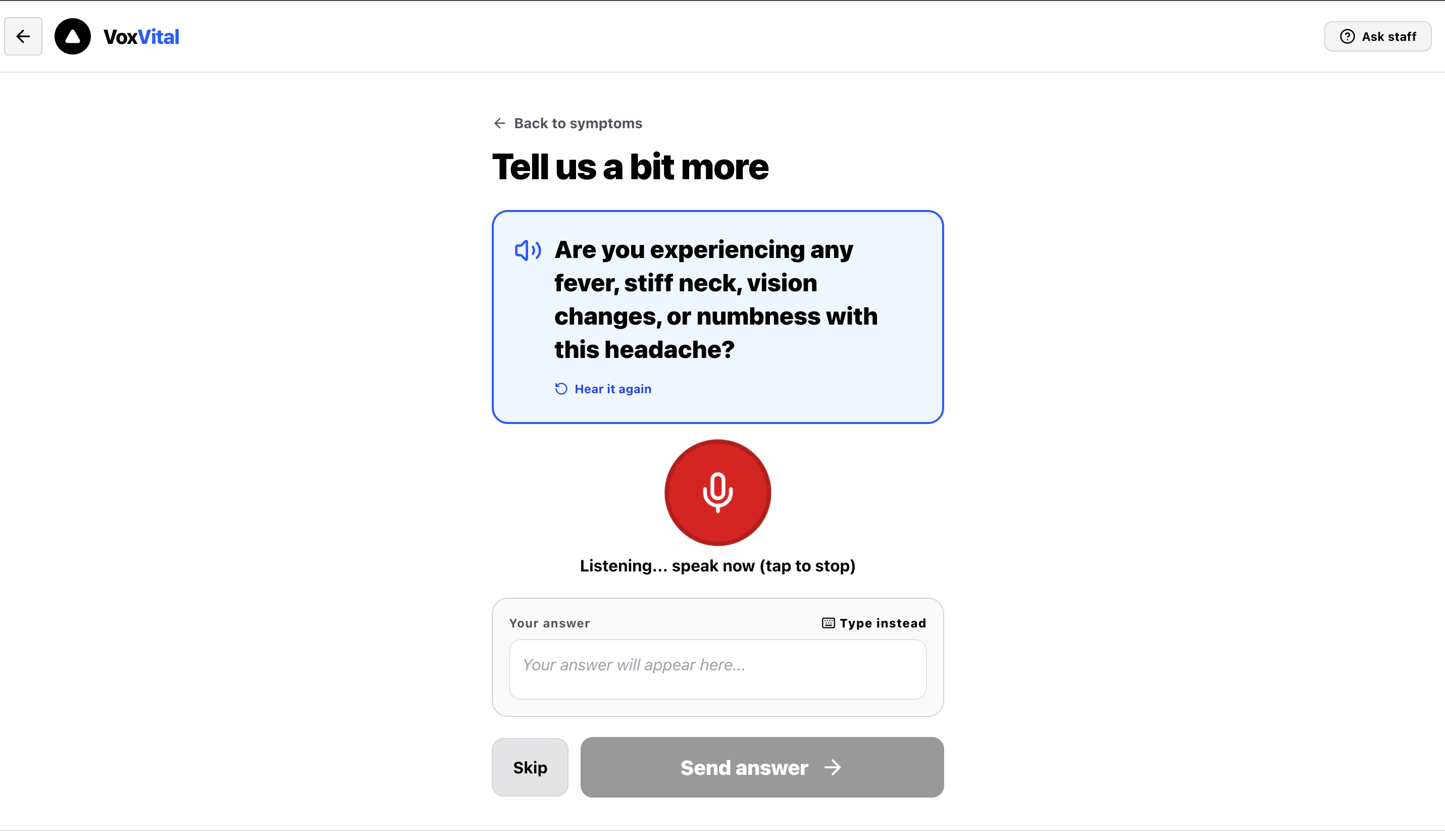
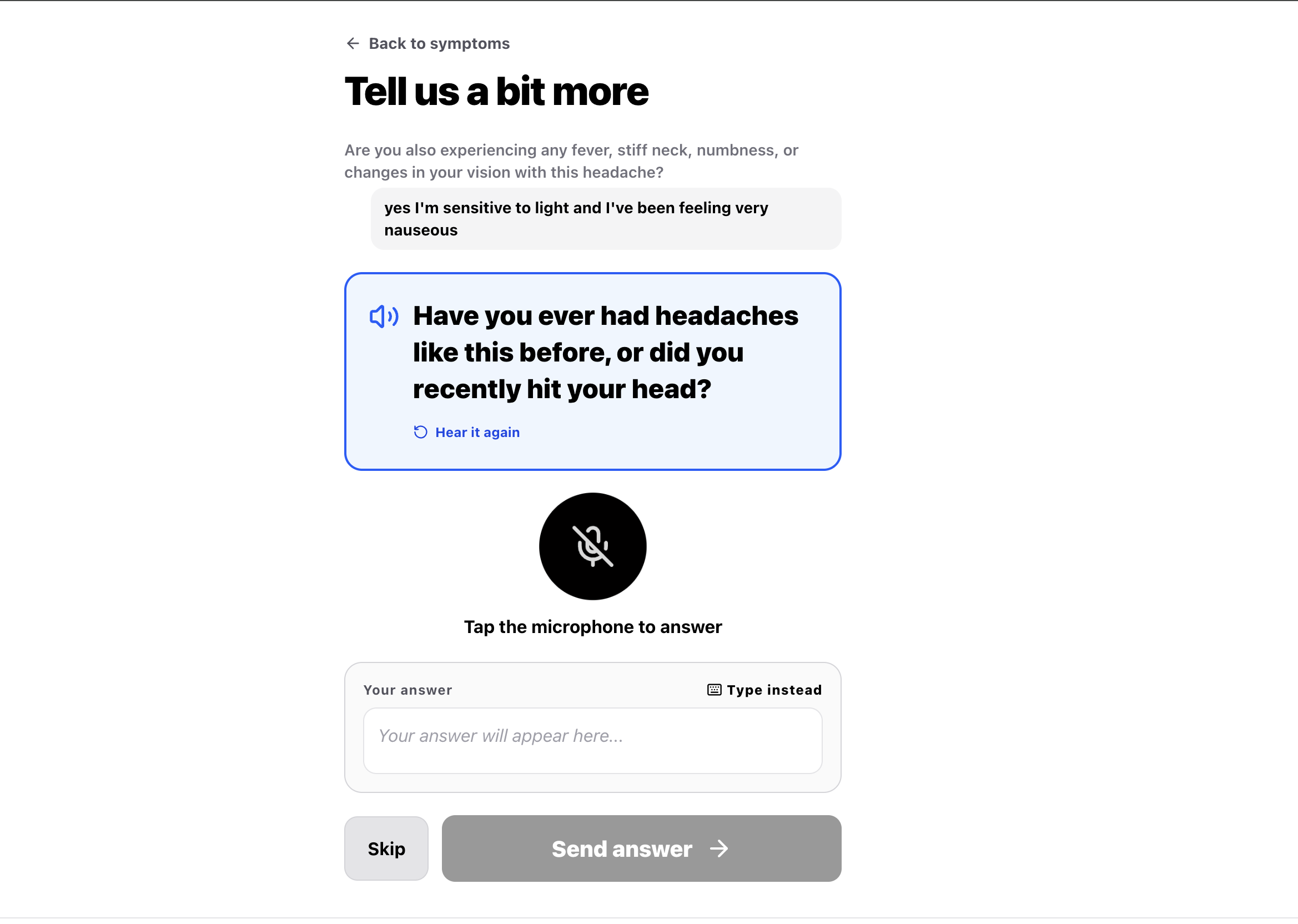
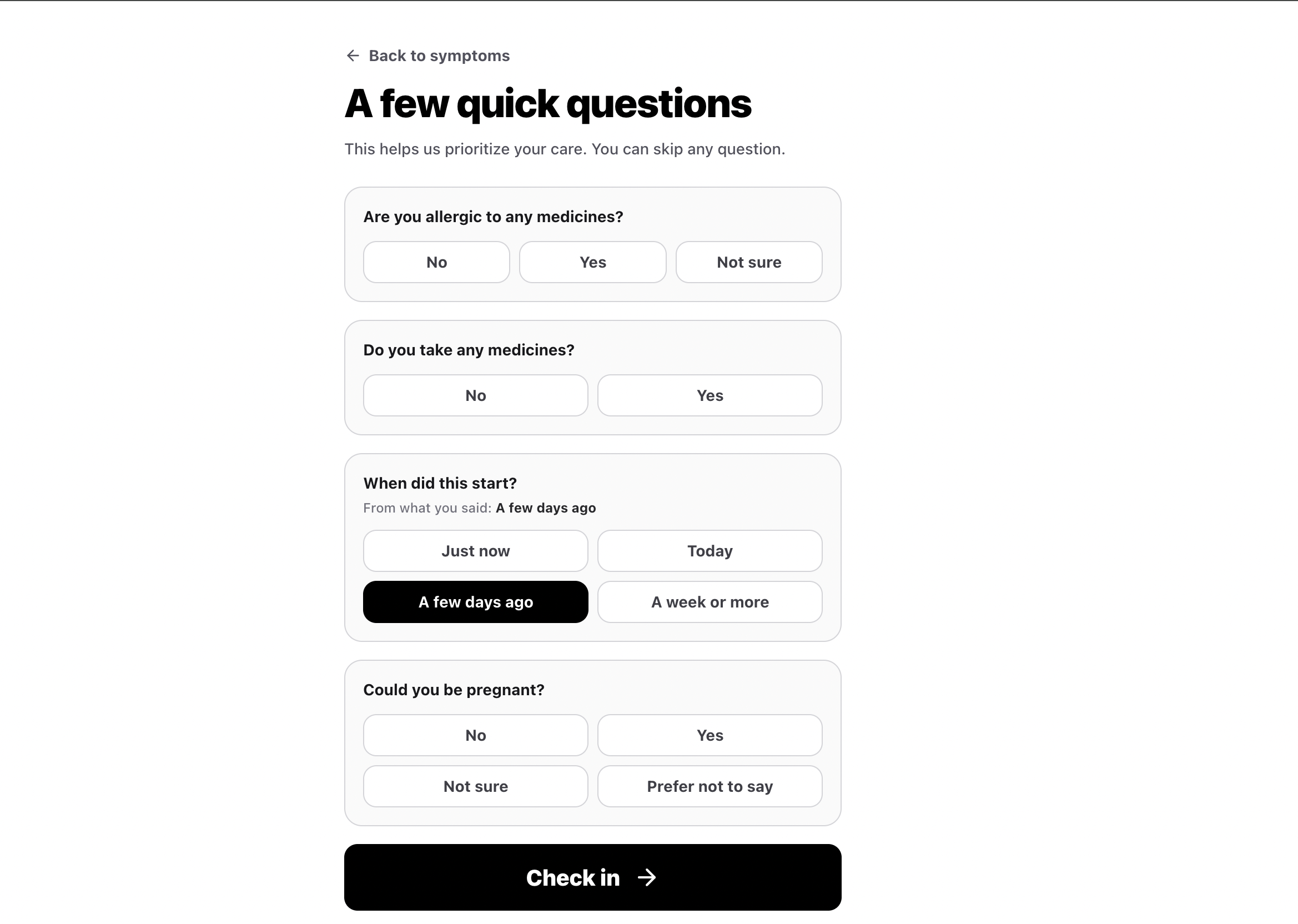
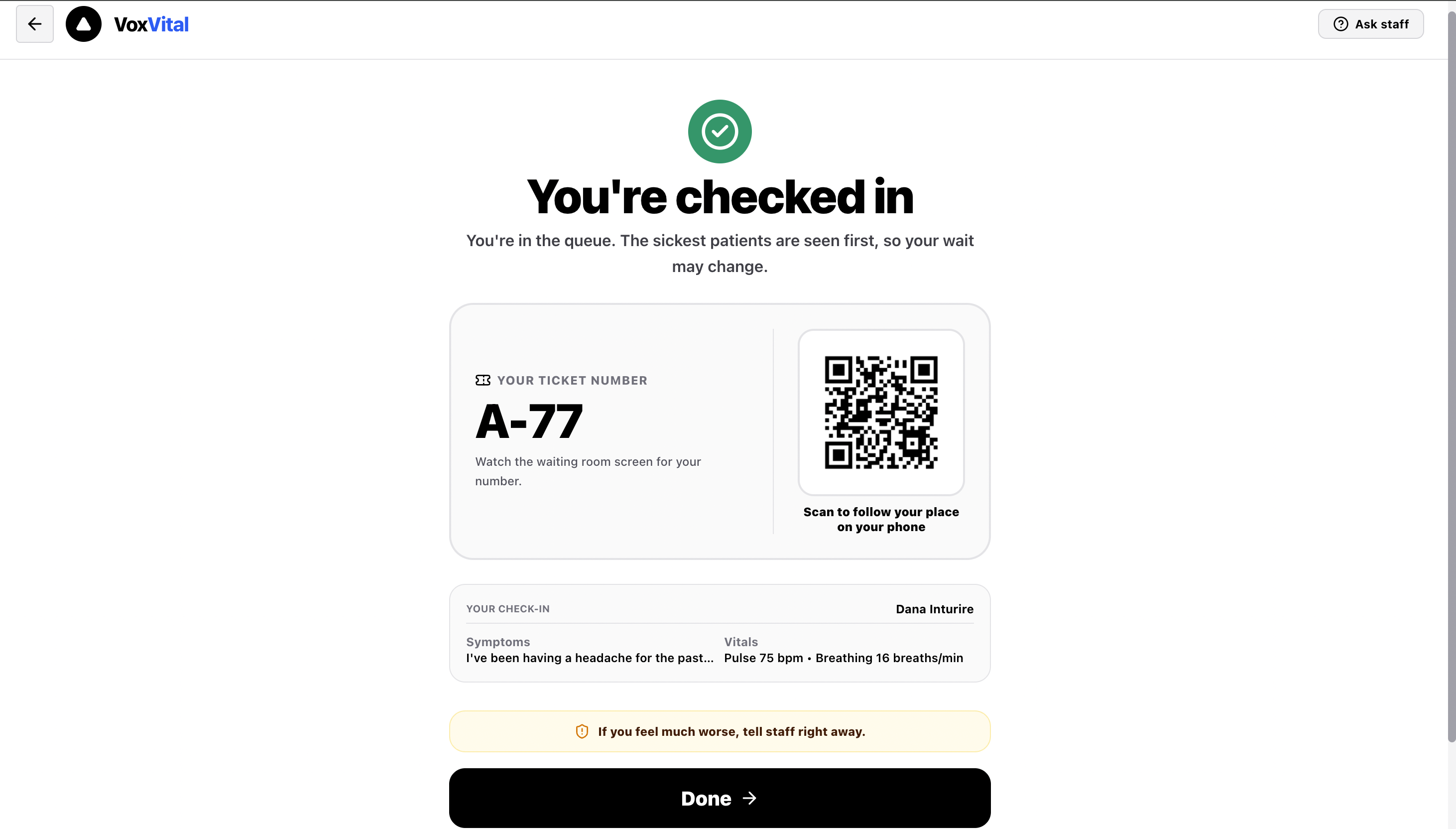
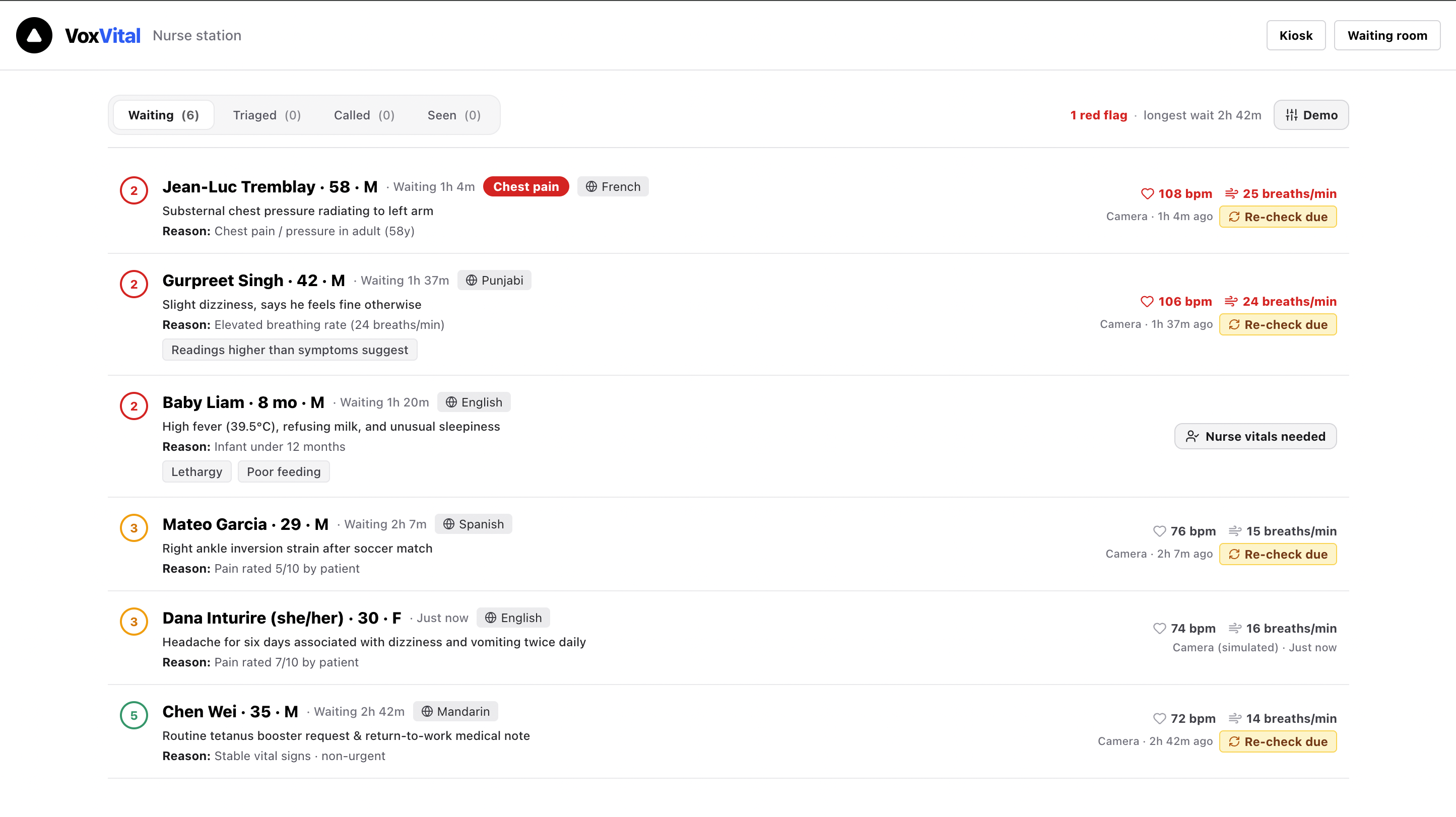
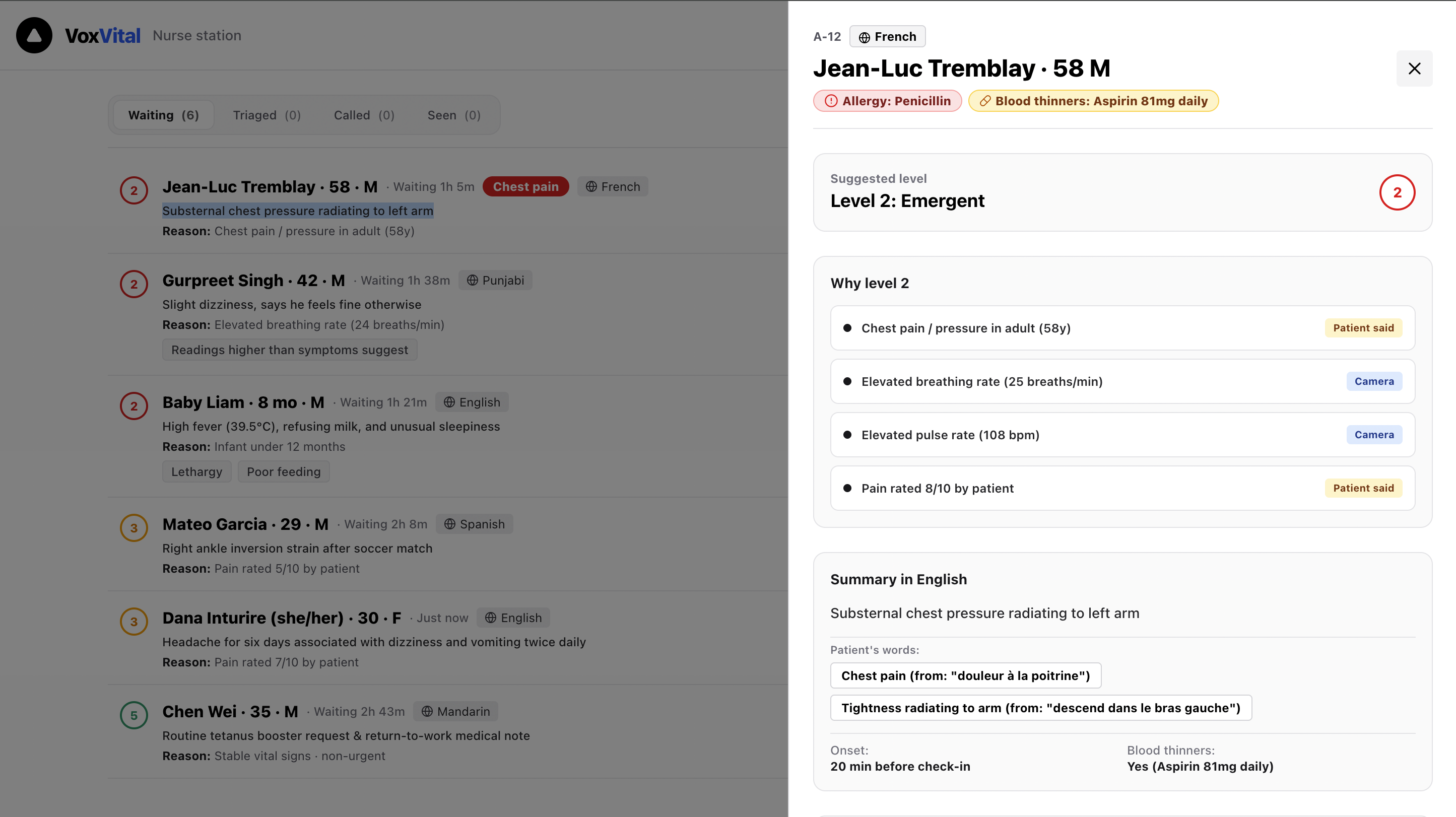
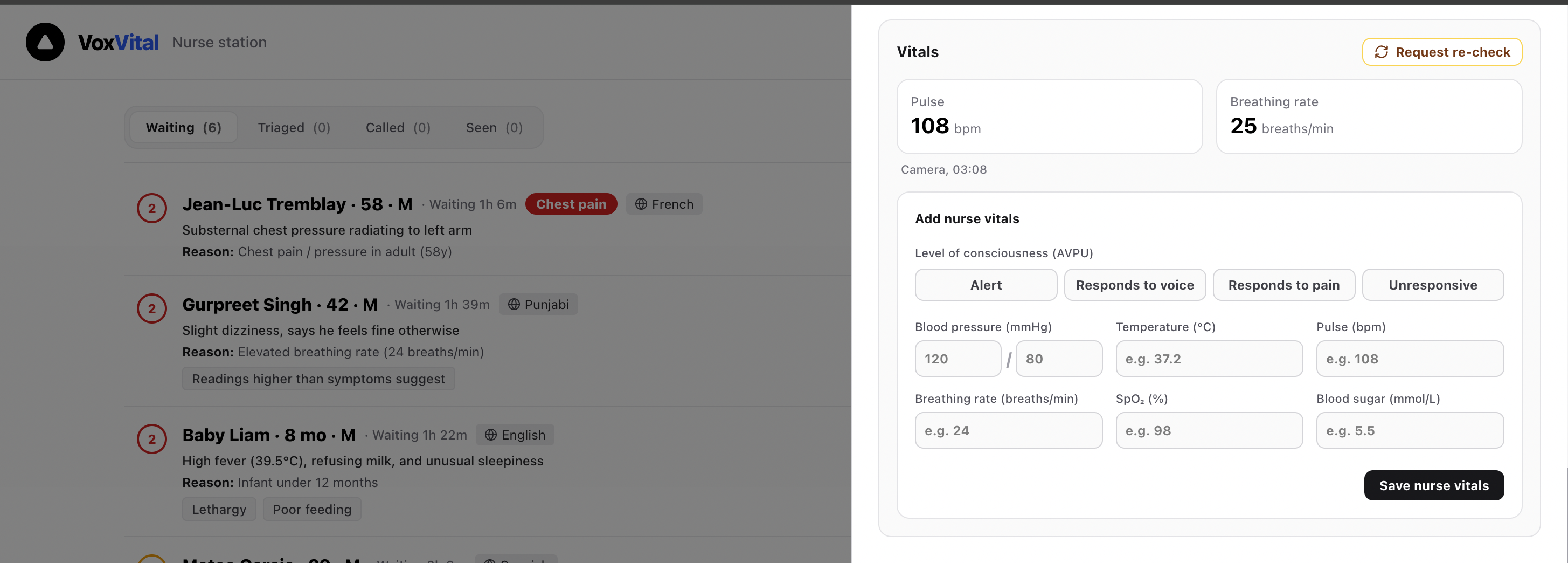
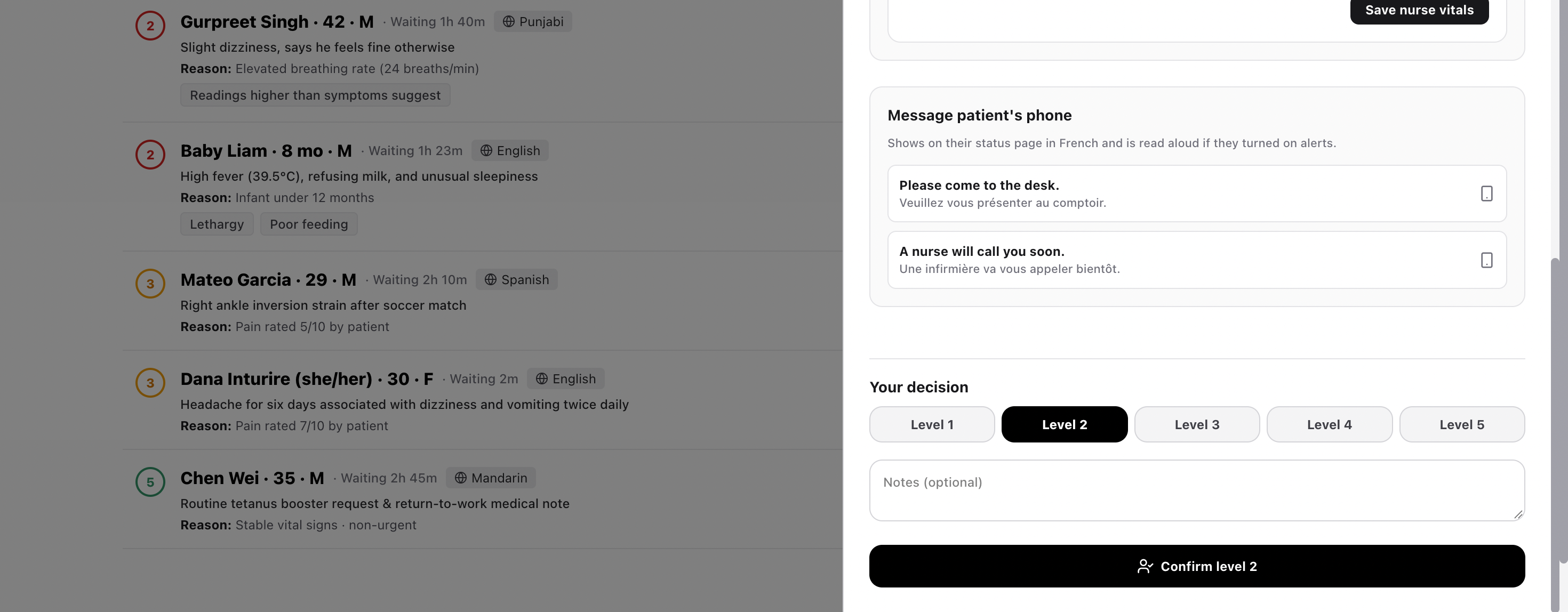
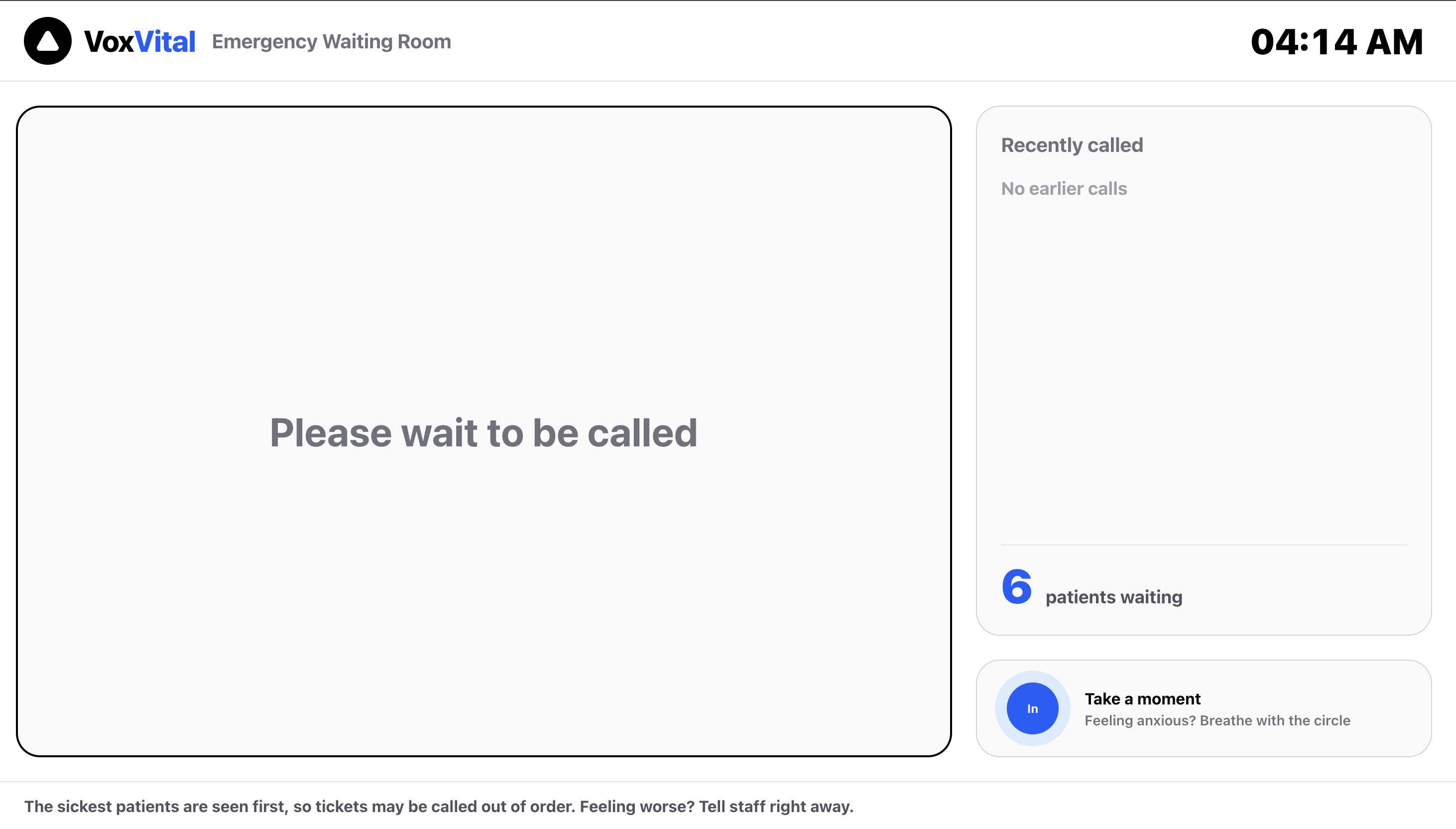
1. Check-in kiosk. The patient picks their language, does a 30-second camera scan for pulse and breathing rate (simulated in this demo; built to use Presage's camera SDK), and describes symptoms by voice or typing, plus allergies, medicines and when it started. 2. Safety rules first. Canadian triage (CTAS) rules set the minimum priority and red flags. AI can only raise priority, never lower it. A nurse confirms every level. 3. Nurse station. One sorted list showing why each patient got their level, a flag when readings don't match what the patient said, an English summary with the patient's own words, and buttons that speak to the patient in their language. 4. While waiting. Re-check timing follows CTAS intervals. The nurse can request a re-check, the patient re-scans, and their row updates. The waiting room screen calls patients by ticket number, never by name.
How I built it
- Next.js + Node.js on one laptop, with live updates to the nurse screen
- Gemini 2.5 Flash to translate to English and pull out symptoms, onset and pain
- ElevenLabs to speak back to the patient in their language
- Web Speech API for speech-to-text (works best in Chrome)
- A CTAS-based rule engine for minimum levels and red flags
- Presage camera SDK integration prepared; vitals are simulated for the demo
Safety and privacy
- The camera is a screening aid, not a diagnosis. Readings show their age, and nurses can enter their own vitals.
- If the AI fails or is wrong, the rules still set the minimum level and the nurse decides.
- Patient data stays in memory on the laptop and is never saved to disk.
Challenges
Keeping AI safe in a medical setting, designing a calm screen for tired nurses, and making check-in inclusive (languages, pronouns, sign language requests, visual calling for deaf patients).
What I learned
How ER triage actually works, what nurses need on screen, and how to use AI as decision support rather than a decision maker.
What's next
Connect real Presage camera readings and test their accuracy against clinical devices, get feedback from triage nurses, and connect to hospital systems.## Inspiration
What it does
How we built it
Challenges we ran into
Accomplishments that we're proud of
What we learned
What's next for VoxVital
Built With
- elevenlabs
- gemini
- javascript
- next.js
- node.js
- react
- web-speech-api


Log in or sign up for Devpost to join the conversation.