Inspiration
Managing everyday computer tasks can interrupt concentration. Students and developers often switch between applications to locate files, track deadlines, start focus sessions, and manage reminders. Voxora explores how a voice-enabled AI assistant can make these workflows more convenient and accessible.
What it does
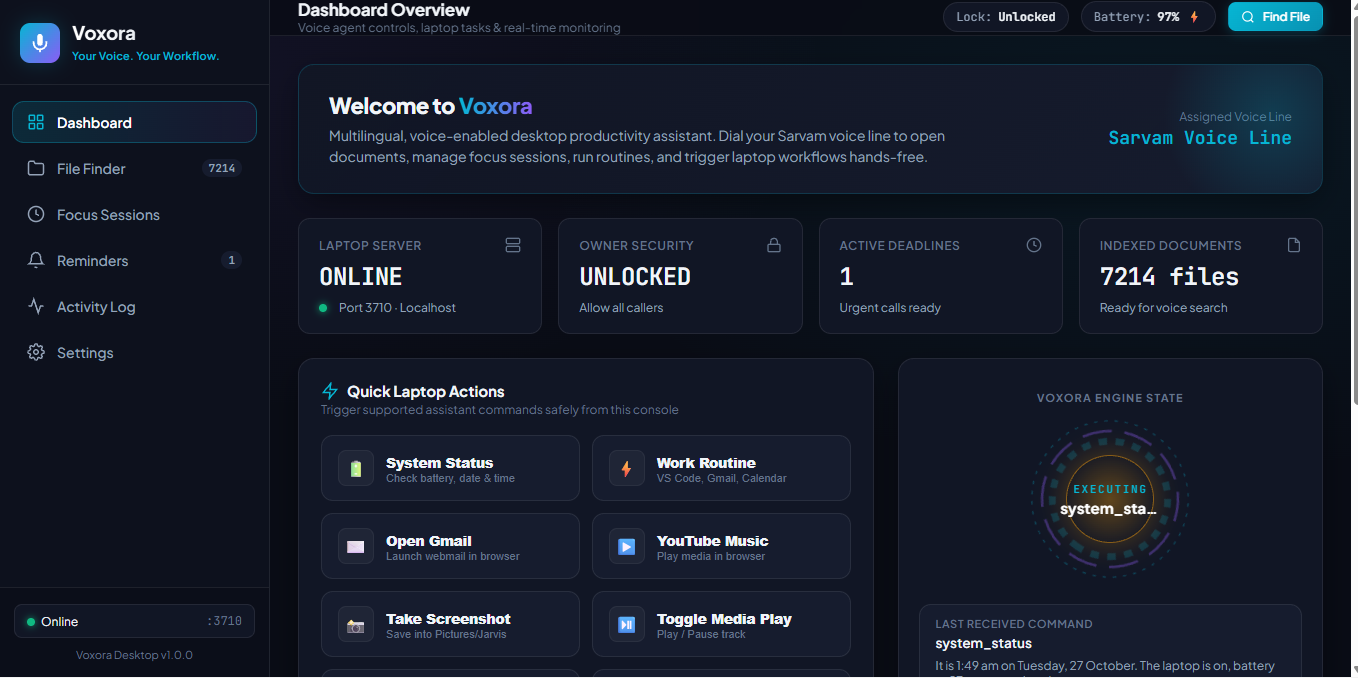
Voxora is a multilingual desktop productivity assistant concept designed to connect natural-language requests with selected computer actions.
Its intended capabilities include:
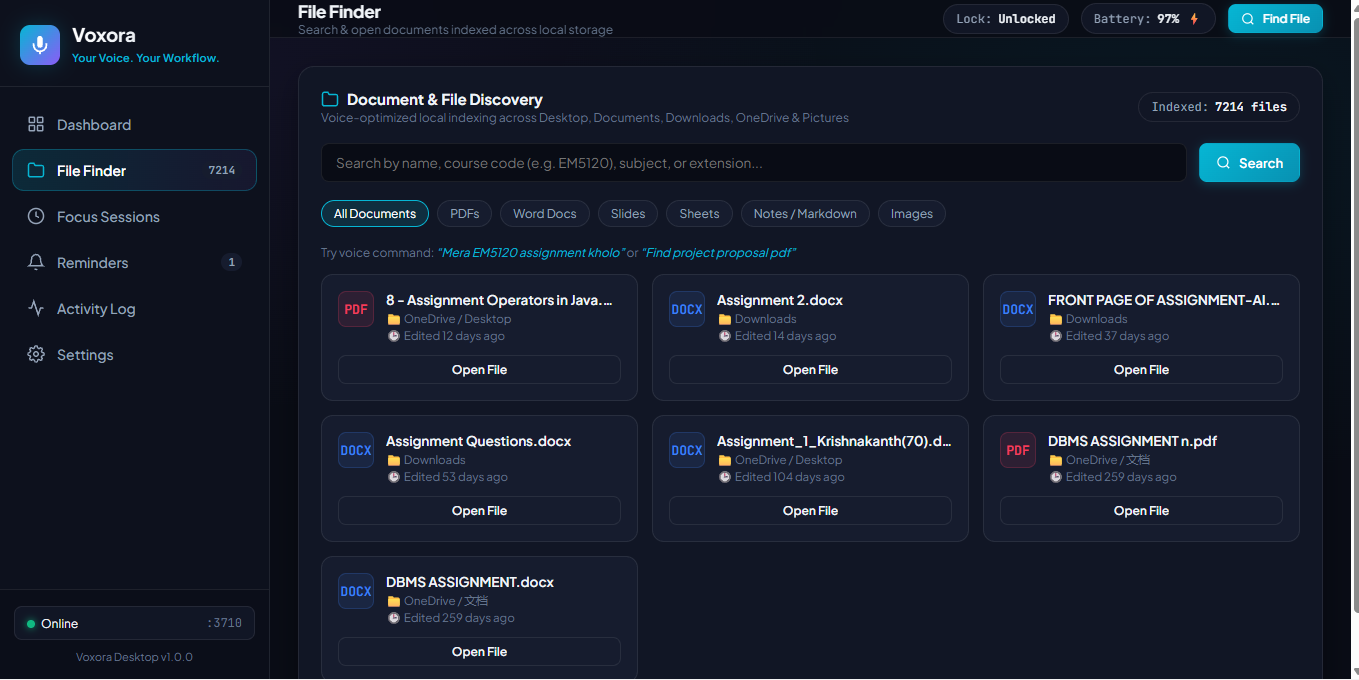
- File discovery: Find relevant documents using keywords and course codes.
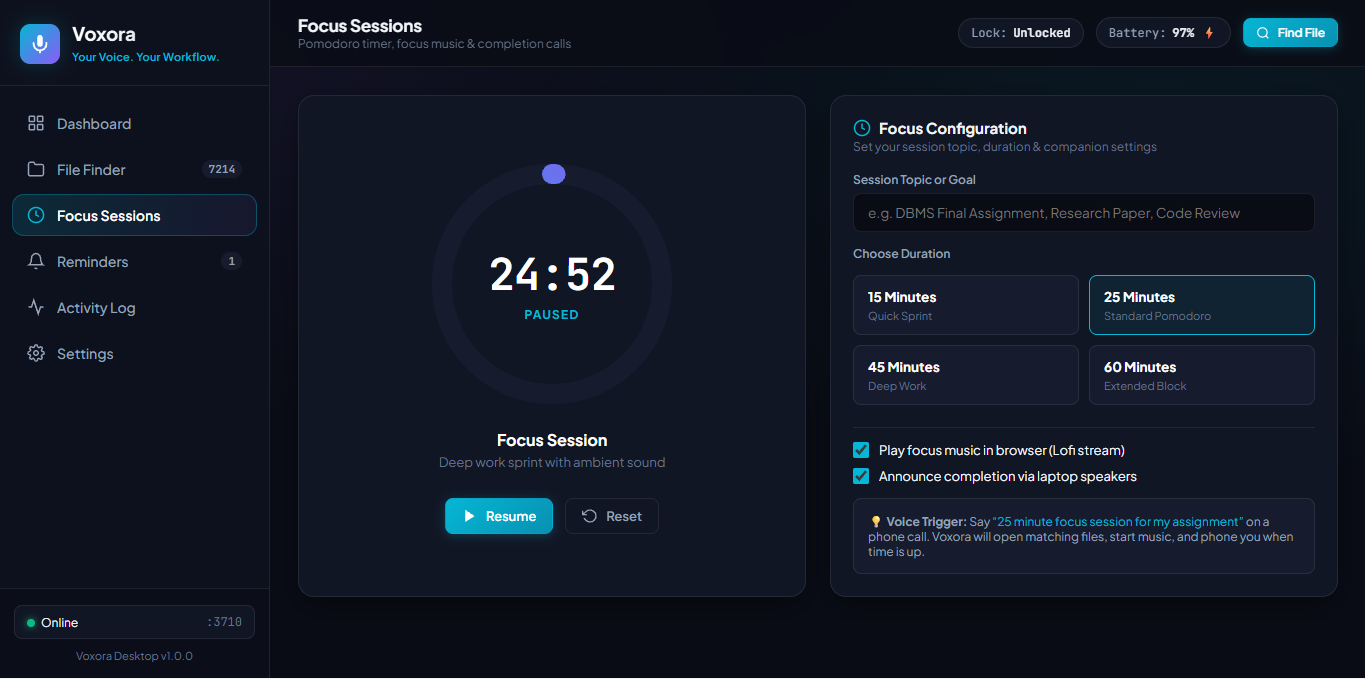
- Focus sessions: Support timed work sessions.
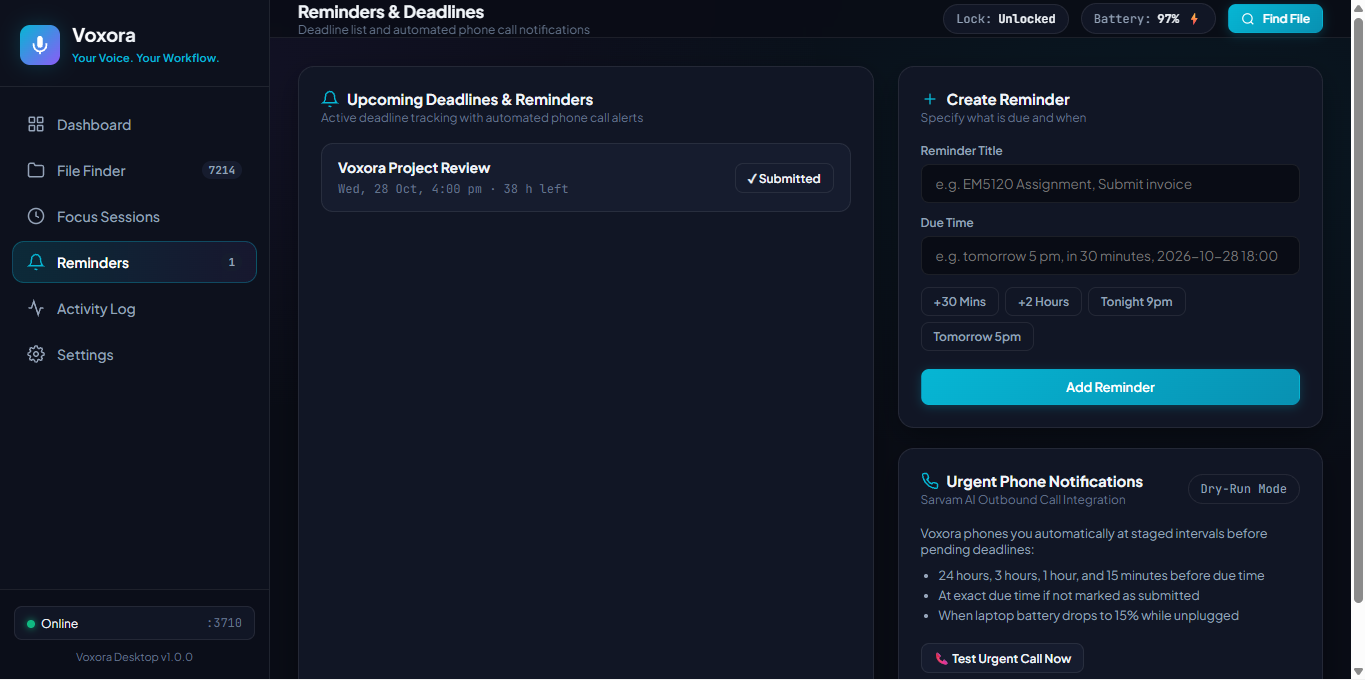
- Smart reminders: Track deadlines and scheduled tasks.
- Desktop productivity: Open supported websites and perform selected actions.
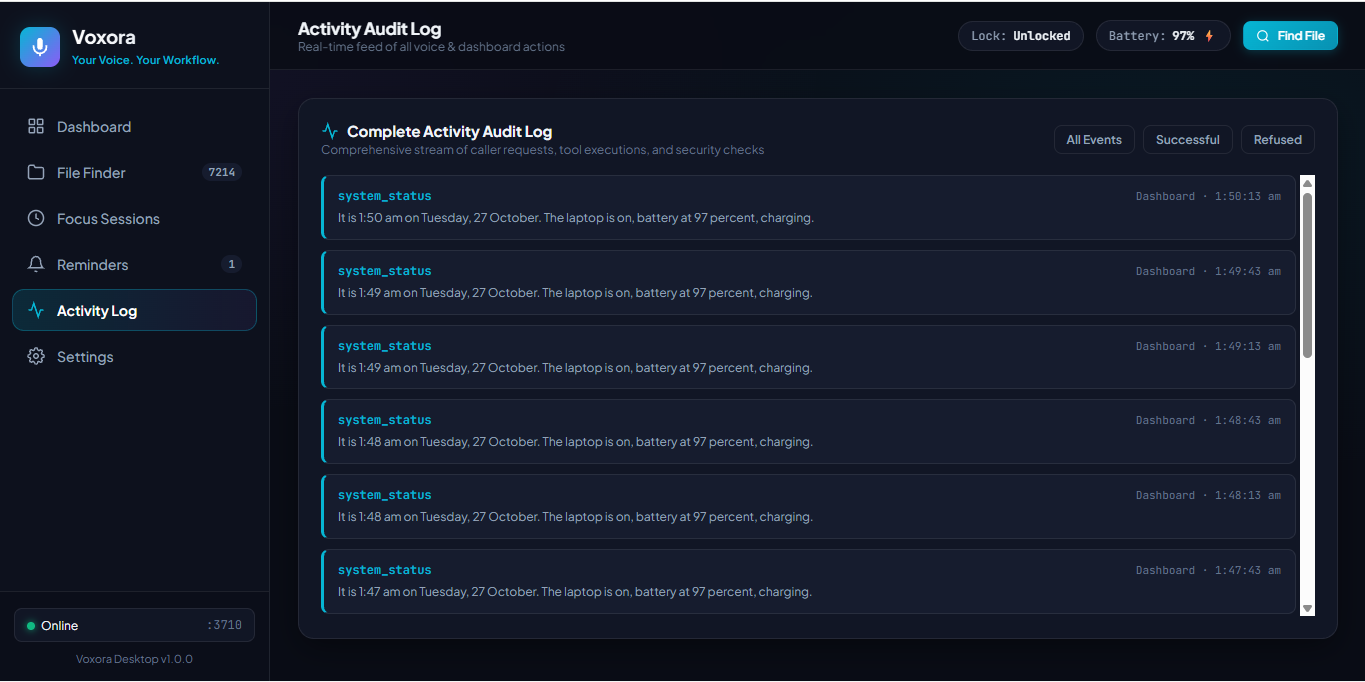
- Activity feedback: Help users understand the status of their requests.
Availability depends on the existing implementation and the configuration of external services.
How it was built
The current prototype is based on the existing ARRC open-source project, which uses JavaScript and Node.js for its local action server and integrates with Sarvam AI voice services. The project is being explored under the Voxora name, with planned improvements to its dashboard, visual design, and user experience.
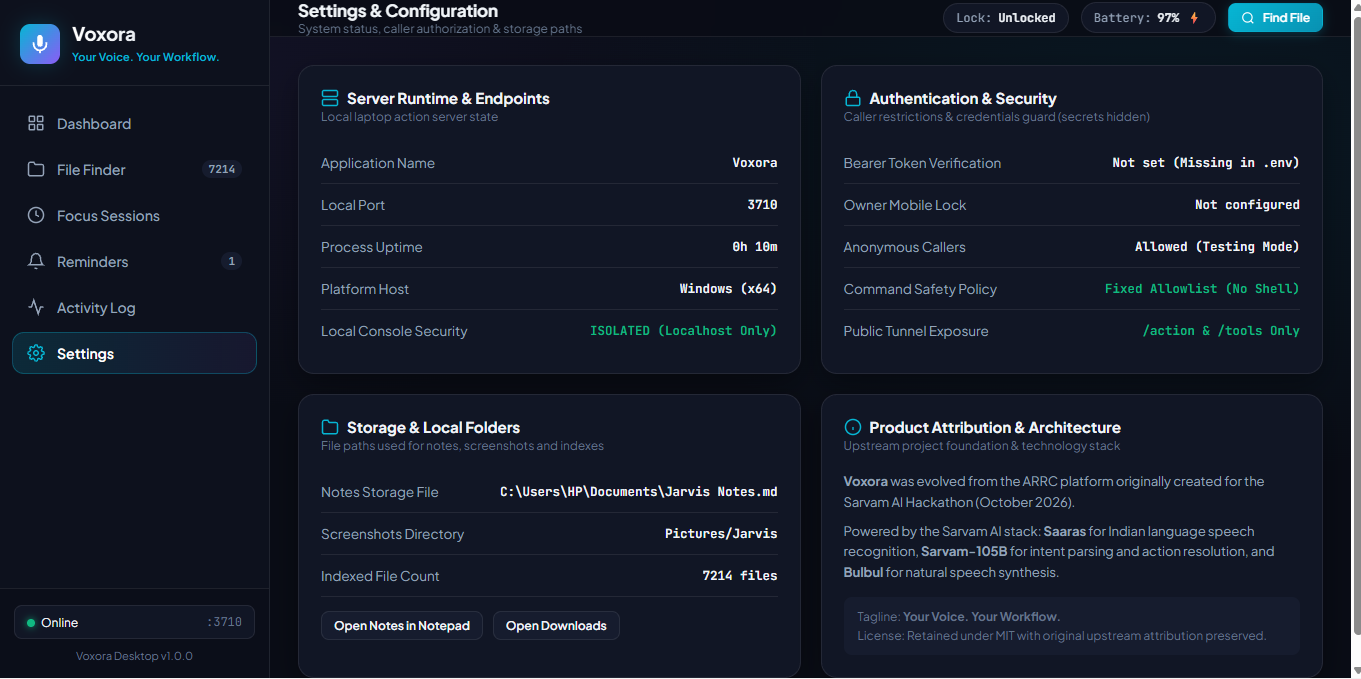
The intended architecture separates the desktop interface from the local action server and external voice-agent services. Authentication and restrictions on supported actions are important considerations when connecting AI systems to a personal computer.
Challenges
The main challenges include understanding the existing codebase, configuring external integrations, preserving safe boundaries around desktop actions, and making the interface clear and approachable. External API credentials are required for some integrations, so not every capability can be demonstrated in an unconfigured environment.
What I learned
Working with this prototype provides an opportunity to learn about Node.js applications, API integrations, voice-agent workflows, local server configuration, user-interface design, and the importance of testing AI-driven actions before relying on them.
Future improvements
Potential improvements include more robust multilingual command handling, clearer error recovery, better accessibility, improved configuration guidance, and expanded automated testing.

Log in or sign up for Devpost to join the conversation.