-
-
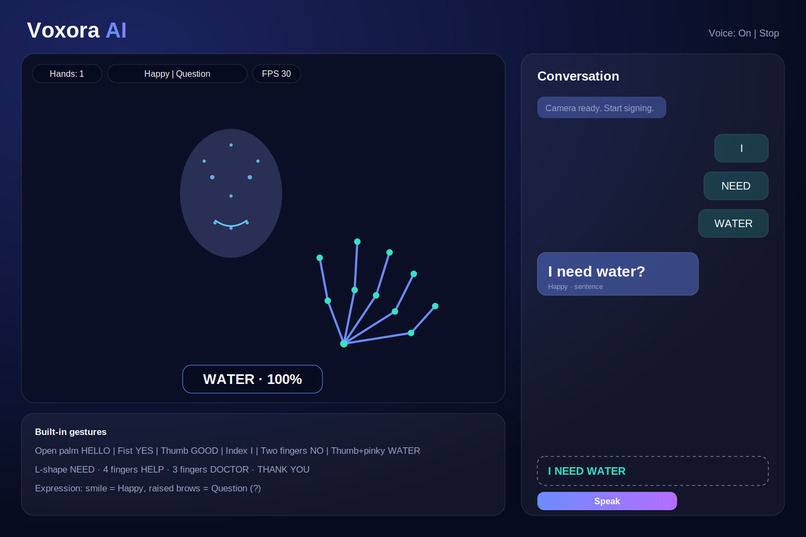
Voxora ui mockup
-
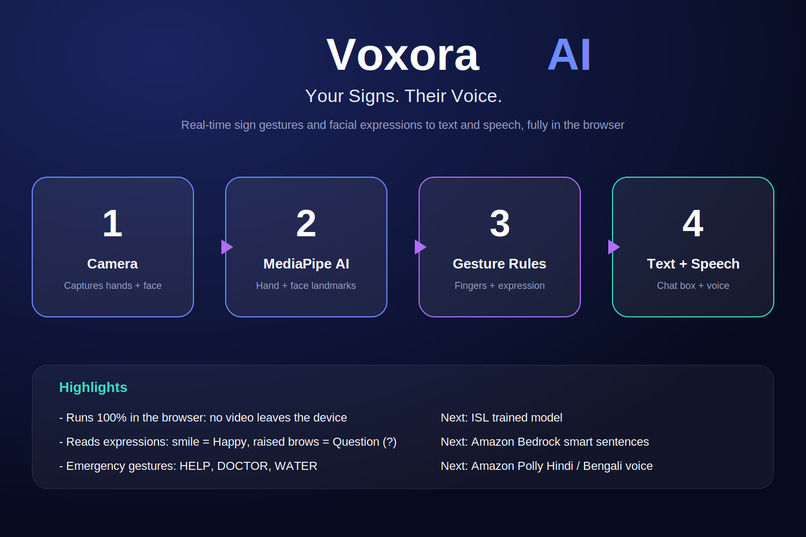
Voxora pipeline
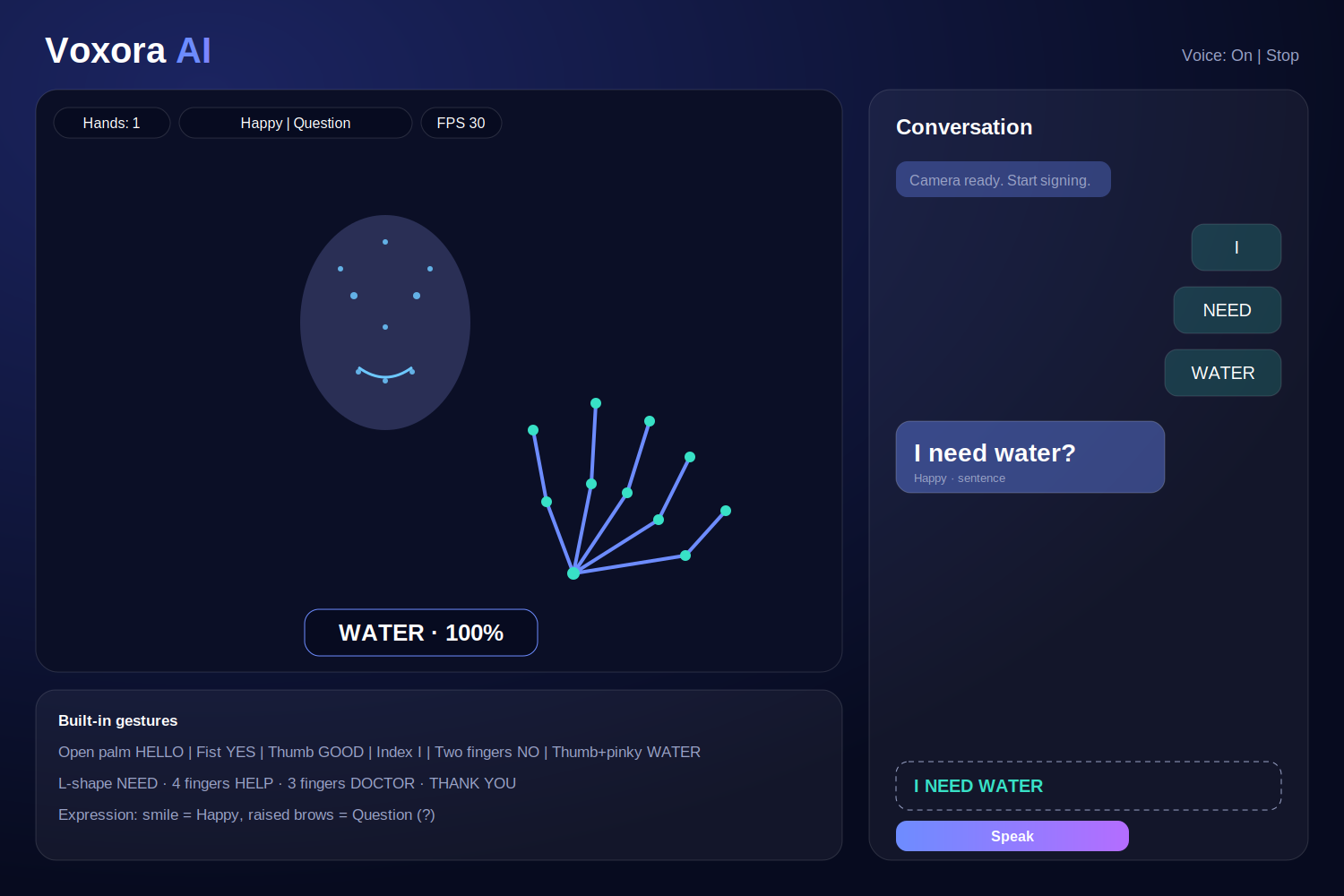
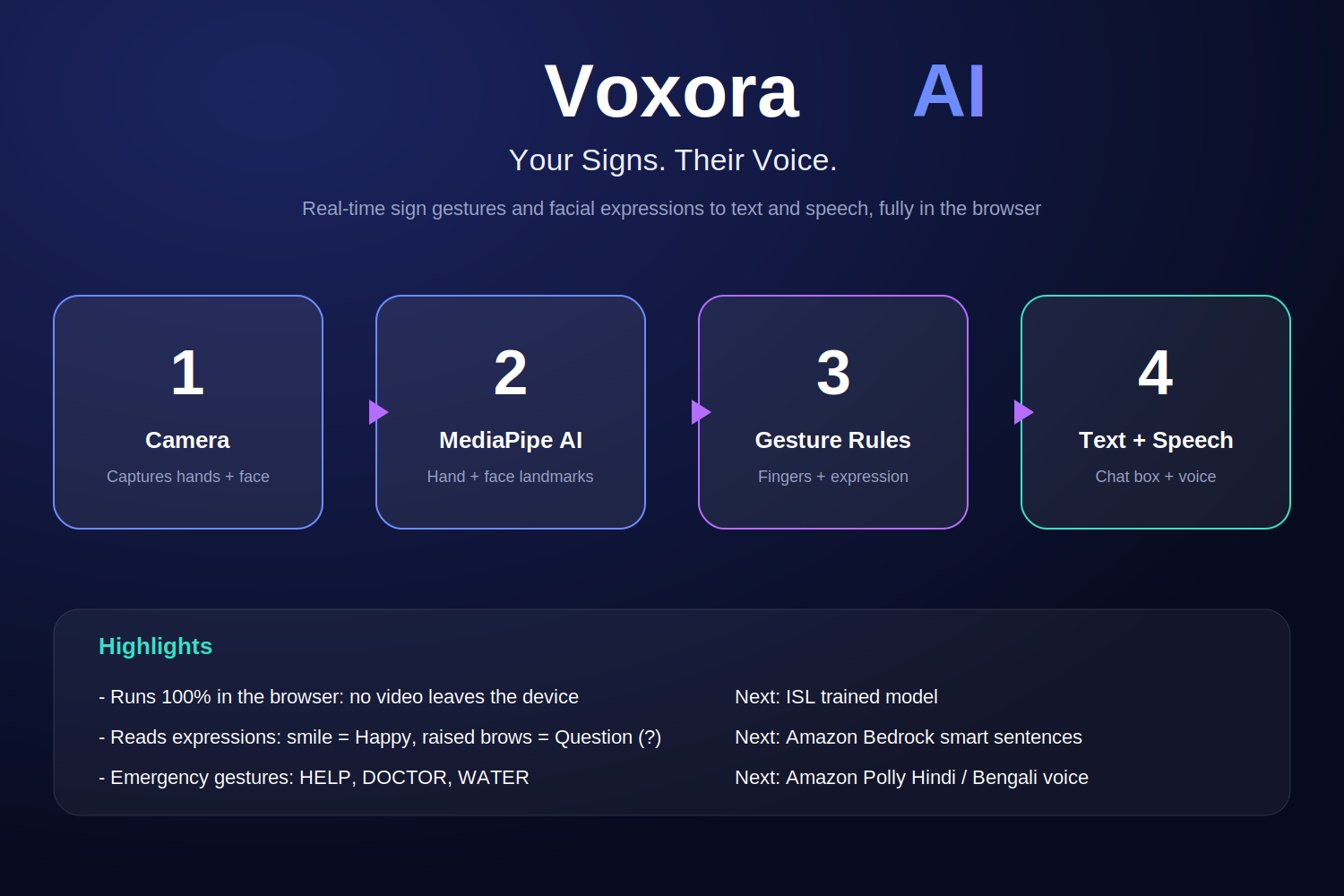
Voxora AI — Breaking Communication Barriers with AI
Inspiration
Communication can be challenging for people who rely on sign language or have difficulty expressing themselves verbally. We wanted to explore how AI could help bridge this gap by recognising hand signs and visible facial expressions and converting the results into speech.
What It Does
Voxora AI is an accessibility-focused AI prototype that brings together:
- Hand Sign Recognition: Identifies a few basic hand gestures from images.
- Facial Expression Recognition: Estimates visible facial-expression categories from face images.
- Text-to-Speech: Speaks the recognition results aloud.
- Body Detection: Detects the presence of a body in uploaded videos.
How We Built It
We built Voxora AI using Python and Streamlit to create a simple, interactive web application. OpenCV handles image processing, MediaPipe extracts hand and body landmarks, and FER estimates facial expressions. The pyttsx3 library provides text-to-speech output.
The prototype supports image uploads and camera-based photo capture, along with body detection from uploaded videos.
Challenges We Faced
One of our main challenges was setting up compatible Python libraries and resolving package import errors. We also faced difficulties getting camera access to work. We addressed the installation issues and developed image-based recognition so that we could continue building and testing the prototype without depending on a working live camera.
Another challenge was recognising gestures and expressions reliably. Our current implementation focuses on a limited set of basic gestures and visible expression categories rather than attempting full sign-language translation.
What We Learned
Through this project, we learned how to integrate computer vision libraries, AI-based recognition, and speech output into a web application. We also gained practical experience in debugging Python environments, designing an interactive interface, and understanding the limitations of AI predictions.
What's Next
Our future plans include real-time camera processing, dynamic sign-language recognition, better gesture classification, multilingual speech output, and improved accessibility features.
Voxora AI is an early prototype with a simple goal: explore how AI can help make communication more accessible, one gesture at a time.
Built With
- accessibility
- artificial
- computer
- fer
- image
- intelligence
- learning
- machine
- mediapipe
- numpy
- opencv
- pillow
- processing
- python
- streamlit
- tensorflow
- text-to-speech
- vision


Log in or sign up for Devpost to join the conversation.