-
-
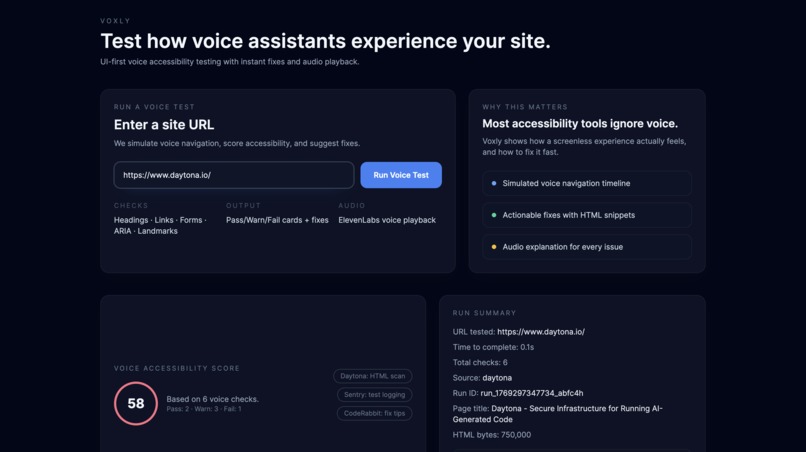
Daytona.io website accessibility analysis using Voxly
-
-
Inspiration Our team previously built an AR tool that helps dyslexic individuals improve reading fluency. For this hackathon, we wanted to target another underserved group: the 153.5 million people in the U.S. and 20.5% worldwide who rely on voice assistants, including over 83 million daily Siri users and 50 million daily Alexa users.
As of 2026, 68% of web pages have broken HTML structures, causing 71% of users with disabilities to abandon inaccessible sites immediately because they cannot effectively use voice assistants.
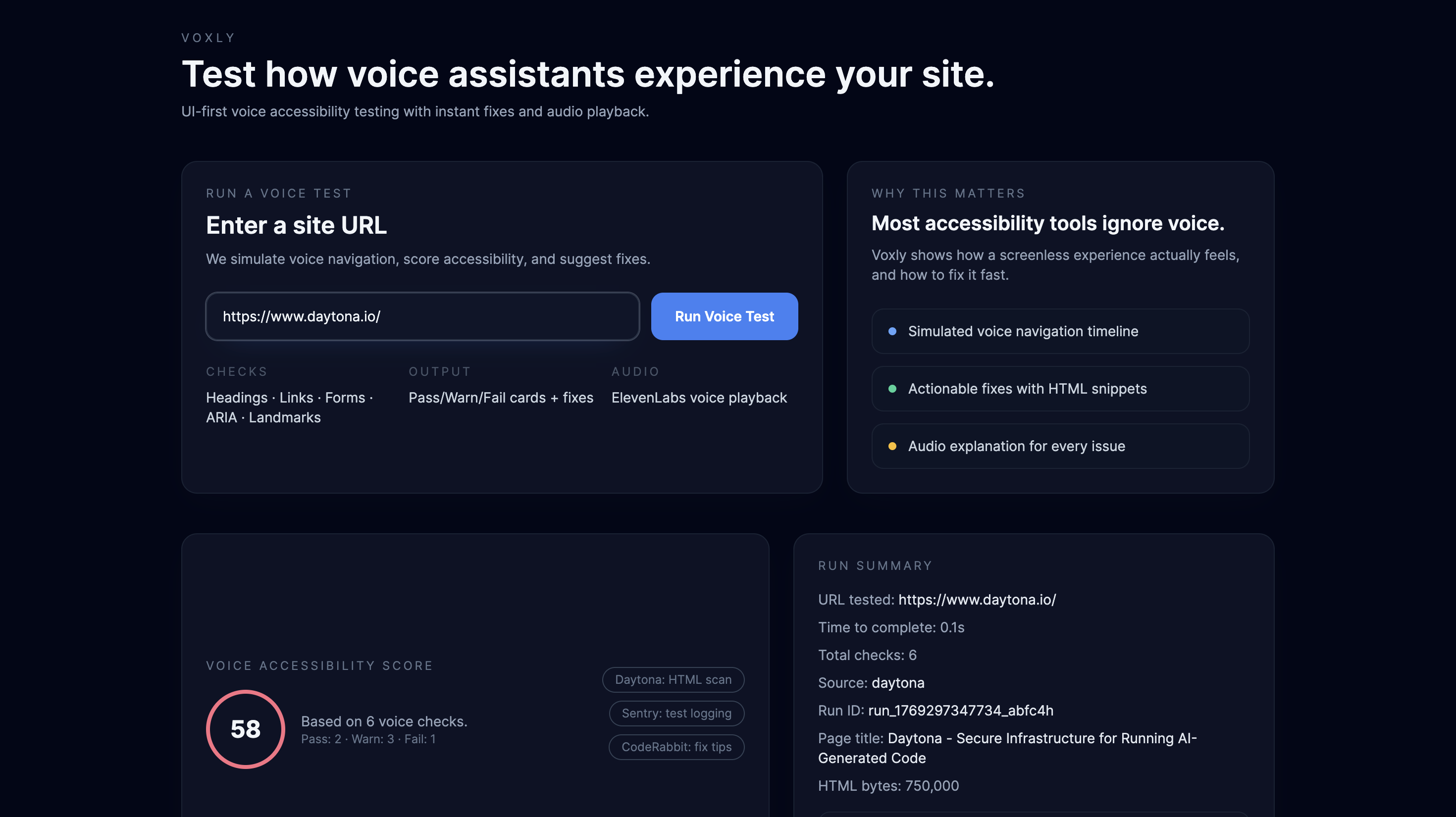
What it does Voxly is designed for web developers, accessibility teams, and companies who want to quickly identify and fix voice- and screen-reader navigation issues on their websites.
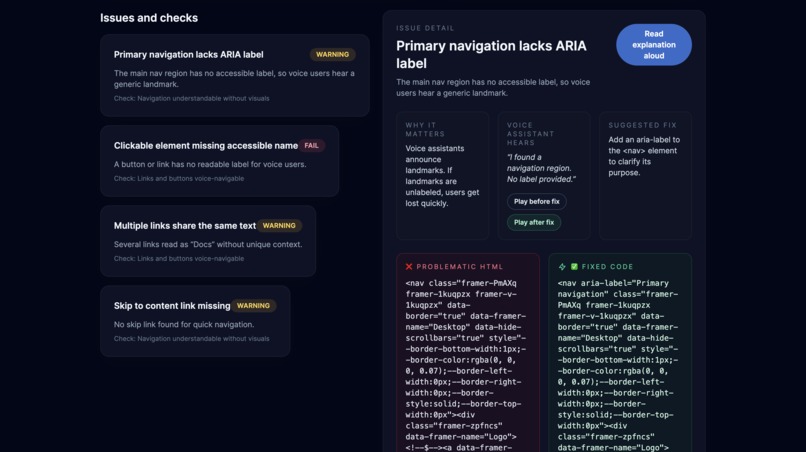
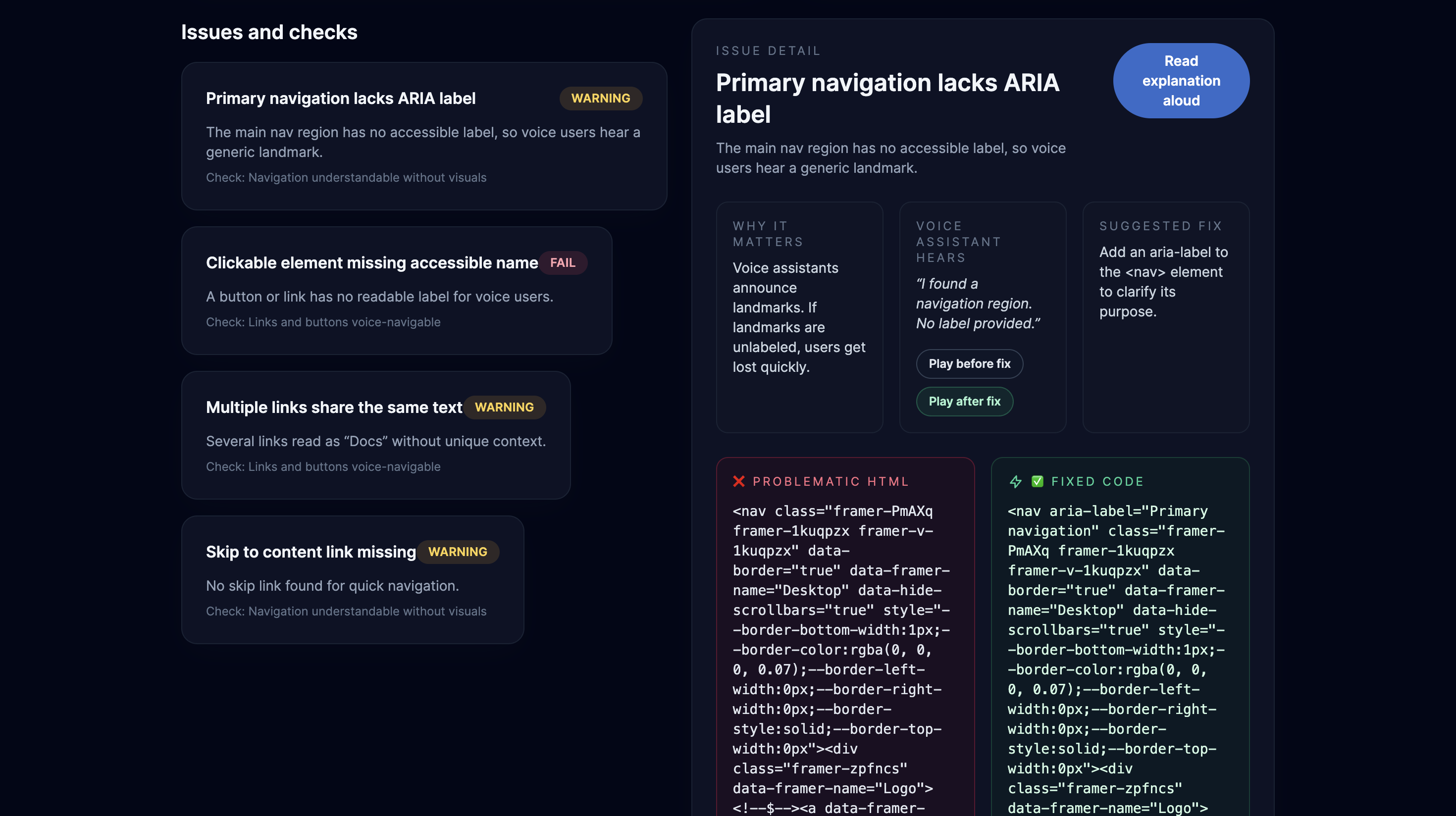
Voxly simulates how screen readers and voice assistants navigate a website by running six core accessibility checks (heading hierarchy, navigation labels, form/button labels, link context, and skip links) then providing AI-suggested code fixes and live audible demos.
How we built it The React (Vite) frontend manages user flow and displays test progress. A Node.js backend uses Daytona to run headless browser DOM analysis, extracts headings, links, and forms, passes issues to CodeRabbit for AI fix suggestions, and converts explanations into audio using ElevenLabs.io. Sentry logs errors during analysis and demos.
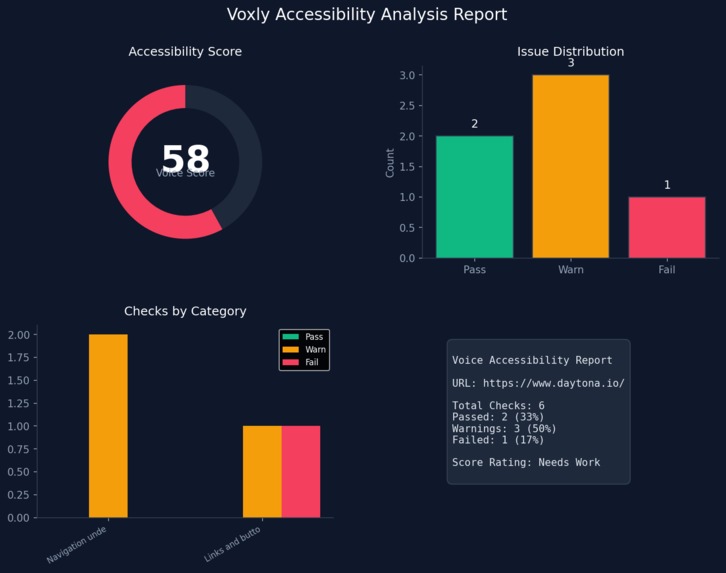
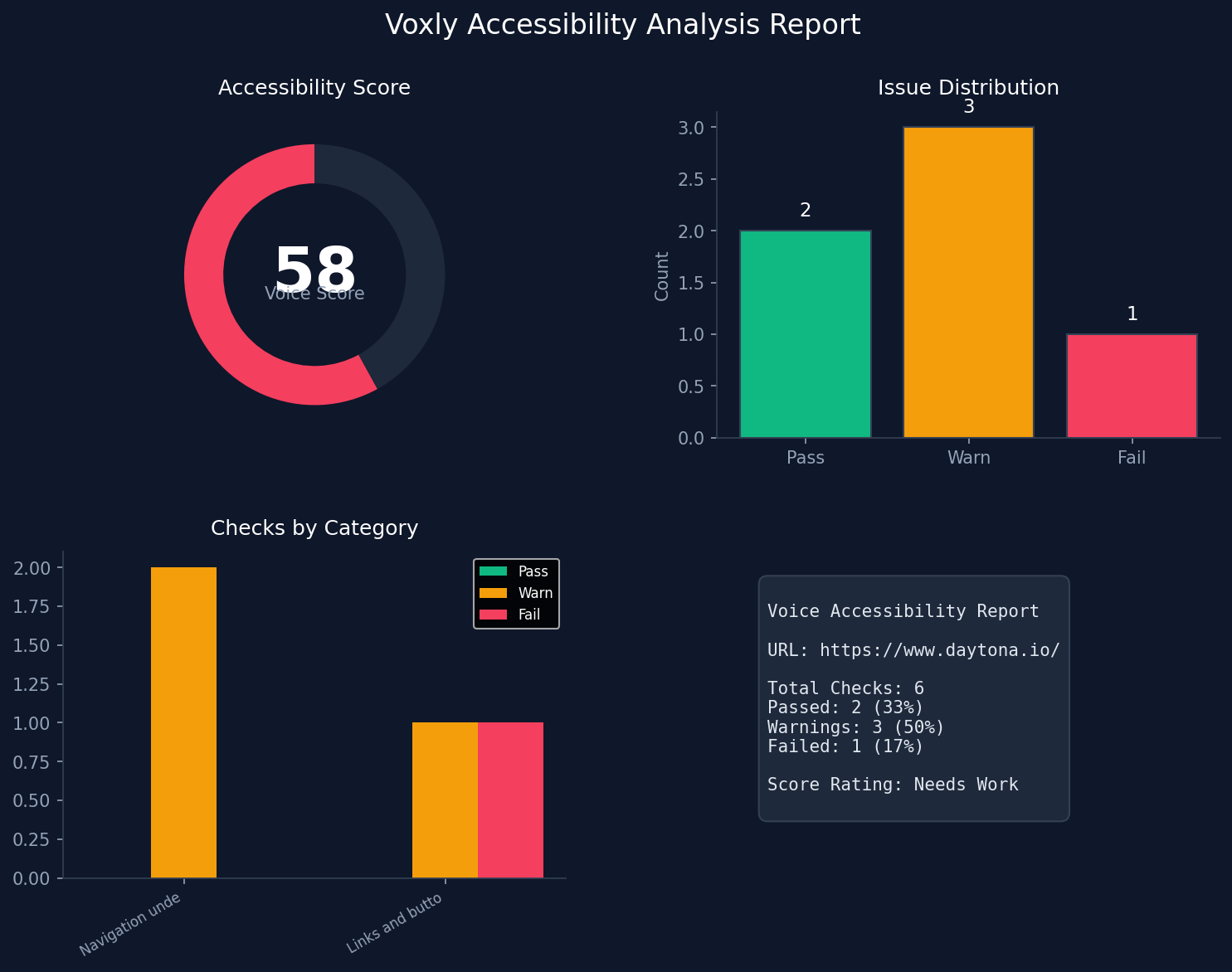
Accomplishments that we're proud of We brought together all the tools from our hackathon sponsors (Daytona, CodeRabbit, ElevenLabs.io, and Sentry) into one smooth workflow. With feedback we received from judges, we added Daytona-powered charts to better show accessibility issues and reworked our demo video three times so it would connect more clearly with our audience. Now, our tool not only makes inaccessible sites audible but also highlights key problems and shows suggested fixes in a way anyone can understand.
Challenges we ran into Different websites are built in unique ways, so we had to make Voxly work across all of them. To do this, we implemented HTML-based detection and normalization for headings, forms, buttons, and links to ensure consistent checks. Synchronizing audio demos with dynamic content and generating accurate AI suggestions were additional challenges.
What we learned We learned how voice-assistive tools have hidden accessibility gaps and how AI tools like CodeRabbit and ElevenLabs can accelerate testing and remediation for developers.
What's next for Voxly We plan to expand rule coverage, add automated continuous accessibility testing for live websites, and build analytics dashboards so teams can track improvements over time.
Built With
- coderabbit
- daytona
- elevenlabs.io
- node.js
- python
- react
- sentry
- typescript

Log in or sign up for Devpost to join the conversation.