-
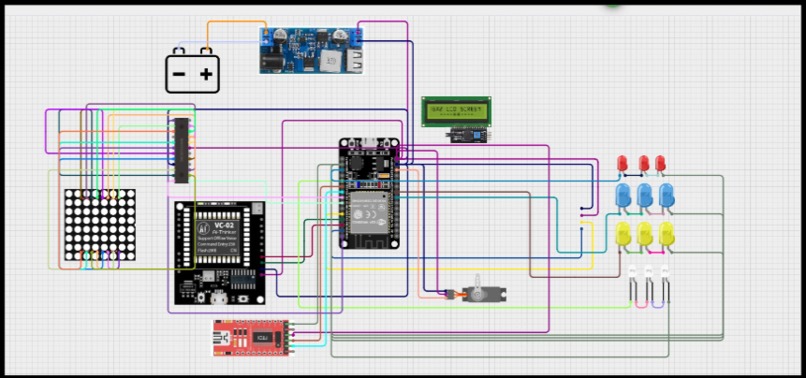
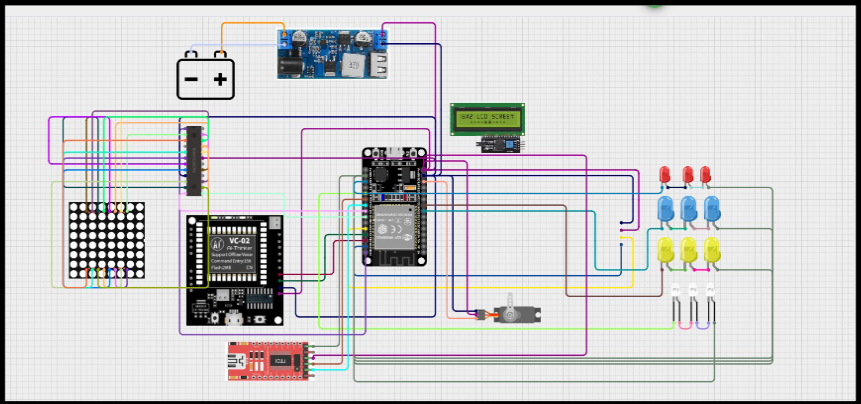
circuit Diagram
-
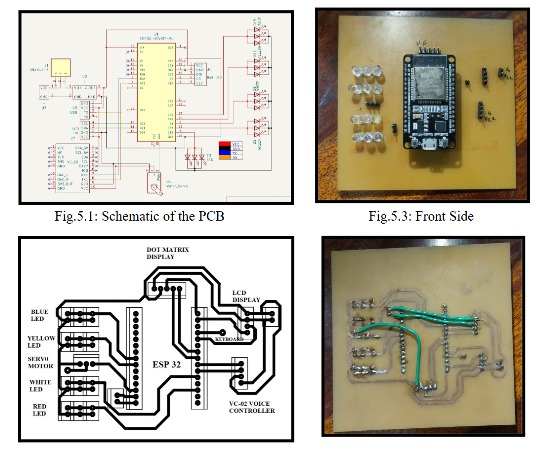
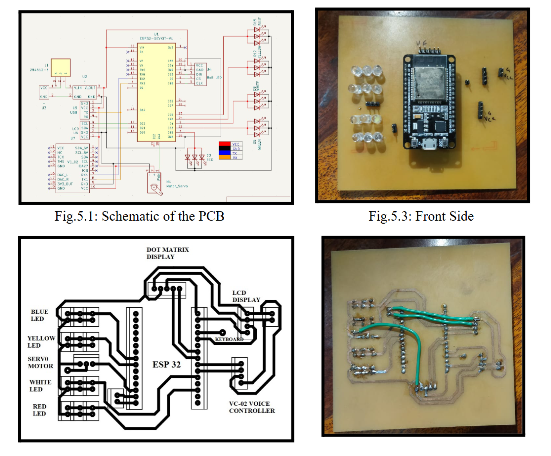
PCB layout and ArtWork
Inspiration
We were inspired by the need for more inclusive and engaging learning tools for children with autism. Traditional learning methods may not provide the same level of visual, auditory, and physical interaction that some children benefit from. Our goal was to create an assistive learning device that makes fundamental concepts such as alphabets, numbers, pronunciation, and colors more interactive and accessible. This led us to develop VoxLearn, a voice-interactive educational toy designed around multi-sensory learning and independent interaction.
What it does
VoxLearn transforms a child's simple keyboard input into synchronized visual, auditory, and tactile feedback. When a key is pressed, the ESP32 processes the input and coordinates multiple outputs.
The 16×2 I²C LCD displays the selected character or message, while the 8×8 LED matrix provides graphical and symbolic visual feedback. The VC-02 AI Thinker voice module provides speech and pronunciation through UART. Color LEDs reinforce color recognition, and a servo motor adds physical movement such as pointing or waving.
By combining these modalities, VoxLearn creates an interactive learning environment that helps connect symbols, sounds, colors, and actions.
How we built it
At the core of VoxLearn is an ESP32 microcontroller, which manages the complete system and coordinates communication between the peripherals. We integrated a keyboard input through the Sunrom 1305 USB-to-UART interface, an I²C LCD, an 8×8 LED matrix, the VC-02 voice module, color LEDs, and a PWM-controlled servo motor.
The system uses UART, I²C, SPI, PWM, and GPIO for communication and hardware control. We developed the circuit using a modular architecture and designed the PCB with optimized component placement and routing. Special attention was given to power traces, signal integrity, noise reduction, and accessibility for debugging and future upgrades.
Challenges we ran into
The biggest challenge was integrating multiple hardware modules and communication protocols into one reliable and synchronized system. Coordinating the ESP32, voice module, LCD, LED matrix, keyboard interface, LEDs, and servo required careful timing and debugging.
We also faced practical hardware challenges involving PCB routing, signal integrity, noise, cross-talk, wiring reliability, and power requirements. We addressed these issues through modular circuit design, systematic debugging, optimized PCB routing, proper component placement, and protocol-level testing.
Accomplishments that we're proud of
We successfully developed a working multi-sensory educational prototype that responds to user input with coordinated visual, auditory, and tactile feedback.
We are particularly proud of integrating different embedded interfaces into a single assistive learning platform and translating classroom concepts into a practical hardware solution. Testing demonstrated responsive operation, stable hardware integration, and reliable communication between the major modules.
What we learned
This project strengthened our practical understanding of embedded systems, microcontroller programming, peripheral interfacing, PCB design, hardware debugging, and communication protocols.
We gained hands-on experience working with ESP32, UART, I²C, SPI, PWM, GPIO, display modules, voice synthesis, LEDs, serial interfaces, and servo control. More importantly, we learned how to integrate individual components into a complete system where hardware, firmware, and user interaction must work together reliably.
What's next for VoxLearn: Voice-Interactive Autism Learning Toy
Our next goal is to make VoxLearn more adaptive, personalized, and intelligent. Future versions could include emotion recognition, improved speech recognition, personalized progress tracking, cloud connectivity, interactive social-learning modes, smart-home integration, richer tactile feedback, and eye-tracking capabilities.
These additions could help VoxLearn move beyond a basic educational toy toward a more adaptive assistive-learning platform that supports personalized learning, communication, engagement, and developmental needs.

Log in or sign up for Devpost to join the conversation.