-
-
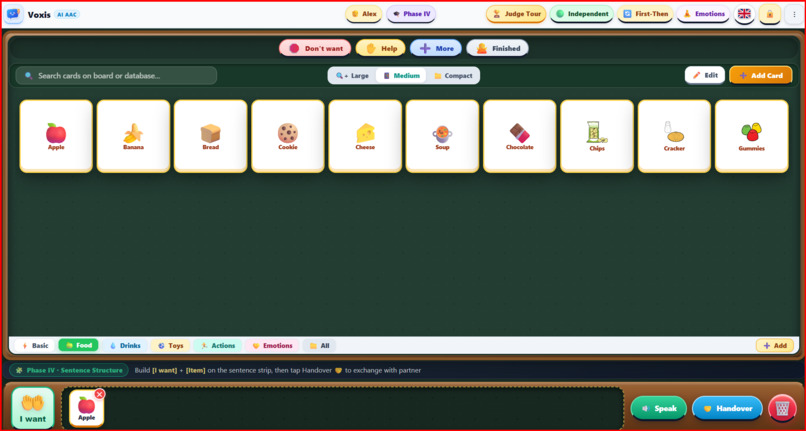
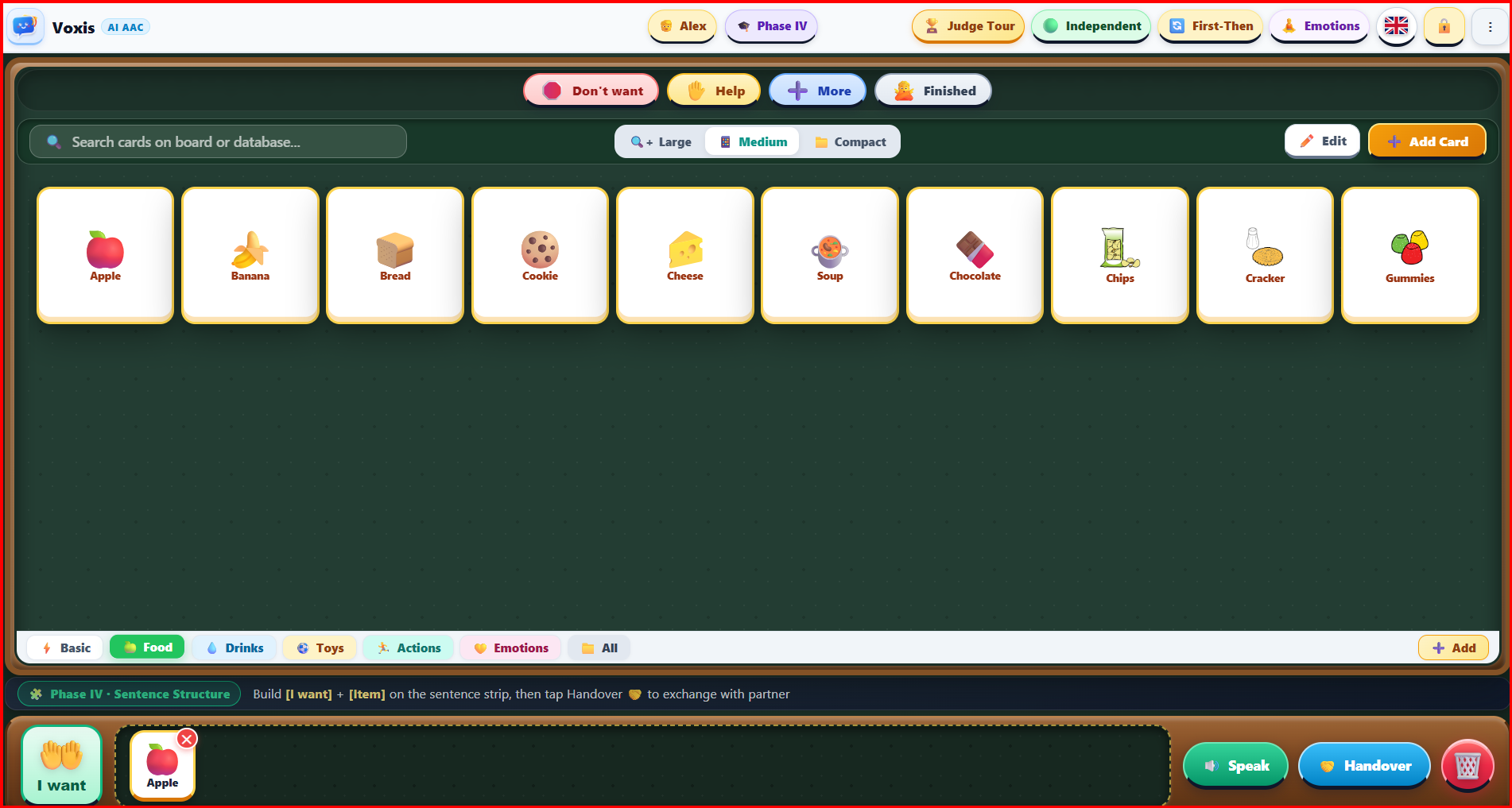
Interactive AAC communication board with Montessori tactile canvas and sentence strip
-
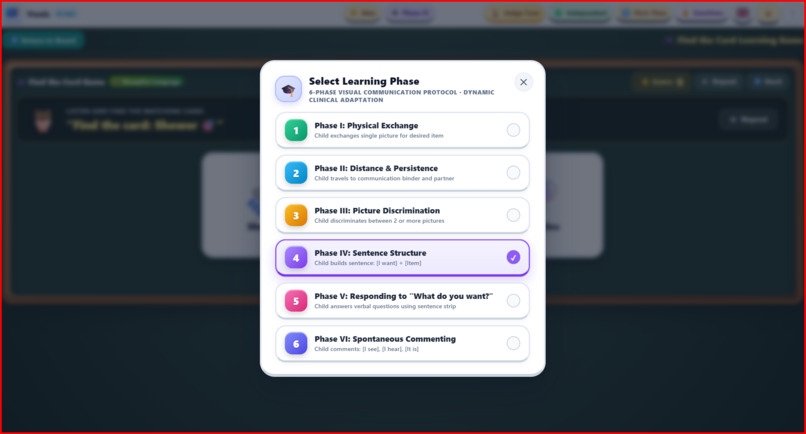
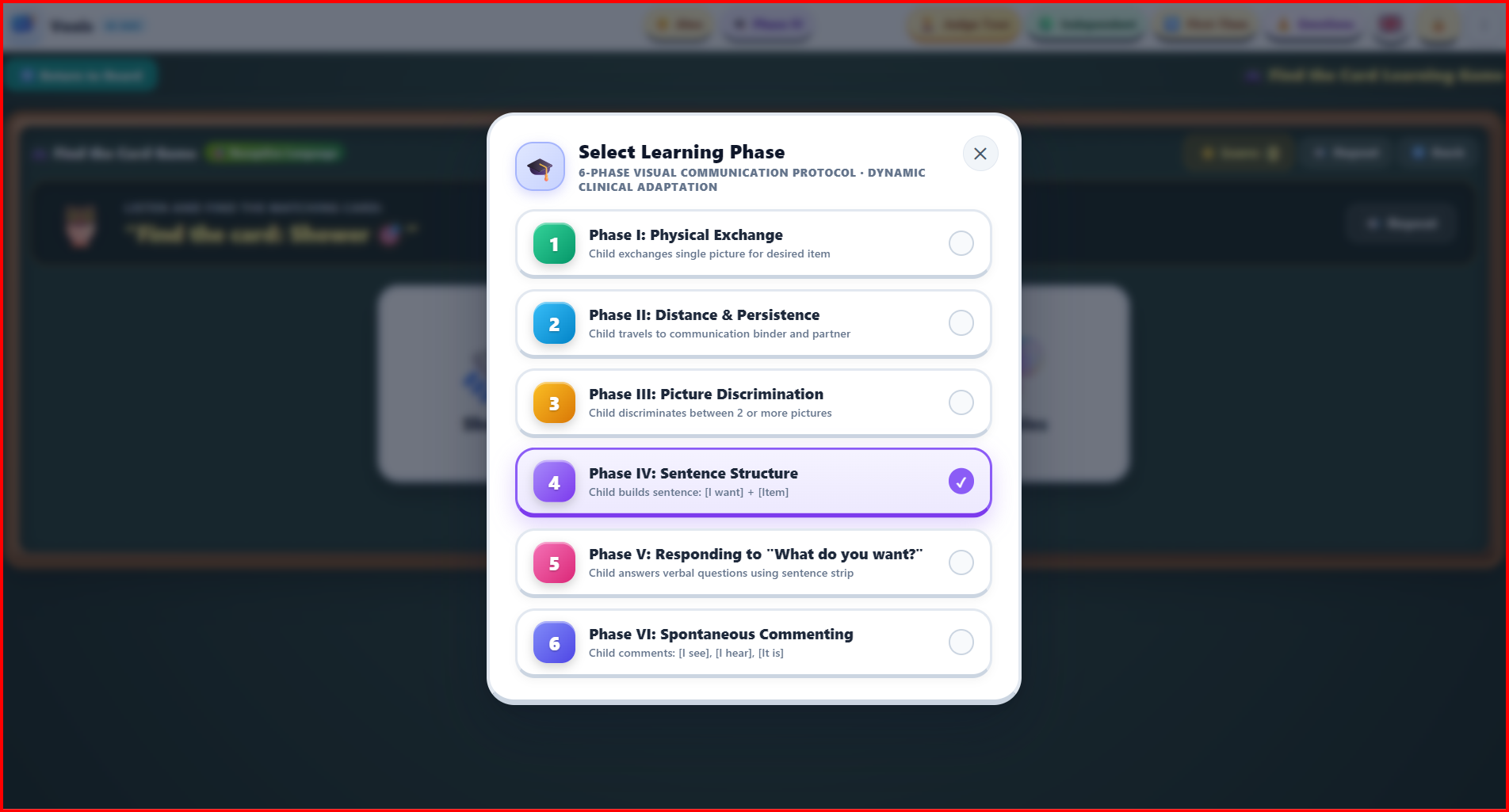
6-Phase progressive learning system from single card exchange to full sentences
-
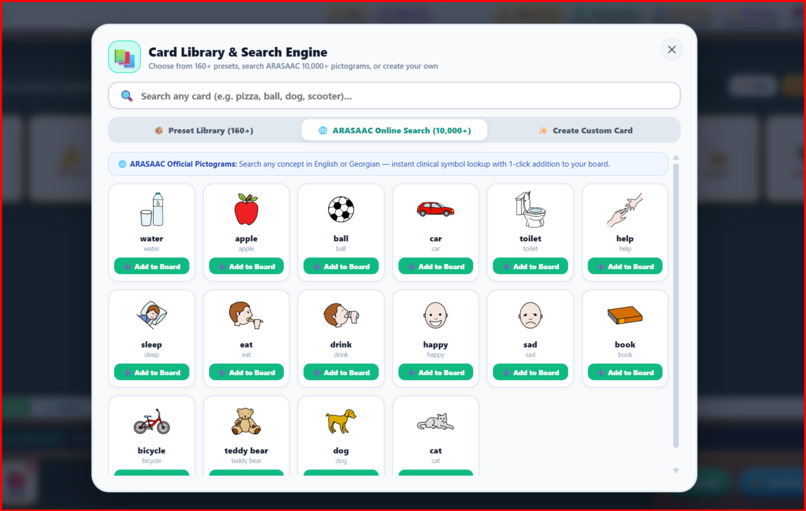
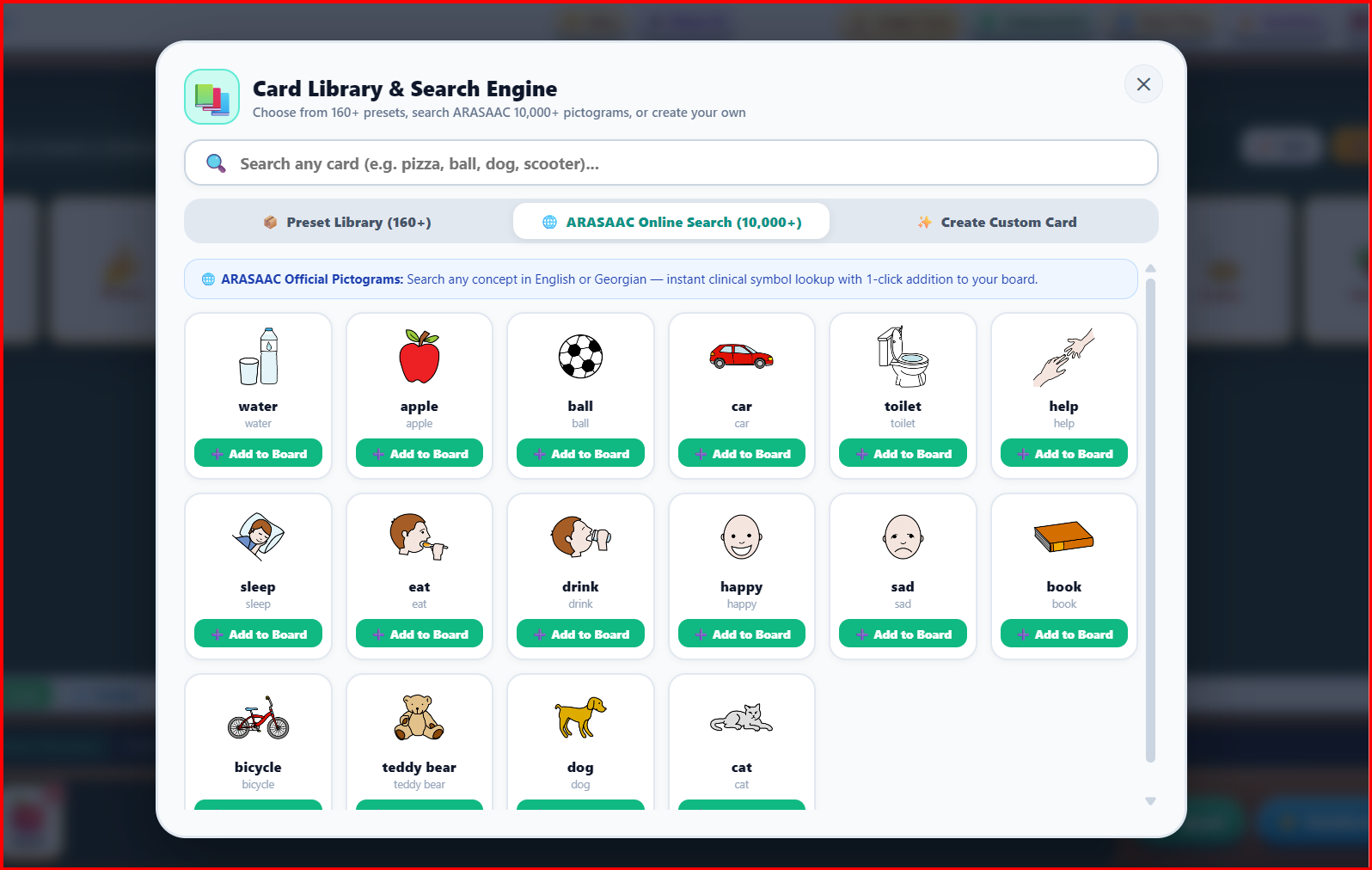
Comprehensive AAC library browser with categorized pictograms and instant search
-
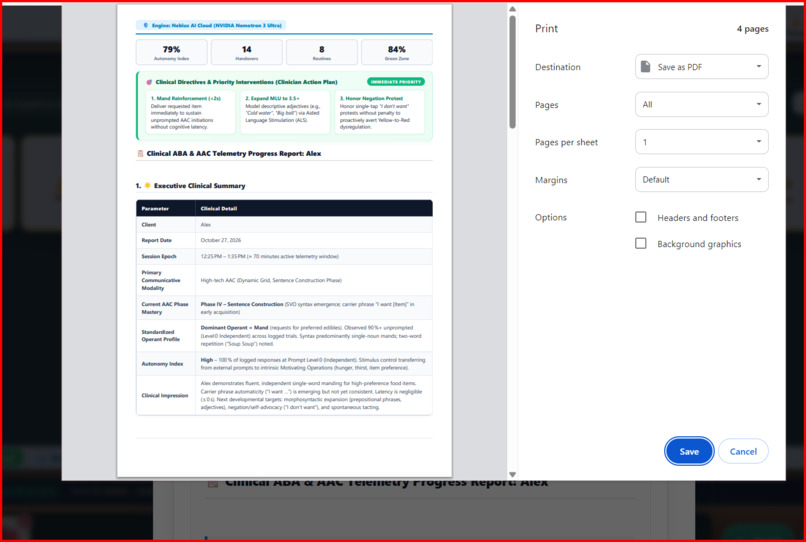
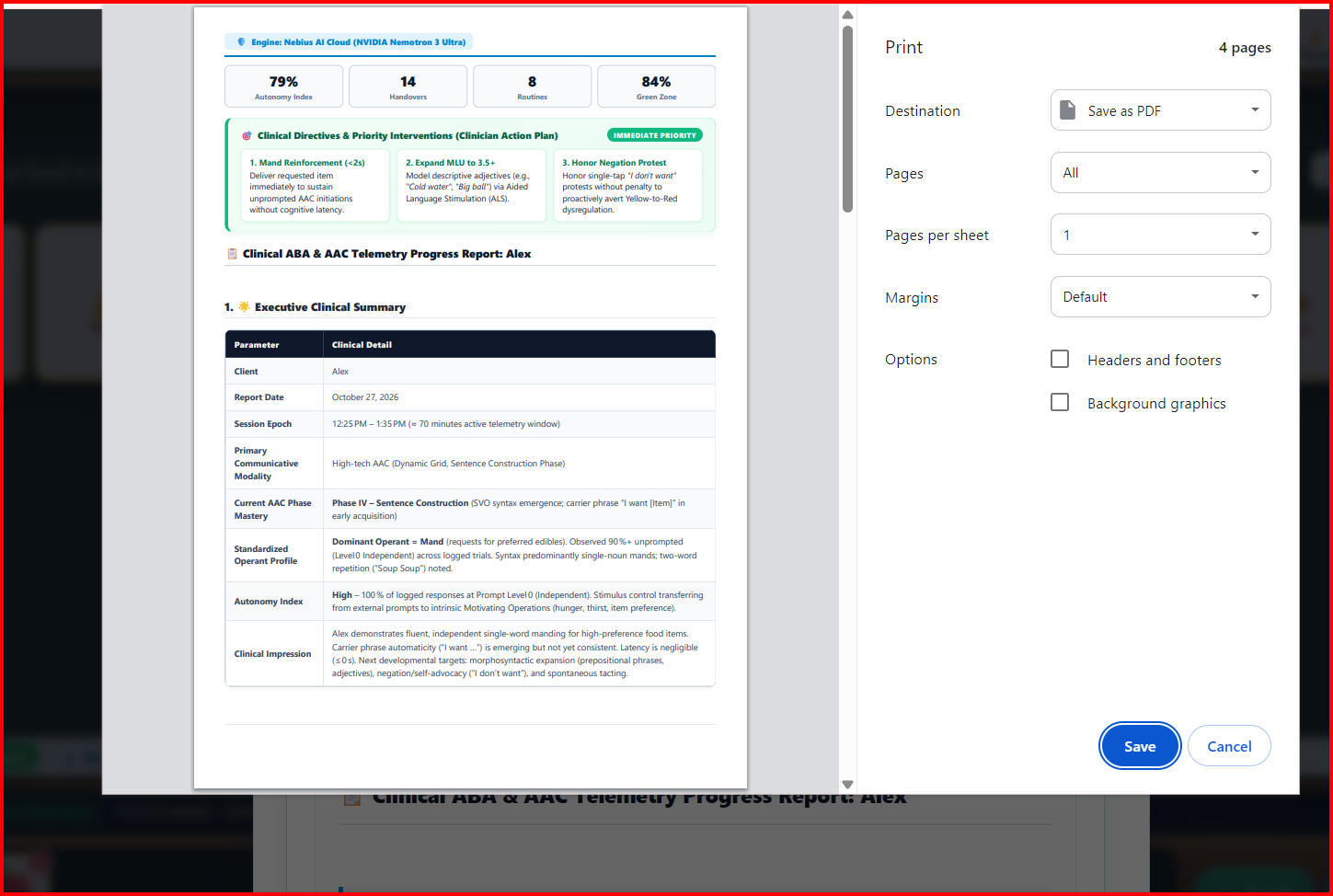
Nebius Token Factory AI generating clinical IEP goals and individualized behavioral targets
-
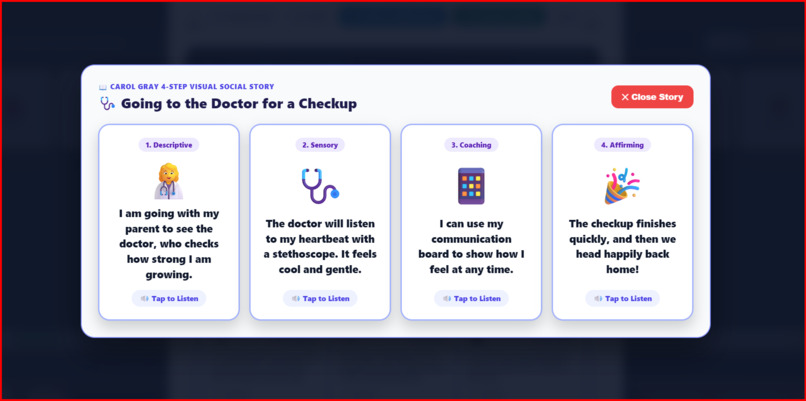
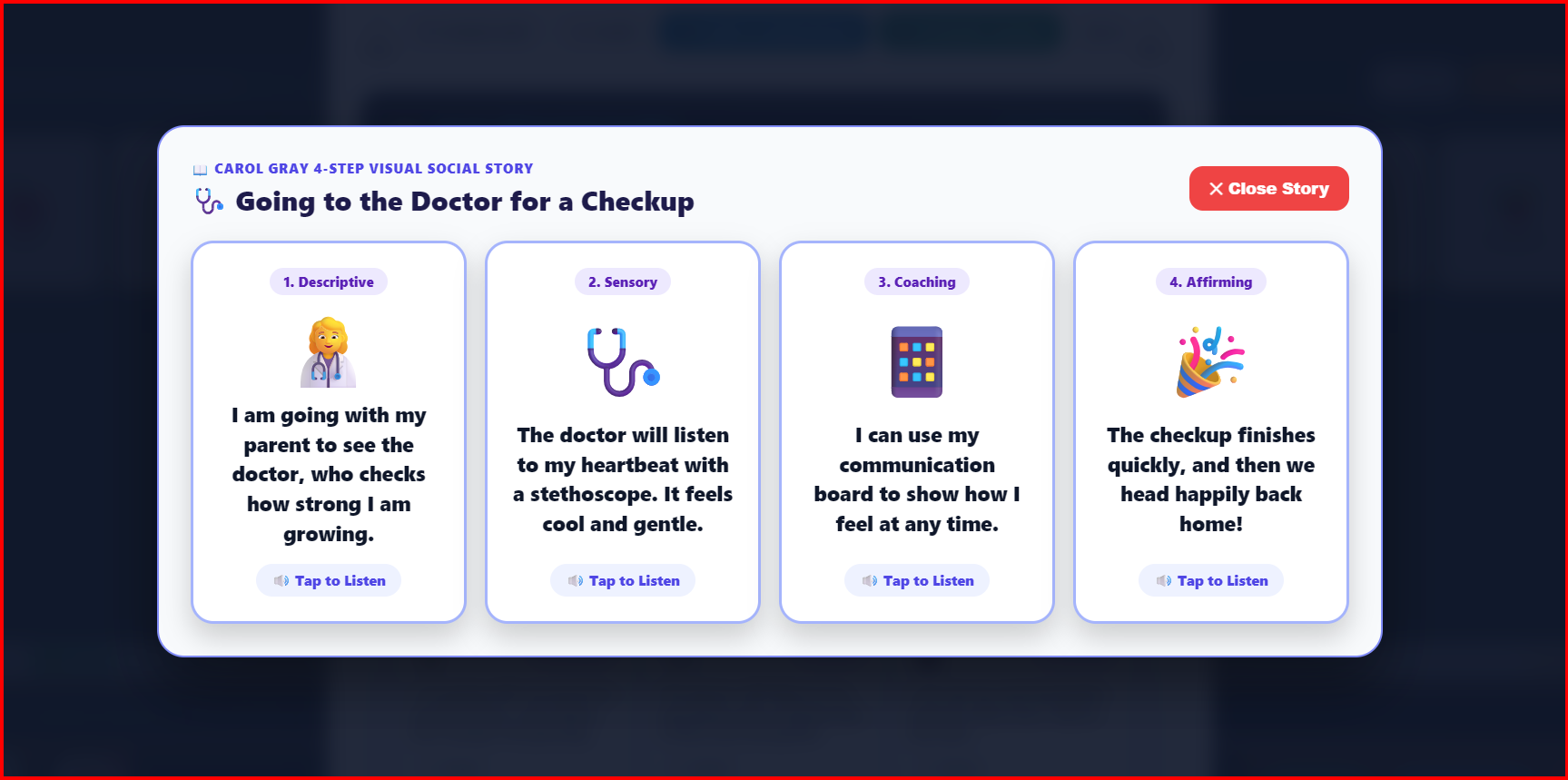
Evidence-based Carol Gray 4-step interactive visual social story reducing anxiety for doctor visits
-
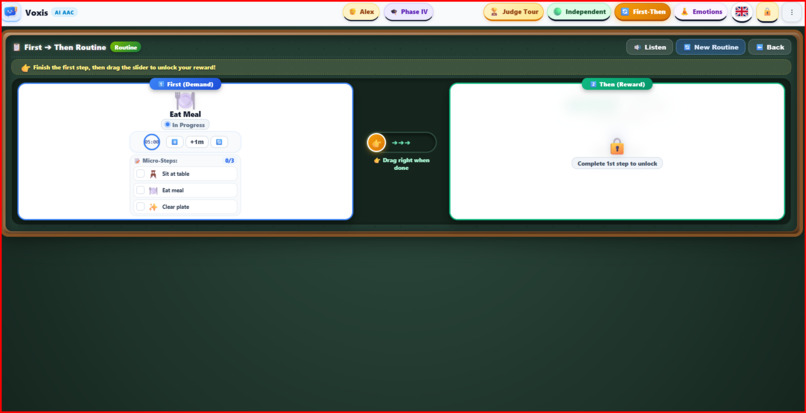
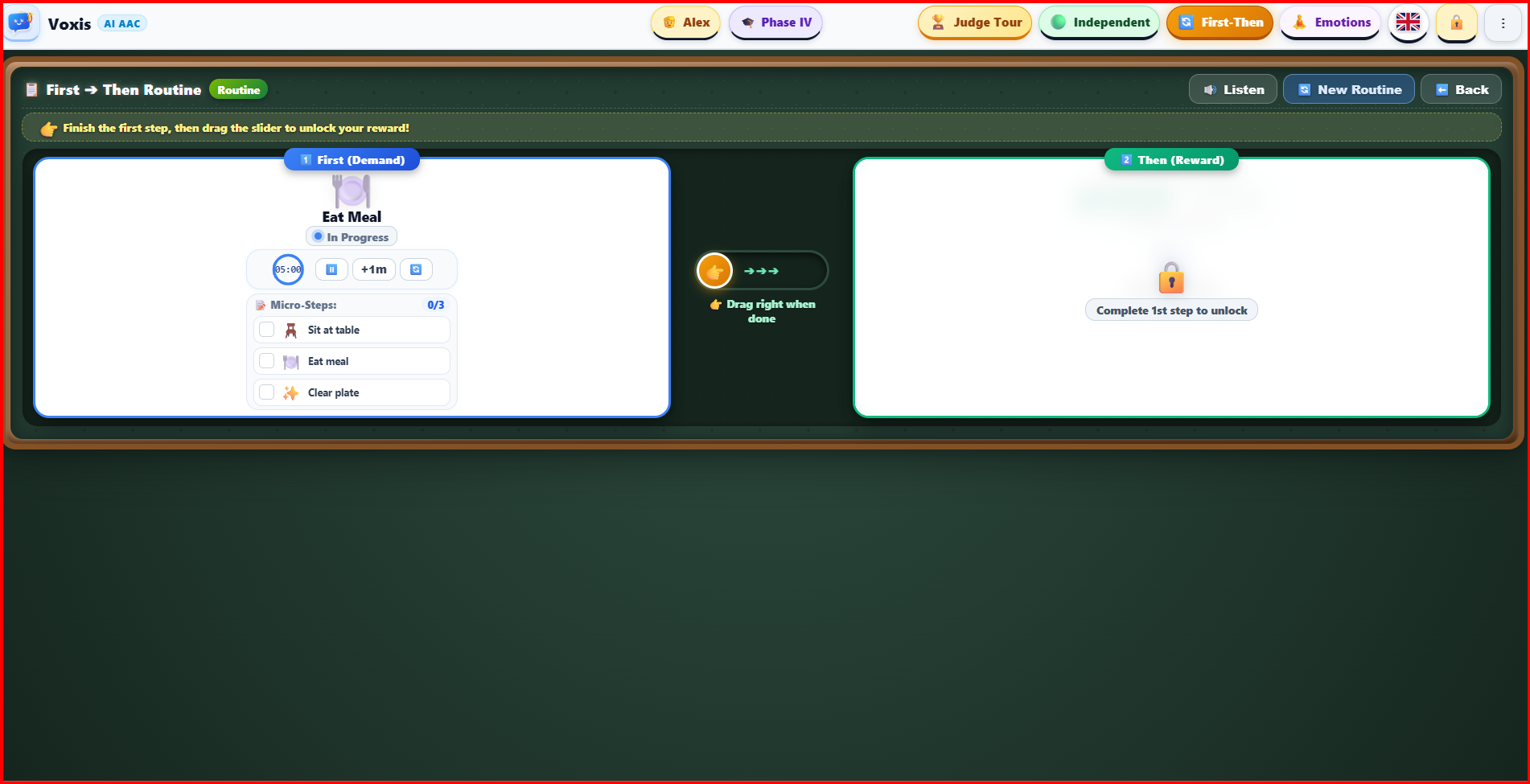
Interactive "First-Then" visual routine schedule for structured pediatric behavior support
-
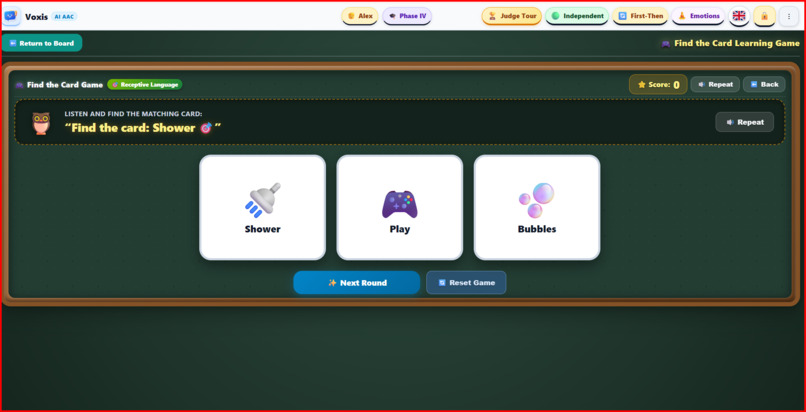
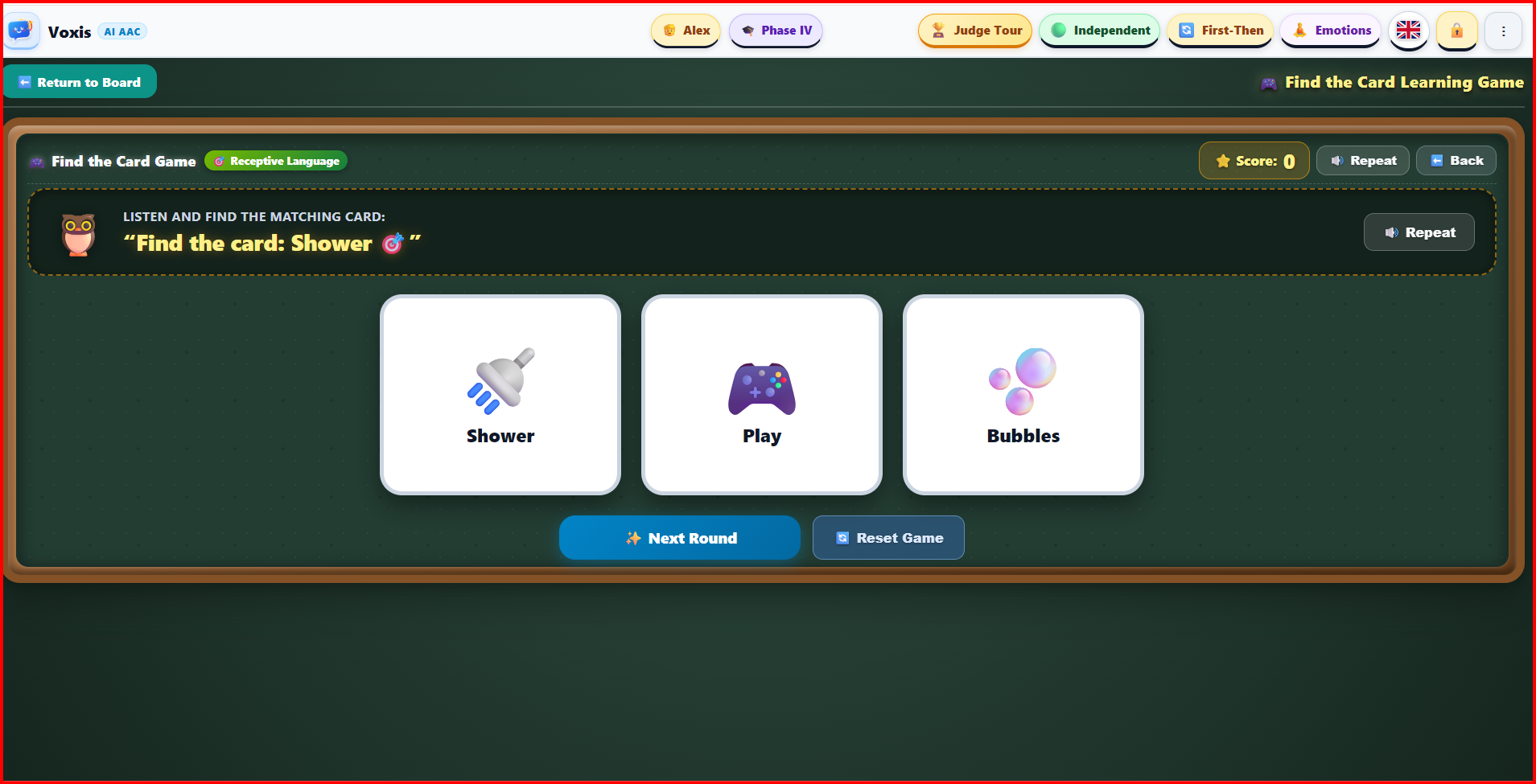
Receptive language training game with auditory prompts and encouraging rewards
-
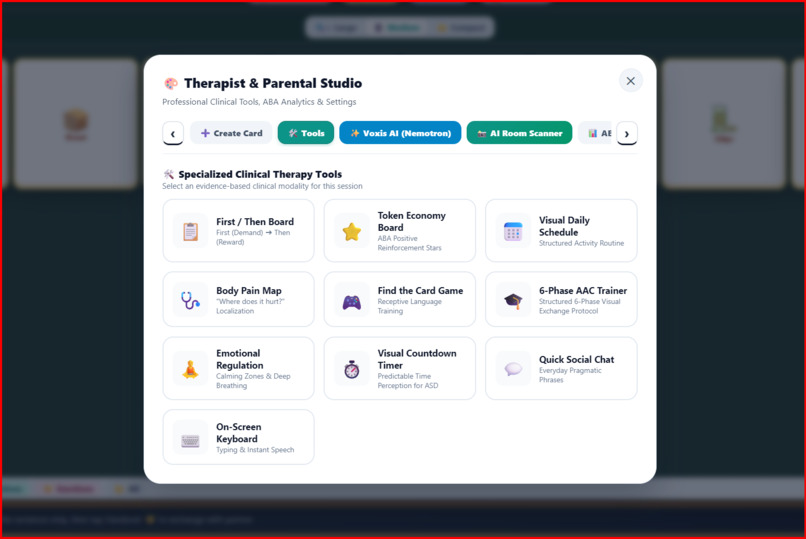
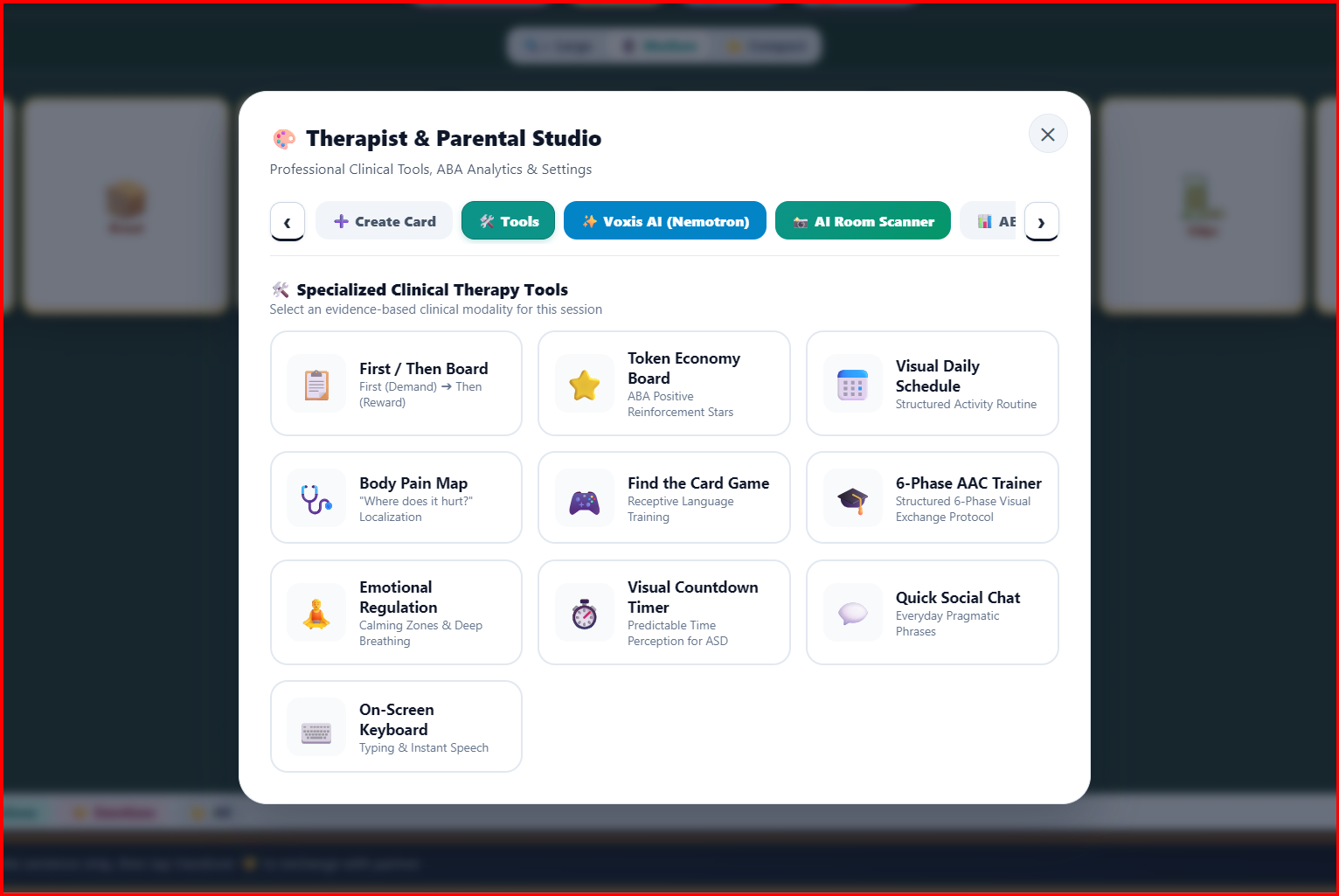
Therapist & Parental Studio with evidence-based specialized clinical therapy tools
What inspired us to build Voxis
When a child cannot speak, the hardest part isn't the silence. It is the heartbreak of watching a child know exactly what they want or where it hurts, but having no way to tell the people who love them.
For decades, the standard way to help non-verbal children has been visual card exchange and ABA therapy. But in real life, parents and therapists spend endless evenings printing pictures, laminating them with plastic sheets, cutting them out with scissors, and gluing velcro dots onto heavy binders. If a child suddenly wants a specific toy or needs to say their stomach hurts, and that card isn't printed yet, communication simply stops.
Existing commercial speech tablets and apps charge steep prices for rigid software that doesn't even offer half of what a modern therapy session requires—no vision AI to scan a room, no automatic clinical reports, and no sensory regulation tools. To make matters worse, almost all digital tools are built exclusively for major Western languages, leaving smaller communities completely overlooked. Forcing a non-verbal child to learn through a foreign language creates an unfair double hurdle when all they need is to be understood at home.
We wanted to change that. Working side-by-side with our clinical supervisor and practicing therapists, we set out to build Voxis. Our goal was simple: turn hours of tedious manual prep into seconds, tear down the language barrier, and give every child a voice that truly belongs to them.
What Voxis does
Voxis brings two worlds together: a calm, clutter-free board for the child, and a clinical studio for therapists and parents.
Instead of presenting an intimidating, crowded screen, Voxis meets the child exactly where they are developmentally. In Phase 1, the board shows just a single card on an empty screen so the child can grasp the physical idea of exchange without getting overwhelmed. As they progress through the clinical stages, the board gently introduces choice-making, automatic card shuffling so they don't just memorize screen positions, and eventually a digital sentence strip where they can build sentences like "I want water."
Following ethical clinical practice, we never attach medical labels inside a child's profile. Everything is tailored strictly around their age, gender, and current communication phase.
Because synthetic robotic voices can feel cold to a young child, we built an Express Voice Studio where parents can record their own warm voice directly in the browser, alongside natural neural speech. We also built everyday support tools right into the screen: a First-Then routine slider, a visual daily schedule, token rewards, an interactive pain map where a child can touch where their body hurts, and gentle breathing exercises.
Why Voxis is fully bilingual (English and Georgian)
English makes Voxis globally accessible and fully compatible with international ABA research, ensuring any clinician worldwide can immediately use it.
We built the Georgian version because existing AAC applications have absolutely zero support for our language, which continues to create a massive barrier for local families. In Voxis, every feature works natively in Georgian, allowing a child to express their very first words and everyday needs in their mother tongue.
How we use Nebius Token Factory and NVIDIA Nemotron
From day one, our clinical team set one non-negotiable rule: AI must never rewrite, predict, or correct the words on a child's sentence strip. In speech therapy, the child must have complete ownership of what they say.
Instead, we put Nebius and NVIDIA Nemotron to work behind the scenes to help the adults who care for them:
First, with our AI Room Scanner, a parent can simply take a photo of their living room or classroom. Vision models on Nebius recognize everyday items in the picture and instantly generate official, color-coded communication cards in seconds, eliminating hours of laminating and cutting.
Second, during therapy sessions, Voxis tracks every trial, prompt level, and response latency. With a single click, NVIDIA Nemotron 3 Ultra analyzes this session history and writes a complete, clinical progress report with measurable IEP goals, saving therapists hours of paperwork after each session.
Third, to help children prepare for stressful events like a haircut or a visit to the dentist, Nemotron 3 Ultra generates custom 4-step illustrated social stories based on the Carol Gray method. We also built an automatic fatigue detector into the board: if a child starts impulsively tapping the screen out of sensory overload, the system gently pauses and offers a calming breathing exercise before a meltdown can start.
How we built it and what we learned
We built Voxis as a lightweight, fast Progressive Web App using PHP 8, vanilla JavaScript, HTML5 Canvas, and Web Audio, wired directly to Nebius Token Factory inference endpoints.
Our biggest engineering challenge was balancing clinical strictness with generative AI. Large language models naturally want to hallucinate, complete sentences, or "fix" grammar. In pediatric AAC, that would break therapy protocols, so we had to strictly constrain the model's role: LLMs run exclusively as a silent analytical co-pilot for clinicians, transforming raw telemetry logs into formal BCBA documentation and mapping physical camera frames to standard ARASAAC pictograms, without ever intruding on the child's autonomous communication.
Another critical hurdle was latency. When a non-verbal child selects a card, the auditory feedback must happen instantly—any delay over a few hundred milliseconds severs the cognitive association between the visual symbol and spoken sound. We engineered an ultra-fast caching and audio architecture that delivers natural voice playback in zero milliseconds, completely offline.
Building Voxis taught us that assistive AI achieves its highest purpose not by attempting to replace human therapists or reinvent proven behavioral science, but by removing the friction, giving caregivers more time and energy to connect with their children.

Log in or sign up for Devpost to join the conversation.