-
-
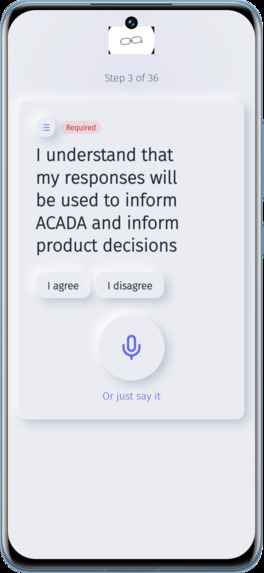
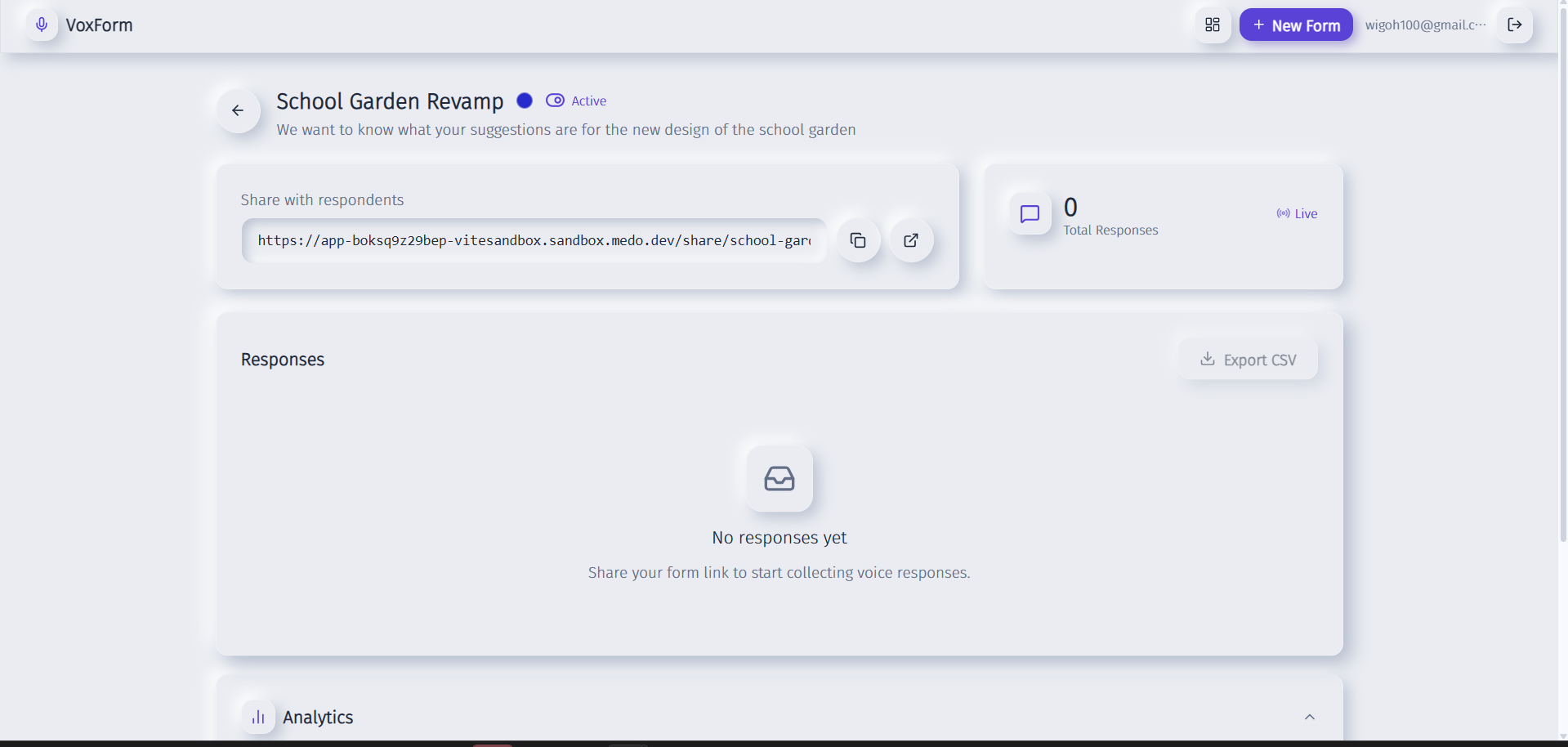
Form Look
-
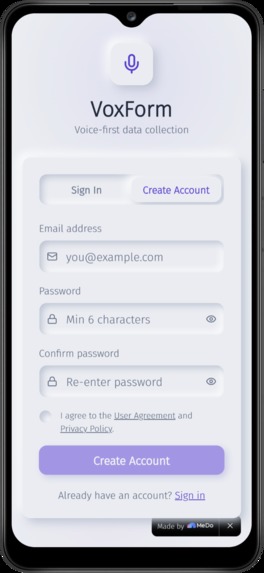
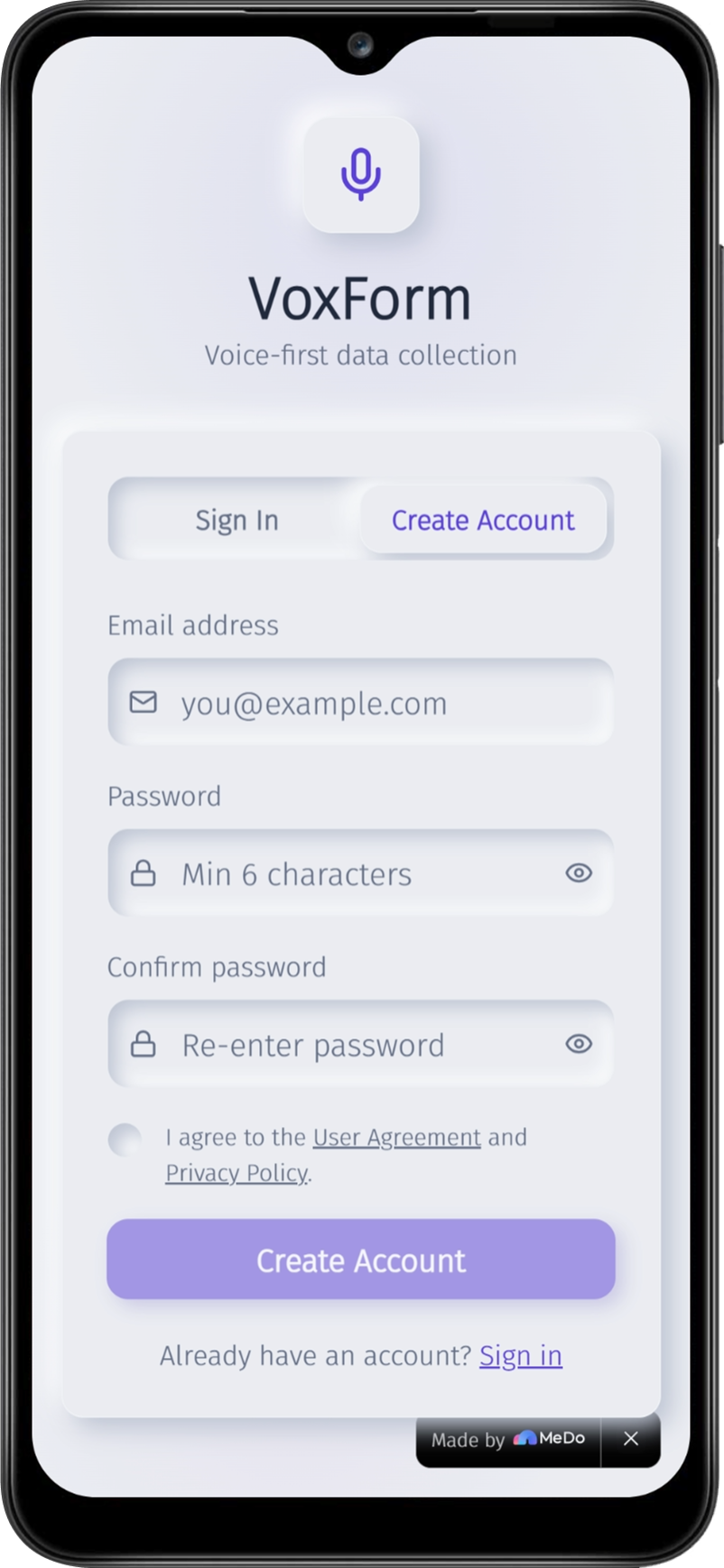
Login Screeen
-
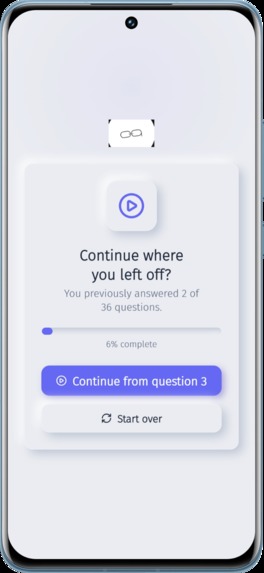
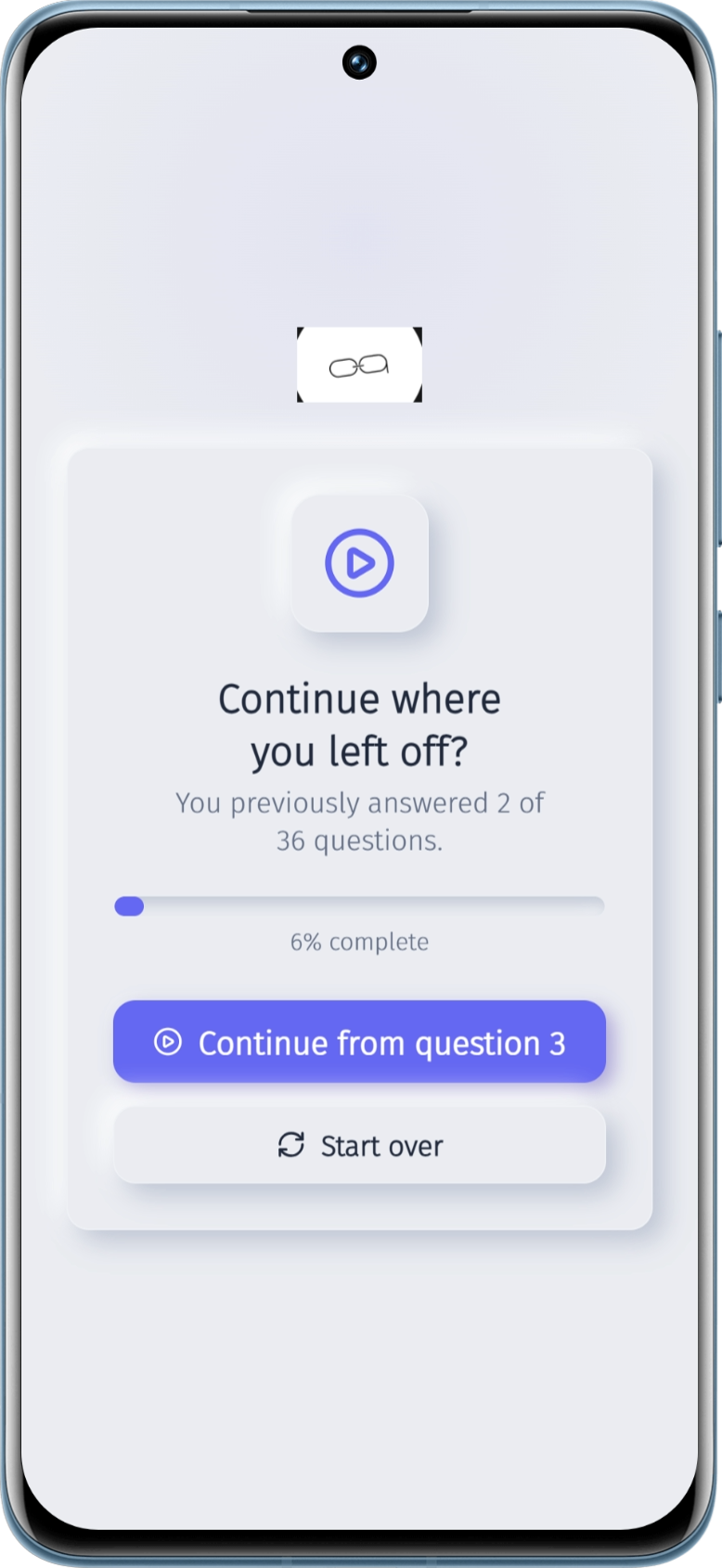
Saved state
-
-
-
-
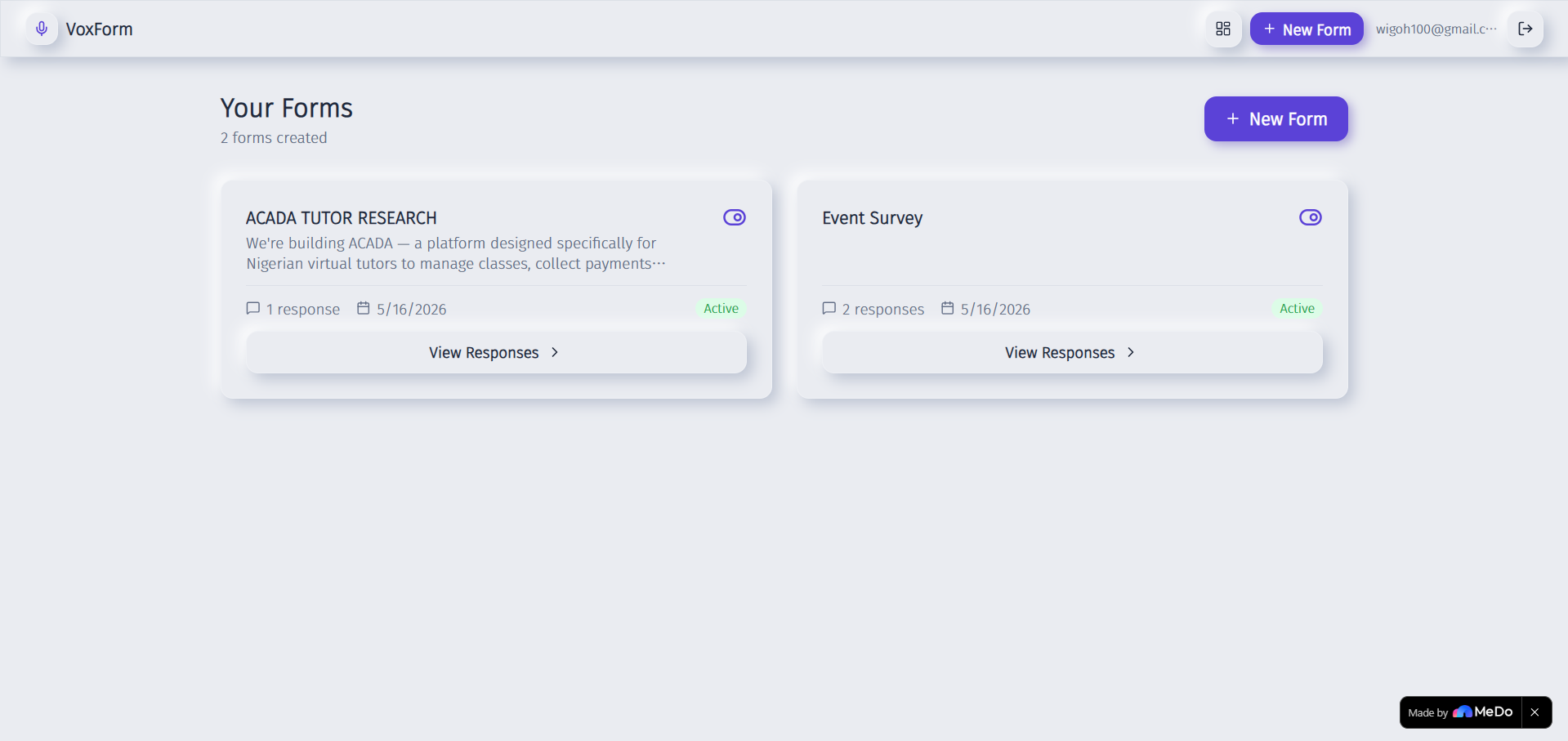
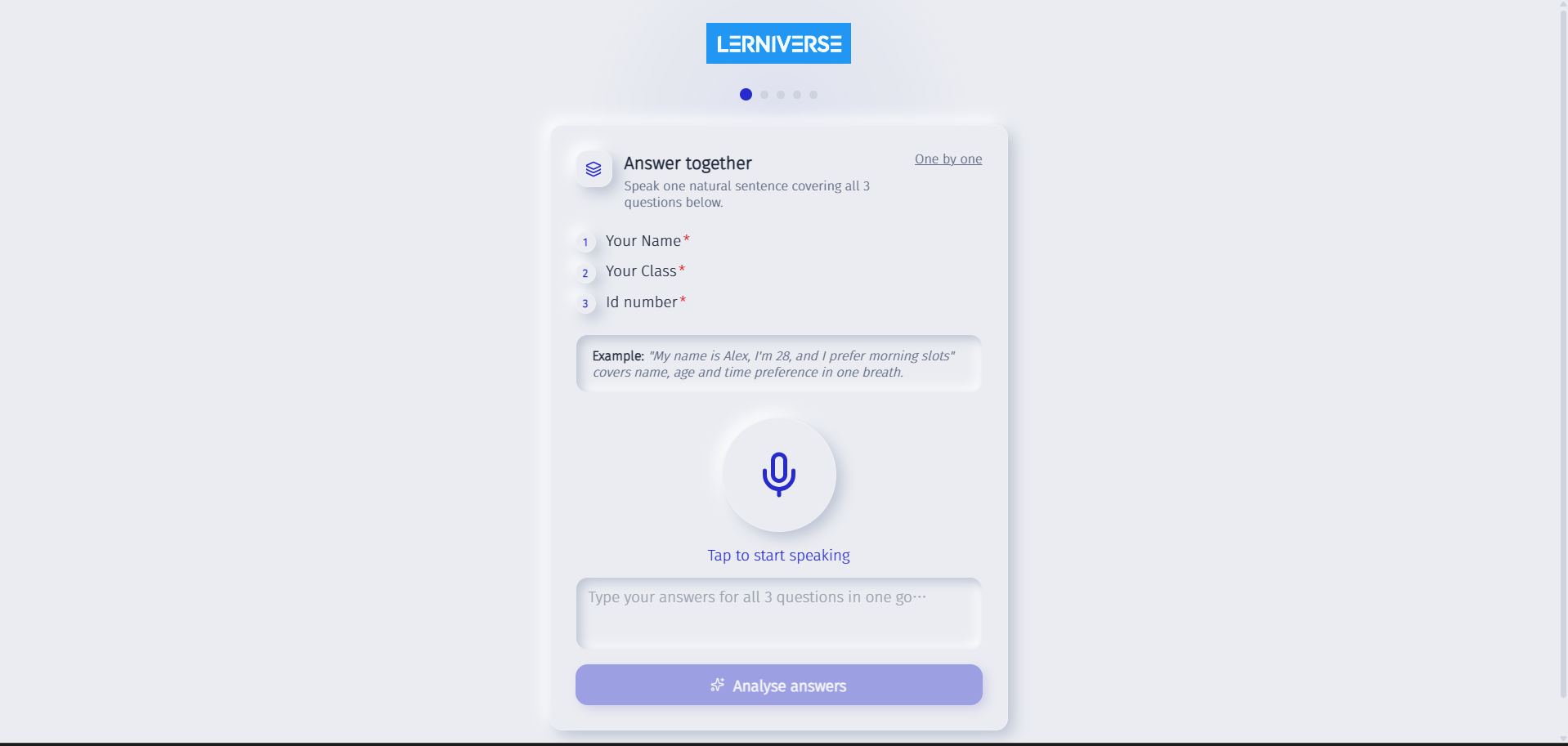
Inspiration
It started in a classroom. I was sitting with a friend, working on my laptop, when a WhatsApp message came in asking me to fill a form. I opened it, saw how long it was, and closed it. Just like that — ignored. What made it hit different was that earlier that same week, I had demoed a concept to the CEO of Dorcas Africa — a platform that could collect data from farmers using AI agents. The idea was powerful but the interface problem was still there. How do you get people, especially busy or non-technical ones, to actually respond? Those two moments collided in my head right there in that classroom. The problem wasn't the data — it was the friction of collecting it. That's where VoxForm was born. A platform that makes data collection less of a chore and more of a conversation.
What it does
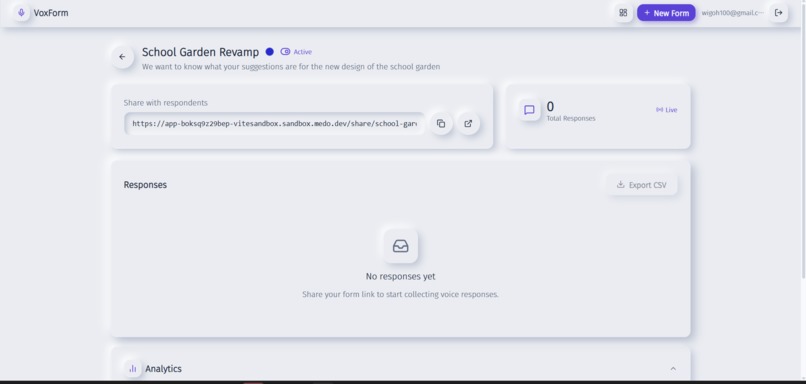
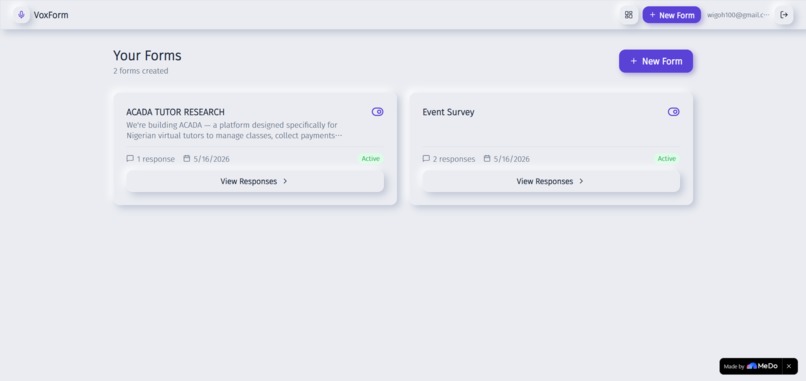
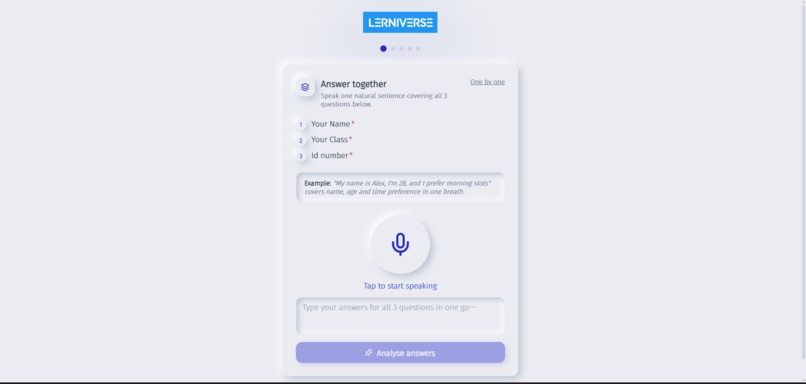
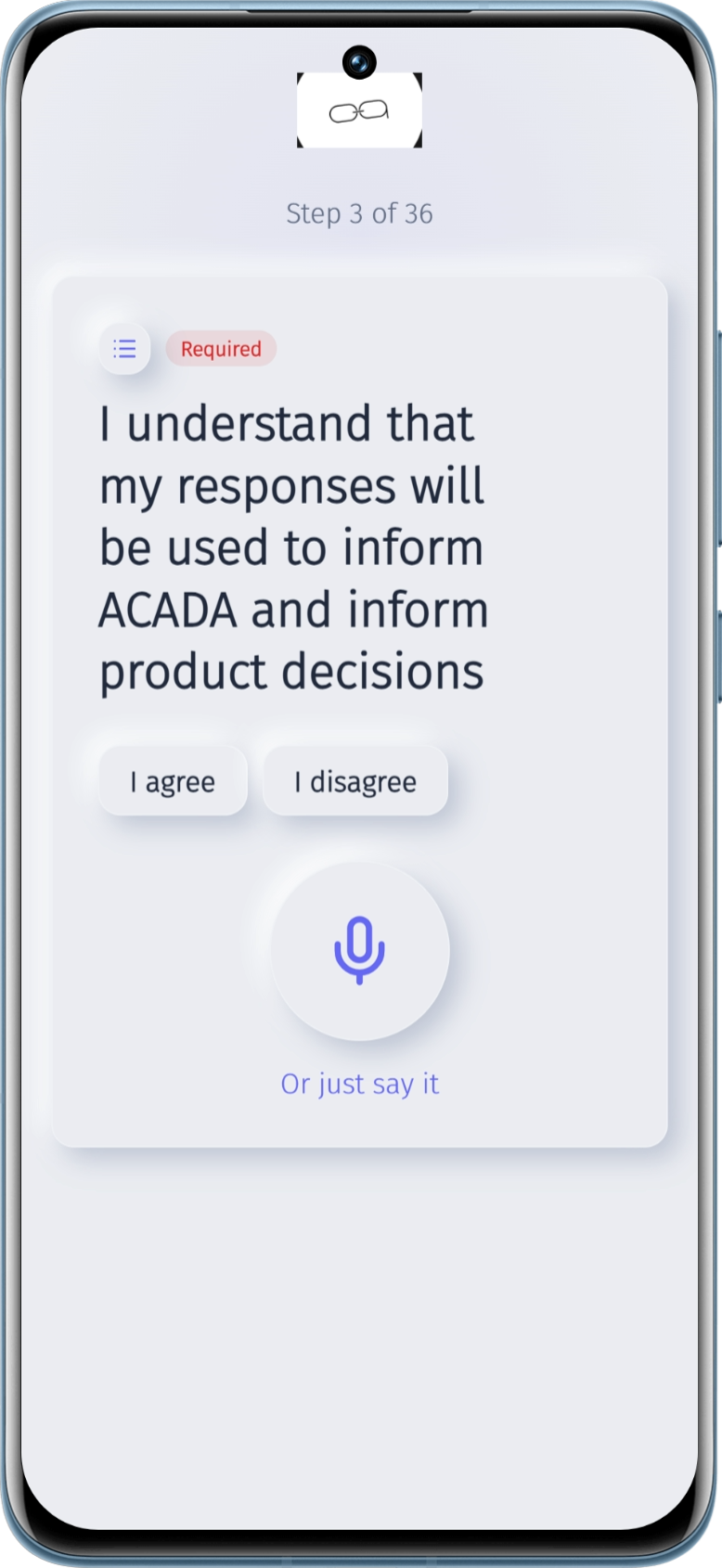
VoxForm is a voice-first data collection platform. Instead of clicking through a long list of questions and typing answers on a small keyboard, respondents simply speak. Form creators set up the fields they need, share a link, and their respondents open it, tap a mic, say their answers naturally, and submit — all in under 60 seconds. The AI handles extraction, structures the data, and delivers it clean and ready to download. No more boring forms. No more ignored responses.
How we built it
I built VoxForm using the MeDo app. I started by creating a detailed PRD (Product Requirements Document) and a full system design document that covered the database schema, API routes, component structure, AI extraction logic, and the complete respondent experience. I uploaded both documents to MeDo's coding agents, which used them as a blueprint to build the full working platform end to end — from the creator dashboard and form builder to the voice respondent interface and response export system.
Challenges we ran into
Even with a detailed PRD and system design uploaded, getting the coding agent to produce exactly what I envisioned was not always straightforward. The challenge was communicating intent precisely enough that the agent built the right thing without me burning through credits on back-and-forth corrections. I solved this by giving the agent explicit, structured rules — not just what to build, but what the end product must do, how it should look, and what constraints it must respect. That shift in how I prompted the agent made a significant difference and allowed me to get a solid MVP out of it.
Accomplishments that we're proud of
I had this idea for a while, but between academics and everything else, actually building it felt far away. What I'm most proud of is that VoxForm is no longer just an idea — it's a working product. Someone can go to the link right now, create a form, share it, and have their respondents fill it with their voice. Seeing that full loop work end to end is genuinely satisfying.
What we learned
The biggest takeaway for me was how capable AI coding agents actually are when you communicate with them the right way. The technology is there — the skill is in prompting. Learning how to structure instructions so that an agent understands not just what to build but why, and what the experience should feel like, is something I'm taking away from this hackathon as a real, transferable skill.
What's next for VoxForm
The vision for VoxForm is to become the default platform for data collection — the tool people actually want to use. The immediate next steps are expanding beyond English to local languages, starting with Yoruba, Pidgin, and Hausa, so the platform works for more communities across Africa and beyond. I also plan to replace the current speech-to-text approach with a live audio mode that streams directly to the AI, making the experience more seamless, faster, and more natural. Longer term, VoxForm will support API integrations so developers and businesses can embed voice-powered data collection into their own products.


Log in or sign up for Devpost to join the conversation.