-

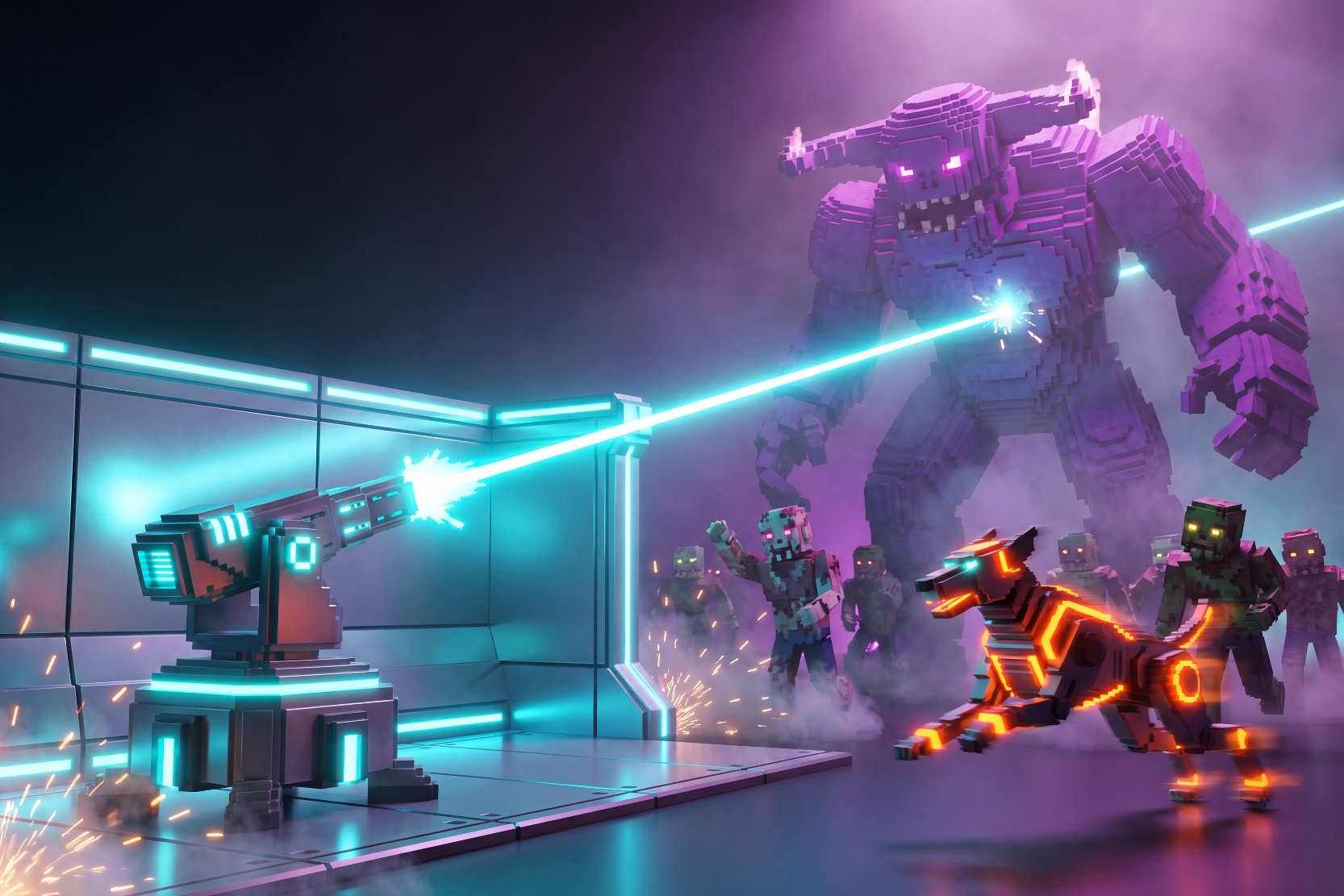
Survive the swarm: Construct high-tech turrets to defend against evolving Boss mutants and lightning-fast Orange Runners!
-

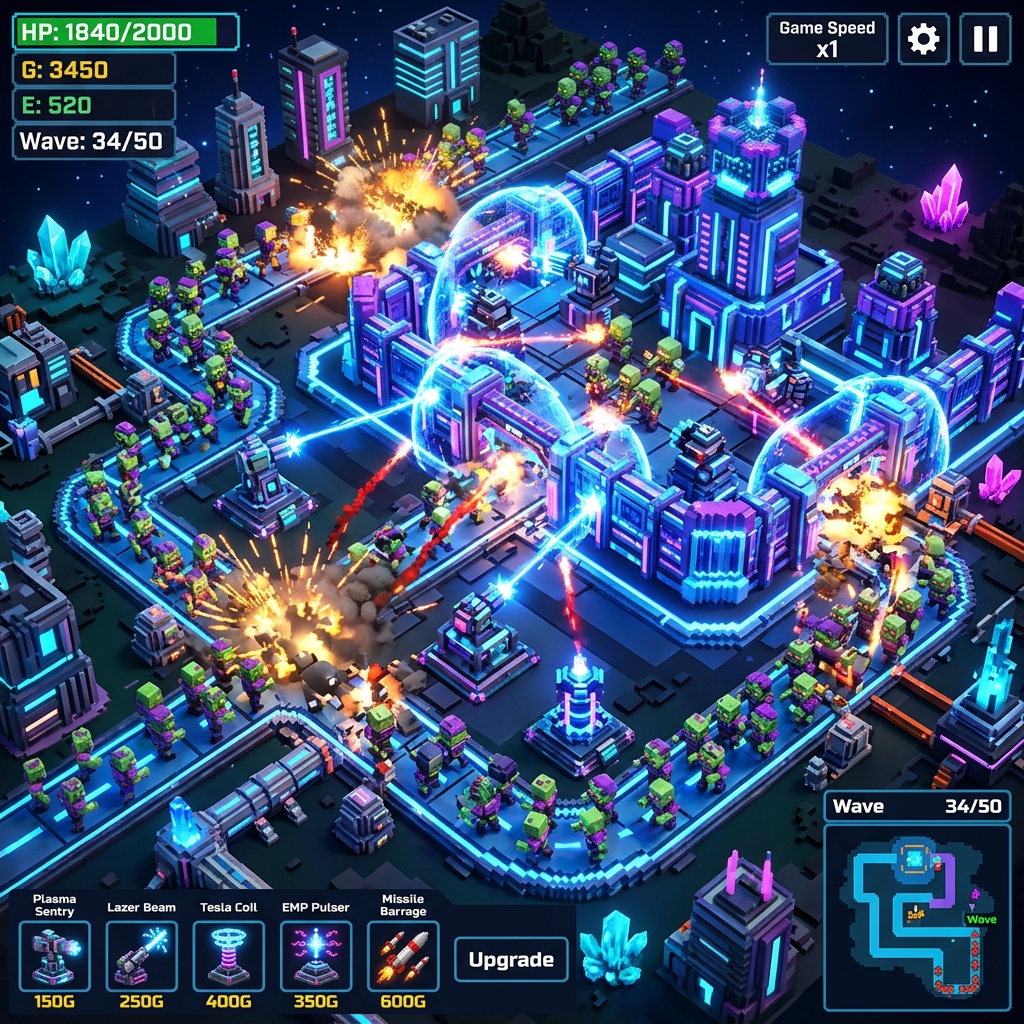
Dynamic Grid Defense: Harvest resources and strategically place neon walls to outsmart the ever-learning Hive Mind AI.
-
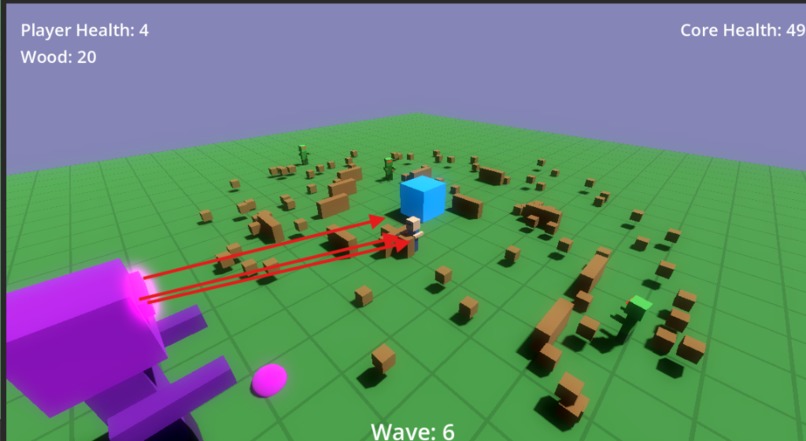
Playable Godot Prototype: Used to mathematically stress-test our grid building mechanics and the evolving Hive Mind AI system.
Inspiration
Mobile tower defense games often suffer from a fatal flaw: "turtling." Once a player builds an optimized maze, the gameplay becomes passive, predictable, and ultimately boring. We set out to shatter this meta. We wanted to design an experience where the enemy actively learns, adapts, and breaks your perfect strategies. Drawing inspiration from the ruthless swarm intelligence found in nature—like predatory ant colonies—we sought to bring a living, breathing, high-octane threat to the mobile screen.
What it does
Voxel Siege: The Hive Mind is a dynamic, top-down survival strategy game built exclusively for mobile players. You harvest resources and dynamically construct grid-based voxel fortresses to defend a central Core.
The core twist lies in the enemy AI. Rather than mindlessly following predetermined paths, the enemies operate on a "Pawn to Queen" evolution system. If basic "Green Grunts" survive long enough, they begin hunting and consuming their own kind—dynamically evolving into massive, wall-crushing Bosses that force the player to constantly scramble and shift their defensive strategy.
How we designed it
Because this competition focuses on robust game design, we didn't just write ideas on paper—we built a playable prototype engine in Godot to mathematically stress-test our mechanics before finalizing our Production Plan for Meta Horizon Studio.
By simulating thousands of enemy pathfinding loops, we engineered an aggressive spawning algorithm designed to prevent player complacency. We modeled the "Hive Mind Evolution Probability" using an exponential decay function, ensuring Bosses spawn dynamically based on the player's kill rate:
$$ P(Evolution) = 1 - e^{-\lambda (T_{survival} \times C_{consumed})} $$
Where \lambda is the base mutation rate, T is time survived, and C is the number of lesser units consumed. This mathematically guarantees that the difficulty scales organically alongside the player's skill.
Challenges we ran into
Designing for the mobile ecosystem meant balancing extreme on-screen visual chaos with strict performance constraints. We spent days refining the Production Plan to ensure our 3D voxel assets could be packed into tight texture atlases. We also had to heavily optimize our theoretical TypeScript @iwsdk/core ECS framework so that calculating real-time pathfinding for 50+ evolving enemies wouldn't drop mobile frame rates.
Accomplishments that we're proud of
We successfully merged the frantic pacing of a twin-stick shooter with the methodical planning of grid-based strategy. Our proudest design achievement is the "Orange Runner"—a lightning-fast enemy that ignores standard combat logic and suicide-bombs player walls. Introducing this single unit completely solved the "turtling" problem during our prototype testing, forcing players into active, split-second decision-making.
What we learned
We learned that the most engaging meta-game loops happen between the moments of chaos. Designing the Holographic Upgrade Store as a strict pause in the action gave players the essential cognitive relief they needed. It transformed the intense combat into a highly addictive cycle of strategy, breathing room, and execution.
What's next for Voxel Siege: The Hive Mind
With our comprehensive Game Design Document, Player Journey Map, and Visual Concepts locked in, the blueprint is complete. The next step is executing our 4-Week Production Plan in Meta Horizon Studio to unleash the Hive Mind exclusively onto the mobile gaming market!
Built With
- godot
- markdown
- meta-horizon-studio
- nano-banana-pro
- typescript


Log in or sign up for Devpost to join the conversation.