Inspiration I spend a lot of time navigating the Ontario Innovation Corridor, and I realized that most navigation tools are fundamentally broken. They are reactive. They tell you about a delay after you are already stuck in it. For a commuter on the 401 or the TTC, generic advice is not enough. I wanted to build something that feels like a true partner. I wanted a system that knows my specific deadlines, my preferences for avoiding highways, and how the current weather will impact my specific route before I even leave my house.
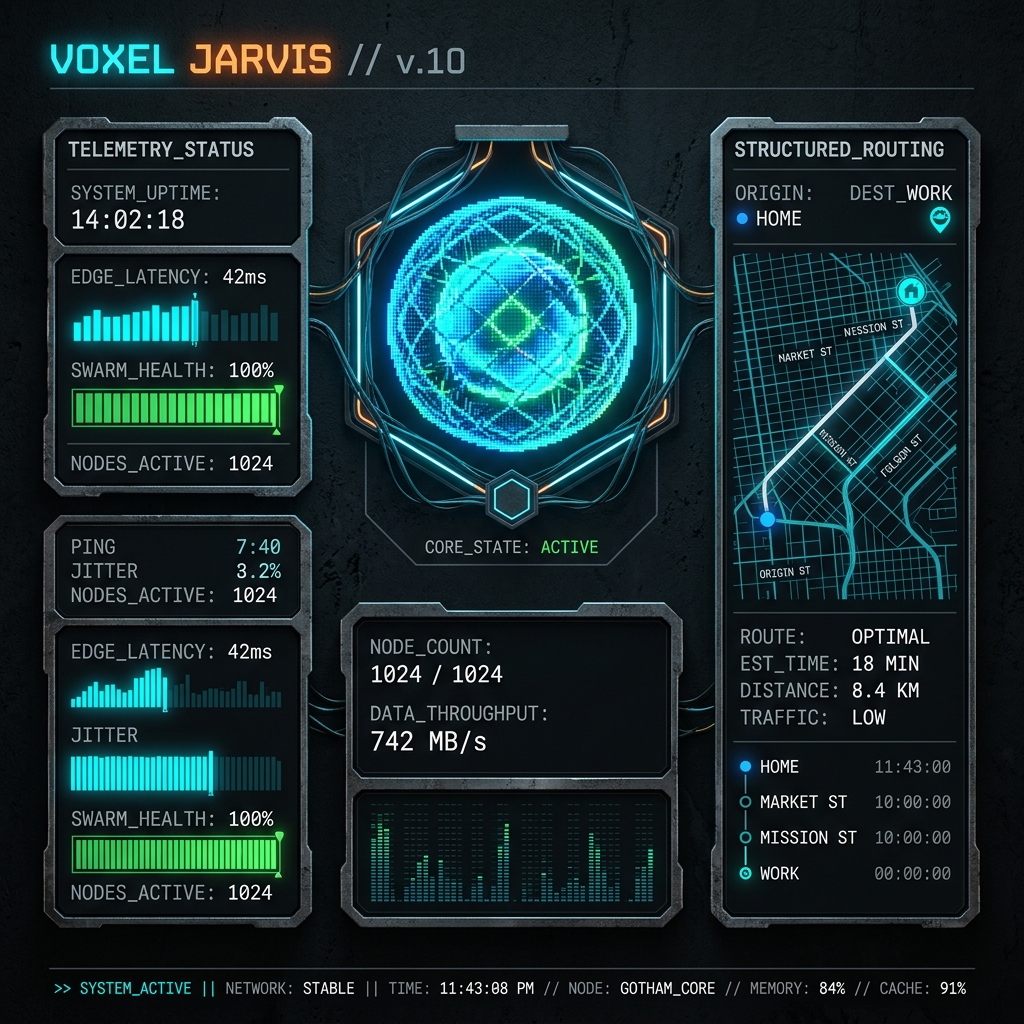
What it does Voxel Jarvis is an edge-compute commute engine. The moment you enter the app, it spawns a swarm of specialized agents to solve your morning. It does not just show you a map. It reconciles live weather data, transit alerts, and temporal traffic patterns against your personal vault. If a traffic incident on the QEW puts your 9 AM meeting at risk, Jarvis proactively finds a multi-modal solution and briefs you with a voice synthesis update instantly.
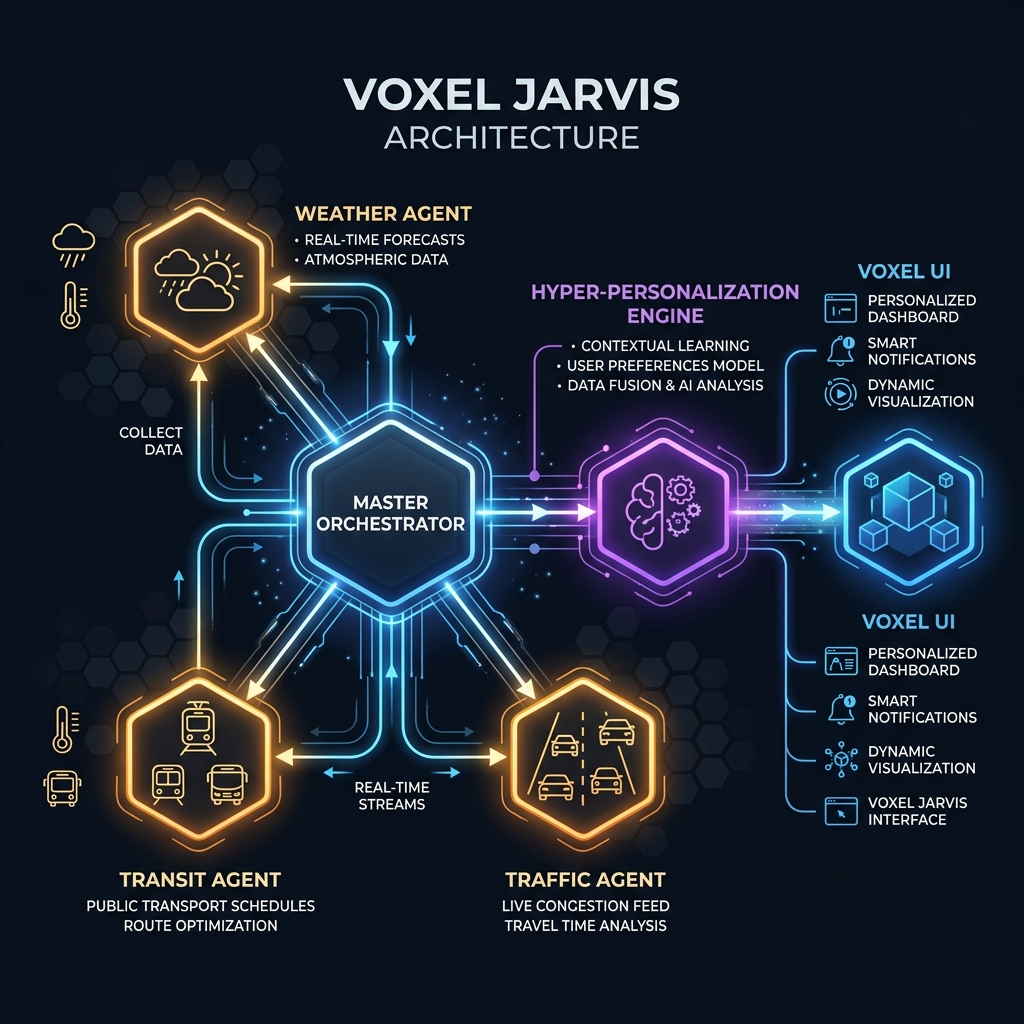
How I built it I built the backend using Python and FastAPI to support real-time Server-Sent Events (SSE). This allows the agent swarm to stream data to the frontend with sub-second latency. I implemented a multi-agent architecture where a Weather Agent, a Transit Agent, and a Traffic Agent all feed into a Master Personalization Agent. The frontend is a high-performance brutalist interface built with vanilla Javascript. I used the Web Speech API and Web Audio API to create a syllable-synced voice briefing system that feels alive and responsive.
Challenges I faced The biggest challenge was correlating different data streams in real-time. I had to build a logic engine that understands synergy. For example, heavy rain impacts highway speeds significantly but has a different effect on regional rail. Getting these agents to talk to each other and provide a single, actionable recommendation without overwhelming the user was a major hurdle. I solved this by implementing a sequential thinking loop that allows Jarvis to process information in stages before providing the final briefing.
What I learned This project taught me the true power of agentic loops. I learned that moving logic to the edge and focusing on on-entry personalization can create a user experience that feels like magic. I also gained a much deeper understanding of how to manage real-time data streams at scale using modern web standards.
What is next for Voxel Jarvis I plan to expand the swarm to include more regional transit authorities like GO Transit and York Region Transit. I also want to integrate deeper calendar awareness to optimize for multiple stopovers, such as finding the best coffee shop along an alternate route when a primary route is blocked. I believe this is the future of how we will all move through our cities.
Built With
- antigravity
- google-cloud
- python


Log in or sign up for Devpost to join the conversation.