-
-
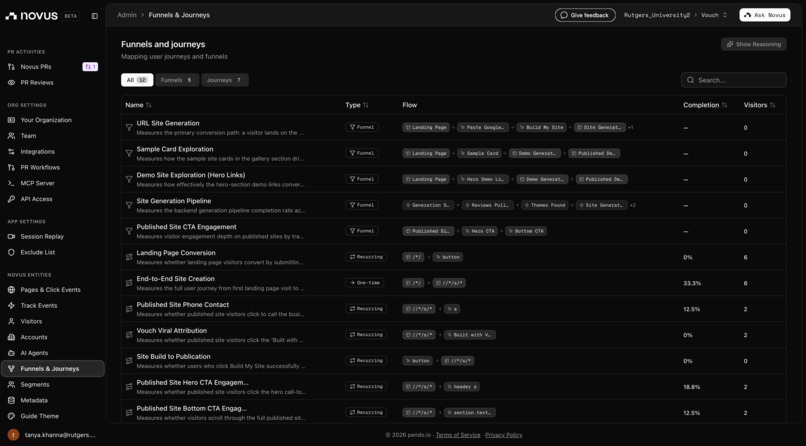
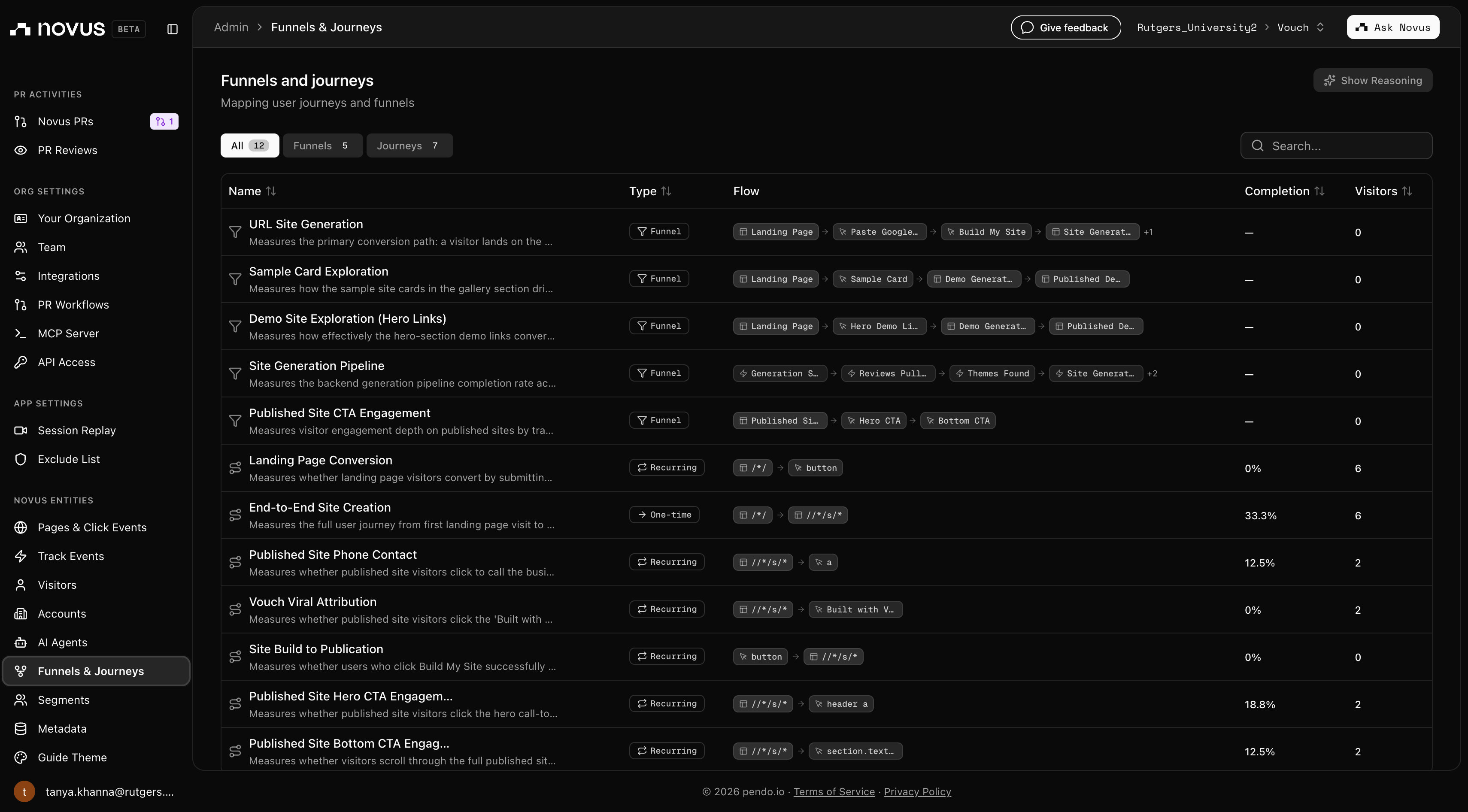
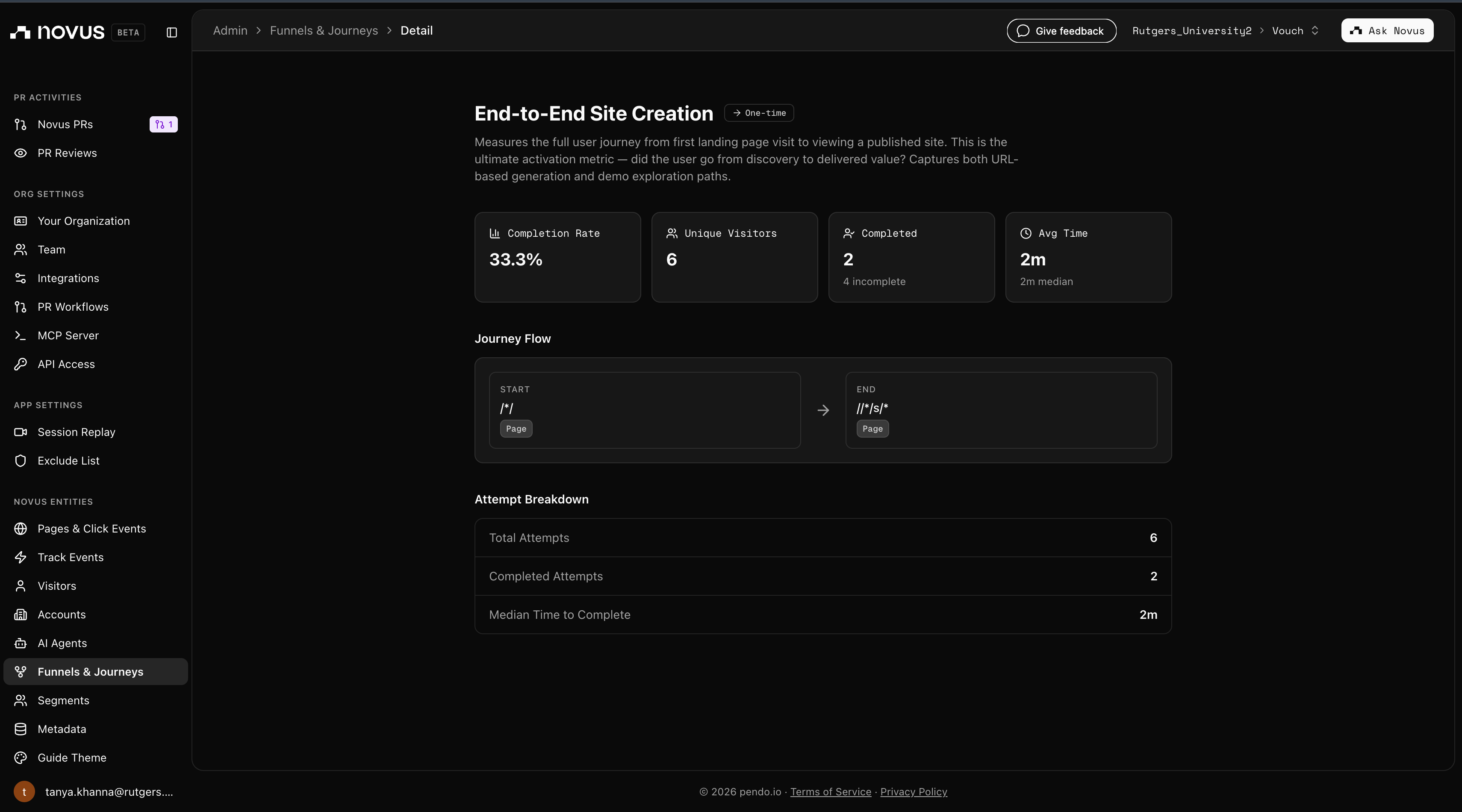
Novus.ai live on the deployed site: real visitor activity: End-to-End Site Creation 33.3% (6 visitors), CTA engagement 18.8%.
-
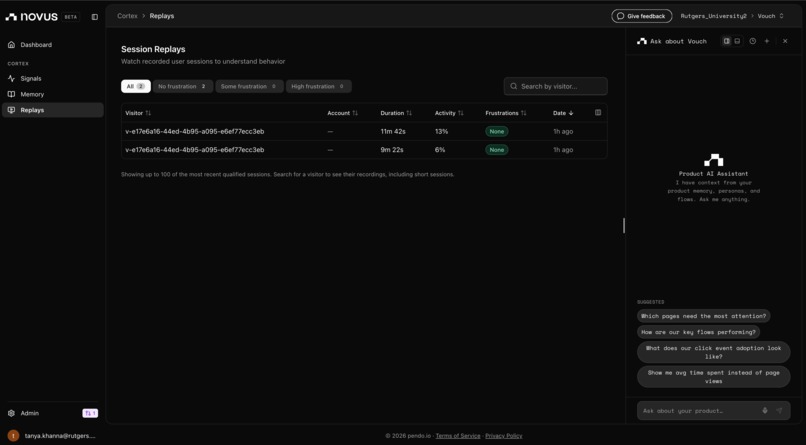
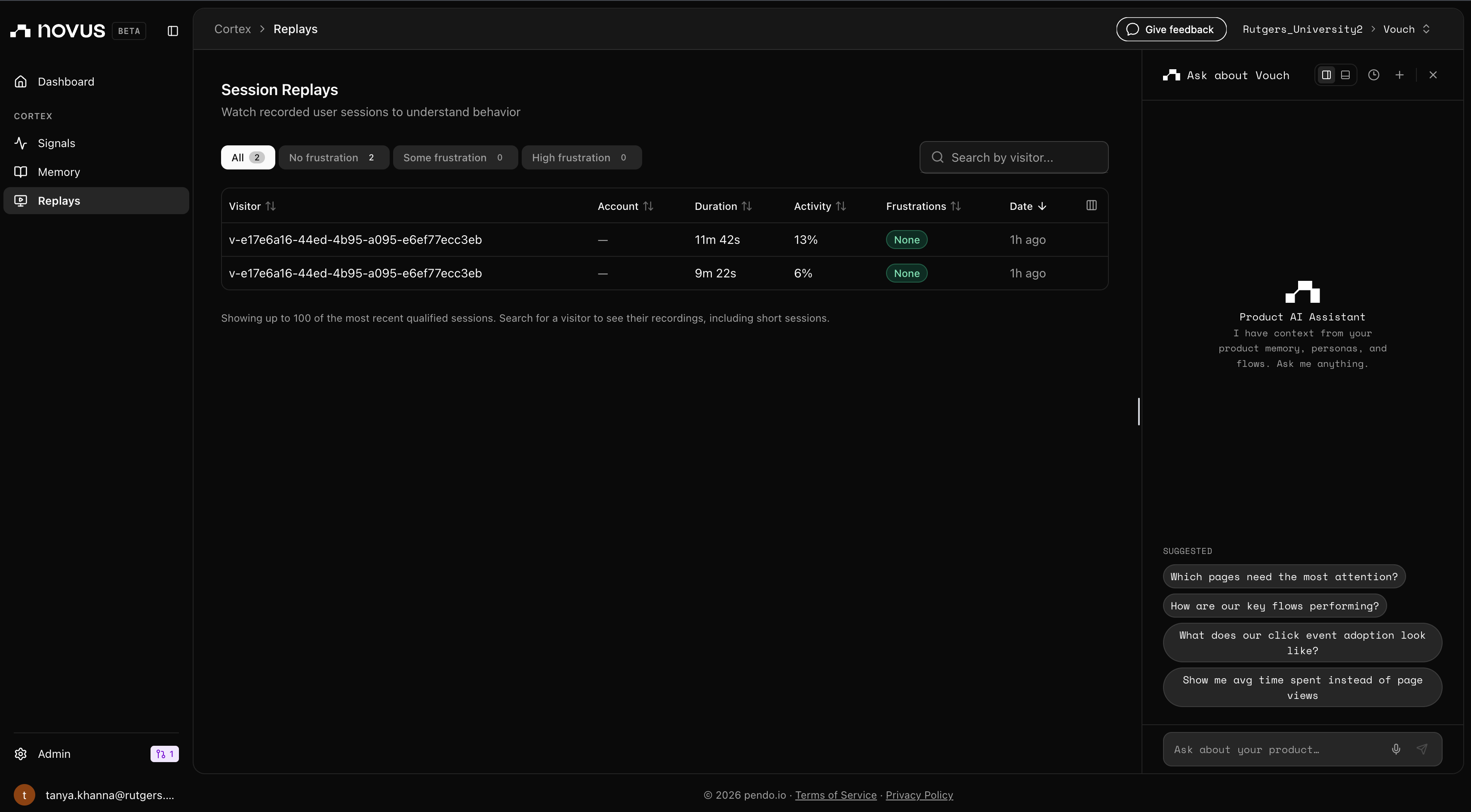
Novus.ai session replays from our live site, 2 real visitor sessions (11m 42s, 9m 22s), no frustration. Proof of live engagement.
-
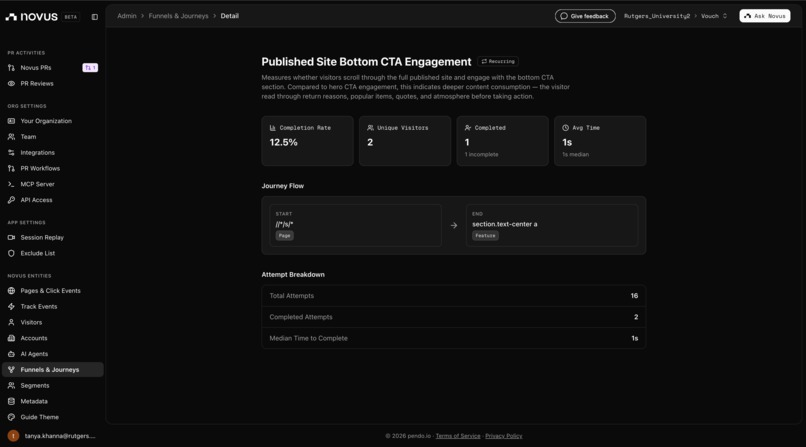
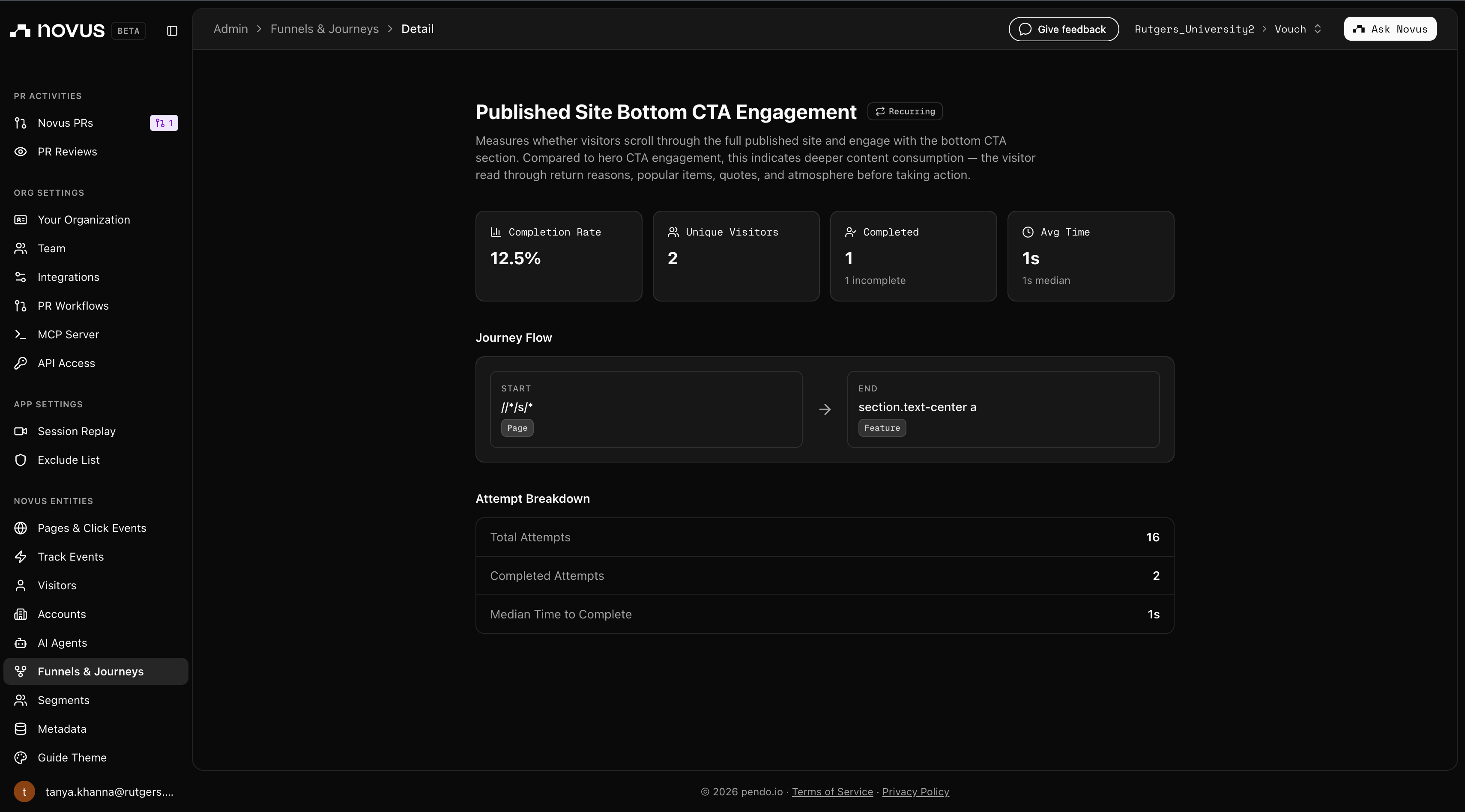
Novus.ai journey detail: Published Site Bottom CTA — 12.5% completion, 2 visitors, 16 attempts. Live data from our deployed site.
-
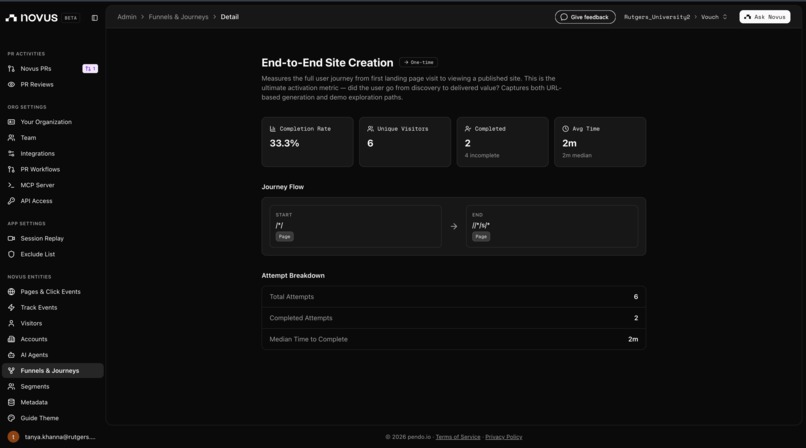
Novus.ai journey: End-to-End Site Creation — 33.3% completion, 6 visitors, 2m median. Real activation data from our live deployed site.
-
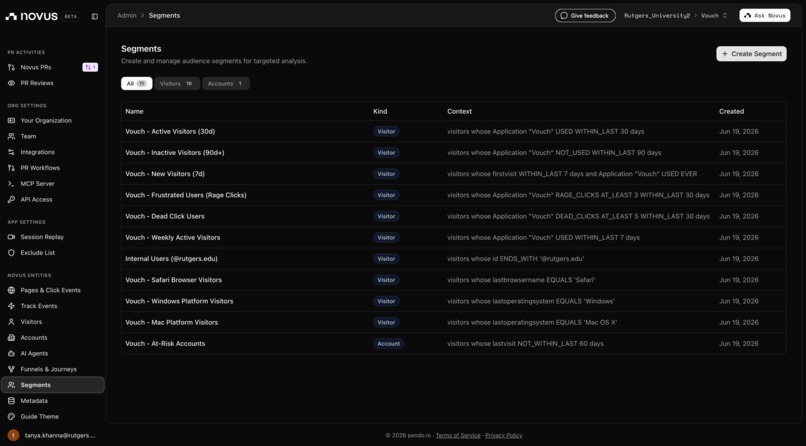
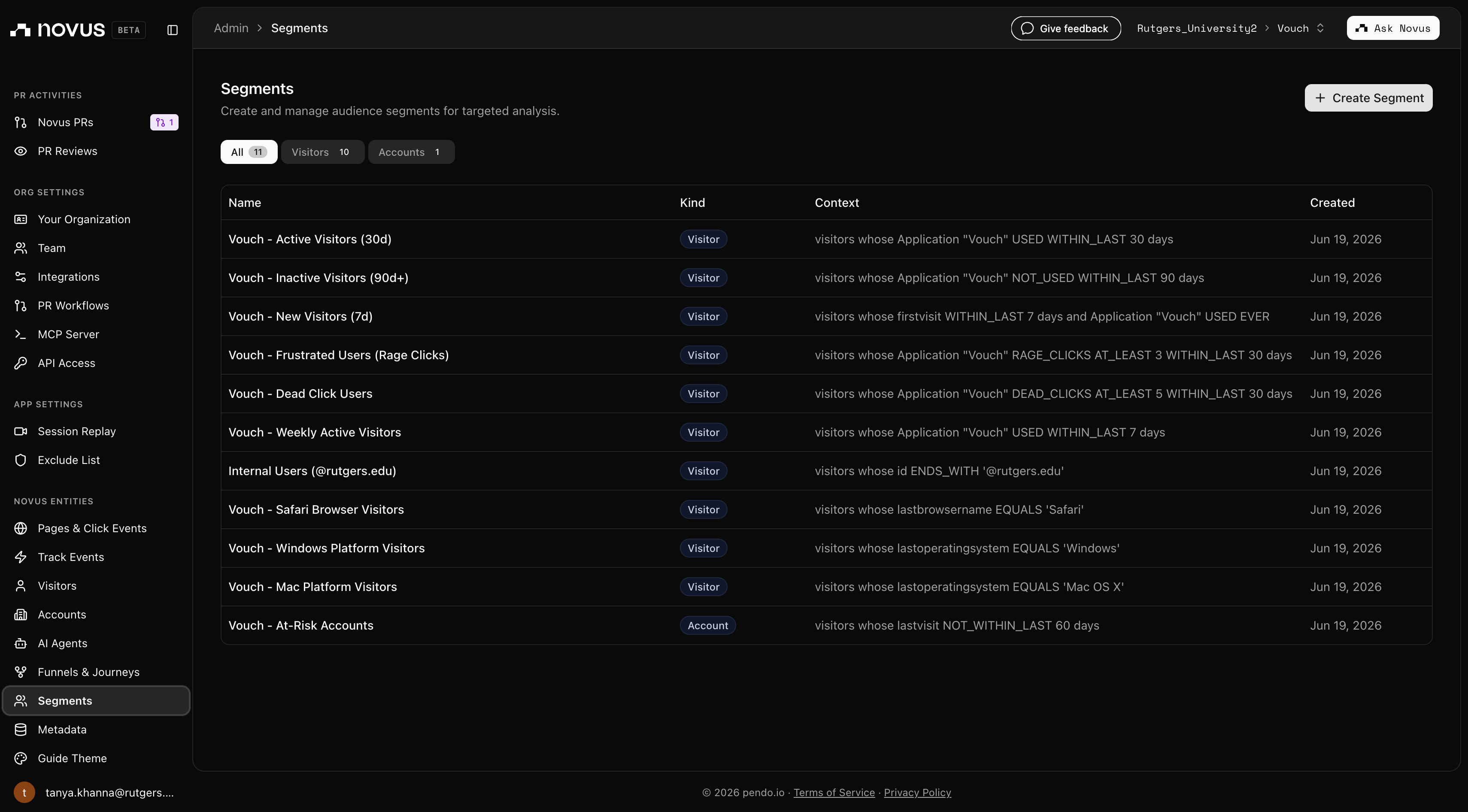
Novus.ai auto-built 11 audience segments for Vouch (active/new/frustrated users, browser & OS) — ready for targeted analysis.
-
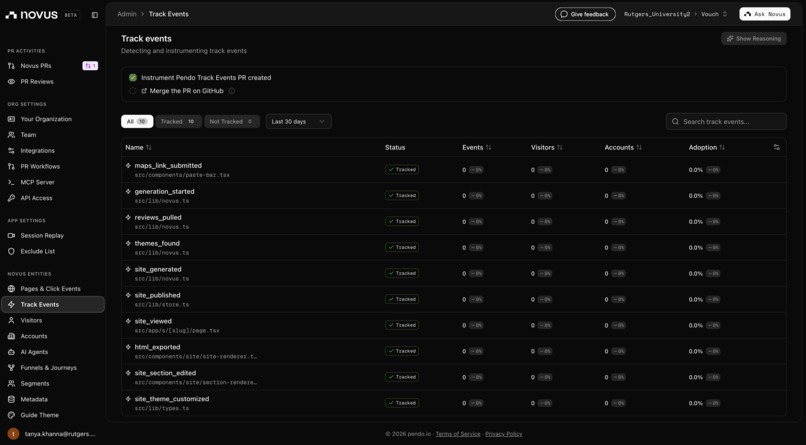
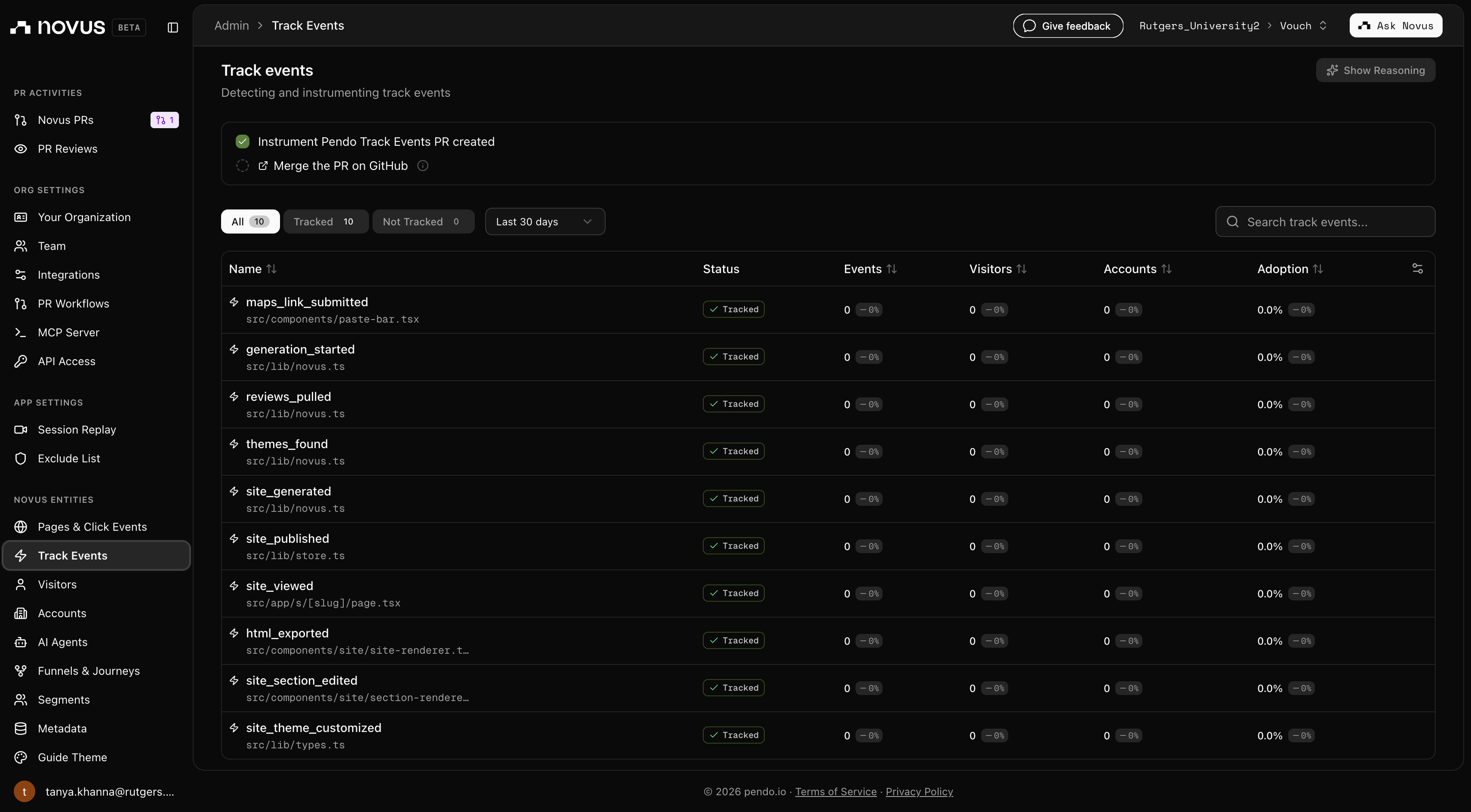
10 Novus events instrumented on vouch-peach.vercel.app, tracking the full funnel from maps_link_submitted to site_published.
-
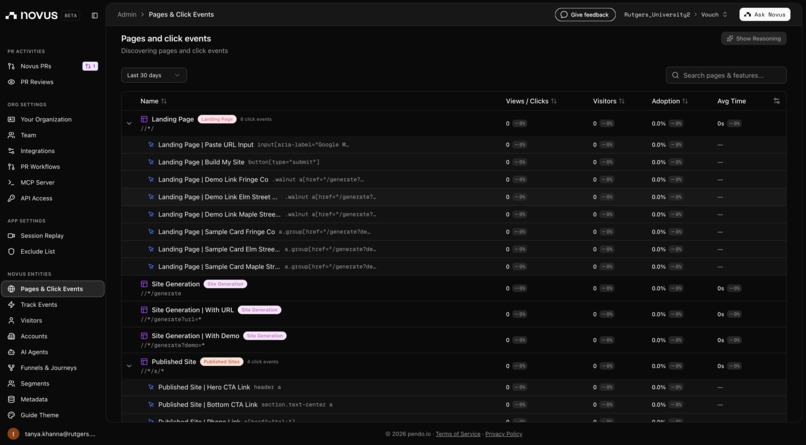
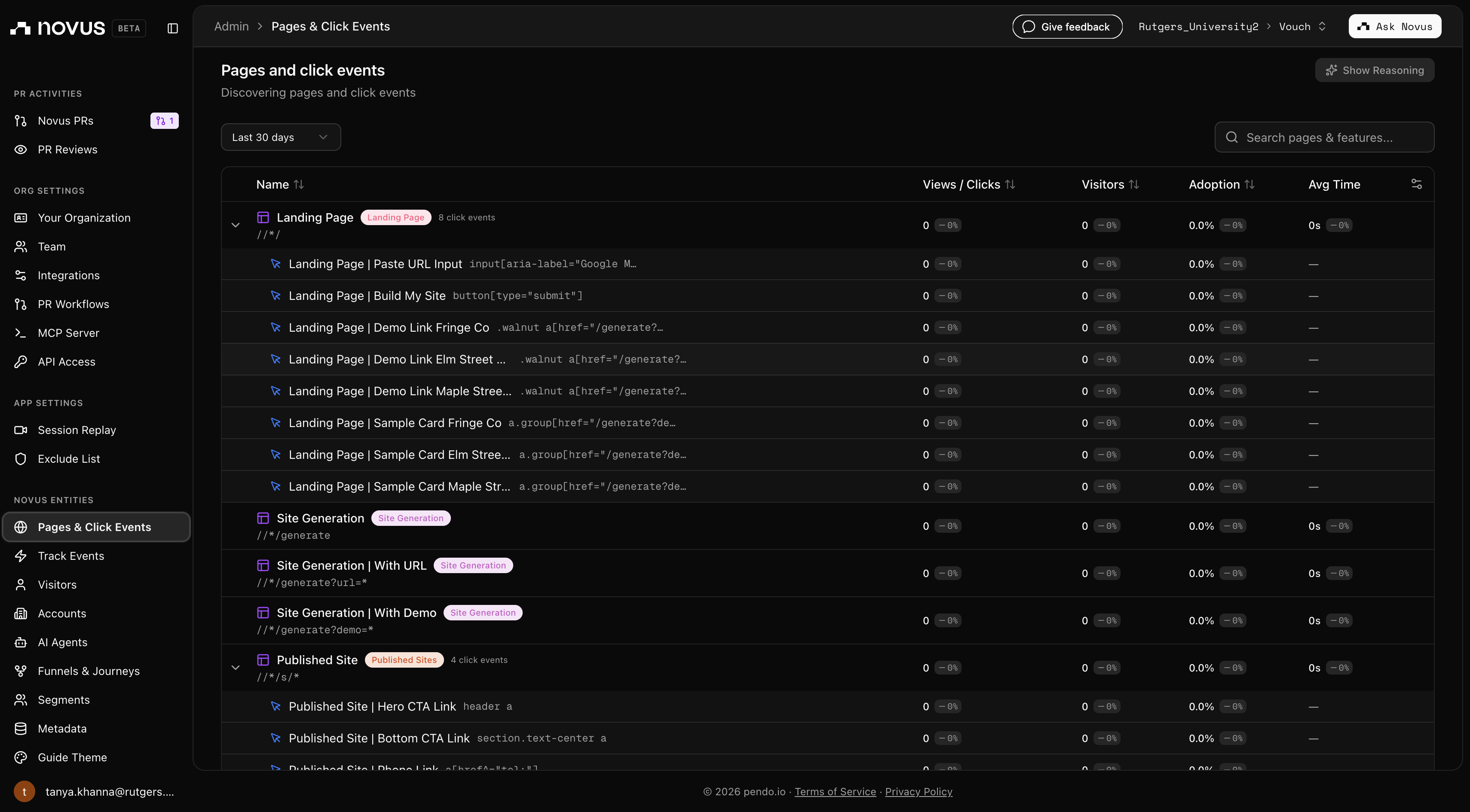
Novus.ai installed on vouch-peach.vercel.app, auto-tracking live pages, clicks, samples, and published-site CTAs; counts are populating.
Inspiration
Most local businesses have already written their best marketing, they just don't know it. Small local businesses often have the most important part of their marketing already written for them: their customer reviews.
A restaurant may not have a website. A barbershop may only have a Google Maps listing. A café may have hundreds of customers explaining what they love, what they order, what kind of visit it is good for, and why they keep coming back. But that proof is trapped inside a messy review page.
I built Vouch around a simple product insight: customers are already telling businesses how to position themselves. The missing piece is turning that messy customer language into something useful, shareable, and actionable.
Vouch is for small businesses that do not have a developer, a copywriter, or time to write prompts from scratch, but do have real customer proof.
What it does
Vouch turns a Google Maps business profile into a customer-backed website.
A business owner pastes a Google Maps link. Vouch reads the available business data, including reviews, photos, rating, location, hours, contact details, and customer language. It then extracts the recurring reasons people choose the business and turns those patterns into a published website.
The generated site includes sections like:
- customer-backed positioning
- reasons people love the business
- popular dishes, services, or items
- customer quotes
- photos
- reviews
- good-for situations
- visit details
- calls to action like directions, call, order, or book
The goal is not to make another generic AI website builder. Vouch does not start with a blank prompt and produce vague copy like “great service” or “high quality food.” It starts from real customer proof and turns it into a website that sounds specific to that business.
How we built it
Vouch was built as a working, deployed web product with a focus on being demo-safe and usable by a stranger.
Tools & stack: I built Vouch with Claude Code (Anthropic) as my AI pair-programmer. The app is Next.js + TypeScript, styled with Tailwind CSS and a custom editorial design system. The core generation: review analysis and customer-backed copy, is powered by Claude (Opus + Sonnet) via Amazon Bedrock, including a Claude vision pass to filter business photos. Real business data and reviews come from the SerpAPI Google Maps endpoints, sites persist to DynamoDB, the product is deployed on Vercel, and usage is instrumented with Novus (Pendo).
The core product is structured around a Google Maps link input, a review and business-data extraction workflow, and a generated site renderer. Instead of treating the website as one block of raw HTML, Vouch renders generated sites from structured content: business details, themes, quotes, sections, photos, CTAs, and layout data. This makes the generated output easier to publish, edit, and extend later.
The review analysis focuses on what I call “Return Reasons”: the specific reasons customers come back, recommend the business, forgive tradeoffs, or choose it for a certain situation. These patterns are inspired by Jobs to Be Done and Voice of Customer thinking.
For the hackathon build, I focused on making the core flow work end-to-end:
- paste or select a business
- analyze real review patterns
- generate a customer-backed site
- publish it as a shareable URL
- show working examples for different local businesses
- keep the design coherent and usable
- instrument the product with Novus for interaction tracking
The frontend uses a newspaper-inspired editorial design system because the product is about turning customer proof into something that feels credible, specific, and worth reading.
Challenges we ran into
The hardest challenge was avoiding generic AI output.
It is easy to generate a website that looks polished but says nothing specific. Vouch needed to do something harder: preserve the actual customer language and use it as the foundation for the site.
That meant the system had to balance several tradeoffs:
- repeated review themes versus one-off comments
- useful customer proof versus noisy or low-signal reviews
- polished website copy versus authentic customer language
- enough content versus forcing weak sections
- business actions like directions and ordering versus generic CTAs
Another challenge was scope. There are many possible directions for this product: menus, booking, custom domains, editing, dashboards, competitor analysis, and auto-updates. For this hackathon, I had to keep the product focused on the core promise: turn customer reviews into a real, shareable website.
The final challenge was craft. The output had to feel like an actual website a small business could share, not just an AI-generated demo page. That meant paying attention to layout, typography, CTAs, section rhythm, photo treatment, and the overall editorial feel.
Accomplishments that we're proud of
I am proud that Vouch is not just a pitch or a mockup. It is a working product with a clear user, a clear input, and a useful output.
The strongest part of the build is that the generated websites feel specific. For example, a restaurant page can surface details like popular dishes, family-run hospitality, generous portions, customer quotes, and good-for situations. That feels much more useful than a generic “About us” page.
I am also proud of the product framing. Vouch is not trying to replace a full website builder. It is solving a sharper problem: helping local businesses turn the customer proof they already have into a site they can share.
The build also includes multiple generated examples, a coherent editorial design system, practical CTAs, published website pages, and measurable product usage through Novus.
What we learned
The biggest learning was that good AI products need strong product judgment, not just generation.
A model can write copy, but the product has to decide what counts as evidence, what should become a section, what should be omitted, and how much confidence to place in a review pattern.
I also learned that small businesses do not just need “a website.” They need a website that explains why someone should choose them. Reviews are a surprisingly rich source for that because they contain real customer language, real tradeoffs, and real use cases.
Another learning was the importance of constraints. Keeping Vouch focused on a single action, paste a Google Maps link, made the product easier to understand and easier to ship.
What's next for Vouch
The next step is to make Vouch more flexible while keeping the core promise the same: customer proof becomes a website.
Near-term improvements include:
- better editing controls for generated sections
- custom domains and branded subdomains
- stronger photo selection and photo-to-section matching
- menu and pricing extraction when source data supports it
- existing website ingestion so Vouch can include services that reviews do not mention
- chat-based editing for changes like “add a catering section” or “send bookings to WhatsApp”
- deeper business-specific functionality for restaurants, salons, coaches, photographers, and service businesses
Longer term, Vouch could become more than a website generator. It could become a local business positioning system: review dashboards, competitor analysis, customer insight reports, SEO page generation, and automatic site updates as new reviews come in.
The larger vision is simple: small businesses should not have to start from a blank page. Their customers already wrote the proof. Vouch turns it into a website.
Built With
- amazon-web-services
- bedrock
- framer-motion
- next.js
- novus.ai
- react
- typescript
- vercel

Log in or sign up for Devpost to join the conversation.