-
-
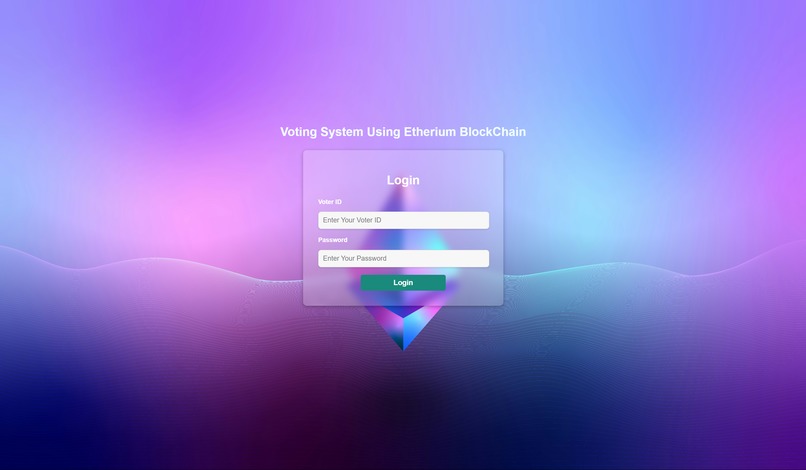
Login Page
-
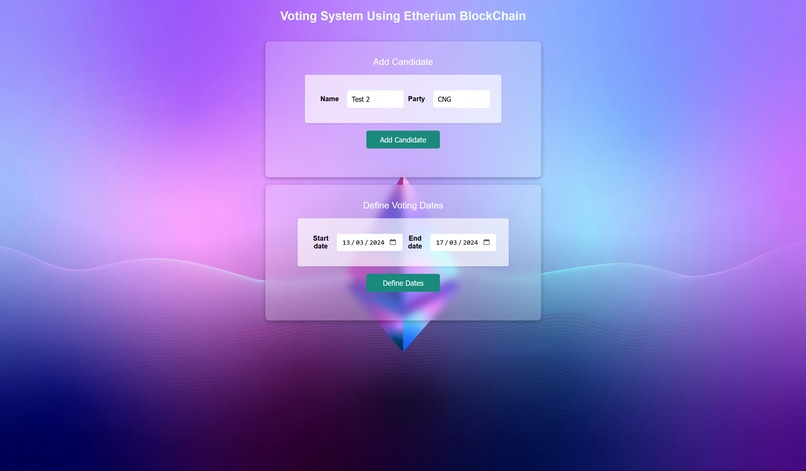
Admin Page
-
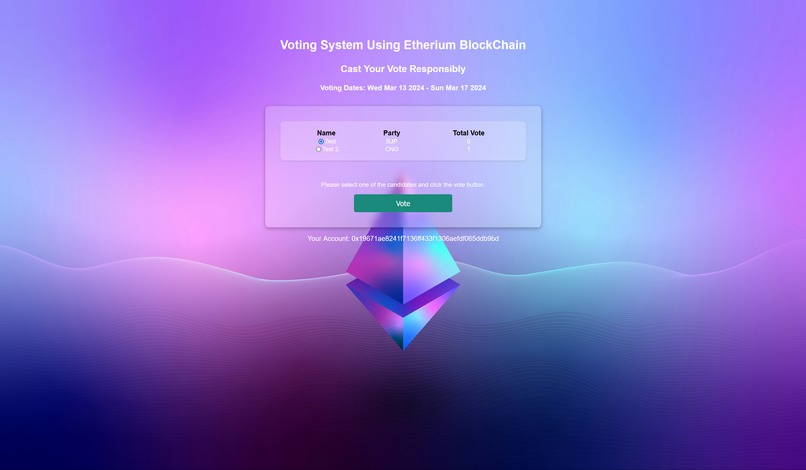
Voting Page
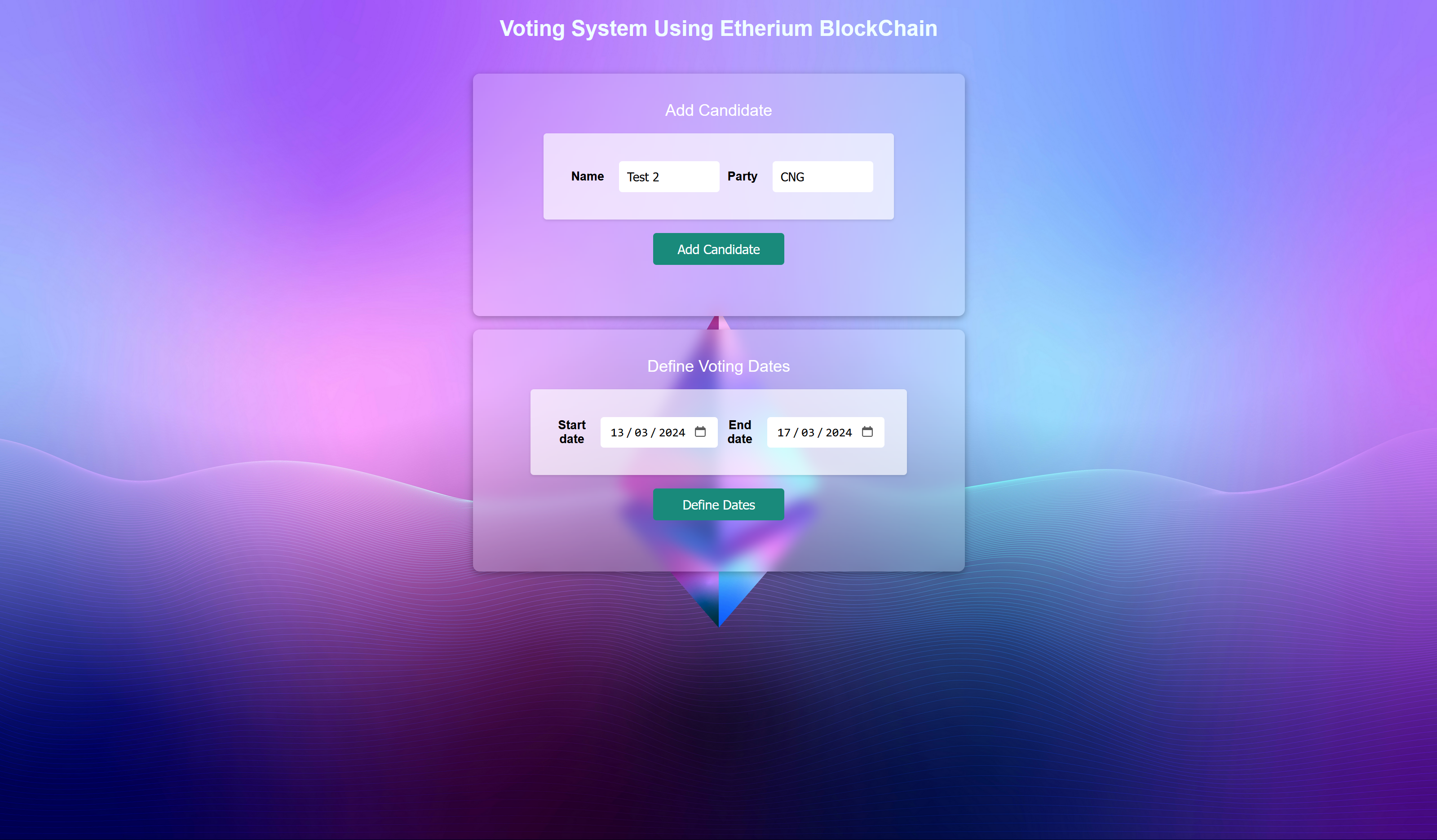
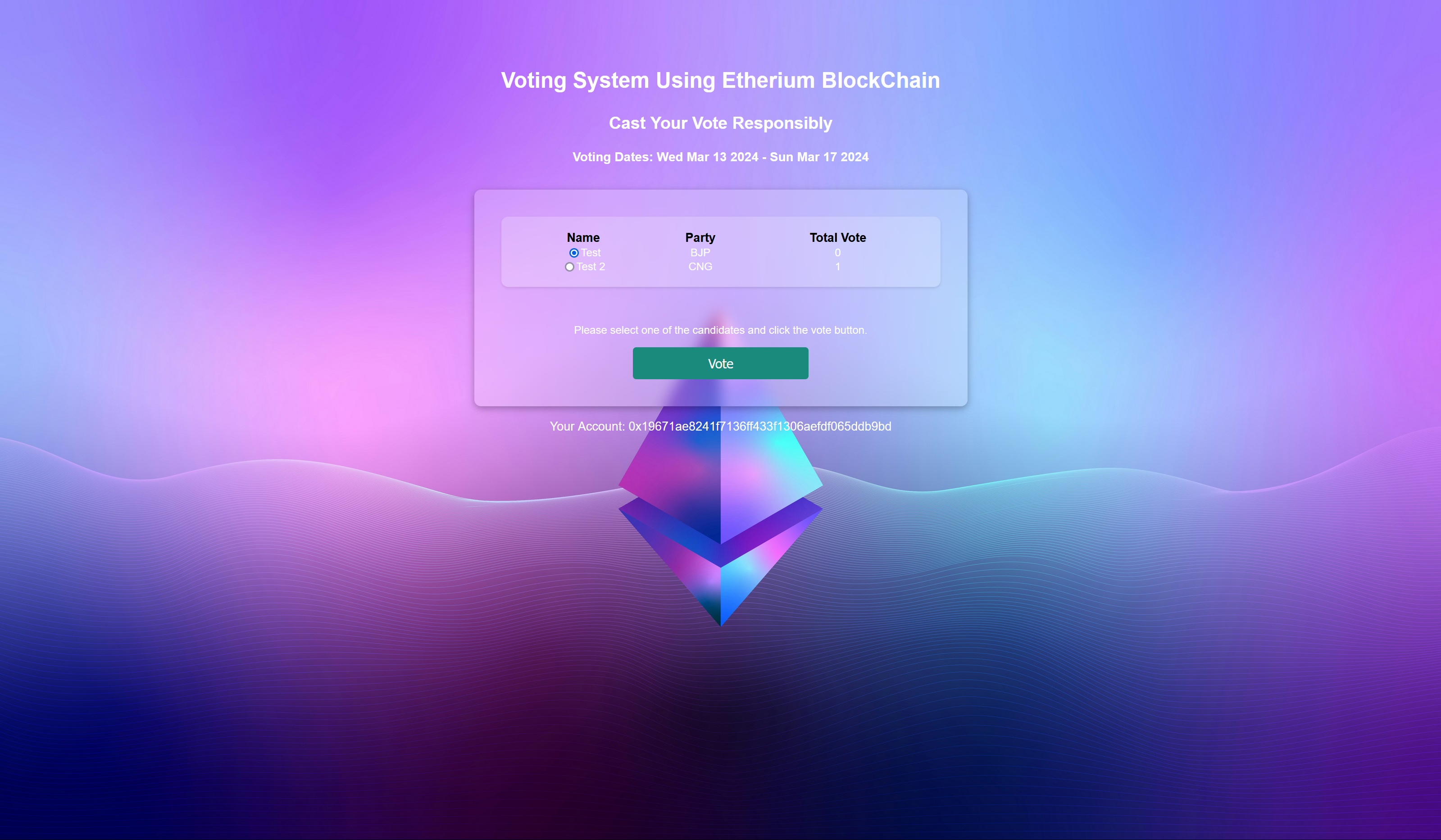
Voting System Using Ethereum Blockchain
Inspiration
The idea of creating a decentralized voting system stemmed from the need to tackle the issues of vote tampering, lack of transparency, and security in traditional voting systems. By leveraging blockchain technology, particularly Ethereum, we aimed to create a more secure, transparent, and tamper-proof system for voting. Blockchain ensures that once a vote is cast, it cannot be altered, and every vote can be traced to its origin without compromising voter privacy.
What it does
This voting system allows users to securely cast their votes in an election or survey using Ethereum blockchain. The system ensures that each vote is unique and can only be cast once, thus eliminating issues of multiple votes by a single person. The blockchain records each vote transaction, making the process transparent and auditable. The result of the voting process is available instantly and securely, without the risk of tampering.
How we built it
The voting system was built using the following technologies:
- Node.js: Used for the backend server to handle requests, authentication, and managing the voting logic. Node.js is a great choice for handling real-time data processing and event-driven tasks.
- Python: Used for interacting with the Ethereum blockchain and deploying smart contracts. Python’s web3 library made it easier to communicate with the Ethereum network.
- HTML & CSS: Used for building the frontend interface where users can cast their votes. We designed the user interface to be simple and intuitive, ensuring ease of use for voters.
- MySQL: Used to store additional data such as user profiles, voting history, and results. MySQL handled data management and ensured that the application could scale easily with more users and votes.
The Ethereum smart contract was written using Solidity, allowing for secure and transparent handling of votes. The contract interacts with the Node.js backend, while the Python scripts manage the Ethereum network communication.
Challenges we ran into
- Smart contract development: Writing secure smart contracts on Ethereum was challenging, especially ensuring that the contract couldn’t be exploited to allow users to cast multiple votes. We spent significant time ensuring proper access controls and handling edge cases.
- Blockchain deployment: Interacting with Ethereum networks can be tricky, especially with gas fees and transaction costs. We had to make sure that users wouldn’t face excessive transaction costs, and also handle failed transactions gracefully.
- Frontend and backend integration: Syncing the Ethereum blockchain with the frontend interface while maintaining a smooth user experience was another challenge. We used Web3.js to help bridge this gap, ensuring that blockchain interactions were seamless.
- Security: Ensuring that the system was fully secure, especially in a decentralized environment, required careful attention to detail. We had to ensure no one could manipulate the system or bypass the Ethereum network's consensus mechanism.
Accomplishments that we're proud of
- Decentralized Security: We successfully implemented a system where votes are securely recorded on the Ethereum blockchain, ensuring that votes are tamper-proof and auditable by anyone.
- Real-time voting results: The results of the voting process were available immediately once the voting period ended. This was a significant improvement over traditional voting systems where results are often delayed and open to manipulation.
- User-friendly interface: Despite the complex technology behind the scenes, the frontend was simple and user-friendly, ensuring that users could easily participate without needing technical knowledge.
- Scalability: The system can handle a growing number of users and votes with MySQL providing robust data storage and Node.js ensuring fast processing.
What we learned
- Blockchain development: Gaining a deeper understanding of smart contracts and blockchain technology, specifically Ethereum, was one of the key takeaways from this project.
- Smart contract optimization: Learning to optimize the gas fees and transaction times for Ethereum was a vital learning experience.
- Full-stack development: Integrating blockchain technology with a web application and managing data storage with MySQL enhanced our full-stack development skills.
What's next for Voting System Using Ethereum Blockchain
- Enhancements to smart contract features: We plan to add additional features to the smart contract, such as voting periods, quorum requirements, and better access control mechanisms.
- User authentication improvements: We are exploring ways to improve the security and anonymity of users while ensuring that each individual vote can be tracked.
- Expansion to other blockchain networks: We are considering supporting additional blockchains, such as Binance Smart Chain or Polkadot, to make the voting system more versatile and accessible.
- Mobile app development: To make the voting system even more accessible, we plan to develop a mobile application that can interact with the Ethereum blockchain for secure, on-the-go voting.
This project represents a powerful step toward creating a more secure and transparent voting system by combining modern web development with cutting-edge blockchain technology.

Log in or sign up for Devpost to join the conversation.