-
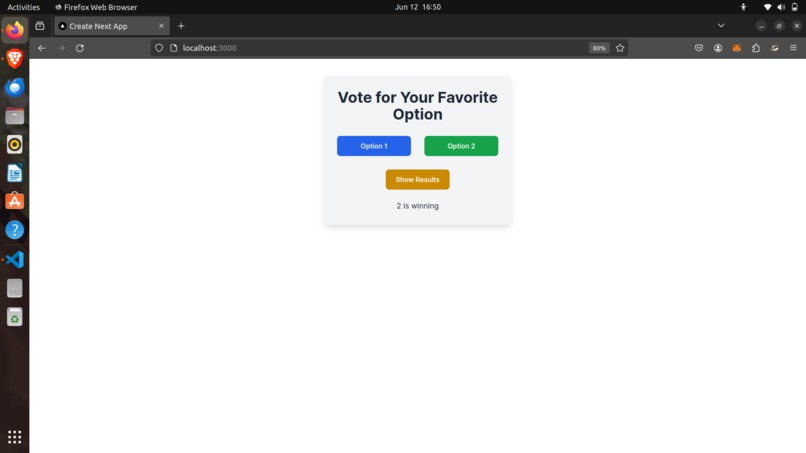
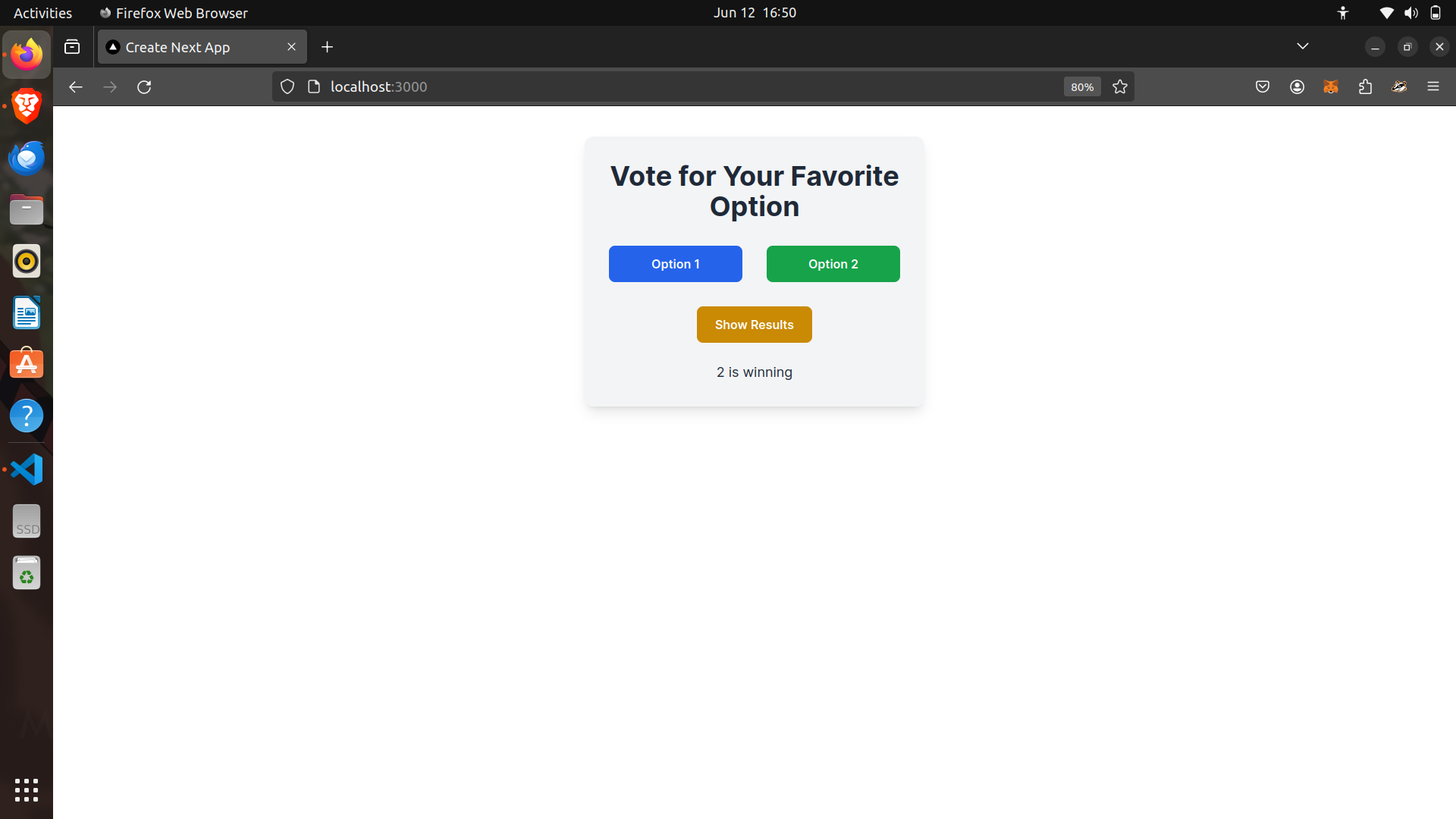
it shows the options to vote on and result button to show the current result
Inspiration
The inspiration behind developing the Voting DApp was to create a more secure, transparent, and efficient voting system. Traditional voting methods face numerous challenges, including fraud, tampering, and lack of transparency. Blockchain technology offers a solution by providing an immutable ledger and verifiable transactions, which can address these issues effectively.
What it does
The Voting DApp allows users to cast votes on two predefined options (Option1 and Option2). It ensures that each address can vote only once and records each vote on the blockchain, making the process secure and transparent. Users can also view the total votes for each option and determine the current winning option.
How we built it
We built the Voting DApp using Solidity, the smart contract programming language for the Ethereum blockchain. The main components include:
- Smart Contract: The core of the DApp, written in Solidity, handles vote casting, vote counting, and checking if an address has already voted.
- Mapping: Utilized for storing vote counts and tracking whether an address has voted.
- Functions: Defined for voting, checking the winning option, and retrieving total votes for each option.
Here is the smart contract code:
// SPDX-License-Identifier: MIT
pragma solidity ^0.8.0;

contract Voting {
    uint8 constant Option1 = 1;
    uint8 constant Option2 = 2;

    mapping(uint8 => uint256) public votes;
    mapping(address => bool) public hasVoted;

    function vote(uint8 _option) public {
        require(_option == Option1 || _option == Option2, "Invalid option");
        require(!hasVoted[msg.sender], "You have already voted");
        votes[_option]++;
        hasVoted[msg.sender] = true;
    }

    function getWinningOption() public view returns (uint8) {
        if (votes[Option1] > votes[Option2]) {
            return Option1;
        } else if (votes[Option2] > votes[Option1]) {
            return Option2;
        } else {
            return Option1;
        }
    }

    function getTotalVotes(uint8 _option) public view returns (uint256) {
        require(_option == Option1 || _option == Option2, "Invalid option");
        return votes[_option];
    }
}
Challenges we ran into
During development, we faced several challenges:
- Security: Ensuring the contract is secure against potential attacks, such as double voting and vote tampering.
- Gas Costs: Optimizing the contract to minimize gas costs for users, especially during high network congestion.
- User Experience: Designing a user-friendly interface that simplifies the voting process for non-technical users.
Accomplishments that we're proud of
We are proud of several key accomplishments:
- Security: Successfully implementing measures to prevent double voting and ensure the integrity of the vote count.
- Transparency: Creating a system where votes are publicly verifiable, enhancing trust in the voting process.
- Usability: Developing a straightforward and accessible interface that allows users to participate easily.
What we learned
Throughout the development process, we learned important lessons:
- Smart Contract Development: Gaining deeper insights into writing and optimizing smart contracts for security and efficiency.
- Blockchain Mechanics: Understanding the nuances of blockchain technology, including transaction costs and network behavior.
- User-Centric Design: The importance of designing applications that are not only functional but also user-friendly.
What's next for Voting DApp
Looking ahead, we plan to:
- Expand Options: Enable voting on multiple options and support more complex voting mechanisms.
- Enhanced Security: Implement advanced cryptographic techniques to further secure the voting process.
- Scalability: Explore layer-2 solutions to improve scalability and reduce transaction costs.
- User Interface Improvements: Continuously refine the user interface based on feedback to enhance user experience.
These enhancements will help make the Voting DApp more robust, scalable, and user-friendly, paving the way for broader adoption in various voting scenarios.
Built With
- ethers
- hardhat
- javascript
- metamask
- nextjs
- sepolia
- solidity
- tailwind


Log in or sign up for Devpost to join the conversation.