-
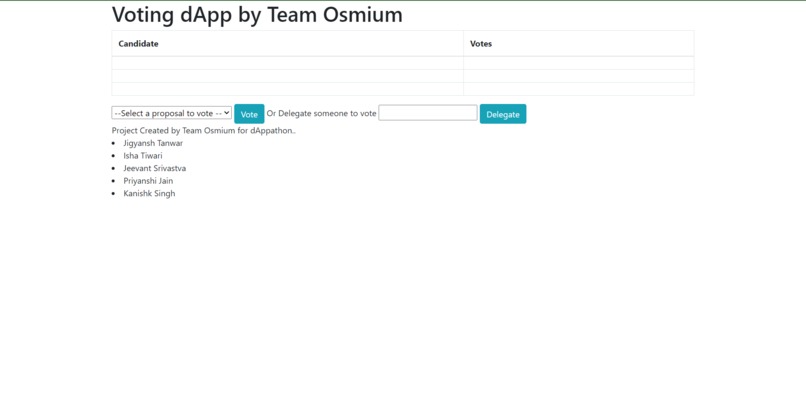
Default Homepage
-
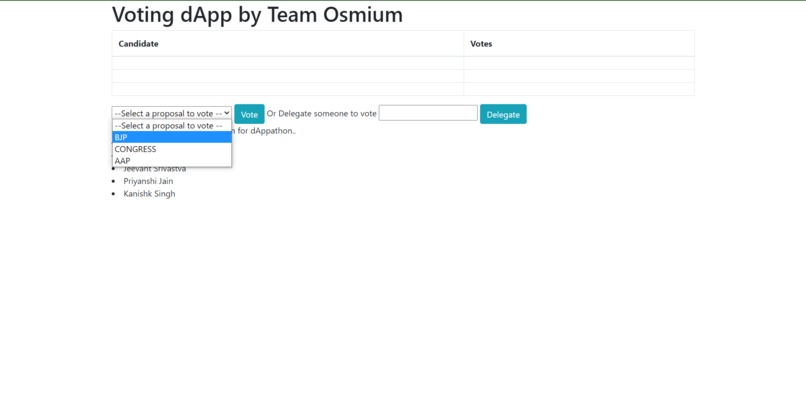
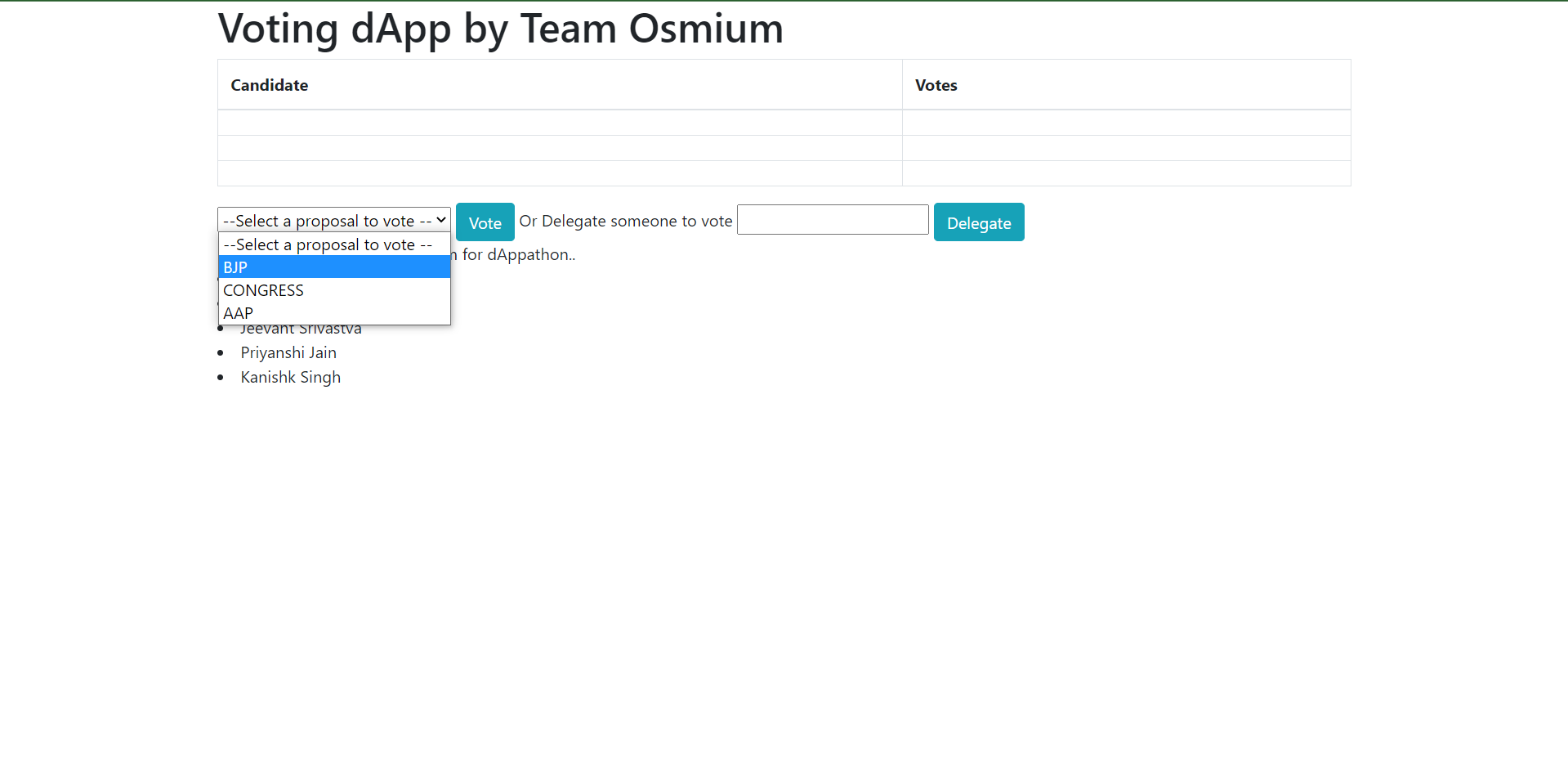
Dropdown to choose Candidate

Our Journey Building a Decentralized Voting Application
Inspiration and Learning
The inspiration for a decentralized voting application comes from the need for a transparent and secure election process that can be accessible to all. The existing traditional voting systems often face issues of centralization, fraud, and accessibility, which may lead to mistrust in the outcome of an election.
By building a decentralized voting application, we can leverage the power of blockchain technology to create a secure and transparent voting system that anyone can access from anywhere.
Problems Solved:
Voter Fraud: The use of blockchain technology eliminates the possibility of voter fraud, as the decentralized and immutable nature of the blockchain ensures that votes cannot be altered or deleted.
Voter Suppression: By providing an online voting system, the application increases accessibility and allows more people to vote, potentially reducing the likelihood of voter suppression.
Trust in Elections: With the transparent and secure nature of the system, voters can trust that their vote is accurately recorded and counted, increasing trust in the electoral process as a whole.
Cost and Time: The use of blockchain technology reduces the cost and time associated with traditional voting methods, potentially making the voting process more efficient and cost-effective.
Building the Project
The development of a decentralized voting application involves several steps, including:
Designing the system architecture: This involves creating a blueprint of how the system will work, including the different components and how they interact with each other.
Developing Smart Contracts: Smart contracts are self-executing contracts with the terms of the agreement between buyer and seller being directly written into lines of code. They can be used to automate voting processes, manage voter registrations, and secure the vote data.
Creating the User Interface: The user interface is the front-end of the application that enables users to interact with the system. It should be user-friendly, easy to navigate, and accessible to everyone.
Integrating with Blockchain: This involves integrating the application with a blockchain network, such as Ethereum, to enable secure and transparent voting.
Testing and Deployment: This involves testing the application to ensure it functions as expected and deploying it on a decentralized network.
In conclusion, building a decentralized voting application was a complex process that required a deep understanding of blockchain technology, cryptography, smart contracts, and other relevant technologies. However, the benefits of a transparent, secure, and accessible voting system made it a worthwhile endeavor.
Built With
- css
- ether.js
- ethereum
- html
- javascript
- metamask
- solidity
- spheron


Log in or sign up for Devpost to join the conversation.