-
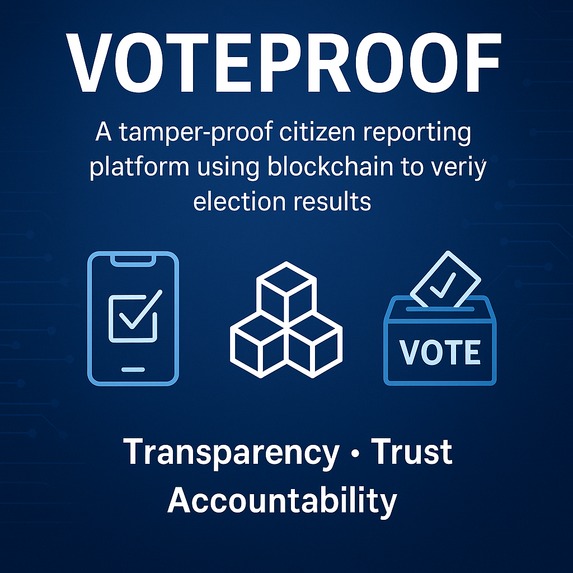
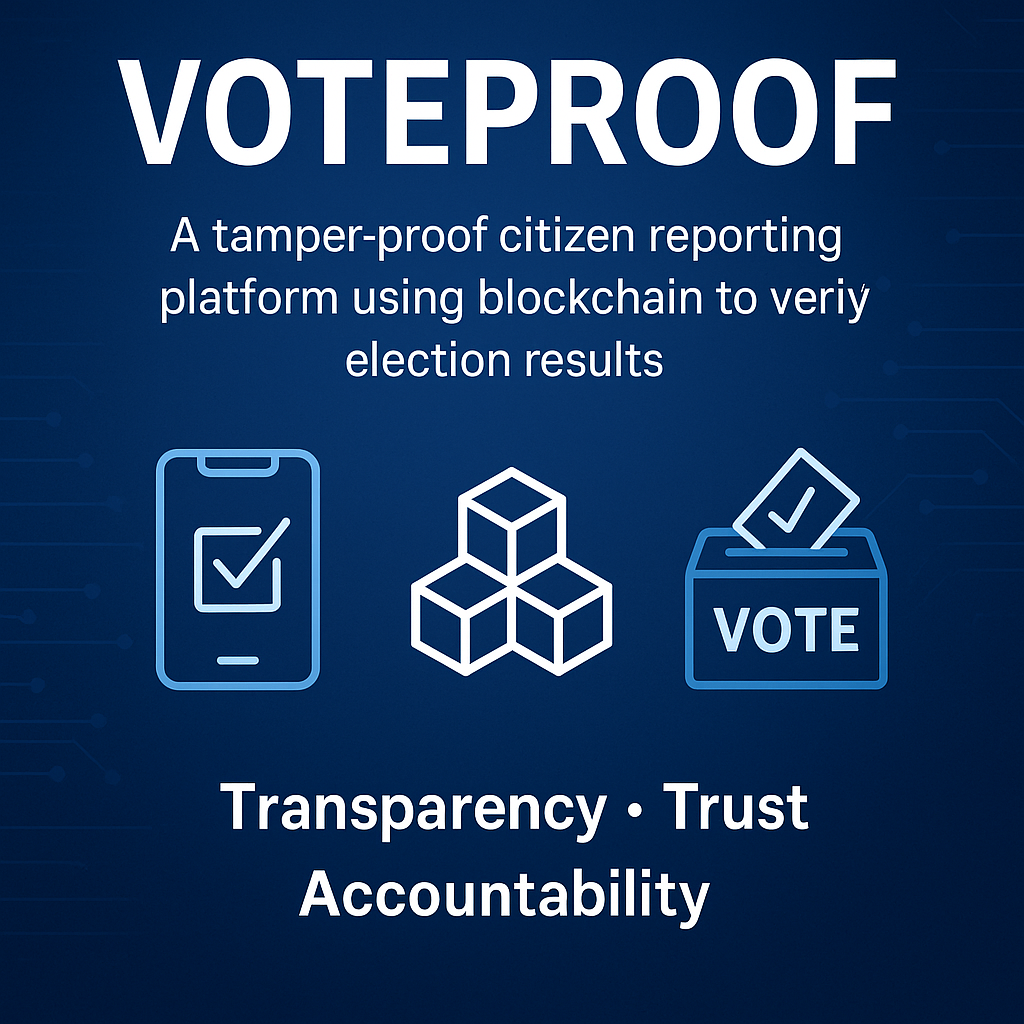
VOTEPROOF
Inspiration
Around the world, democratic trust is eroding due to corruption, vote tampering, and lack of transparent election reporting. In many cases, citizens feel their voices don’t matter because official results appear predetermined. Inspired by the need for trust in governance, VoteProof was conceived as a tool to empower ordinary people to verify and share election results securely. By combining the transparency of blockchain with the reach of mobile technology, we aim to give everyone a role in safeguarding democracy.
What it does
VoteProof is a decentralized citizen reporting system that enables voters, observers, and journalists to submit verified election results from polling stations. Each report is cryptographically signed, stored on a blockchain, and cross-verified by multiple submissions to ensure tamper resistance and accuracy.
How we built it
We developed the concept around blockchain principles, smart contracts, and decentralized storage (IPFS) to ensure transparency and immutability. The envisioned frontend would let users submit results with geotagged proof and timestamps, while the backend design leverages consensus mechanisms to verify submissions before adding them to a public ledger. This ideathon phase focused on mapping the architecture, workflows, and security safeguards needed to make VoteProof feasible at scale.
Challenges we ran into
Our biggest challenge was balancing security with accessibility. While blockchain offers transparency, it can be complex for non-technical users. We also needed to address potential misinformation risks, ensuring only verified, authentic reports make it to the ledger. Lastly, scaling the idea for both urban and rural environments posed design considerations around connectivity and device availability.
Accomplishments that we're proud of
We’re proud of conceptualizing a practical framework that could restore trust in democratic processes. VoteProof’s design blends cutting-edge blockchain security with everyday usability, showing that citizen-powered election monitoring can be both secure and inclusive.
What we learned
We learned that technology alone cannot solve trust issues, the design must also prioritize human behavior, education, and accessibility. This project deepened our understanding of how blockchain, consensus mechanisms, and decentralized storage can be applied beyond finance to civic engagement.
What's next for VoteProof
Our next step is to build a proof-of-concept and test it in simulated election environments. We aim to integrate mobile-first reporting tools, enhance verification algorithms, and partner with civic organizations to pilot VoteProof in local elections before scaling globally.
Built With
- ipfs
- javascript
- mapbox
- metamask
- solidity


Log in or sign up for Devpost to join the conversation.