-
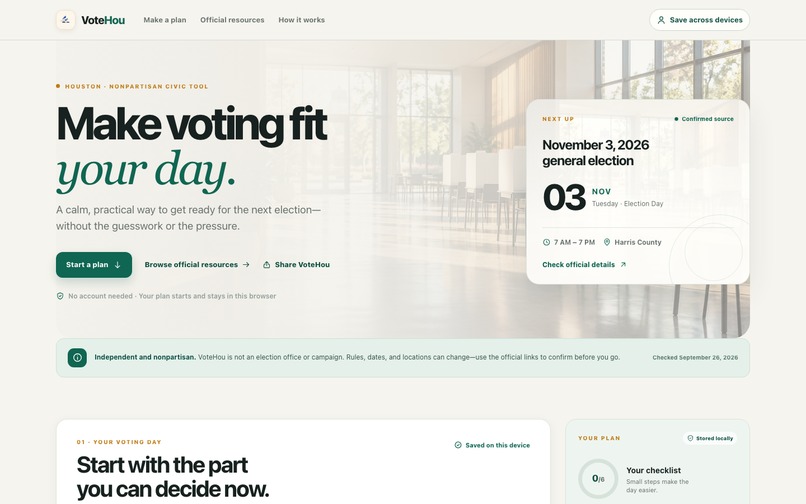
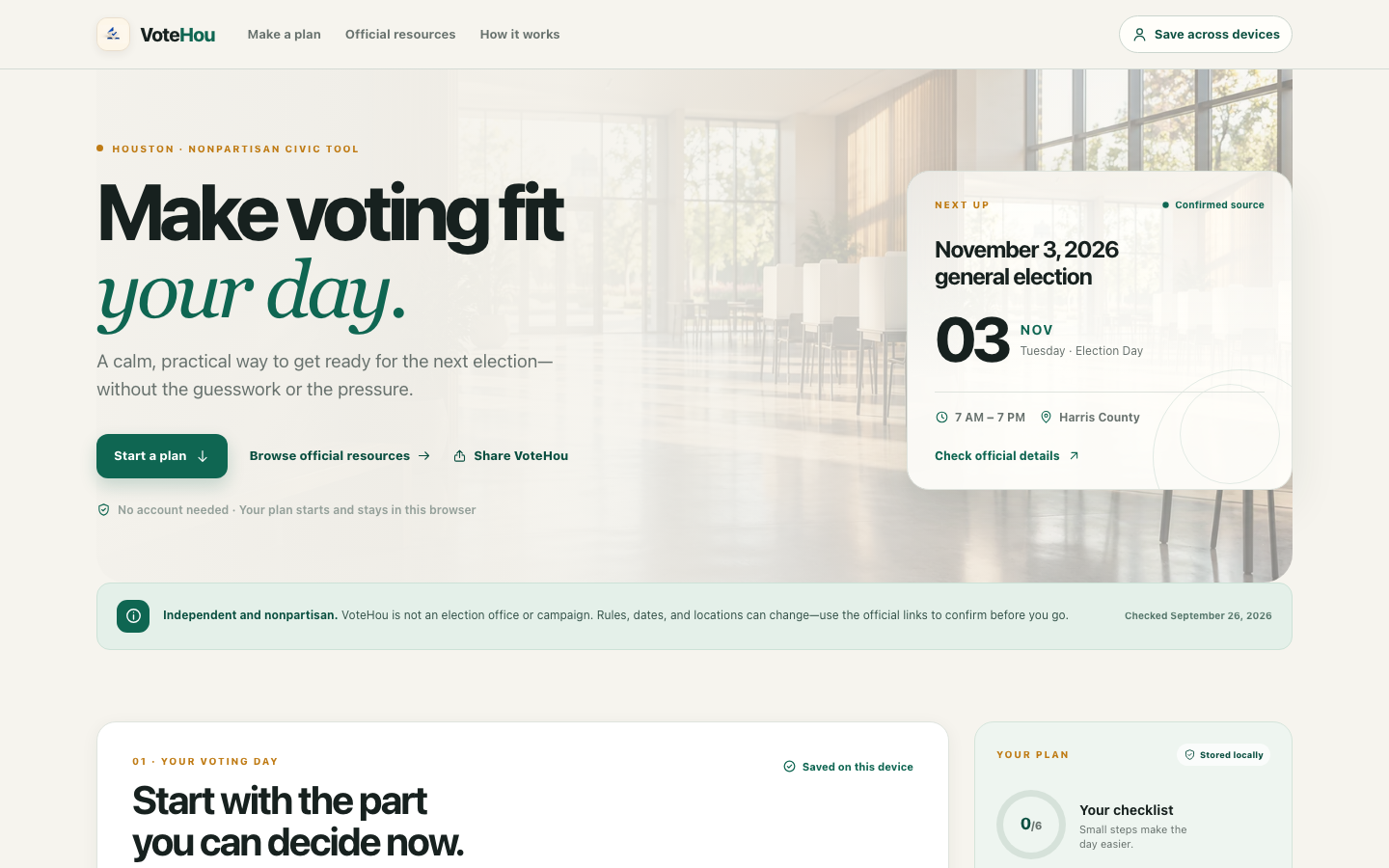
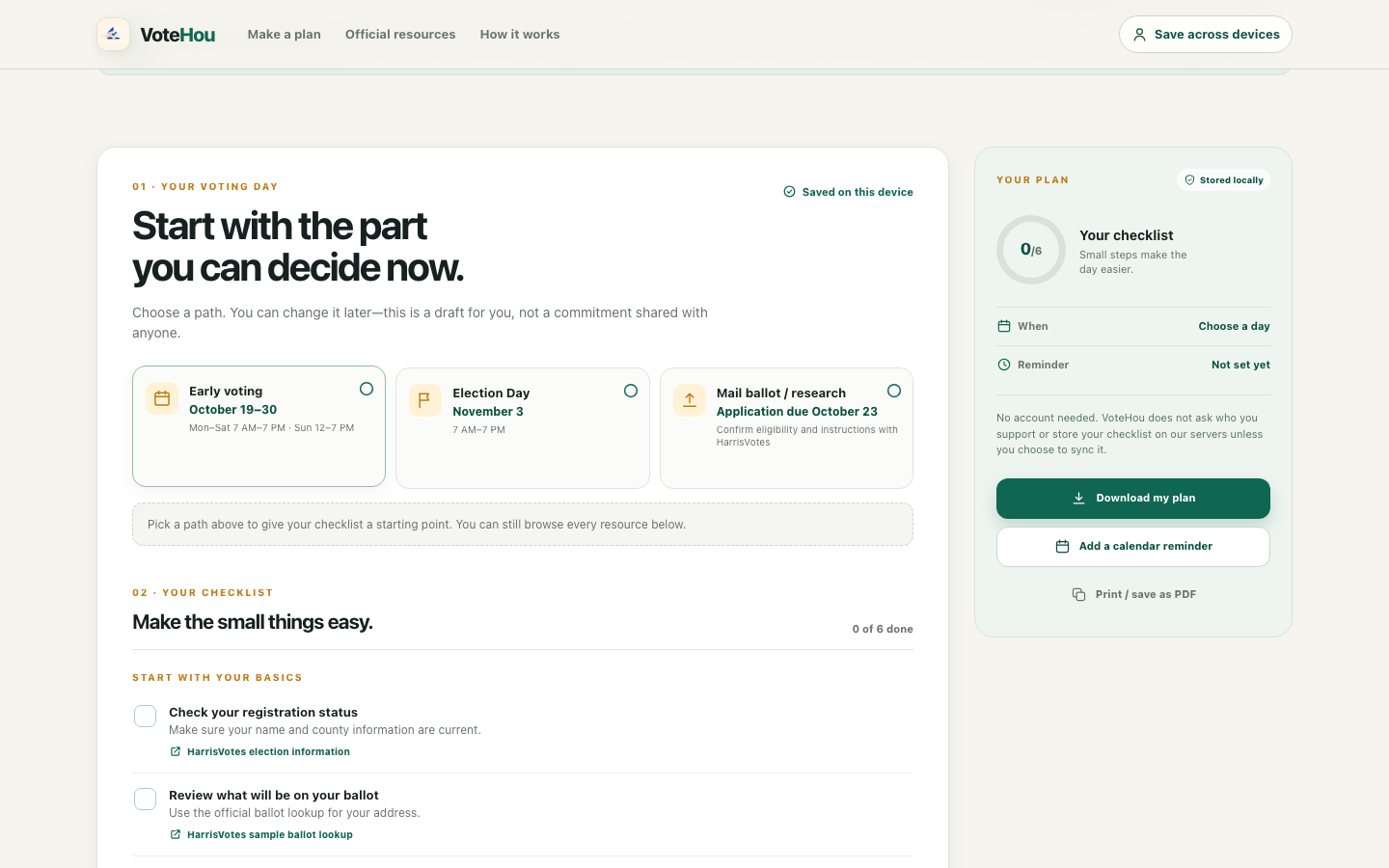
VoteHou: prototype interface and core workflow.
-
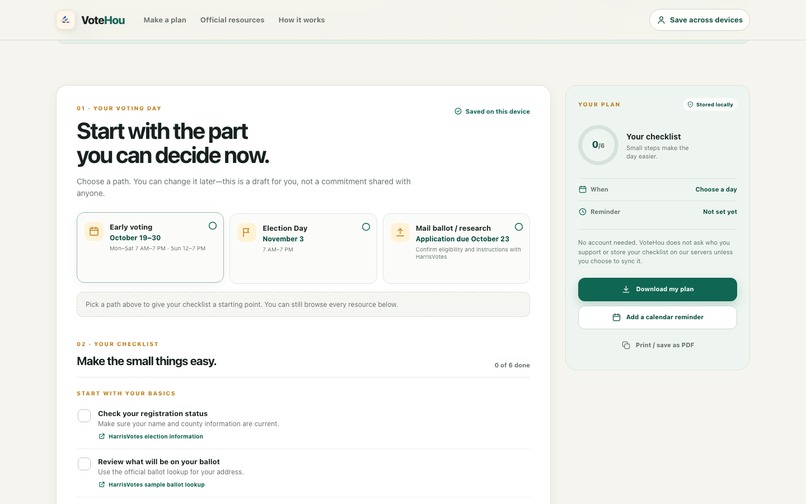
VoteHou: prototype interface and core workflow.
-
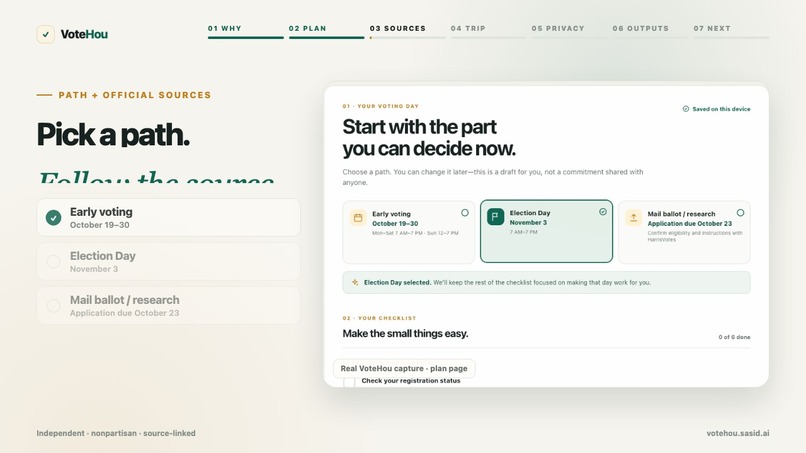
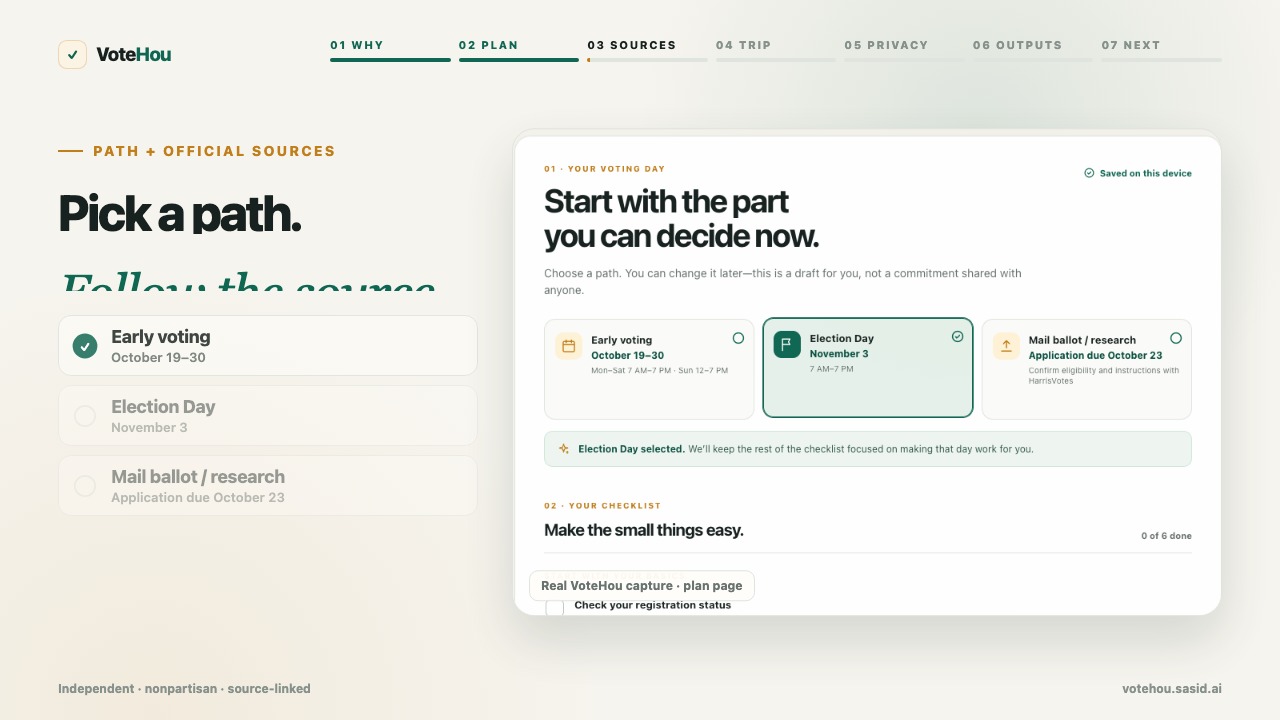
VoteHou: product demo cover.
Inspiration
The voter-participation challenge named voter apathy but left the intervention and success measure open. VoteHou responds to the practical gap between intention and logistics: choosing a path, checking the rules, and remembering the details.
What it does
A user chooses early voting, Election Day, or mail-ballot research, works through a six-step checklist, adds logistics, and exports a local plan, calendar file, print view, or text copy. Links point to HarrisVotes, the Texas Secretary of State, and METRO. The product is independent and nonpartisan and does not ask who someone supports.
How I built it
The app uses Vite and vanilla browser modules with a local-first plan store, an Express and TypeScript API for optional sync, PostgreSQL and Drizzle ORM, Google Identity Services, and date-stamped official-source links. The revised demo is a product composition without public viewer captions or transcript controls.
Challenges
Election information changes and political products can easily imply persuasion. The app is nonpartisan, logistics stay tied to official sources, plans are stored locally by default, and no turnout lift, partnership, endorsement, or completed intervention is claimed.
Accomplishments
VoteHou delivers a working path selector, practical checklist, logistics fields, local outputs, optional sync boundary, and a focused seven-chapter demo and pitch. It turns a broad challenge statement into a testable product workflow without inventing success metrics.
What I learned
Participation barriers are often mundane and specific. A short, source-linked plan can be a better experiment than a broad message about civic duty.
What's next
The next pilot would define its audience, test which barriers block completion, keep each election detail current, and measure a clearly stated process outcome with the appropriate nonpartisan partners.
Explore
Built With
- browser-local-storage
- drizzle-orm
- express.js
- google-identity-services
- icalendar-export
- node.js-22
- postgresql
- typescript
- vanilla-javascript-and-es-modules
- vite

Log in or sign up for Devpost to join the conversation.