Inspiration
Traditional voting systems often face challenges such as lack of transparency, vote tampering, delayed result processing, and centralized control. We aimed to build a secure, scalable, and decentralized digital voting platform using blockchain technology to ensure transparency, data integrity, authentication, and immutable election records.
Vote integrity in VoteChain is supported through blockchain cryptographic verification:
$$ Hash(Block_n) = SHA256(Data + PreviousHash) $$
This mechanism ensures tamper-proof vote storage and secure transaction validation.
What it does
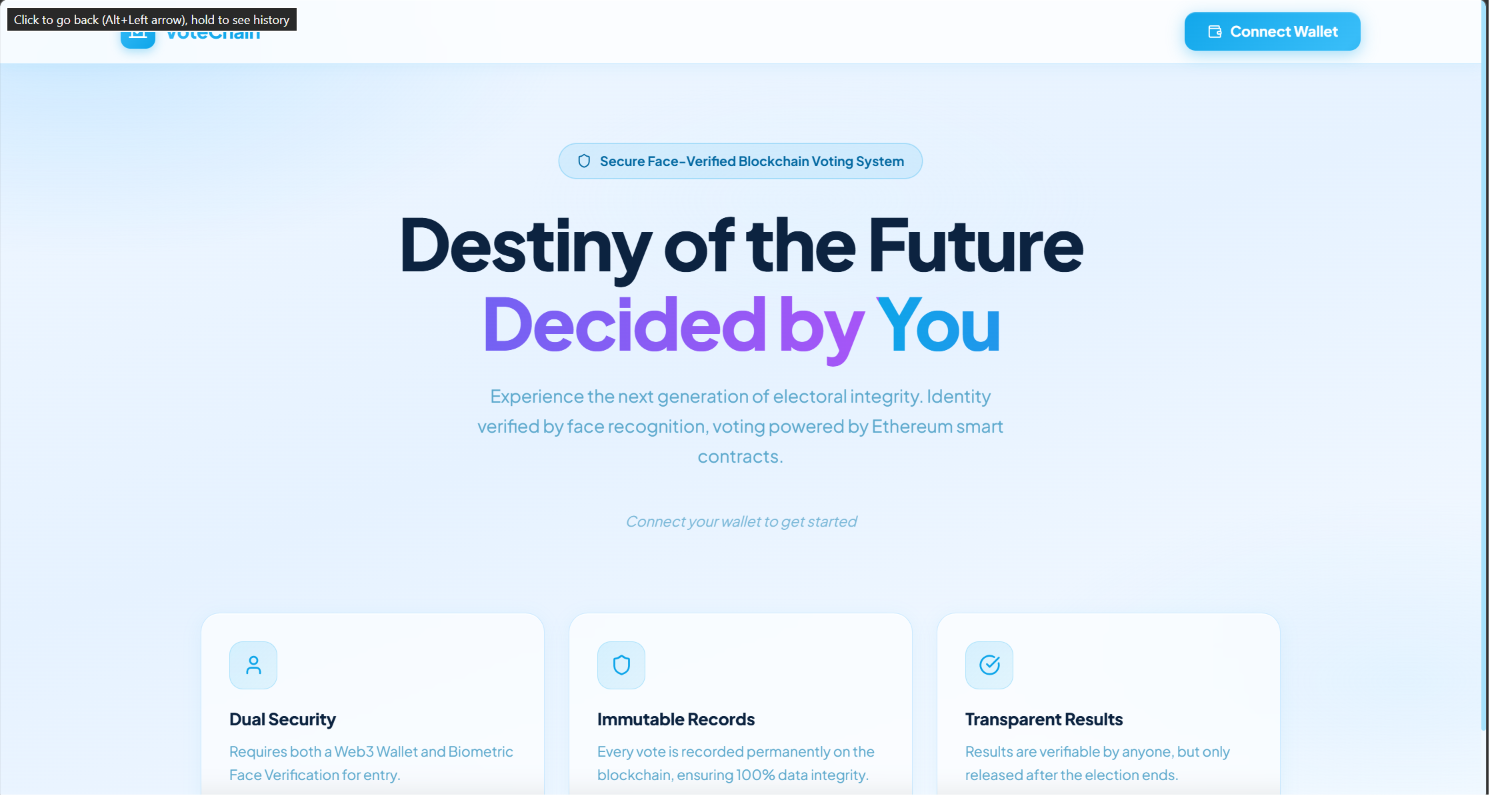
VoteChain is a decentralized blockchain-powered voting platform that enables users to securely participate in online elections. The application provides secure user authentication, smart contract-based voting, real-time vote tracking, transparent result management, and immutable blockchain record storage.
The system validates votes using decentralized consensus and verification mechanisms:
$$ V_{total} = \sum_{i=1}^{n} VerifiedVote_i $$
Key features include:
- Blockchain-based vote verification
- Secure authentication and authorization
- Real-time election monitoring
- Smart contract integration
- Responsive and scalable web application architecture
How we built it
We developed the frontend using React.js, Vite, and Tailwind CSS to create a responsive and modern user experience. The backend infrastructure was built using Node.js, Express.js, and MongoDB for API management, authentication, and election data handling.
Blockchain functionality was implemented using Solidity smart contracts and Web3 wallet integration for decentralized vote storage and transaction verification. The application was deployed using Render for backend hosting and Vercel for frontend deployment.
Tech Stack:
- React.js
- Vite
- Tailwind CSS
- Node.js
- Express.js
- MongoDB
- Solidity
- Web3
- Smart Contracts
- Render
- Vercel
Challenges we ran into
- Integrating blockchain smart contracts with frontend APIs
- Managing secure authentication and wallet connectivity
- Configuring CORS policies and deployment workflows
- Handling environment variables and secret management securely
- Synchronizing blockchain transactions with backend services
- Debugging decentralized application (DApp) interactions
- Managing full-stack deployment and production configuration
Accomplishments that we're proud of
- Successfully developed a fully functional decentralized voting application
- Implemented blockchain-based vote verification and transparency
- Built secure authentication and real-time election tracking
- Integrated smart contracts and Web3 wallet connectivity
- Deployed a scalable full-stack application using modern cloud platforms
- Applied blockchain, backend, and frontend engineering concepts in a real-world project
What we learned
Through VoteChain, we gained hands-on experience in:
- Blockchain application development
- Smart contract engineering
- Full-stack web development
- REST API development and integration
- Secure authentication workflows
- Cloud deployment and DevOps fundamentals
- Environment variable and secret management
- Decentralized application (DApp) architecture
The project also improved our debugging, problem-solving, system design, and collaborative development skills.
What's next for VoteChain
Future enhancements planned for VoteChain include:
- Aadhaar-based identity verification
- Multi-election and multi-admin support
- Advanced analytics and reporting dashboard
- Gas fee optimization for smart contracts
- Improved scalability and cybersecurity measures
- AI-powered fraud detection mechanisms
- Progressive Web App (PWA) support
- Mobile application integration
Built With
- apis
- authentication
- blockchain
- contracts
- cors
- css
- environment
- ethereum
- express.js
- git
- github
- integration
- javascript
- jwt
- mongodb
- node.js
- react.js
- render
- rest
- smart
- solidity
- tailwind
- technology
- variables
- vercel
- vite
- wallet
- web3.js

Log in or sign up for Devpost to join the conversation.