-
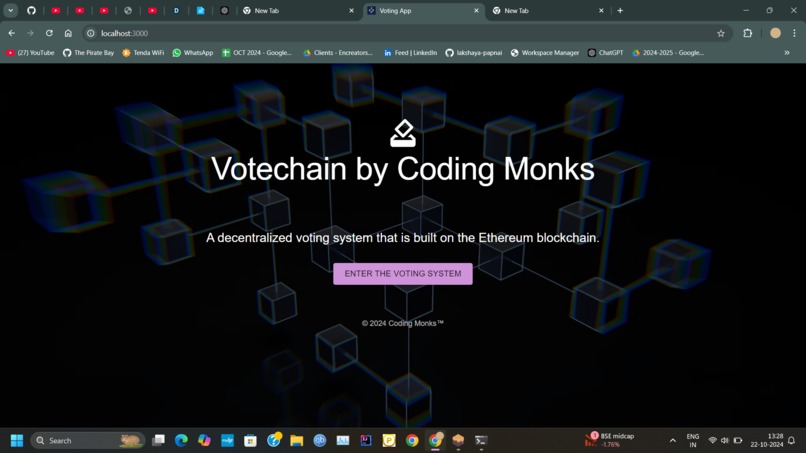
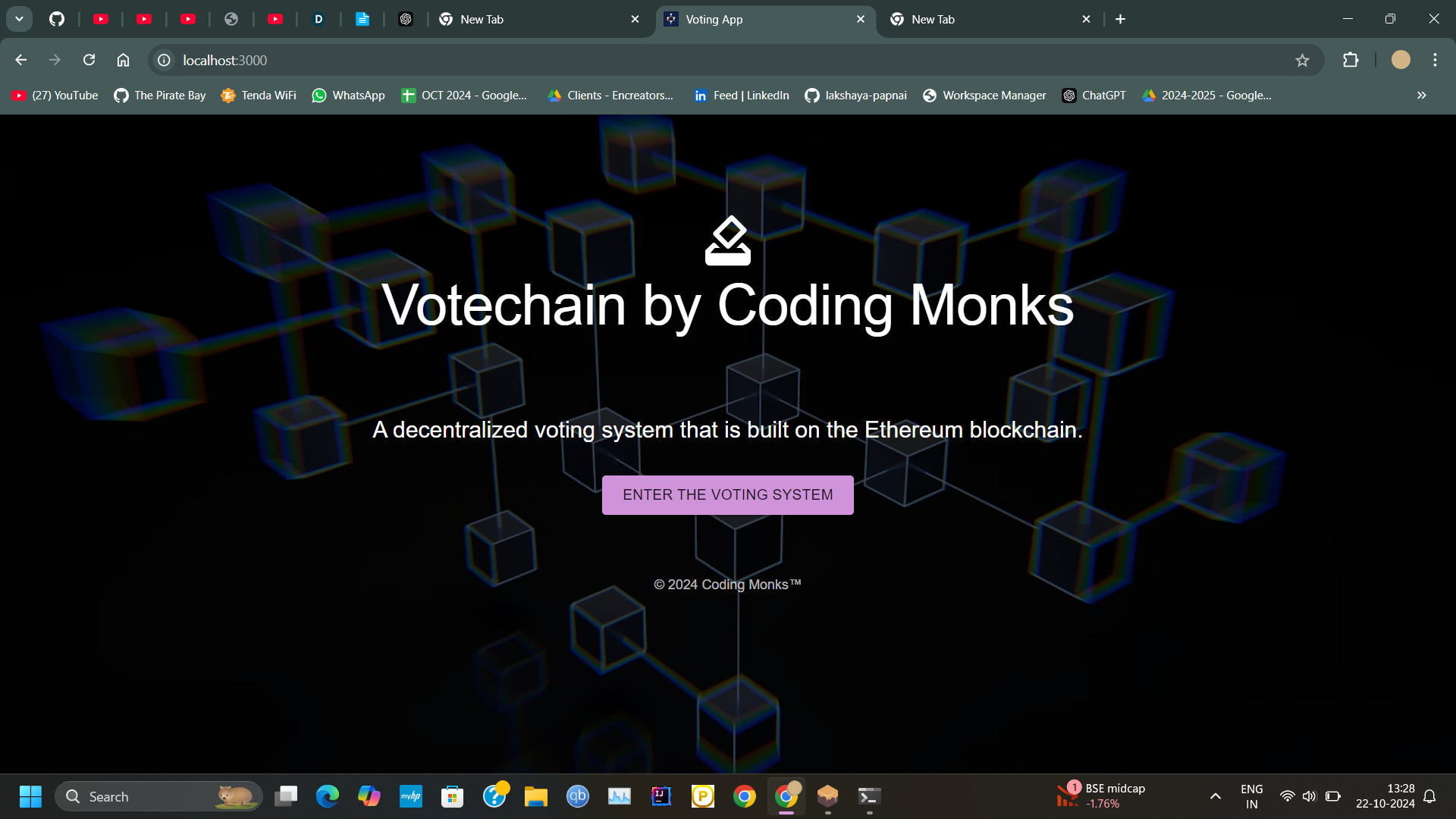
Home Page
-
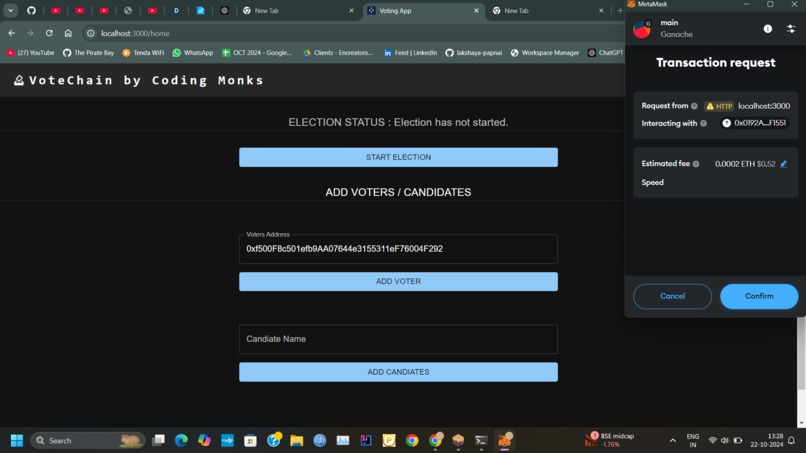
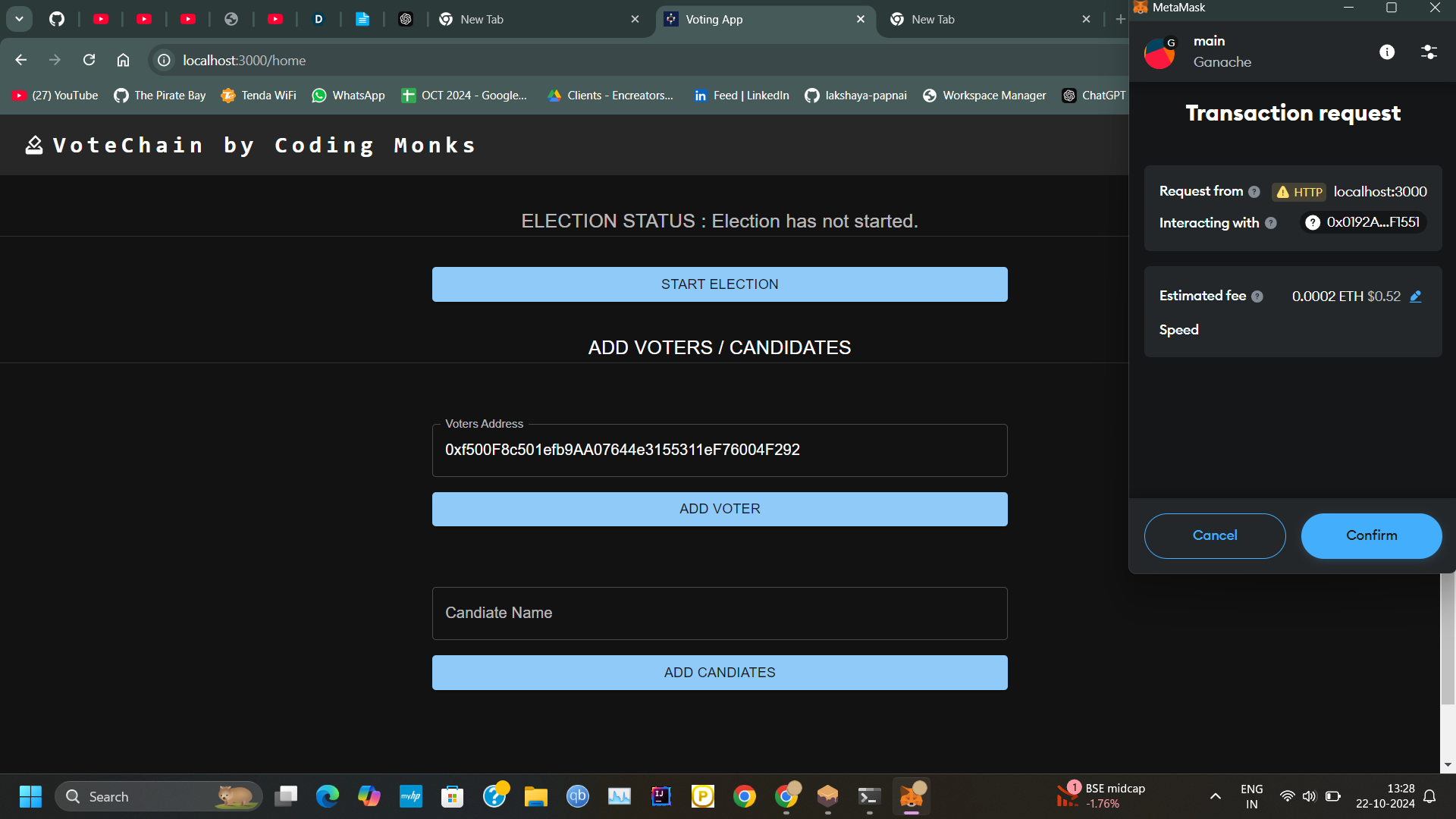
Registering Voter
Inspiration
The inspiration for VoteChain came from the growing need for transparency and trust in the voting process. With increasing concerns about election integrity, I wanted to create a solution that empowers individuals to participate securely in democratic processes. By leveraging blockchain technology, I aimed to build a system that ensures every vote is counted and protected from tampering.
What I Learned
Throughout the development of VoteChain , I learned several key concepts:
- Blockchain Fundamentals: Gained a solid understanding of how blockchain works and its potential applications in voting.
- Smart Contract Development: Learned how to write smart contracts to handle voting logic and securely record votes on the blockchain.
- User Experience Design: Realized the importance of creating an intuitive interface that makes voting accessible to all users, regardless of their technical background.
- Testing and Security: Understood the significance of thorough testing to ensure the DApp’s security and functionality.
How I Built the Project
-1. Technology Stack
- Chose the Etherkink blockchain for its beginner-friendly documentation and robust security features.
- Used HTML, CSS, and JavaScript for front-end development, creating a responsive and simple interface.
-2. Smart Contract Development
- Developed a smart contract to manage the voting process, allowing users to cast votes and retrieve results.
-3. User Interface
- Designed a clean, minimalistic interface where users can easily register, vote, and view results.
-4. Testing
- Conducted extensive testing to ensure the application was user-friendly and secure, addressing any bugs or issues encountered during development.
Challenges Faced
- Understanding Blockchain Concepts: Initially, grasping the technical aspects of blockchain and smart contracts was challenging. However, through research and experimentation, I gained confidence.
- Security Concerns: Ensuring the security of the voting process was a priority. I had to stay updated on best practices for secure smart contract development.
- User Experience: Balancing functionality and simplicity in the user interface proved challenging. Feedback from potential users helped refine the design to make it more intuitive.
Conclusion
VoteChain represents not just a voting application, but a step toward enhancing democratic processes through technology. This project has deepened my understanding of blockchain and reinforced my passion for creating accessible solutions. I look forward to continuing to improve VoteChain and exploring further innovations in decentralized applications.


Log in or sign up for Devpost to join the conversation.