Inspiration
Supply chains break during bad weather. Not because nobody saw the storm coming — but because the people who needed to act on it never got the memo in time. Forecasts live in one place, supplier contacts in another, and ops teams are stuck in the middle playing phone tag. We wanted to close that gap.
What it does
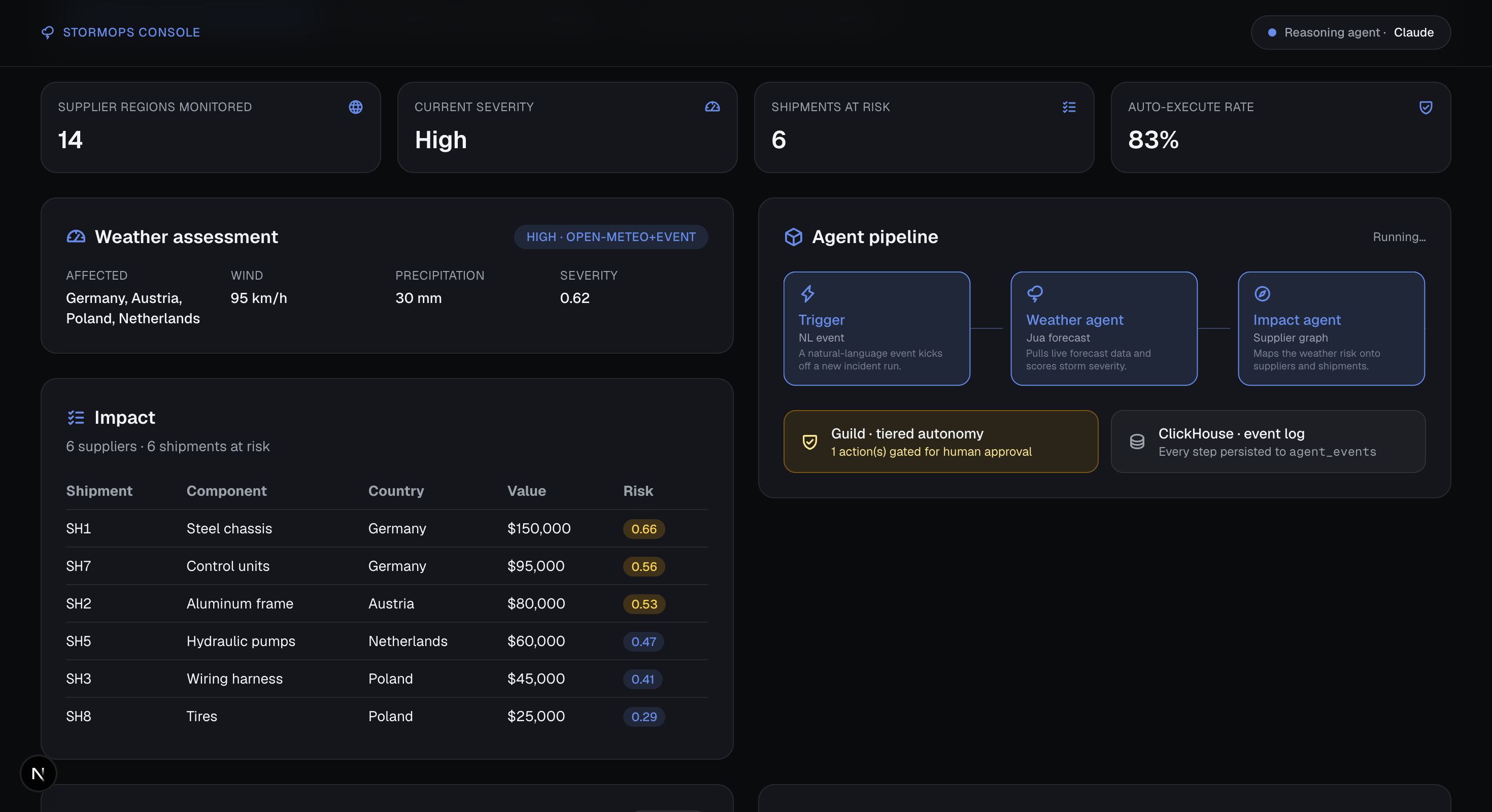
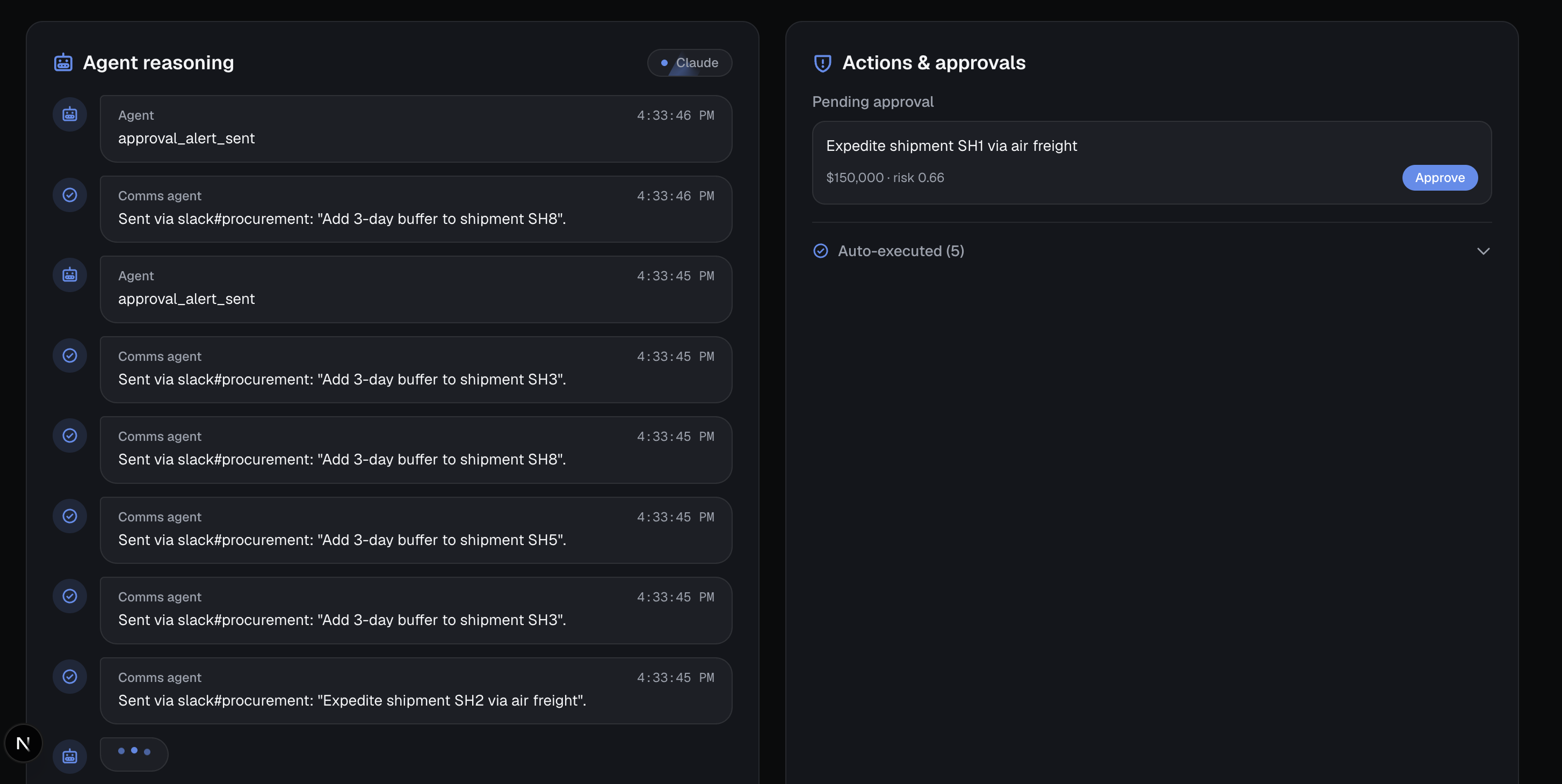
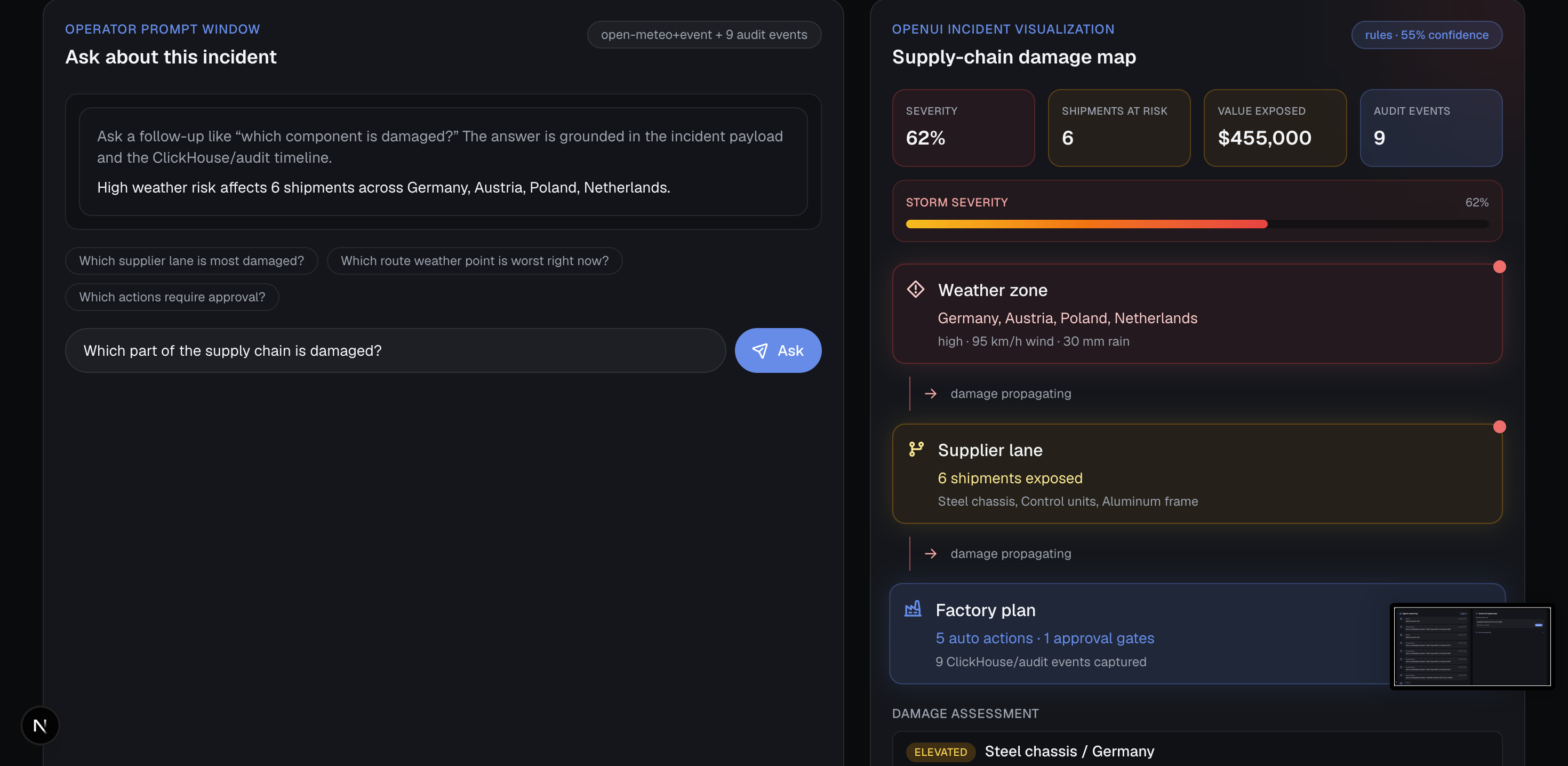
Vortex takes a hypothetical route or weather event, scans up to 10 coordinate points along that route using real atmospheric forecast data, and flags dangerous conditions — high winds, heavy precipitation, freezing temperatures. For every flagged segment it generates a contingency plan, recalculates ETA with delay multipliers by severity, and drafts supplier alerts ready to fire via Slack. A human reviews and approves before anything sends.
How we built it
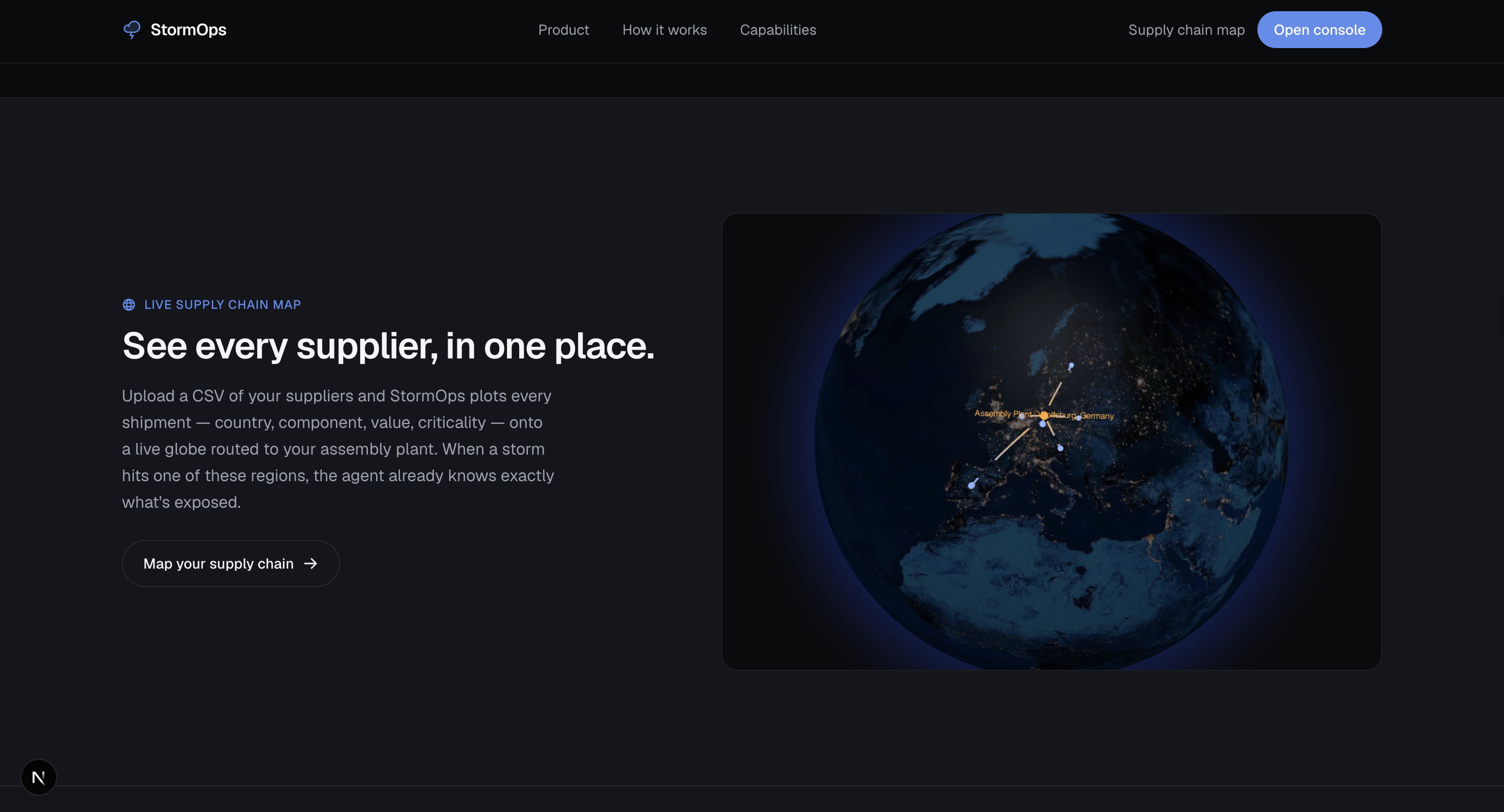
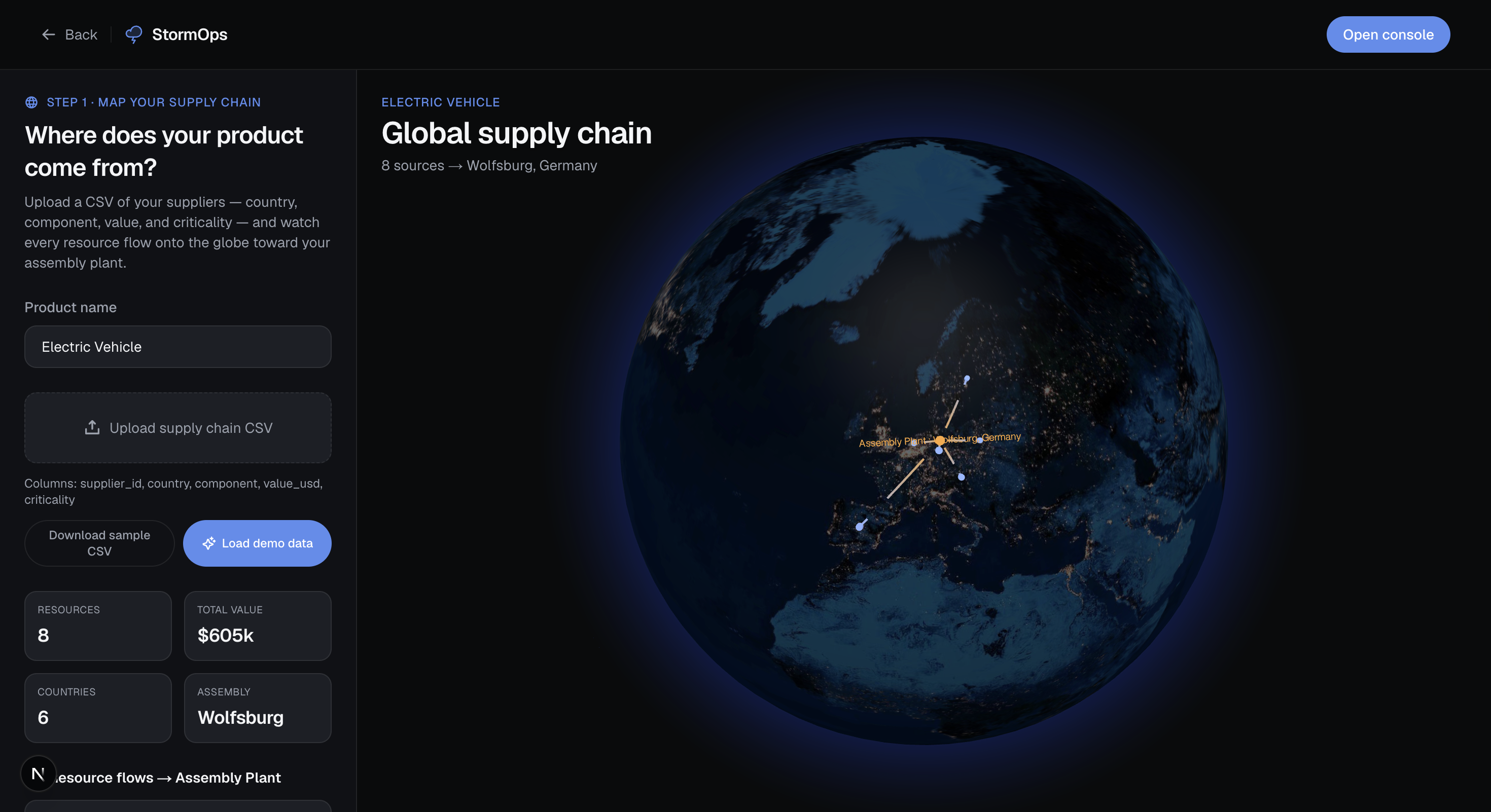
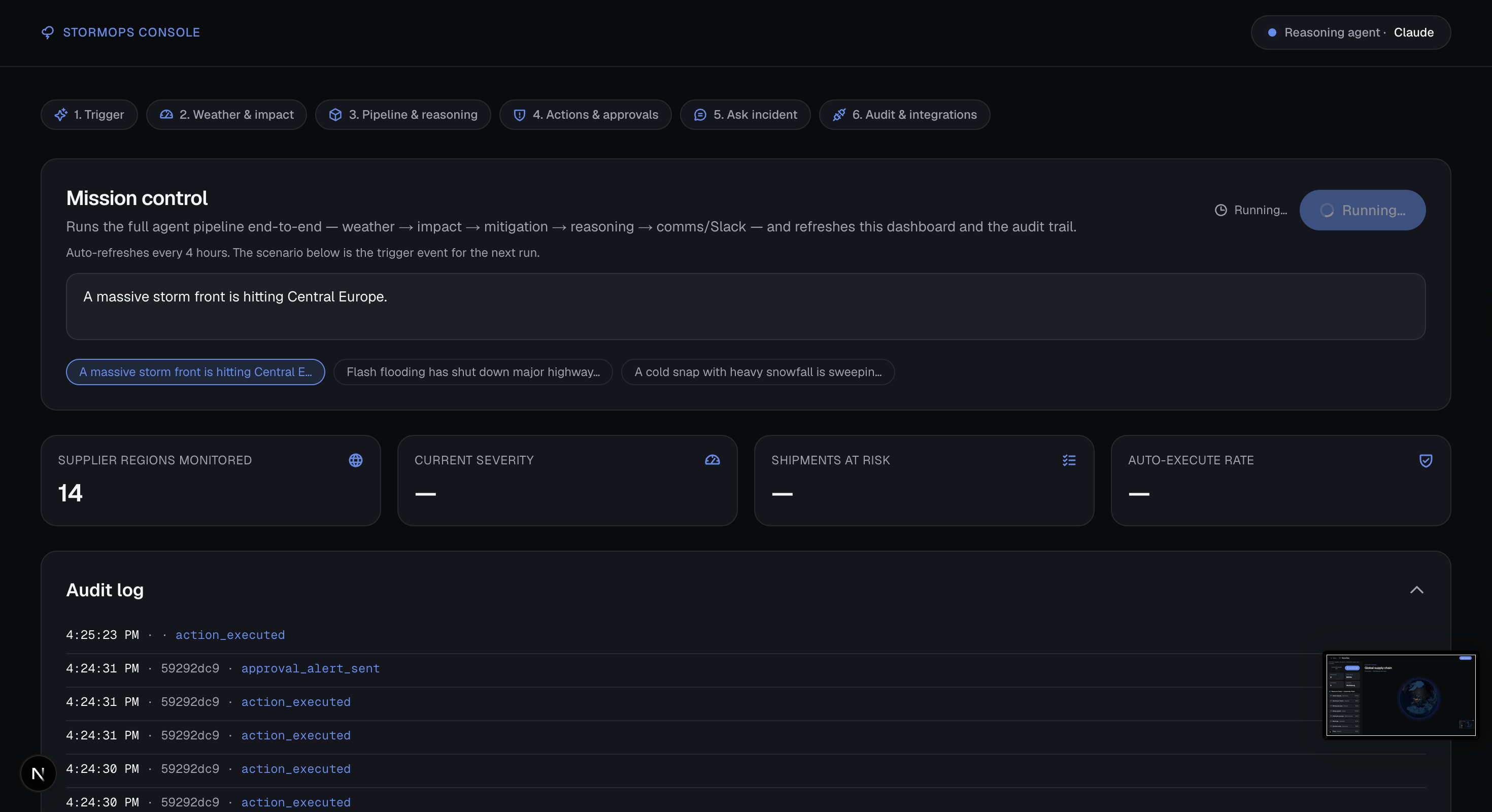
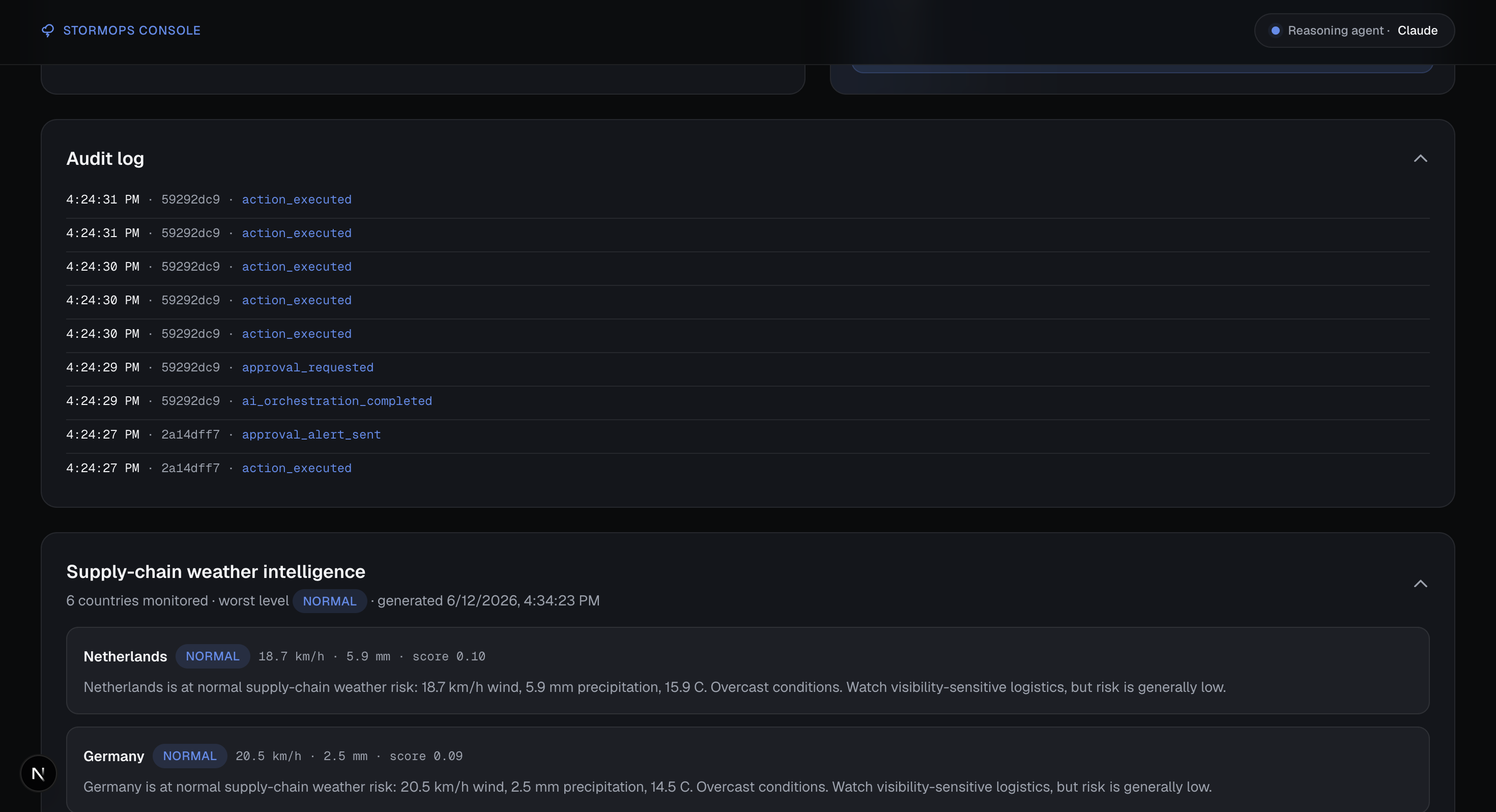
FastAPI backend, Next.js frontend deployed on Render. Weather data comes from Open-Meteo — no API key, no friction, just coordinates in and forecasts out. Claude handles the reasoning layer: extracting coordinates from natural language, evaluating conditions against thresholds, drafting alerts, and powering the in-app chatbot that explains pending approvals in plain English. Alerts get sent via Slack. Every action gets logged and surfaced in a collapsible audit trail on the dashboard. The whole thing lives on one page — supply weather, pipeline, agent reasoning, actions, and approvals all visible at once.
Challenges we ran into
We started with Jua AI as our weather provider, got deep into the SDK integration, then had to swap to Open-Meteo mid-hackathon when access became uncertain. The interface contract we'd designed saved us — same function signatures, different internals, fifteen minute swap. Python version conflicts between miniforge and Homebrew also cost us more time than we'd like to admit.
Accomplishments that we're proud of
Shipping a genuinely useful end-to-end agent loop in five hours. The route scanner is real — it makes live API calls, evaluates real atmospheric data, and produces actionable output. The human-in-the-loop approval step felt important to get right and we did. The single-page dashboard layout came together better than expected.
What we learned
Design the interface contract before you write a single line of implementation. Swapping providers hurt zero percent as much as it should have because we did this. Also: scope is everything at a hackathon. We cut Composio, TrueFoundry, and Guild AI from the live build and the project was stronger for it.
What's next for Vortex StormOps
Real-time route monitoring with push alerts rather than on-demand scans. Tighter ETA modeling that accounts for road conditions alongside weather. Integration with actual logistics APIs so supplier data is live rather than mocked. And properly plugging in Jua's EPT-2 model for forecast accuracy that Open-Meteo can't match on edge cases.
Built With
- airbyte
- clickhouse
- fastapi
- openmeteo
- python
- render


Log in or sign up for Devpost to join the conversation.