-
-
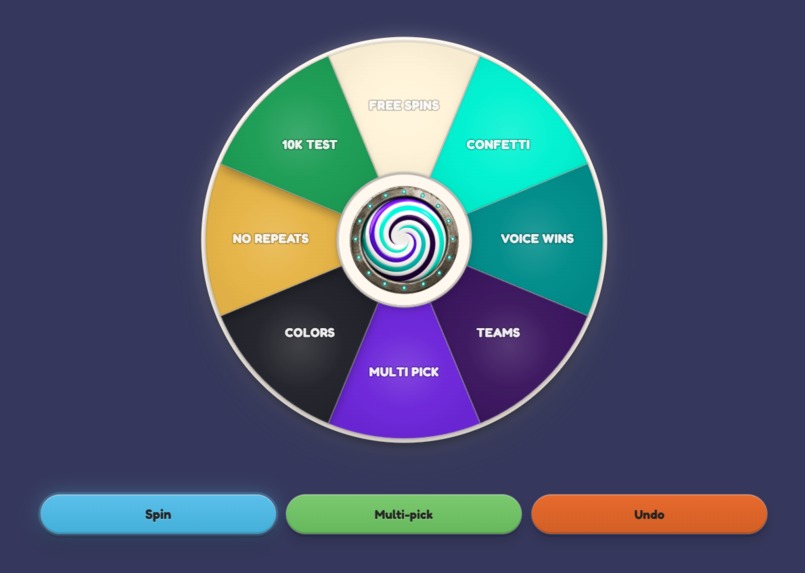
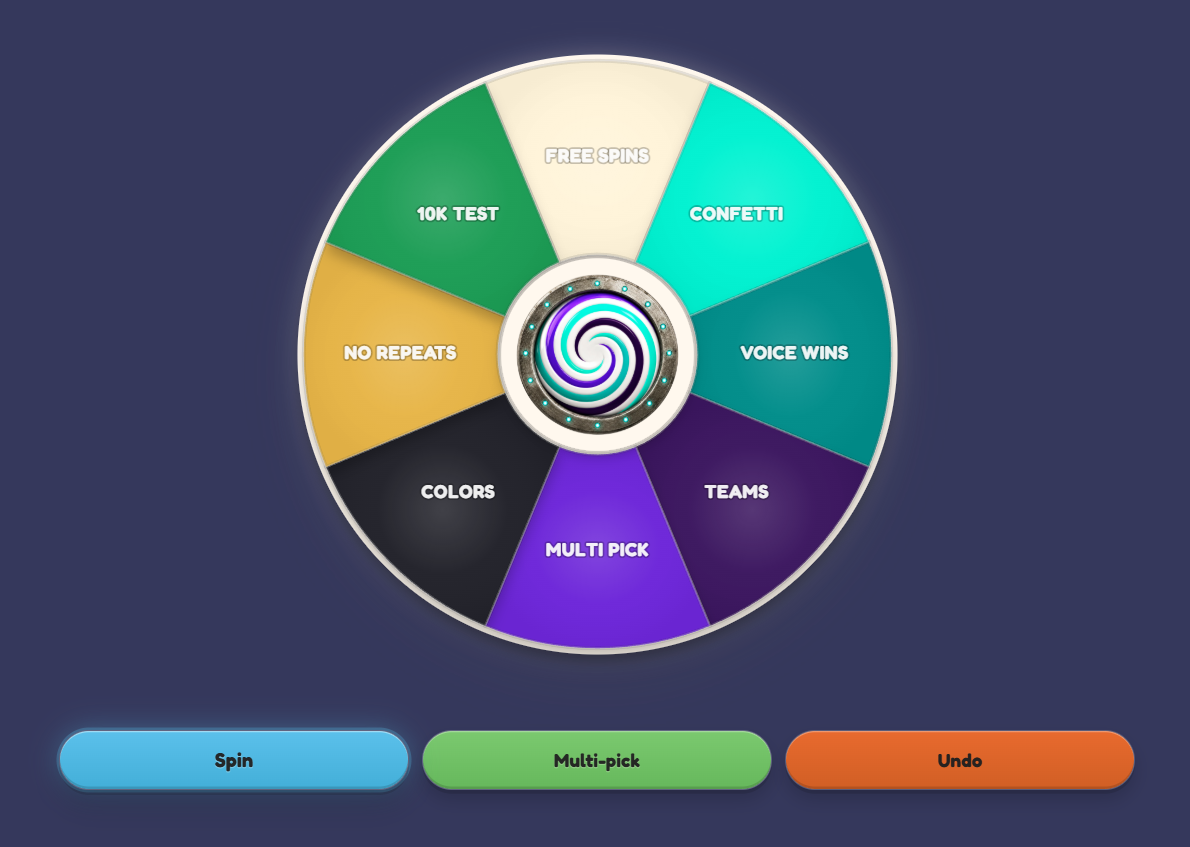
A feature-packed wheel with free spins, multi-pick, undo, voice wins, confetti, team tools, color controls, and fairness testing.
-
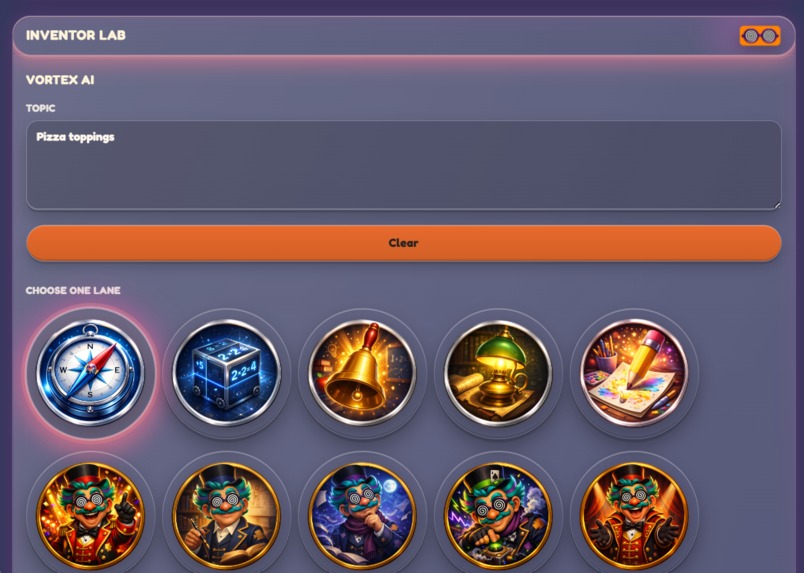
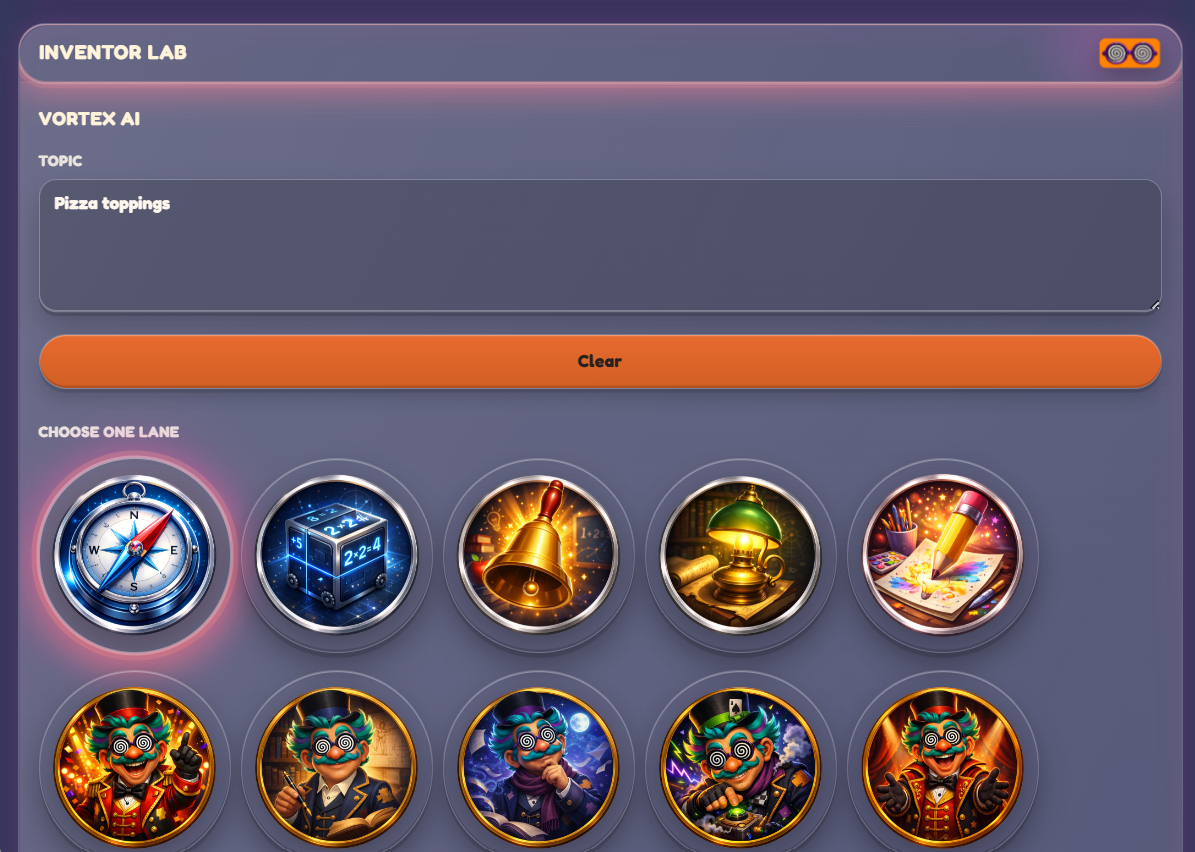
Vortex AI lets users choose a purpose and personality, then turns a simple topic into a custom wheel ready to spin.
-
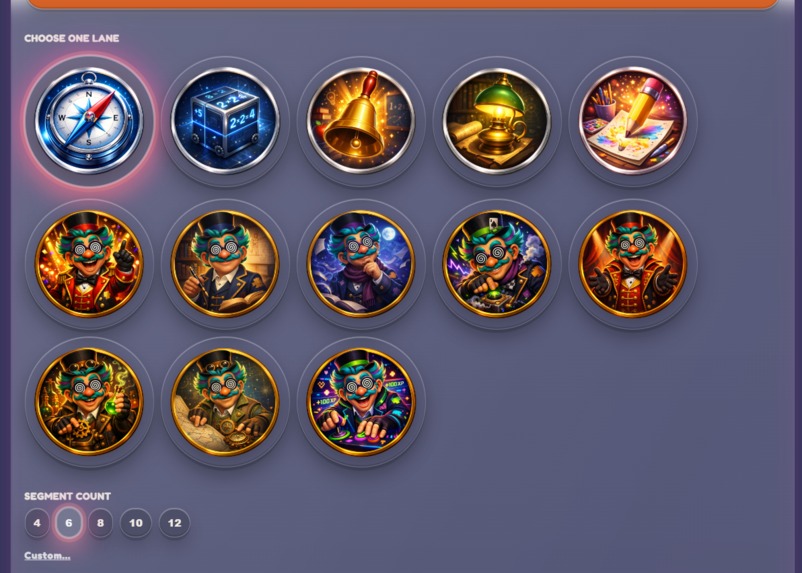
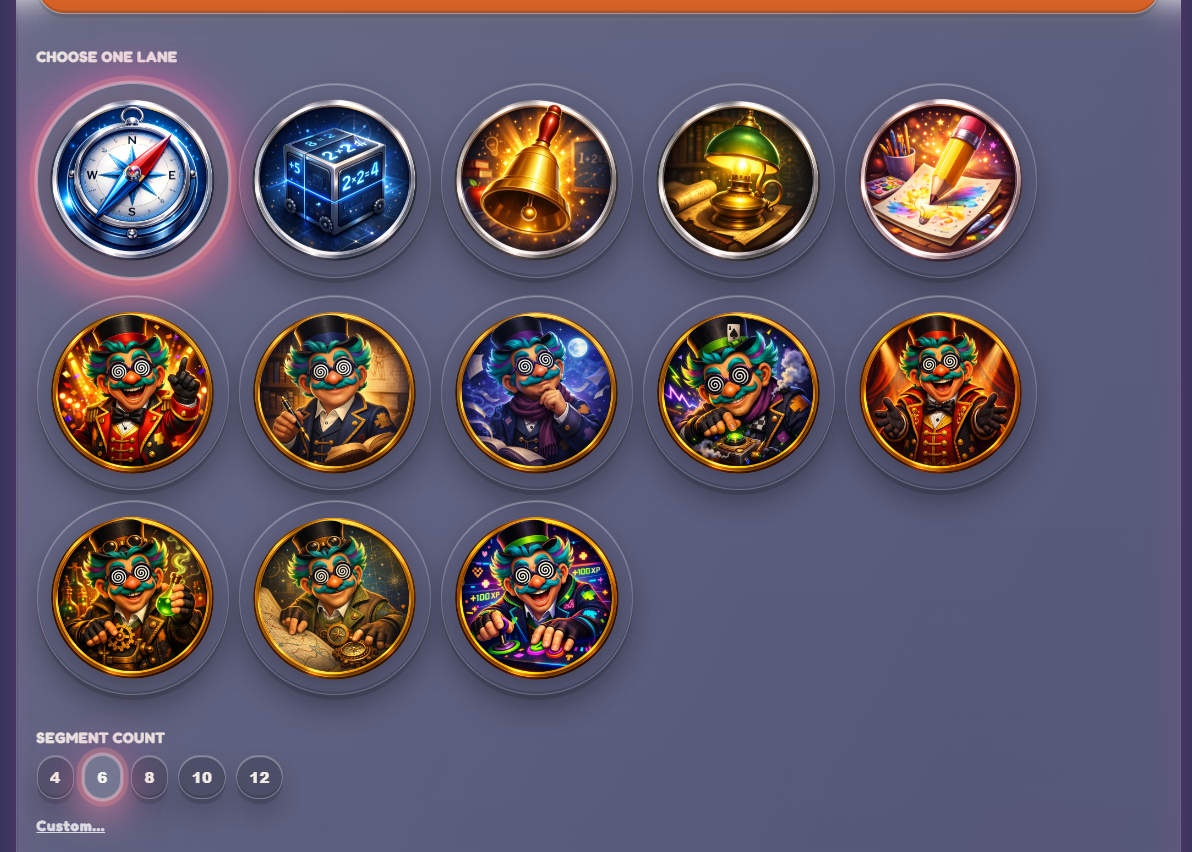
Choose a purpose, personality, and segment count so Vortex AI can shape each wheel for the exact audience, activity, or mood.
-
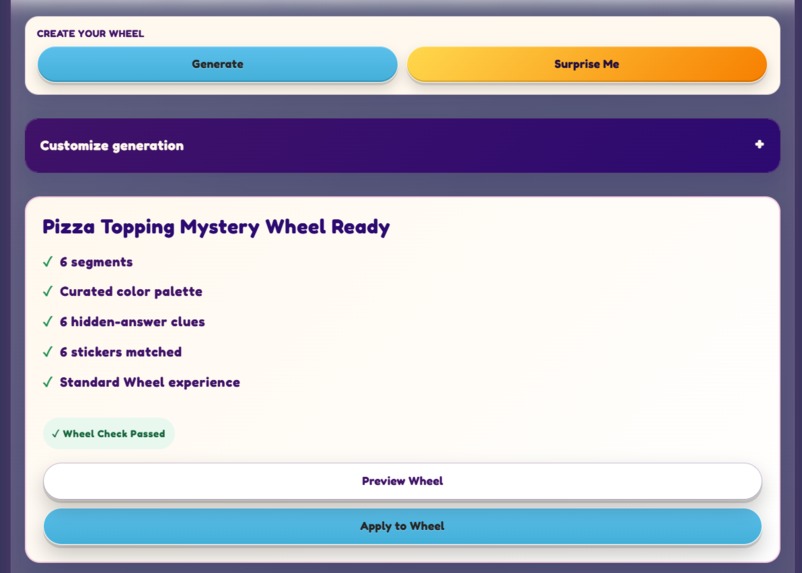
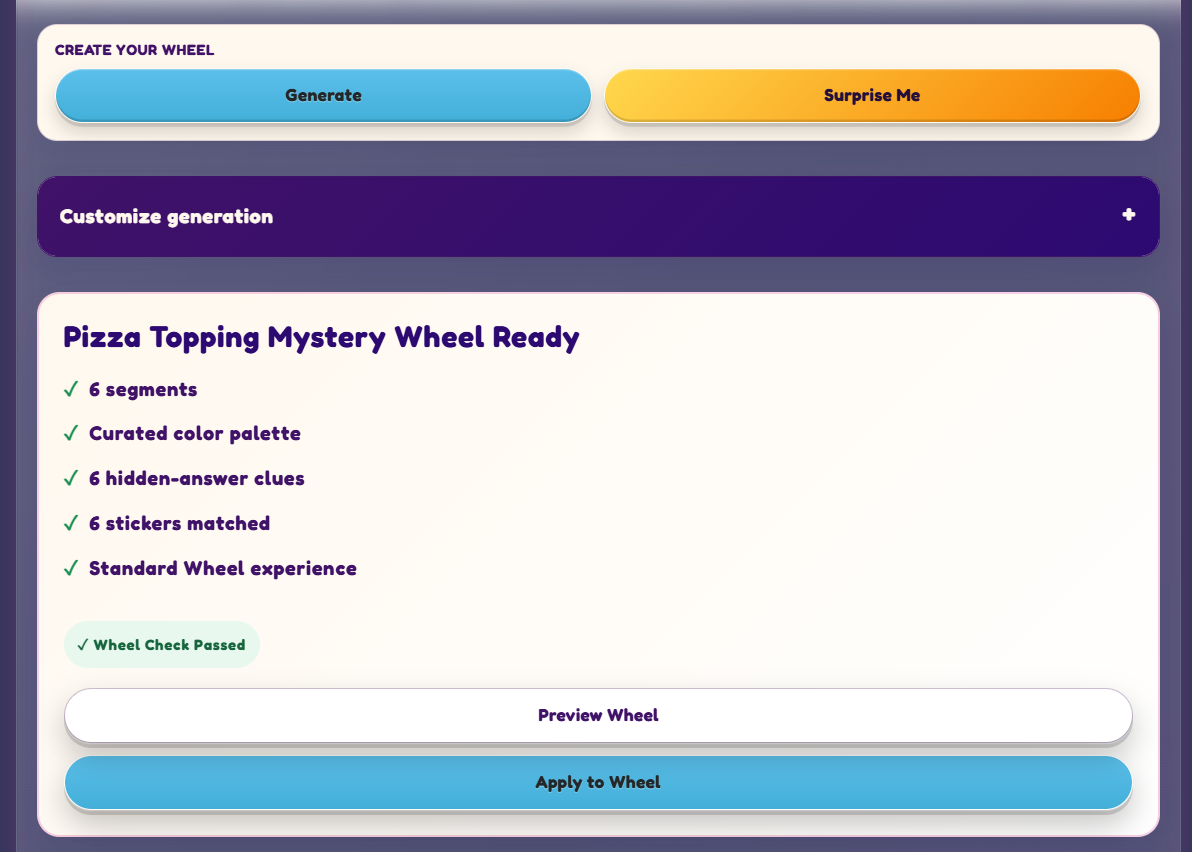
Vortex AI checks every generated wheel, matches colors and stickers, builds hidden-answer clues, and lets users preview before applying.
-
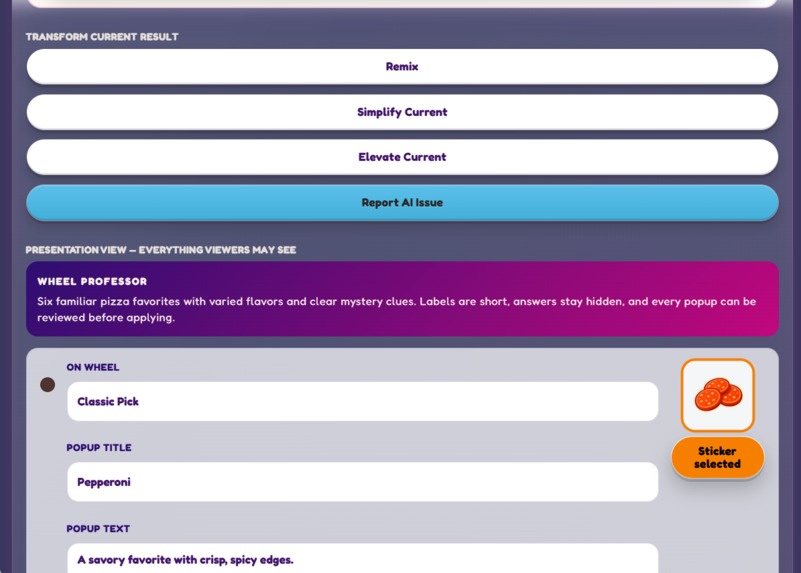
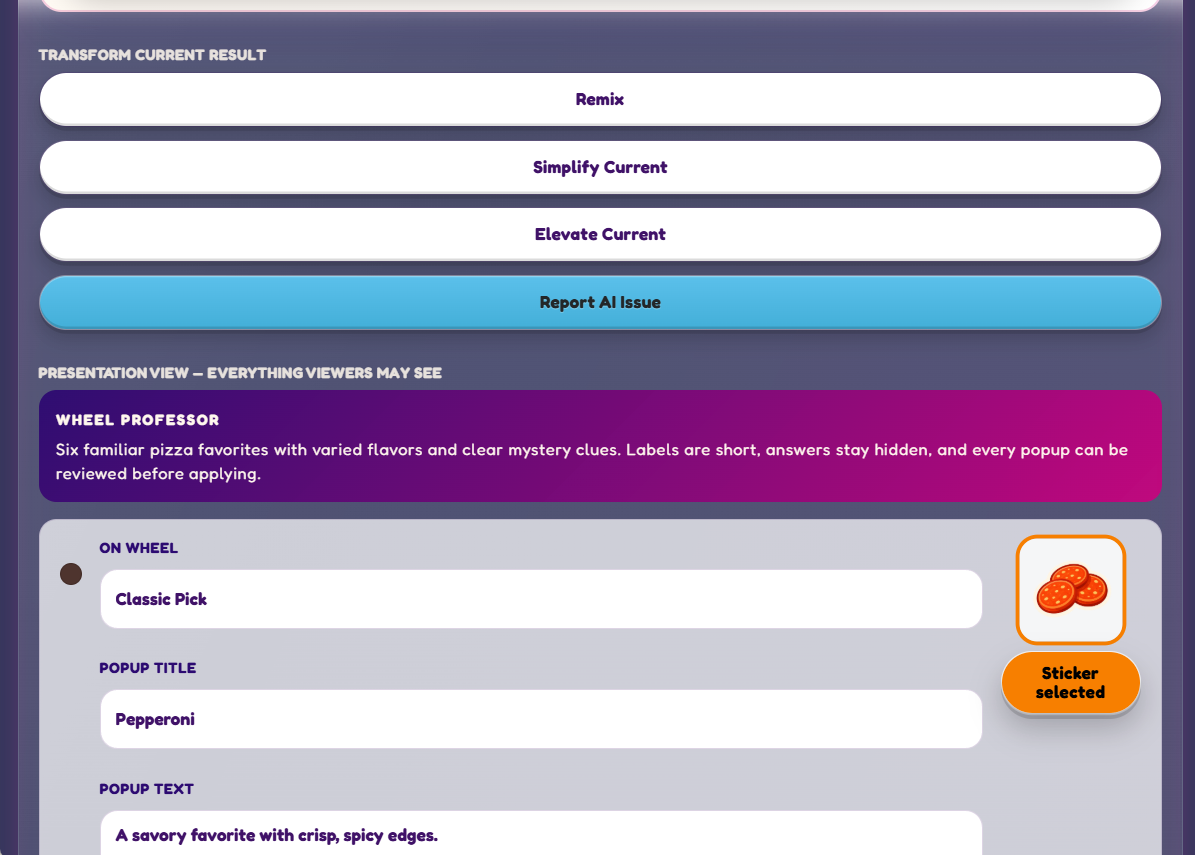
Remix, simplify, or elevate any result, then review wheel labels, popup text, and matched stickers before presenting it.
-
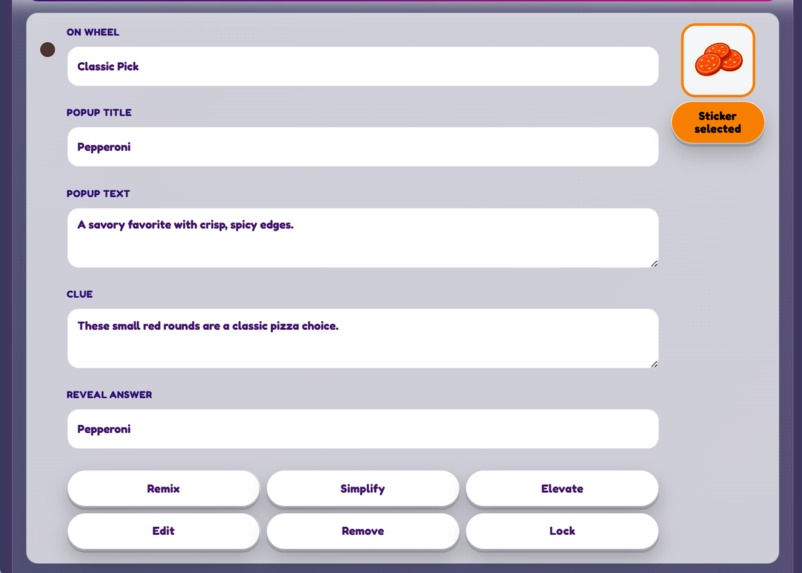
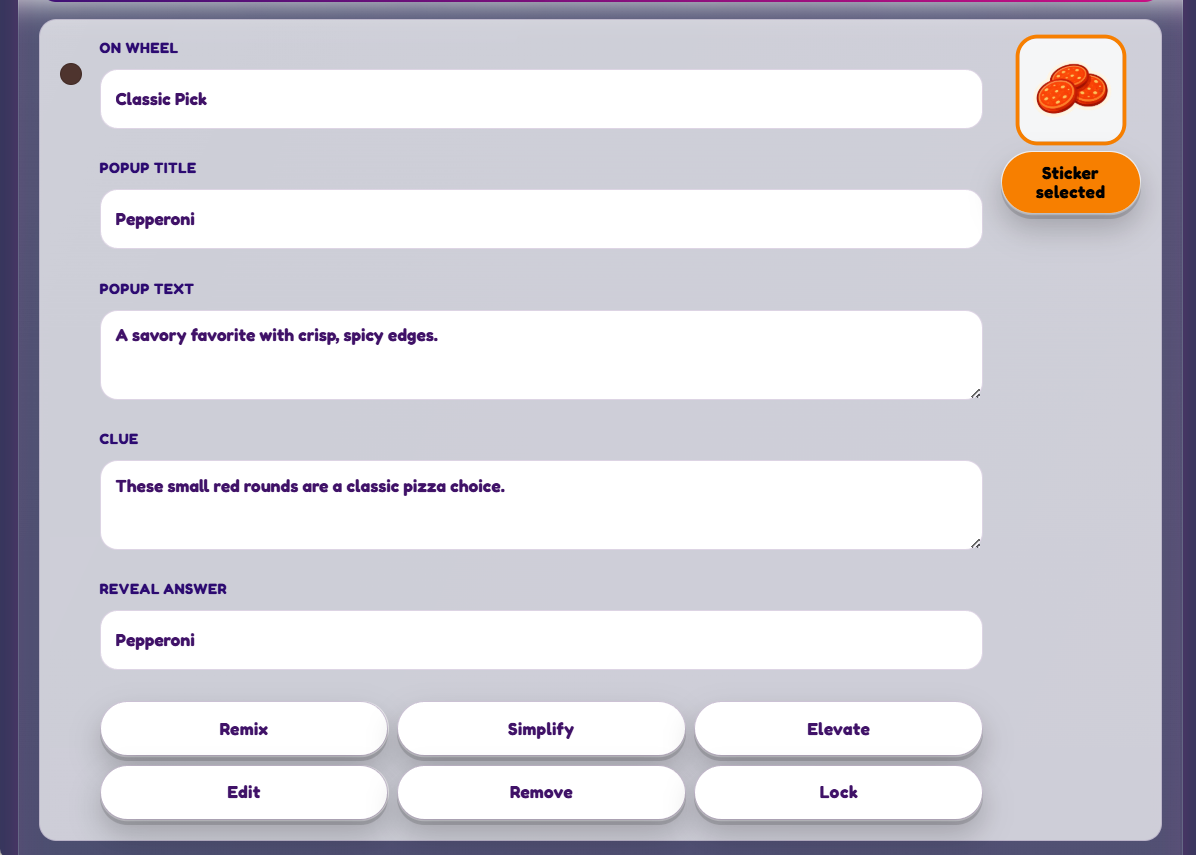
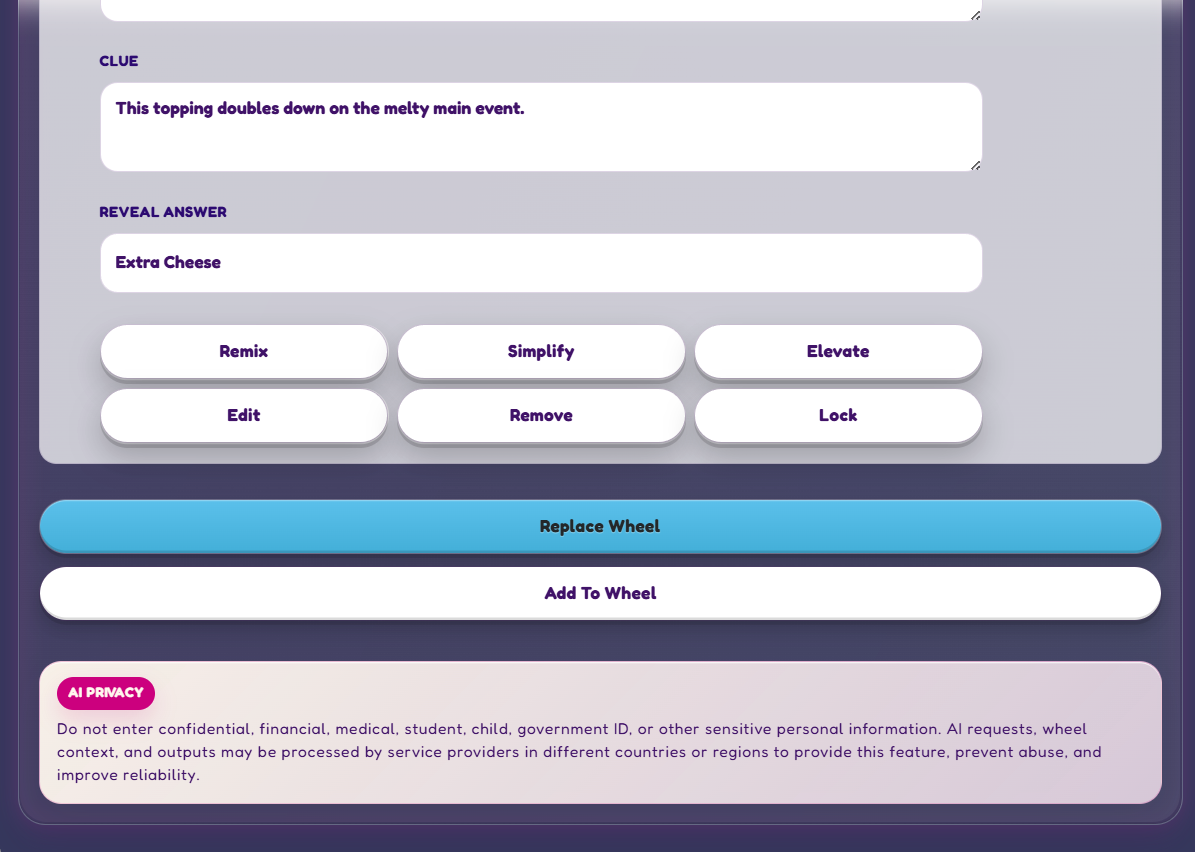
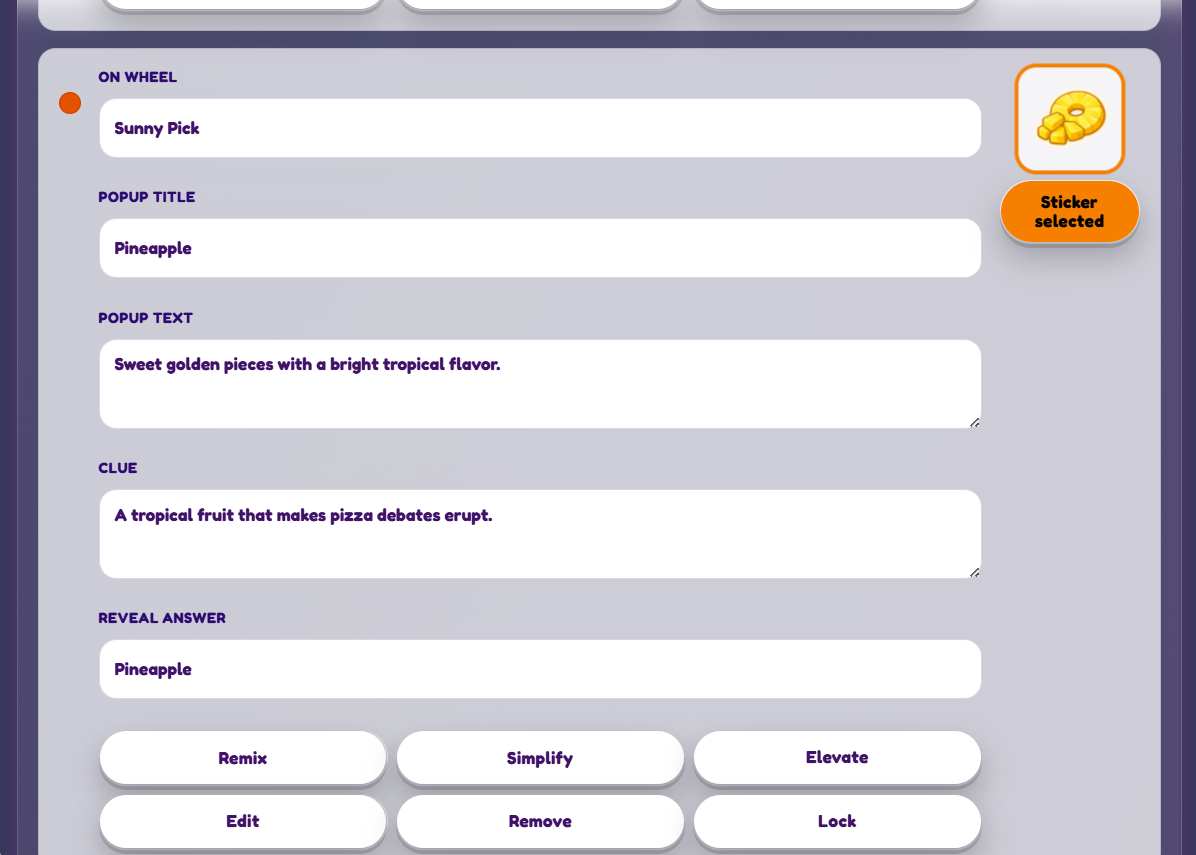
Review and fine-tune every result with editable labels, popup text, clues, answers, stickers, and controls to remix, remove, or lock.
-
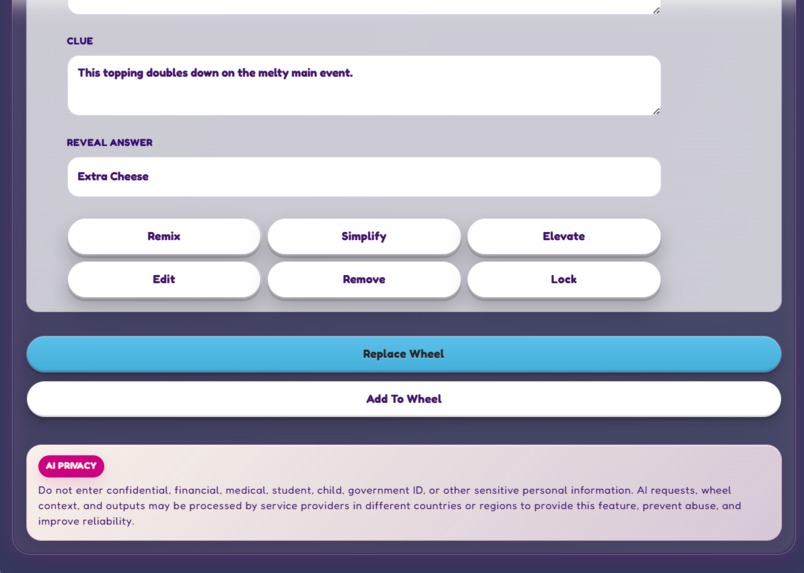
Replace or add generated results to the wheel, with clear AI privacy guidance built directly into the creation experience.
-
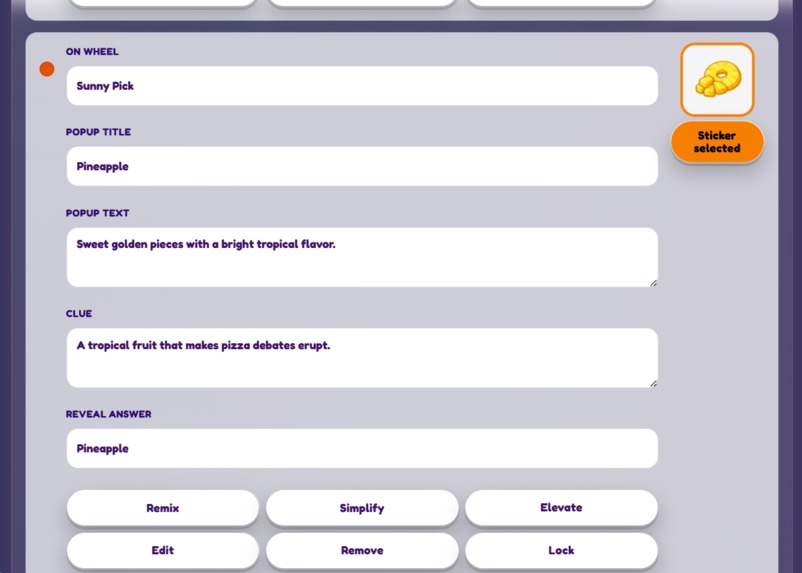
Each segment includes a custom label, winner message, clue, reveal answer, and matched sticker, with controls to edit or transform it.
-
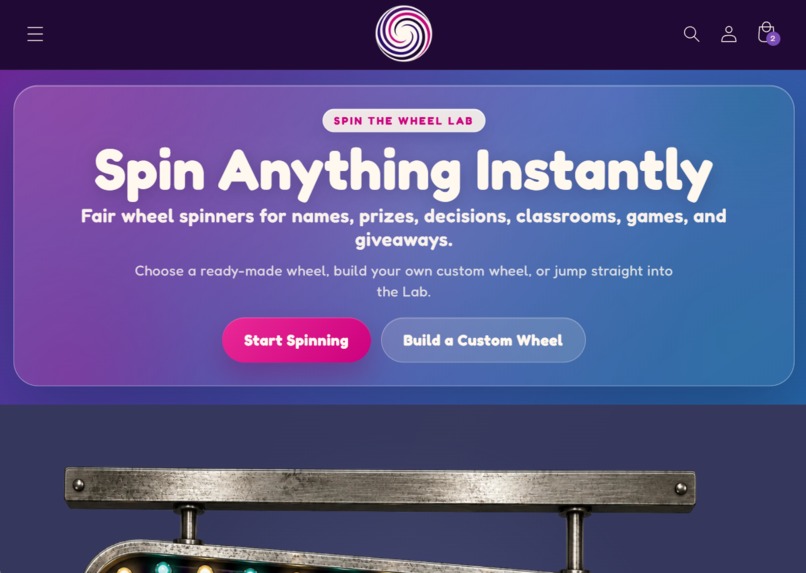
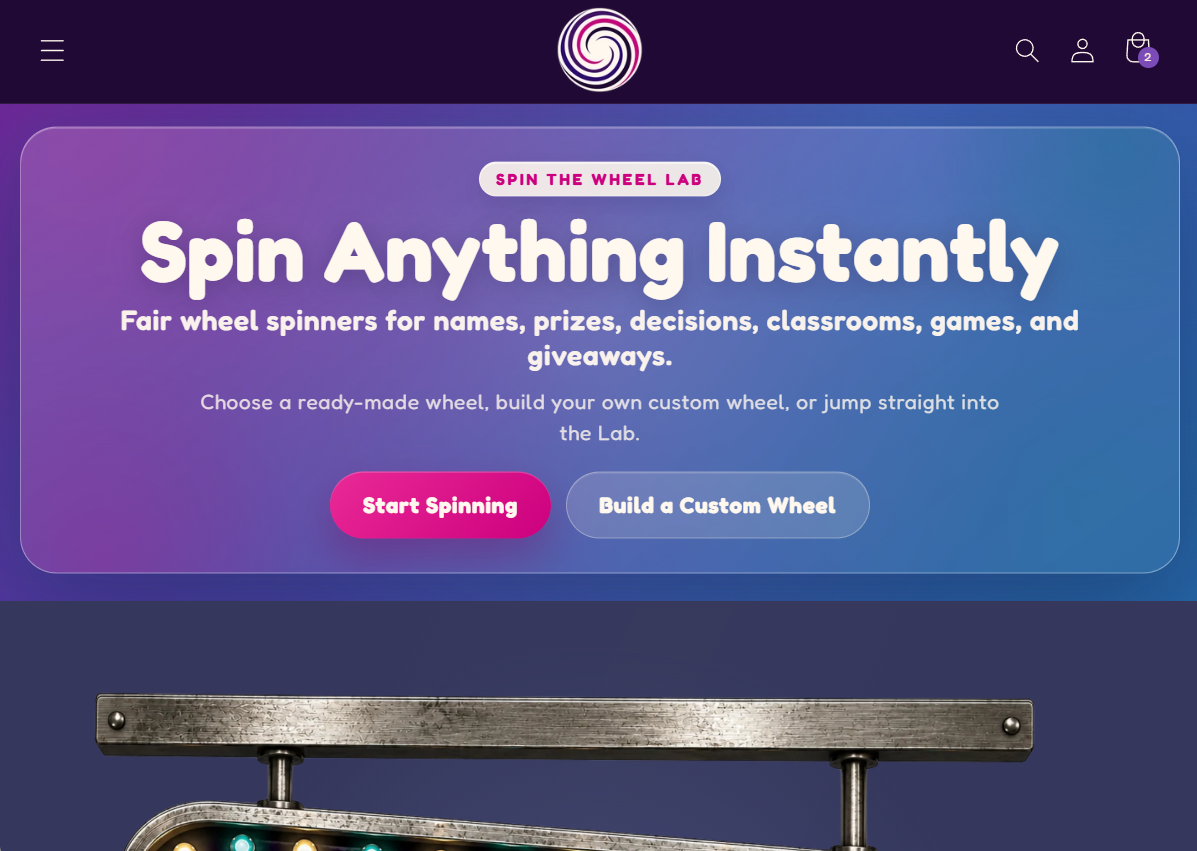
Spin the Wheel Lab offers ready-made and custom wheels for decisions, classrooms, games, prizes, giveaways, and everyday fun.
-
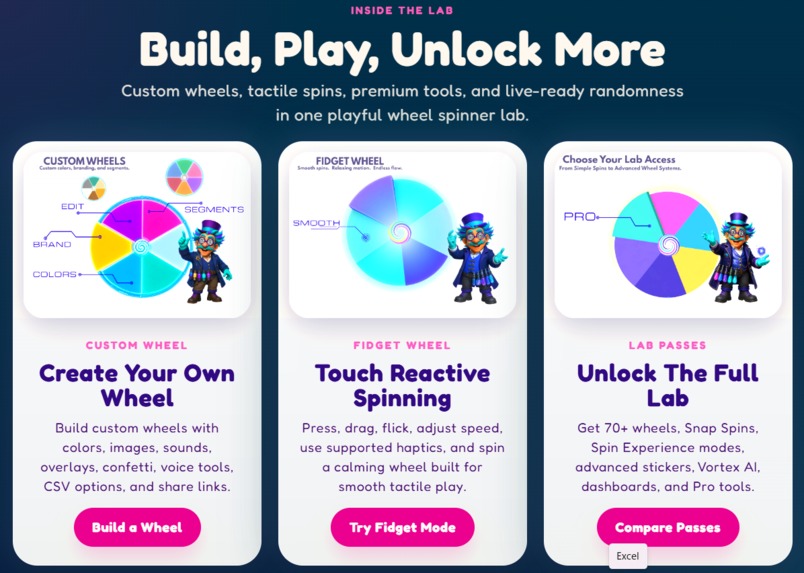
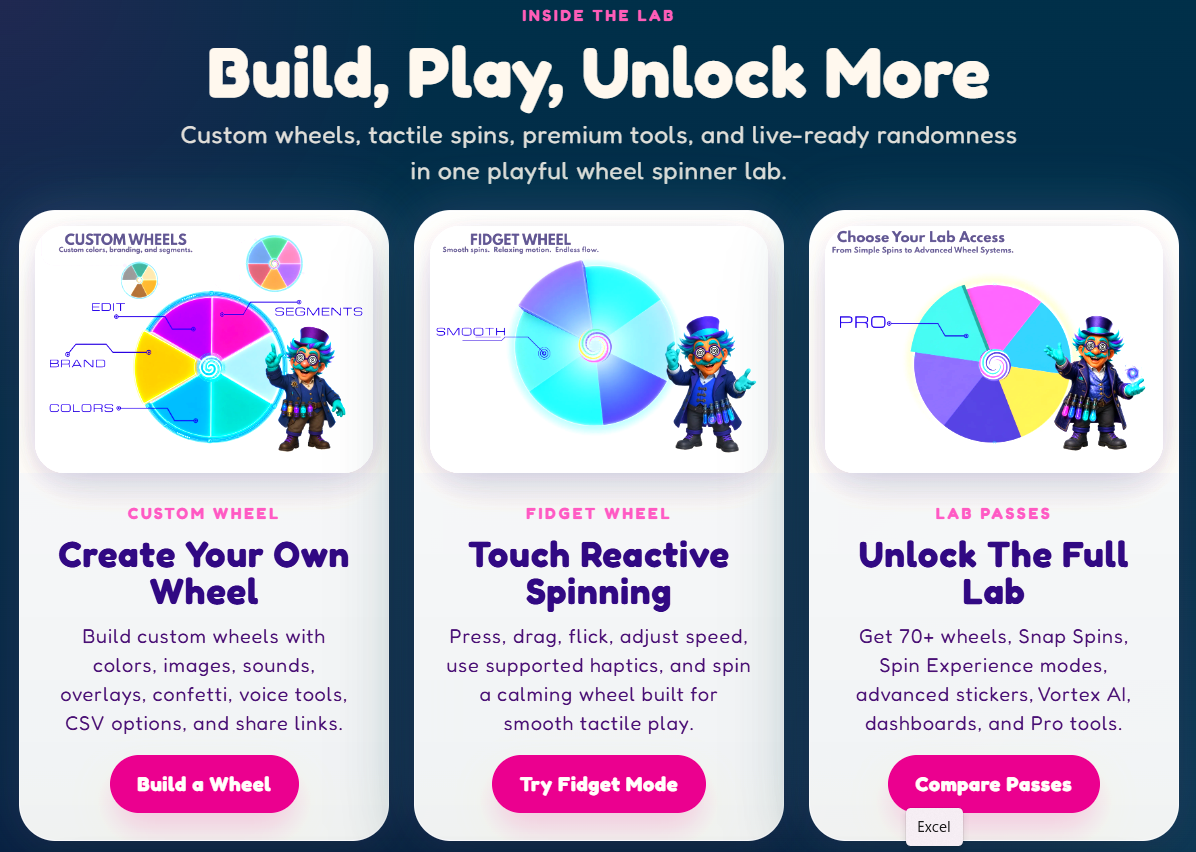
Build custom wheels, try touch-reactive spinning, and unlock 70+ wheels, premium tools, advanced effects, and Vortex AI.
-
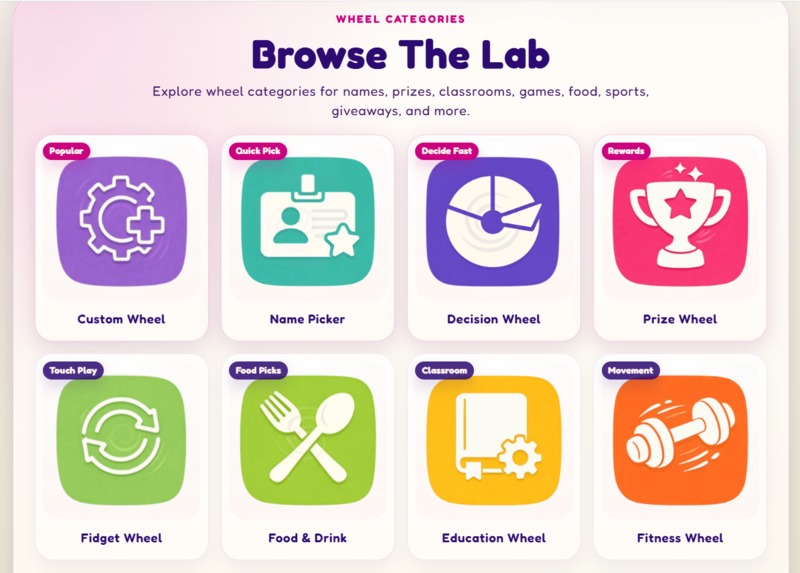
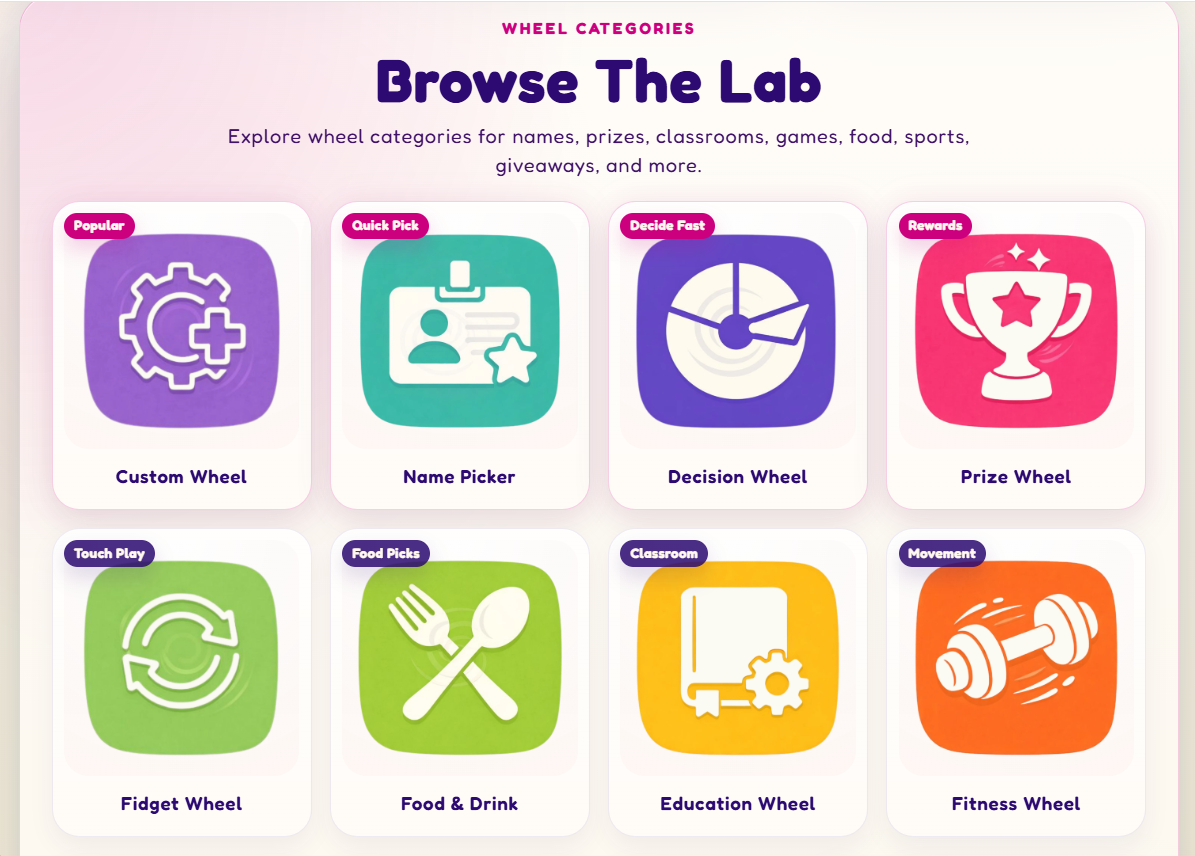
Browse wheel categories for custom builds, names, decisions, prizes, food, classrooms, fitness, touch play, and more.
-
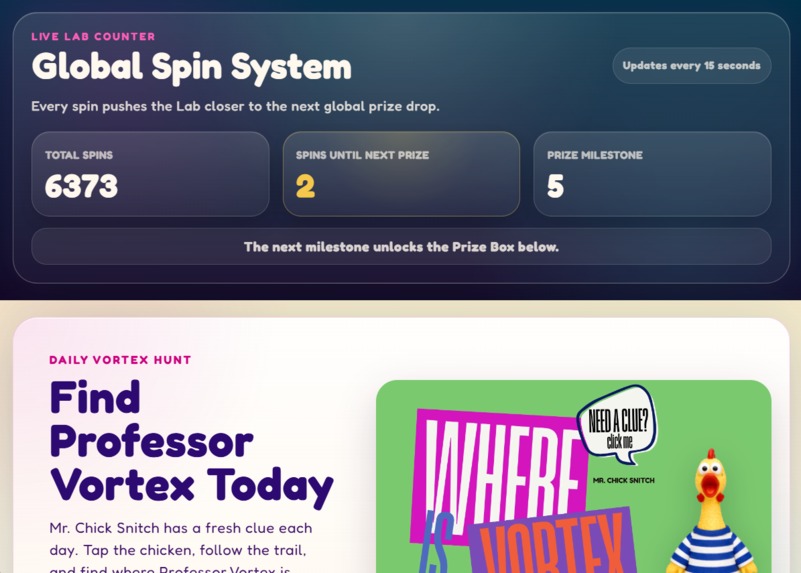
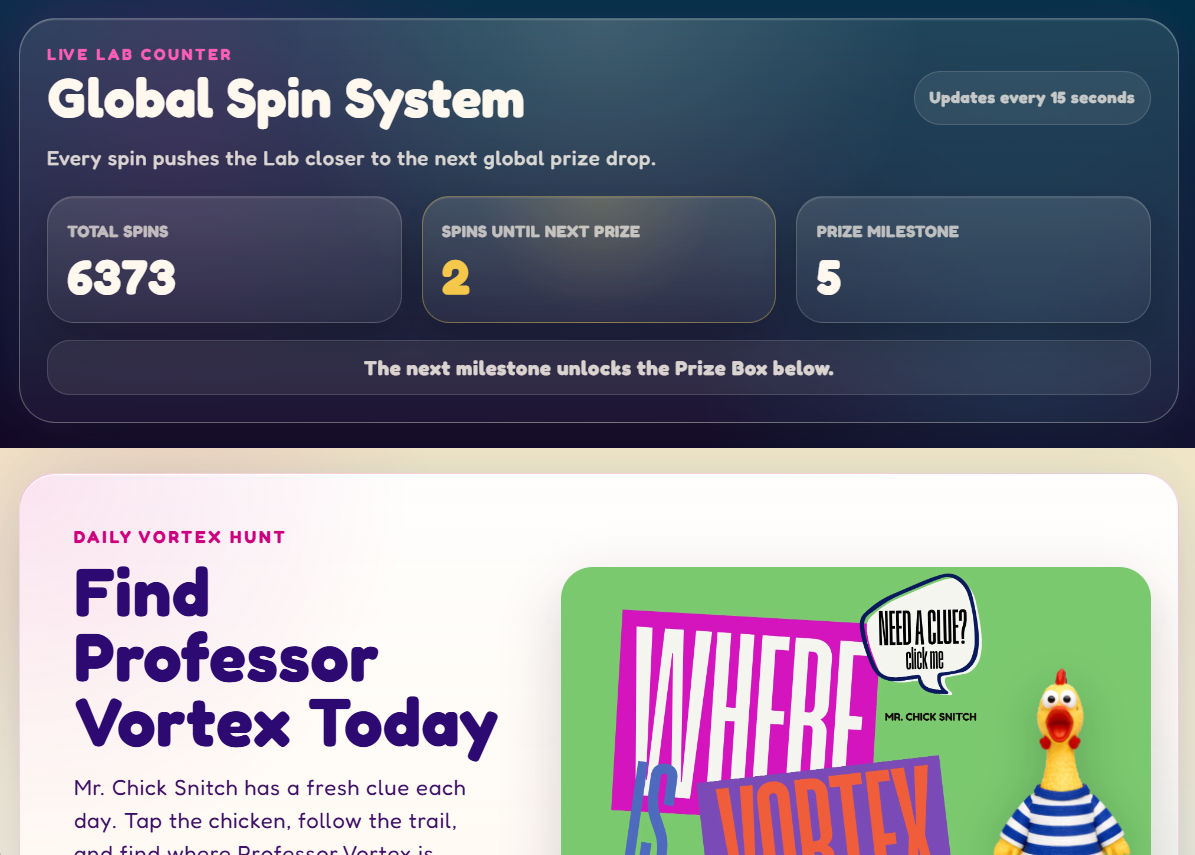
A live global spin counter unlocks shared prize milestones, while the daily Vortex Hunt invites visitors to follow clues across the site.
-
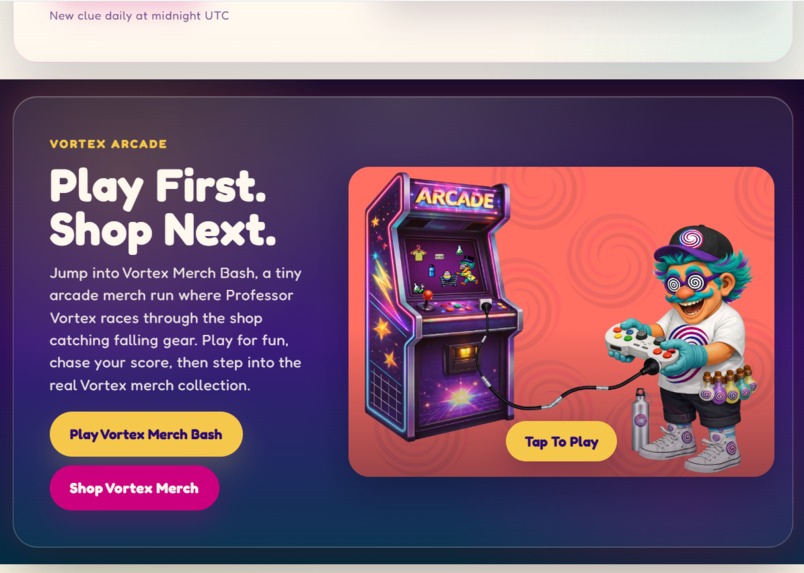
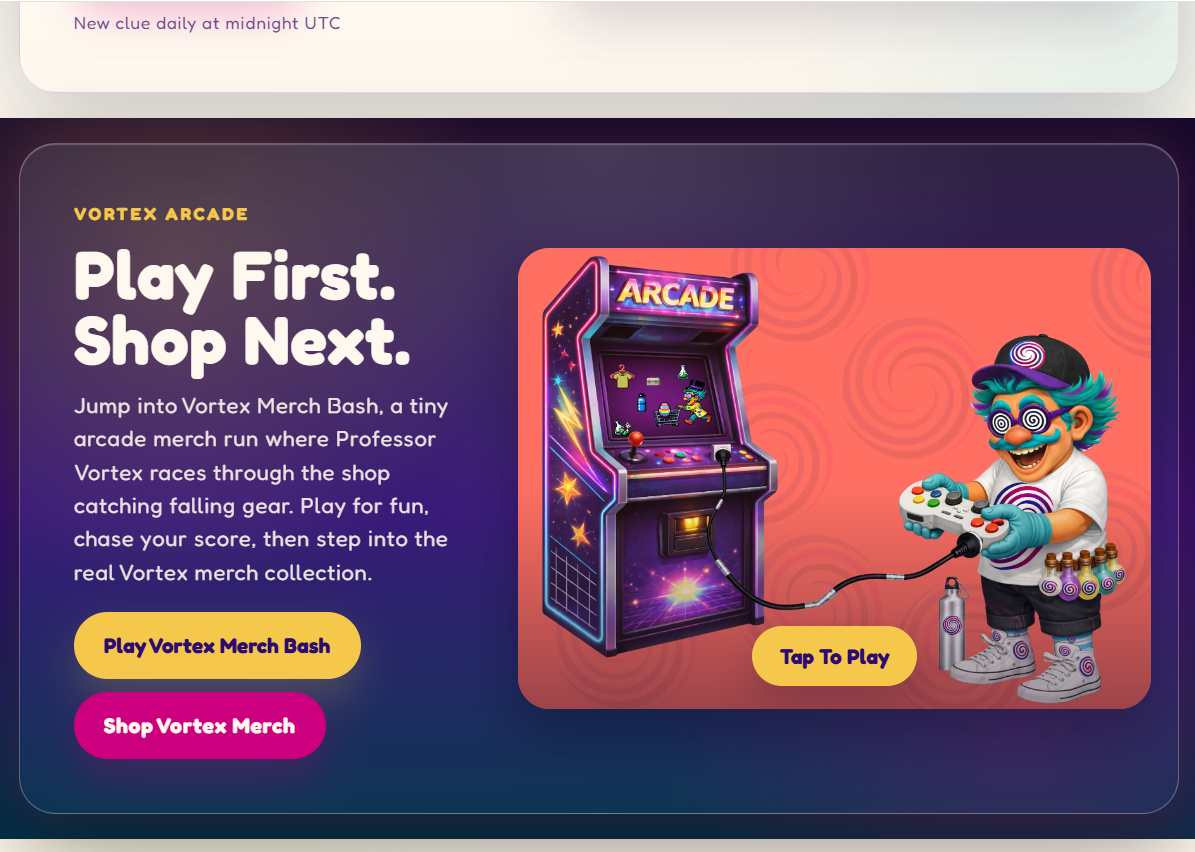
Play Vortex Merch Bash, a fast arcade challenge where Professor Vortex catches falling gear before players explore the real merch shop.
-

Wheel of the Month spotlights a featured themed wheel, giving visitors a fresh way to spin, play, and explore more categories.
-
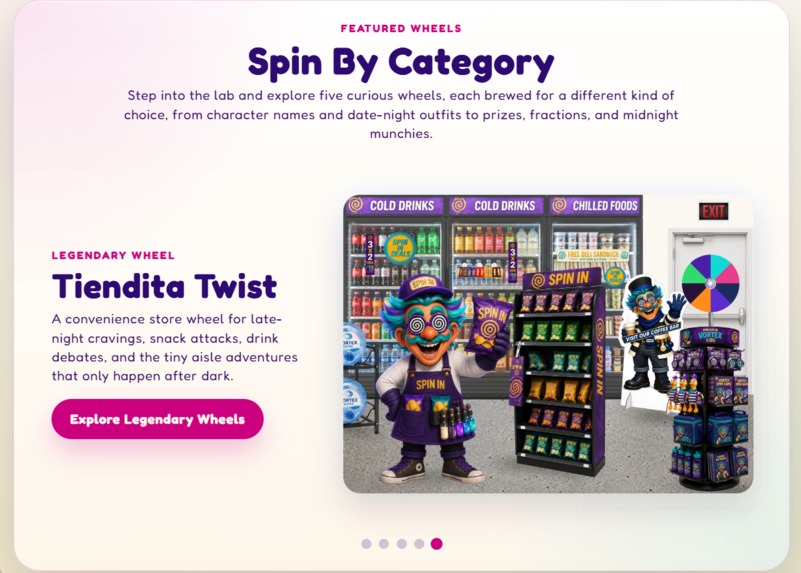
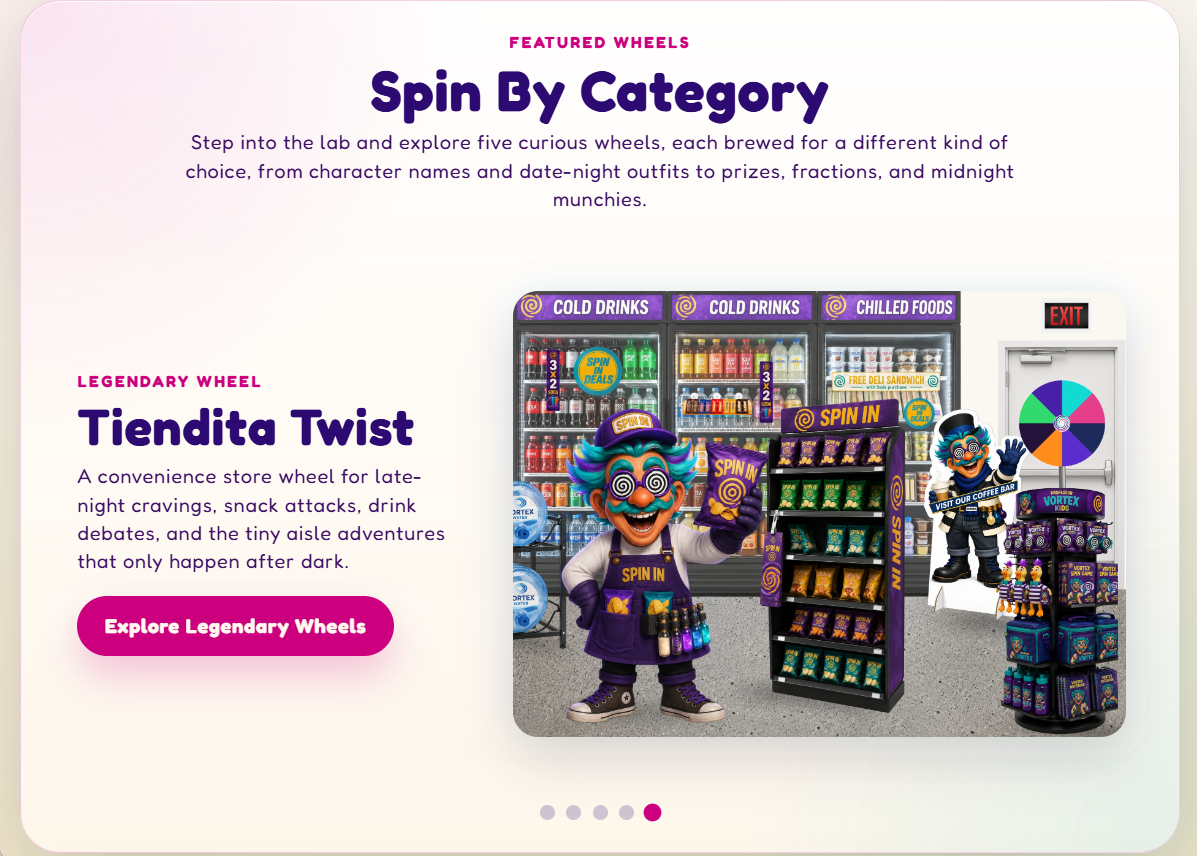
Featured wheels spotlight imaginative choices across categories, from names and prizes to fractions, outfits, snacks, and late-night fun.

Inspiration
I am a mom to a nine-year-old son, I live in Mexico, and I teach children in the United States how to read online. Most of what I teach is phonics.
Originally, I thought I might start doing some online tutoring on my own. I was already tutoring for a company, so I figured I should get myself a Shopify page, put some content on it, and see where it went.
Then I started working with the preset blocks, shapes, and text sections, and nothing was fitting right. Everything felt flat, awkward, and honestly pretty boring.
At the time, I had a little train conductor character, and I thought, well, maybe I could make him ride across the screen in a train and have it make a choo sound.
I had absolutely no idea how to do that, so I asked ChatGPT, “Can you do this?”
She walked me through it step by step, and somehow it worked.
That was really the moment that got me hooked. It was amazing to see something that only existed in my head suddenly moving across the screen. After that, I just kept thinking, okay, what else can I make?
As I was working on the tutoring idea, I also realized I wanted better interactive tools for kids. I teach reading online, and I have a nine-year-old son, so I know how quickly kids get bored when something feels repetitive or visually dull.
I started looking at popular wheel sites, and to me they felt pretty basic. They worked, but the visuals were limited, the functionality was limited, and I kept thinking we could do something much more fun and useful.
That is where Spin the Wheel Lab started.
Over time, the idea became much bigger than a classroom tool. Life is complicated, everything feels chaotic, and even simple decisions can become exhausting. I started seeing the wheel as something that could help with teaching, games, families, businesses, events, creativity, and everyday choices.
Eventually, I want Spin the Wheel Lab to become something more social, where people can create, share, discover, and interact through wheels.
And all of that started because I wanted a little train conductor to move across a Shopify page and say choo.
What it does
Vortex AI turns a simple idea into a complete interactive wheel that is ready to use.
A user can type in almost anything they need, like a classroom activity, study review, giveaway, party game, family decision, business promotion, prize wheel, or creative challenge.
Vortex AI then builds the wheel choices, keeps the labels short enough to actually fit on the wheel, creates more detailed winner messages, suggests matching visuals and stickers, and shapes the result around the purpose and audience.
Users can create a brand-new wheel, remix one they already have, simplify it, elevate it, or edit the individual results.
They can also choose different purposes, personalities, segment counts, prize styles, color behavior, and reveal modes.
The important thing is that the AI is not just giving someone a list of text. The result goes directly into a real working wheel. The user can review it, change it, apply it, spin it, and use it immediately.
Spin the Wheel Lab is meant for teachers, families, businesses, streamers, creators, event hosts, and honestly anyone who needs help making a choice or creating something more engaging.
At the center of the whole idea is something pretty simple. People get stuck. Decisions get harder than they should be. Sometimes you do not need to think about something for another hour. Sometimes you just need to spin the wheel and move on with your life.
How we built it
I built this over more than six months with the help of ChatGPT and Codex.
We had no coding experience and no real knowledge of how to build something like this.
This is also very much a family project. My mom works on the graphics. She has an art degree and uses ChatGPT to help develop artwork, visual ideas, and prompts. My nine-year-old son gives us ideas for Professor Vortex, our main character, and for different parts of the site.
My son refers to me as the coding department.
That basically means I am the one who takes all of our random ideas, figures out whether they are possible, and then works with ChatGPT and Codex until they become real.
I learned by describing what I wanted, testing what came back, breaking things, fixing things, asking a ridiculous number of questions, and slowly understanding more each time.
The wheel platform runs on Shopify, and the interactive parts use custom HTML, CSS, and JavaScript.
Vortex AI uses the OpenAI API and structured output so it returns a complete wheel package instead of a random paragraph or a basic list.
It creates the segment labels, winner titles, descriptions, clues, answers, visual suggestions, and other information the wheel needs in order to function.
I also built different modes for things like teaching, studying, math, creativity, giveaways, events, games, and direct answers.
One thing that mattered to me was separating what the wheel is supposed to do from how it sounds. A teacher may need accurate classroom content but still want it to feel fun. A creative personality should not make a math answer less correct.
The backend checks for duplicate segments, character limits, safe requests, valid colors, account access, subscription level, and usage limits.
There are a lot of moving parts, and somehow they all have to behave like one product.
Challenges we ran into
The biggest challenge was trying to build a real product while also learning what the code was doing.
It is actually pretty easy to ask AI for a list of ten things. It is much harder to make those ten things fit correctly on a wheel, feel different from each other, make sense in a winner popup, match the audience, and still be useful.
Wheel labels were a whole challenge by themselves because there is not much room. The AI has to shorten ideas naturally without chopping off words or turning them into nonsense.
We also had to deal with repeated ideas, filler, vague answers, incorrect educational content, unsafe requests, misleading prize language, and results that sounded nice but were not actually useful.
Another huge challenge was connecting everything together.
The AI, the wheel engine, Shopify customer accounts, subscription access, usage tracking, stickers, colors, winner effects, and mobile behavior all had to work together.
Mobile performance has also been a battle.
Confetti, animations, popups, pulsing wheels, and more complicated effects might work perfectly on one device and then completely lose their minds on another.
A lot of debugging involved figuring out not only what broke, but how to fix it without destroying three other things that were already working.
That has probably been one of the hardest lessons. Every time you touch one thing, something else somewhere decides it now has a personal problem.
Accomplishments that we're proud of
I am most proud that this became a real working product.
It is not just an idea, a mockup, or a pretty design. A user can open Vortex AI, describe what they need, generate a wheel, review the results, apply it, and spin it.
Vortex AI can create classroom activities, study prompts, math questions, party games, rewards, giveaways, decisions, creative challenges, and business ideas while changing the output based on the purpose and audience.
I am also proud that the AI is built directly into the wheel experience.
Users do not have to copy something out of a chatbot and then rebuild it somewhere else. The AI creates the wheel inside the actual product.
The larger Spin the Wheel Lab platform now includes a complete wheel engine, more than 70 ready-made wheels, hundreds of stickers, customization tools, winner experiences, fairness testing, subscription access, and Vortex AI.
But honestly, the thing I am proudest of is that we built it without starting as developers.
Not that long ago, I was surprised that I could make a little train move across a screen.
Now my son calls me the coding department, and I have built an entire interactive wheel platform.
That is still kind of crazy to me.
What we learned
I learned that building with AI does not remove the need for human judgment.
ChatGPT and Codex could help me write code, explain problems, and suggest fixes, but they could not decide what kind of product I wanted to build.
I still had to decide what made sense, what looked good, what a user would understand, what felt confusing, and whether a feature was actually useful.
I learned to test small changes instead of changing everything at once.
I learned to protect working code.
I learned that one tiny visual adjustment can somehow break something completely unrelated on a mobile phone.
I also learned that AI output gets much better when the system has clear rules.
Telling a model to “make a wheel” is not enough. It needs instructions about the purpose, audience, tone, label length, winner text, safety, variety, visuals, and quality.
The biggest thing I learned is that AI can give people access to skills they did not think they had.
It did not magically turn me into a developer overnight.
It gave me a way to learn by doing, to keep going when I had no idea where to start, and to take ideas from my family and actually bring them to life.
What's next for Vortex AI: The Intelligent Wheel Builder
The next step is to make Vortex AI more personal, collaborative, and social.
I want users to be able to save their wheels, share them, build collections, and discover wheels made by other people.
I also want Vortex AI to understand more about the real situation behind a request.
A teacher, parent, streamer, business owner, and event host could all ask for a wheel on the same topic, but they would need completely different results.
In the future, I would like to add shared wheels, audience voting, live event tools, multi-stage experiences, collaborative decision-making, social challenges, and connected wheel sets that change over time.
The long-term goal is for Spin the Wheel Lab to become more than a random wheel website.
I see it becoming a playful lifestyle tool where people can create, share, discover, make decisions, and get unstuck together.
And knowing us, it will probably also involve a lot more characters, strange ideas from my son, artwork from my mom, and me sitting in the coding department trying to figure out how to make all of it work.
Built With
- admin
- api
- app
- authentication
- chatgpt
- cloudflare
- codex
- css
- d1
- gpt-5.6
- graphql
- html
- javascript
- json
- jwt
- lemon
- local
- moderation
- openai
- proxy
- responses
- schema
- shopify
- squeezy
- workers

Log in or sign up for Devpost to join the conversation.