-
-

logo
-
log in
-
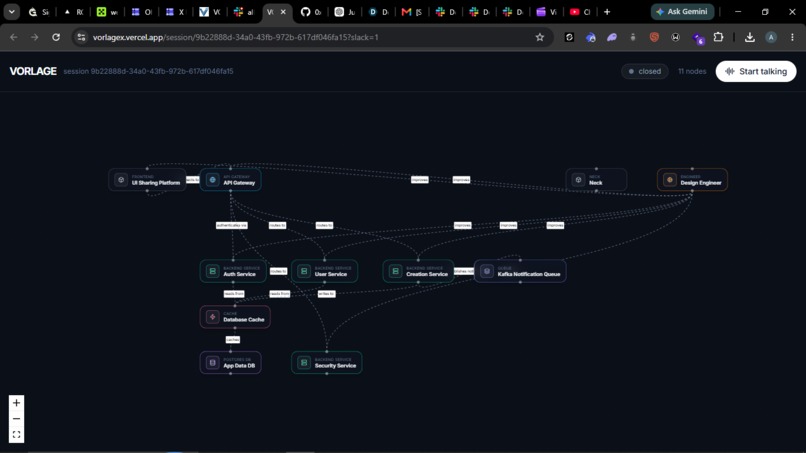
proof of work seesion
-
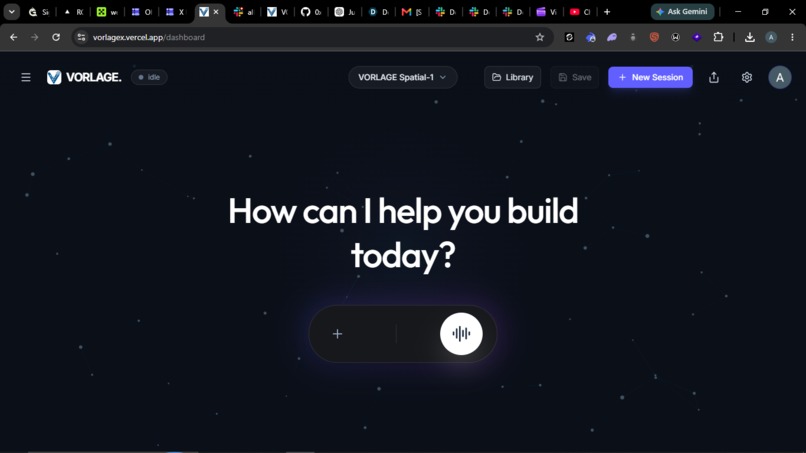
dashboard

Vorlage
Inspiration
Software architecture is rarely designed in diagrams first.
It starts as a conversation.
Engineers discuss ideas in Slack, whiteboard sessions, voice calls, and architecture reviews. By the end of the meeting, everyone understands the design—but the architecture itself often exists only in people's heads. Someone still has to recreate the discussion, draw diagrams, write documentation, and produce an implementation plan.
We wanted to remove that manual step entirely.
Vorlage was built around a simple question:
What if software architecture could be created while engineers were still talking?
Instead of documenting meetings afterward, the conversation itself becomes the source of truth.
What it does
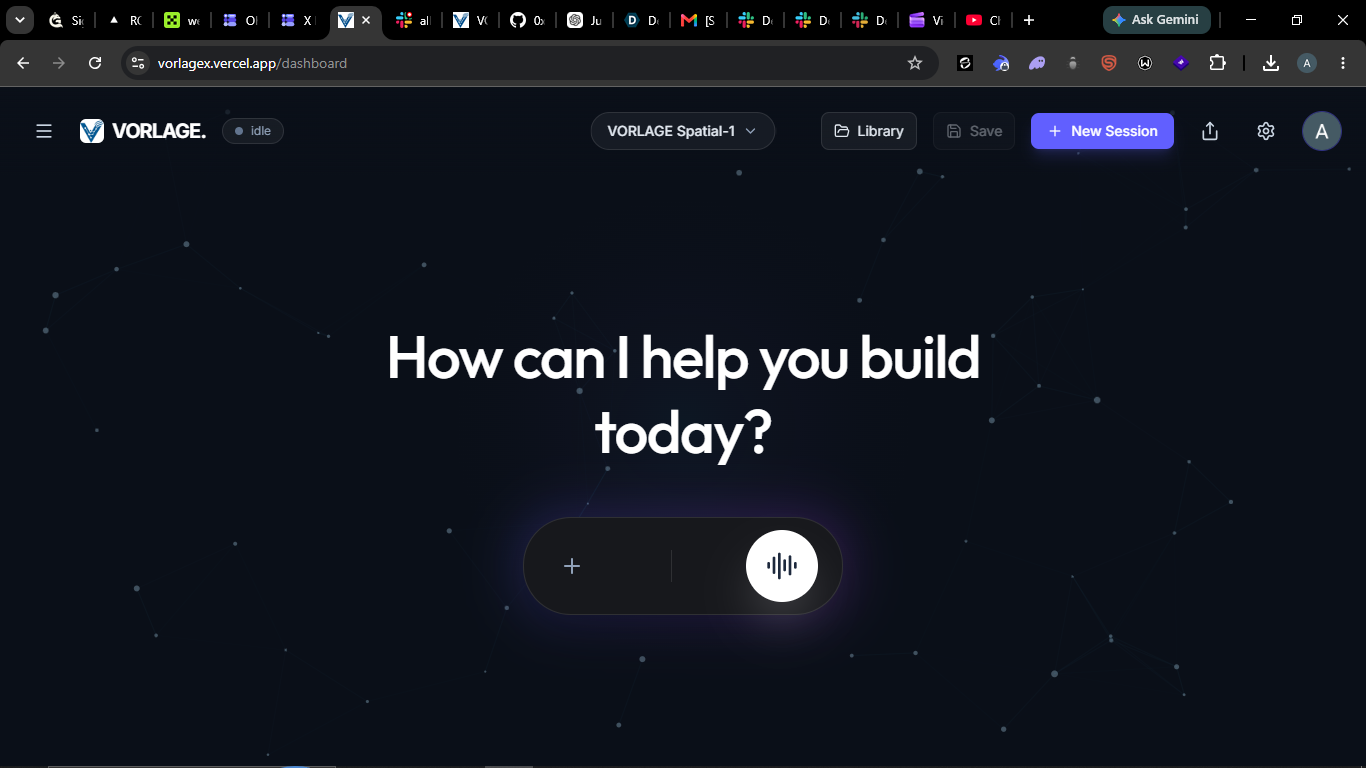
Vorlage is a voice-first AI Systems Architect that integrates with Slack.
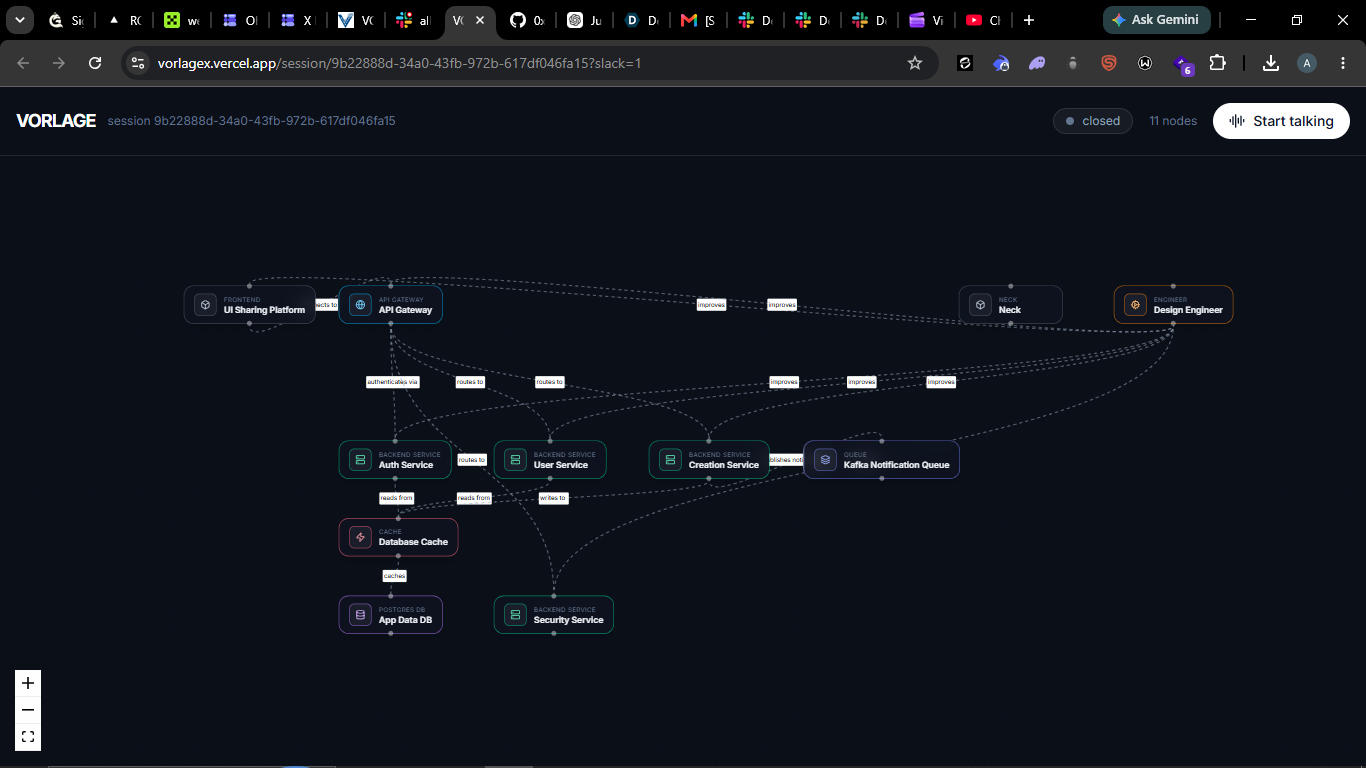
Teams start a Vorlage session from Slack and collaborate naturally through conversation. As engineers discuss a system, Vorlage streams audio in real time, transcribes the discussion, identifies architectural components, and builds a living architecture diagram while the conversation is still happening.
To make the experience feel instantaneous, Vorlage introduces Ghost Nodes—temporary architecture components generated immediately from partial speech before the language model finishes reasoning. Once the AI completes its analysis, those placeholders are replaced with fully validated services, databases, APIs, queues, and relationships.
When the session ends, Vorlage automatically publishes the engineering artifacts back into Slack, including:
- Architecture summary
- Mermaid diagram
- Technical documentation
- Implementation plan
- Security recommendations
- Action items
- Structured graph data
The result is that engineering conversations become persistent architectural knowledge instead of disappearing once the meeting ends.
How we built it
Vorlage combines real-time streaming, AI reasoning, and collaborative workflows.
The frontend is built with React, Vite, React Flow, and Zustand to provide a responsive visual canvas for live architecture updates.
The backend uses FastAPI with WebSockets to stream voice data continuously. Audio is processed through Deepgram for low-latency speech recognition, while our architecture engine maintains the evolving system graph.
To reduce perceived latency, the backend generates Ghost Nodes from partial transcripts before the language model responds. Once the transcript is finalized, the current canvas state and conversation are sent to an LLM that produces a validated JSON graph describing the updated architecture.
The application uses a provider abstraction that supports Gemini as the primary model with Groq as an automatic fallback, allowing the system to recover from rate limits or temporary provider failures without interrupting the session.
For collaboration, Slack serves as the entry point. Teams launch sessions from Slack, collaborate in the browser during voice discussions, and receive the completed architecture and documentation back in the originating Slack thread.
Challenges we ran into
One of our biggest challenges was balancing responsiveness with AI reasoning.
Large language models produce better architectural decisions when they have complete context, but waiting for a full response creates noticeable delays during live conversations. We solved this by separating immediate interaction from final reasoning. Ghost Nodes provide instant visual feedback while the model continues processing, creating a collaborative experience instead of making users wait.
Maintaining consistency across multiple architecture revisions was another challenge. Every AI update has to preserve existing relationships while incorporating new information without corrupting the graph structure. We addressed this by validating every generated graph before it reaches the client and retrying failed generations automatically.
Integrating Slack without compromising the voice-first experience also required careful design. Rather than forcing the entire application into Slack, we made Slack the collaboration hub while preserving the dedicated real-time architecture workspace.
Accomplishments we're proud of
We're especially proud of building an experience that feels collaborative instead of transactional.
Watching architecture evolve in real time while engineers are still speaking creates a very different interaction than waiting for an AI to generate a diagram after the conversation ends.
We're also proud of our low-latency streaming pipeline, Ghost Node system, resilient LLM provider architecture, and the ability to automatically transform engineering discussions into documentation that teams can immediately share and build upon.
What we learned
Building Vorlage reinforced that technical accuracy alone is not enough. For AI collaboration tools to become part of everyday engineering workflows, they must feel responsive, fit naturally into existing tools, and reduce work rather than create more of it.
We also learned how important resilient AI infrastructure is. Supporting multiple model providers, validating structured outputs, and designing for failure are just as important as generating high-quality responses.
What's next for Vorlage
We're continuing to make Vorlage a true engineering teammate rather than simply an AI assistant.
Future work includes richer collaborative editing, architecture version comparison, deeper Slack workflows, support for larger engineering organizations, and expanded analysis capabilities that help teams identify scalability, security, and reliability issues as architectures evolve.
Built With
- ai
- deepgram
- fast
- github
- groq
- llm
- postgresql
- python
- railway
- react
- slack
- speech-to-text
- typescript
- vercel
- vite
- voice-ai


Log in or sign up for Devpost to join the conversation.