-
-
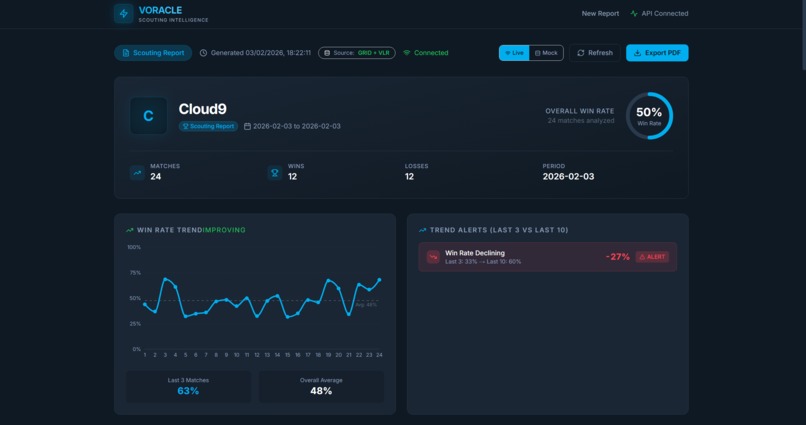
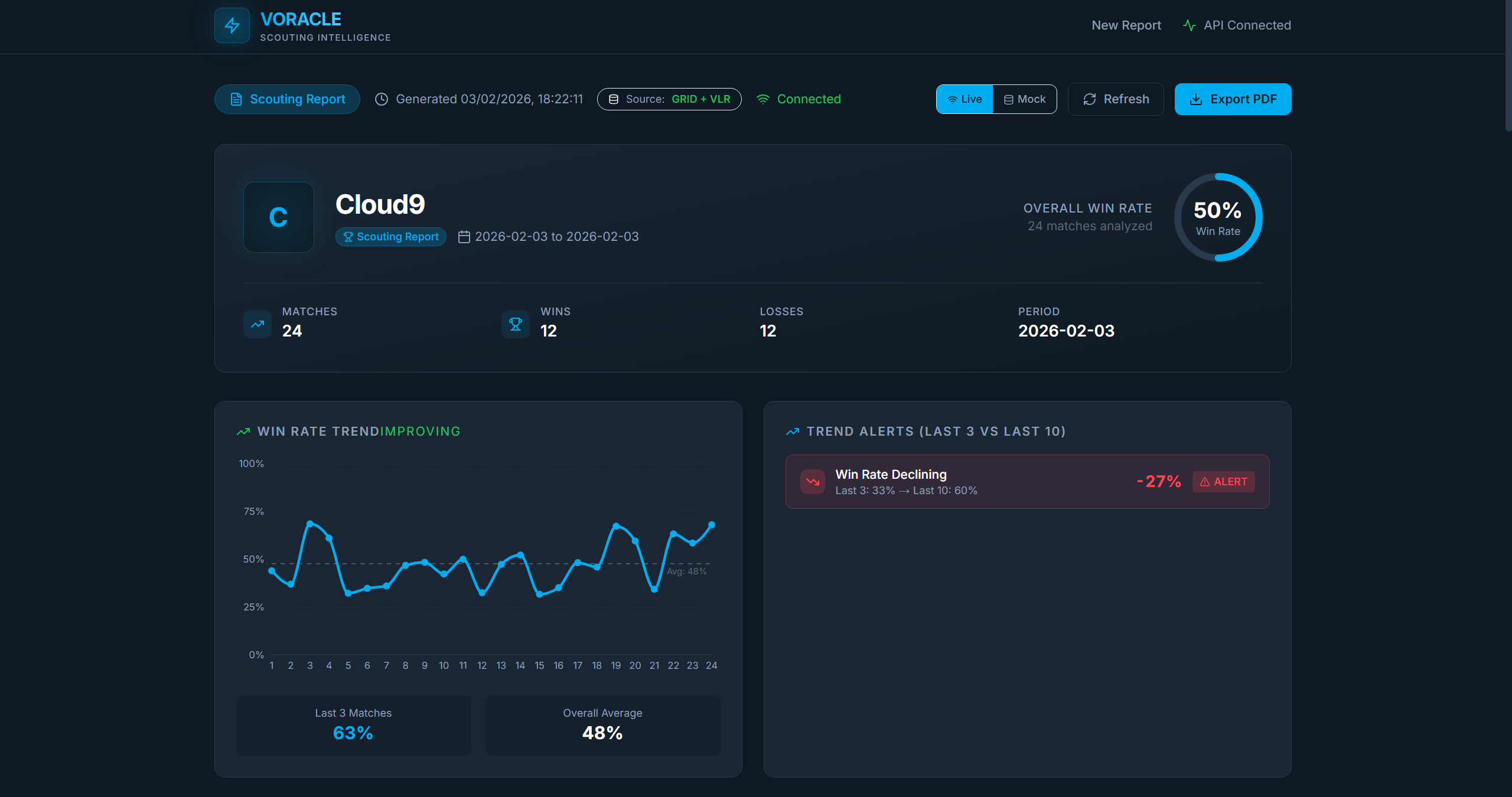
Cloud9 Scouting Report
-
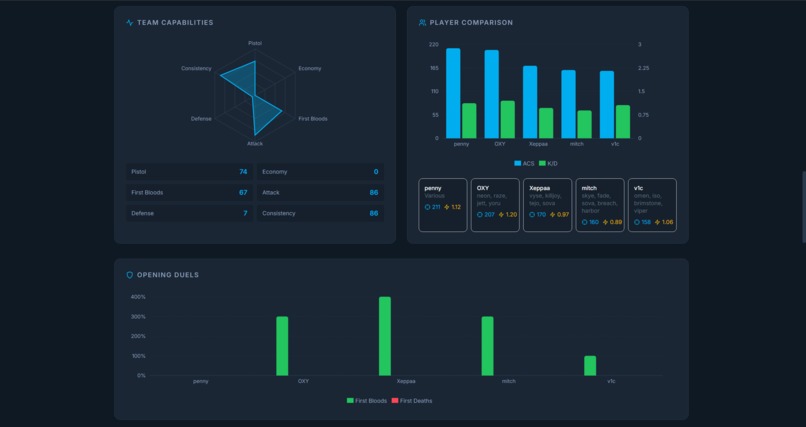
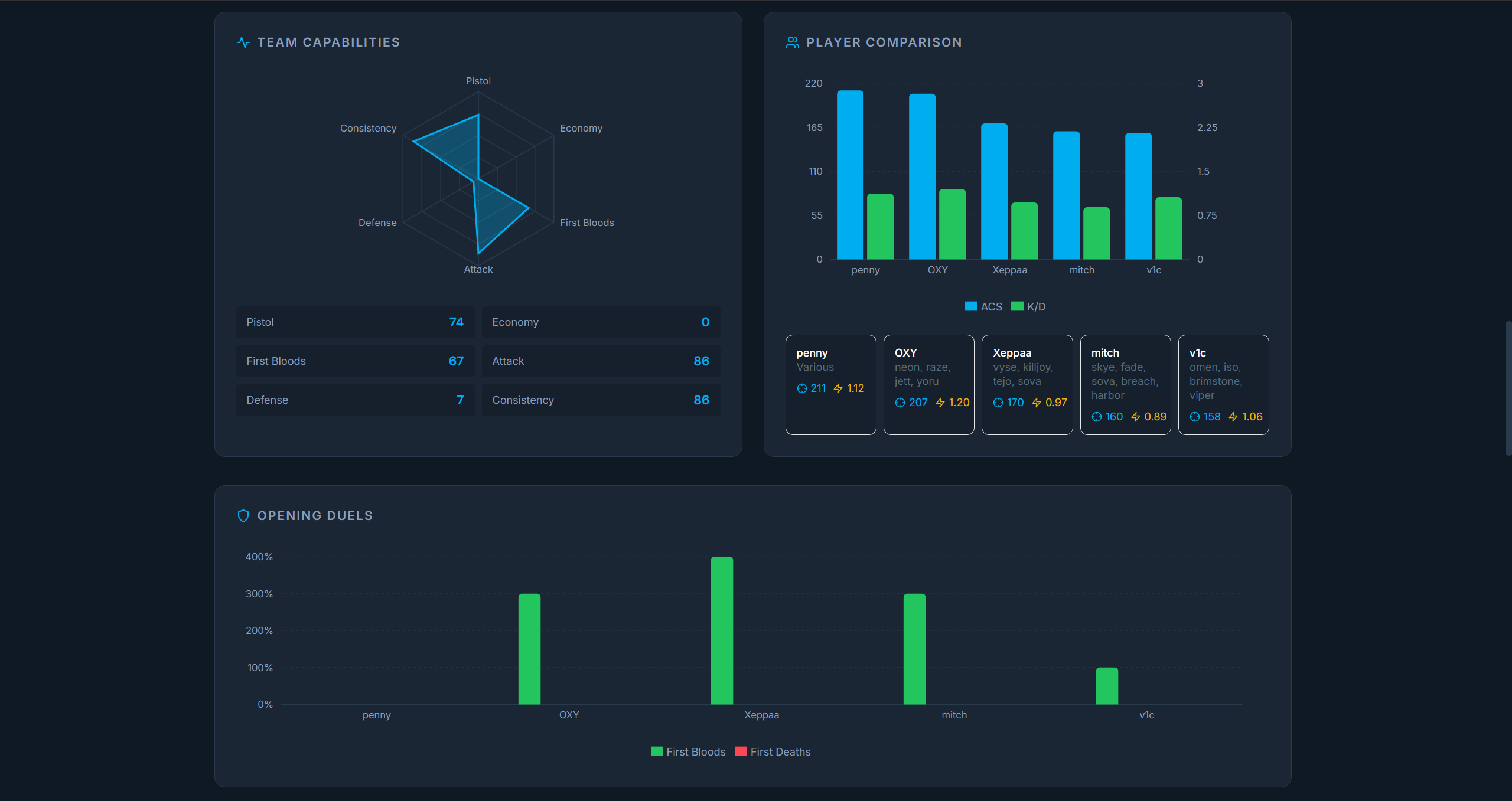
Visualization
-
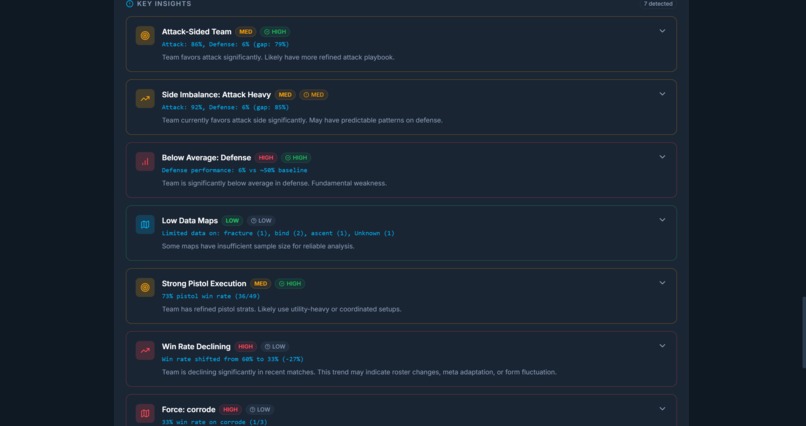
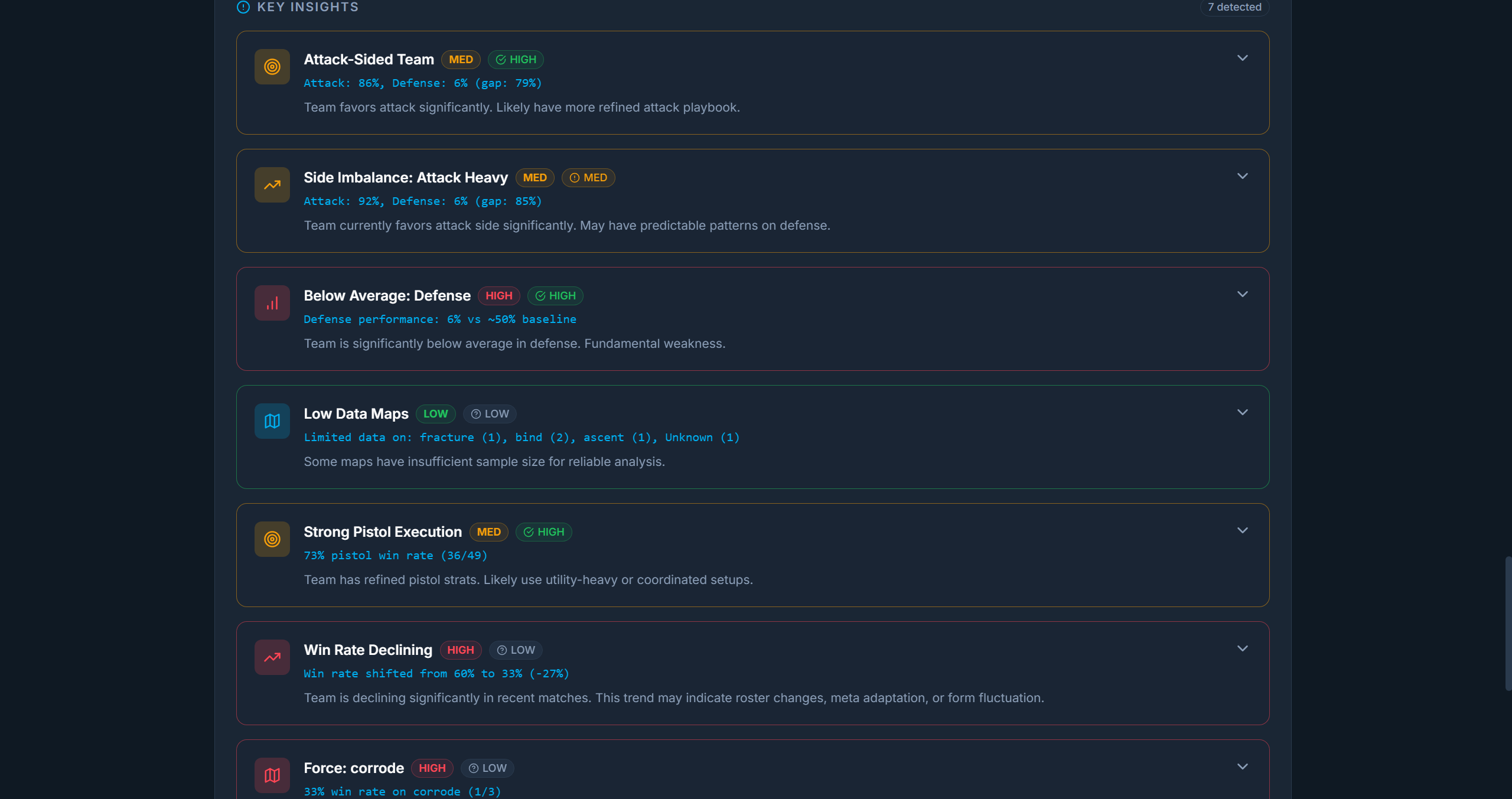
Key Insights
-
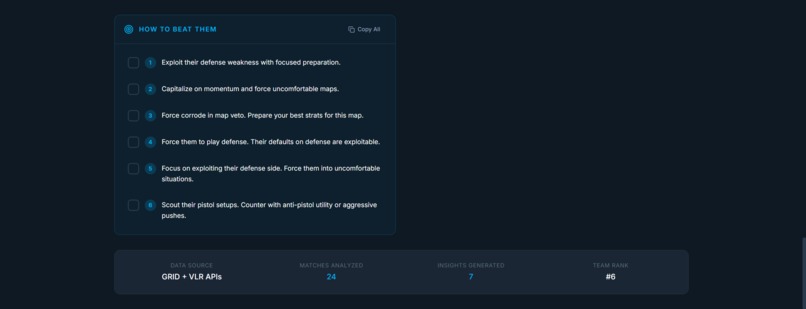
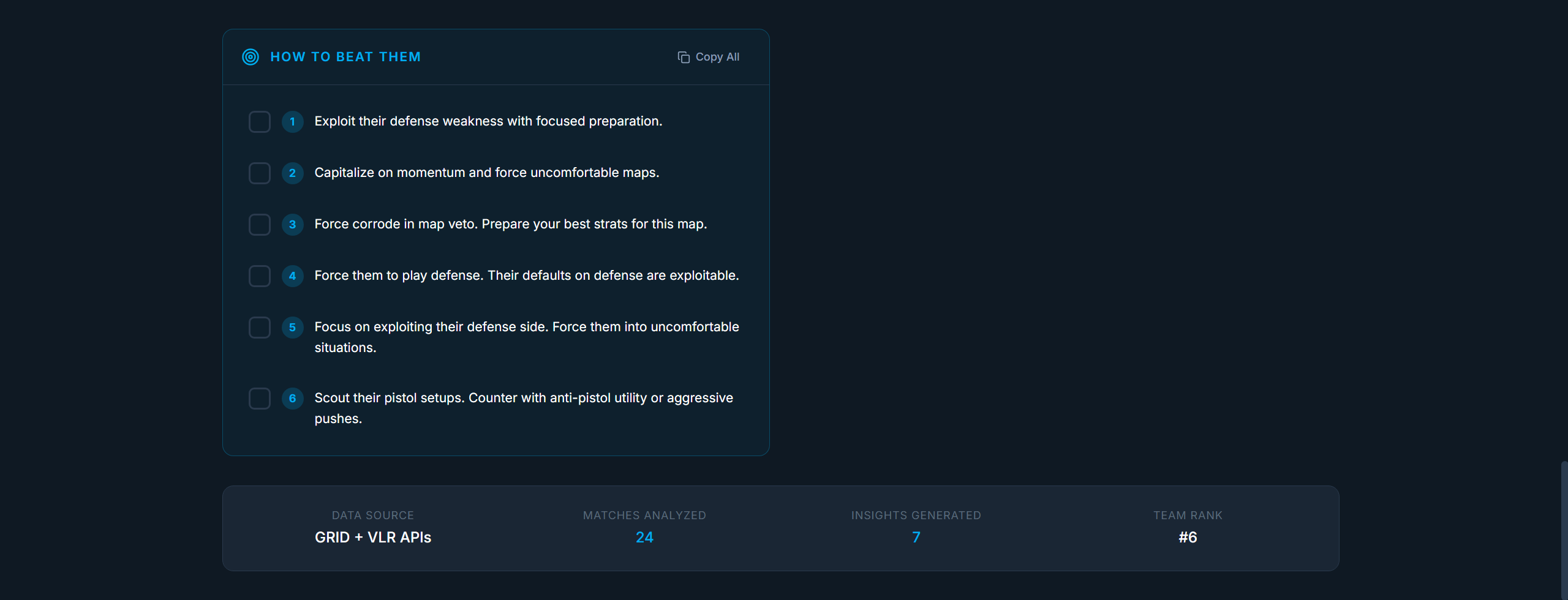
Counter Strategies
Project Story
About the Project
This project was created for the Cloud9 x JetBrains Hackathon, Category 2: Automated Scouting Report Generator.
Inspiration
VORACLE started from a simple place: being a huge VALORANT esports fan. After watching countless pro matches and tournaments, it became obvious how much preparation happens behind the scenes. Coaches and analysts aren’t just looking at stats... they’re trying to understand how teams play and how to beat them.
After exploring existing analytics tools, a clear gap emerged. Most platforms are great at showing numbers, but very few help answer strategic questions like matchup approaches or counter-strategies. That gap is what pushed us to build VORACLE.
What It Does
VORACLE is an automated scouting tool for VALORANT teams. It gathers live competitive data, analyzes team and player behavior, and turns everything into clear, coach-ready scouting reports.
Instead of just listing stats, VORACLE focuses on identifying patterns, exposing weaknesses, and suggesting how to approach a matchup. Everything is presented in a clean, VALORANT-inspired interface, with the ability to export reports as PDFs for easy sharing and review.
How We Built It
We built VORACLE as a modular full-stack application designed to be flexible and resilient.
On the backend, a FastAPI service pulls and normalizes data from the GRID API and VLR.gg. This feeds into an analytics layer that calculates map performance, player metrics, and economy trends. On top of that, an insight engine looks for recurring patterns and turns them into practical strategic suggestions.
The frontend is built with Next.js and focuses on clarity and usability with interactive charts, smooth animations, and a dark theme inspired by VALORANT and Cloud9.
If one data source fails or returns limited information, the system adapts and still produces a usable report.
Challenges We Ran Into
Data was easily the hardest part.
Series-level match data was inconsistent, and access to GRID API queries was limited, making it difficult to retrieve complete datasets. In many cases, the information we wanted simply wasn’t available.
To work around this, we:
- Used VLR.gg as a fallback to fill in missing data
- Built report generation that adapts based on what data exists
Handling real-world esports data required a lot of trial, error, and creative problem-solving.
Accomplishments That We're Proud Of
Shipping a complete scouting platform within a hackathon timeframe
- Successfully combining multiple unreliable data sources into one system
- Moving beyond raw stats to provide actionable insights
- Creating a UI that feels natural to VALORANT players and analysts
- Generating reports that could realistically be used by competitive teams
What We Learned
This project reinforced that numbers alone aren’t enough. Context, trends, and interpretation matter far more than individual stats.
We also learned a lot about working with imperfect APIs, designing systems that don’t break when data is missing, and turning complex analytics into something people can actually use.
Most importantly, we learned how to think like both engineers and analysts at the same time.
What's Next?
There’s a lot more we’d love to explore next:
- Agent and composition-based scouting
- Round-level and VOD-based pattern detection
- Role-specific reports for coaches, analysts, and players
- Live prep tools for upcoming matches
VORACLE is just the beginning, but the goal is clear: make competitive VALORANT prep smarter, faster, and more strategic.
Built With
- fastapi
- framer-motion
- grid-esports-api
- next.js-14
- pandas
- python
- react
- recharts
- tailwindcss
- typescript
- vercel
- vlr.gg-api

Log in or sign up for Devpost to join the conversation.