-
-
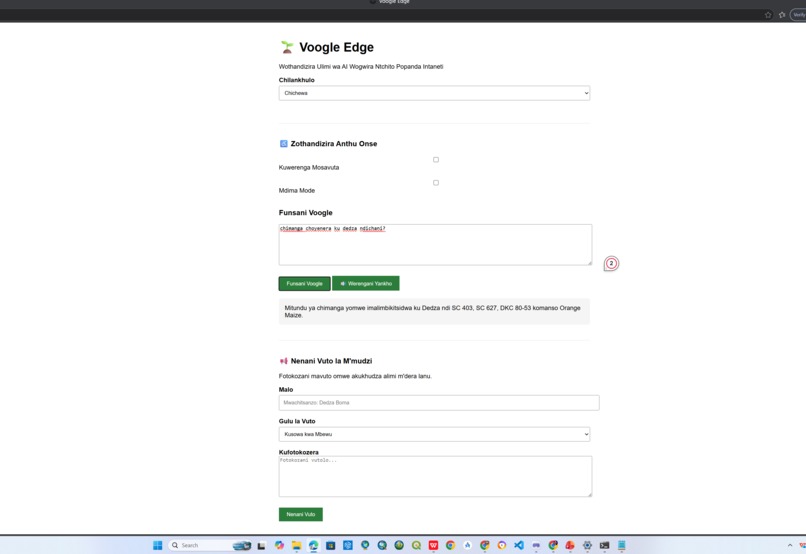
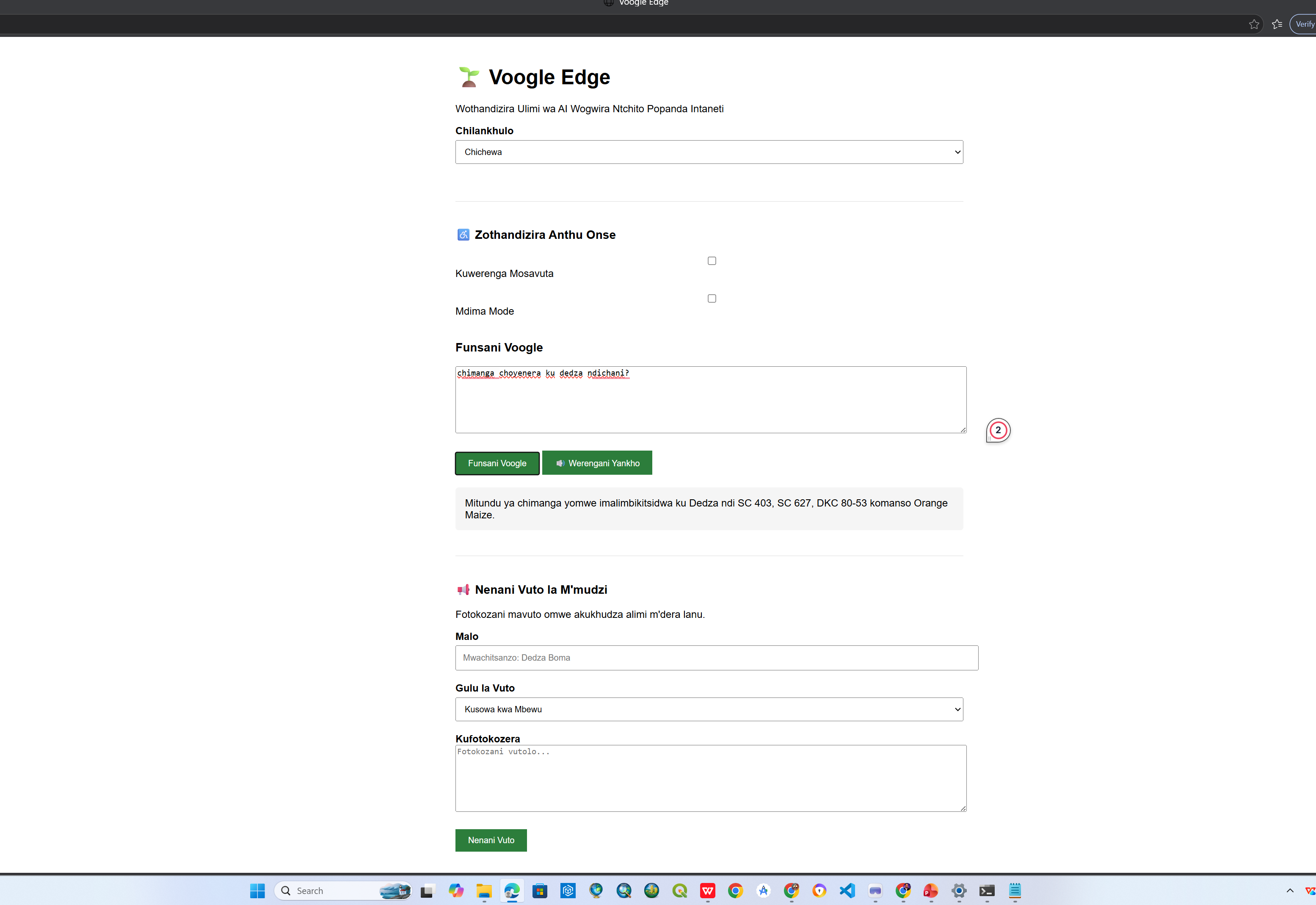
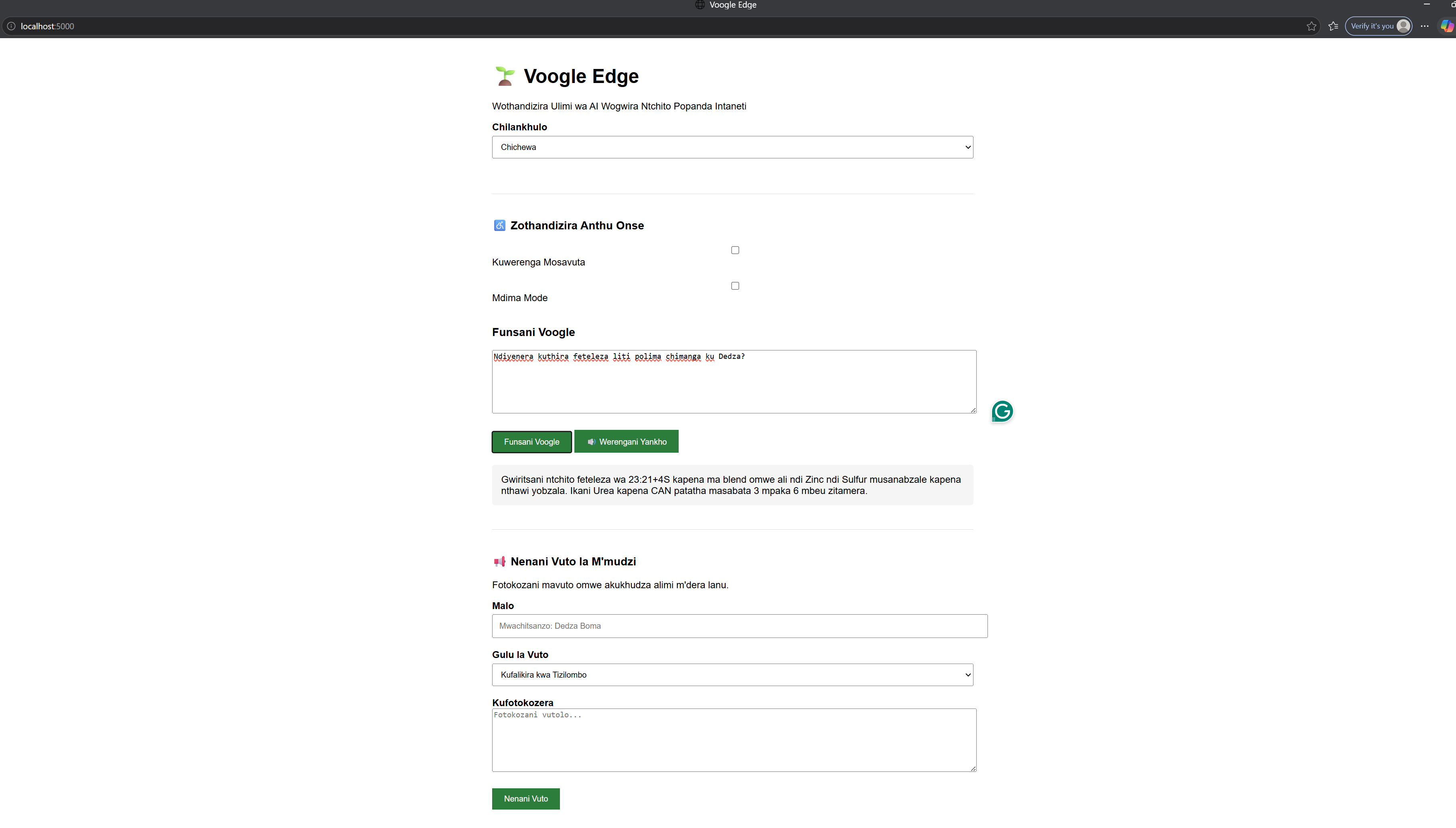
Screenshot of Voogle Edge Interface in Chichewa Language
-
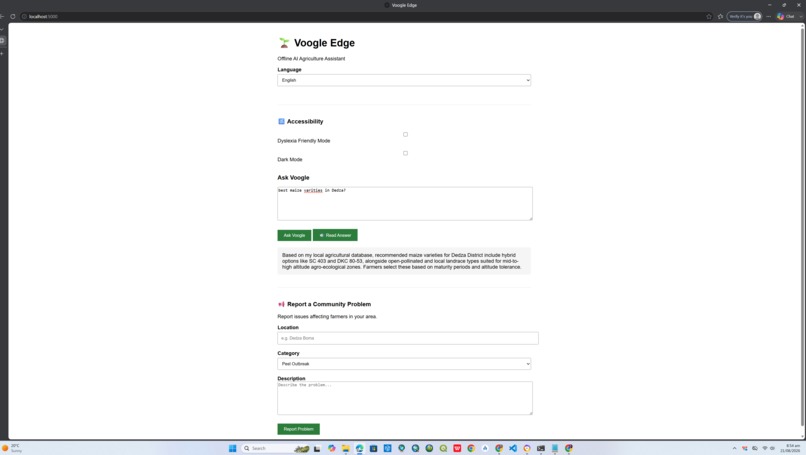
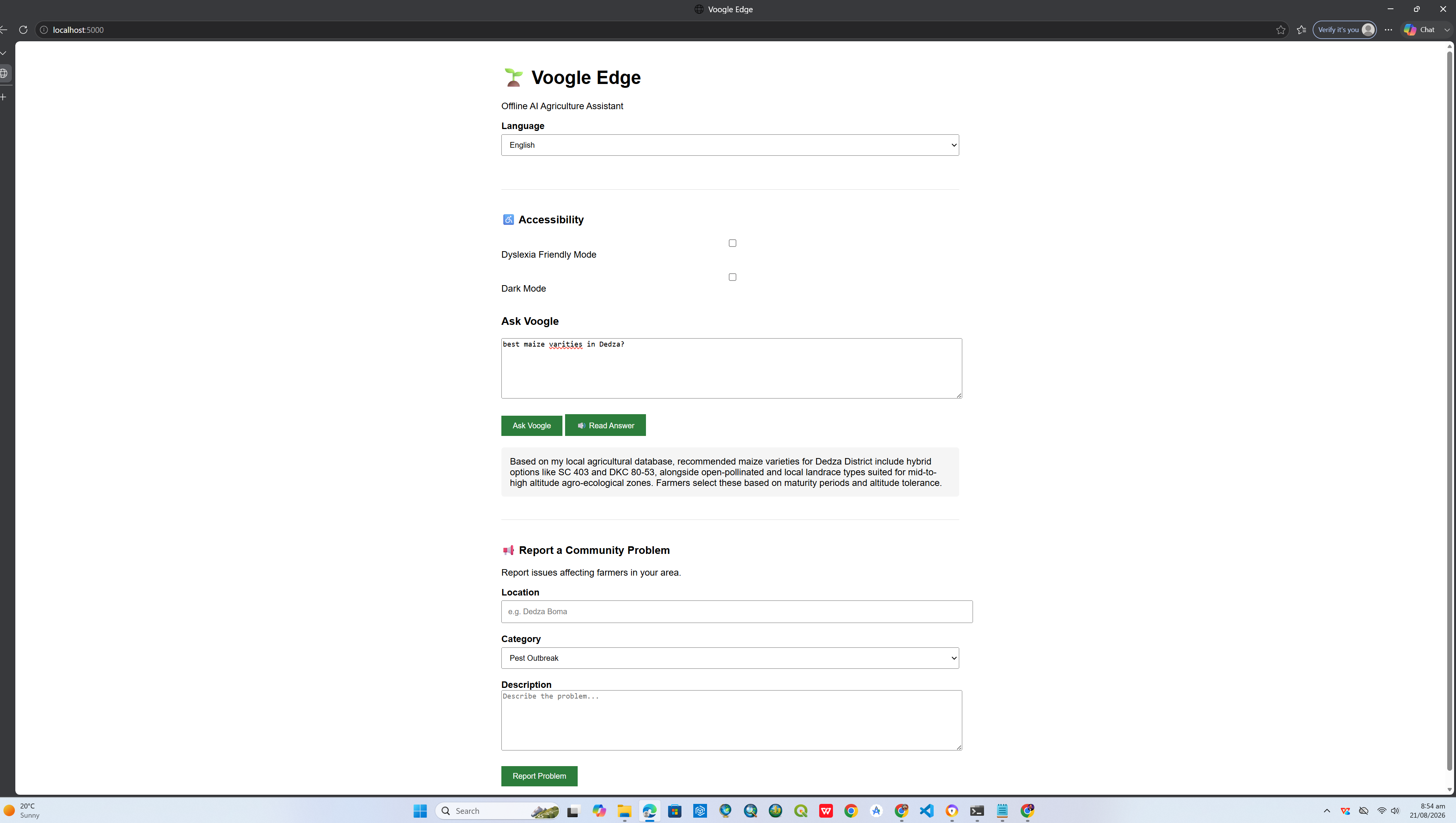
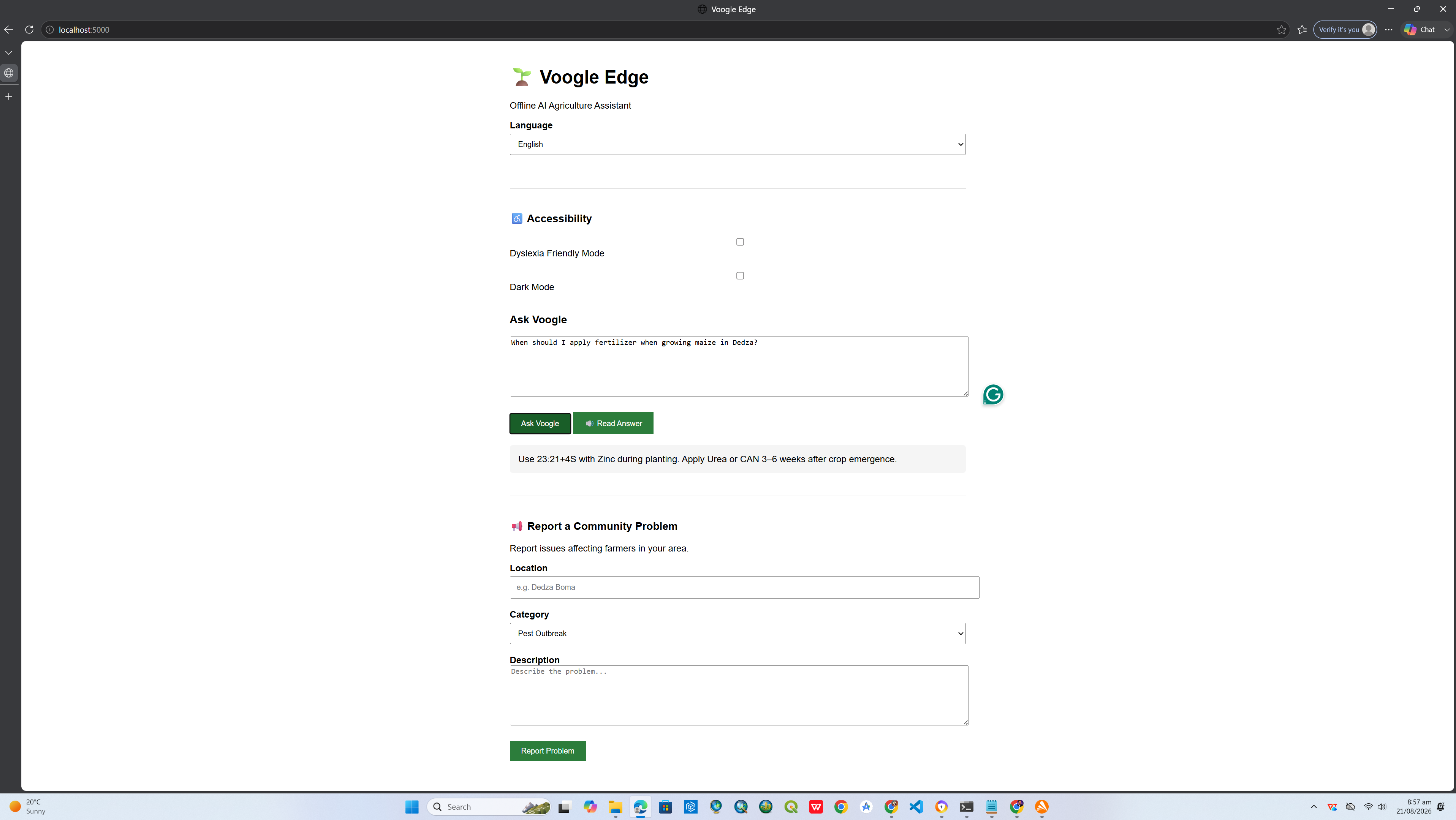
Screenshot of Voogle Edge Interface in English Language
-
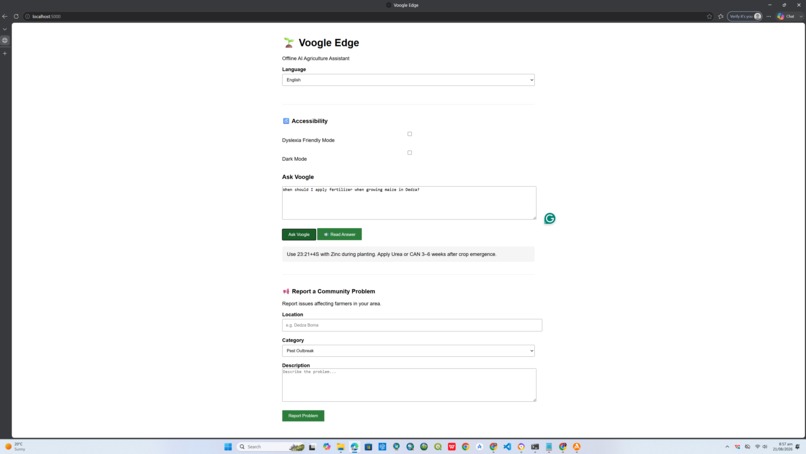
Screenshot of Voogle Edge Interface in English Language different prompt
-
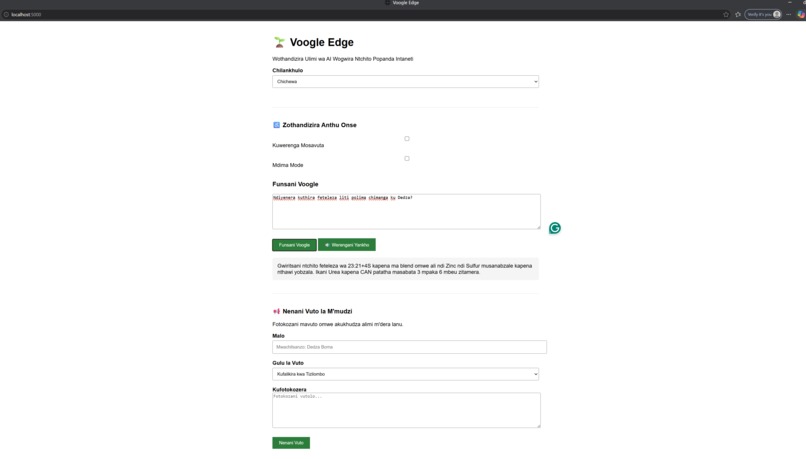
Screenshot of Voogle Edge Interface in Chichewa Language different prompt
-
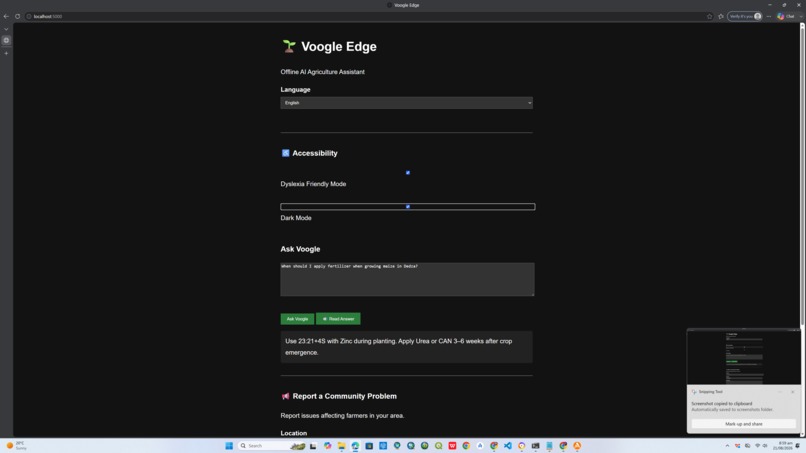
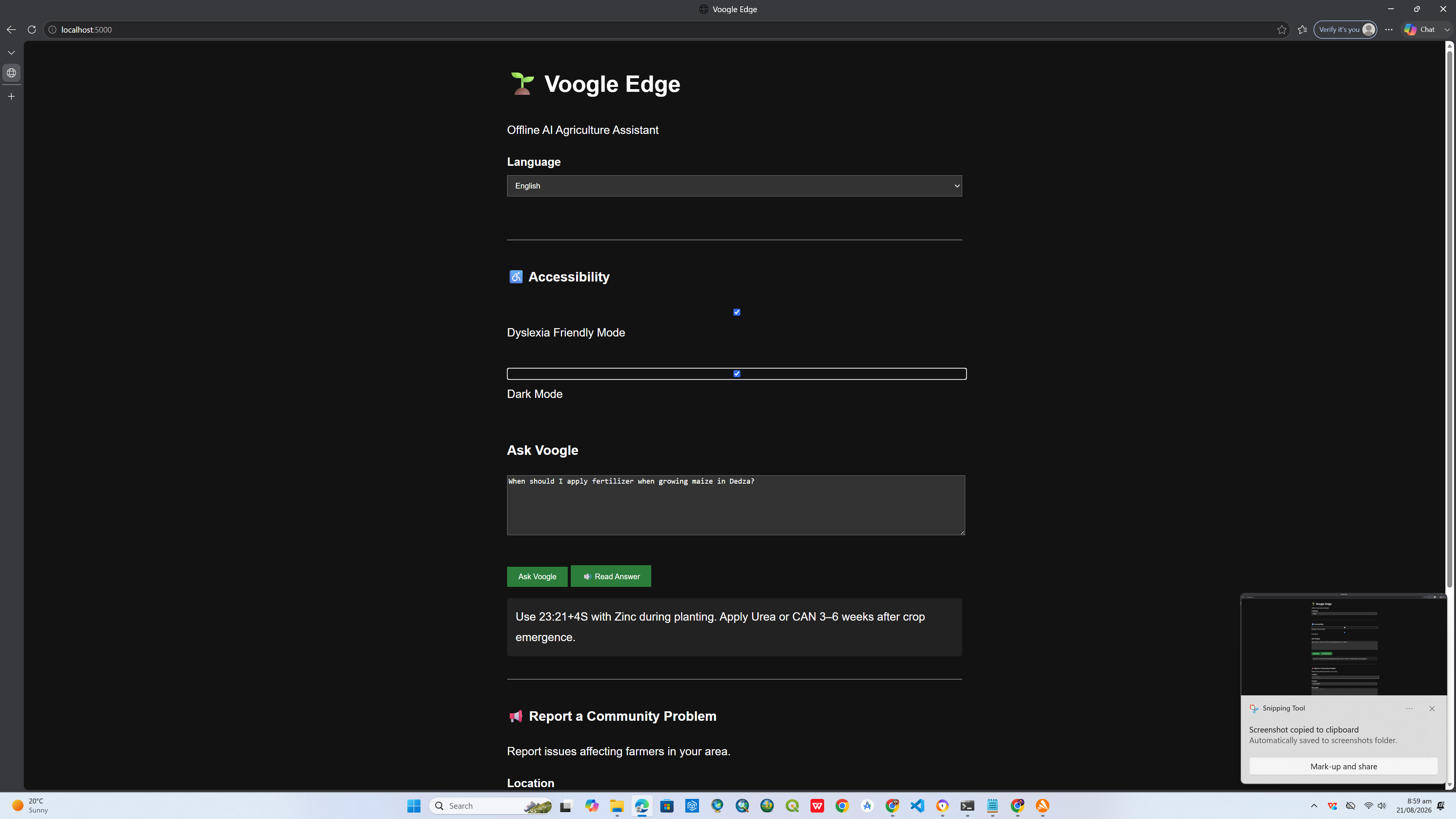
Dyslexia+ Dark Mode of Voogle Edge
-
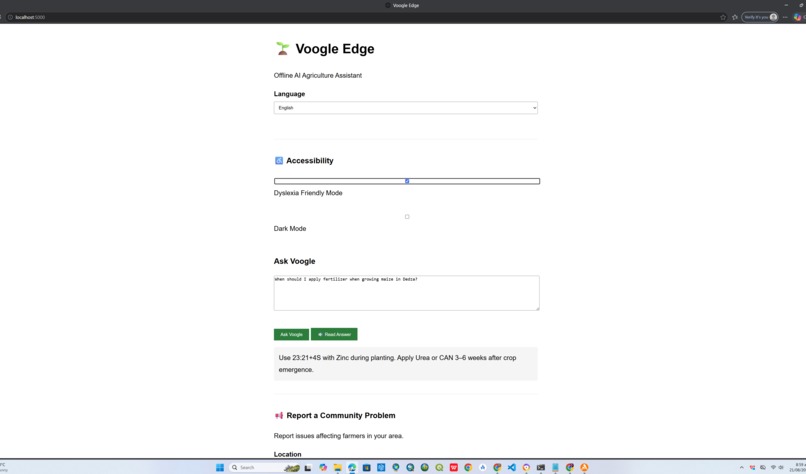
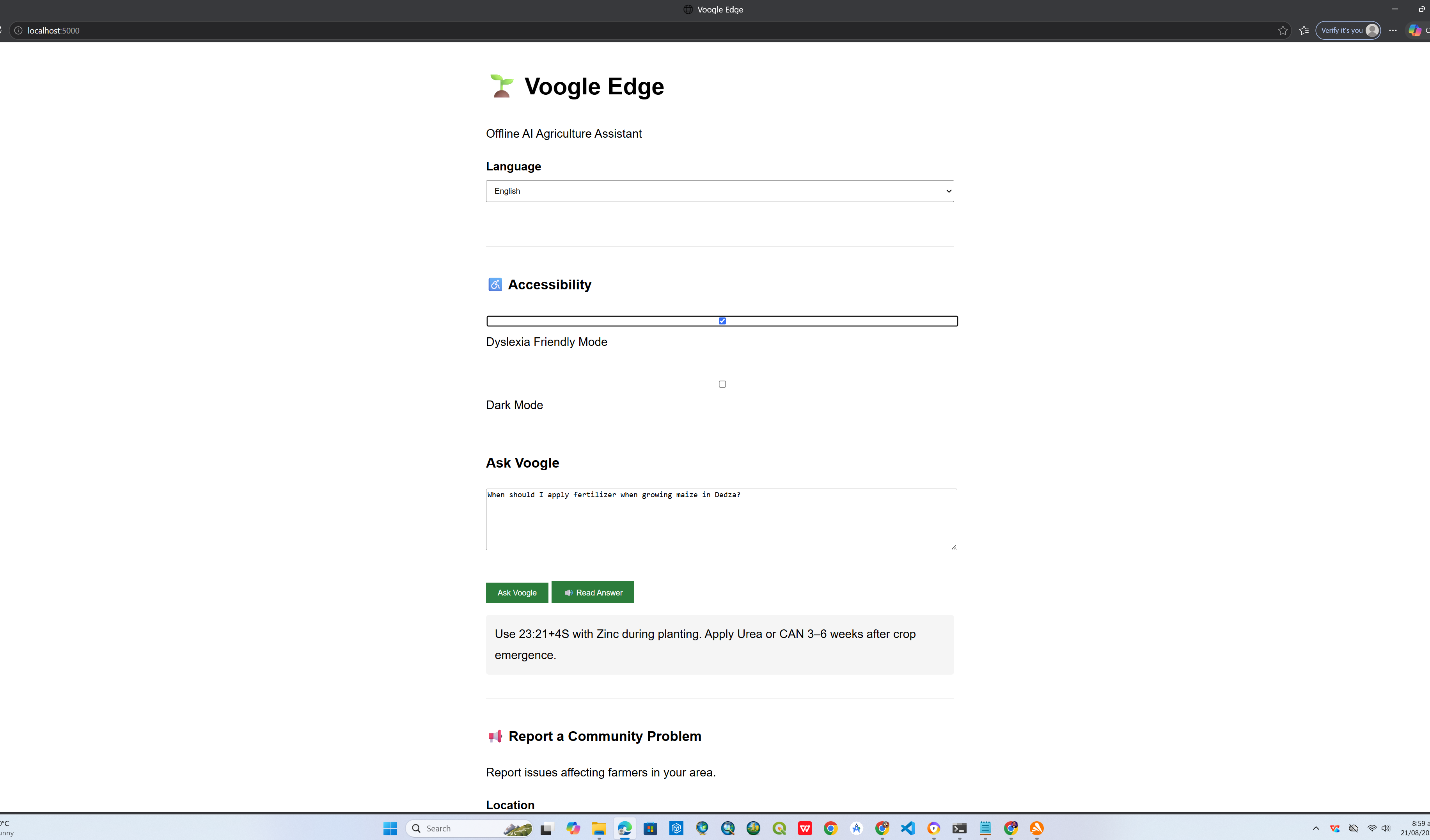
Dyslexia Mode of Voogle Edge
Voogle Edge
Inspiration
I grew up in Chikangawa, a remote area in Malawi, where access to information was often limited by poor connectivity and the high cost of internet access. For many people, especially farmers, getting reliable information could mean traveling long distances or waiting for someone with access to help.
This experience inspired us to build Voogle (from Village Google) SMS, an AI-powered platform that delivered information through simple text messages. Our goal was to make AI accessible to people without smartphones or reliable internet.
As we developed and tested the platform, we discovered a deeper challenge. Even SMS solutions still depend on network coverage, and many of the communities we hoped to serve struggled with connectivity itself. We realized that if we truly wanted to reach underserved communities, we needed a solution that worked completely offline.
That realization became the foundation of Voogle Edge.
What Voogle Edge Does
Voogle Edge is an offline AI assistant that provides localized agricultural knowledge directly from affordable devices without requiring internet access.
Users can ask questions about:
- Crop production
- Pest and disease management
- Fertilizer application
- Farming best practices
- General agricultural guidance
The system is designed for:
- Smallholder farmers
- Rural communities
- Low-connectivity users
- Students and extension workers
- People with disabilities who may face additional barriers to accessing information
How We Built It
We built Voogle Edge using:
- A lightweight local language model running through llama.cpp
- Quantized GGUF models optimized for low-resource hardware
- Agricultural knowledge tailored to Malawi
- English and Chichewa language support
- An offline deployment architecture that eliminates dependence on cloud services
To make the solution practical on affordable devices, we optimized the model to balance performance and resource usage.
Our deployment uses a locally packaged model that runs entirely on-device, allowing users to receive answers without an internet connection.
Challenges We Faced
Building an offline AI assistant came with several challenges:
- Finding a model that could run efficiently on ordinary laptops.
- Balancing speed, memory usage, and response quality.
- Packaging the solution for offline deployment.
- Creating agricultural test prompts relevant to Malawi.
- Ensuring accessibility for users with limited digital resources.
We initially experimented with larger models but encountered compatibility and hardware limitations. This forced us to evaluate different models and optimize our deployment pipeline until we found a configuration that worked reliably within the competition constraints.
What We Learned
One of the biggest lessons from this project is that innovation starts with understanding real problems.
We began with an SMS-based AI solution, but through development and reflection we realized the larger issue was connectivity itself. That insight pushed us to create a solution that removes the internet requirement entirely.
We also learned that meaningful AI does not always need powerful cloud infrastructure. With careful optimization, useful AI systems can run locally and still deliver value to underserved communities.
Impact
Voogle Edge is about more than agriculture.
It is about ensuring that access to knowledge is not determined by where someone lives, how much they earn, whether they have internet access, or whether they live with a disability.
By bringing AI directly to the edge, we hope to make information more accessible to the communities that need it most.
Looking Ahead
Our long-term vision is to expand Voogle Edge beyond agriculture into areas such as education, healthcare information, and community development.
We believe that everyone deserves access to knowledge, regardless of connectivity.
Voogle Edge is our step toward that future.



Log in or sign up for Devpost to join the conversation.