-
-
Our logo.
-
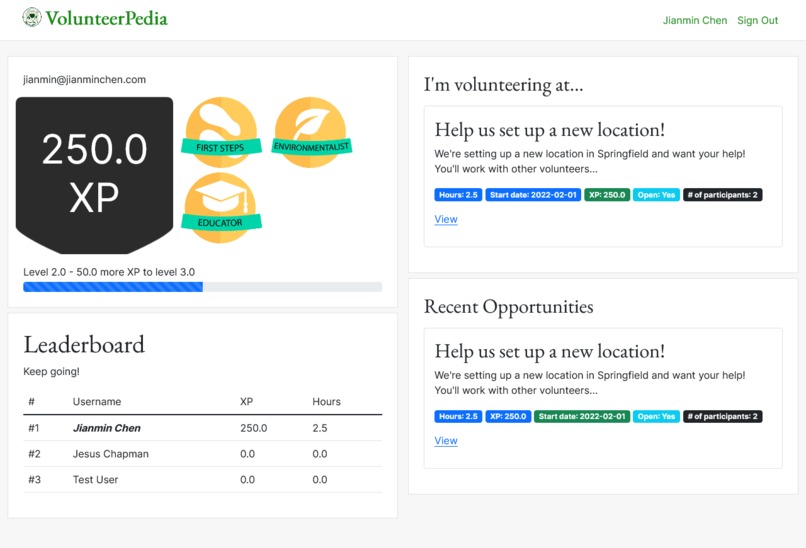
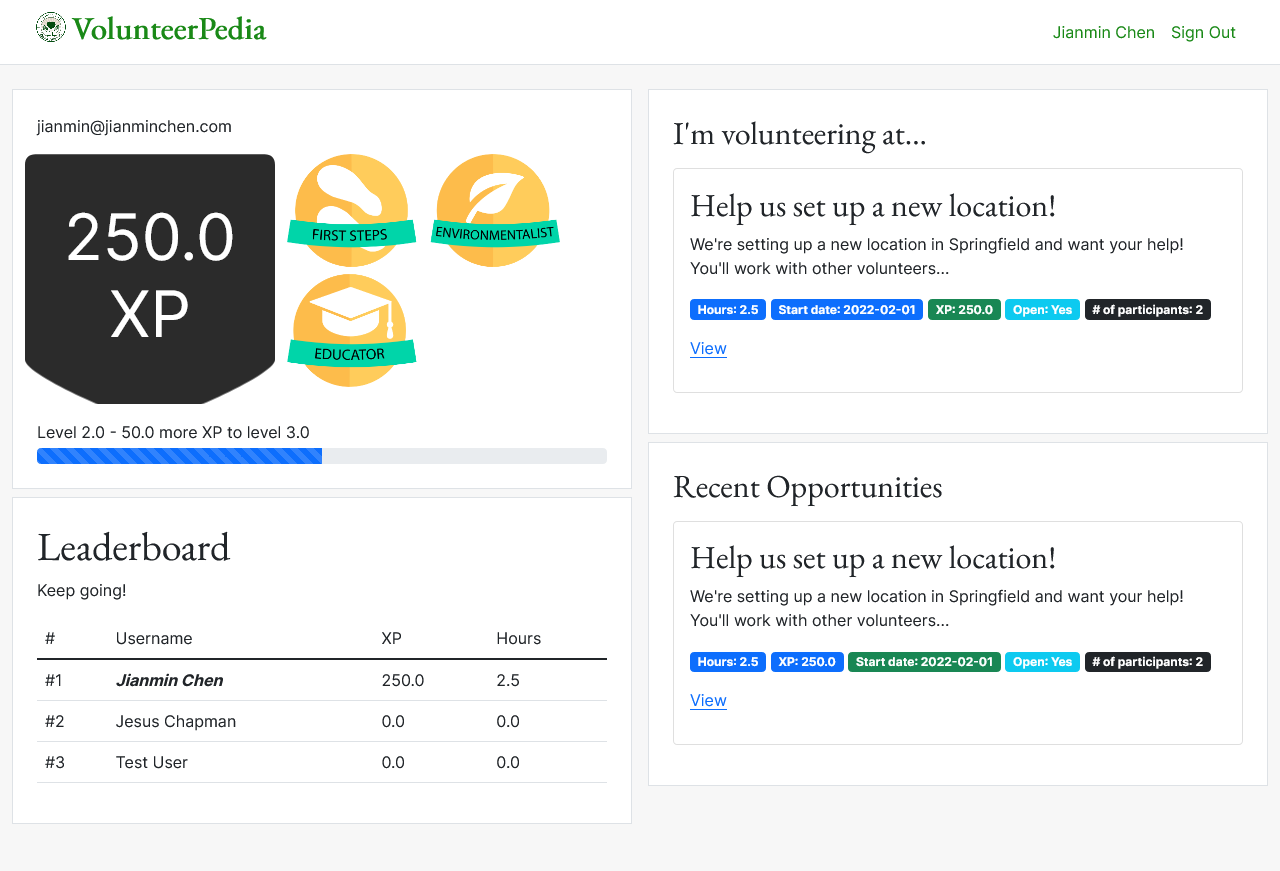
The user dashboard.
-
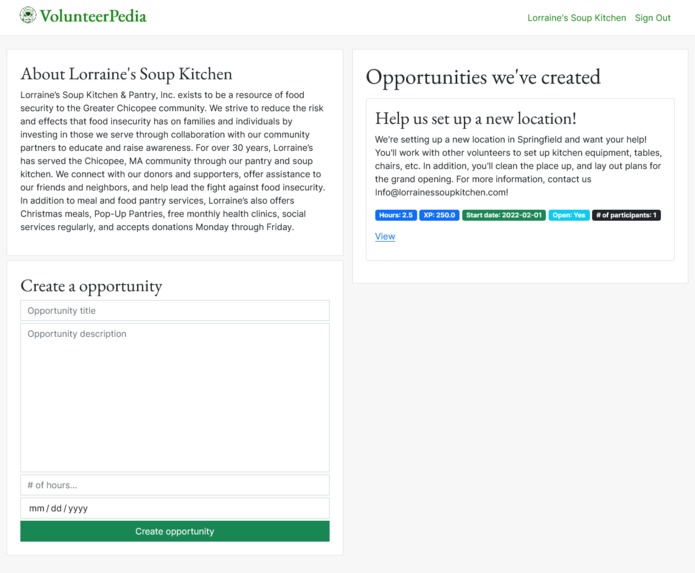
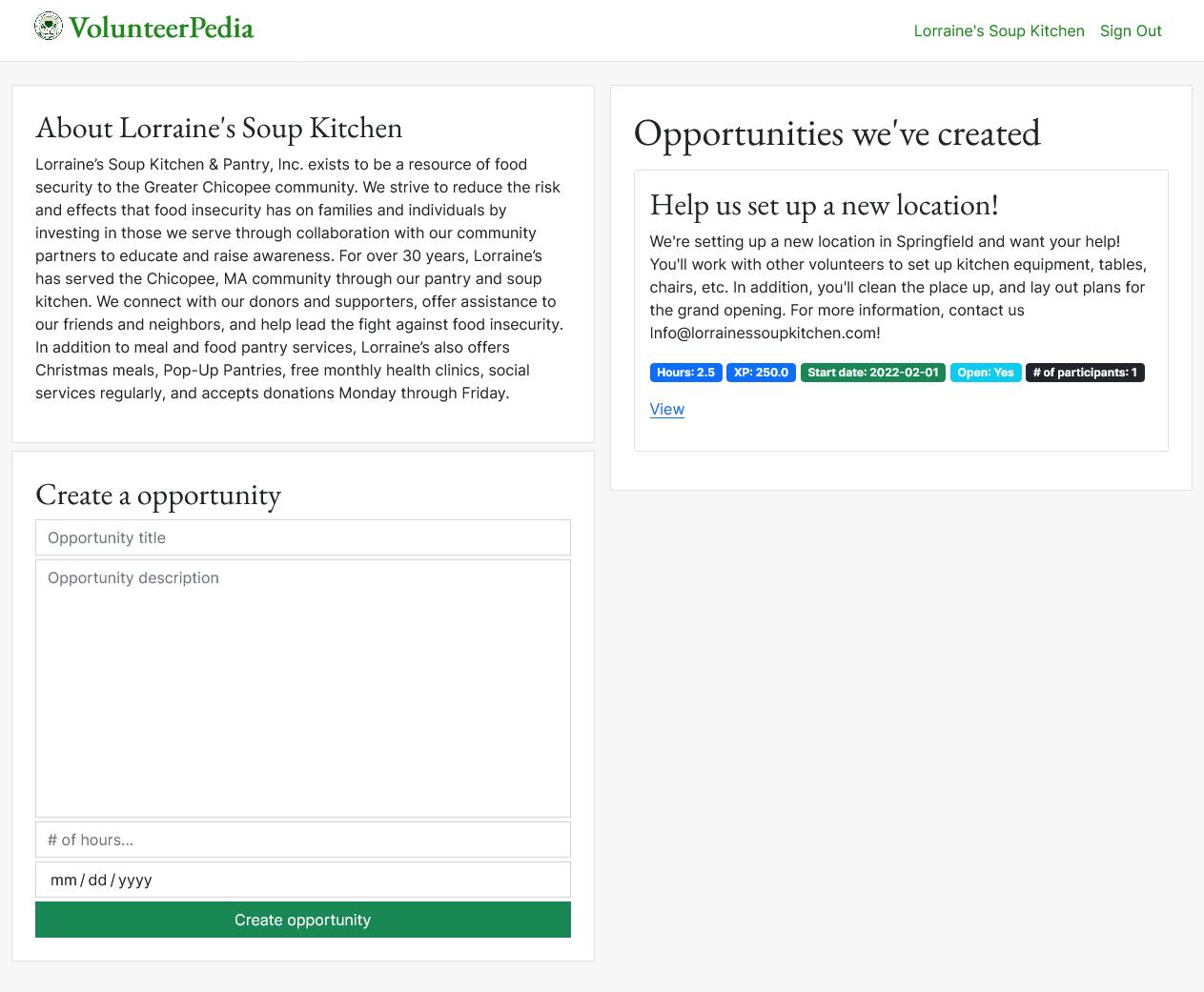
The organization dashboard.
-
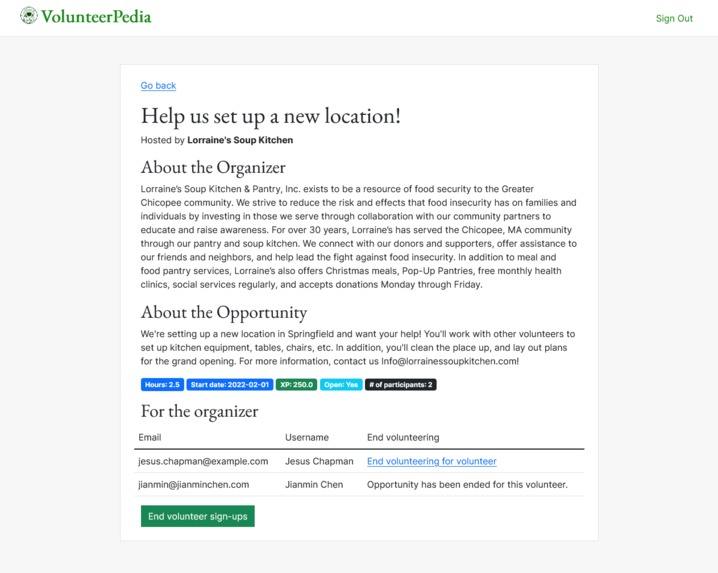
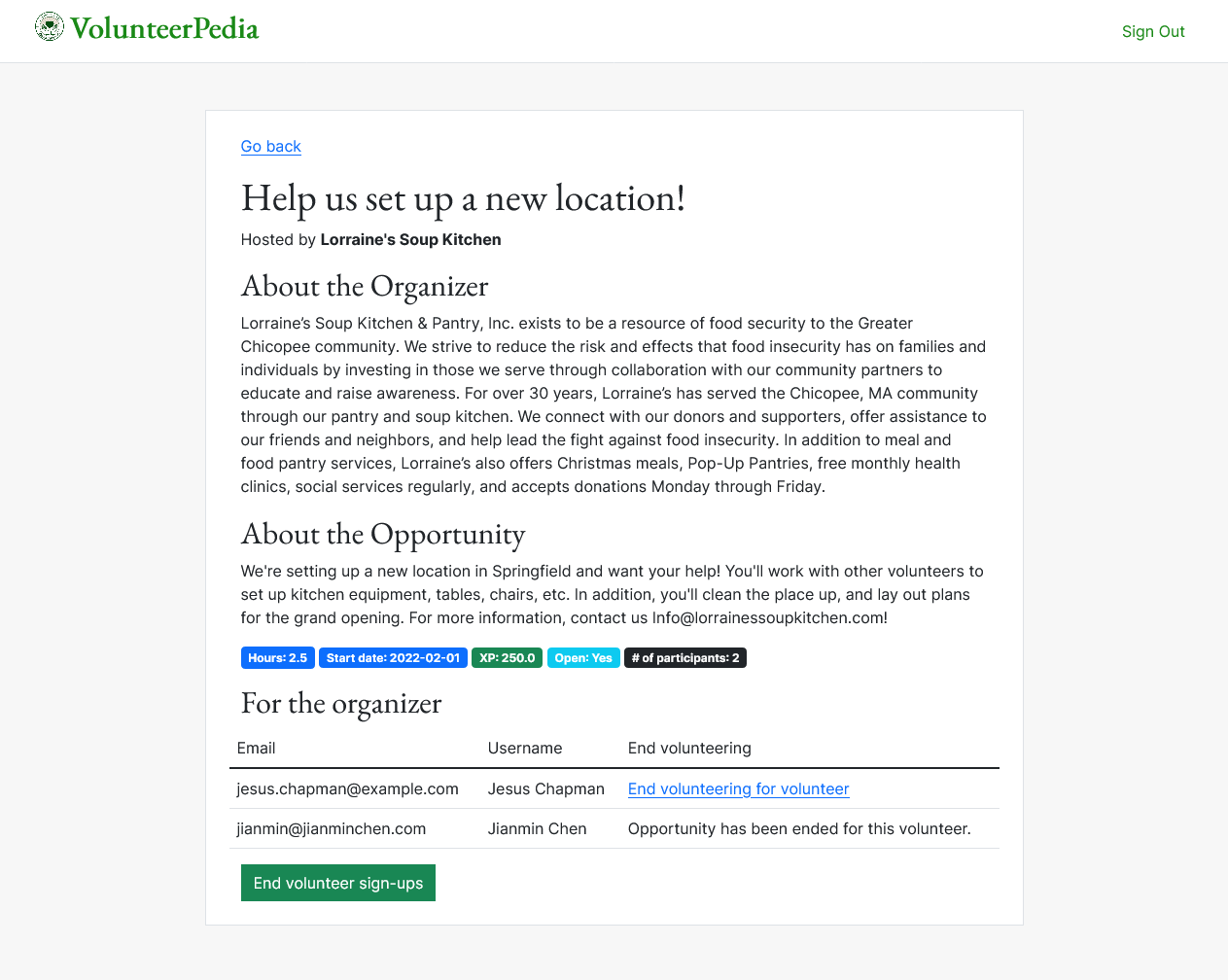
How an opportunity looks like.
Inspiration
As high school students, most of us are required to volunteer. What about those that don't or those that don't know where to find these opportunities?
We wanted to find a way to encourage other teens, as well as adults and kids, to volunteer outside of requirements. So we came up with VolunteerPedia: the fun volunteering app. With VolunteerPedia, we hope to encourage those who wouldn't usually volunteer to give it a try. Maybe they'll end up loving it!
What it does
Rather than only providing a platform for volunteers to connect with organizations, VolunteerPedia also runs as a competition for the volunteers, who compete to receive badges, level up, and show on the leaderboard. After volunteers find available opportunities on VolunteerPedia's user-friendly platform, they are able to volunteer, collecting hours and experience points (XP) for their profile.
As volunteers compete, non-profit organizations get the help they desperately need. Organizations can post a volunteer opportunity and get a list of ready and willing volunteers who want to volunteer with them for a set amount of time.
How we built it
We built the VolunteerPedia platform with Python, Flask, and SQL, with the frontend consisting of HTML, CSS, and Bootstrap. The demo link was deployed using Heroku.
Challenges we ran into
Time management and communication over different platforms were a major issue for us, but we got through it to complete the application on time. Deciding on how the gamifying system would work was also a challenge, but in the end we decided to implement a XP/level system with a leaderboard. Coming up with a idea was definitely a challenge as well, but we think that the idea we came up with after a hour-long brainstorming session was really good! We also haven't coded in python for a while but watching the hackathon workshops really helped jog our memory.
Accomplishments that we're proud of
For most of us, this is our second hackathon, meaning we haven't really had experience with hackathons before. Our application is something we're really proud of - it's fully functional, plus we built it in only thirty-six hours. Integrating the different frameworks and programming languages together is also an accomplishment we're proud of.
What we learned
While making VolunteerPedia, we learned a lot about the process of building a full-stack web application. Only one of us had experience with Flask in the past, so the rest of us learned more about what Flask is and how to use it. Additionally, we learned how to avoid some of the challenges that arise when working with a remote group on a project, from sleeping times to issues with communication technology. We also used the python workshops as a refresher.
What's next for VolunteerPedia
After the competition, we want to improve our website design to make sure that it is user-friendly and neat for everyone who might use it. Additionally, we want to make sure our interface highlights the fun aspects of the app and volunteering in general.
In the future, we want to add certificates to VolunteerPedia that confirm how many hours a volunteer has volunteered. These could be used to combine different volunteer opportunities to fill required volunteering hours.
Additionally, we want to improve our badge system to add dynamic badges that display for specific achievements the user has completed, such as volunteering in a certain area, setting up an account, or having a certain number of XP.
One other feature we hope to add is direct messaging between organizations and those volunteering for their organization. While we currently use email for this, we think an integrated messaging system could be beneficial for both parties.


Log in or sign up for Devpost to join the conversation.