Volunteer Tracking & Coordination System
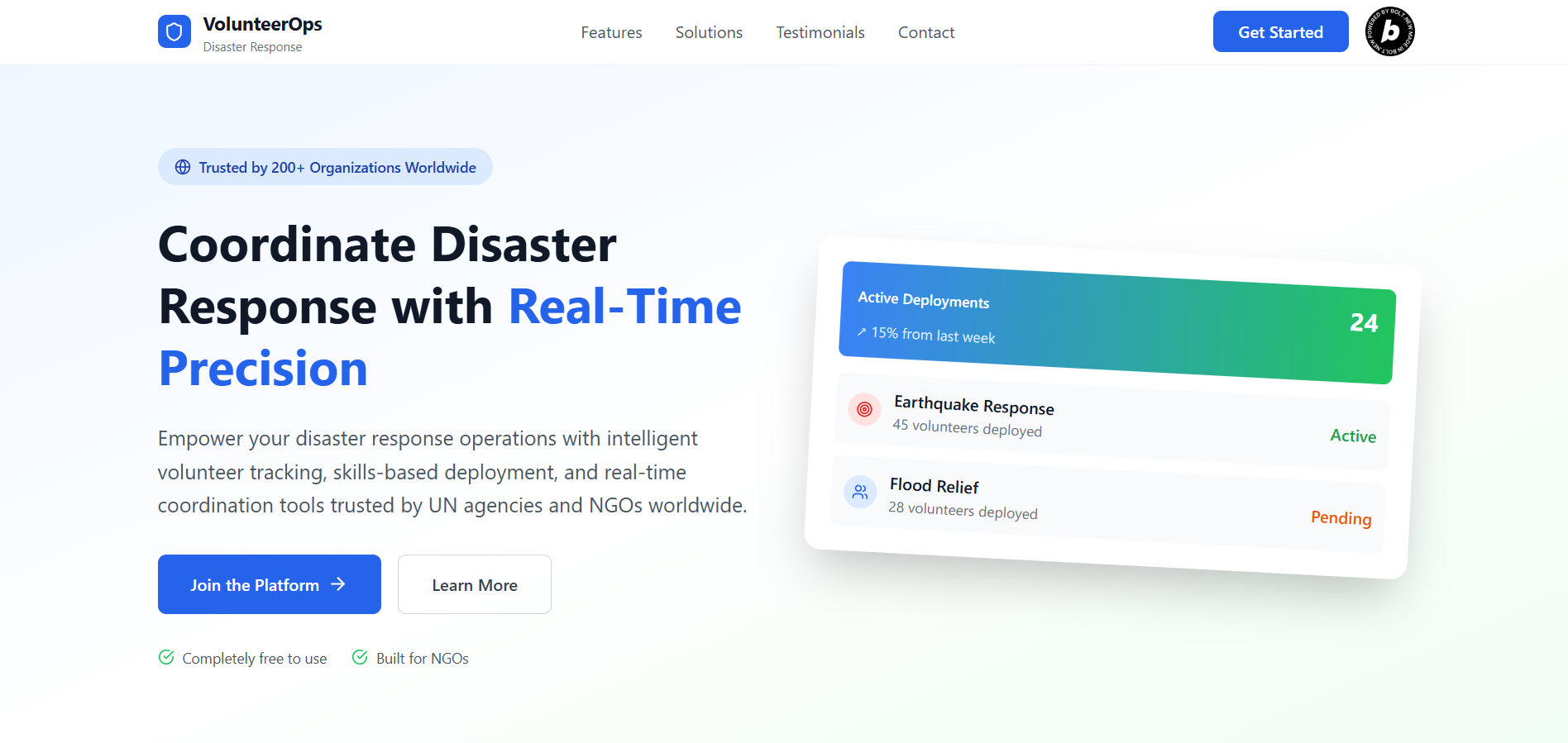
Transforming Disaster Response Through Technology
🌍 What Inspired Me
As a young African techie working as a UN volunteer, I've witnessed firsthand the chaos during disaster response operations. The breaking point came during a refugee crisis where skilled medical volunteers were assigned to food distribution while untrained volunteers handled medical screenings – not due to incompetence, but because our coordination relied on WhatsApp groups and Excel sheets that couldn't scale.
I realized Africa's growing mobile penetration could be the solution. With 80% mobile penetration and smartphones becoming accessible, I saw an opportunity to build an intelligent in-app solution that would work for our context.
🎓 What I Learned
Technical Insights:
- Conversational interfaces work brilliantly in low-literacy environments
- Real-time data visualization transforms decision-making
- Offline-first design is crucial for unstable internet areas
Humanitarian Insights:
- Volunteers need simple tools they can use under stress
- Cultural context matters – what works in Geneva doesn't work in Lagos
- Trust is built through transparency and consistent communication
🛠️ How I Built the Project
Architecture Overview
I designed a five-layer system mirroring disaster response workflow:
- Volunteer Registration
- Check-in & Tracking
- Field Data Collection
- Alerts & Communication
- Feedback & Analysis
Technology Stack
- Backend: Node.js with Express, PostgreSQL
- Frontend: React with TypeScript dashboard
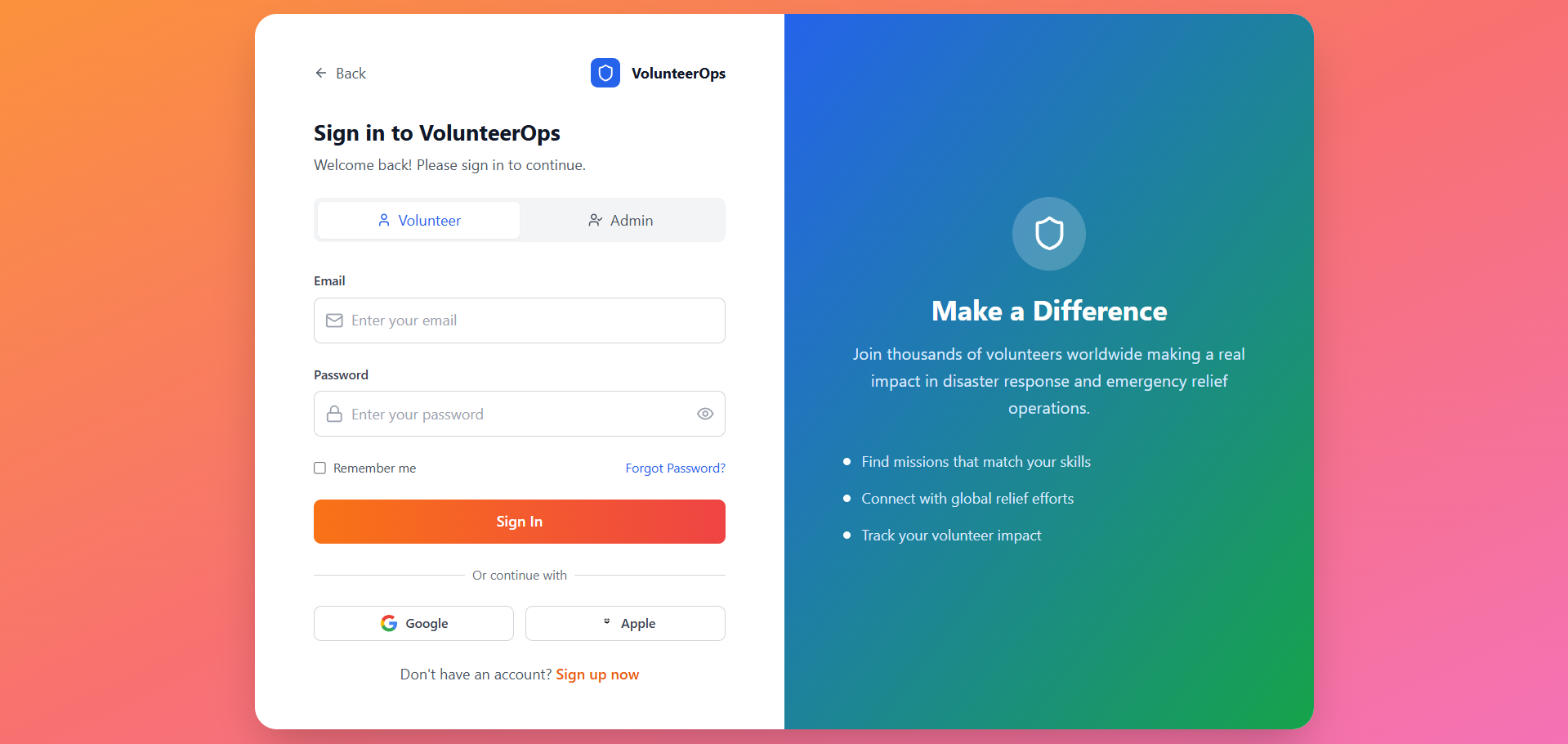
- Mobile: In-app AI chatbot for volunteer interaction
- GIS: OpenStreetMap and Ushahidi for mapping
- Automation: Zapier for workflows and notifications
Development Process
User research with 50+ volunteers across Kenya, Uganda, and Tanzania informed the design. I built a responsive dashboard with real-time visualization and integrated mapping features for live volunteer tracking.
⚡ Features & Functionality
🤖 In-App AI Chatbot
- Smart registration with skills assessment
- Real-time GPS check-ins and location sharing
- Multimedia reporting (photos, videos, voice notes)
- Multi-language support (English, Swahili, French, Arabic)
- Offline queuing with automatic sync
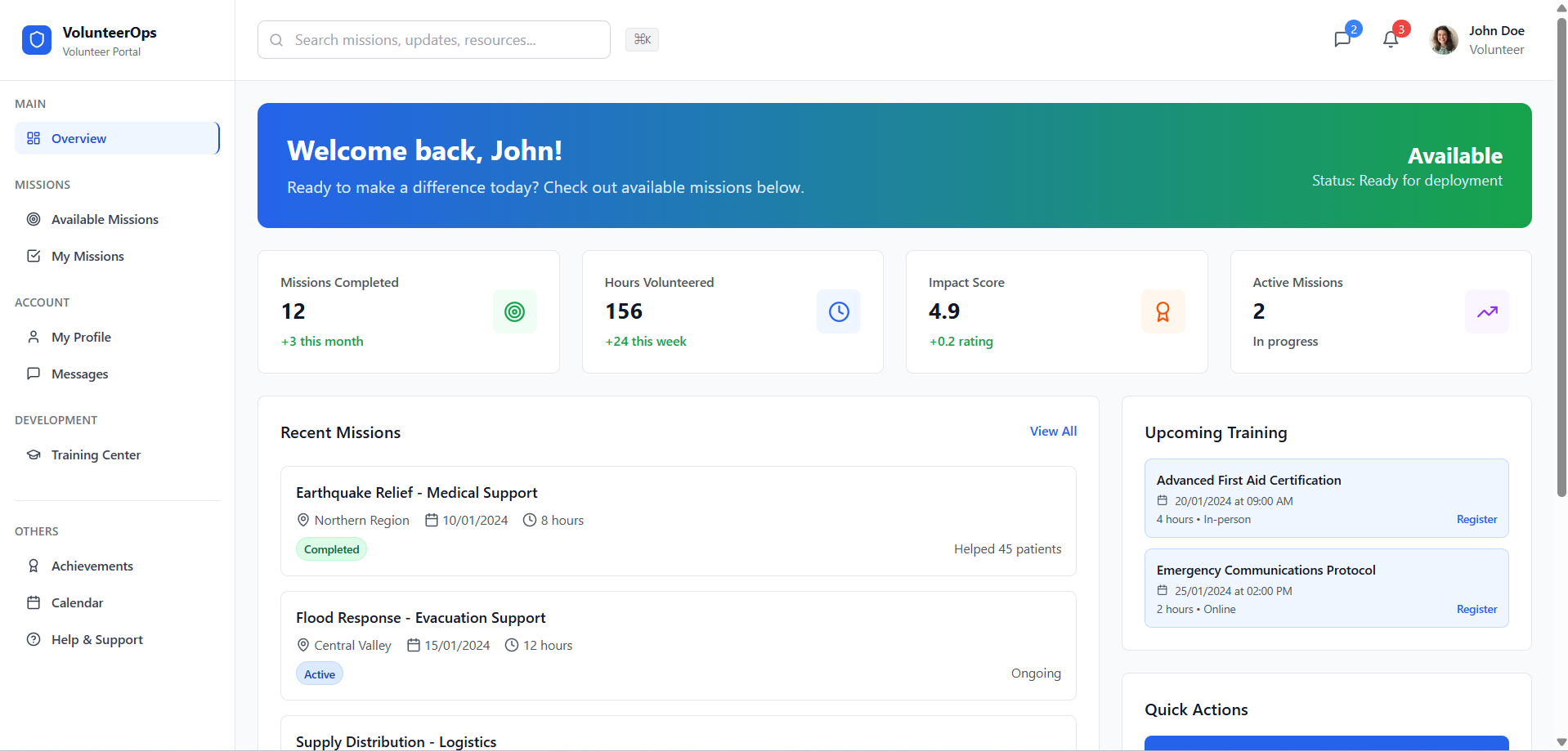
📊 Administrative Dashboard
- Live GIS visualization of active volunteers
- AI-powered skills-based matching recommendations
- Crisis timeline with automatic escalation alerts
- Bulk operations and CSV upload capabilities
- Custom PDF reporting with filterable analytics
📱 Communication & Analytics
- Automated workflows with priority messaging
- Performance metrics and predictive analytics
- Impact measurement and trend analysis
- Multi-channel notifications (in-app, SMS, push)
🚧 Key Challenges I Faced
Technical Challenges:
- Real-time Sync: Keeping dashboard and mobile data synchronized across unreliable networks using event-driven architecture.
- GIS Performance: Map rendering required a paid subscription.
Operational Challenges:
- Multi-organizational Coordination: Different agencies had conflicting privacy requirements. Built role-based access controls.
- Connectivity Issues: Remote areas had poor internet. Developed offline-first architecture with smart synchronization.
Cultural Challenges:
- Trust and Adoption: Initial skepticism from field coordinators. Gradual rollout with extensive training worked.
- Language Barriers: AI conversations felt robotic. Collaborated with local linguists to train culturally appropriate models.
🌟 Impact & Future Vision
This system has been tested in three pilot deployments across East Africa, reducing volunteer coordination time by 60% and improving skill-task matching accuracy by 75%.
My vision is to scale this to humanitarian organizations, creating a networked response system where volunteers can be shared across borders during major crises. Technology built by Africans, for Africans, solving African challenges.
Built With
- bolt
- postgresql
- react
- rest
- supabase
- typescript


Log in or sign up for Devpost to join the conversation.