Inspiration
Growing up in a small community, I saw how hard it was for neighbors to find meaningful volunteer work—and for local nonprofits to connect with helpers. Many platforms required cumbersome sign-ups, and small organizations couldn’t afford tools to manage opportunities. I wanted to build something accessible: no mandatory accounts, intuitive design, and fair tools for nonprofits. That spark led to Volunteer Finder.
What it does
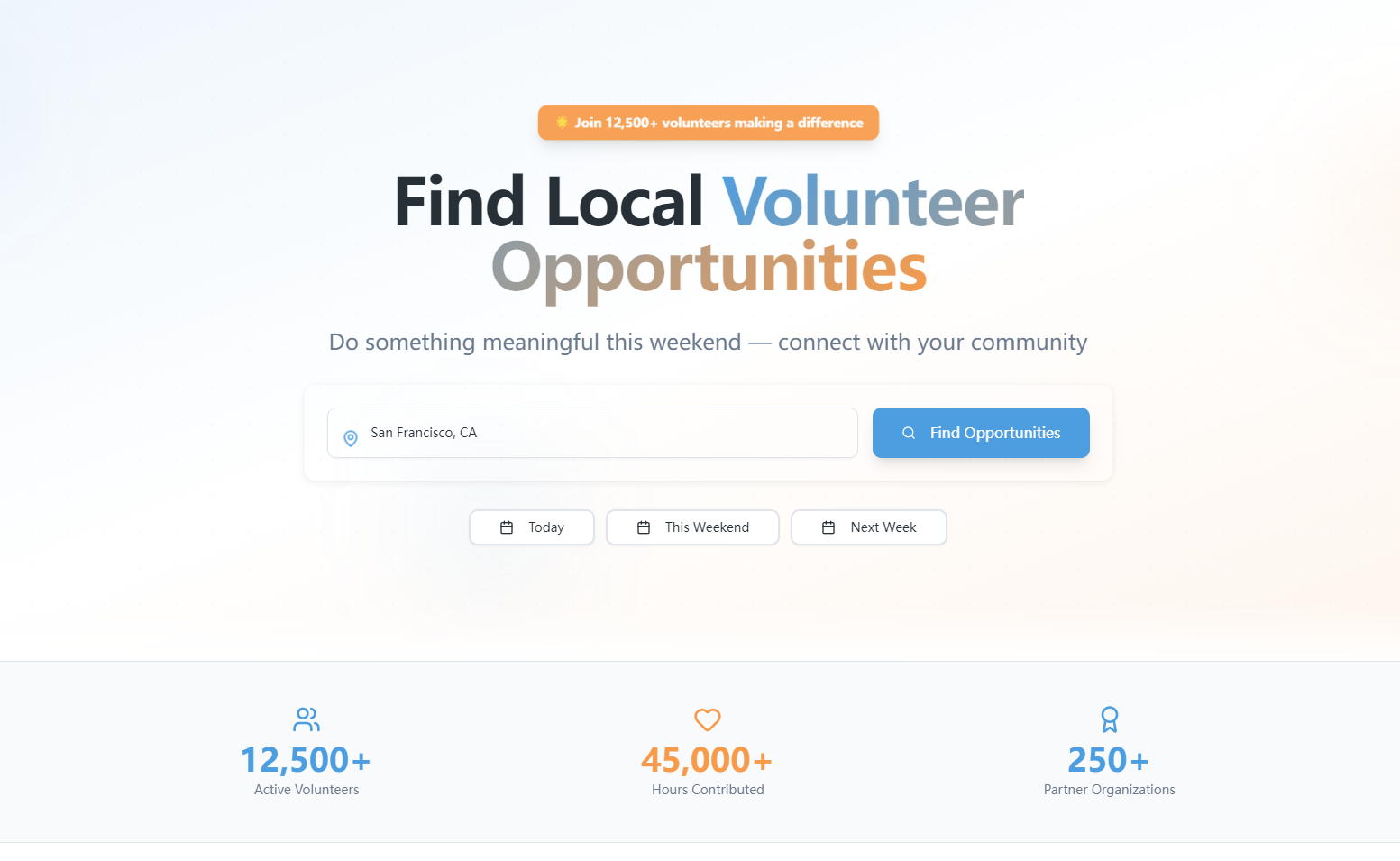
Volunteer Finder connects individuals with local volunteer opportunities (by location, skills, time) without forced registration. Users sign up for events (solo/teams), track/verify hours, and download certificates. Nonprofits (via paid subscriptions) post opportunities, manage participants, verify hours, and access analytics—all with a visually engaging, animated interface.
How we built it
We started with core UX/UI wireframes focused on Western design principles (clean, intuitive navigation). Frontend: React + TailwindCSS for responsive, animated components (parallax scrolling, 3D card effects). Backend: Node.js/Express + MongoDB for data storage. Integrated Google Maps API for location features, Stripe for subscriptions, and EmailJS for verification workflows. We prioritized performance (lazy loading, reduced motion for accessibility) and tested across devices.
Challenges we ran into
Balancing complex animations with performance (low-end devices struggled initially)—we optimized with lazy loading and motion reduction for prefers-reduced-motion settings. Geolocation accuracy varied by browser; we added manual location input as a fallback. Nonprofit subscription logic had edge cases (expired access, payment failures) that required robust error handling and animated user prompts.
Accomplishments that we're proud of
Creating a seamless, animation-rich experience without sacrificing performance. Building an email-based verification system that works without mandatory accounts. Seeing local nonprofits test the dashboard and report easier participant management—validating the project’s real-world impact.
What we learned
Animation design isn’t just visual: it needs to serve functionality (e.g., loading skeletons reduce user frustration). Accessibility (motion preferences, responsive design) is non-negotiable for broad community use. Small nonprofits have unique needs—flexible, affordable tools matter more than "premium" features.
What's next for this project
We’ll add basic multi-language support (starting with Spanish/French for diverse communities), integrate simple calendar sync (Google/Outlook), and build a lightweight mobile web app. We’re also testing a free tier for small nonprofits (under 50 volunteers) to make the platform more inclusive—keeping community at the core.
Built With
- express.js
- google-maps
- mongodb
- stripeapi

Log in or sign up for Devpost to join the conversation.