-
-
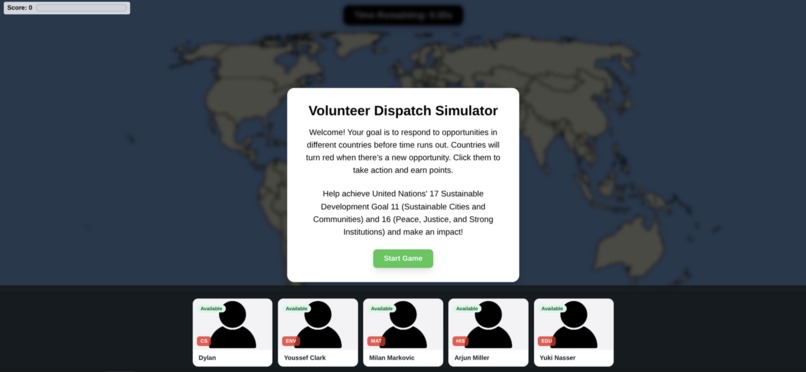
Start
-
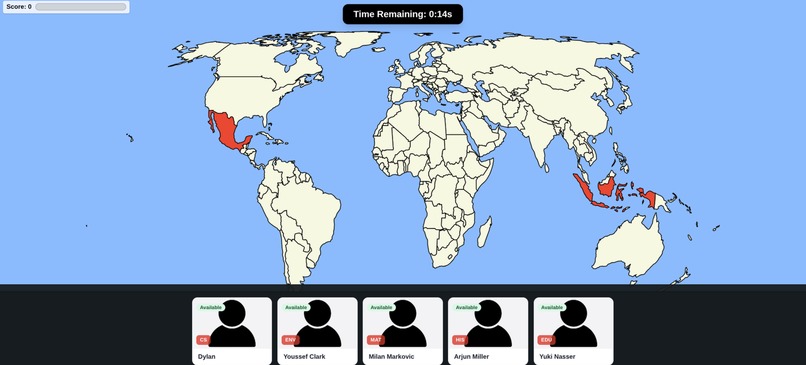
WorldMapView
-
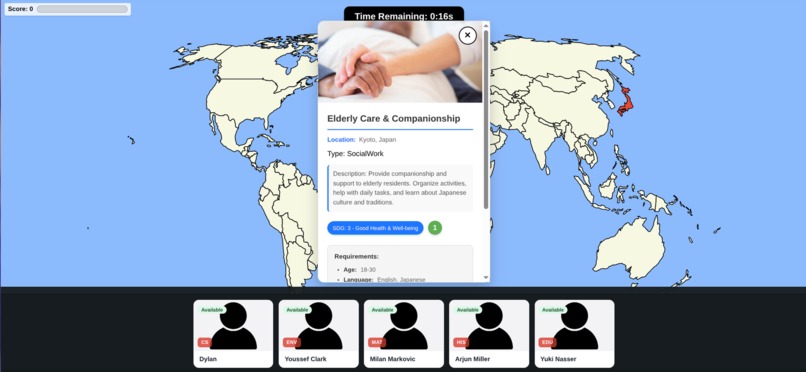
Opportunity Description
-
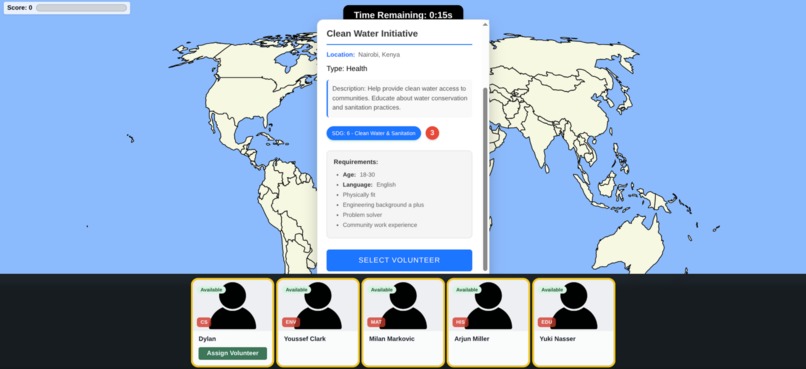
Assigning Opportunities
-
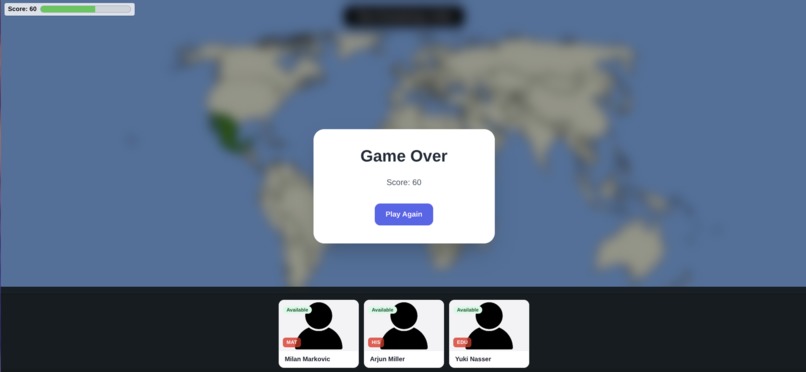
End Game Score
-
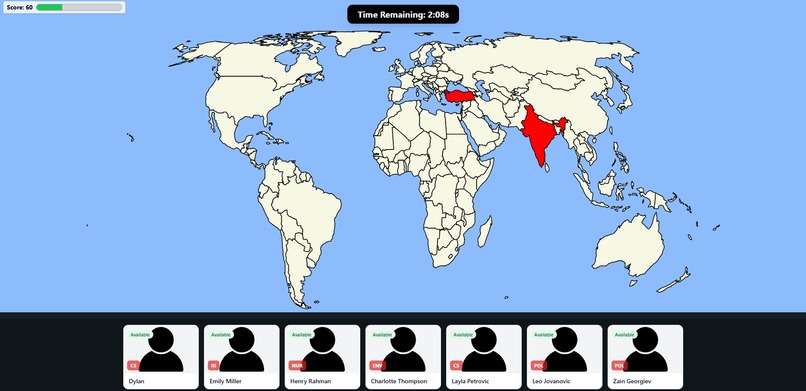
All Volunteers in "Available" State
-
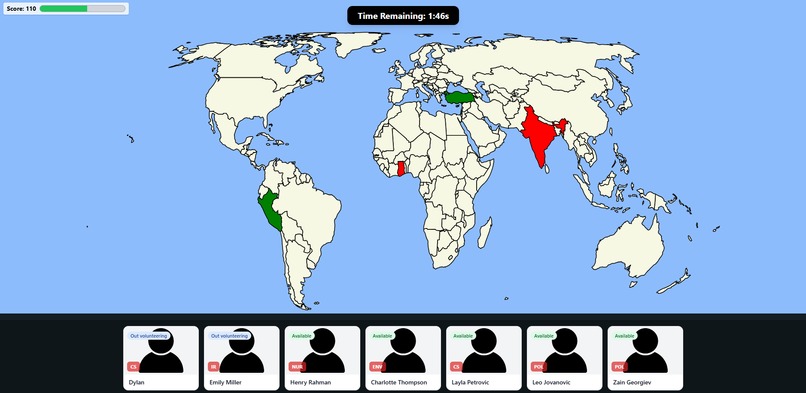
Some Volunteers in "Out" State
Inspiration
We're volunteer members (Exchange Managers) of AIESEC UK in various local committees and we wanted to develop a game where we can show off what kind of things someone from our line of work would do. AIESEC's goal is to send interested volunteers all over the world and create cross-cultural exchange experiences that develop leadership in young people.
As Exchange Managers, our role involves matching volunteers to international opportunities, supporting them through the preparation process, handling documentation, communicating with partner countries, and solving unexpected challenges along the way. It’s fast-paced, people-focused, and requires balancing multiple cases at once.
We realised that many people don’t fully understand what happens behind the scenes of an exchange. So we decided to turn our day-to-day responsibilities into a simulation game by allowing players to experience the pressure, decision-making, and strategy involved in managing volunteers.
Through this game, players step into the role of an Exchange Manager:
- Assigning volunteers to opportunities
- Managing time and volunteers.
- Developing volunteer experience levels
- Maximising successful exchanges
The idea of the game is to educate & inspire individuals to go on volunteering on the opportunities available. With this, they can aim to make a change in the world while gaining a little something to help their career or experience a cultural exchange while doing a good deed!
This project is not affiliated with or endorsed by AIESEC. It is independently created and inspired by our personal experiences as volunteers.
What it does
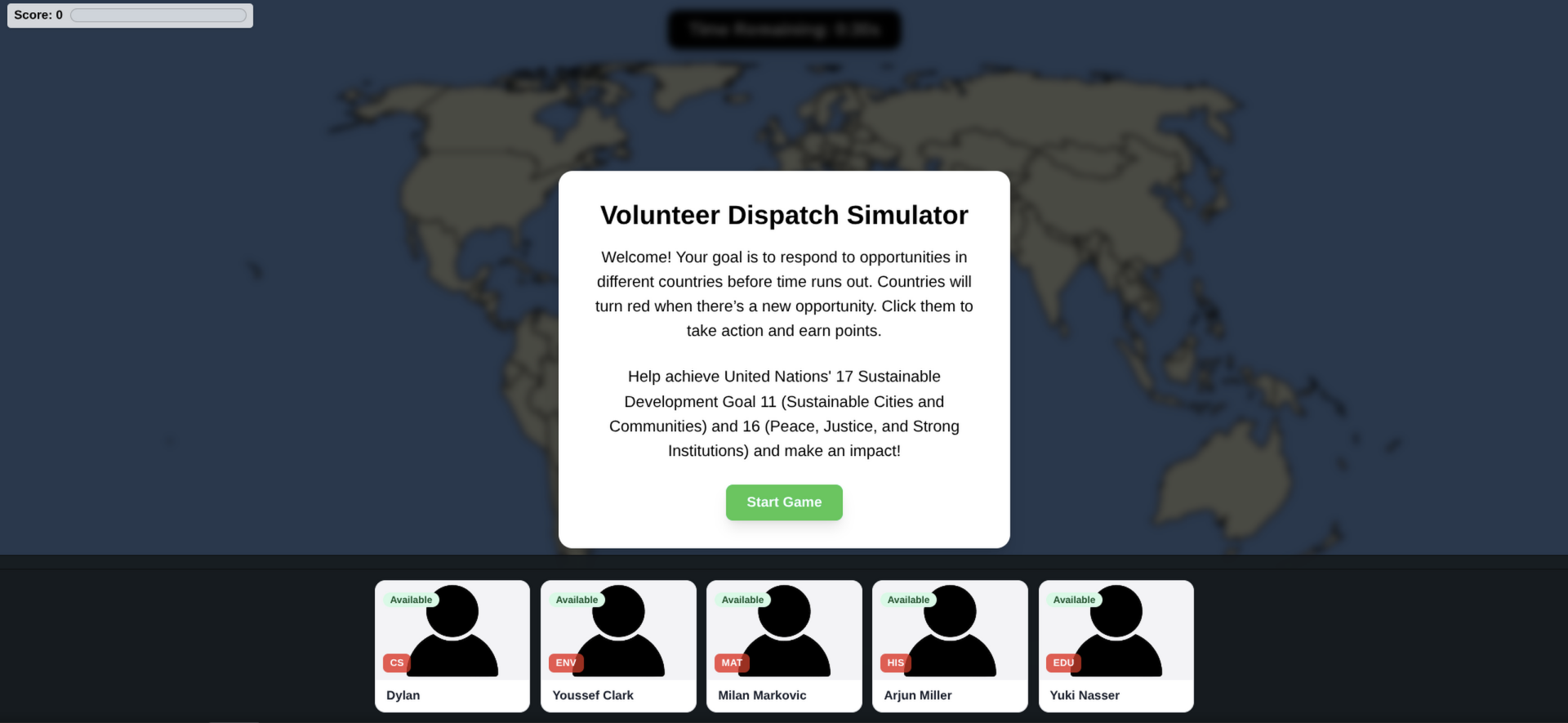
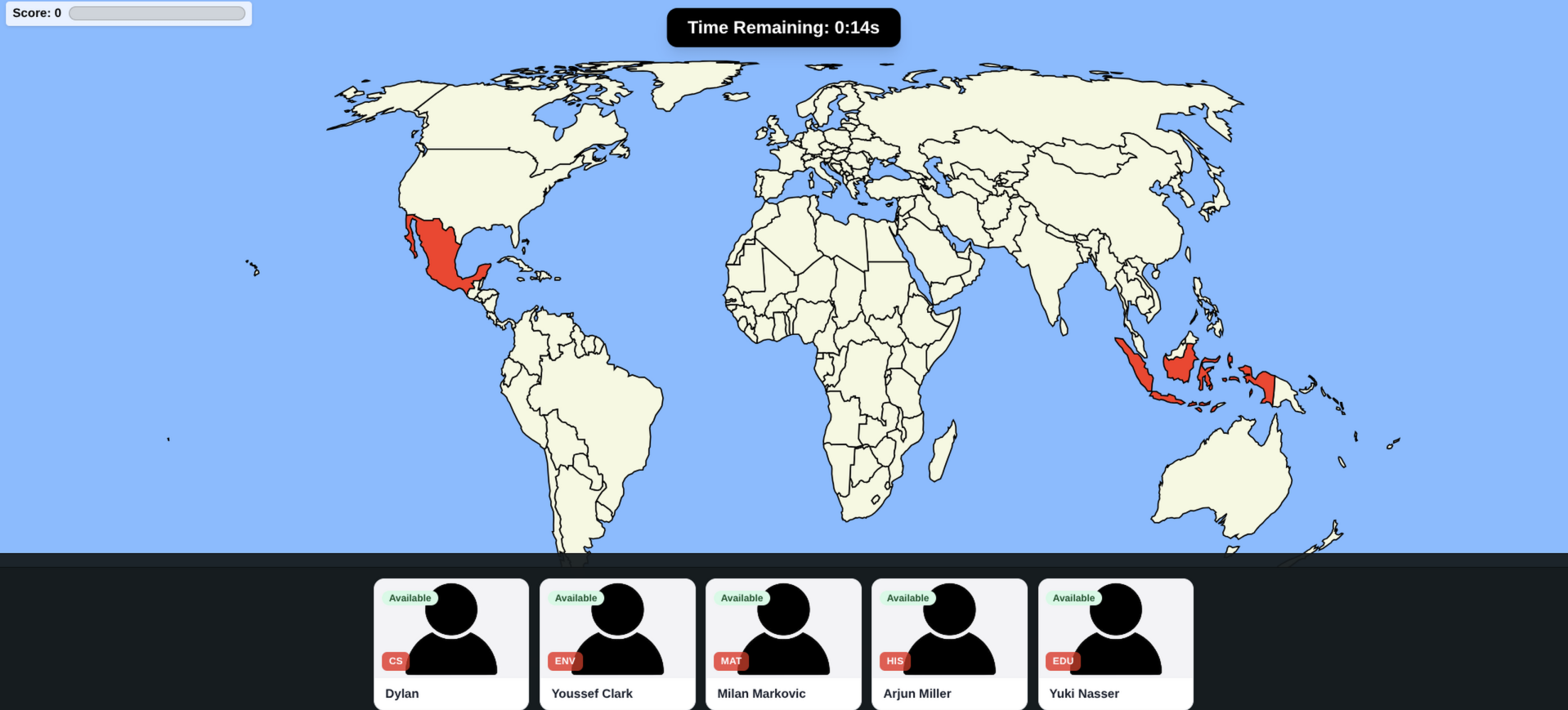
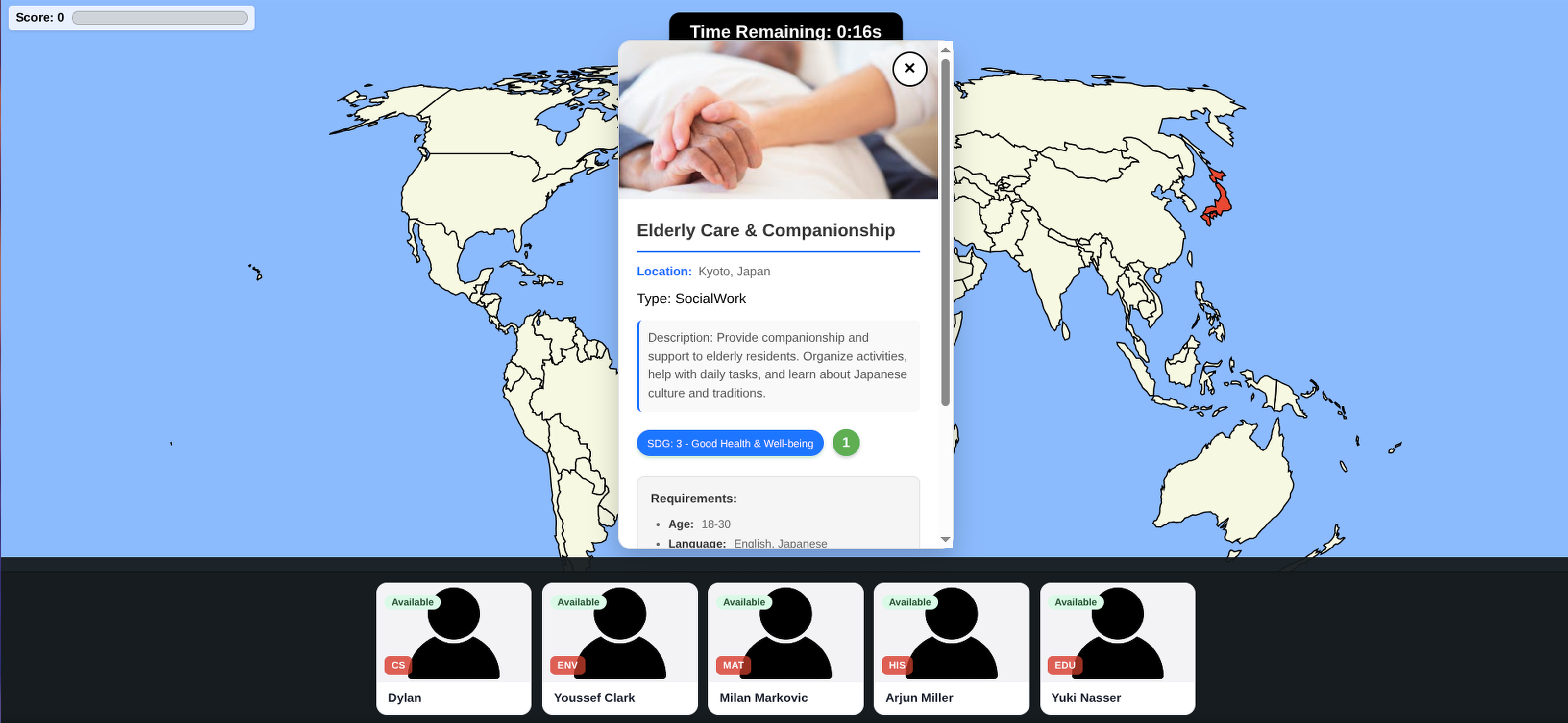
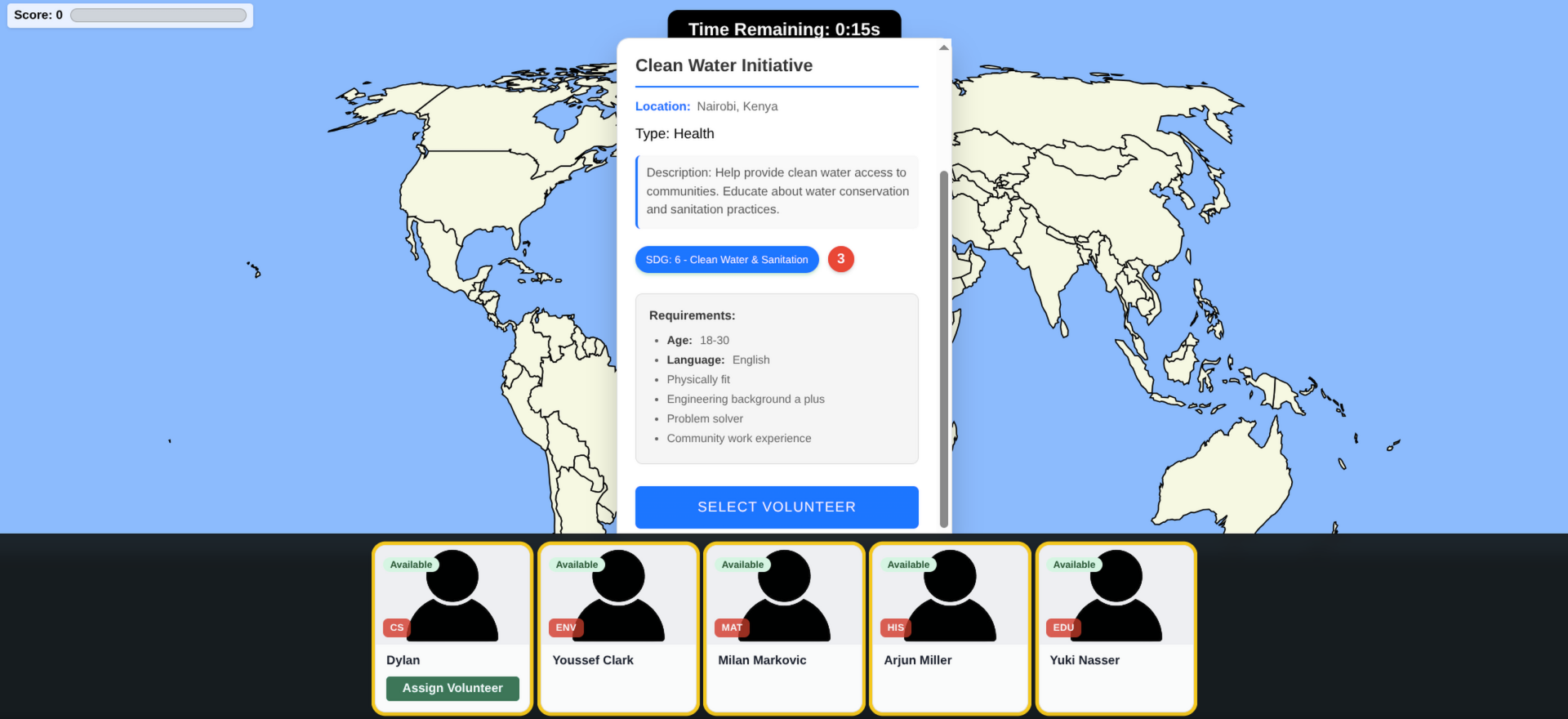
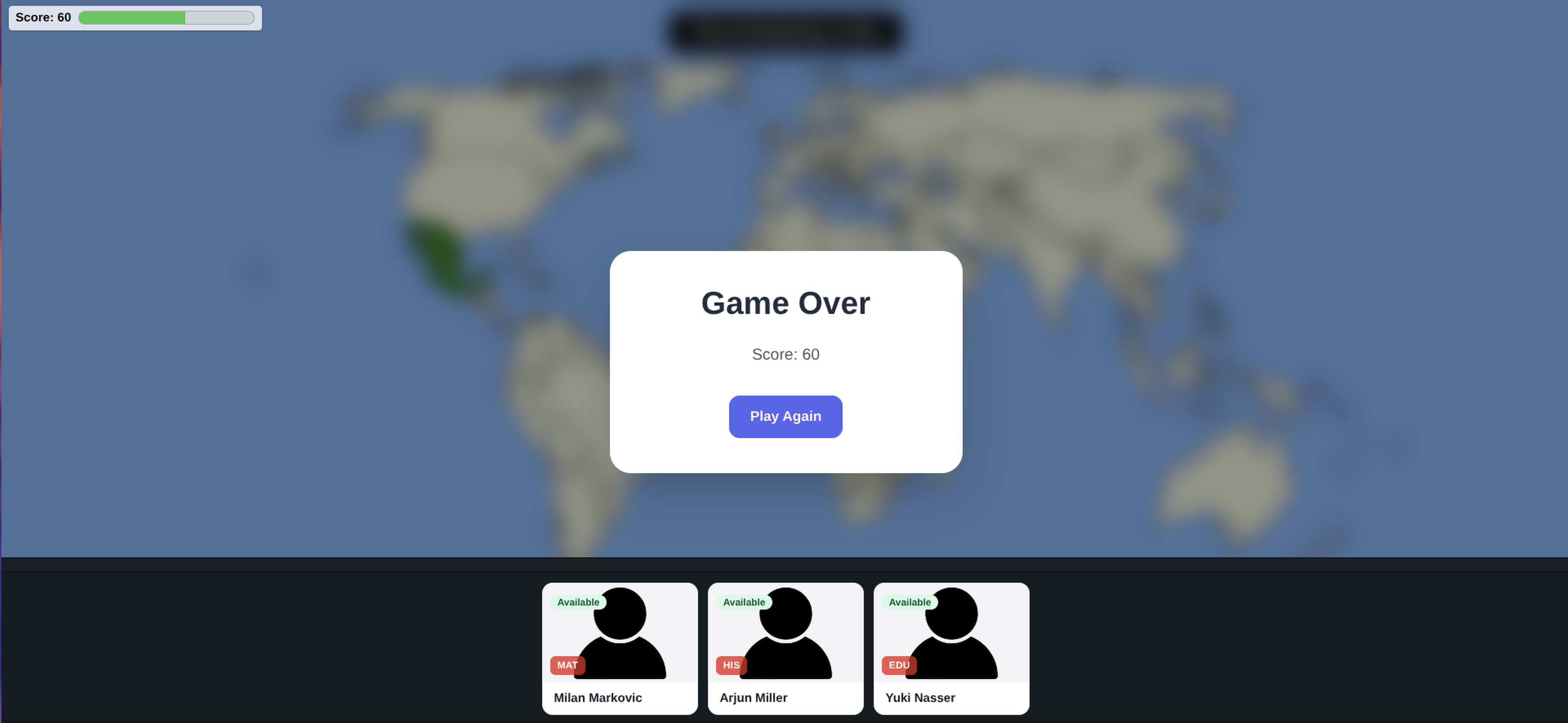
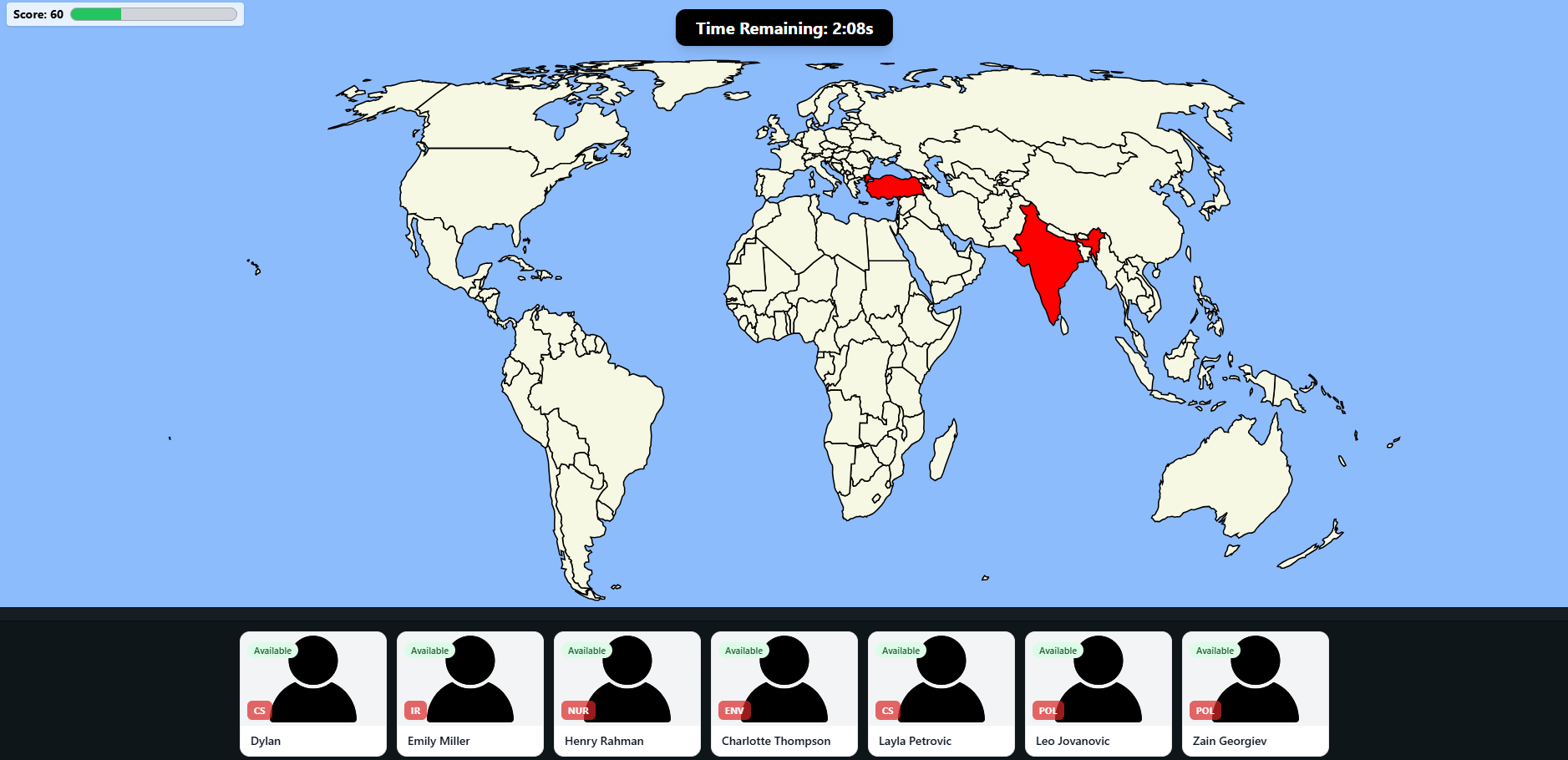
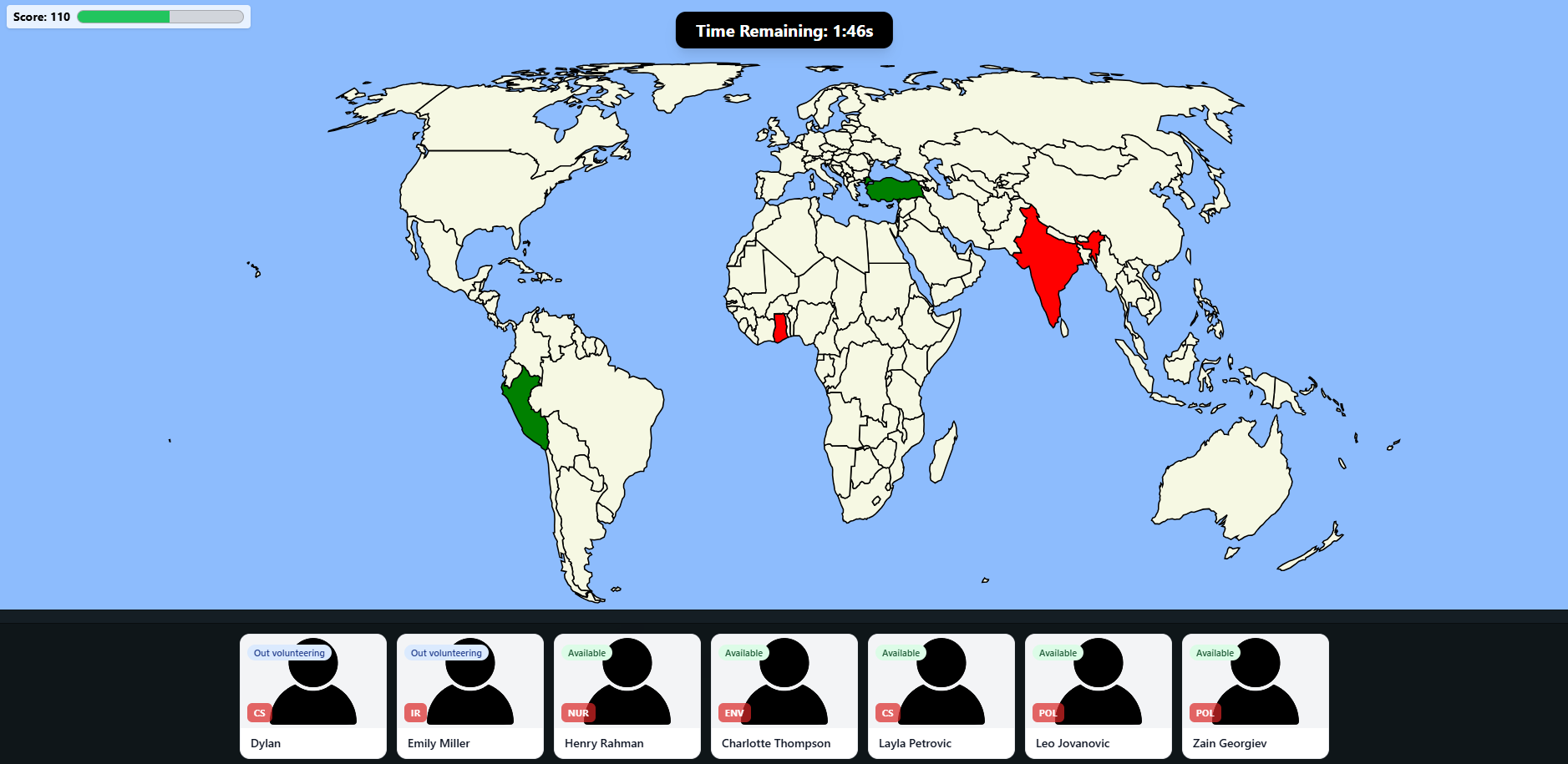
In the game, you play as a dispatcher managing international volunteering opportunities. A world map is displayed, and countries turn red to signal that a new opportunity has become available. You can choose to ignore it or assign an available volunteer to respond.
How we built it
We built the project using GitHub, React, Vite, and TypeScript. These technologies were chosen because they allowed us to quickly set up frameworks and tools to build our idea within the hackathon's limited time constraints.
Our team consisted of three members. We communicated through Discord and maintained a Progress Log where we recorded ideas, tasks, and current work.
Challenges we ran into
Although we chose powerful tools to turn our vision into a playable game, most of us had limited experience with them. In the first few hours, the project felt overwhelming and only one team member had a basic understanding of how React, TSX components, and TypeScript files worked together. Structuring components properly, passing state between them, and managing data flow required a lot of quick learning and experimentation.
Another major challenge was defining a realistic MVP for the hackathon timeframe. The concept naturally includes many small but important mechanics like scoring systems, visual highlights, volunteer progression, reward and penalty balancing, and opportunity expiration logic. Deciding what to prioritise without overcomplicating the game was difficult.
Oh, and definitely the time constraint!
Accomplishments that we're proud of
We're happy to have created something real. A game that, even with its fair share of bugs, runs and works. And we did it all in just two days, learning a lot along the way.
What we learned
We learned the importance of planning first. Creating wireframes and especially class diagrams or their equivalents helped everyone understand each component’s role. This made task distribution much smoother. On the technical side, we gained deeper experience with React and TypeScript, improving both our coding and project organization skills.
What's next for VolunteerNow
We plan to continue developing the project as a team when time allows. There are many features we want to add, including:
- Basic improvements to the UI and controls
- More volunteer types
- Additional rewards and punishments
- Sound effects and music
- More personalized and handcrafted visuals
- New time-based and alternative game modes
Built With
- react
- typescript
- vite


Log in or sign up for Devpost to join the conversation.