Inspiration
Our idea was based on a general phenomenon that is currently being faced by almost all modern AI systems – if an external API or data stream breaks down, then the entire system goes down. Thus, we decided to leave behind all these fragile constructions and start designing something autonomous. Based on the ideas of self-healing networks and distributed computing, we started working on developing the Autonomous Grid System. The main idea was to design a robust and intelligent backend that will perform everything on its own.
What it does
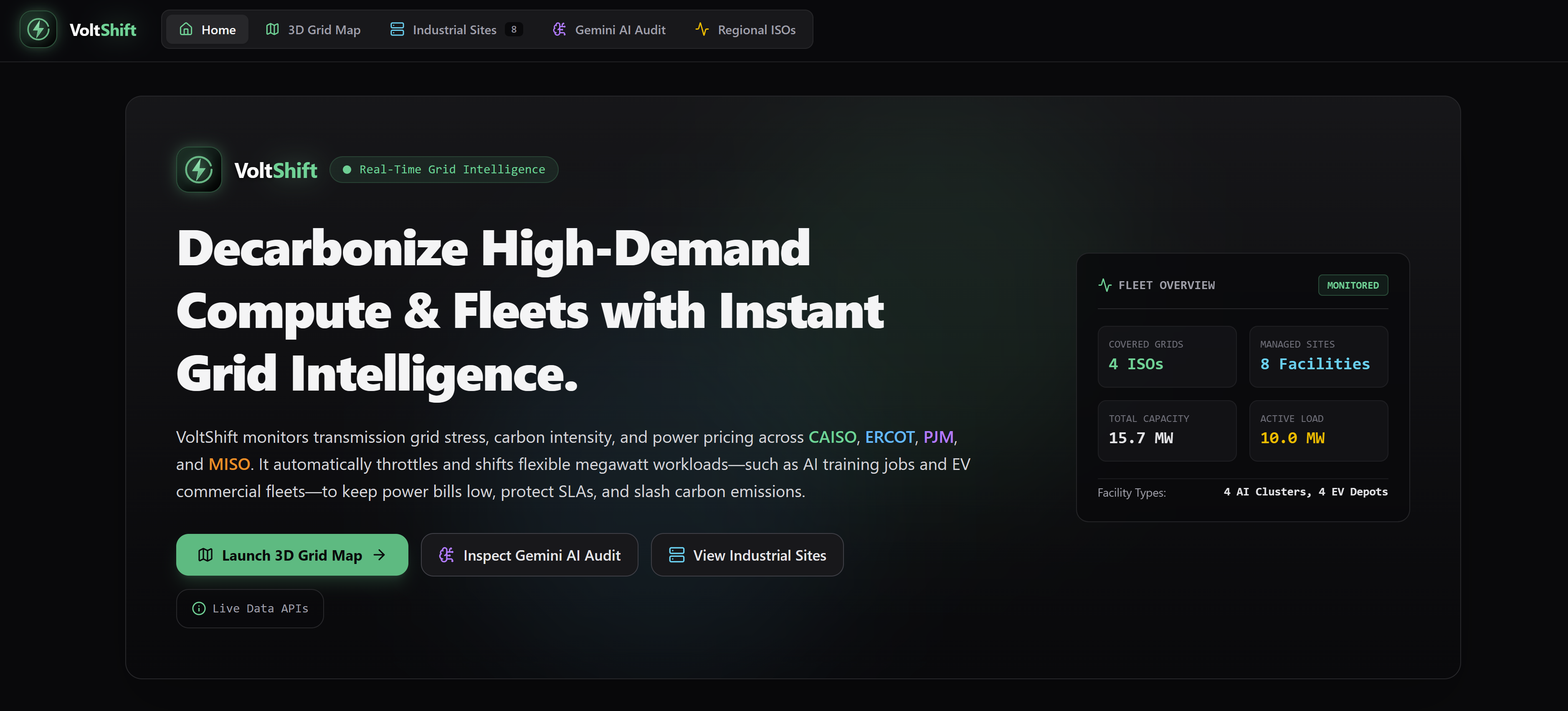
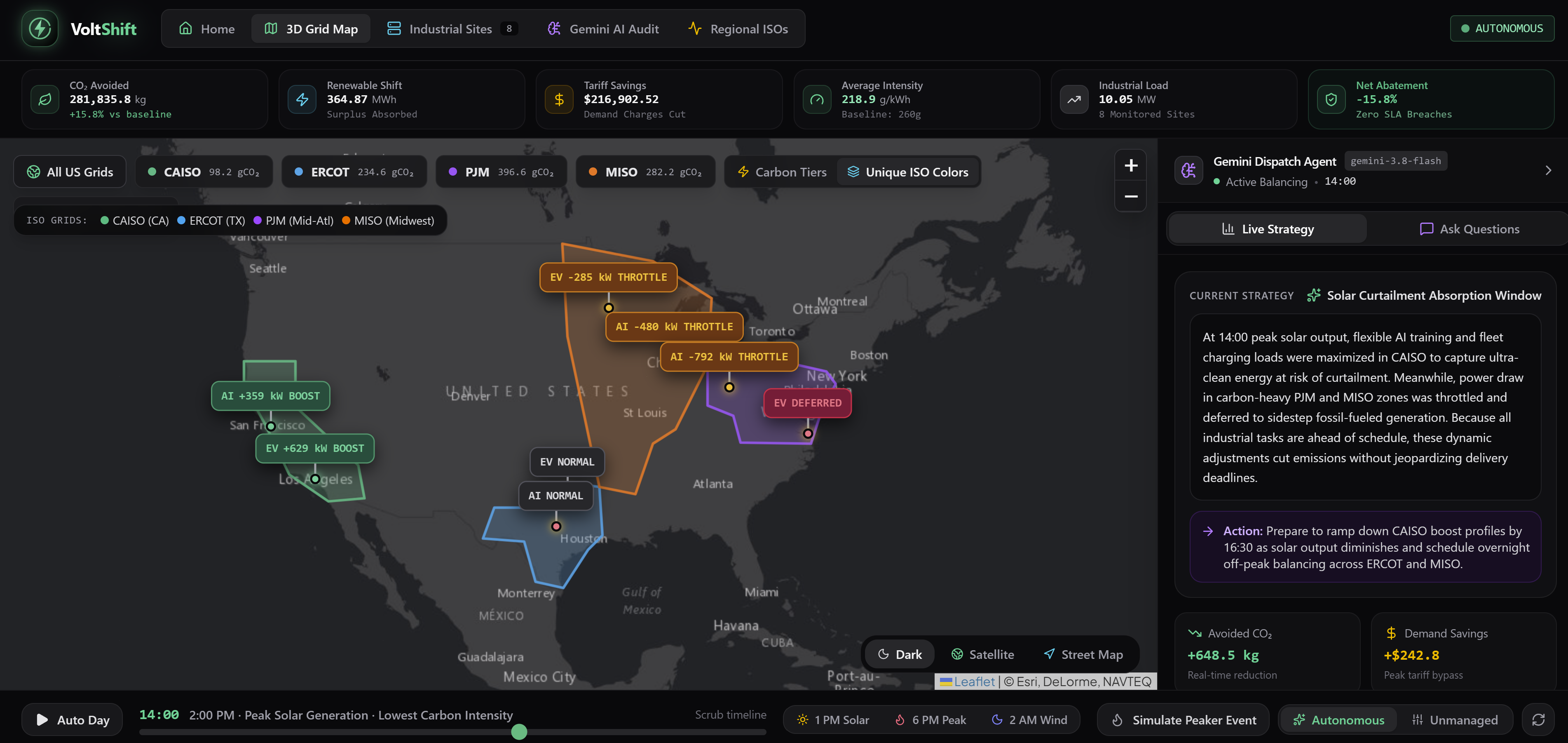
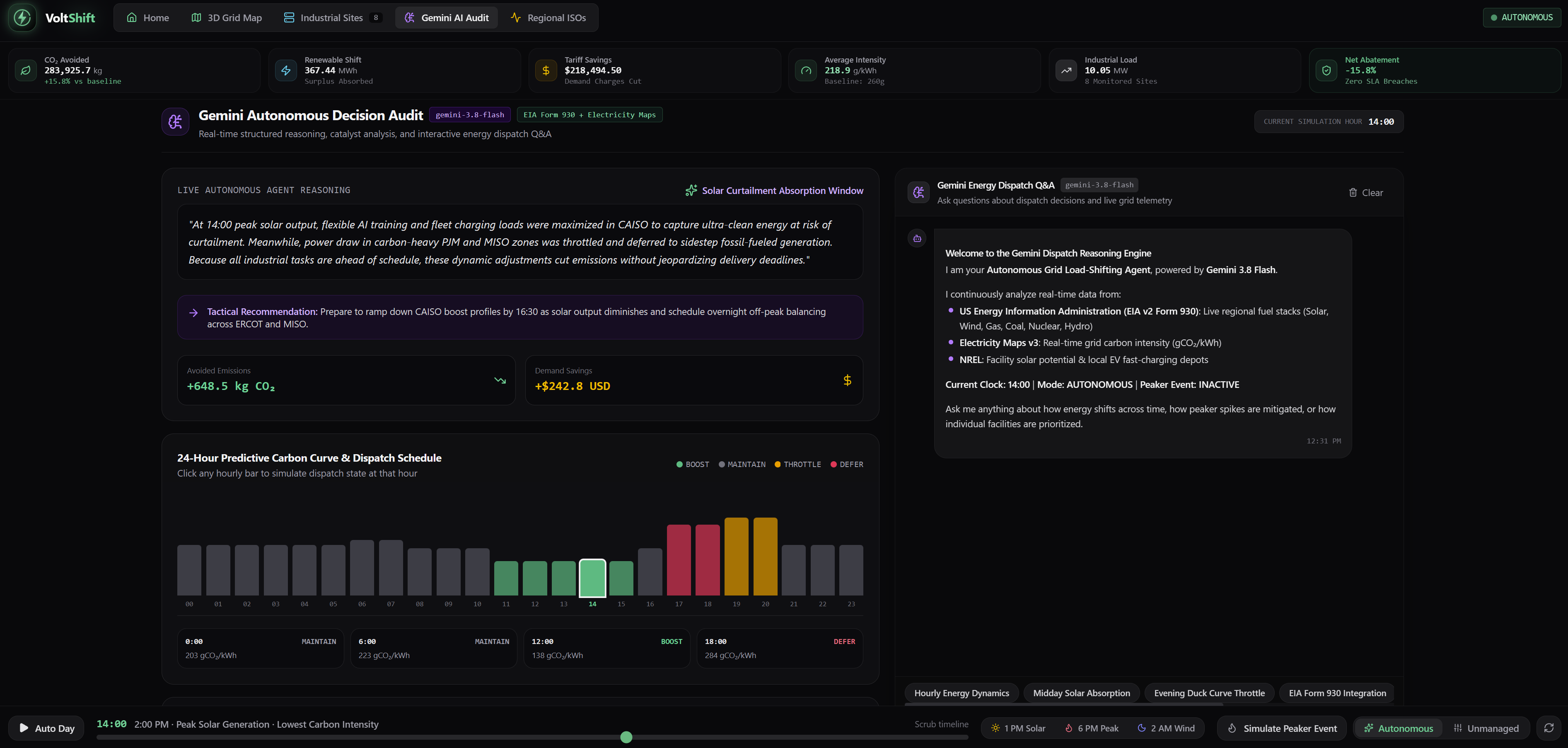
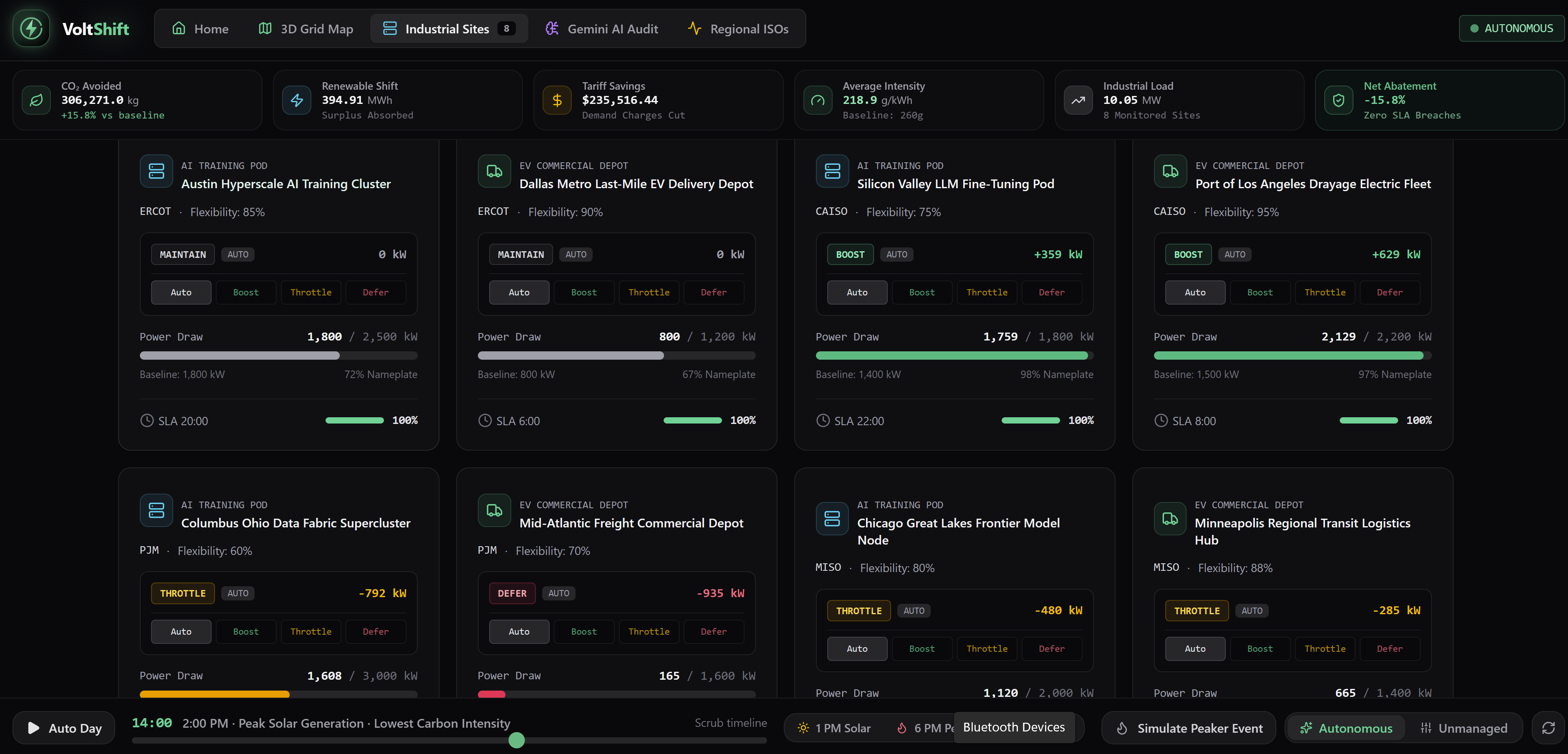
VoltShift is an AI-driven chatbot with an elaborate and dark-styled terminal interface. You can use it to interact with the intelligent assistant and get all your queries solved and debug any issues. We have also included some wonderful developer-oriented features such as the source of the messages, configurations of the models, and live logging of errors.
How we built it
Architecture-wise, we took an approach based on logic: we decomposed the task into 3 parts – the user interface, AI brain, and our custom-made self-managed backend engine.
User Interface (Frontend): To ensure the futuristic look we designed the application, we chose the dark theme, neon cyberpunk elements and used Tailwind CSS as the layout designer. As the font we selected JetBrains Mono, which gives the user interface its authenticity, since it resembles the coding environment. Finally, we deployed our frontend on Vercel to provide users with the fast loading of the website.
AI Brain: The smartness of the chatbot was provided through the integration of the Gemini API, which works as the core of intelligence of VoltShift. It analyzes user inputs and provides a detailed response.
Engine & Autonomous Grid System (Backend): This is where all the work takes place. Here we created a Node.js server and deployed it using Render. While the user and AI would just send and receive messages, we created our Autonomous Grid System here. This would be a like traffic controller for data flowing within our application. This not only receives but manages the flow of information. In case there is a timeout or a disconnection by the AI API, the grid system recognizes it immediately and routes the data, triggering the custom fallback functions that we designed.
Challenges we ran into
One of the major issues we faced was making sure our application remained stable despite any problems with our external APIs. We found out that if there is an error or timeout from Gemini API, then our bot would just crash. The problem was solved by designing a custom fallback system for our node server that allows our chatbot to function regardless of whether our AI works or not. Integrating our Vercel frontend with our Render backend, as well as configuring our CORS and error logging within a very short time period, did keep us busy too!
Accomplishments that we're proud of
One of the things we are particularly proud about is creating and developing the Autonomous Grid System. This serves as the self-managing engine that facilitates data routing and maintains stability in the platform without constant intervention from us. Developing a system that would be capable of routing tasks and managing resources independently and working perfectly in tandem with our error handling fallbacks was one of the biggest accomplishments we had as a development team.
What we learned
We were able to learn a lot about full-stack development, more specifically on how to connect Vercel with Render. We were also able to develop our abilities in prompt creation and error handling for APIs. Design-wise, we were able to learn how to stretch the capabilities of Tailwind CSS in creating a particular user interface.
What's next for VoltShift
VoltShift will get new features! We will add more commands with interactive terminals, improve our fallback heuristic approach and, in the end, enable people to upload their local files to chat so that our AI can process them.
Built With
- css
- gemini-api
- html
- javascript
- node.js
- render
- tailwind-css
- vercel

Log in or sign up for Devpost to join the conversation.