-
-
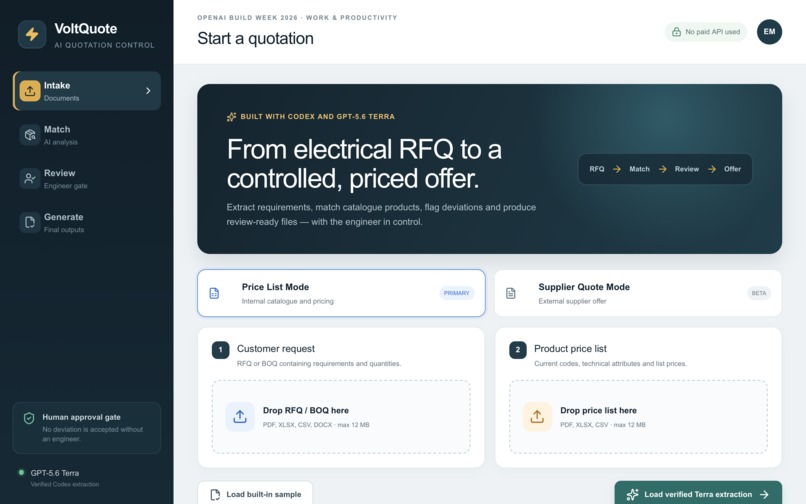
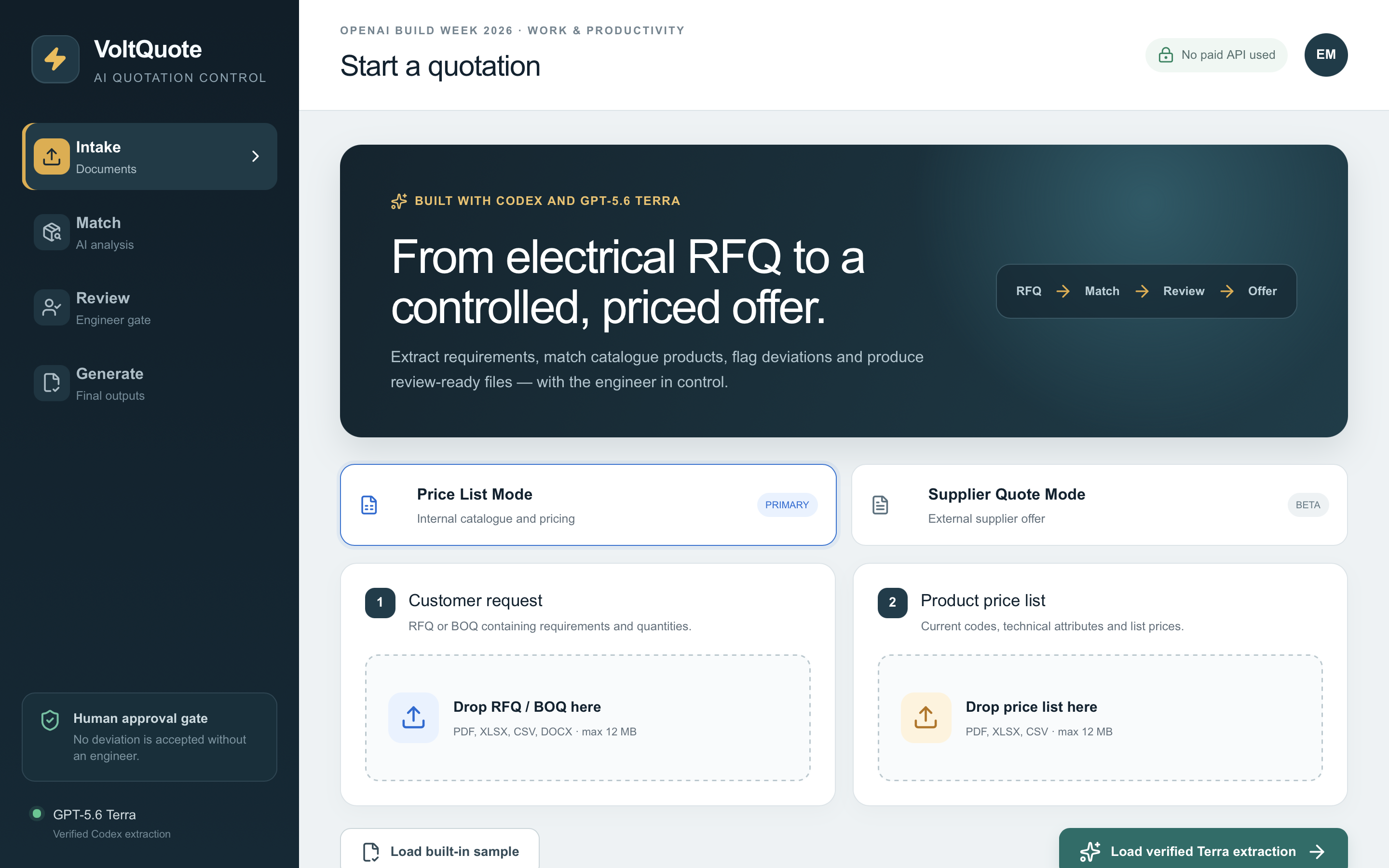
Intake and Verified Terra Extraction
-
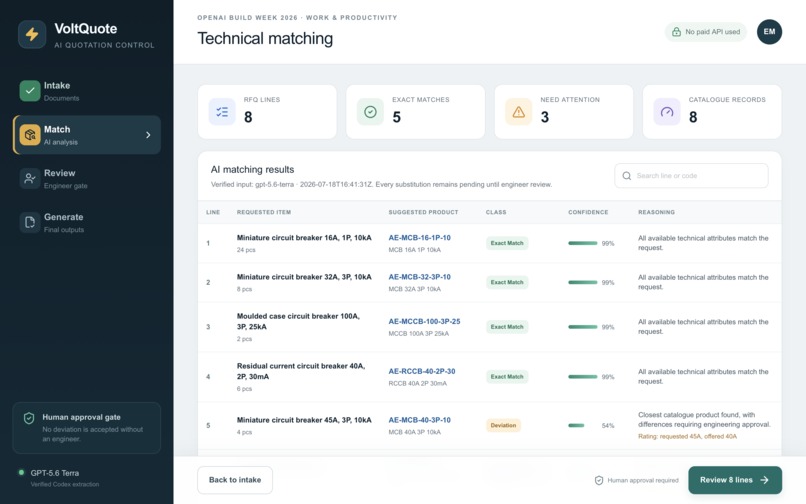
Transparent Matching Classifications
-
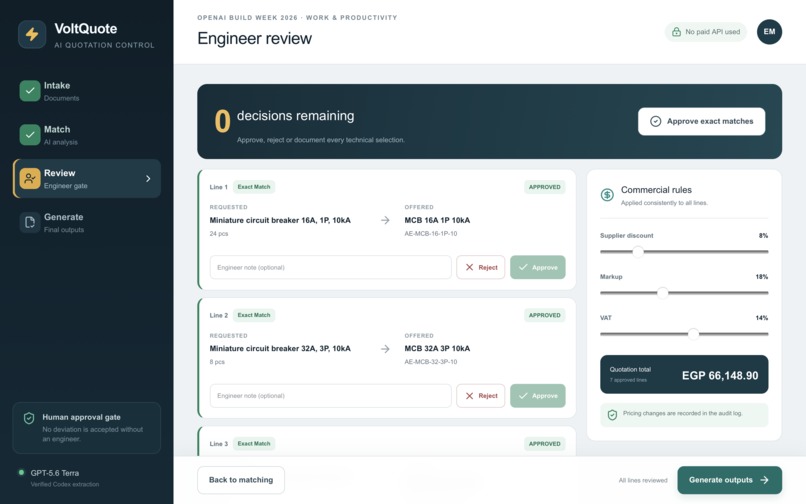
Engineer Review and Approval Gate
-
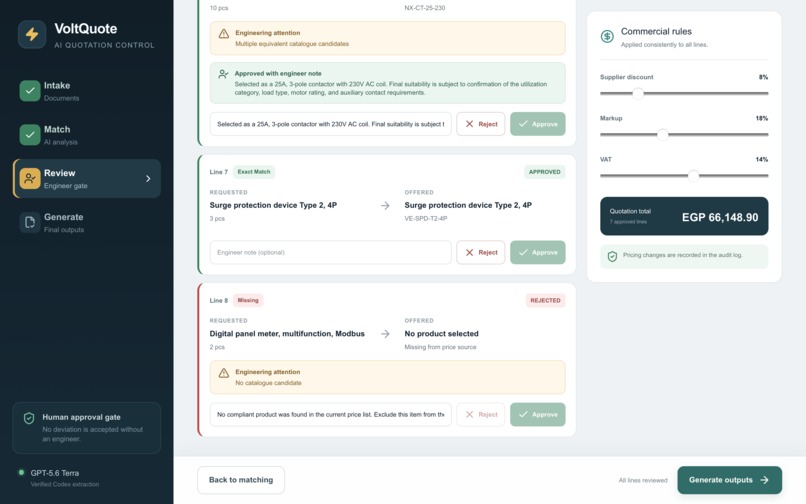
Engineer Notes and Final Decisions
-
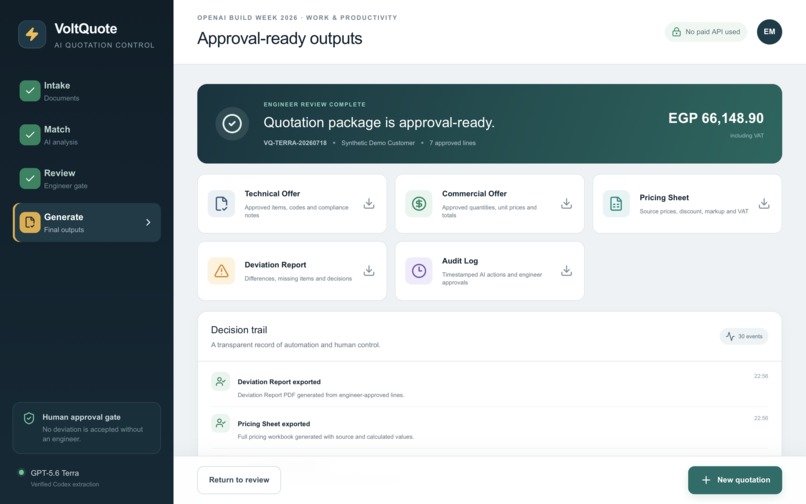
Approval-Ready Quotation Outputs
-
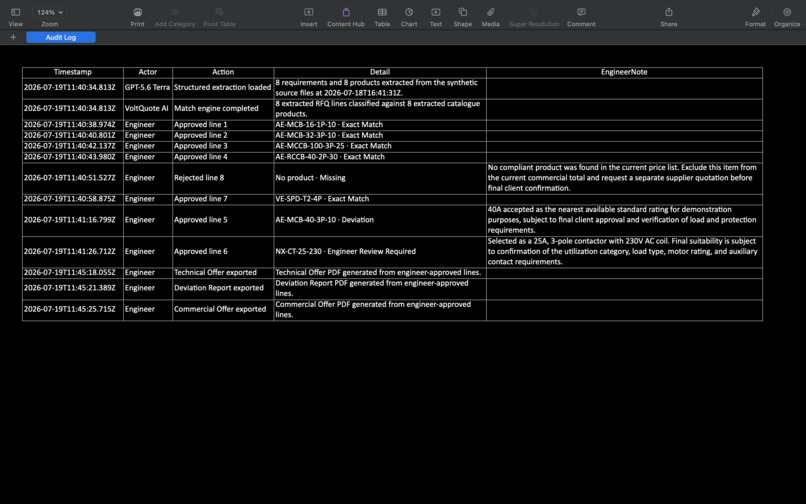
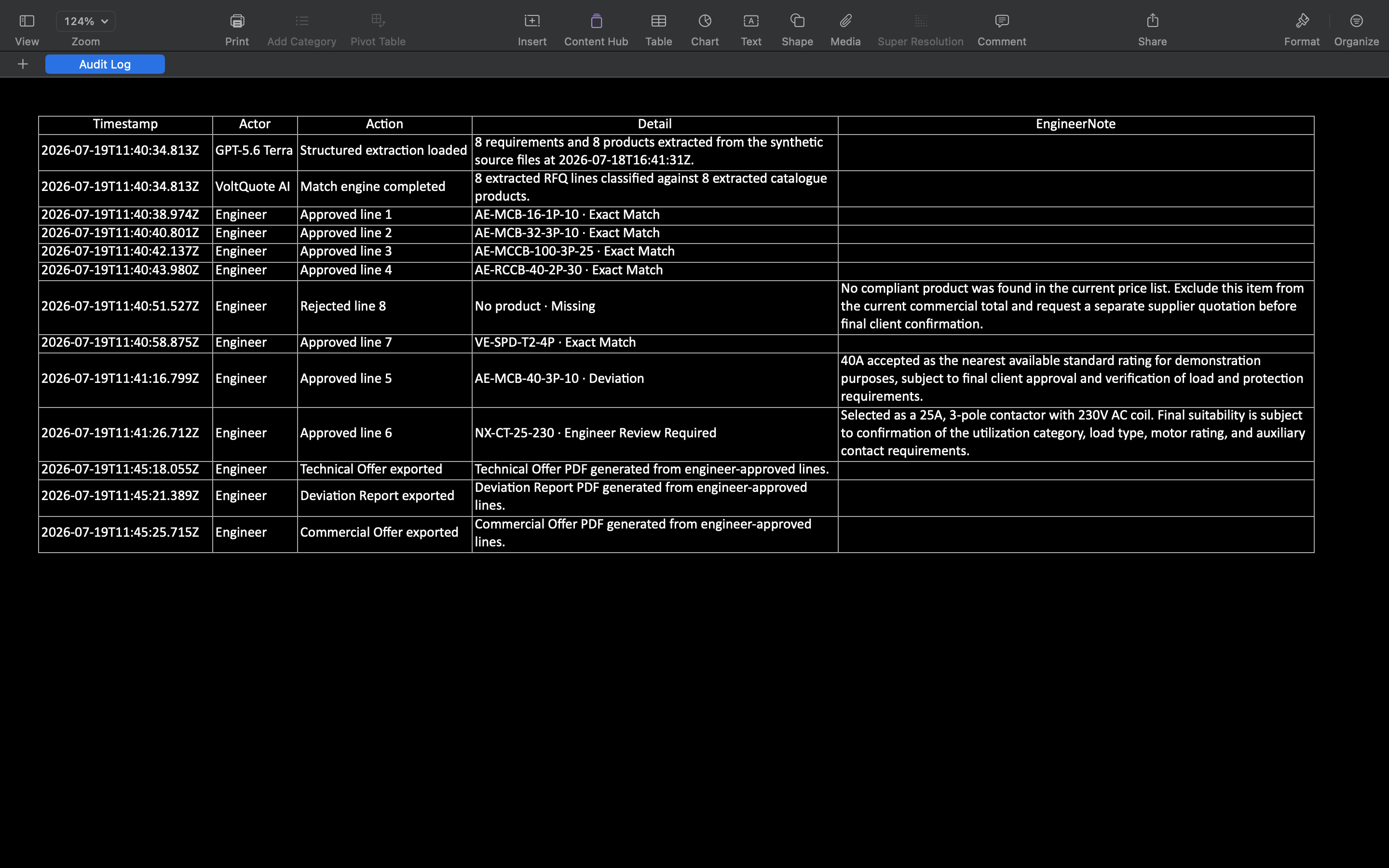
Timestamped Audit Log
-
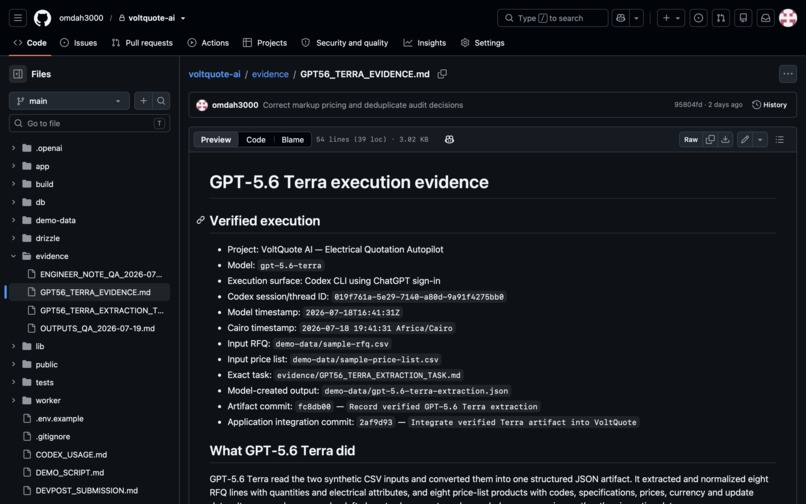
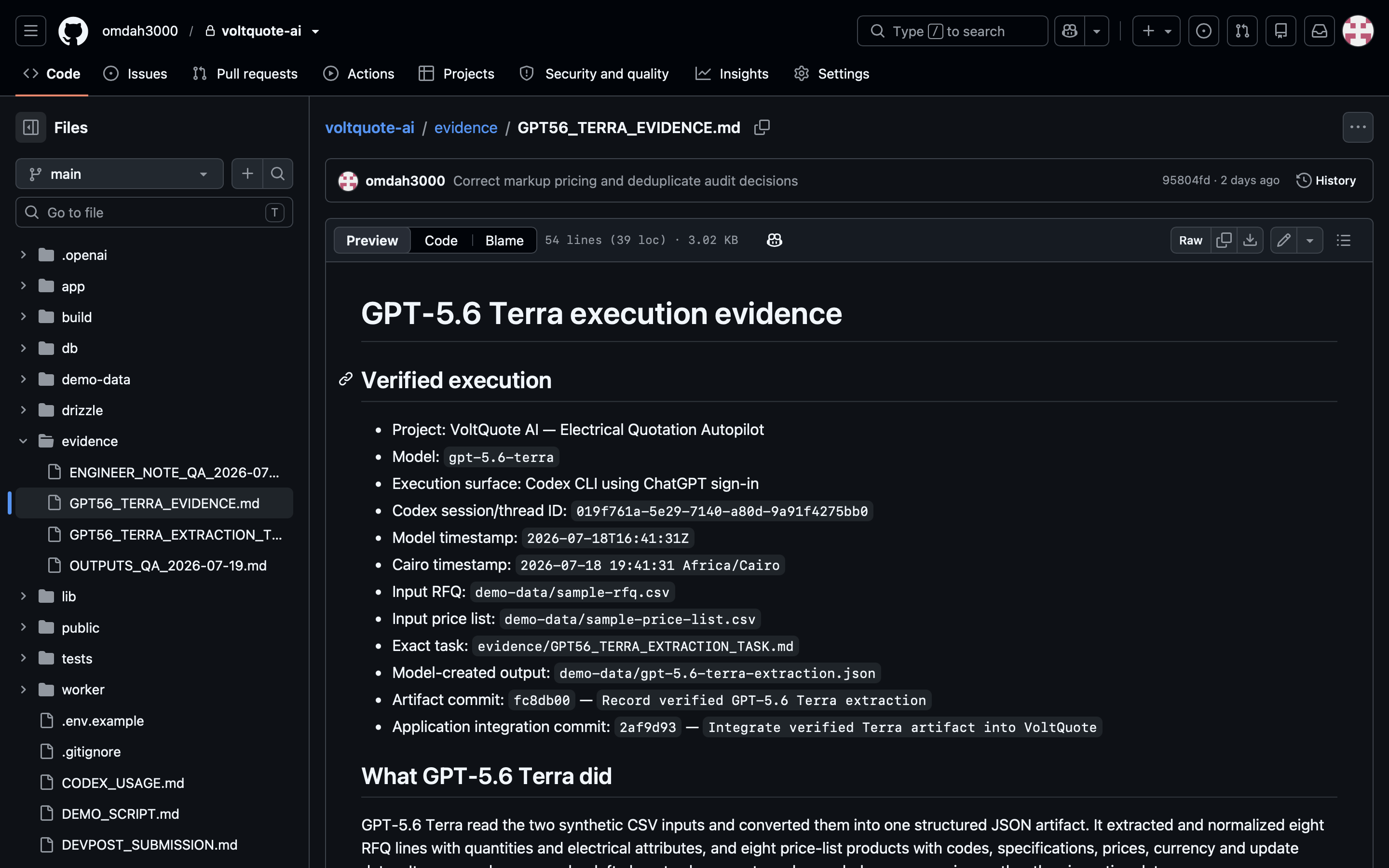
Verified GPT-5.6 Terra Execution Evidence
Inspiration
Electrical quotation work is often fragmented across RFQs, BOQs, supplier quotations, product catalogues, price lists and manual offer templates. Engineers spend hours transferring information between documents, while a missed item, outdated price or silent change in a technical rating can create serious commercial and engineering risk.
VoltQuote AI was inspired by a real electrical quotation workflow. The goal was not to replace the engineer, but to automate repetitive work while preserving engineering responsibility and complete decision visibility.
What it does
VoltQuote AI converts an electrical RFQ or BOQ into a controlled, priced and engineer-approved quotation package.
GPT-5.6 Terra performed a verified structured extraction of synthetic RFQ and price-list files inside a recorded Codex session. It converted the source files into a structured JSON artifact containing requirements, quantities, specifications, product codes and prices.
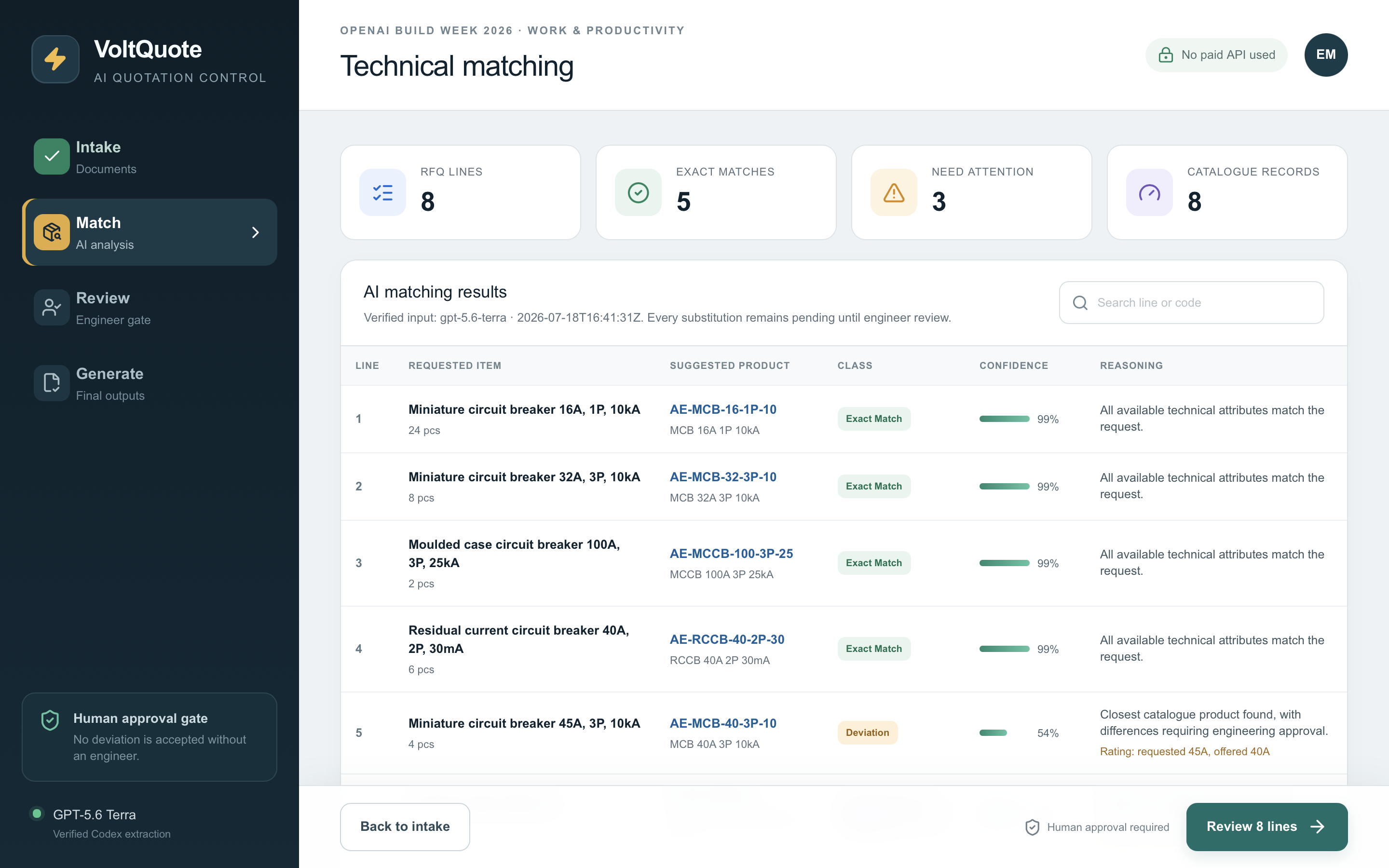
VoltQuote AI then applies transparent application logic to classify every requested item as:
- Exact Match
- Possible Match
- Deviation
- Missing
- Engineer Review Required
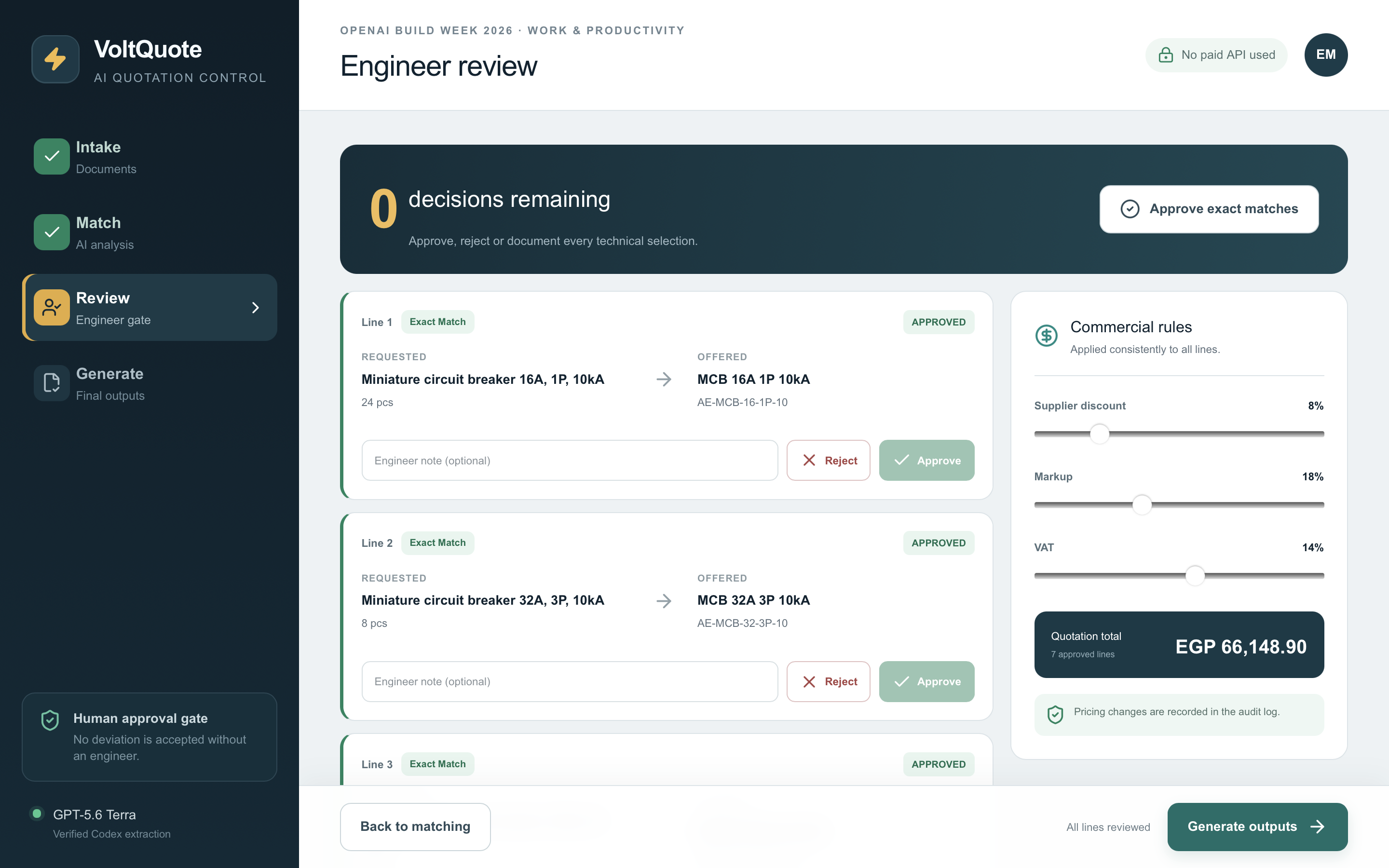
Every line begins as Pending. The engineer must approve or reject every item before the final outputs can be generated.
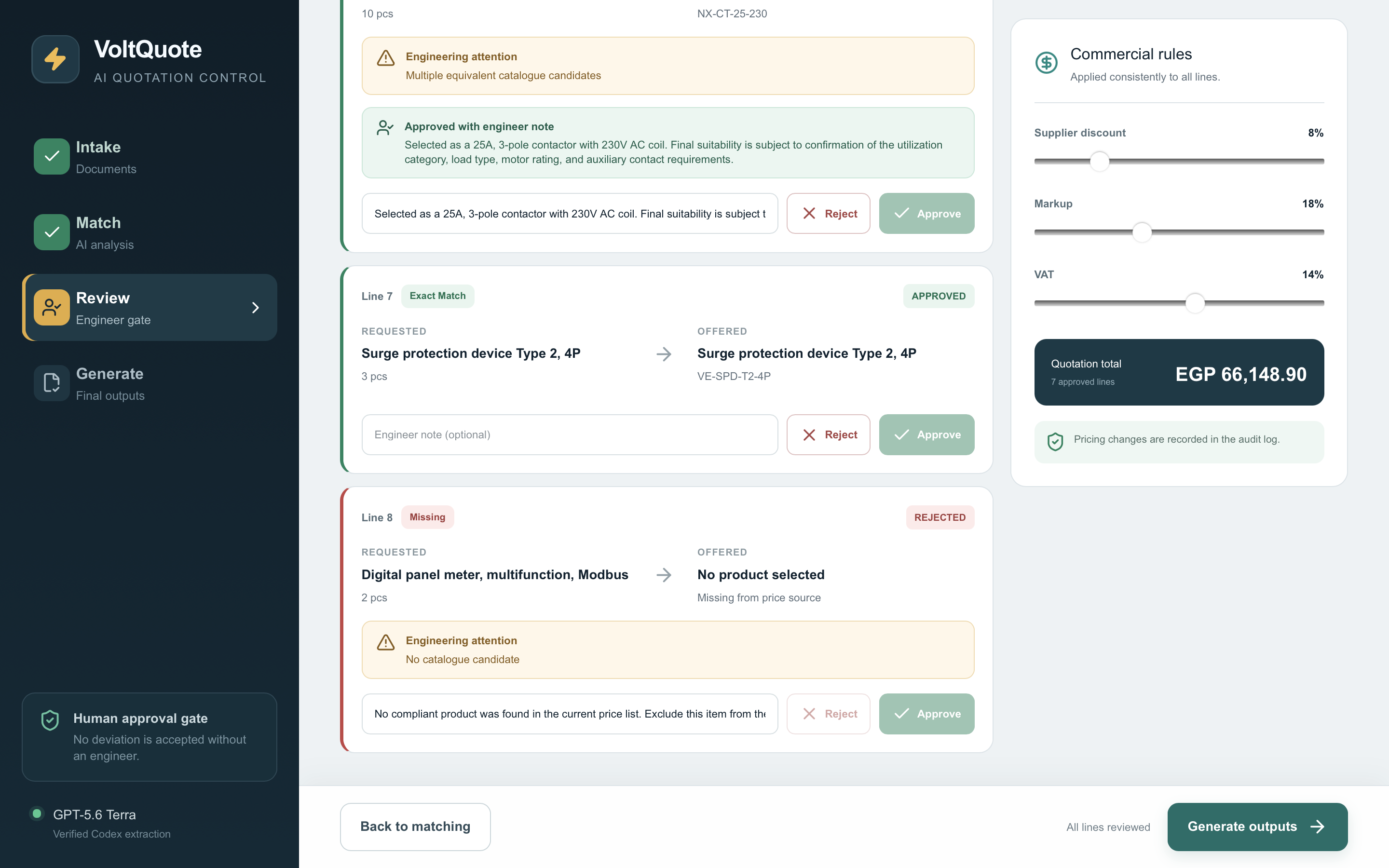
Non-exact items cannot be approved without a written Engineer Note. Missing products are never invented, and technical deviations such as offering a 40A breaker against a 45A request are clearly exposed rather than silently accepted.
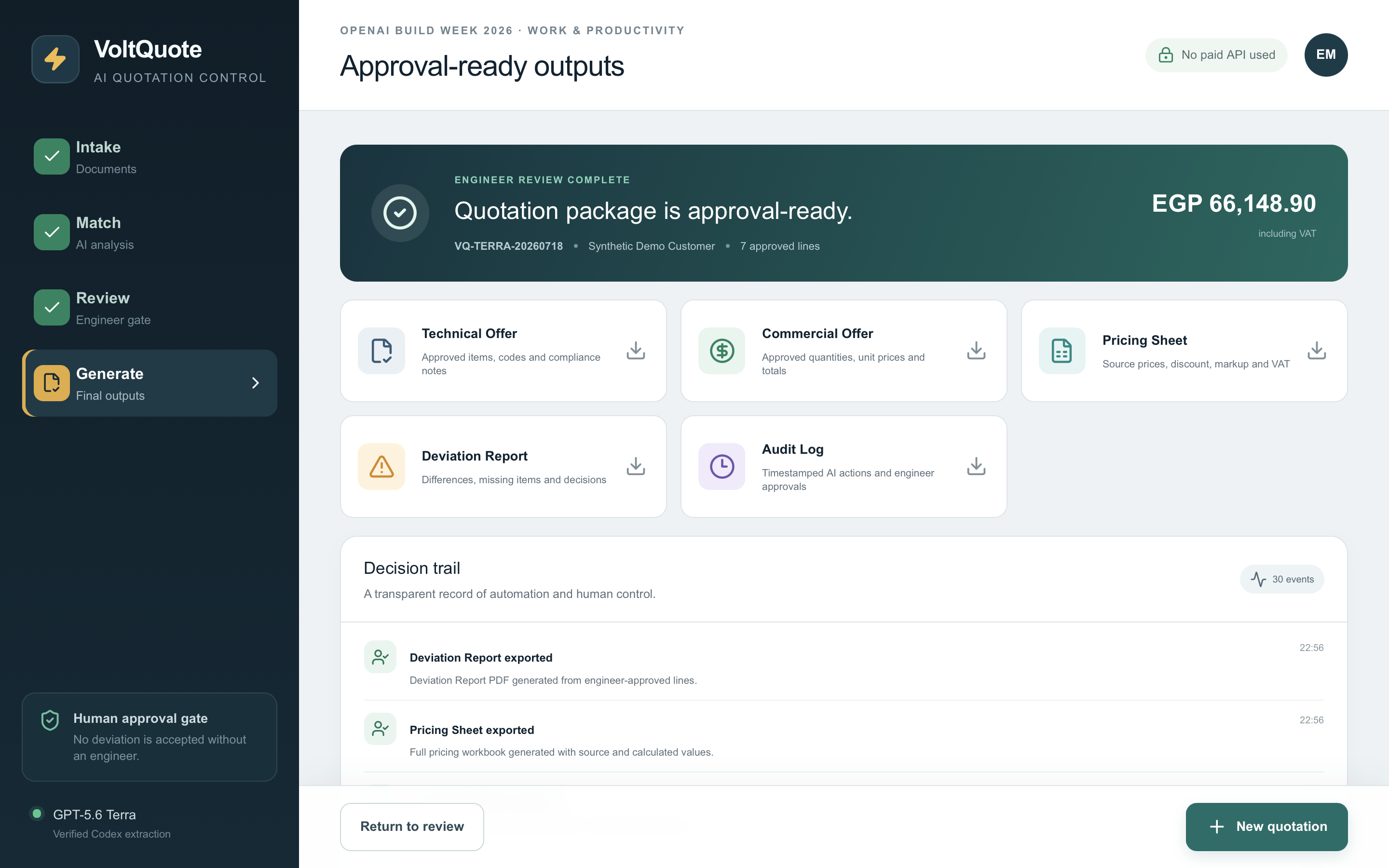
The application applies supplier discount, markup and VAT, then generates five business-ready outputs:
- Technical Offer
- Commercial Offer
- Pricing Sheet
- Deviation Report
- Audit Log
How we built it
Codex was the primary implementation partner throughout the project. It helped define the MVP, build the workflow UI, implement matching and pricing logic, create exports, add tests and prepare the evidence and competition documentation.
GPT-5.6 Terra handled the bounded semantic extraction task inside Codex using ChatGPT sign-in. It read the synthetic RFQ and price-list CSV files and produced the exact structured JSON artifact consumed by the application.
The matching, pricing and approval stages are explicit application logic rather than one opaque AI prompt.
The project uses:
- OpenAI Codex
- GPT-5.6 Terra
- React and TypeScript
- Next.js-compatible vinext
- Cloudflare-ready runtime
- jsPDF for PDF generation
- SheetJS for Excel generation
The included data is entirely synthetic so the complete workflow can be demonstrated without exposing customer, supplier or confidential pricing information.
Challenges
The main challenge was balancing automation with engineering safety.
A fluent AI response must never be treated as automatic electrical approval. We therefore separated the workflow into three layers:
- AI-assisted structured extraction
- Deterministic catalogue matching and pricing
- Mandatory human engineering review
The final package remains locked until every item receives an explicit engineering decision.
Another challenge was maintaining financial consistency across PDF and Excel exports. The final implementation uses one shared two-decimal calculation policy so displayed unit prices, line subtotals, VAT and totals remain consistent in every output.
Accomplishments
- Built a complete RFQ-to-offer workflow rather than a prompt-only prototype
- Created five visible technical match classifications
- Added a mandatory engineer approval gate
- Required Engineer Notes for all approved non-exact selections
- Prevented silent technical substitutions
- Generated five practical quotation and audit outputs
- Preserved a timestamped audit trail of AI actions and engineering decisions
- Verified GPT-5.6 Terra extraction with preserved inputs, outputs, session ID, timestamp and commit evidence
- Added Price List Mode and a secondary Supplier Quote Mode
- Completed a production build with 9 automated tests passing
What we learned
Domain AI becomes more trustworthy when the model handles interpretation while visible software rules handle control, calculations and approvals.
The most useful pattern was not full autonomy. It was clear responsibility:
AI proposes. The engineer decides. Every deviation is visible, justified and auditable.
Codex also demonstrated how quickly a real professional workflow can be transformed into a tested product when domain expertise and AI-assisted implementation work together.
What's next
Future development could add:
- Reusable product-rule libraries
- Approved alternative databases
- Supplier quotation comparison
- Branded quotation templates
- Email RFQ intake
- Multi-user approval workflows
- Customer and supplier databases
- Project workflows covering BOQ preparation, procurement, submittals and delivery tracking
Built With
- cloudflare
- codex
- gpt-5.6terra
- jspdf
- next.js
- openai
- openaicodex
- react
- sheetjs
- typescript
- vinext


Log in or sign up for Devpost to join the conversation.