Inspiration
Seeing multiple people producing and selling things amongst themselves, it got me thinking about power distribution and consumption between houses.
What it is
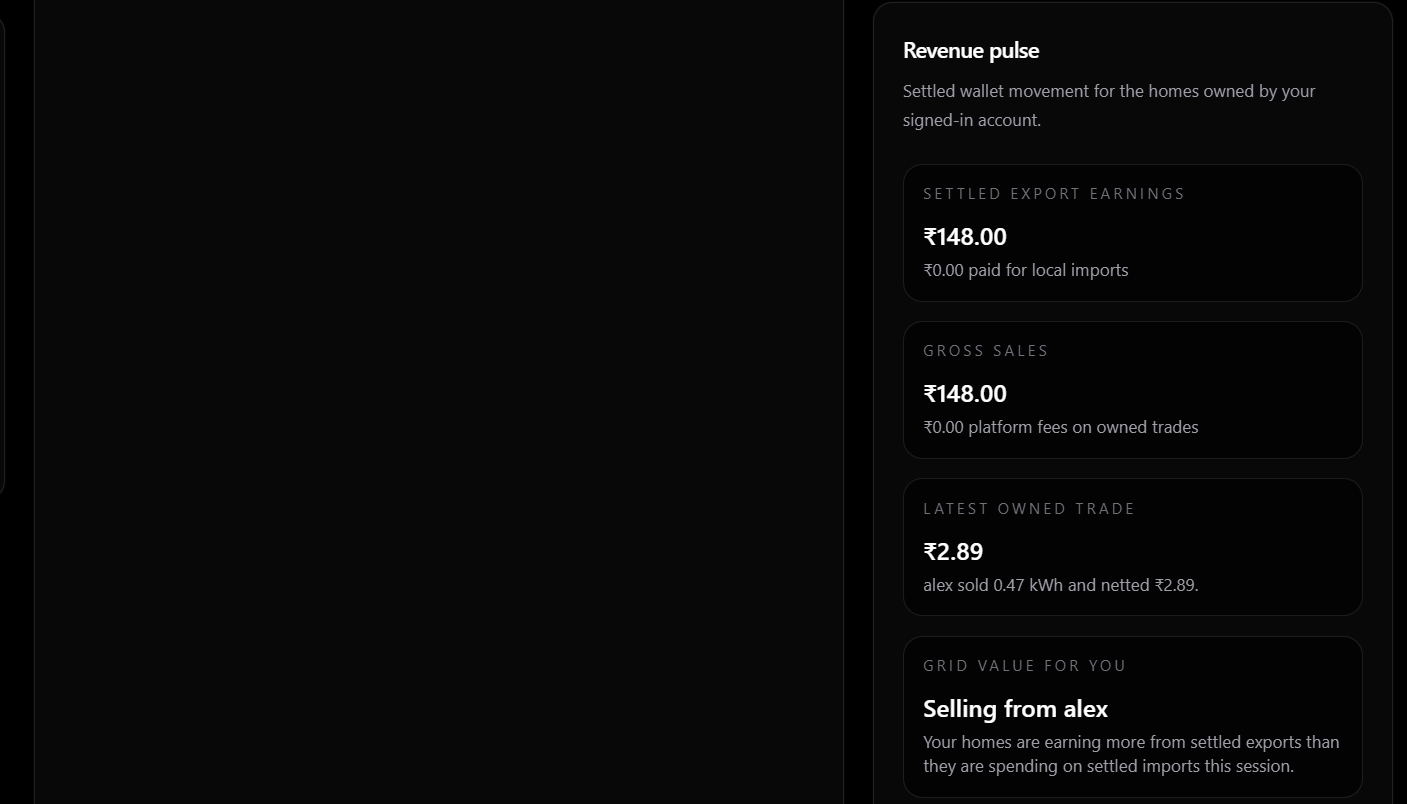
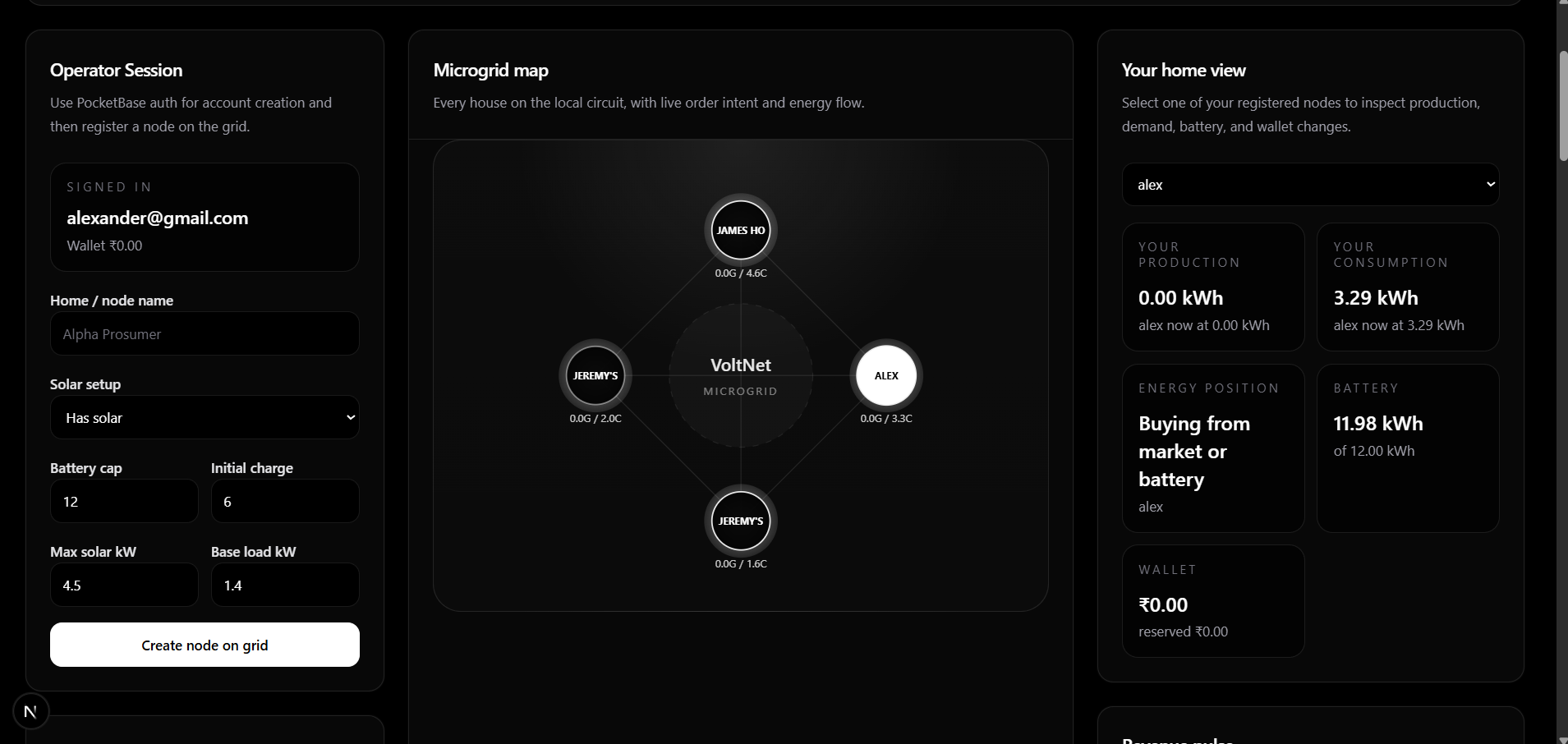
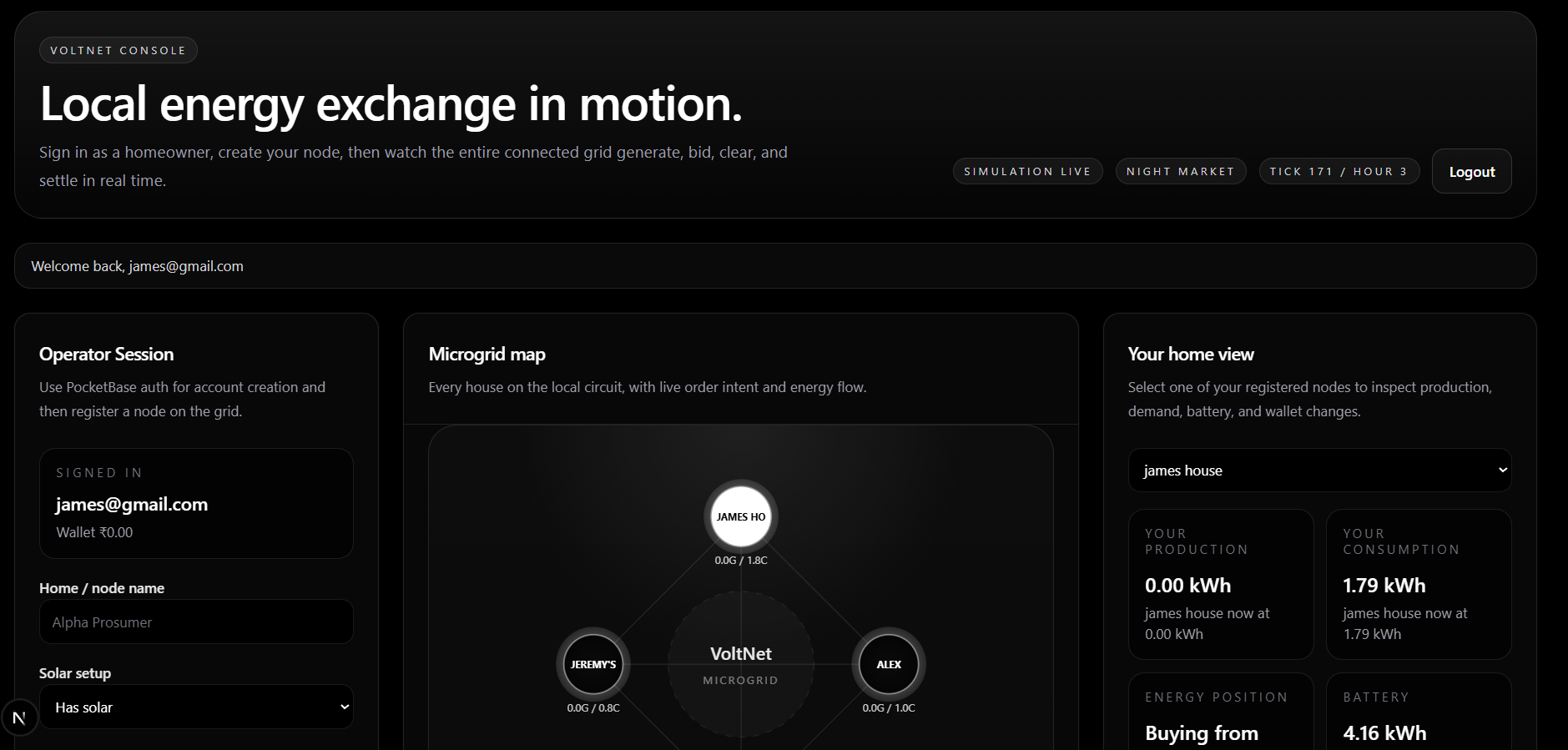
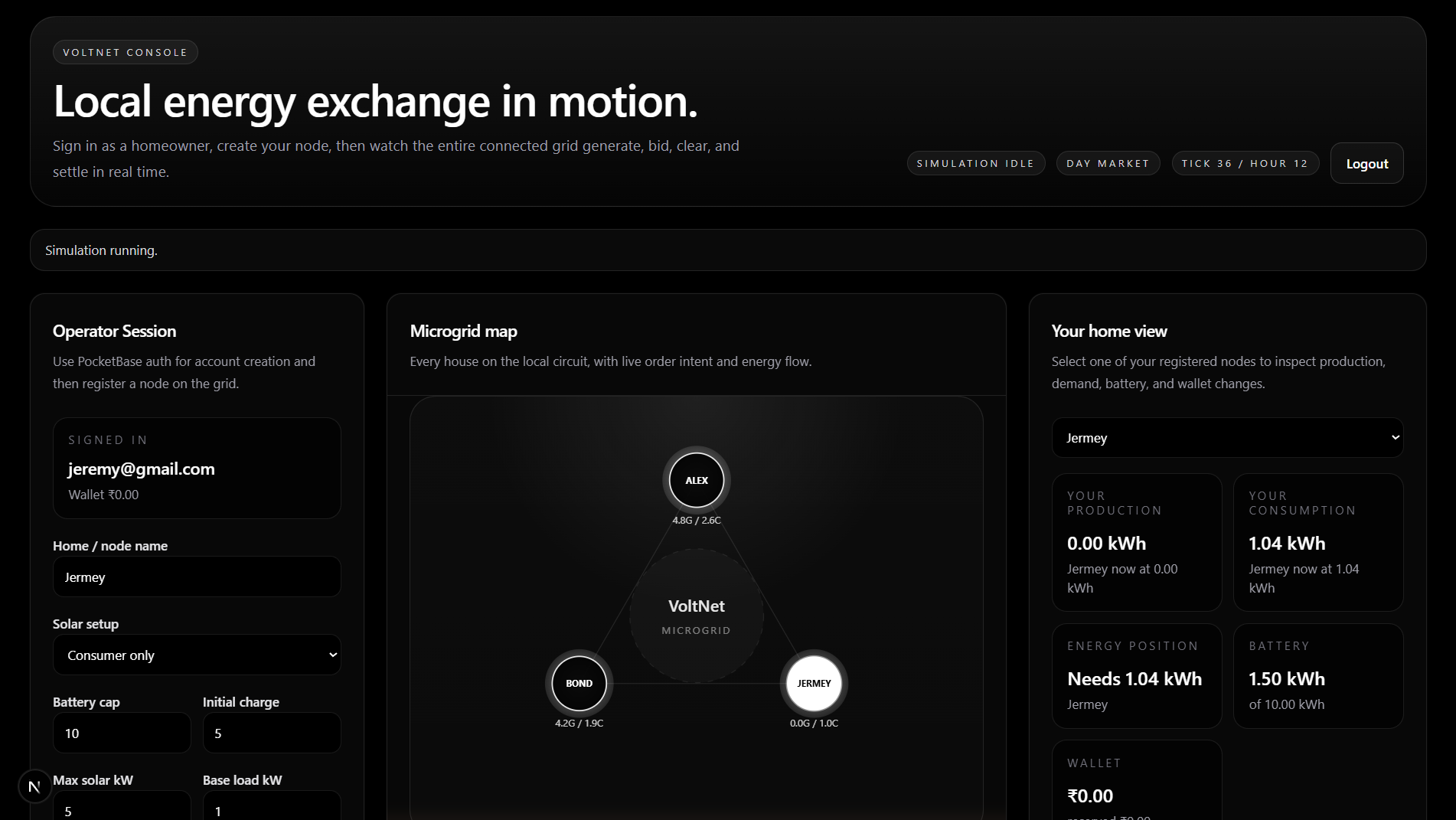
VoltNet is a decentralized peer-to-peer micro-grid energy market clearing engine. It simulates neighborhood homes that generate, consume, store, buy, and sell electricity in real time. The goal is simple: homes with excess electricity can sell it locally at a fair price, while homes with higher consumption can buy from nearby providers using real wallet settlement logic.
What it does
- Simulates a local micro-grid with solar producers, consumers, batteries, wallets, and live telemetry.
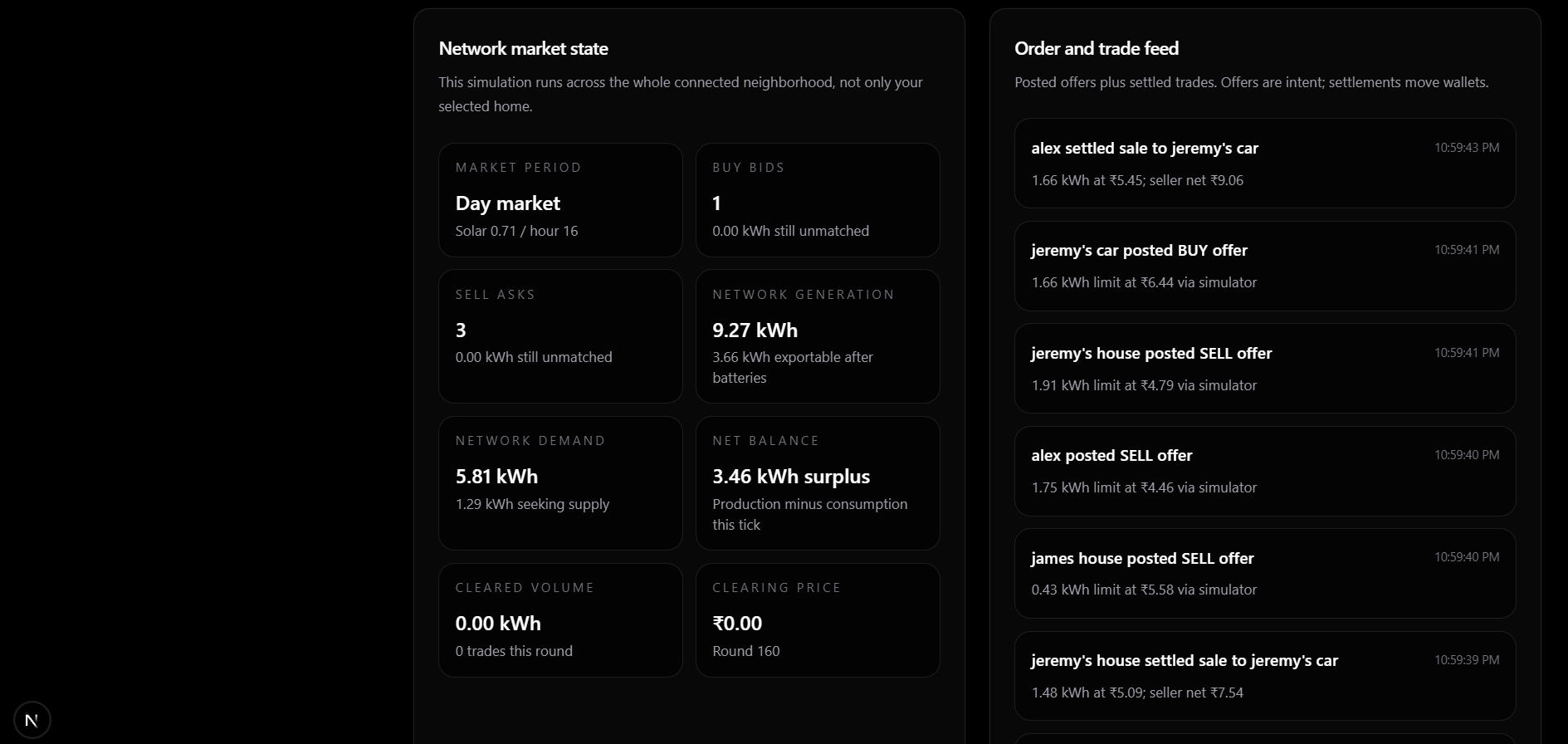
- Opens short market rounds where nodes submit buy bids and sell asks.
- Clears the market with a double-auction matcher.
- Settles trades by actually debiting buyer wallets and crediting seller wallets.
- Prevents overdrawn wallets and unpaid fills.
- Streams telemetry, orders, round state, and ledger events to the dashboard over WebSockets.
- Persists nodes, market orders, wallets, and ledger records in PocketBase.
How we built it
we built it using : Backend: FastAPI, Python, async WebSockets Market engine: custom Python double-auction matcher and settlement flow Data store: PocketBase Frontend: Next.js, React, TypeScript, Tailwind CSS, shadcn-style UI components Package manager: Bun for the frontend
Challenges we ran into
making a ledger from scratch is something I've never done, and also making a real time bidding system.
Accomplishments that we're proud of
I implemented a real time autonomous bidding system that buys and sells goods [electricity] over a decentralized network of nodes.
What we learned
I learnt how to simulate an interconnected IOT of nodes (houses in this case) and use their shared data over a database to make a real world application of IOT and blockchain technologies.
What's next for VoltNet
idk, I think it needs a lot more work than what hackathon project does.
Built With
- fastapi
- nextjs
- python
- shadcn
- typescript
- websockets

Log in or sign up for Devpost to join the conversation.