Inspiration
Living through grueling summer heatwaves where rolling blackouts plunge entire neighborhoods into darkness isn't just an inconvenience—it's a critical infrastructure crisis. In countries like Tunisia, overburdened national grids (like STEG) struggle with surging demand, leading to unannounced power cuts and, worst of all, violent voltage surges when power abruptly snaps back on. These surges fry expensive household appliances, threaten medical equipment, and leave families vulnerable. We were inspired to build VoltGuard because citizens shouldn't have to guess when the grid will fail or watch their hard-earned home electronics get destroyed by sudden electrical shocks. We needed an intelligent shield that bridges the gap between macro-grid instability and micro-level household safety.
What it does
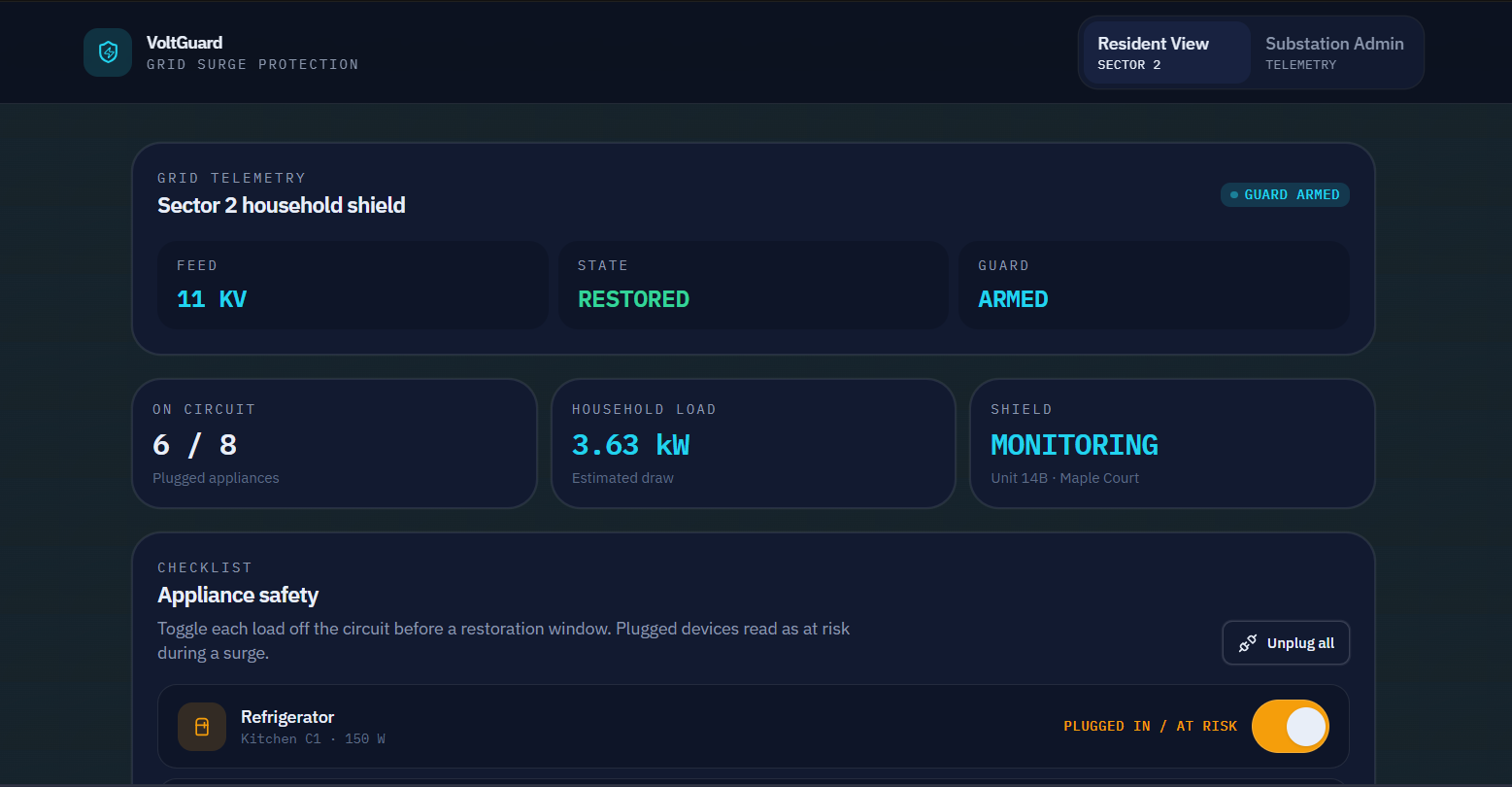
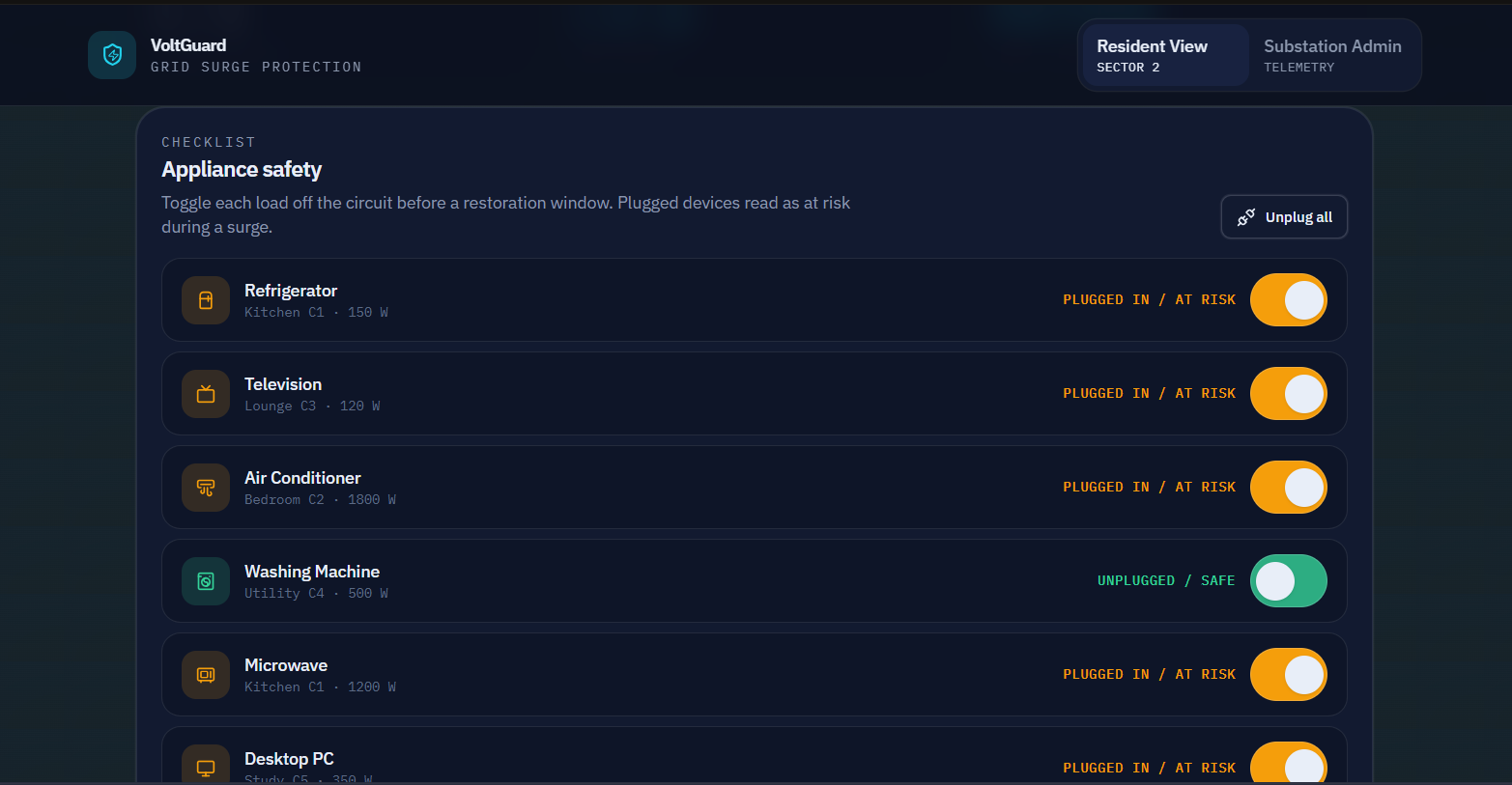
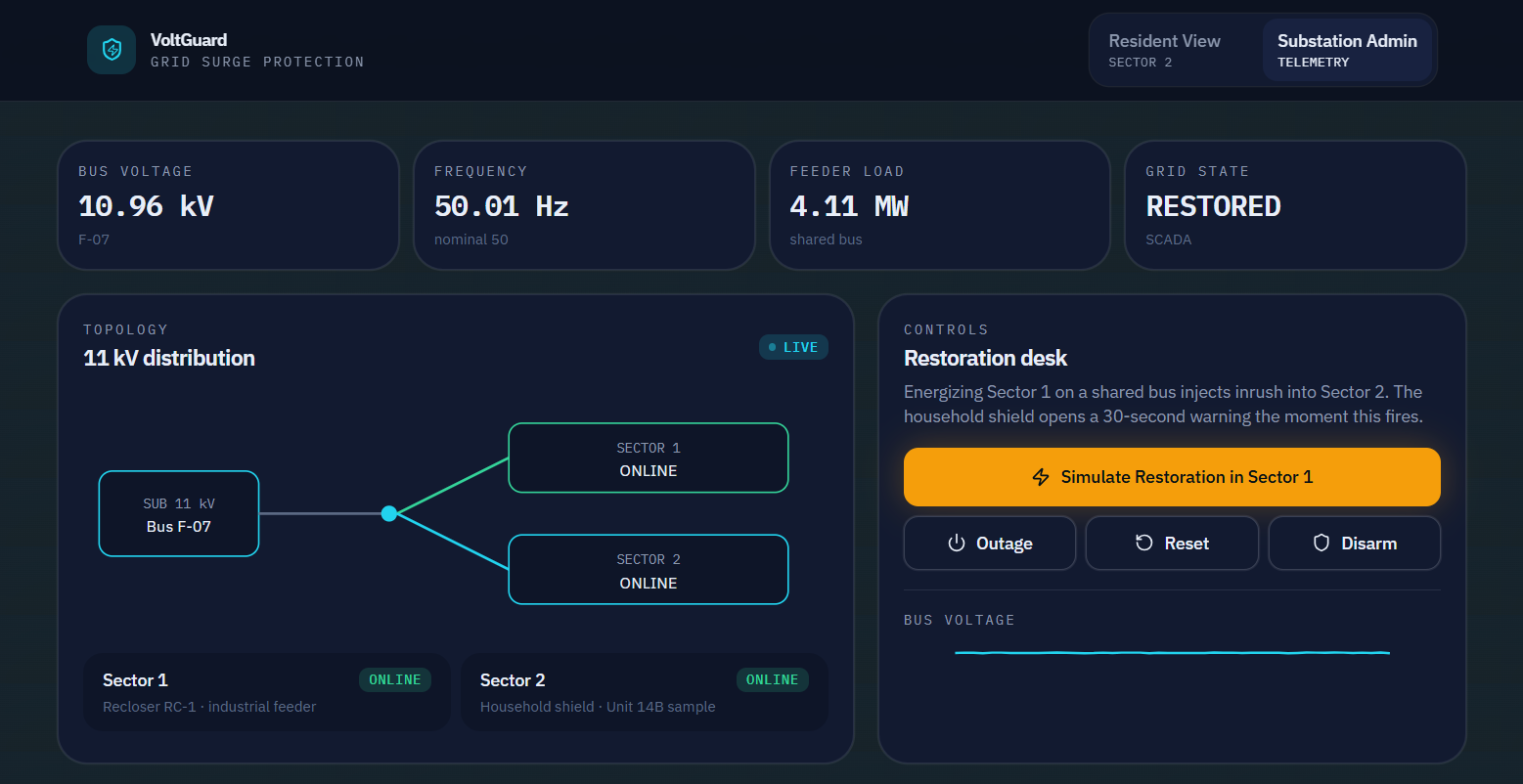
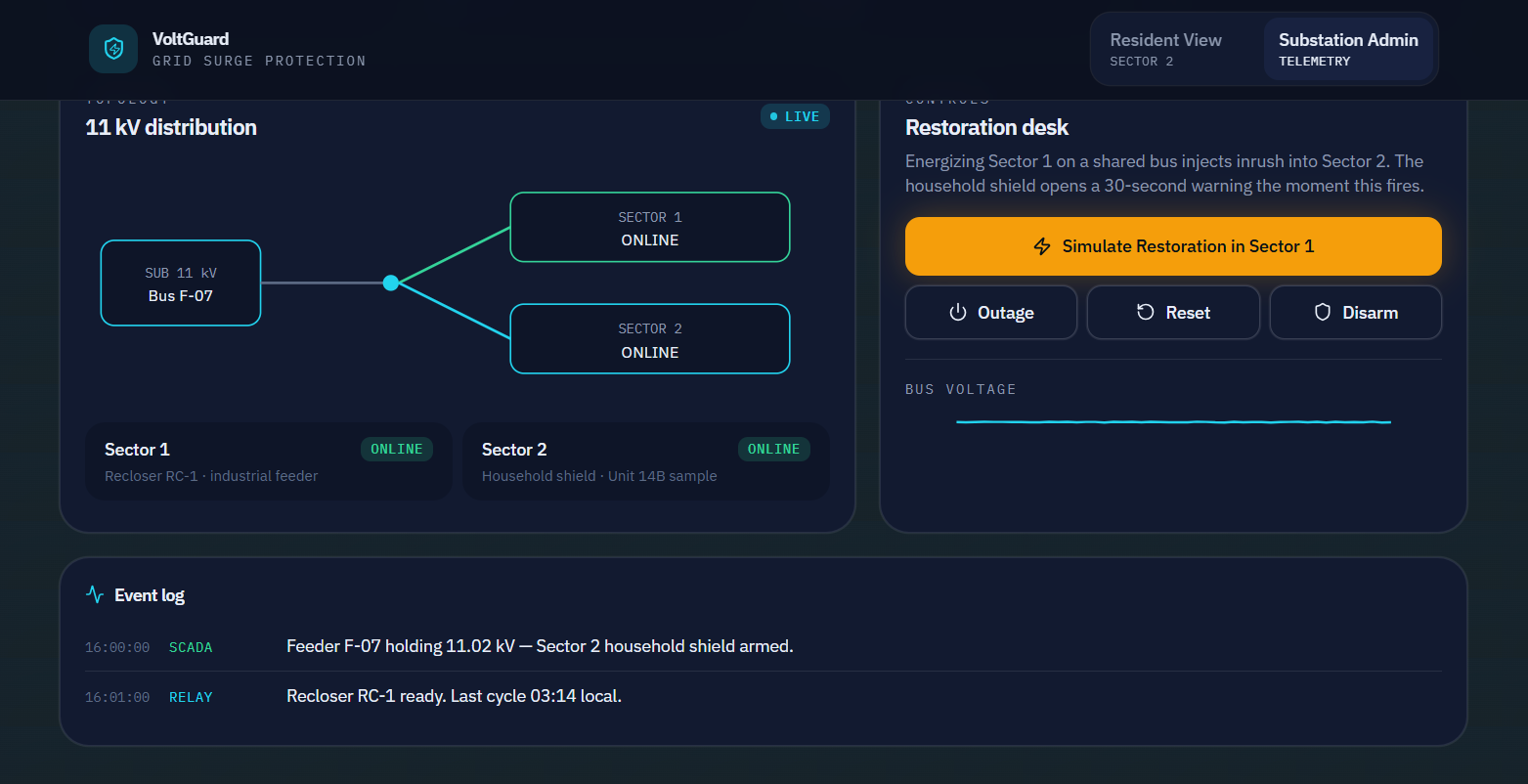
VoltGuard acts as an intelligent grid-surge protection and telemetry system divided into two powerful perspectives: Resident View: Gives households real-time circuit monitoring, tracking active appliance load (e.g., kW draw), grid status (Armed, Monitoring, or Restored), and an interactive checklist to manage plugged devices. When a grid fluctuation or cut is detected, it triggers automated countdown safety protocols telling users to unplug critical appliances before a destructive surge hits. Substation Admin View: Provides live telemetry feeds (such as tracking 11 kV lines across sectors like Sector 2), allowing operators to simulate power restorations, manage grid loads, and monitor regional stability to prevent cascading blackouts
How we built it
Built a dual-interface web architecture featuring a high-contrast, dark-mode dashboard tailored for real-time emergency monitoring. Integrated responsive component layouts using modern HTML/CSS/JavaScript frameworks to handle dynamic telemetry states (e.g., switching seamlessly between Monitoring, Armed, and Restored modes). Designed interactive safety workflows utilizing real-time state manipulation (such as countdown modals, circuit load counters tracking active kW usage, and automated appliance toggle checklists). Integrated Web Audio API components to deliver audio alerts when critical grid warnings and surge countdowns are triggered.
Challenges we ran into
State Management During Grid Transitions: Ensuring that sudden state changes (from a simulated blackout to a sudden power restoration surge) accurately updated both the resident checklist and the substation admin telemetry without breaking UI components. Designing for High-Stress Scenarios: Balancing data density on the dashboard so that complex information (voltage feeds, active loads, safety countdowns) remains instantly readable and actionable under pressure. Lack of Physical Hardware for Testing: Building a grid-protection tool without access to actual high-voltage lines, smart meters, or substations meant we had to creatively simulate real-world electrical telemetry, voltage fluctuations, and power-return surges purely through software logic and state machines.
Accomplishments that we're proud of
Successfully fusing real-world utility management metrics with consumer-side protective actions into a single cohesive platform. Creating an intuitive "Appliance Safety Checklist" workflow that directly mitigates the physical risk of power-return surges. Designing a clean, mission-control aesthetic (navy/cyan theme) that makes high-stakes grid telemetry feel professional and easy to navigate.
What we learned
Managing an unstable power grid requires protecting both ends of the system: the macro infrastructure (substations managing kV feeds) and the micro endpoints (households protecting individual refrigerators and electronics from voltage spikes). User interface design during an emergency must be minimalist, urgent, and unambiguous to prevent panic and property damage.
What's next for VoltGuard
Integrating predictive Vision AI modules to analyze live feeder line imagery and thermal stress. Expanding IoT smart-plug integrations so households can automatically cut power to heavy appliances during a grid anomaly without manual intervention. Scaling the substation telemetry module to interface with regional distribution networks for automated load balancing.
Built With
- async-js
- css3
- dashboard
- dom-manipulation
- git
- html5
- javascript
- local-storage
- prototyping
- real-time-telemetry
- responsive-design
- simulation
- state-management
- tailwind
- web-audio-api

Log in or sign up for Devpost to join the conversation.